Rat Disection Lab Practical
 Call Kai
 Learn
Learn Practice Test
 Spaced Repetition
 Match
Match Flashcards
 Knowt Play
1/41

There's no tags or description
Looks like no tags are added yet.
Name | Mastery | Learn | Test | Matching | Spaced | Call with Kai | Chat |
|---|
No analytics yet
Send a link to your students to track their progress
42 Terms

Incisors- teeth in the front of the mouth that gnaw. Oral cavity, digestive system

Molars- teeth located in the back of the mouth that are used to crush and grind up food. Oral Cavity, digestive system.

Hard plate- the base of the skull in the top of your mouth that has hard ridges used to crush up food. Oral Cavity, digestive system
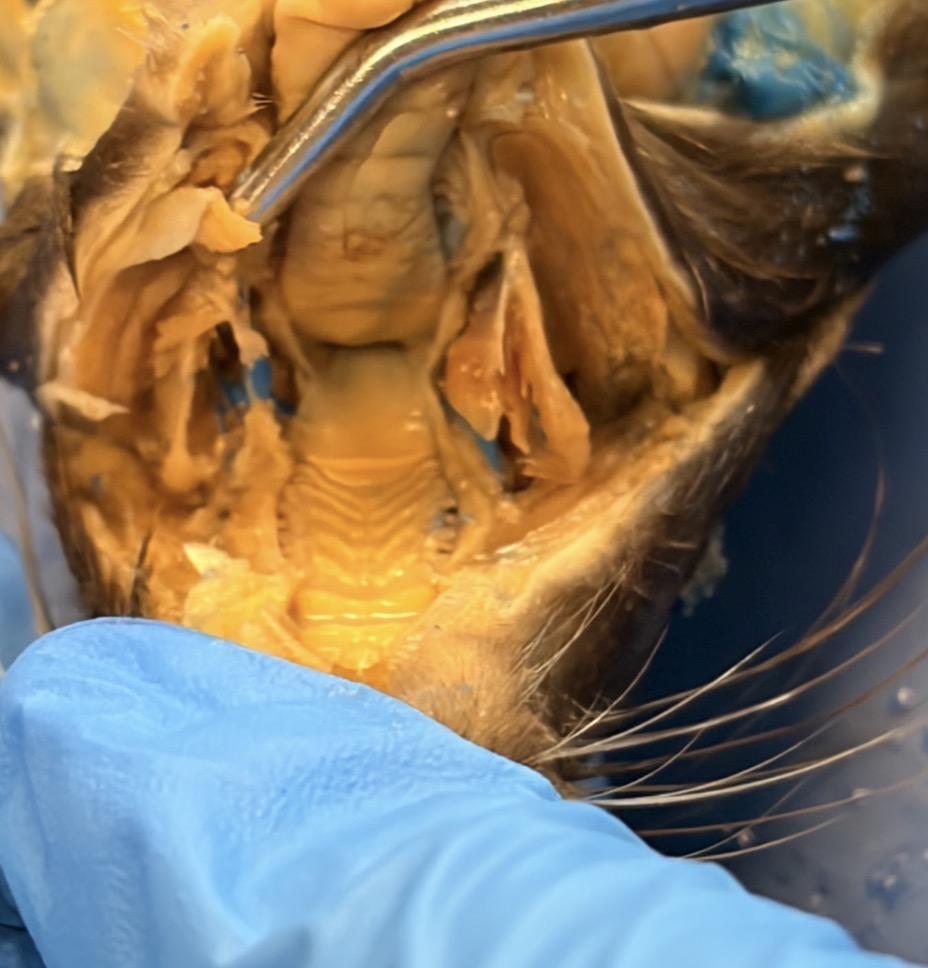
oropharynx- The middle part of the throat that allows for food, air, and fluid passage. Oral Cavity, digestive/respiratory system.

Soft palate- behind the hard plate, helps push food into the esophagus. Oral Cavity, respiratory/digestive system

Epiglottis- directs food into the throat and keeps the trachea covered. Laryngeal cavity, respiratory/digestive system.
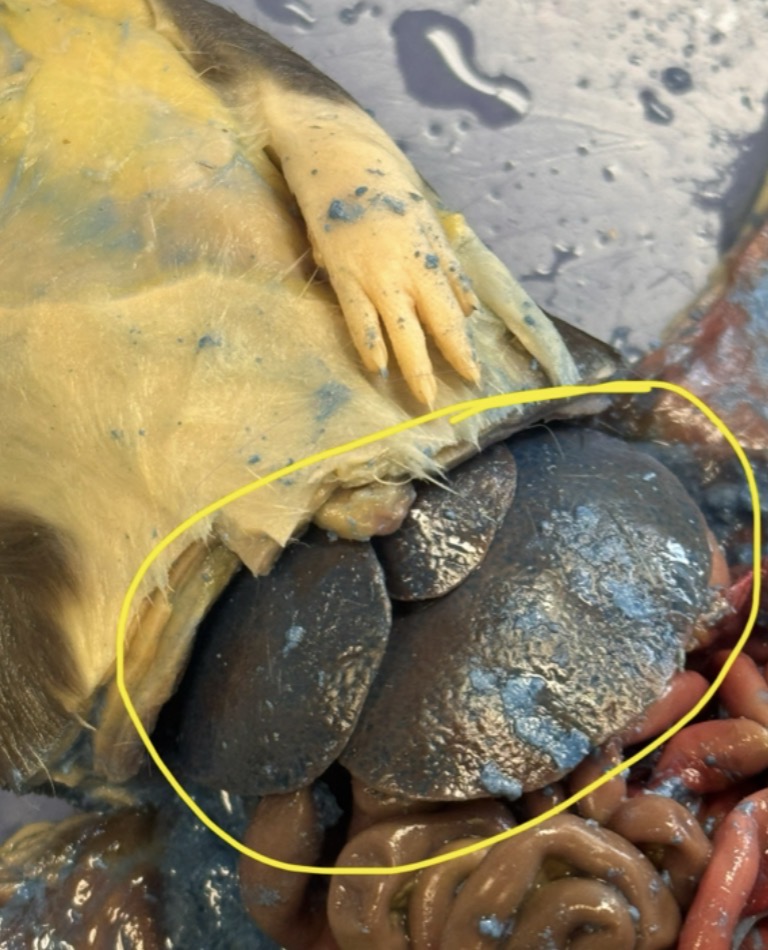
Liver- Produces bile in order to digest fat. also stores glycogen and transforms waste. Abdominal cavity, digestive system

Esophagus- moves food from mouth to stomach. thoracic cavity, digestive system.

Stomach- Cardia the top, body the central region, and pylorus the lower region, where food is mixed with gastric juices for digestion. Abdominal cavity, digestive system.

Large intestine- ascending colon, transverse colon, descending colon, and rectum, responsible for water absorption and formation of feces. Abdominopelvic cavity, digestive system.

Small intestine (duodenum)- the first part of the small intestine responsible for digestion and absorption of nutrients. Abdominopelvic cavity, digestive system.

Small intestine (ileum)- the final part of the small intestine, mainly involved in the absorption of nutrients and bile acids before they enter the large intestine. Abdominopelvic cavity, digestive system.

Small intestine (jejunum)- the middle section of the small intestine, important for nutrient absorption, particularly carbohydrates and proteins. Abdominopelvic cavity, digestive system.

Rectum- stores feces. Pelvic cavity, digestive system

Anus- opening for feces to exit the body. Perineum (below pelvic), digestive system

Mesentery- a fold of tissue that attaches the small intestine to the abdominal wall and contains blood vessels, lymphatics, and nerves. Appears clear. Abdominopelvic cavity, digestive system.

Pancreas- a gland that produces digestive enzymes and hormones, including insulin. Membrane over the stomach and spleen. Abdominopelvic cavity, digestive system.

Lungs- organs responsible for gas exchange, allowing oxygen to enter the bloodstream and carbon dioxide to be expelled. Located on either side of the heart. Thoracic cavity, respiratory system.

Trachea- tube for oxygen entering the lungs and co2 exiting the lungs. Thoracic cavity, respiratory system.

Larynx- the voice box, protects the airway regulates breathing, and produces sound. Cervical cavity, respiratory system.
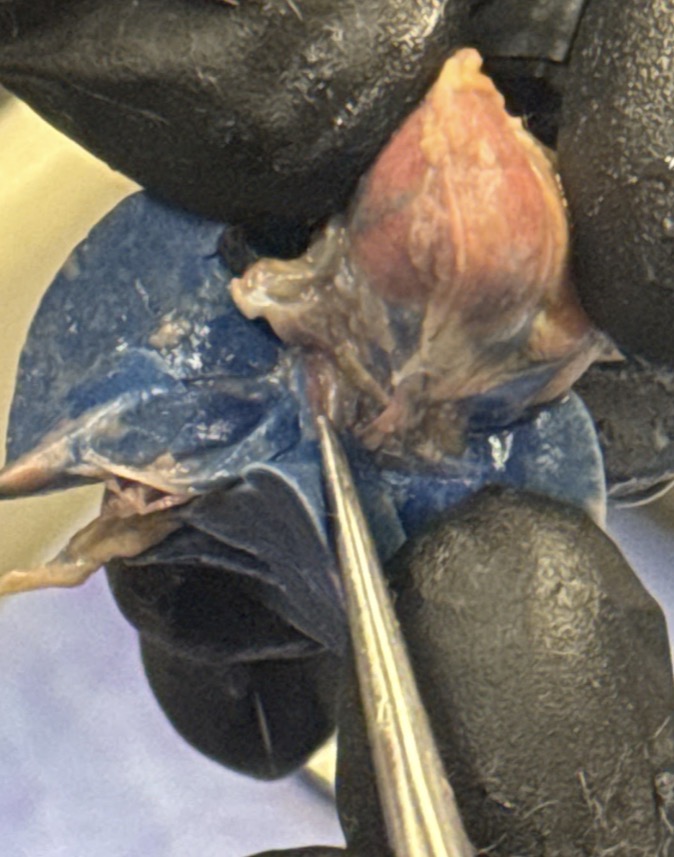
Bronchi- carries air to and from the lungs while also cleaning it. Thoracic cavity, respiratory system.

Diaphragm- muscle that separates the thoracic and abdominal cavities. Respiratory system It contracts to facilitate breathing by expanding the thoracic cavity and allowing air to flow into the lungs.

Cecum
A pouch connected to the junction of the small and large intestines, playing a role in the absorption of fluids and salts that remain after intestinal digestion. Abdominal cavity, digestive system.

Inferior/superior vena cava- large veins that carry deoxygenated blood from the body back to the heart. Cardiovascular system, thoracic and abdominopelvic cavities

Descending aorta- the main artery that carries oxygen-rich blood from the heart to the lower parts of the body. Thoracic and abdominopelvic cavities; cardiovascular system.

Thymus- a organ lying above the heart that produces hormones for immune system protection. Thoracic cavity, endocrine system.

Ribs/Sternum- a set of bones protecting the thoracic cavity and organs such as the heart and lungs. Thoracic cavity and skeletal system.

Kidneys- two bean-shaped organs that filter blood to produce urine and regulate water and electrolyte balance. Abdominal cavity: urinary system.

Ureter- transports urine from the kidneys to the bladder. Abdominal/pelvic cavities, Urinary system.

Bladder- stores urine, pelvic cavity, urinary system.

Urethra- where urine exits the body. Pelvic cavity and perineum, urinary system.

Ovaries- produces eggs in female animals. Located in the pelvic cavity, part of the reproductive system.

Uterine Horns/Uterus- tubes that transport eggs to the site where eggs then are fertilized by sperm. Located in the pelvic cavity, part of the reproductive system.

vagina- where babies come out and where uterine lining is shed. Located in the pelvic cavity, part of the reproductive system.

spleen- organ involved in filtering blood and recycling iron from red blood cells. functions in the immune system. Located in the abdominal cavity, part of the lymphatic system.

Adrenal glands
Endocrine glands located on top of the kidneys that produce hormones such as adrenaline and cortisol. They play key roles in stress response and regulating metabolism. located in the abdominal cavity part of the endocrine system.
Testes
Male reproductive organs that produce sperm and testosterone. Located in the scrotum, part of the reproductive system, located in the pelvic cavity.
Penis
Organ that delivers sperm and plays a role in urine leaving the body. Located in the pelvic cavity, part of the male reproductive system.
Scrotum
External pouch that contains the testes and helps regulate their temperature for optimal sperm production. Located in the pelvic cavity, it is an essential part of the male reproductive system.
Vas deferens
Tube that transports sperm from the testes to the urethra. Located in the pelvic cavity, it plays a key role in the male reproductive system.
seminal vesicles
Glands that produce a fluid that nourishes and helps transport sperm. Pelvic cavity and reproductive system.
prostate glands
Glands located near the base of the bladder that produce a fluid that helps protect and energize sperm. Located in the pelvic cavity and male reproductive system.