Digestive System
 Call Kai
 Learn
Learn Practice Test
 Spaced Repetition
 Match
Match Flashcards
1/27

There's no tags or description
Looks like no tags are added yet.
Name | Mastery | Learn | Test | Matching | Spaced | Call with Kai | Chat |
|---|
No analytics yet
Send a link to your students to track their progress
28 Terms
mucosa
the innermost layer of the alimentary canal, made of epithelial tissue
pharynx
food enters here AFTER the mouth
esophagus
muscular tube that leads to the stomach
chief cells
produce pepsinogen (in the stomach)
protein
what pepsinogen breaks down
parietal cells
produces HCl (in the stomach)
chyme
paste-like substance that leaves the stomach
salivary gland
produces amylase in the mouth
cardio-esphogeal
sphincter between the esophagus and stomach
stomach
organ of physical digestion that chemically breaks down protein too
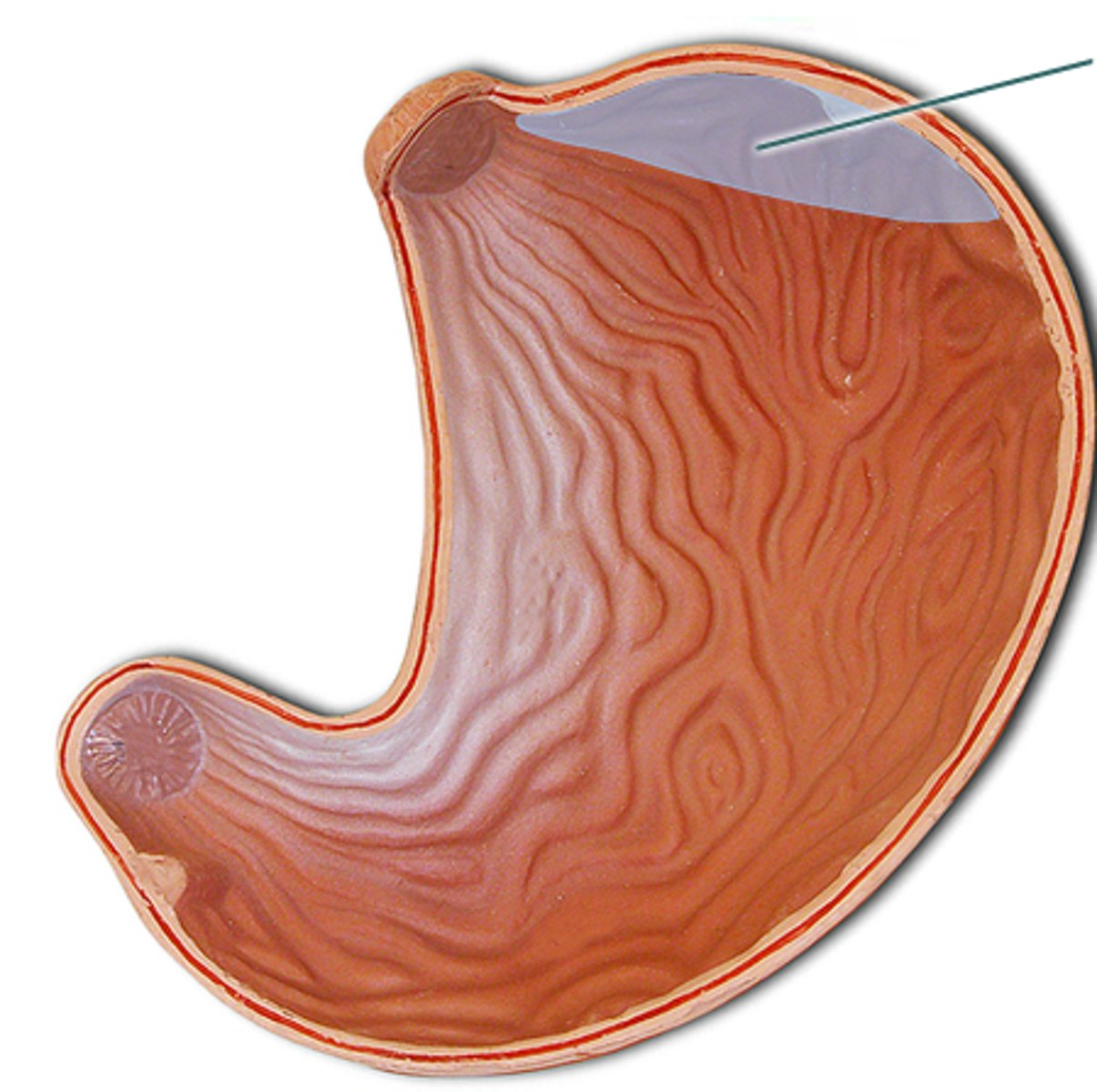
fundus
expanded part of the upper stomach
pyloris
terminal or last part of the stomach/most activity here
pyloric
sphincter between the stomach and small intestine
gastrin
a hormone made in the stomach when food enters
duodenum
first part of small intestines, most digestion takes place, chemicals released from liver, gall bladder, and pancreas
jejunum
the second (middle) part of the small intestine
ileum
final part of the small intestine
ileocecal
a valve that separates the small intestine from the large intestine
villi
finger-like projections in the small intestine, contains enzymes and increases surface area
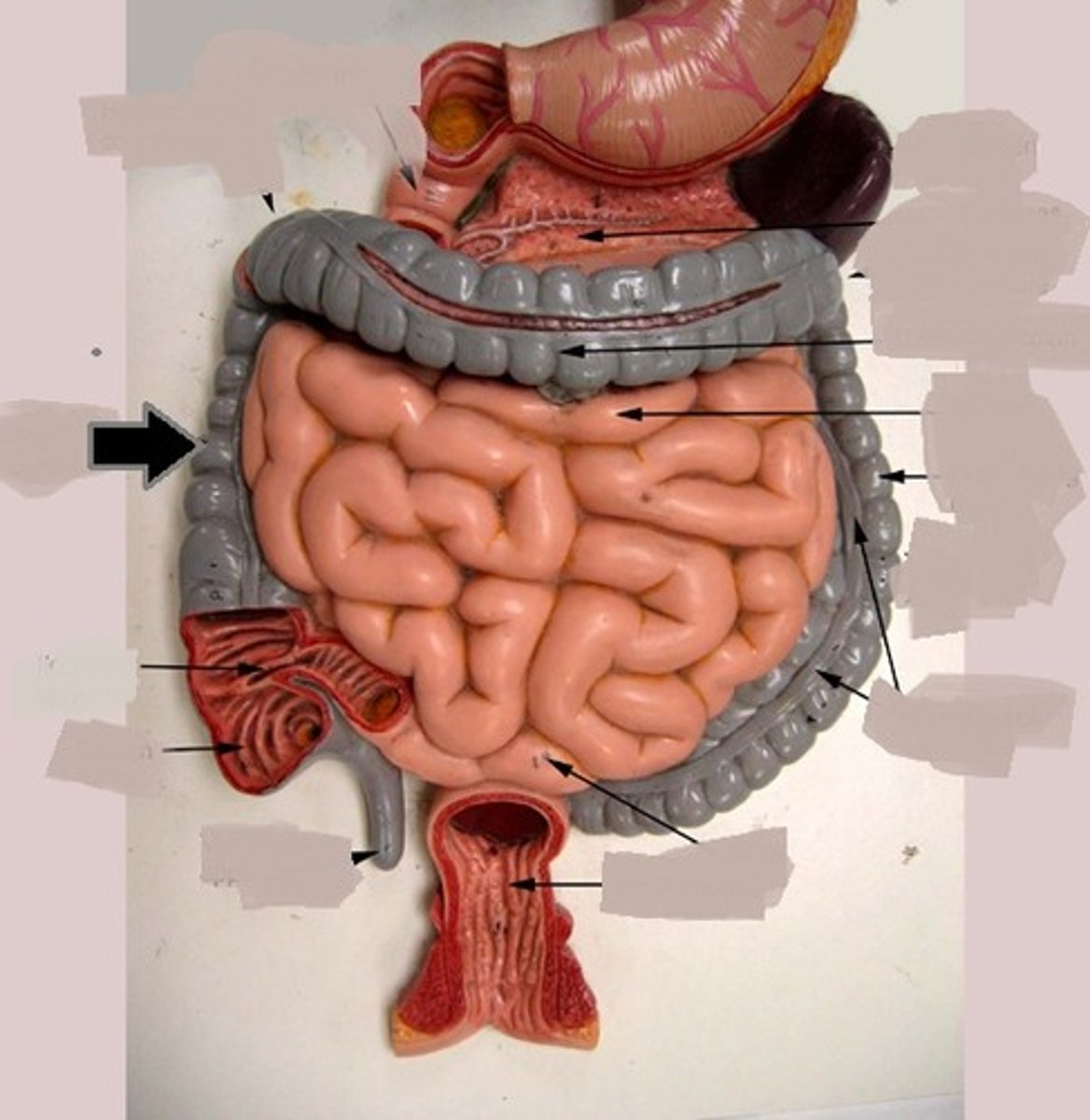
large intestine
is made up of the cecum, appendix, colon, rectum and anal canal
appendix
usually twisted and therefore may become infected by bacteria
the first part of the colon
ascending colon
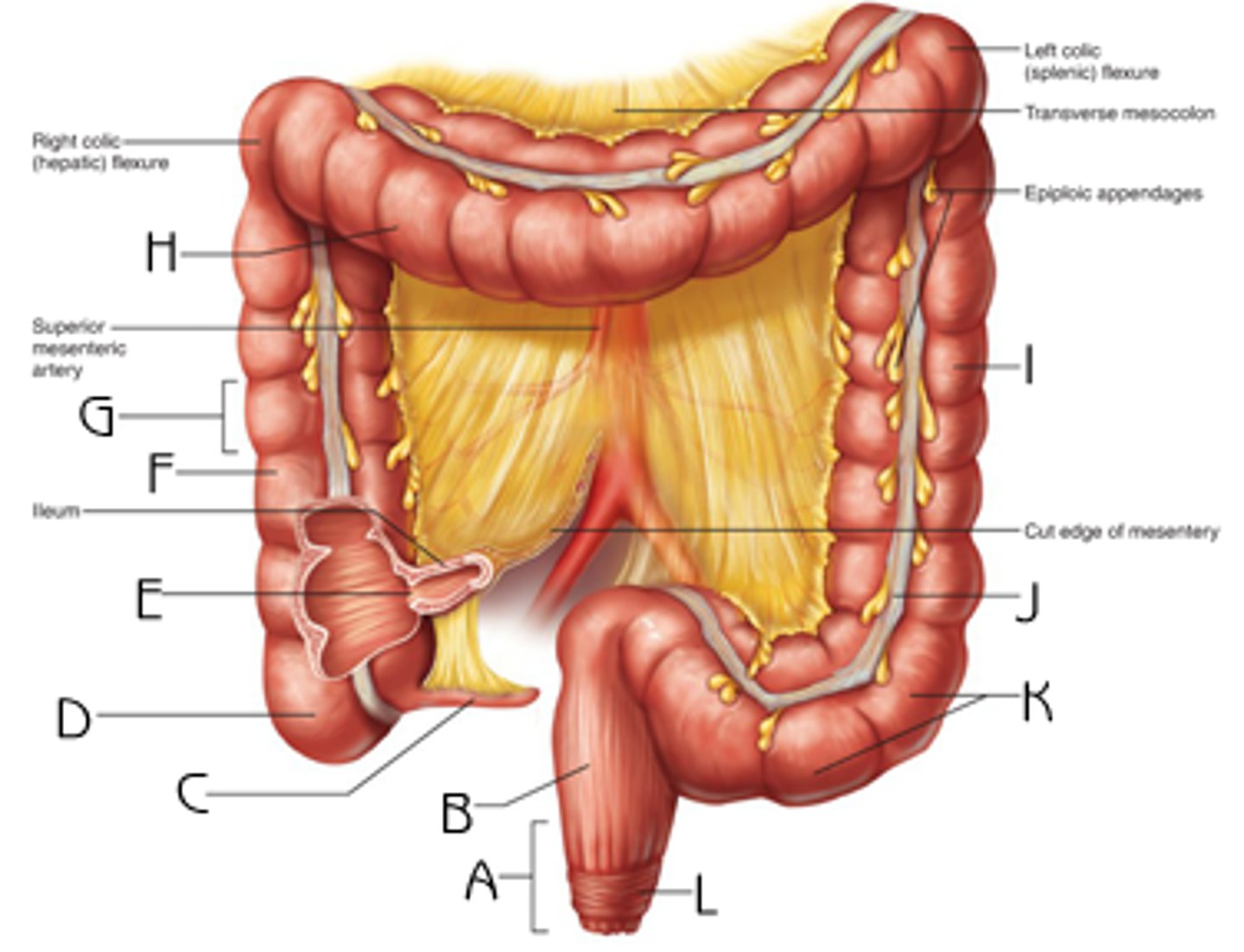
sigmoid
the descending colon becomes this s-shaped part of the colon (k on the diagram)
pancreas
makes all purpose digestive juice and helps neutralize the pH of chyme
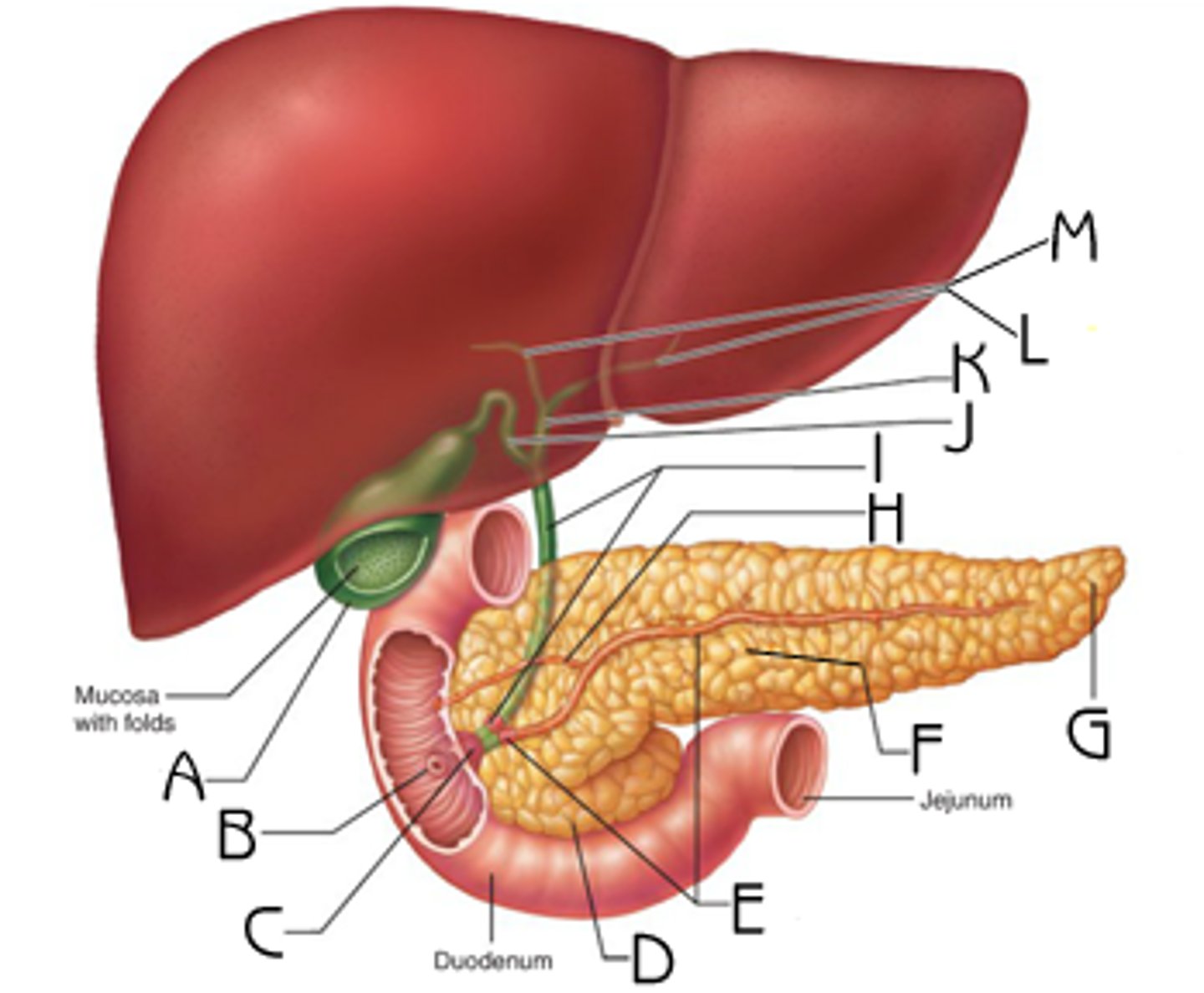
bile
emulsifies fat
liver
produces bile
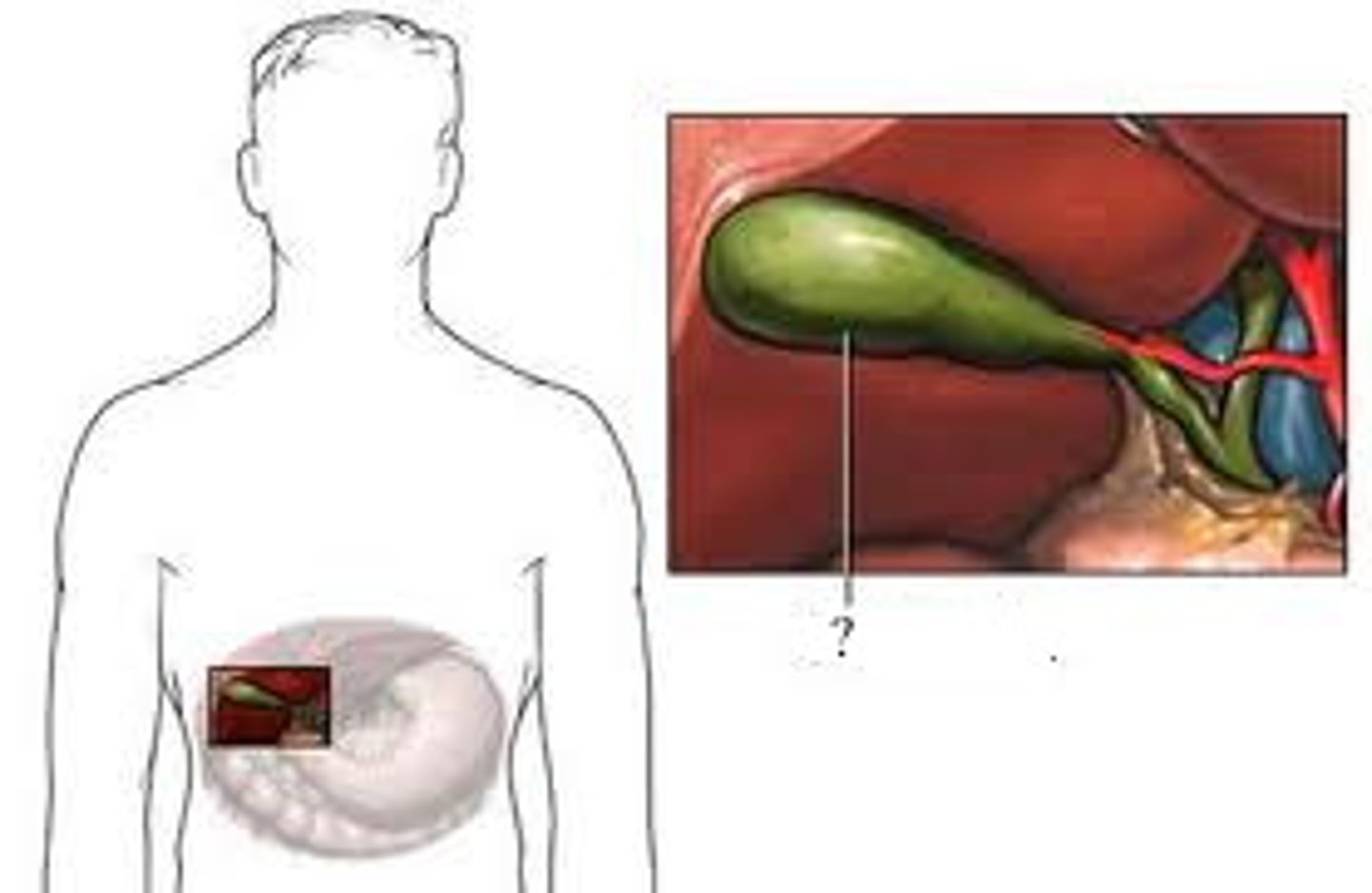
stores bile
gall bladder
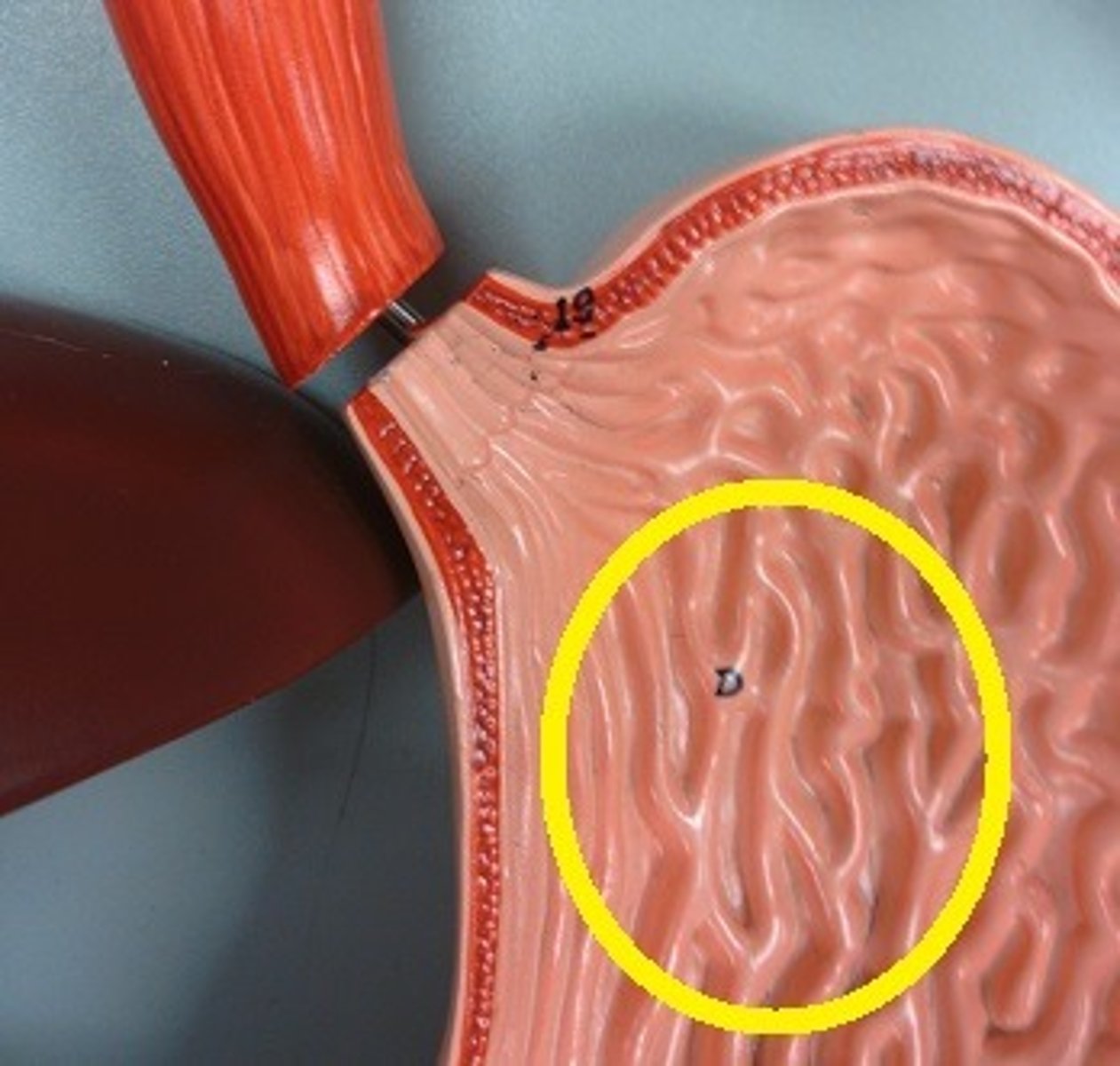
rugae
the folds in the mucosa lining the stomach