Series 1 Form B Part 1
 Call Kai
 Learn
Learn Practice Test
 Spaced Repetition
 Match
Match Flashcards
 Knowt Play
1/44

There's no tags or description
Looks like no tags are added yet.
Name | Mastery | Learn | Test | Matching | Spaced | Call with Kai | Chat |
|---|
No analytics yet
Send a link to your students to track their progress
45 Terms
A patient reports a 2-day history of a hot, swollen, first metatarsophalangeal joint. This complaint is MOST common in:
1.osteoarthritis.
2.polymyositis.
3.gout.
4.rheumatoid arthritis.
4,3
1. Osteoarthritis is typically characterized by dull, achy pain in weight-bearing joints (e.g., hips, knees, etc.)
2. Polymyositis presents as symmetric proximal muscle weakness with malaise and weight loss. There is no joint involvement.
3. Gout's typical presentation is severe joint pain, occurring at night, typically in the first metatarsophalangeal joint. Signs and symptoms also include erythema, warmth, and extreme tenderness and hypersensitivity of the affected joint.
4. Rheumatoid arthritis presents with symmetrical joint inflammation and pain with subluxations
A patient who has bicipital tendinopathy is MOST likely to experience pain with which of the following maneuvers?
1.Resisted shoulder flexion with the forearm supinated and the elbow flexed to 15°
2.Passive shoulder medial (internal) rotation and abduction with 90° of elbow flexion
3.Passive shoulder flexion greater than 90° with application of light pressure on the acromion
4.Resisted shoulder extension with the elbow extended and the shoulder abducted to 90° and medially (internally) rotated
1,1
1. This movement describes the Speed Test, which is diagnostic of bicipital tendinopathy
2. This movement is more likely to elicit pain in an individual who has rotator cuff impingement, not bicipital tendinopathy
3. This movement is more likely to elicit pain in an individual who has rotator cuff impingement, not bicipital tendinopathy
4. This movement is more likely to elicit pain in an individual who has supraspinatus tendinopathy, not bicipital tendinopathy
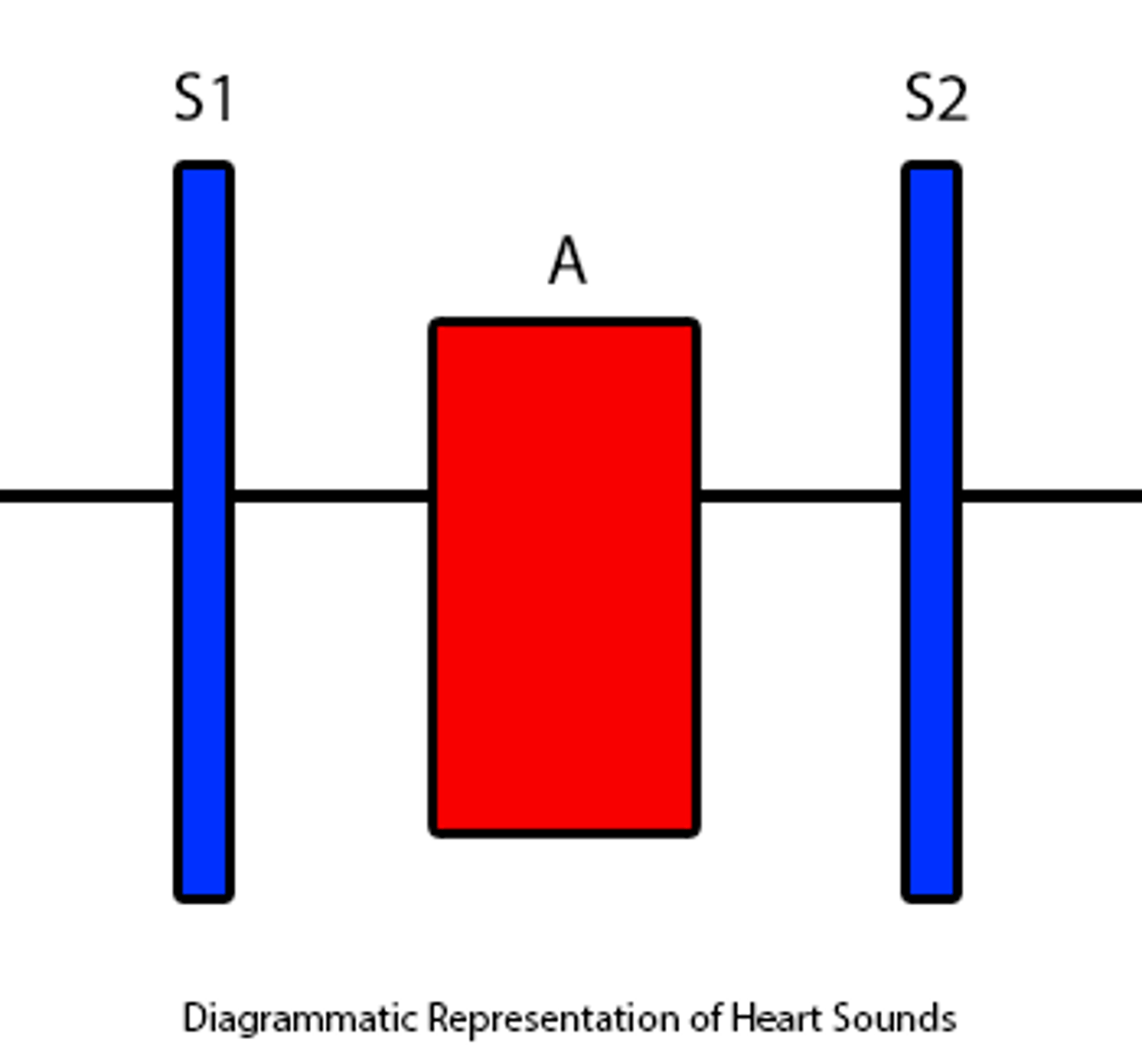
A physical therapist performs heart auscultation as part of a patient's cardiac systems review. The therapist hears a sound represented by "A" in the illustration. This sound is BEST described as a:
1.systolic murmur not considered to be normal.
2.normal heart sound occurring during systole.
3.diastolic murmur not considered to be normal.
4.normal heart sound occurring during diastole.
3,1
1. S1 represents closure of the mitral and tricuspid valves, while S2 represents closure of the aortic and pulmonary valves. These are the only two heart sounds that should occur normally. Sounds occurring between S1 and S2 are considered systolic murmurs.
2. S1 represents closure of the mitral and tricuspid valves, while S2 represents closure of the aortic and pulmonary valves. These are the only two heart sounds that should occur normally.
3. Sounds occurring between S2 and S1 are known as diastolic murmurs. The illustration does not show the sound occurring between S2 and S1.
4. S1 represents closure of the mitral and tricuspid valves, while S2 represents closure of the aortic and pulmonary valves. These are the only two heart sounds that should occur normally.
A patient with an incomplete C8 spinal cord injury reports of burning in the buttocks when sitting in a wheelchair. Which of the following problems with the patient's wheelchair would be MOST likely to contribute to the burning?
1.Footplates are too high.
2.Footplates are too low.
3.Seat is too narrow.
4.Seat is too deep.
1,1
1. Footrests that are too high shift the patient's weight posteriorly onto the buttocks, leading to pressure and pain
2. Footrests that are too low shift weight forward onto the thighs. Although this would cause problems due to pressure on the thighs, it would not lead to pain in the buttocks.
3. A narrow seat will lead to pressure and pain on the lateral pelvis and thighs, not in the buttocks
4. A long seat will lead to posterior pelvic tilt and kyphotic posture to compensate for the extra depth
A patient is referred to physical therapy for right shoulder pain. Which of the following findings suggests that physical therapy intervention may not be appropriate?
1.Pain that subsides with right sidelying
2.Tenderness to palpation at the origin of the biceps tendon
3.Trigger points at the right rib 2-3 intercostal space
4.Pain with resisted shoulder lateral (external) rotation
3,1
1. Right sidelying often increases musculoskeletal pain but may decrease pleural friction/irritation and thus may decrease visceral pain.
2. Musculoskeletal pain is often tender to palpation or pressure
3. Trigger points are the most common musculoskeletal cause of chest pain (Goodman).
4. Resisted testing or contraction of the involved muscle may increase pain of a musculoskeletal origin
Which of the following options BEST describes the mode of action of angiotensin-converting enzyme (ACE) inhibitors?
1.Reduction of heart rate and increase in cardiac contractility
2.Reduction of heart rate and decrease in cardiac contractility
3.Reduction of peripheral vascular resistance and increase in venous capacitance
4.Reduction of peripheral vascular resistance and decrease in venous capacitance
1,3
1. The mode of action described does not occur with angiotensin-converting enzyme inhibitors
2. The mode of action described is for beta-blockers, which are another medication used to treat hypertension
3. Angiotensin-converting enzyme inhibitors produce vasodilation, reduce peripheral vascular resistance, and increase venous capacitance
4. Angiotensin-converting enzyme inhibitors produce vasodilation, reduce peripheral vascular resistance, and increase venous capacitance. Therefore this option is incorrect since it states an action is decreasing venous capacitance.
A 4-year-old child who has an L1 myelomeningocele has developed scoliosis over the past 2 years. The curve currently measures 25°. Which of the following recommendations is MOST appropriate for scoliosis management?
1.Continue to monitor the scoliosis, with no intervention at this time.
2.Begin a home program of stretching exercises for trunk rotators.
3.Refer to an orthopedic surgeon for evaluation for spinal fusion.
4.Fit the child with a thoracolumbosacral orthosis.
4,4
1. Orthotic intervention, usually with a thoracolumbosacral orthosis, is helpful in maintaining improved trunk position for functional activities. For children with progressive spinal deformities, orthotic intervention is continued until the child reaches a sufficient age (10+ years) to allow surgical fusion of the spine.
2. Stretching programs have not been found to halt or improve scoliosis. If stretching exercises are performed, they should focus on the iliopsoas and low back extensors and lateral trunk flexors on the concave side of the curvature.
3. This child is too young for surgery for scoliosis. The ideal minimum age for spinal fusion is 10 to 11 years old in girls and 12 to 13 years old in boys. Long spinal fusions before the skeletal age of 10 result in greater loss of trunk height and an increased frequency of instrumentation failure.
4. Orthotic intervention, usually with a thoracolumbosacral orthosis, is helpful in maintaining improved trunk position for functional activities. For children with progressive spinal deformities, orthotic intervention is continued until the child reaches a sufficient age (10+ years) to allow surgical fusion of the spine and is indicated for a curvature 25° to 45°
Which of the following techniques would MOST likely facilitate learning the movement pattern demonstrated in the video?
1.Slow reversal
2.Rhythmic initiation
3.Slow reversal hold
4.Repeated contractions
3,2
1. Slow reversal is an incorrect answer because this technique promotes rapid, reciprocal action of agonists and antagonists and the intent is not to facilitate learning the movement
2. Rhythmic initiation is the correct answer because this technique allows the therapist to assist the individual with the desired movement pattern. The therapist passively moves the individual through the desired motion several times, until the patient becomes familiar with the movement pattern, thus facilitating learning of the desired movement pattern
3. Slow reversal hold is an incorrect answer because this technique promotes isometric contraction at end range to enhance dynamic stability, not to facilitate learning the movement
4. Repeated contractions is an incorrect answer because this technique is designed to strengthen a weak agonist, not to facilitate learning the movement
A patient reports constant bilateral posterior calf pain with itching. The examination reveals a body temperature of 98.8°F (37.1°C), normal temperature of the lower extremities, and tenderness to palpation and crusting of the skin in the affected areas. Which of the following conditions is MOST likely present?
1.Dermatitis
2.Cellulitis
3.Atrophie blanche
4.Superficial venous thrombosis
1,1
1. Symptoms of dermatitis include lack of fever, itching, normal temperature of the lower extremities, inflammation, tenderness to touch, presence of vesicles and crusting, and either unilateral or bilateral distribution
2. Although the patient's limb is painful, the other reported findings are not consistent with cellulitis. Signs of cellulitis include fever, elevated temperature of the lower extremities, erythema, inflammation, tenderness, one or a few bullae, no lesions, and unilateral distribution.
3. Atrophie blanche is characterized by white, scar-like areas associated with pain. Affected areas present as smooth white plaques
4. Superficial venous thrombosis is characterized by pain and tenderness along the affected vein, usually the saphenous vein. Crusting of the skin is not a feature of this condition.
A patient who has emphysema reports a weight gain of 20 lb (9 kg) over the past month. There is 3+ pitting edema in both distal lower extremities. Which of the following tests is MOST important to identify the likely underlying condition?
1.Heart rate
2.Capillary refill
3.Heart auscultation
4.Ankle-brachial index
4,3
1. The patient has concerning symptoms suggestive of heart failure. Heart rate would not be most important measure because right ventricular heart failure is not associated with acute changes to heart rate. Right ventricular failure is due to the sustained elevation in pulmonary arterial hypertension.
2. Capillary refill is used to assess for microvascular disease. This test would not help explain the patient's clinical presentation of pitting edema and weight gain.
3. The patient has concerning symptoms suggestive of heart failure. The classic signs include peripheral pitting edema, weight gain, JVD, diminished appetite, right upper quadrant discomfort, and a ventricular gallop (S3) heart sound. Assessing the heart sounds would be of value for the medical diagnosis or for determining whether consultation with another health care professional is needed.
4. The ABI is performed to assess for arterial disease and is designed to test the potential loss of perfusion in the lower extremities. Clinical manifestations of arterial disease include pain, pallor, paralysis, diminished pulses, hair loss, and thin shiny skin. Venous insufficiency is represented by edema, hemosiderin staining of the skin, and normal arterial pulses. The patient could have secondary venous issues, but the ABI would not be indicated as an additional testing measure.
A patient is unable to reach behind the low back during activities of daily living. Muscle performance testing is pain-free, normal, and symmetrical. What is the MOST likely problem contributing to this functional impairment?
1.Subscapularis disorder
2.Pectoralis minor stiffness
3.Posterior capsular stiffness
4.Acromioclavicular joint arthrosis
3, 3
1. Muscle performance testing is normal, thus subscapularis disorder is not likely
2. Stiffness of the pectoralis minor would lead to impairments in activities requiring upward rotation and posterior tilting of scapula
3. Posterior capsular stiffness would decrease medial (internal) rotation, which is required for reaching the hand behind the back
4. Acromioclavicular joint arthrosis is most likely to limit horizontal adduction and overhead motions
Which of the following functions is MOST likely to be impaired in a patient who has a pontine infarct?
1.Jaw movement
2.Eyelid elevation
3.Tongue movement
4.Pharyngeal swallowing
4, correct 1
1. Observed jaw deviation during mastication results from an insult to the trigeminal nerve (CN V), which originates in the pons.
2. Impaired eyelid elevation (ptosis) results from an insult to the oculomotor nerve (CN III), which originates in the midbrain, not the pons.
3. Impaired tongue movement results from an insult to the hypoglossal nerve (CN XII), which originates in the medulla, not the pons.
4. Difficulty swallowing (dysphagia) results from an insult to the vagus nerve (CN X), which originates in the medulla, not the pons.
Iontophoresis should be used with precaution for a patient who has which of the following conditions?
1.Peripheral neuropathy
2.Raynaud disease
3.Degenerative joint disease
4.Chronic edema
1, 1
1. Iontophoresis should be used with precaution in patients who have conditions involving decreased sensation
2. Raynaud disease is not a precaution or contraindication for iontophoresis
3. Degenerative joint disease may be associated with joint pain and inflammation, both of which could be indications for iontophoresis
4. Chronic edema may be an indication for iontophoresis
During examination of a patient, a physical therapist notes bradycardia. The patient reports constipation and cold intolerance. Which of the following conditions is the MOST likely cause of the sign and symptoms?
1.Hypothyroidism
2.Hyperthyroidism
3.Hyperparathyroidism
4.Hypoparathyroidism
1, 1
1. Hypothyroidism is consistent with signs and symptoms of bradycardia, constipation, and cold intolerance
2. Hyperthyroidism causes diarrhea, rather than constipation
3. Hyperparathyroidism is not associated with bradycardia
4. Hypoparathyroidism is associated with arrhythmias and either constipation or diarrhea
Which of the following interventions is MOST appropriate for an individual who has multiple sclerosis?
1.Submaximal exercise performed in the morning
2.Swimming exercises performed in a heated indoor pool
3.Resistance exercise alternating each day between upper and lower body workouts
4.Maximal exercise to the point of fatigue with several days of rest between training sessions
1,1
1. Persons with multiple sclerosis are susceptible to fatigue and heat intolerance. Submaximal exercises at moderate intensity (50% to 70%) are tolerated well. In addition, exercising in the morning is recommended because the body's core temperature is lowest at this time.
2. Persons with multiple sclerosis should take precautions to manage core body temperature and prevent overheating. Swimming in a heated pool could result in overheating and an increase in fatigue.
3. Because persons with multiple sclerosis are susceptible to fatigue, circuit training alternating work between upper and lower extremities is recommended during one training session. Performing upper extremity resistance exercise one day followed by lower extremity resistance exercise is more likely to result in increased fatigue.
4. Persons with multiple sclerosis are susceptible to fatigue. Submaximal exercises at moderate intensity (50% to 70%) are more appropriate.
If the test shown in the photograph has positive findings, which of the following muscles is MOST likely affected?
1.Adductor pollicis
2.Pronator quadratus
3.Flexor pollicis longus
4.Abductor pollicis longus
3, 1
1. The nerve being stretched in the photograph is the ulnar nerve. The adductor pollicis is innervated by the ulnar nerve (nerve roots C7-C8, T1)
2. The pronator quadratus is innervated by the median nerve. The nerve being stretched in the photograph is the ulnar nerve.
3. The flexor pollicis longus is innervated by the anterior interosseous nerve, which is a branch of the median nerve. The nerve being stretched in the photograph is the ulnar nerve.
4. The abductor pollicis longus is innervated by the posterior interosseus nerve, which is a branch of the radial nerve. The nerve being stretched in the photograph is the ulnar nerve.
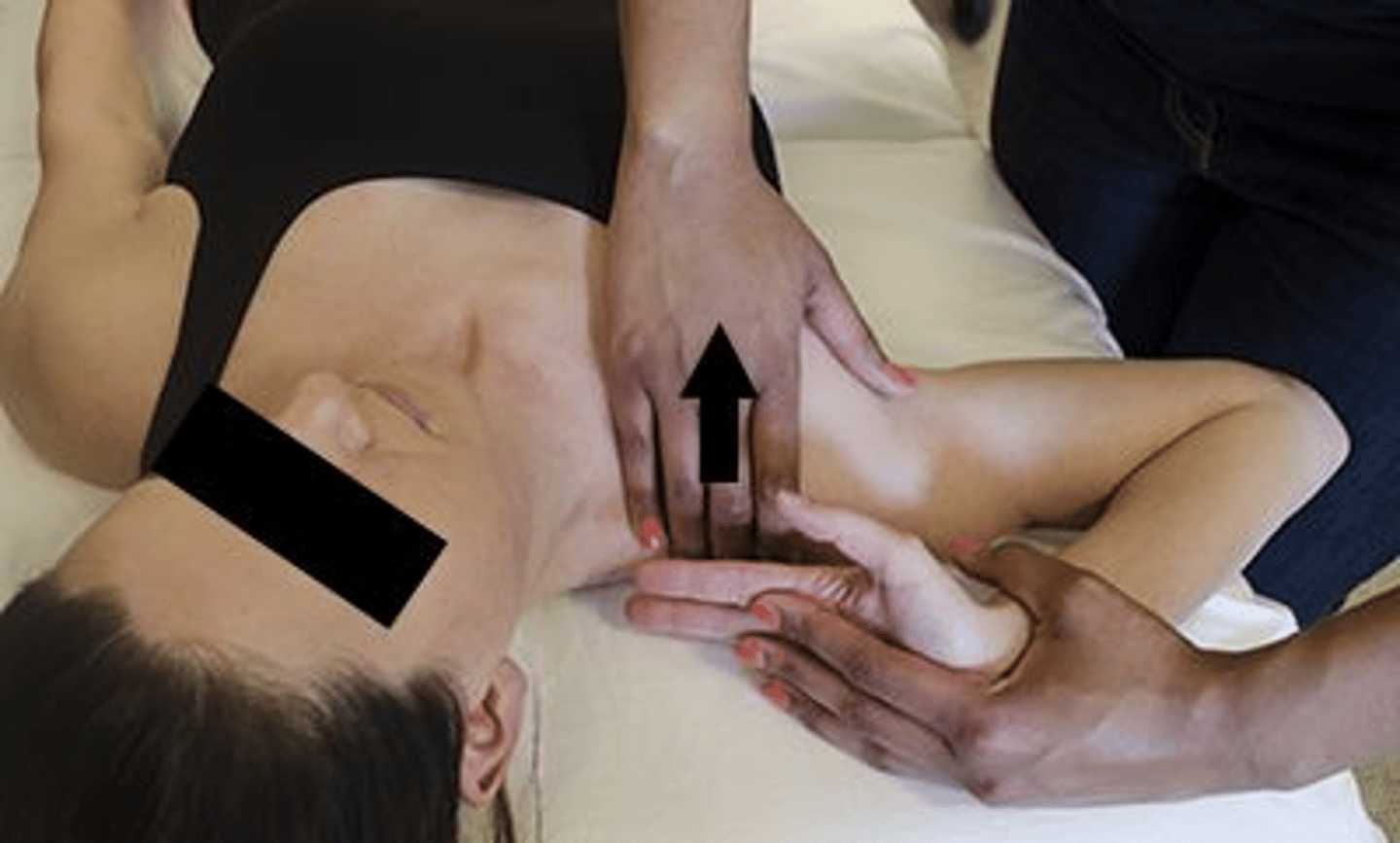
A patient presents with moderate pain in the elbow after a fall. The radiograph is negative for a fracture. Which of the following mobilizations is MOST appropriate for decreasing the pain?
1.Small-amplitude oscillations before the onset of tissue resistance
2.Small-amplitude oscillations into tissue resistance
3.Large-amplitude oscillations into tissue resistance
4.Large-amplitude oscillations at the end of tissue resistance
3, 1
1. Small-amplitude oscillations before the onset of tissue resistance are appropriate for pain modulation.
2. Small-amplitude oscillations into tissue resistance are more appropriate for joint stiffness, not pain.
3. Large-amplitude oscillations into tissue resistance are more appropriate for joint stiffness.
4. Large-amplitude oscillations at the end of tissue resistance are for end range joint restrictions and are too aggressive for patients who have pain.
A patient who has severe bilateral hip and knee flexion contractures requires the assistance of two people for bed-to-chair transfers. The patient demonstrates normal dynamic sitting balance and Normal (5/5) upper body strength. The patient lives at home with one caregiver. The physical therapist's FIRST intervention should be to teach which of the following transfers?
1.Use of a mechanical lift operated by the caregiver
2.Sliding-board transfer performed by the patient with assistance from the caregiver
3.One-person lift transfer performed by the caregiver
4.One-person stand pivot transfer performed by the patient with assistance from the caregiver
4, 2
1. A mechanical lift will promote total dependence for the patient, which should not be necessary in this case
2. With normal sitting balance and normal upper body strength, this patient should be able to participate significantly with transfers, thereby easing much of the strain on the caregiver and allowing transfers to be done with assistance of only one person
3. A one-person lift transfer performed by the caregiver does not allow the patient to participate by using existing abilities
4. The description of the patient's lower extremities indicates that the patient is not likely to be a good candidate for a stand pivot transfer
When evaluating wheelchair positioning of a child with cerebral palsy, the position of which of the following body parts should be examined FIRST?
1.Pelvis
2.Lower extremities
3.Head
4.Spine
1,1
1. The assessment of posture in a wheelchair begins with the pelvis and its relationship to its adjacent segments.
2. The pelvis, not the lower extremities, should be considered first when evaluating wheelchair seating.
3. The pelvis, not the head, should be considered first when evaluating wheelchair seating.
4. The pelvis, not the spine, should be considered first when evaluating wheelchair seating.
When providing patient education in cardiac rehabilitation, which of the following signs and symptoms of exertional intolerance should the physical therapist emphasize?
1.Anginal pain, insomnia, sudden weight gain, leg stiffness
2.Persistent dyspnea, dizziness, anginal pain, sudden weight gain
3.Persistent dyspnea, anginal pain, insomnia, weight loss
4.Anginal pain, confusion, leg numbness, weight loss
2,2
1. Leg stiffness is not a sign/symptom associated with exercise intolerance among patients undergoing cardiac rehabilitation.
2. The signs and symptoms listed in this option are associated with exercise intolerance among patients undergoing cardiac rehabilitation.
3. Weight loss is not a sign associated with exercise intolerance among patients undergoing cardiac rehabilitation. However, angina and dyspnea are important signs of exercise intolerance.
4. Leg numbness, confusion, and weight loss are not associated with exercise intolerance. However, angina is important to note in the patient who has cardiac dysfunction.
A patient with normal urine control reports not being able to reach the toilet in time due to muscle weakness and joint pain. Which type of incontinence BEST describes the patient's condition?
1.Functional
2.Stress
3.Urge
4.Overflow
1,1
1. Functional incontinence occurs in people who have normal urine control but who have difficulty reaching a toilet in time because of muscle or joint dysfunction.
2. Stress incontinence is the loss of urine during activities that increase intraabdominal pressure such as coughing, lifting, or laughing
3. Urge incontinence is the sudden unexpected urge to urinate and the uncontrolled loss of urine. Urge incontinence is often related to reduced bladder capacity or detrusor instability.
4. Overflow incontinence is the constant leaking of urine from a bladder that is full but unable to empty
While walking on a treadmill during Phase II cardiac rehabilitation following coronary artery bypass surgery, a patient reports the new onset of chest pain and dyspnea. The physical therapist should instruct the patient to:
1.continue walking while the therapist monitors the patient's vital signs.
2.continue walking at 50% slower speed while the therapist calls the physician.
3.cease walking while the therapist reassesses the patient's vital signs.
4.cease walking while the therapist activates the emergency medical system.
3,3
1. Continuing to walk is inappropriate. Angina during exercise should result in termination of the activity.
2. These are indications to terminate exercise and reassess vital signs. Continuing to walk at a lower intensity is inappropriate.
3. An episode of stable angina is an indication to terminate exercise testing and reassess vital signs.
4. These symptoms do not constitute a medical emergency. It is more appropriate to reassess vitals and ask the patient to take nitroglycerin, if prescribed to do so.
A patient with no history of trauma has nonradiating low back pain. Lumbar flexion does not reverse the lordosis and is pain-free; lumbar extension increases the symptom. Palpation reveals a step-off in the lower lumbar region. The MOST appropriate treatment for this patient would be:
1.abdominal strengthening.
2.sustained prone positioning on elbows.
3.exaggerated lumbar lordosis in sitting.
4.grade III posteroanterior glide to L5.
1,1
1. This patient's signs and symptoms are consistent with spondylolisthesis. Abdominal muscle strengthening and stabilization are key to conservative management.
2. Extension activities are not indicated for a patient with spondylolisthesis.
3. Extension activities are not indicated for a patient with spondylolisthesis.
4. Extension activities are not indicated for a patient with spondylolisthesis.
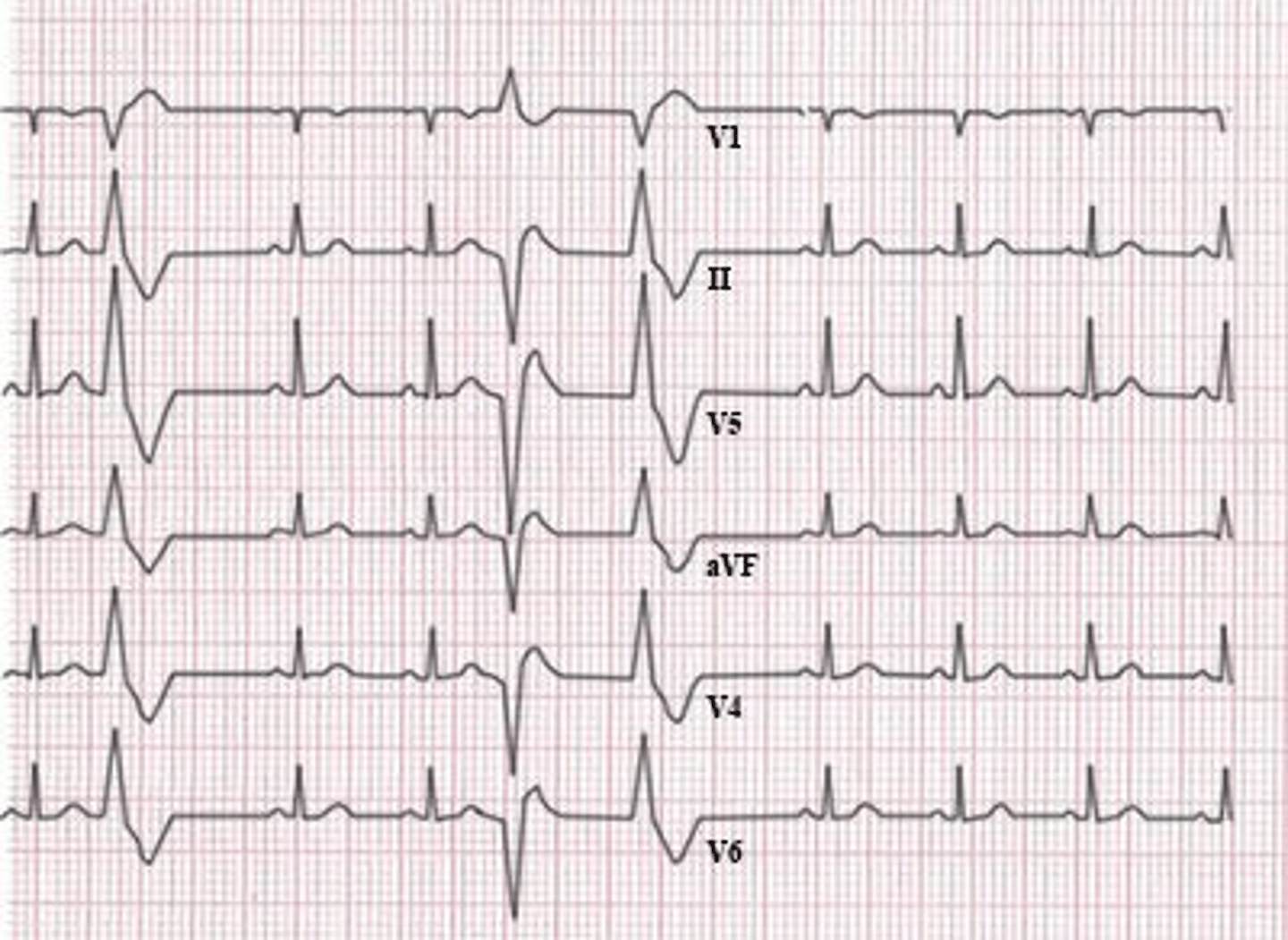
During a symptom-limited graded exercise test, a patient exhibits the electrocardiogram pattern shown in the photograph. This pattern is indicative of which of the following phenomena?
1.ST segment elevation
2.Premature ventricular contractions
3.Acute first-degree atrioventricular block
4.Normal response to exercise
3,2
1. The ST segment is not elevated in the photograph of the electrocardiogram
2. Premature ventricular contractions are present in the photograph of the electrocardiogram, as evidenced by the wide QRS complex and absent P wave
3. Acute first-degree atrioventricular block would be represented by a prolonged PR interval, which is not shown in this photograph
4. This electrocardiogram is not consistent with a normal response to exercise, because premature ventricular contractions are present
An 18-year-old patient who has osteogenesis imperfecta has been receiving physical therapy services through the school system. The patient is independent in transfers, wheelchair mobility with a motorized wheelchair, and self-care and has been utilizing public transportation. Which of the following courses of action is MOST appropriate in planning for the patient?
1.Continue physical therapy services with a modified goal to maintain independence with mobility.
2.Continue physical therapy services under the care of a physical therapist assistant.
3.Recommend that the patient participate in a support group.
4.Refer the patient to vocational services.
1,4
1. The patient has achieved the goals necessary for independent mobility, so there is no need to continue with a mobility goal.
2. Continuing physical therapy services, even by a physical therapist assistant, is inappropriate when the patient has achieved the goals and expected prognosis at this stage of life.
3. There is no indication in this question that the person requires any social support.
4. This 18-year-old patient is independent for activities of daily living and is developmentally appropriate for the workforce or further academic study. A vocational counselor will provide the best guidance and support for the next setting/stage.
A patient reports insidious onset of pain and paresthesias on the lateral aspect of the right forearm and hand. The symptoms are reproduced with neck extension. Which of the following is the MOST likely diagnosis?
1.C6 radiculopathy
2.Ulnar nerve entrapment
3.Radial nerve entrapment
4.C8 radiculopathy
3,1
1. The dermatome for the C6 nerve root is the lateral aspect of the forearm and hand. Cervical extension with compression is a part of the foraminal compression test for nerve root involvement.
2. Injury to the ulnar nerve would result in sensory disturbance of the little and ring fingers (4th and 5th digits)
3. Injury to the radial nerve would result in sensory disturbance of the dorsum of the hand, thumb (1st digit), and fingers
4. The dermatome for the C8 nerve root is in the medial hand and lower forearm
Which of the following activities would be MOST appropriate to practice to assist a 20-year-old patient who has Duchenne muscular dystrophy in maintaining independence?
1.Stair training using both handrails
2.Gait training using a rolling walker
3.Transfer training using a slide board
4.Power wheelchair training over various surfaces
3,4
1. The cessation of independent walking in boys with DMD typically occurs by age 10-12 or 13 years. Therefore, stair climbing is not likely.
2. The cessation of independent walking in boys with DMD typically occurs by age 10-12 or 13 years. Therefore, gait training is highly unlikely to be plausible.
3. The transition to adulthood marks a time of continued progressive disability. Assistance with transfers would be required at this stage.
4. A 20-year-old patient with DMD is likely to require a power wheelchair for functional mobility due to the progressive nature of the disease. Typically, by age 14 years, boys who have DMD are not ambulatory and require power-assisted mobility. The transition to adulthood marks a time of continued progressive disability with a greater reliance on assistive technologies such as a power wheelchair
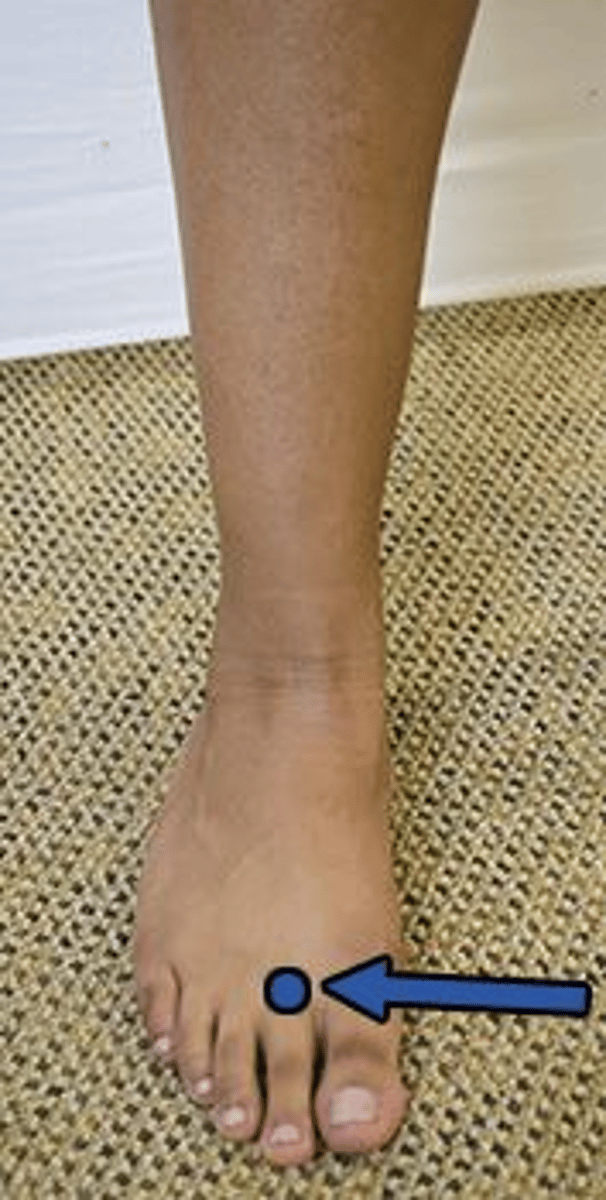
A patient reports low back pain that radiates down one leg below the knee. The patient also reports numbness and tingling in the location shown on the photograph. Which of the following examination findings is MOST likely?
1.Diminished knee reflex
2.Diminished ankle reflex
3.Weakness of the gastrocnemius
4.Weakness of the extensor hallucis longus
2,4
1. A diminished knee reflex is indicative of a herniated disc at the L4 level, which would not be consistent with the symptoms reported by the patient
2. A diminished ankle reflex is indicative of a herniated disc at the S1 level, which would not be consistent with the symptoms reported by the patient
3. A weak gastrocnemius is indicative of a herniated disc at the S1 level, which would not be consistent with the symptoms reported by the patient
4. The patient's symptoms are indicative of a herniated disc at the L5 level, which causes compression of the 5th lumbar nerve root. Sensory deficits extend on the dorsolateral foot as indicated in the photograph. Subsequent motor weakness involves the extensor hallucis longus
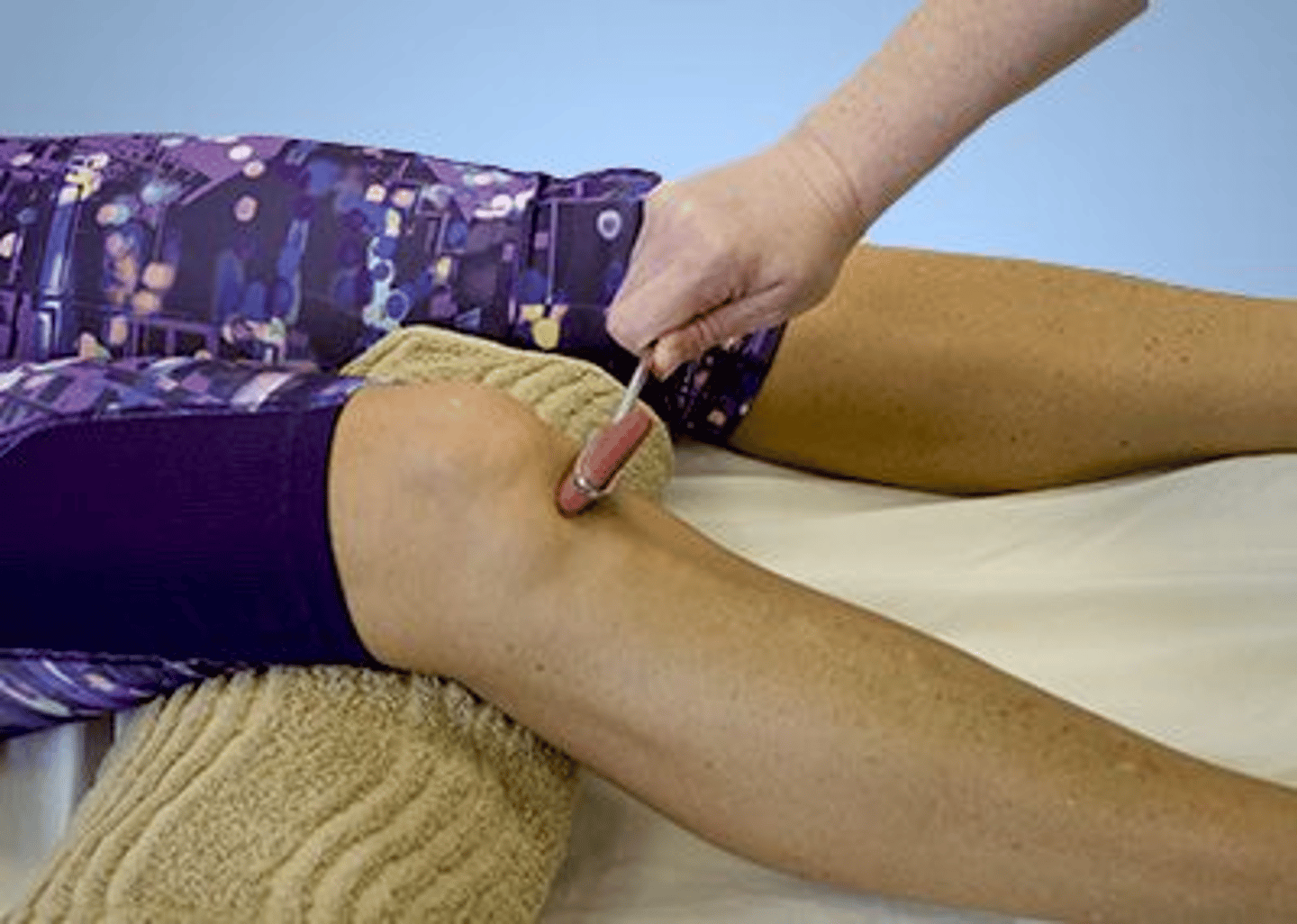
During the test in the photograph, the patient demonstrates hyperreflexia. What is the MOST likely cause of this finding?
1.A spinal cord tumor at L1
2.A herniated nucleus pulposus at L4
3.Femoral nerve impingement
4.A cauda equina lesion
4,1
1. Pressure on the spinal cord at L1 would cause signs of upper motor neuron lesions below this level
2. A weak or absent patellar reflex is expected with nerve root L4 compression
3. Peripheral nerve injuries, such as a femoral nerve impingement, would result in a diminished patellar reflex
4. Peripheral nerve injuries, such as a cauda equina lesion, would result in a diminished patellar reflex
A 41-year-old patient sustained a grade II injury to the right medial collateral ligament of the elbow 3 weeks ago. A systems review reveals normal cardiopulmonary, integumentary, and neuromuscular status. Which of the following is MOST likely the status of the healing tissue?
1.Well organized and gaining in tensile strength
2.Well organized and capable of withstanding high tensile forces
3.Disorganized but able to withstand high tensile forces
4.Disorganized and unable to withstand high tensile forces
3,4
1. Although the repair is gaining in tensile strength, 3 weeks is not enough time for a grade II injury to fully organize.
2. A longer period of time is needed for a well-organized repair in a grade II injury.
3. A disorganized repair is not able to withstand high tensile forces.
4. A grade II ligament injury requires significant repair, and, although the tissue is beginning to organize at 3 weeks, it is not fully organized and is deficient in tensile strength.
A home health physical therapist conducts an initial evaluation of a patient who sustained a tibial plateau fracture. The patient's status is non-weight-bearing, and the patient uses a walker. The patient lives alone, but has a neighbor who helps with meals. With which of the following aspects of the home environment should the therapist be MOST concerned?
1.Depth of the bathtub
2.Steps without a handrail
3.Width of the doorways
4.Height of the countertops
2,2
1. The patient will require a shower seat, so depth of bathtub is not the primary aspect of concern.
2. Ascending and descending stairs with a walker should be performed only when a handrail is available and all of the feet of the walker fit on the stair treads. Instruction without a handrail should be reserved for emergency situations only.
3. The walker can be used sideways through a narrow doorway.
4. Because the neighbor is helping with meals, the height of the countertop is not relevant
A patient reports dizziness and frequent falls. Upon examination, the patient demonstrates constant vertical pendular nystagmus, abnormal smooth pursuit, and abnormal saccadic eye movements. The patient's symptoms are MOST likely caused by which of the following conditions?
1.Vertebrobasilar insufficiency
2.Central vestibular system lesion
3.Peripheral vestibular system lesion
4.Posterior semicircular canalithiasis
2,2
1. Vertebrobasilar insufficiency is associated with visual field cuts, visual dysfunction, drop attacks, and unsteadiness/incoordination.
2. A patient who has a central vestibular system lesion, in particular a cerebellar lesion, may have pure vertical nystagmus that oscillates at equal speeds (pendular nystagmus). In addition, abnormal smooth pursuits and abnormal saccadic eye movements are symptoms associated with a central vestibular lesion.
3. Peripheral vestibular lesions are associated with intermittent nystagmus that will incorporate slow and fast phases (jerk nystagmus) and with normal smooth pursuit and saccades.
4. Peripheral vestibular lesions, including posterior semicircular canalithiasis, are associated with intermittent nystagmus that will incorporate slow and fast phases (jerk nystagmus) and with normal smooth pursuit and saccades.
Which of the following findings BEST describes an injury in the acute stage?
1.Collagen fibers reorient in response to stresses placed on connective tissue.
2.Collagen formation and granulation tissue development occurs at an increased rate.
3.During range of motion testing, the patient experiences pain synchronous with tissue resistance.
4.During range of motion testing, the patient experiences pain with movement and before tissue resistance.
4,4
1. This activity characterizes the chronic stage of healing, which involves tissue maturation and remodeling
2. This activity characterizes the subacute stage of healing
3. This response characterizes the subacute stage of healing
4. Pain on active movement is a hallmark of the acute stage of healing
A physical therapist examines a right-handed patient who demonstrates a rounded upper back and protracted shoulders. The patient may be at INCREASED risk for developing which of the following conditions in the left upper extremity?
1.Thoracic outlet syndrome
2.Carpal tunnel syndrome
3.Paresthesia in an ulnar nerve distribution
4.Lateral epicondylalgia
1,1
1. Anterior scalene or pectoralis minor tightness from this posture can impinge the neurovascular bundle, causing thoracic outlet syndrome
2. Overuse injury of the wrist is unrelated to this postural presentation
3. The ulnar nerve is well protected above the elbow. Injury most often occurs at the elbow or wrist.
4. Overuse injury of the elbow is unrelated to this postural presentation
Which of the following strategies for transfer training is MOST likely to be successful for a patient who has apraxia?
1.Give frequent and detailed verbal commands.
2.Provide the patient with written instructions.
3.Teach one component of the transfer at a time.
4.Have the patient practice transfers in a variety of settings and contexts.
4,3
1. Patients with apraxia will not be able to use verbal cues or commands to make corrections. The physical therapist should use the shortest possible sentences, not detailed or complex commands.
2. Patients with apraxia have a great deal of difficulty following written or verbal instructions for movement.
3. When teaching a new task to a patient with apraxia, the task should be broken down into its component parts. One component is taught at a time, and the patient is physically guided through the task if necessary.
4. Patients with apraxia benefit from repetition of the task using the same approach in the same environment. It is helpful to use as normal an environment as possible.
Which of the following blood pressure changes is an ABNORMAL response to increased exercise intensity and a reason to terminate exercise?
1.Decrease in diastolic blood pressure of 5 mm Hg
2.Increase in diastolic blood pressure of 5 mm Hg
3.Decrease in systolic blood pressure of 20 mm Hg
4.Increase in systolic blood pressure of 20 mm Hg
1,3
1. The normal blood pressure response to increased exercise intensity consists of a progressive increase in systolic blood pressure and no change or a slight decrease in diastolic blood pressure
2. The normal blood pressure response to increased exercise intensity consists of a progressive increase in systolic blood pressure and no change or a slight decrease in diastolic blood pressure. A slight increase in diastolic blood pressure would not be cause for termination of exercise.
3. A drop in systolic blood pressure is considered an abnormal test response. Criteria for terminating exercise include exercise hypotension (drop in systolic blood pressure of 20 mm Hg or more).
4. This is a normal response. A drop in systolic blood pressure is considered an abnormal test response
A home health patient who recently had a three-vessel coronary artery bypass graft describes experiencing bilateral lower extremity swelling, leg pain, and shortness of breath, especially when lying down. The patient MOST likely has which of the following diagnoses?
1.Deep vein thrombosis
2.Myocardial infarction
3.Pulmonary embolism
4.Heart failure
4,4
1. A deep vein thrombosis corresponds to the leg pain and possibly swelling, but symptoms would typically be unilateral.
2. A myocardial infarction corresponds to shortness of breath but typically does not result in acute swelling. A myocardial infarction could result in the development of heart failure, which would result in these symptoms, but this is a secondary result, not a primary result.
3. A pulmonary embolism would result in shortness of breath, usually not changed by position, and typically cardiac arrest.
4. Typical signs of heart failure include dyspnea, paroxysmal nocturnal dyspnea, orthopnea, and peripheral edema.
The person in the photograph is asked to perform a bilateral squat. Based on the rearfoot position, which of the following will MOST likely be observed?
1.Genu varum with tibial medial (internal) rotation
2.Genu varum with tibial lateral (external) rotation
3.Genu valgus with tibial medial (internal) rotation
4.Genu valgus with tibial lateral (external) rotation
3,3
1. The patient in the photograph exhibits pronation of the feet. Pronation is associated with valgus, not varus, stress at the knee, and pronation of the subtalar joint results in or is caused by medial (internal) rotation of the tibia.
2. The patient in the photograph exhibits pronation of the feet. Pronation is associated with valgus deformity of the knee and medial (internal) rotation of the tibia.
3. The patient in the photograph exhibits pronation of the feet. Pronation is associated with medial (internal) rotation of the tibia and resulting genu valgus.
4. The patient in the photograph exhibits pronation of the feet. Pronation is associated with medial (internal), not lateral (external), rotation of the knee along with valgus stress.
A patient's left eye is adducted at rest. During examination of extraocular eye movements, the patient is unable to move the left eye laterally. These findings MOST likely result from a lesion of which of the following nerves?
1.Oculomotor (CN III)
2.Trochlear (CN IV)
3.Trigeminal (CN V)
4.Abducent (CN VI)
4,4
1. With oculomotor nerve (CN III) injury, the affected eye would have ptosis and lateral deviation
2. With a trochlear nerve (CN IV) injury, the person would have elevation of the involved eye during forward gaze and would not have difficulty with abducting the eye.
3. With trigeminal nerve (CN V) injury, the person would have impaired facial sensation, difficulty with jaw opening, and an impaired corneal reflex
4. With a lesion of the abducent nerve (CN VI), the affected eye is adducted at rest and cannot be abducted
A patient positioned in prone has difficulty initiating hip extension with the knee bent. Which of the following muscles will MOST likely need strengthening?
1.Hamstrings
2.Gluteus maximus
3.Lumbar erector spinae
4.Gluteus medius
2,2
1. Hamstrings are primarily knee flexors. They can be secondary hip extensors but would be tested with the knee extended, not flexed.
2. The gluteus maximus is the primary hip extensor muscle tested in this manner
3. Lumbar erector spinae extend the trunk on the legs. They do not attach on the femur and have no impact on hip extension.
4. Gluteus medius weakness would be assessed by testing hip abduction in sidelying position
Which of the following conditions is a CONTRAINDICATION for mechanical traction of the cervical spine?
1.Muscle spasm
2.Rheumatoid arthritis
3.Hypomobility of the spine
4.Decreased upper extremity sensation
4,2
1. Gentle intermittent traction may assist in decreasing muscle spasm and the resultant spinal compressive forces.
2. Joint capsules, ligaments, and bones are fragile in patients with rheumatoid arthritis (RA). A patient with RA is subject to atlantoaxial subluxation or to developing instability next to areas of hypomobility.
3. Longitudinal traction force provides a gliding separation of the facets, general capsular stretch, and opening of the intervertebral foramen. Traction can improve range of motion.
4. Reduction of neurological deficits may result from improved conduction in large-diameter myelinated afferent and efferent nerve fibers. Mechanical traction can release pressure on nerve fibers, thereby increasing nerve conduction.
A physical therapist is examining the posterior aspect of the heels of a patient who has darkly pigmented skin. Which of the following findings would indicate the presence of a Stage 1 pressure injury?
1.An intact area of the skin that is black and leathery
2.An intact area of the skin that is warm and purple
3.A shallow crater with a moist wound bed
4.An intact blister with a boggy feel
4,2
1. This presentation would indicate the presence of eschar. A pressure injury with eschar cannot be staged
2. This presentation fits the National Pressure Ulcer Advisory Panel's definition of a Stage 1 pressure injury. Warmth and color change indicate pressure damage. Damaged skin may look purple rather than red in people with darkly pigmented skin. Intact skin indicates that the pressure injury is not deeper than Stage 1.
3. A shallow crater with a moist wound bed is characteristic of a Stage 2 pressure injury
4. An intact blister with a boggy feel is characteristic of a suspected deep tissue injury
19 y/o Female
Presenting Problem
Left knee pain, started 2 days ago after her knee gave way when landing from a jump while playing volleyball
Ambulates TTWB with B/L crutches
Pain increases to 7/10 with squatting and stairs
Reports left knee stiffness, swelling, and hesitancy to bear weight on LLE due to fear of knee giving way
Medications: ibuprofen 1000 mg/day as needed
College student; required to sit for 90 minutes in class and 24 stairs at dormitory
PT Examination
Diminished left quad contraction w/ noticeable edema at left knee
Left knee AROM 20° to 88° with pain at end-range flexion and extension
Strength
Left hip abductors and external rotators Good (4/5)
Left knee extensors Fair (3/5)
Which of the following conditions is MOST consistent with the patient's presentation?
1.Patellofemoral pain
2.Patellar tendinopathy
3.Anterior cruciate ligament tear
4.Posterior cruciate ligament tear
3,3
1. Patellofemoral pain is a common source of knee pain and may lead to decreased knee range of motion and pain with squatting and stairs. However, patellofemoral pain typically has an insidious onset and does not include a definitive mechanism of injury. The current patient has symptoms that are not consistent with patellofemoral pain.
2. Patellar tendinopathy is associated with pain and tenderness along the patellar tendon. Pain may be reproduced with loading activities, such as squatting and stairs. The current patient has a definitive mechanism of injury, loss of active range of motion, and edema which are not consistent with patellar tendinopathy.
3. The anterior cruciate ligament tear is a common noncontact injury in female athletes and presents with quadriceps weakness and gait deviations. The current patient has a definitive mechanism of injury, loss of active range of motion, and edema which are consistent with an anterior cruciate ligament tear.
4. A posterior cruciate ligament tear commonly occurs with a traumatic incidence that forces the tibia posterior in relation to the femur. The current patient had a non contact injury which is not consistent with a posterior cruciate ligament tear.
Which of the following assessments is MOST likely to have a positive result?
1.Clarke Test
2.Godfrey Test
3.Lachman Test
4.Thomas Test
3,3
1. The Clarke Test, also known as the Patellar Grind Test, assess for patellofemoral pain. The patient has a definitive mechanism of injury and reports of catching, which are not consistent with patellofemoral pain, and therefore, the Clarke Test is not the most appropriate response.
2. The Godfrey Test assesses the integrity of the posterior cruciate ligament. The patient has a mechanism of injury and presentation consistent with an anterior cruciate ligament tear, not posterior cruciate ligament tear. Therefore, the patient is unlikely to have a positive result on the Godfrey Test.
3. The Lachman Test assesses the integrity of the anterior cruciate ligament. The current patient has a mechanism of injury and presentation consistent with an anterior cruciate ligament tear. Therefore, the patient is likely to have a positive result on the Lachman Test.
4. The Thomas Test is used to assess for iliopsoas or rectus femoris muscle length. The patient has a definitive mechanism of injury and reports a catching sensation, which are not consistent with a muscle length problem. Therefore, the Thomas Test is not the most appropriate response.
Which of the following interventions is MOST appropriate on the FIRST visit?
1.Prone hip extension
2.Standing resisted side stepping
3.Wall squats with an exercise ball
4.Gait training with axillary crutches
4,4
1. Prone hip extension is an open chain exercise that targets the hip extensor muscles, including the gluteus maximus and hamstrings. The patient does not have noted weakness with hip extension; therefore, initial interventions should target the quadriceps or hip abductor muscles.
2. Standing resisted side stepping is a dynamic exercise that strengthens the lower extremities, including the hip abductors. However, standing resisted stepping is likely to be painful and not appropriate as an initial intervention.
3. Wall squats are closed-chain exercises that strengthen the lower extremities, including the quadriceps. However, a wall squat is likely to initially be painful for the patient. Therefore, wall squats should not be part of the initial interventions.
4. The patient has symptoms consistent with an anterior cruciate ligament tear. Additionally, the patient demonstrated toe-touch weight bearing and hesitancy to bear weight on the left lower extremity due to fear of the knee giving way. During the early treatment phase, it is important to promote weight bearing as tolerated. Performing ambulation training with crutches is a first step to improve weight bearing activities.