PSY388 Lecture 2: Emotional Disorders 1: Depressive Disorders; Bipolar Disorders
 Call Kai
 Learn
Learn Practice Test
 Spaced Repetition
 Match
Match Flashcards
 Knowt Play
1/24

There's no tags or description
Looks like no tags are added yet.
Name | Mastery | Learn | Test | Matching | Spaced | Call with Kai | Chat |
|---|
No analytics yet
Send a link to your students to track their progress
25 Terms
Features of being unwell
Difference/Distance/Disturbance
Functional Impact
Distress
Duration
What is an Emotional Disorder?
Strong intense, frequent emotions
Interpret as “bad”
Avoid or control
(All 3 interact with each other)
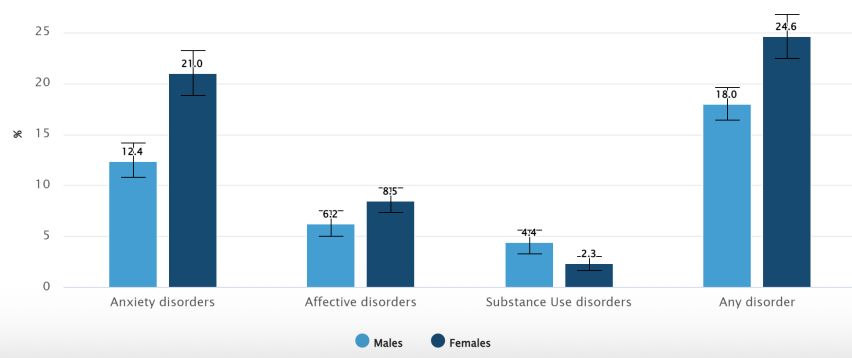
12-month mental disorders, by disorder group and sex
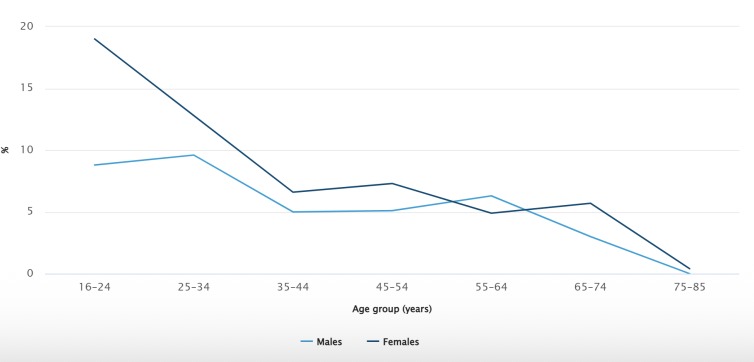
Any 12-month Affective disorder, by age and sex 1
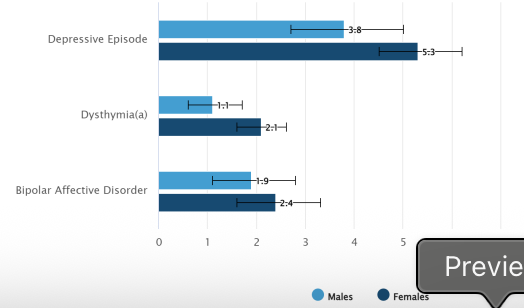
12-month Affective disorders, by type of disorder and sex 2
Depressive Disorders
Major Depressive Disorder (MDD)
Persistent Depressive Disorder (PDD)
Disruptive Mood Dysregulation Dx
Premenstrual Dysphoric Disorder
Substance-Induced, Other Med Condition, Other Specified, Unspecified
Unipolar Depression: Major Depressive Episodes alone
Major Depressive Disorder (MDD)
1. Depressed mood
2. Anhedonia
3. Appetite/weight disturbance
4. Sleep disturbance
5. Psychomotor disturbance
6. Fatigue/energy loss
7. Worthlessness/guilt
8. Impaired concentration
9. Suicidal ideation
Persistent Depressive Disorder (PDD)
1. Depressed mood
2. Appetite disturbance
3. Sleep disturbance
4. Low energy/fatigue
5. Low self-esteem
6. Impaired concentration
7. Hopelessness
Royal Aus and NZ Collefe of Psychiatrist clinical practice guidelines for mood disorders: Goal
The main objective of treatment is the complete remission of depression with full functional recovery and the development of resilience.
Royal Aus and NZ Collefe of Psychiatrist clinical practice guidelines for mood disorders: Step 0
Taper and cease any agents that can potentially lower mood
Institute sleep hygiene
Implement appropriate lifestyle changes e.g. smoking cessation, adopt regular exercise and achieve a healthy diet
Address substance misuse if relevant
Royal Aus and NZ Collefe of Psychiatrist clinical practice guidelines for mood disorders: Step 1
GENERIC PSYCHOSOCIAL INTERVENTIONS:
Psychoeducation (family, friends, caregivers)
Low intensity interventions (e.g. internet based education)
Formal support groups, community groups
Employment, housing
FORMULATION-BASED INTERVENTION
PSYCHOLOGICAL THERAPY
Cognitive Behavioural Therapy (CBВТ)
Interpersonal therapy
Acceptance and Commitment therapy
Mindfulness-Based Cognitive Therapy
PHARMACOTHERAPY
First line: SSRIs. NaSSAs, NDRIs. SNRIs, NARIs, melatonin agonist, serotonin modulator
Second line: Tricyclic antidepressants, MAOls
Royal Aus and NZ Collefe of Psychiatrist clinical practice guidelines for mood disorders: Step 2
Combine pharmacotherapy and psychological therapy
Increase dose of antidepressant medication
Augment antidepressant medication with lithium and / or antipsychotic medication
Combine antidepressants
rTMS (if available)
Royal Aus and NZ Collefe of Psychiatrist clinical practice guidelines for mood disorders: Step 3
ECT
Downward Spiral of Depression
Trigger/Stressor - a difficult event, stress, or life circumstance + negative thoughts begin
Negative thinking - worry, self-criticism, and pessimism increase + mood drops, hope decreases
Emotional decline - feelings of sadness, emptiness, irritability or guilt intensity + energy and motivation decrease
Behavioural withdrawal - avoiding activities, withdrawing from people, procrastination + reinforces isolation and disconnection
Loss of positive reinforcement - fewer rewarding experiences, more negative thoughts + deepens hopelessness and despair
Deepening depression - overwhelming sadness, helplessness, worthlessness, possible thoughts of death + feels like there is no way out
Leads to hopelessness, isolation, suffering, impaired functioning
CBT for MDD
Behavioural Components
Mood monitoring
Pleasant event scheduling (joy)
Mastery development
THEN start to shift unhelpful thinking styles
Cognitive Components
Identifying and challenging (reappraising) automatic negative thoughts (“ANTS”) about the self, world, and future
Other treatment for MDD
Anti-inflammatory diet/changes in diet
Yoga/physical activity
Some evidence, can be useful but still growing in research
Bipolar & Related Disorders
Bipolar Disorder I
Bipolar Disorder II
Cyclothymic Disorder
Substance-Induced, Other Med Condition, Other Specified, Unspecified
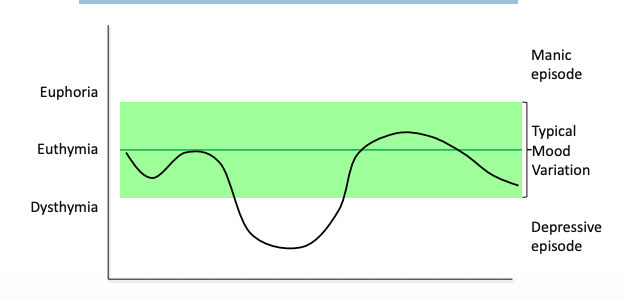
Bipolar Disorders: Types with mood variations
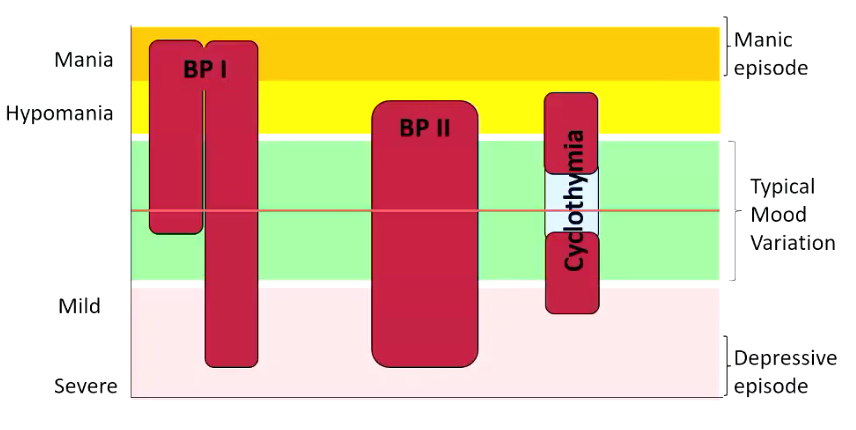
BP I VS BP II: Manic & Hypomanic Episodes
1. Inflated self-esteem/grandiosity
2. Decreased need for sleep
3. More talkative/pressured speech
4. Flight of ideas/racing thoughts
5. Distractibility
6. Increased goal-directed activity
7. Engagement in high-risk activities
Bipolar Disorder I
Must have manic ep
MDE not necessary
15x higher rate of death by suicide than gen pop
80% of attempts and deaths occur during MDE
~75% have co-occurring anx dx
>50% have co-occurring SUD
Bipolar Disorder II
Must never reach manic
Must have MDE
2x higher rate of death by suicide than MDD
~75% have co-occurring anx dx
~37% have co-occurring SUD
Cyclothymia
Never meet manic or hypomanic ep or MDE
Less severe, more chronic
~1 in 3 → BP I or II
Bipolar Treatments
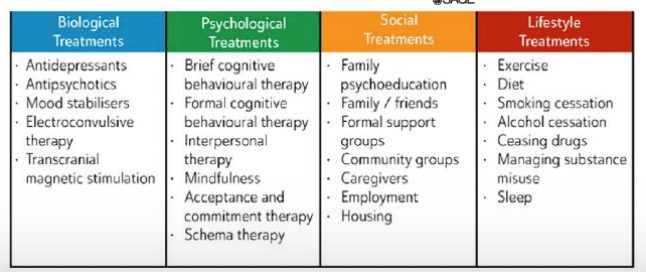
CBT for Bipolar
Mood monitoring:
Examples:
over the next week, monitor the fluctuations in your daily mood by filling in the mood graph below
what am I like when I am mildly depressed?
what am I like when I am moderately depressed?
what am I like when my wood is mildly elevated?
what am I like when my mood is moderately elevated?