Quizzmiss Day 2- Cell Strucure and Transport, organells, and photosynthesis
 Call Kai
 Learn
Learn Practice Test
 Spaced Repetition
 Match
Match Flashcards
 Knowt Play
1/62

Earn XP
Description and Tags
Mrs. Smith Honors Biology
Name | Mastery | Learn | Test | Matching | Spaced | Call with Kai | Chat |
|---|
No analytics yet
Send a link to your students to track their progress
63 Terms
the - is the basic unit of life
cell
-are made of RNA and are the site of protein assembly
ribosomes
the - is a membrane bound organelle containing the gentic information
nucleus
the - - contains smooth and rough and is the site where lipid membance parts are made
endoplasmic reticulum
- are cells that contain a true nucleus
eurkaryote
the - - modifies, packages and ships products from the ER
golgi apparatus
— are cells (organisms) that do not contain a nucleus
prokaryote
specialized membrane bound structures in the eukaryotic cell that carry out specific functions are called
organelle
a sac like organelle used for storage in plants can best be describes as a
vacuole
the - is a specialized fluid medium outside the nucleus where the organelles are found
cytoplasm
the - is an organelle found in plants and is the site of photosynthesis
chloroplast
the — is a membrane structure that surrounds the nucleus
nuclear envelope
the eukaryotic cell maintains shape with a supporting structure called the
cytoskeleton
— is the threadlike genetic material wound around protiens
chromatin
— are found in animal cells and aid in organizing cell divison
centriole
— are the condensed form of chromatin (X-like structures)
chromosome
the — is responsible for converting chemical energy found in foods to a usable source (ATP)
mitchondria
the — is a small condensed portion of the nucleus containing RNA for the assembly of ribosomes
nucleolus
the work of many scientists went into the formulation of the - - which states that all livng things are made of cells that came from living organisms.
cell theory
the — are located in the chloroplasts annd are the site of the light reaction in photosynthesis
thylakoid
— are organisms that must consume orgainic molecules in order to produce energy
heterotroph
— is an enzyme that creates ATP in the inner thylakoid membrane
ATP synthase
the light dependent reaction begins in photosystem
PII
— is the process where plants harvest the sun’s energy and place it into a glucose molecule
photosynthesis
— is the electorn carrier that is used in PSI to transfer energy to the Calvin Cycle
NADPH
— is the primary pigment that plants use to absorb light energy
chlorophyll
the — is where the Calvin Cycle takes place
stroma
— is a molecule produced in both autotrophs and heterotrophs that contains stored potential energy
ATP
an — is an organism that produces its own energy
autotroph
the — connects PSII to PSI
ETC
a — is a molecule that absorbs light at a particular frequency while reflecting all others
pigment
Chlorophyll-a absorbs - and - light best while reflecting predominantly - light
red, violet, green
in PSII - is split to form -, - and 2e-
water, H+, o2
the - - reaction consists of PSI and PSII
light dependent
the - - is where CO2 is fixed into the growing carbohydrate
calvin cycle
a - is an organism that produces its energy using energy from the sun to fix CO2 into usable sugars
photoautotroph
a - is a stack of thylakoids
granum
one of most important functions of cell membrane
regulate movement of molecules into and out of the celll
passive transport
no energy required because movement occurs down the concentration gradient
diffusion
Movement of molecules from an area of greater concentration to an area of lesser concentration
osmosis
Diffusion (movement) of water across a
selectively permeable membrane
facilitated diffusion
involves the use of protein channels located in the cell membrane
If a cell is placed in freshwater, which way will the water move
INTO THE CELL!! Which will cause the cell to swell and burst
blood is what with cells
isotonic
isotonic
the concentration of solutes is the same inside and outside of the cell
If you drink seawater, what will happen to the water
It will be pulled OUT OF your cells
the concentration of solutes is the greater outside of the cell
Hypertonic
active transport
requires energy because material is moved across the membrane going against the concentration gradient
why do we need active transport
Transport (or pump) macromolecules across the cell membrane
Endocytosis
taking materials into a cell (forms a vacuole within the cytoplasm
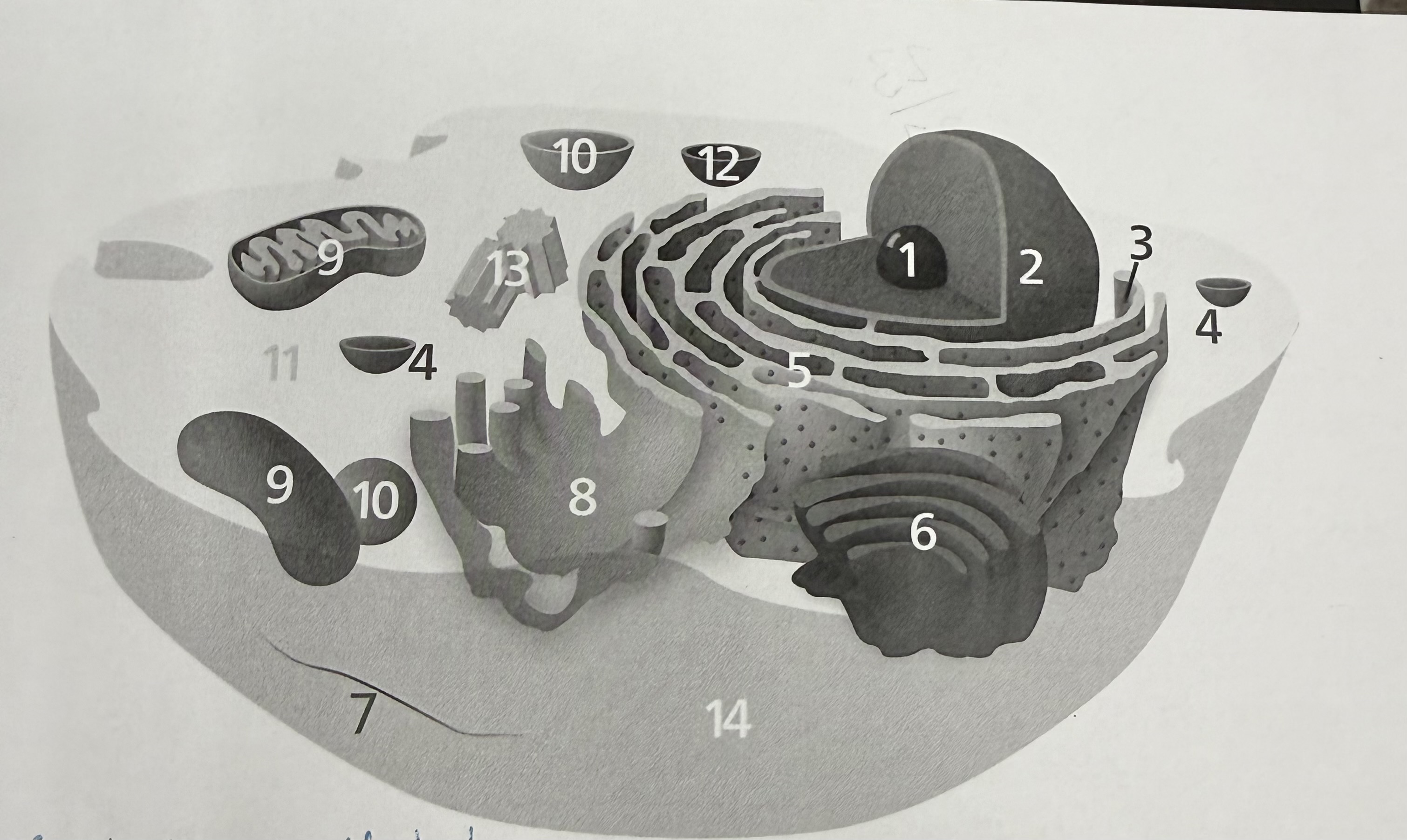
what is 1
nucleolus
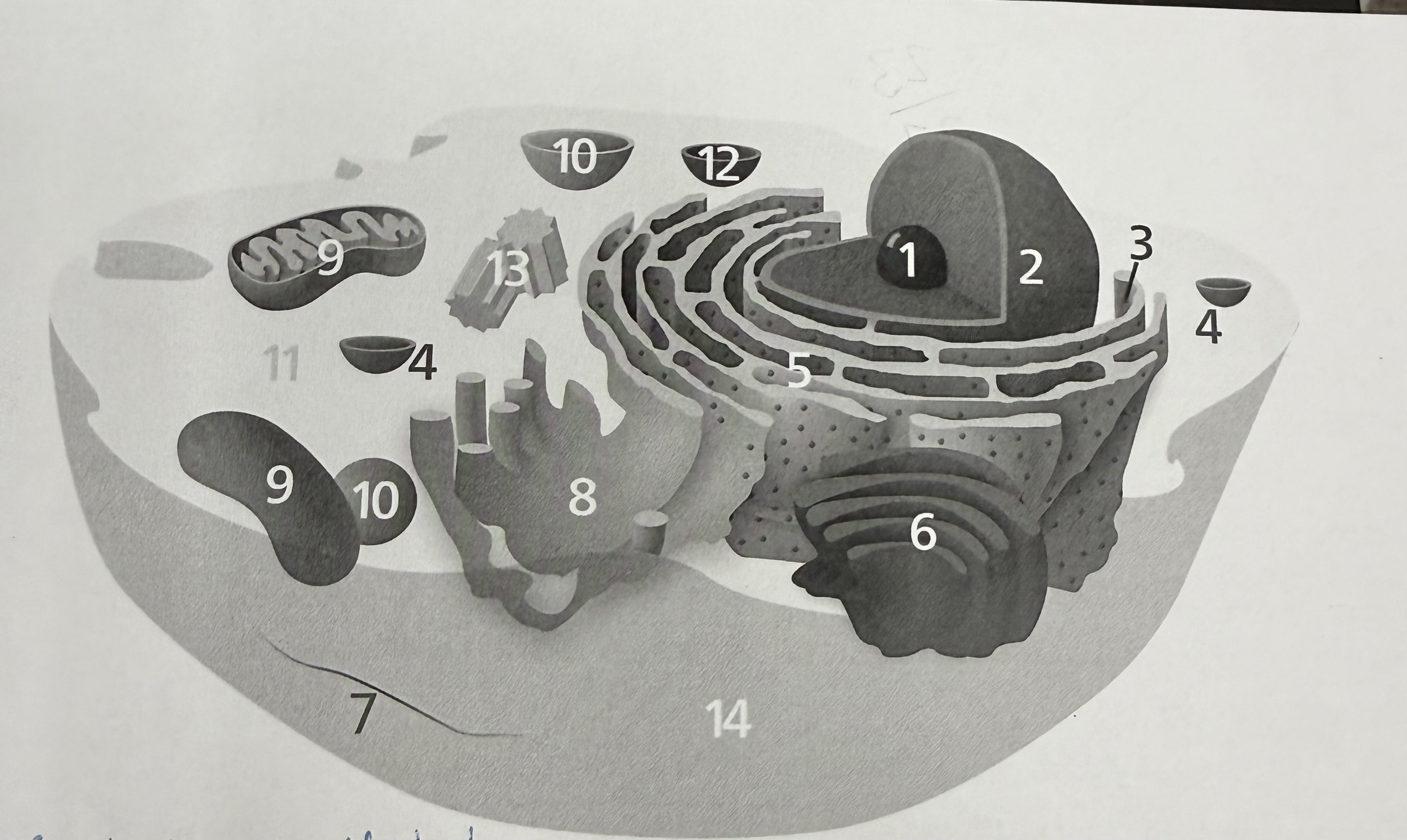
what is 2
nucleus
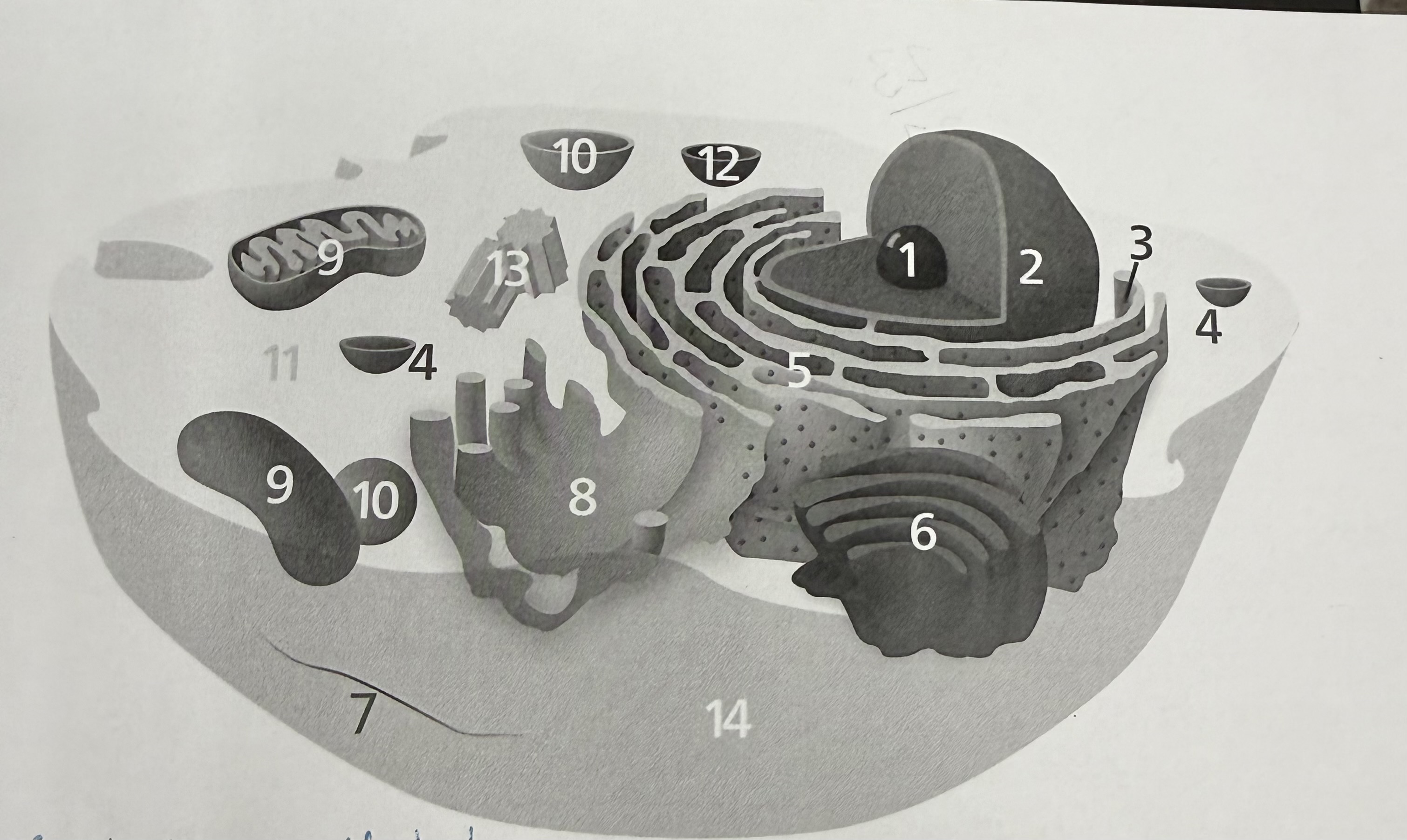
what is 3 / the dots
ribosome
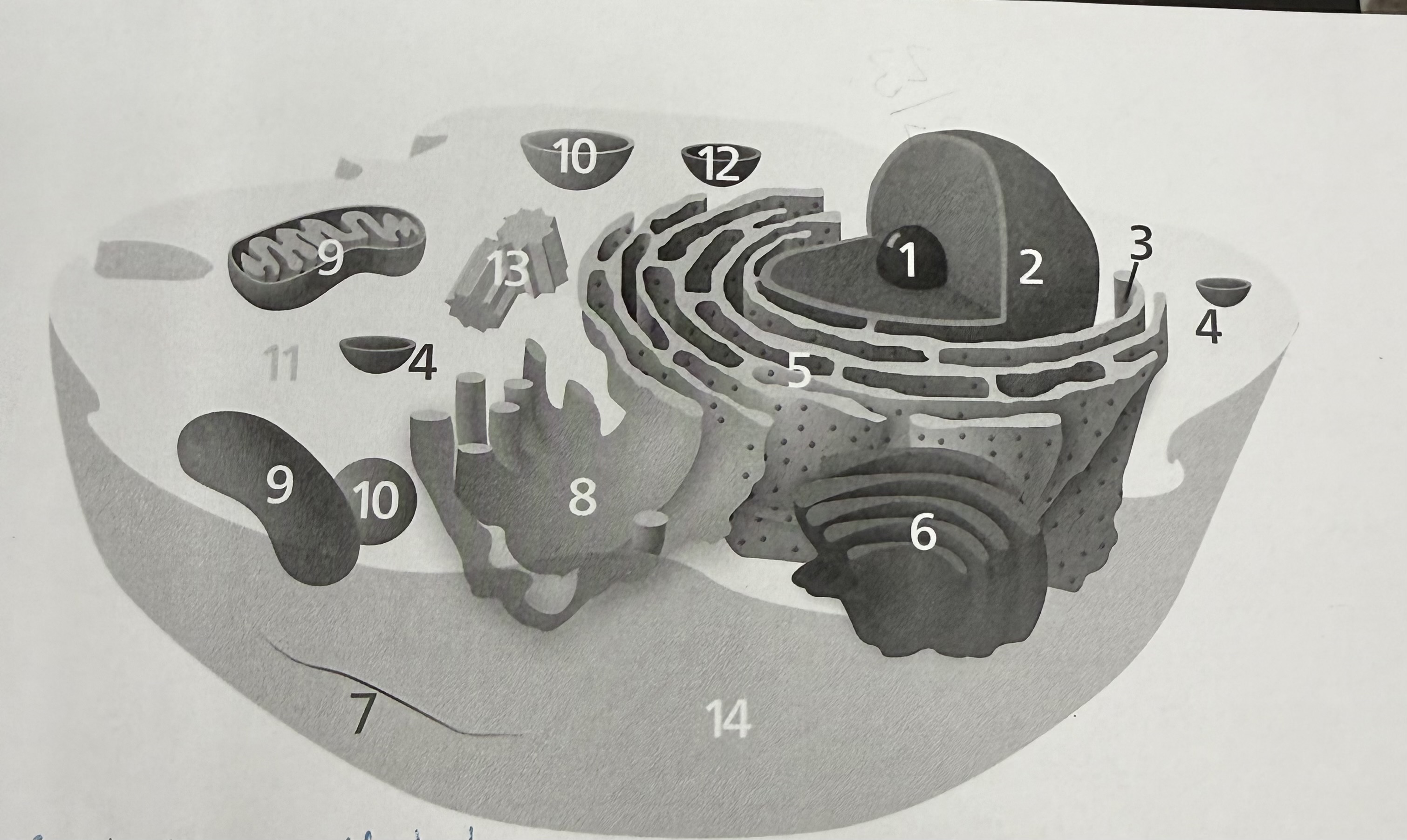
what is 4/ helps transport substances
vesical
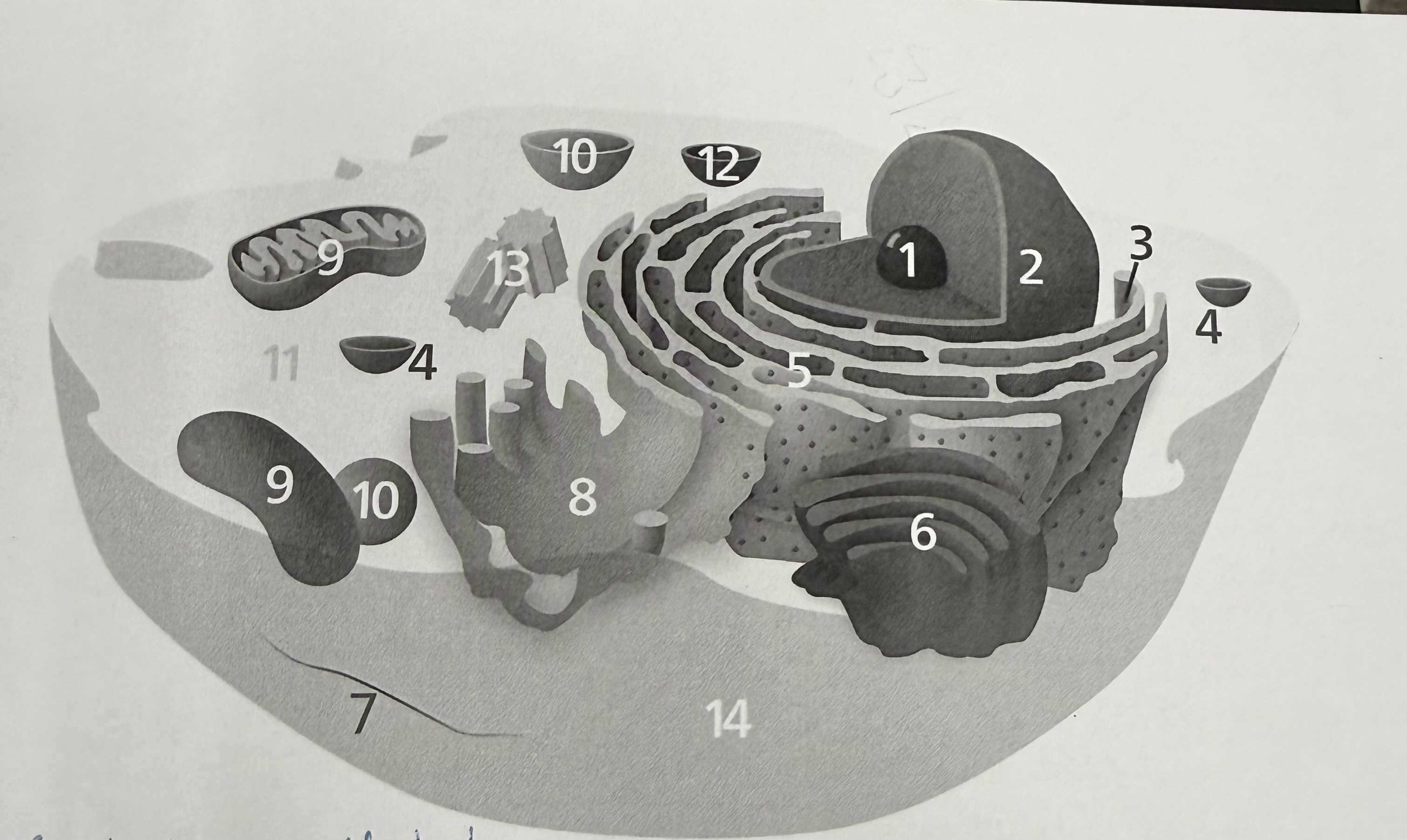
what is 5
rough er
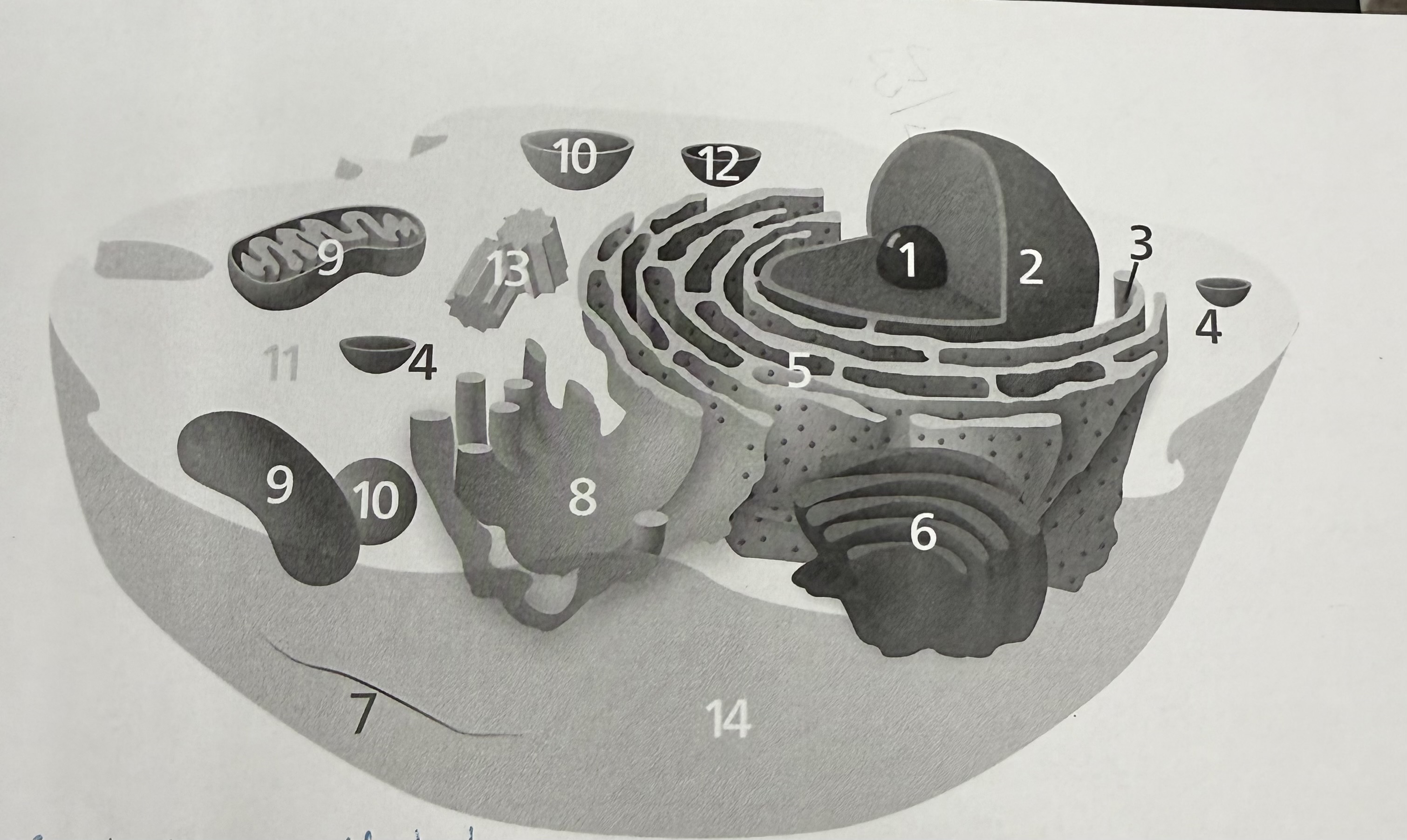
what is 6
golgi apparatus
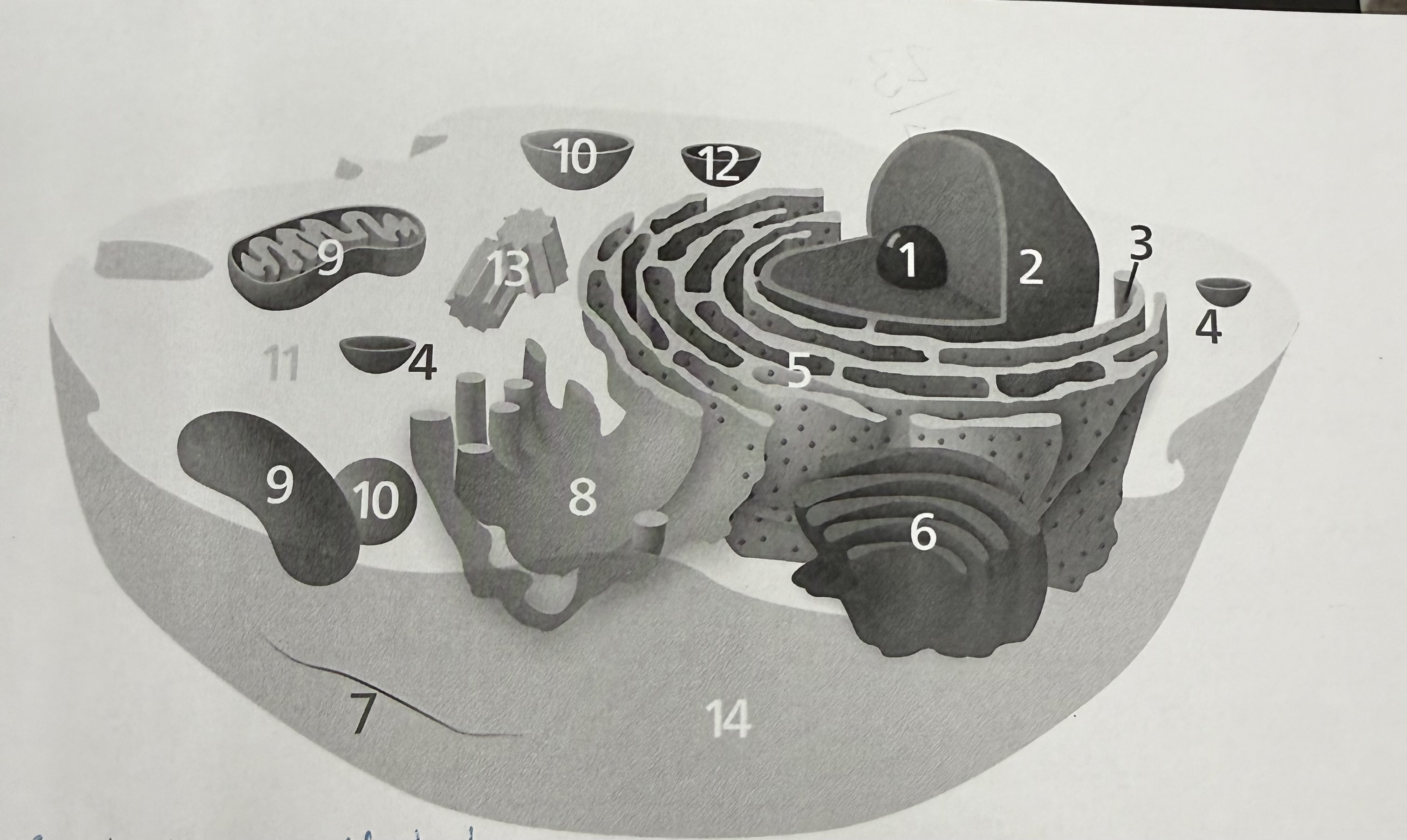
what is 7 / structural element
cytoskeleton
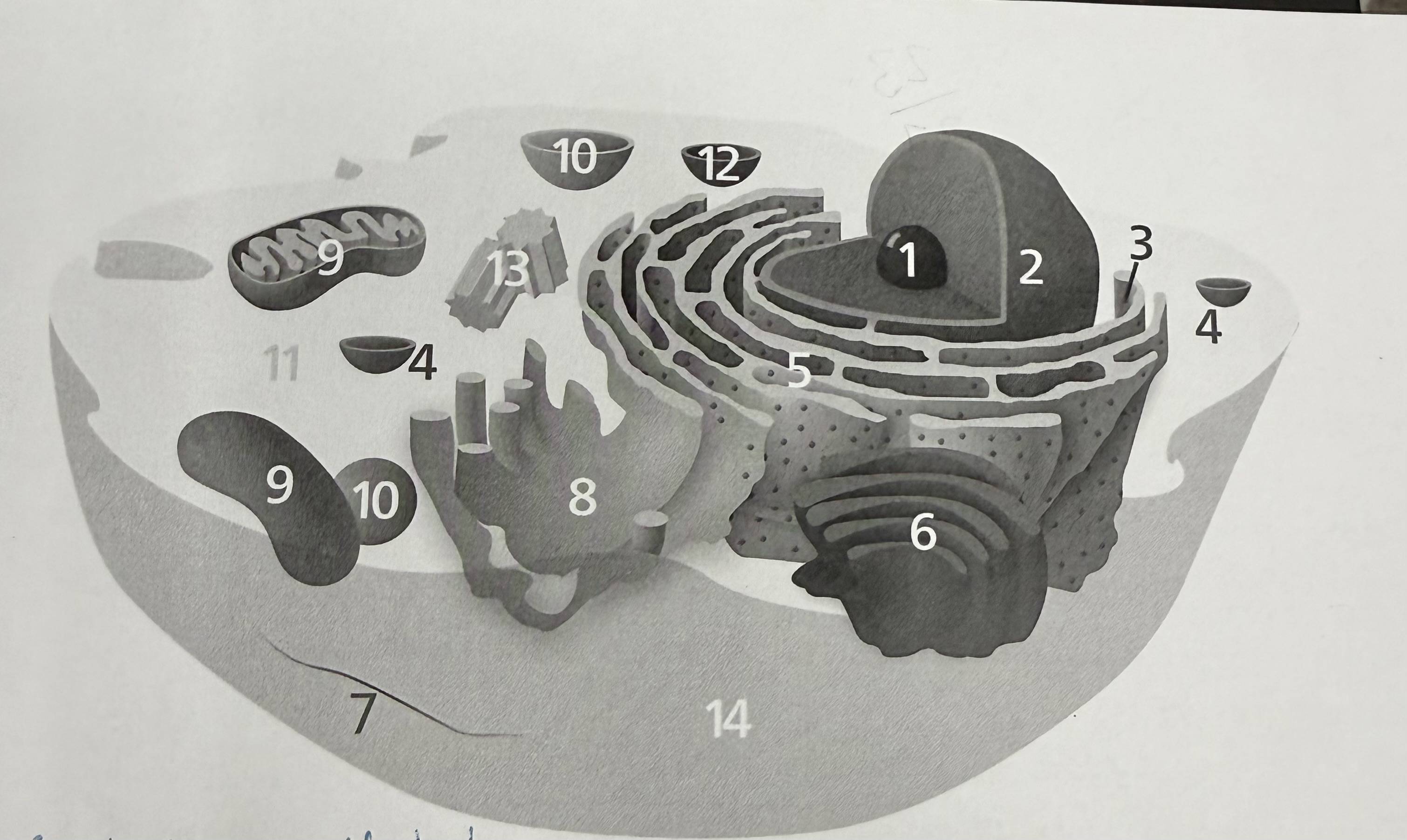
what is 8
smooth er
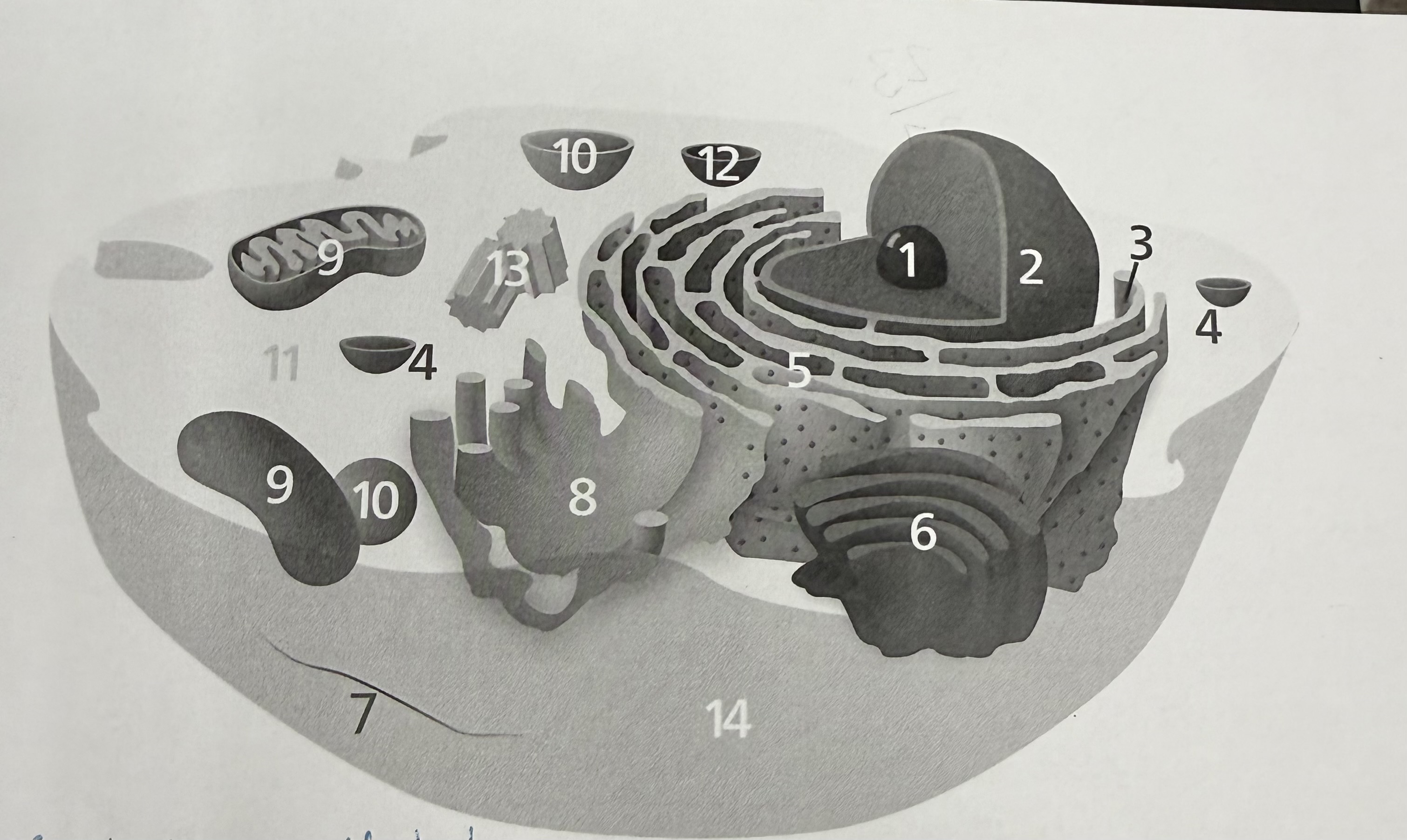
what is 9
mitochondria
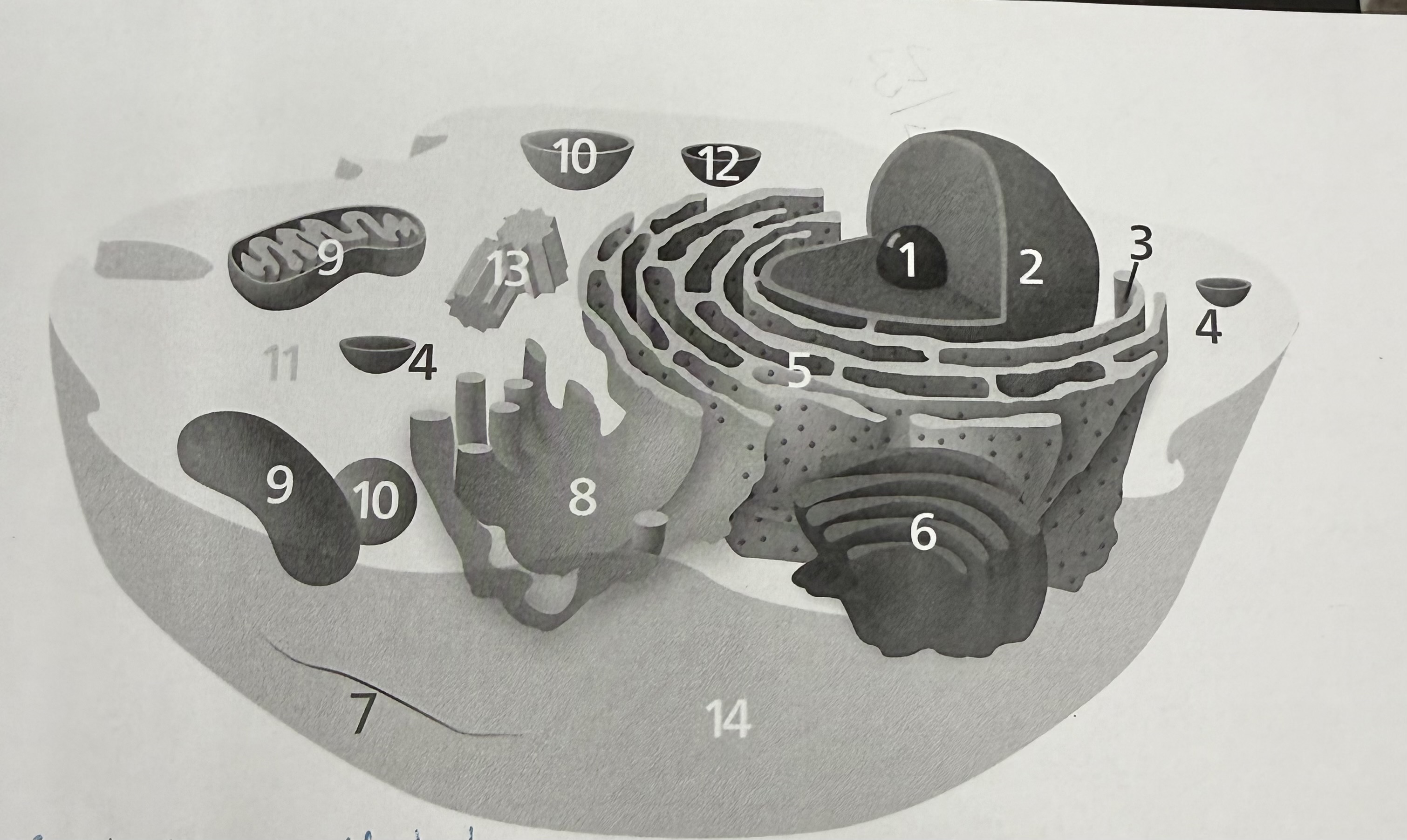
what is 11
cytoplasm
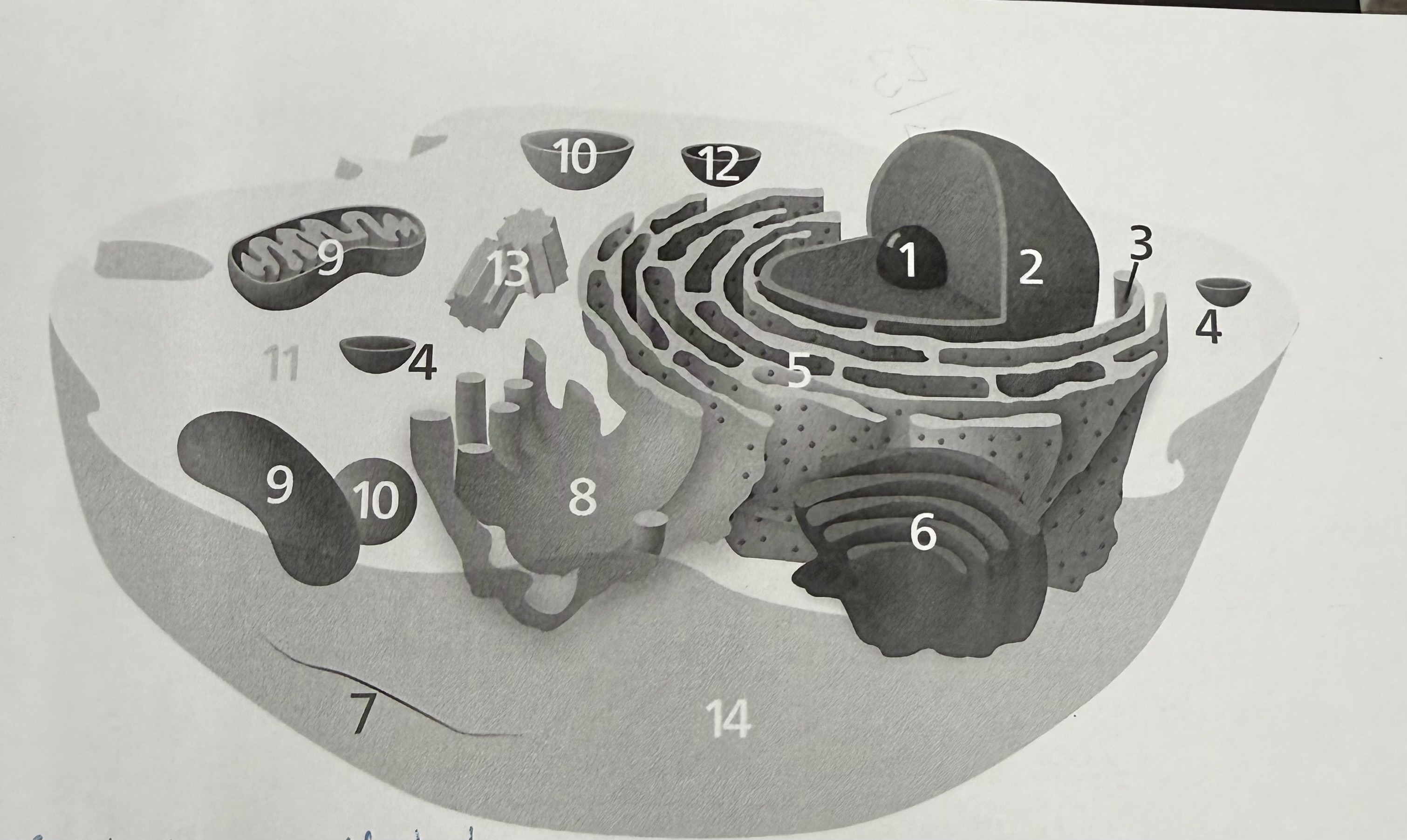
what is 13
centriole
detoxification organelle
smooth er