Care Lecture 5: Acid-Base Balance
 Call Kai
 Learn
Learn Practice Test
 Spaced Repetition
 Match
Match Flashcards
 Knowt Play
1/139

There's no tags or description
Looks like no tags are added yet.
Name | Mastery | Learn | Test | Matching | Spaced | Call with Kai | Chat |
|---|
No analytics yet
Send a link to your students to track their progress
140 Terms
-greater the H+ = more acidic = lower pH
-lower the H+ = more alkaline = higher pH
what is the relationship between the H+ concentration and pH?
acidosis
pH below 7.35
alkalosis
pH above 7.45
between 7.35 and 7.45
what is the body's ideal pH level?
too much CO2 (carbonic acid)
acidosis is attributed to too much of what?
exhaled through the lungs
where is carbonic acid exhaled through?
too much HCO3 (bicarb)
alkalosis is attributed to too much of what?
excreted out of the kidneys
where are metabolic acids excreted out of?
CNS:
-headache, sleepy, confusion, LOC, coma
resp. system:
SOB, coughing
heart:
-arrhythmia, ↑ HR
muscular system:
-seizures, weakness
digestive system:
-n/v/d
what are some basic symptoms of acidosis on the CNS, respiratory system, heart, muscular system, and digestive system?
CNS:
-confusion, stupor, coma, lightheaded
PNS:
-hand tremor, numbness/tingling in face, hands, or feet
muscular system:
-twitching, prolonged spasms
digestive systems:
-n/v
**alkalosis SLOWS everything down
what are some basic symptoms of alkalosis on the CNS, PNS, muscular system, and digestive system?
-acidosis = cerebral vasodilation
-alkalosis = cerebral vasoconstriction
what effect does acidosis and alkalosis have on the CNS?
pH
the acidity or alkalinity of a solution that depends on its hydrogen ion (H+) concentration
PaCO2
partial pressure of arterial carbon dioxide regulated by the lungs
35-45
what is the normal range of PaCO2?
-increased = acidosis
**CO2 increased --> holding onto too much CO2
if PaCO2 is increased, what does this mean?
-decreased = alkalosis
**CO2 decreased --> blowing too much CO2 off
if PaCO2 is decreased, what does this mean?
-2 to +2 (less than -2 = acidosis; more than 2 = alkalosis)
what is the normal range for base excess?
HCO3 (bicarb)
a base regulated by the kidneys
22-26
what is the normal range of HCO3?
PaO2
partial pressure of arterial oxygen
80-100 mmHg
what is the normal range of PaO2?
respiratory imbalances
type of imbalances that result from changes in carbonic acid
concentration
metabolic imbalances
type of imbalances that result from changes in HCO3-
acidosis occurs w/:
-↑ carbonic acid (respiratory acidosis)
-↓ HCO3− (metabolic acidosis)
what are some characteristics of acidosis regarding increase/decrease of carbonic acid and HCO3?
alkalosis occurs w/:
-↓ carbonic acid (respiratory alkalosis)
-↑ HCO3− (metabolic alkalosis)
what are some characteristics of alkalosis regarding increase/decrease of carbonic acid and HCO3?
respiratory acidosis
type of acid-base imbalance that occurs when there is carbonic acid excess in the blood
-hypoventilation
-hypercapnia
-COPD
-pneumonia, ARDS
-Guillan-barre syndrome
-sleep apnea
-CNS depressants
-asthma attack
what are some potential causes of respiratory acidosis?
↑ CO2 retention from hypoventilation
explain the pathophysiology of respiratory acidosis
↑ HCO3 retention by the kidney
what compensation method is used for respiratory acidosis?
set RR to faster rate = to breathe off the extra CO2
for people on a ventilator who are in respiratory acidosis, what can be done?
-SOB
-↓ BP
-rapid, shallow RR
-hyperkalemia (dysrhythmias)
-drowsy, dizzy
-warm, flushed skin
-hyperreflexia
-disoriented
what are some clinical manifestations of respiratory acidosis?
-hyperventilation (↑ RR)
-CPAP or BiPAP
-meds to reverse any airway obstruction
what are some possible treatments used for respiratory acidosis?
respiratory alkalosis
type of acid-base imbalance that occurs when there is a carbonic acid deficit in the blood
-hyperventilation
-panic attack
-mechanical ventilation
-liver failure
-septicemia
-stroke
what are some potential causes of respiratory alkalosis?
hypoxemia from acute pulmonary disorders
what is the primary cause of respiratory alkalosis?
↑ CO2 excretion from hyperventilation
explain the pathophysiology of respiratory alkalosis
↑ HCO3 excretion by the kidney
what compensation method is used for respiratory alkalosis?
-hyperventilation
-↑ HR
-↓ BP
-hypokalemia
-numbness/tingling of extremities
-↑ anxiety
-seizures
-muscle cramping
what are some clinical manifestations of respiratory alkalosis?
-hypoventilation (paper bag)
-anxiolytics
-ventilator support
what are some possible treatments used for respiratory alkalosis?
metabolic alkalosis
type of acid-base imbalance that occurs due to base bicarbonate excess (gain of HCO3) or a loss of acid
-prolonged vomiting
-excess gastric suction
-diuretics
-hypokalemia
-steroid use
-TPN infusion
-antacid use/overuse
what are some potential causes of metabolic alkalosis?
loss of strong acid or gain of base
explain the pathophysiology of metabolic alkalosis
↑ CO2 retention in the lungs
**respiratory rate slows to ↑ CO2 level
what compensation method is used for metabolic alkalosis?
-restlessness
-dysrhythmias
-compensatory hypoventilation
-↓ LOC
-dizzy
-n/v/d
-tremors/tingling
-hypokalemia
what are some clinical manifestations of metabolic alkalosis?
-saline infusion
-potassium replacement
-stop medication that caused imbalance
what are some possible treatments used for metabolic alkalosis?
-dysrhythmias as a result of K+ ↓
-weakness
-muscle cramping
-hyperactive reflexes
-tetany
-convulsions
-confusion
what are some WARNING signs of metabolic alkalosis?
metabolic acidosis
type of acid-base imbalance that occurs due to base bicarbonate loss or gain of an acid
-DKA
-lactic acidosis
-starvation
-severe diarrhea
-impaired kidney function/renal failure
-shock
-excess salicylic acid
what are some potential causes of metabolic acidosis?
inability to excrete acid or loss of base
explain the pathophysiology of metabolic acidosis
↑ CO2 excretion by lungs
**faster, shallow breaths (kussmaul)
what compensation method is used for metabolic acidosis?
-headache
-↓ BP
-hyperkalemia
-muscle twitching
-warm, flushed skin (vasodilation)
-changes in LOC
-kussmaul respirations
what are some clinical manifestations of metabolic acidosis?
-lethargy
-anorexia
-deep, rapid respirations (Kussmaul)
-nausea
-diarrhea
-abdominal discomfort (severe acidosis)
-dangerous dysrhythmias
what are some WARNING signs of metabolic acidosis?
-give HCO3
-insulin if you have DKA
-fluids
what are some possible treatments used for metabolic acidosis?
-metabolic acidosis: DKA, HHS (too much acid)
-metabolic alkalosis: vomiting
-respiratory acidosis: hypoventilation
-respiratory alkalosis: hyperventilation
what are the most common disease processes associated with metabolic acidosis & alkalosis, and respiratory acidosis & alkalosis?
opioid overdose = respiratory acidosis --> respiratory depression/CO2 is retained
which acid-base imbalance would opioid overdose be associated with and why?
panic attack = respiratory alkalosis --> ↑ RR/CO2 is blown off
which acid-base imbalance would a panic attack be associated with and why?
diarrhea = metabolic acidosis --> excessive loss of HCO3
which acid-base imbalance would diarrhea be associated with and why?
renal failure = metabolic acidosis --> kidneys don't excrete H+ ions well
which acid-base imbalance would renal failure be associated with and why?
repeated vomiting = metabolic alkalosis --> loss of gastric acid
which acid-base imbalance would repeated vomiting be associated with and why?
obesity = respiratory acidosis --> obesity leads to hypoventilation & retained CO2
which acid-base imbalance would obesity be associated with and why?
COPD = respiratory acidosis --> air trapping & hypercapnia (high CO2)
which acid-base imbalance would COPD be associated with and why?
gastric suctioning = metabolic alkalosis --> loss of gastric acid
which acid-base imbalance would gastric suctioning be associated with and why?
DKA = metabolic acidosis --> ketones being biproduct of fat breakdown
which acid-base imbalance would diabetic ketoacidosis be associated with and why?
GBS = respiratory acidosis --> neuromuscular deficit can lead to hypoventilation & retained CO2
which acid-base imbalance would Guillain-barre syndrome be associated with and why?
obstructive sleep apnea = respiratory acidosis --> obstruction of airway leads to retained CO2
which acid-base imbalance would obstructive sleep apnea be associated with and why?
pulmonary emboli = respiratory alkalosis --> ↑ RR leads to ↓ CO2
which acid-base imbalance would pulmonary emboli be associated with and why?
TBI involving resp center = respiratory acidosis --> RR is ↓, CO2 retained
which acid-base imbalance would a traumatic brain injury involved the respiratory center be associated with and why?
fever = respiratory alkalosis = ↑ RR leads to ↓ CO2
which acid-base imbalance would fever be associated with and why?
septic shock = metabolic acidosis --> poor perfusion secondary to hypovolemia leads to buildup of lactic acidosis
which acid-base imbalance would septic shock be associated with and why?
aggressive MV = respiratory alkalosis --> settings too aggressive, lead to blowing off too much CO2
**fix by turning down RR
which acid-base imbalance would aggressive mechanical ventilation be associated with and why?
antacid/PPI use = metabolic alkalosis --> excess HCO3 as acid is neutralized
which acid-base imbalance would antacid/proton pump inhibitor use be associated with and why?
severe asthma = respiratory acidosis --> cannot breathe effectively so CO2 is retained
which acid-base imbalance would severe asthma be associated with and why?
pain = respiratory alkalosis --> ↑ RR and blowing off CO2
which acid-base imbalance would pain be associated with and why?
high altitude = respiratory alkalosis --> leads to ↑ RR and blowing off CO2
which acid-base imbalance would high altitude be associated with and why?
kussmaul respirations = respiratory alkalosis --> compensatory in response to metabolic acidosis
which acid-base imbalance would kussmaul respirations be associated with and why?
excessive aspirin ingestion = metabolic acidosis & respiratory alkalosis
**ASA is salicylic ACID so excessive use leads to metabolic acidosis, and in salicylate intoxication, brain center stimulates hyperventilation as compensatory measure)
which acid-base imbalance would excessive aspiration ingestion be associated with and why?
respiratory acidosis can be caused by hypoventilation, but treated with hyperventilation
what is the relationship between hypoventilation, hyperventilation, and respiratory acidosis?
respiratory alkalosis can be caused by hyperventilation, but treated with hypoventilation (paper bag)
what is the relationship between hypoventilation, hyperventilation, and respiratory alkalosis?
-respiratory = opposite
-metabolic = equal
what does ROME stand for regarding ABGs and acid-base balance?
alkalosis = ↑ pH; ↓ PaCO2
**OPPOSITE
what is the relationship between pH and PaCO2 in respiratory alkalosis? (hint: ROME)
acidosis = ↓ pH; ↑ PaCO2
**OPPOSITE
what is the relationship between pH and PaCO2 in respiratory acidosis? (hint: ROME)
alkalosis = ↑ pH; ↑ HCO3 −
**EQUAL
what is the relationship between pH and HCO3 in metabolic alkalosis? (hint: ROME)
acidosis = ↓ pH; ↓ HCO3−
**EQUAL
what is the relationship between pH and HCO3 in metabolic acidosis? (hint: ROME)
1. chemical buffers
2. respiratory compensation
3. renal compensation
what are some examples of compensation mechanisms seen on ABGs?
chemical buffers
type of compensation mechanism that is "on the scene in seconds" and is already present in tissue; will handle minor changes in the acid-base balance
retention or elimination of CO2 within minutes
what happens during respiratory compensation?
mild to moderate acid-base shifts
what type of acid-base shifts can respiratory compensation handle?
regulate HCO3 to combat hydrogen losses & gains
what is the purpose of renal compensation?
starts in hours, but more permanent
**requires up to 5 days to complete
how long does renal compensation take?
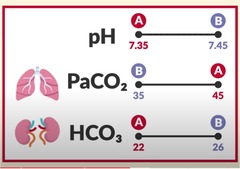
1. classify pH (normal = 7.35-7.45)
2. assess PaCO2 (normal = 35-45)
3. assess HCO3 (normal = 22-26)
4. determine if compensation present
5. if pH is normal, use the closer # to determines alkaline vs. acidic
6. determine if oxygenation is a problem
what are the steps to determining an arterial blood gas reading?
see picture
draw the graphic that can be used to help solve ABGs
respiratory alkalosis uncompensated (7.60)
interpret the following ABG:
-pH: 7.60
-PaCO2: 30
-PaO2: 60
-HCO3: 22
metabolic alkalosis uncompensated (7.58)
interpret the following ABG:
-pH: 7.58
-PaCO2: 35
-PaO2: 75
-HCO3: 50
metabolic acidosis with respiratory compensation (7.28)
interpret the following ABG:
-pH: 7.28
-PaCO2: 28
-PaO2: 70
-HCO3: 18
respiratory acidosis (7.30)
interpret the following ABG:
-pH: 7.30
-PaCO2: 48
-HCO3: 24
respiratory acidosis with compensation (7.08)
interpret the following ABG:
-pH: 7.08
-PaCO2: 80
-HCO3: 27
-PaO2: 46
-SaO2: 80
metabolic alkalosis with compensation (7.49)
interpret the following ABG:
-pH: 7.49
-PaCO2: 52
-HCO3: 28
-PaO2: 70
-SaO2: 92
metabolic acidosis with compensation (7.25)
interpret the following ABG:
-pH: 7.25
-PaCO2: 24
-HCO3: 10
-PaO2: 99
-SaO2: 95
respiratory acidosis uncompensated (7.25)
interpret the following ABG:
-pH 7.25
-PaCO2 55
-HCO3 25
respiratory alkalosis uncompensated (7.57)
interpret the following ABG:
-pH 7.57
-PaCO2 25
-HCO3 22