benzene and aromatic compounds
 Call Kai
 Learn
Learn Practice Test
 Spaced Repetition
 Match
Match Flashcards
 Knowt Play
1/4

There's no tags or description
Looks like no tags are added yet.
Name | Mastery | Learn | Test | Matching | Spaced | Call with Kai | Chat |
|---|
No analytics yet
Send a link to your students to track their progress
5 Terms
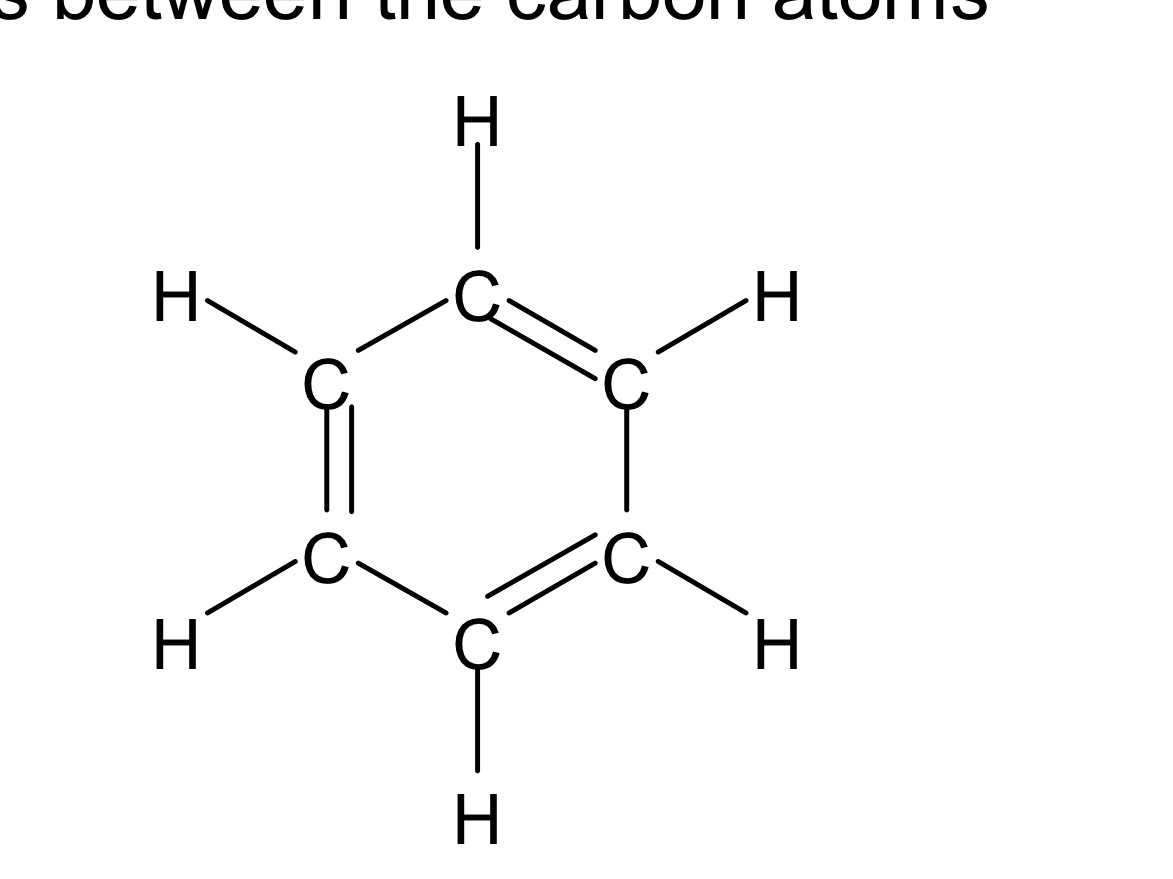
Compare the kekule model with the delocalised model (what type of molecule is the delocalised model? What is the bonding angle?)
Kekule- 6 membered ring of carbon atoms joined by alternate single and double bonds
Benzene - planar,120, cyclic, hexagonal hydrocarbon C6H6.
Each carbon uses 3 of its available 4 electrons in bonding to two other carbon atoms and one hydrogen atom.
Each carbon atom has one electron in a p orbital at right angles to the plane of the bonded carbon and hydrogen atoms
Adjacent p orbital electrons overlap sideways, in both directions, above and below the plane of the carbon atoms- forming a ring of electron density
The overlapping of the p orbitals creates a system of pi bonds which spread over all six of the carbon atoms in the ring structure- which are said to be delocalised
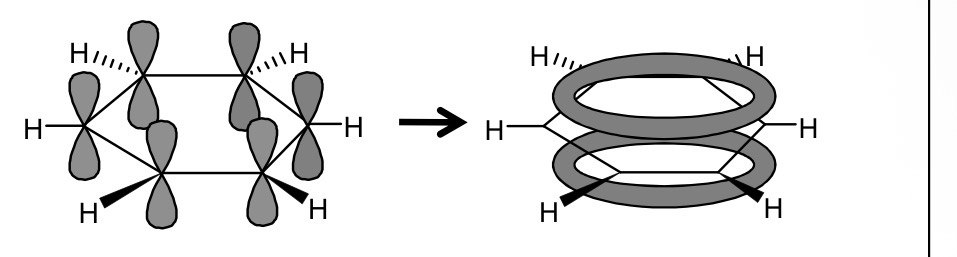
Draw the delocalised structure (show the p orbitals)
Evidence for the delocalised model rather than kekule model
The enthalpy change for hydrogenation is less exothermic than expected when comparing to the enthalpy change for hydrogenation for kekules structure
The bond length was suggested to be different between double C bonds and single C bonds, but in reality the carbon bond lengths are all the same
Kekules model would’ve been expected to react with bromine readily because of the C double bonds, but benzene in reality does not undergo electrophilic addition reactions or decolourise bromine under normal conditions
What is the substituent group name for benzene and when does this happen
Phenyl
When benzene is attached to an alkyl chain with a functional group or to an alkyl chain with 7 or more carbon atoms