Clinical Correlations & Surface Anatomy
 Call Kai
 Learn
Learn Practice Test
 Spaced Repetition
 Match
Match Flashcards
 Knowt Play
1/34

There's no tags or description
Looks like no tags are added yet.
Name | Mastery | Learn | Test | Matching | Spaced | Call with Kai | Chat |
|---|
No analytics yet
Send a link to your students to track their progress
35 Terms
Why is the clavicle the most commonly fractured bone?
Because it acts as the only bony connection between the upper limb and the axial skeleton, transmitting forces from the limb to the trunk.
Observe and label
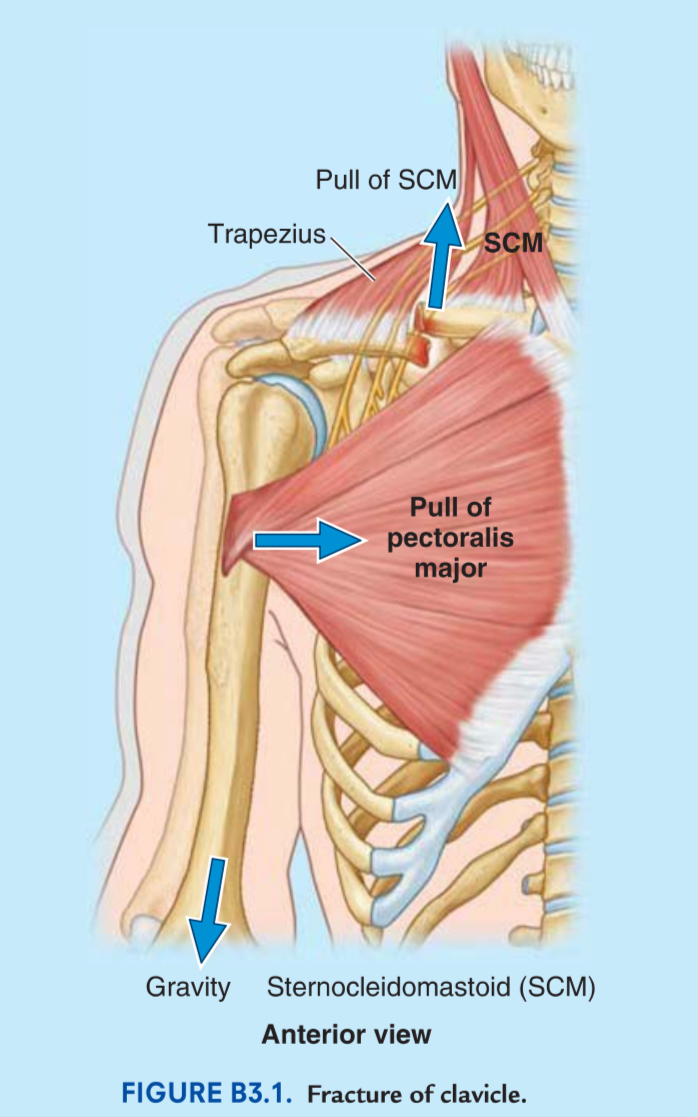
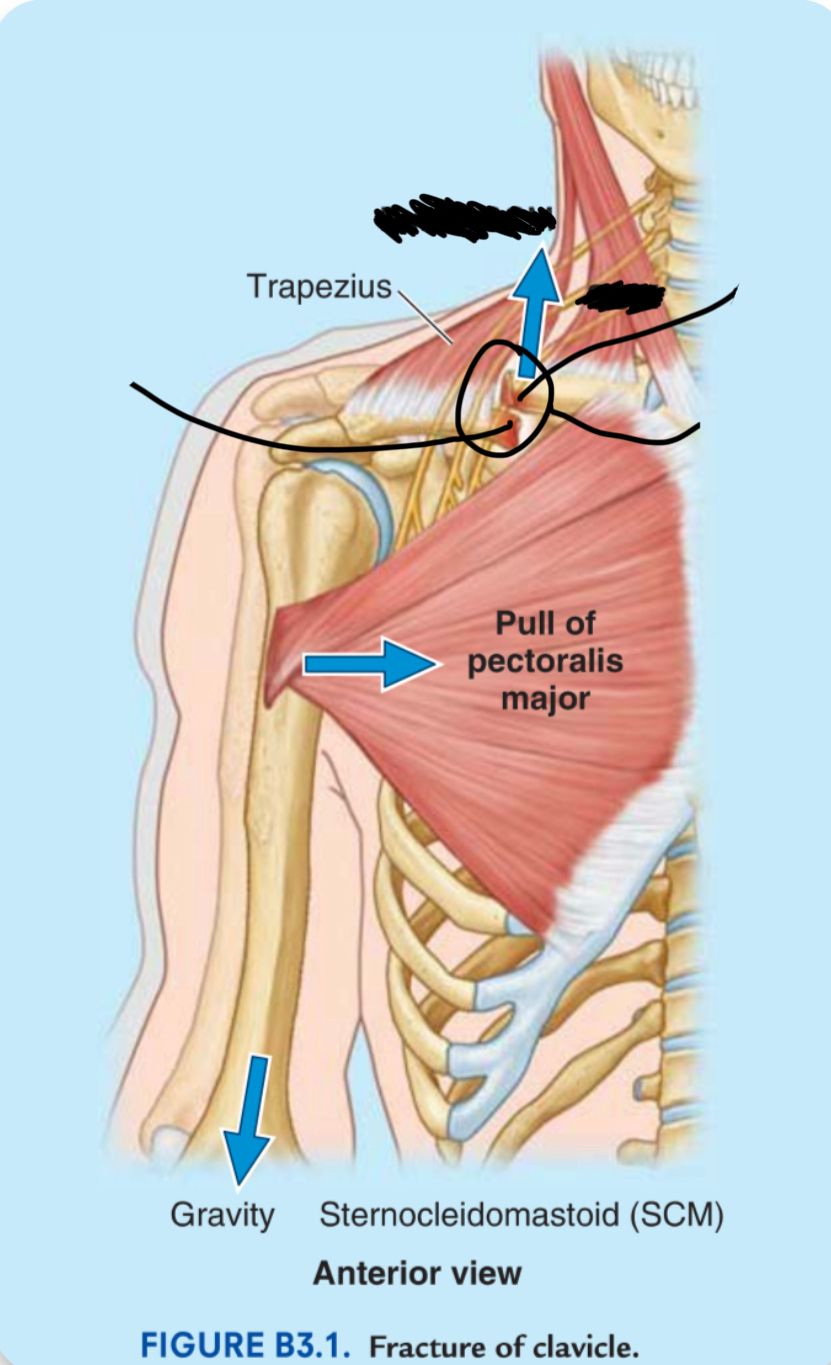
Where do clavicle fractures most commonly occur?
At the junction of the medial two-thirds and lateral one-third.
Why does the medial fragment elevate after a clavicle fracture?
Because it is pulled superiorly by the sternocleidomastoid muscle.
Why does the lateral fragment drop after a clavicle fracture?
Because of the weight of the upper limb and the pull of gravity.
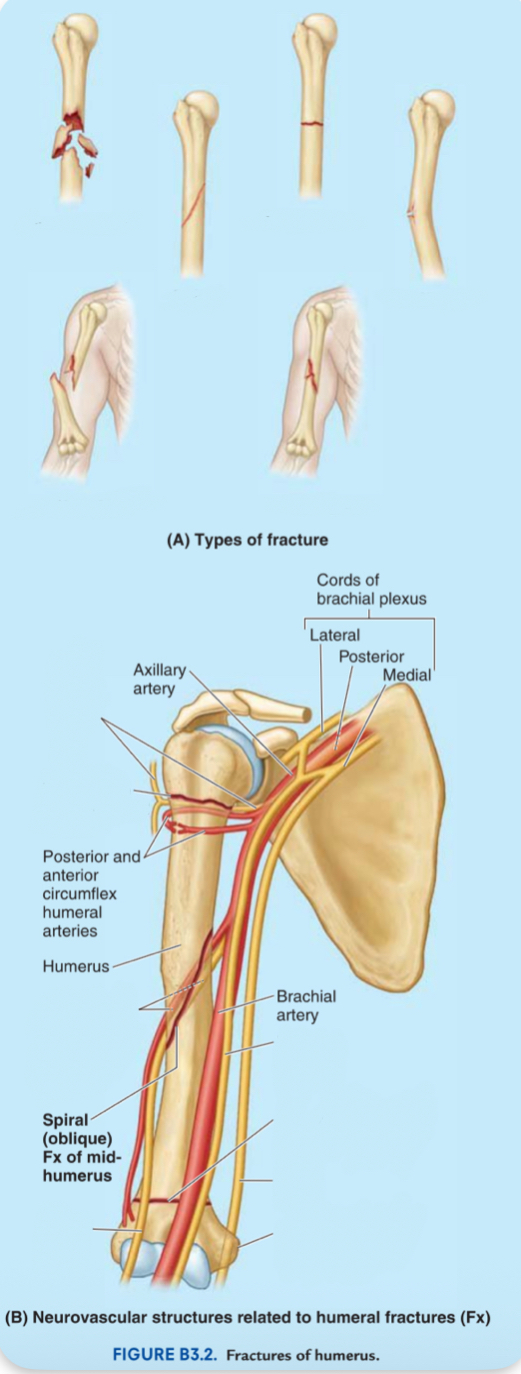
Match each fracture site with the nerve at risk:
Surgical neck
Radial groove
Supracondylar
Medial epicondyle
Fracture | Nerve |
Surgical neck | Axillary |
Radial groove | Radial |
Supracondylar | Median |
Medial epicondyle | Ulnar |
Observe and label
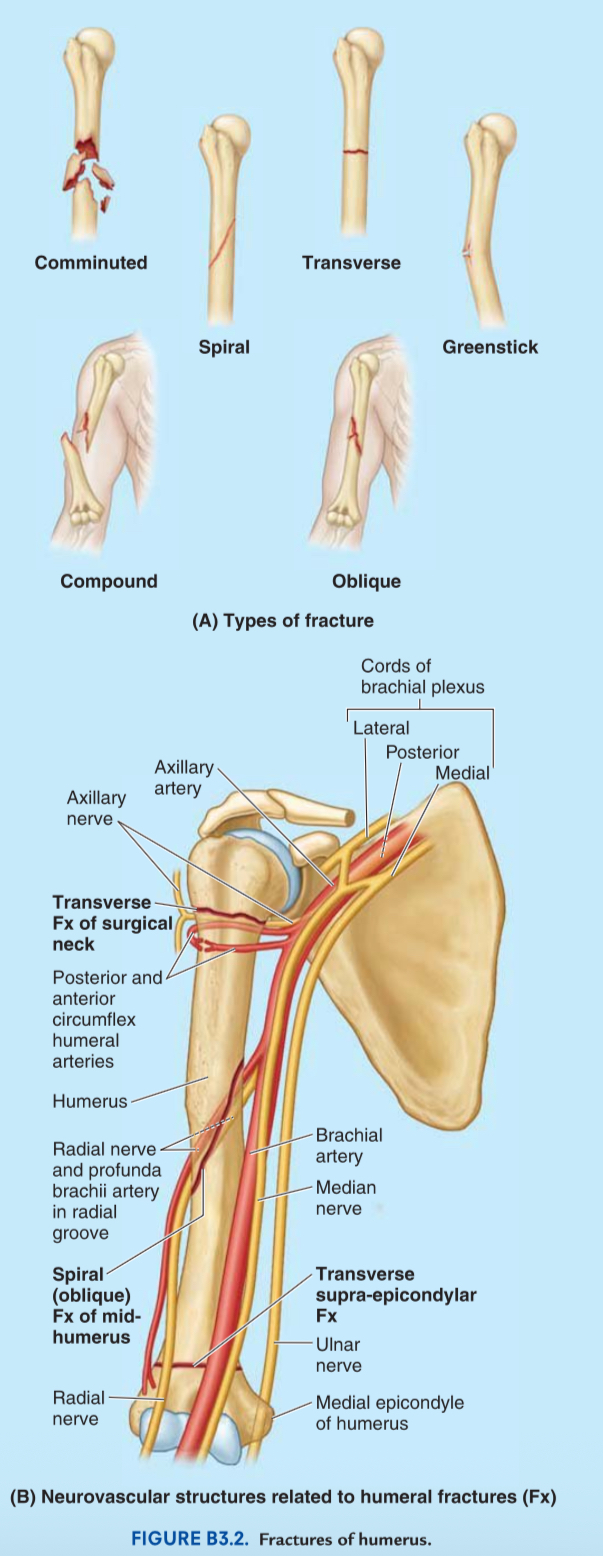
Which fracture commonly injures the axillary nerve?
A fracture of the surgical neck of the humerus.
Which fracture commonly injures the radial nerve?
A fracture involving the radial groove.
Which fracture commonly injures the median nerve?
A supracondylar fracture.
Which fracture commonly injures the ulnar nerve?
A fracture of the medial epicondyle.
What is a Colles fracture?
A fracture of the distal radius, usually following a fall onto an outstretched hand.
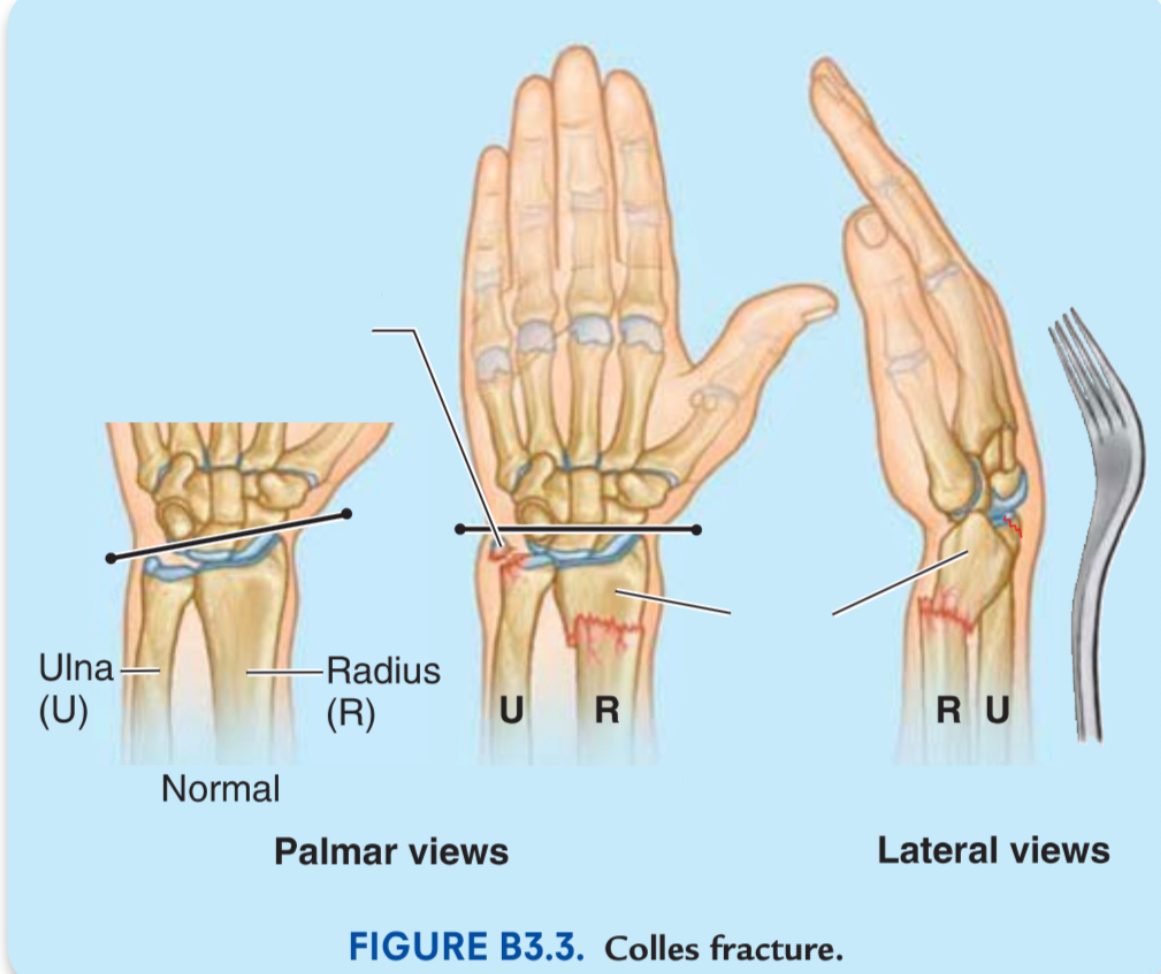
Observe and label
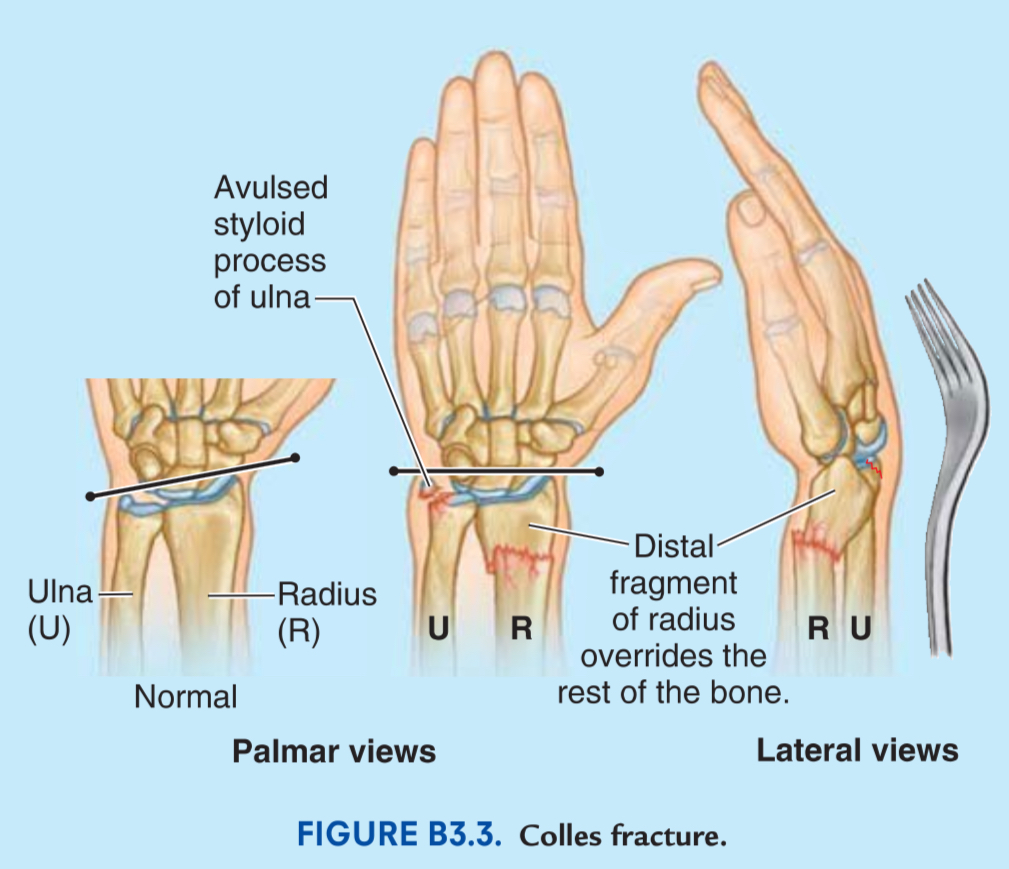
What deformity is characteristic of a Colles fracture?
A dinner fork (silver fork) deformity.
Which additional injury commonly accompanies a Colles fracture?
An avulsion fracture of the ulnar styloid process.
Why is the radial styloid position important?
Normally it lies distal to the ulnar styloid.
Loss of this relationship suggests a Colles fracture.
Which carpal bone is most commonly fractured?
The scaphoid.
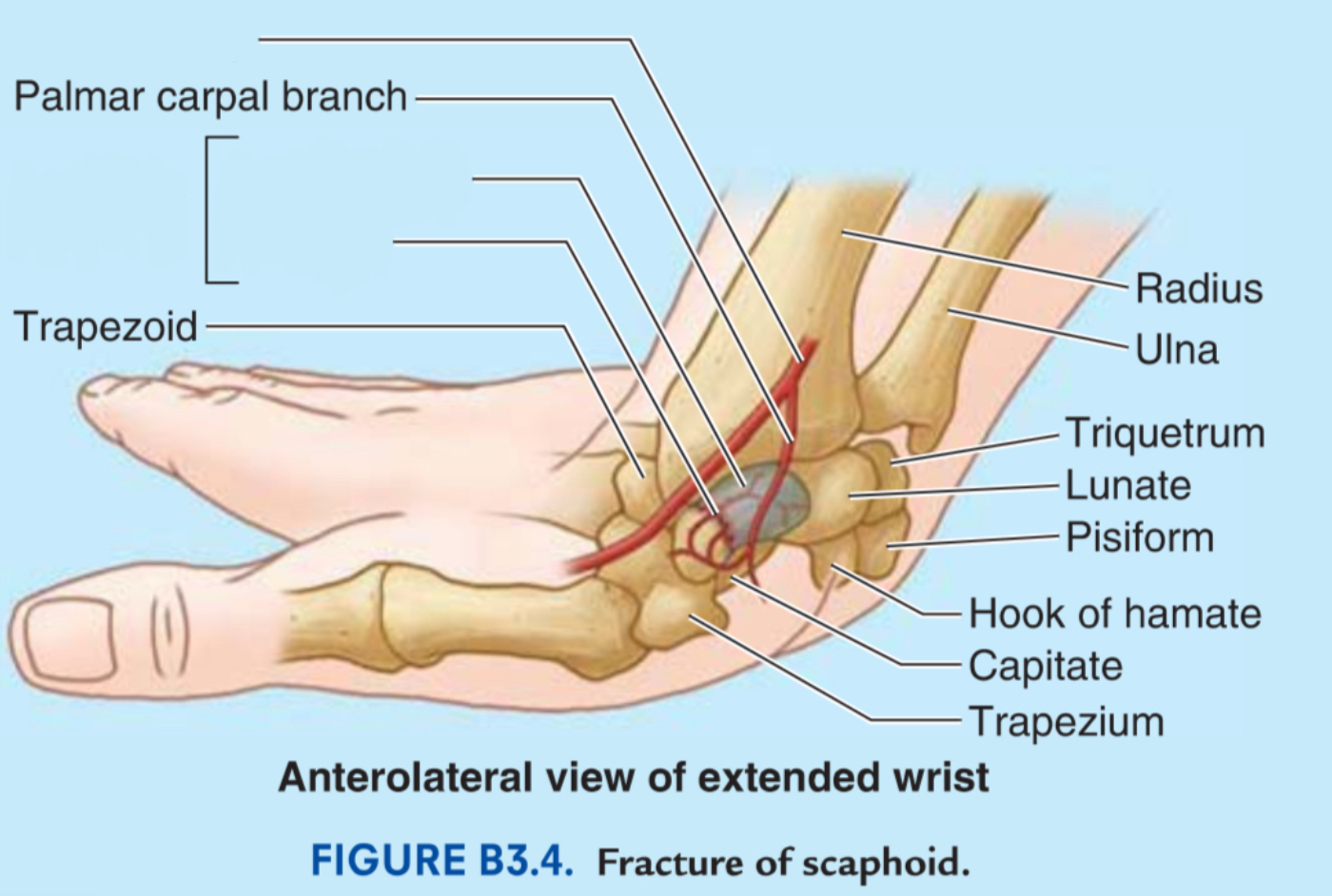
Observe and label
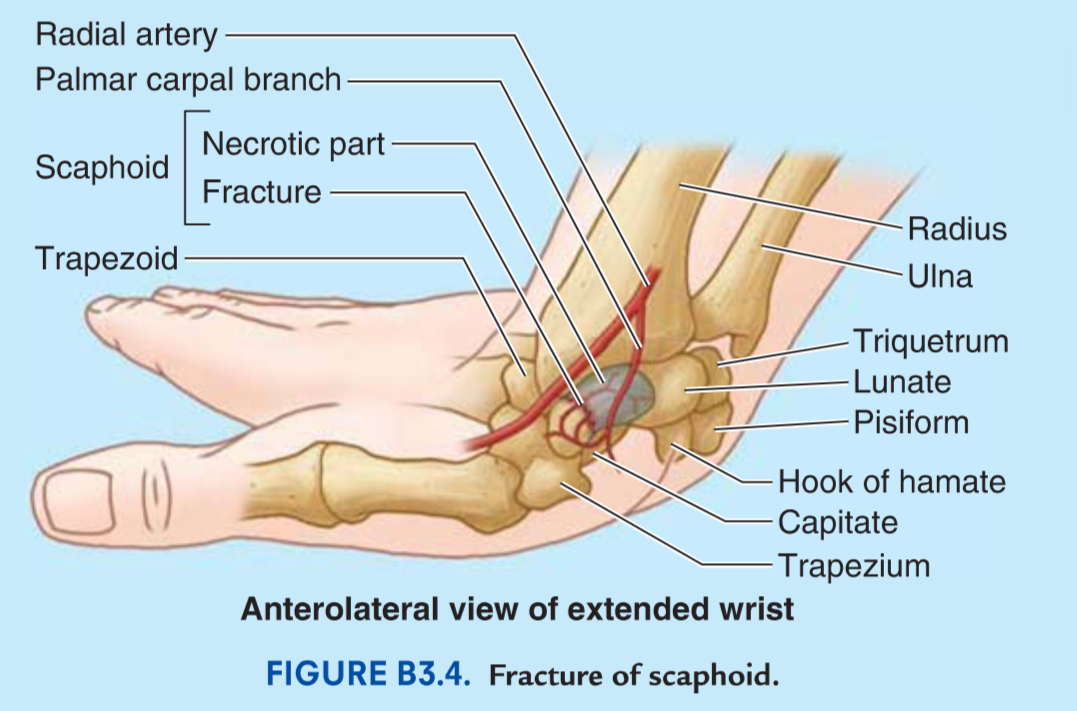
Where do most scaphoid fractures occur?
At the waist of the scaphoid.
Why can a scaphoid fracture lead to avascular necrosis?
Because the proximal fragment has a poor retrograde blood supply.
Why can early X-rays appear normal in a scaphoid fracture?
The fracture line may only become visible after 10–14 days due to bone resorption.
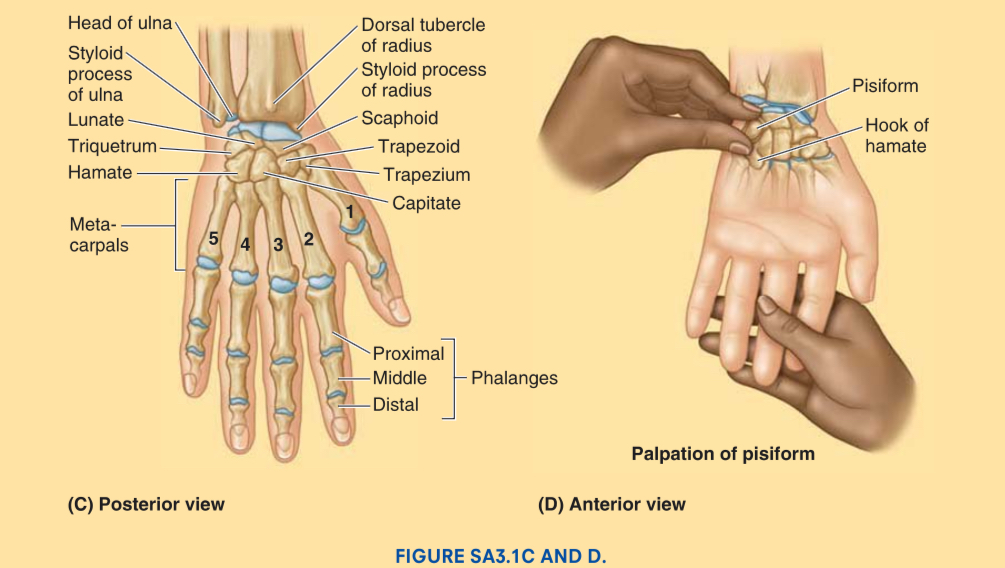
Which carpal bone contains a hook?
The hamate.
Which structures are at risk in a hook of hamate fracture?
Ulnar nerve
Ulnar artery
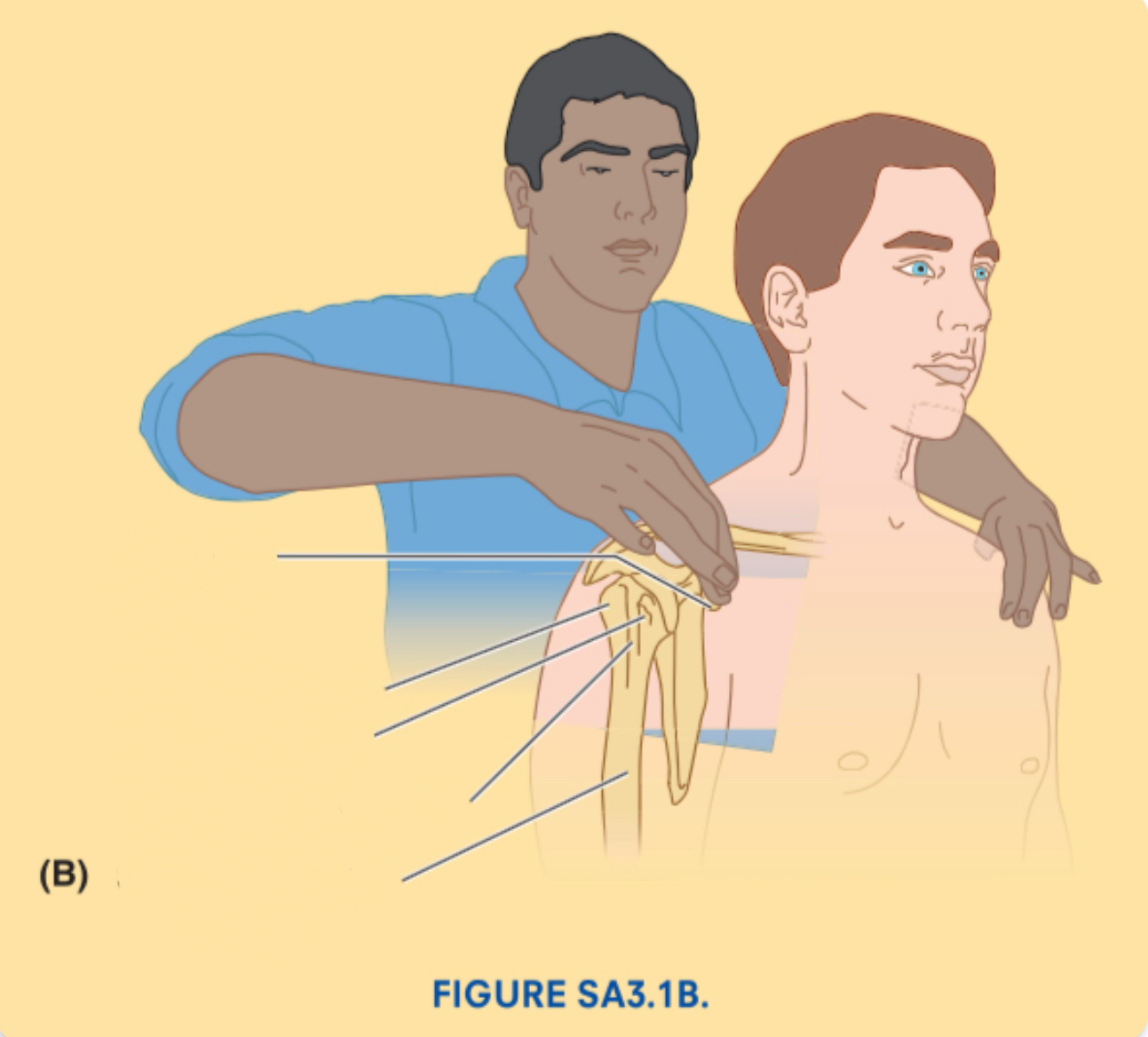
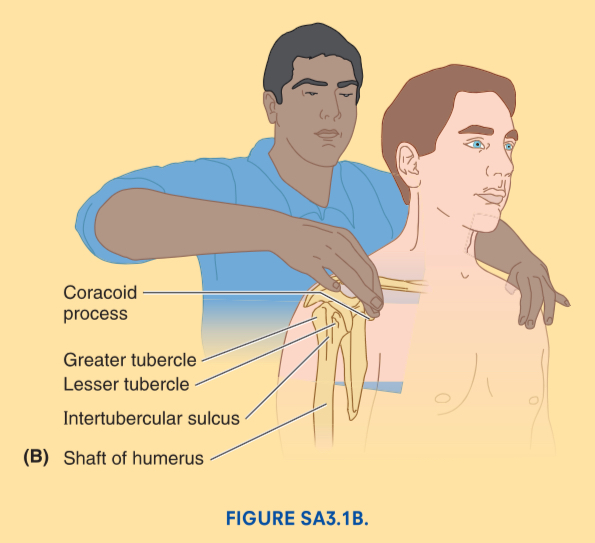
Which bony landmark forms the point of the shoulder?
The acromion.
Which humeral landmark can be palpated just inferior to the acromion?
The greater tubercle.
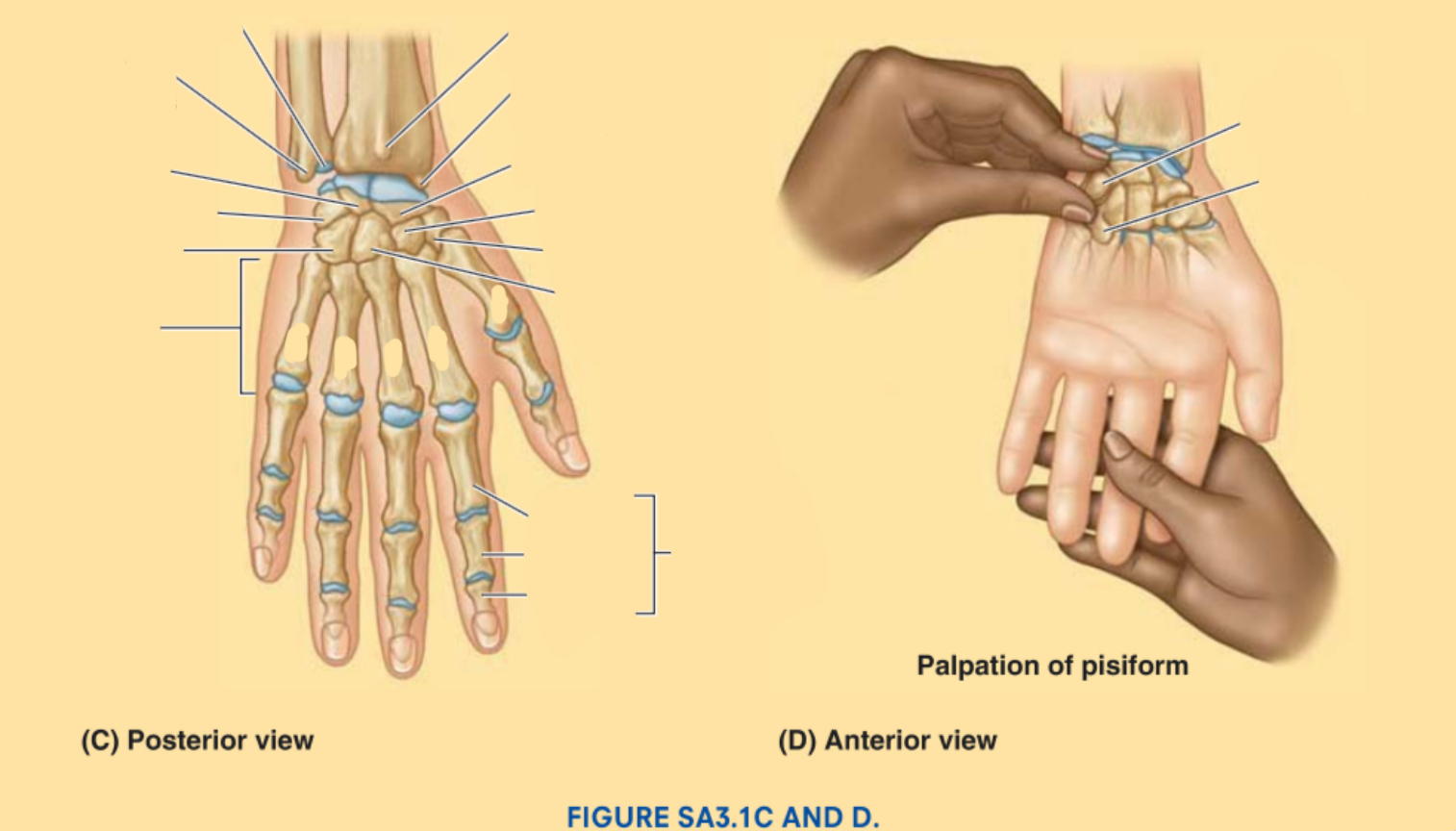
Which two distal forearm landmarks are easily palpable?
Radial styloid
Ulnar styloid
Which carpal bone is easily palpated on the medial side of the wrist?
The pisiform.
Which projection of the hamate can be palpated clinically?
The hook of the hamate.
Which tendon lies within the intertubercular sulcus?
The tendon of the long head of biceps brachii.
Match the landmark with its clinical significance:
Clavicle
Surgical neck
Radial groove
Medial epicondyle
Scaphoid
Radial styloid
Hook of hamate
Landmark | Clinical relevance |
Clavicle | Most commonly fractured bone |
Surgical neck | Axillary nerve injury |
Radial groove | Radial nerve injury |
Medial epicondyle | Ulnar nerve injury |
Scaphoid | Avascular necrosis risk |
Radial styloid | Landmark altered in Colles fracture |
Hook of hamate | Ulnar nerve and artery injury |
Which fractures are associated with each nerve?
Axillary
Radial
Median
Ulnar
Nerve | Associated fracture |
Axillary | Surgical neck |
Radial | Radial groove |
Median | Supracondylar |
Ulnar | Medial epicondyle |
Rapid Upper Limb Clinical Review (Condition - Key fact):
Clavicle fracture
Surgical neck fracture
Radial groove fracture
Supracondylar fracture
Medial epicondyle fracture
Colles fracture
Scaphoid fracture
Hook of hamate fracture
Condition | Key fact |
Clavicle fracture | Most common fracture at junction of medial 2/3 and lateral 1/3 |
Surgical neck fracture | Axillary nerve injury |
Radial groove fracture | Radial nerve injury |
Supracondylar fracture | Median nerve injury |
Medial epicondyle fracture | Ulnar nerve injury |
Colles fracture | Distal radius + dinner fork deformity |
Scaphoid fracture | Waist fracture → avascular necrosis risk |
Hook of hamate fracture | Ulnar nerve & artery injury |
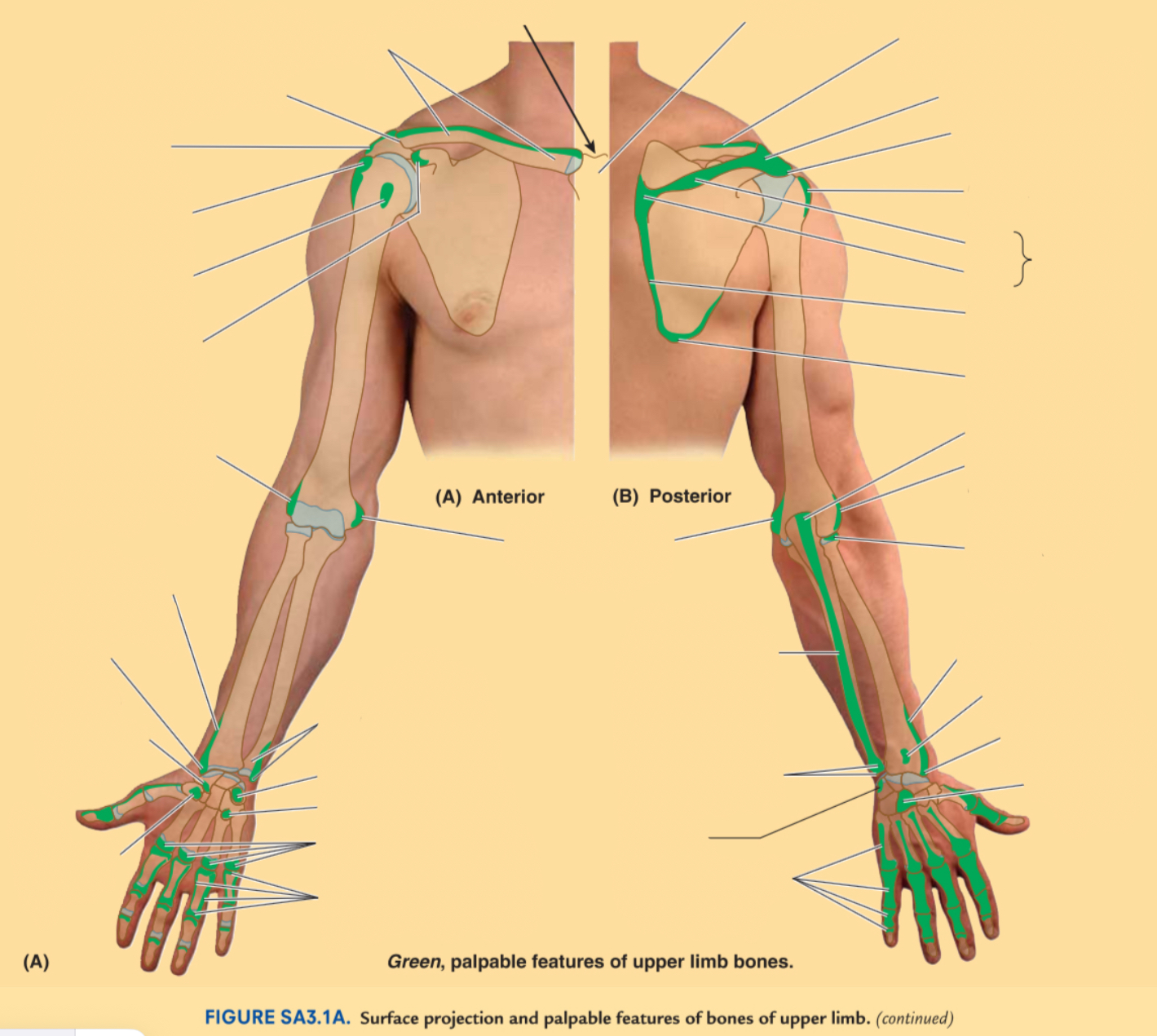
Label
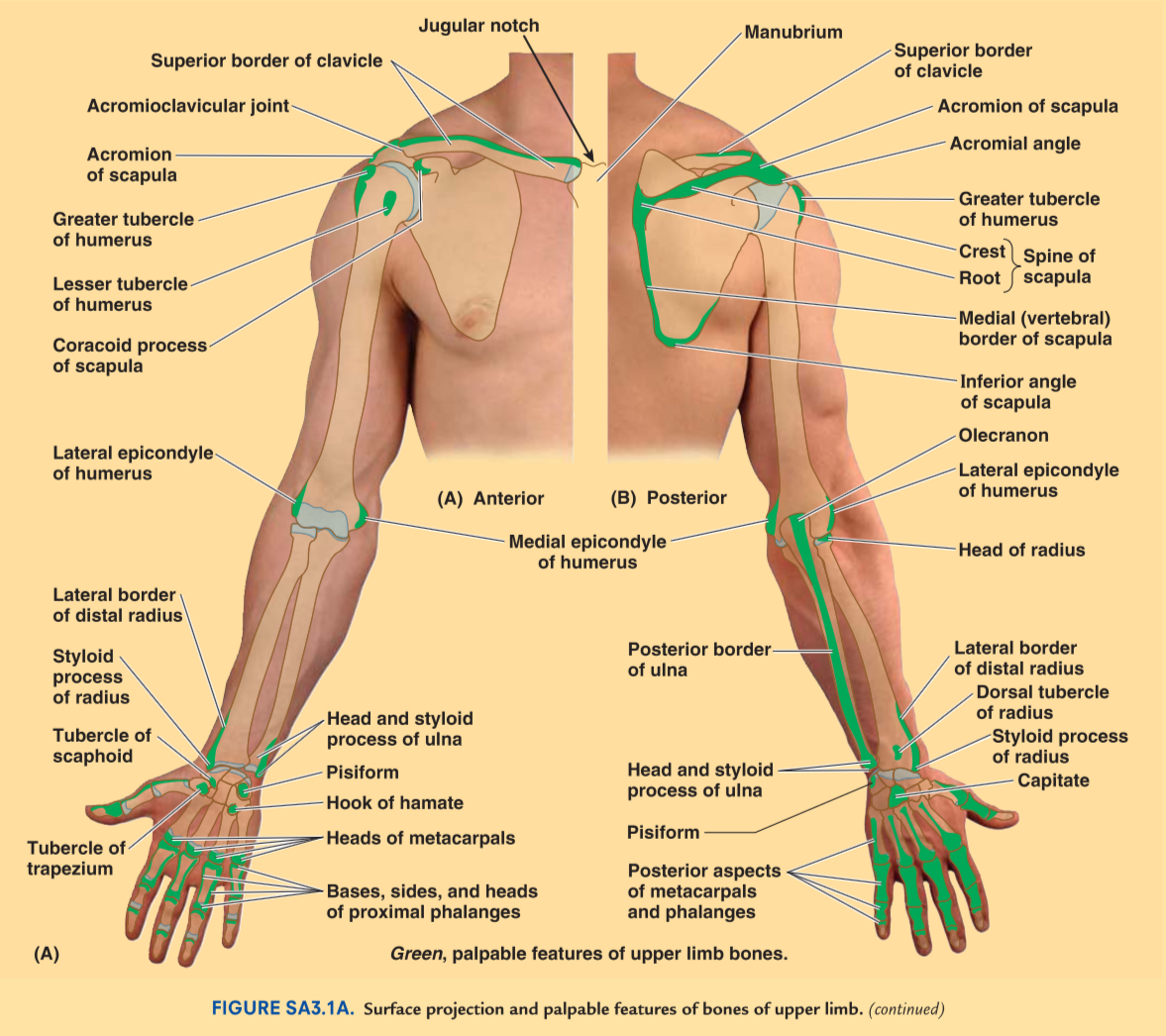
Label
Label