art history exam
 Call Kai
 Learn
Learn Practice Test
 Spaced Repetition
 Match
Match Flashcards
 Knowt Play
1/65

There's no tags or description
Looks like no tags are added yet.
Name | Mastery | Learn | Test | Matching | Spaced | Call with Kai | Chat |
|---|
No analytics yet
Send a link to your students to track their progress
66 Terms

Name the art/ what time period/ where/ what?
La pasiega (ca.65,000 BCE) Paleolithic era, ochre on stone, Spain: it proves that Neanderthals possessed symbolic thought and the capacity for artistic expression, significant as a territorial marking and hunting strategy
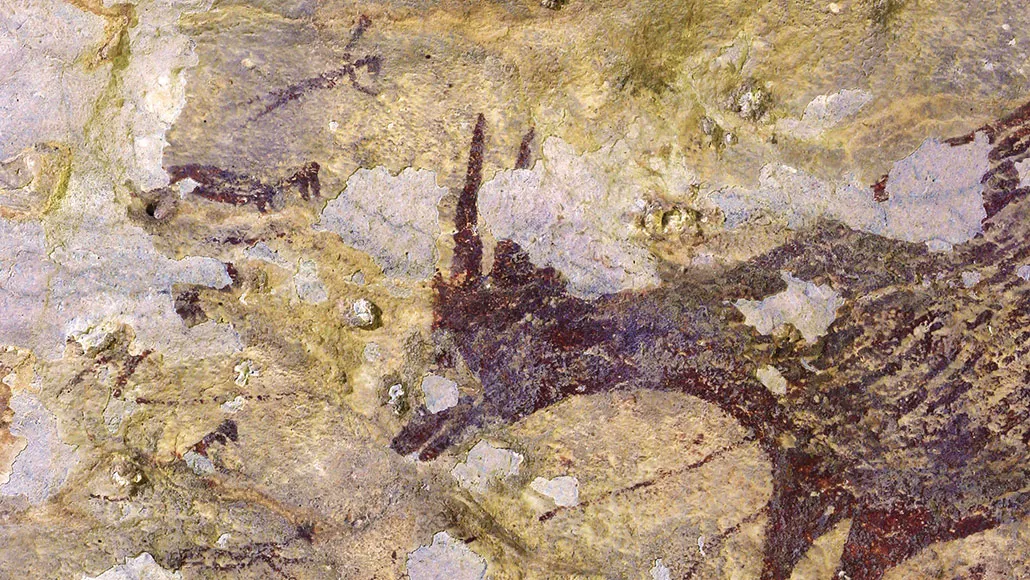
Name the art/ what time period/ where/ what?
hunting scene (ca.51,000 BCE) Paleolithic era, ochre on stone, Indonesia: story telling/narrative art, attempting to gain power over environment, connection to spiritual world. depictions of therianthropes (animal like humans)

Name the art/ what time period/ where/ what?
Hall of Bulls (ca 15,000-13,000 BCE) Paleolithic era, cave painting, Lascaux cave, France: Composite perspective: immediately identifiable bulls, meant to be sacred “let us have a successful hunt” or thanking the gods for a successful hunt. Composition: overlapped carvings, some are much older than others

Name the art/ what time period/ where/ what?
Nude women (venus of Willendorf) (28,000-25,000 BCE) Paleolithic period, limestone: Art mobiler- made to be carried/ held, physical prayer a hope for a continued existence, Ideal women of the time as she is nourished, fertile, taken care of, no face (not identifiable) she is universal hope for all women
Paleolithic period
Representation of animals and hunting scenes dominated, emphasizing observation of nature and survival, portable art and fertility figurines (AKA the Nude women) reflected concerns of fertility and continuity. abstract symbols and ritualistic or shamanistic meanings in cave and rock art suggest spiritual beliefs and practices
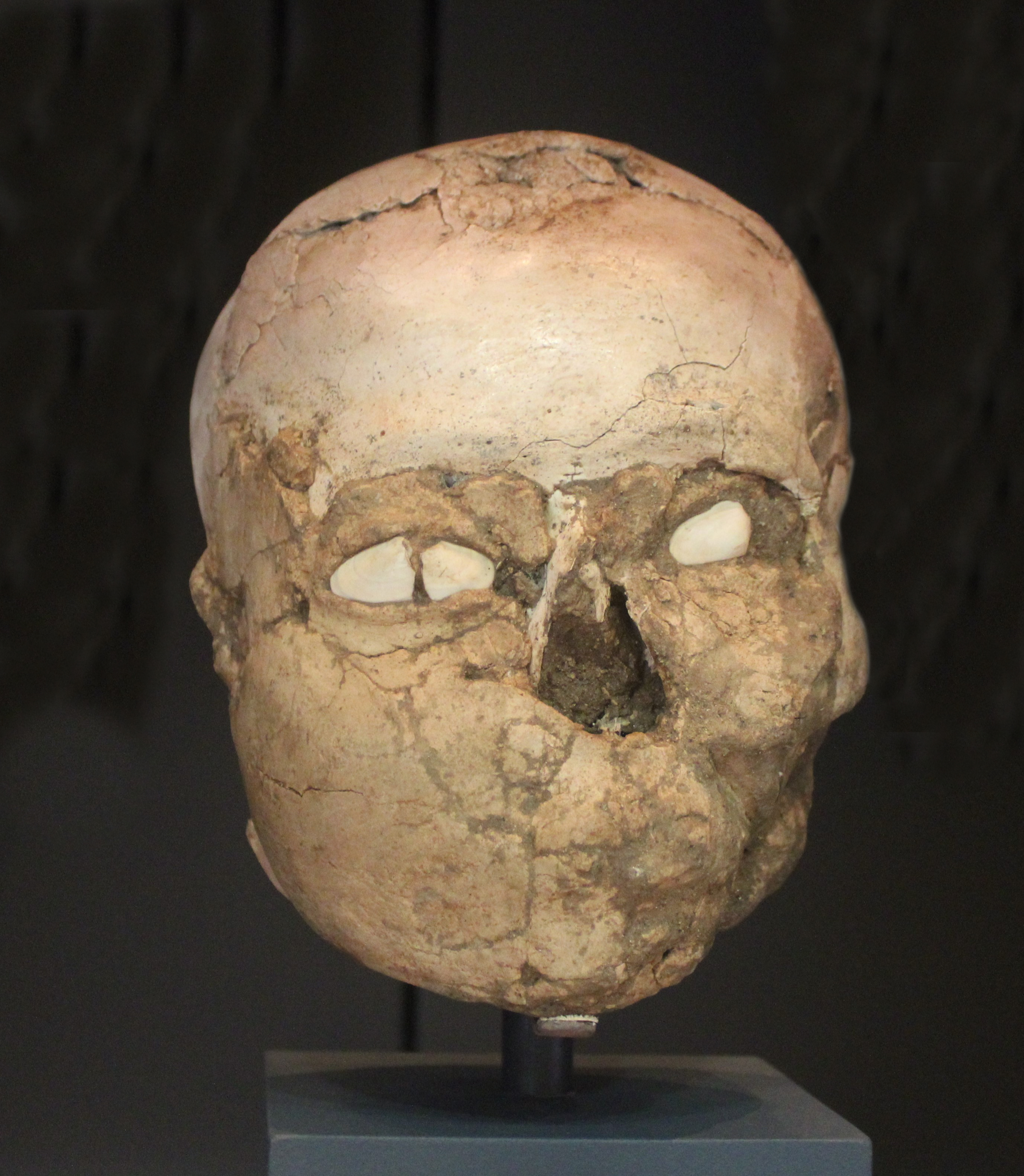
Name the art/ what time period/ where/ what?
Jericho skull (6,000-7,000 BC), Neolithic era, skull with plaster and shell: demonstrate that the prehistoric population took great care in burying their loved ones/ancestors, powers in the spiritual world that effect their world (symbolizes belief system)

Name the art/ what time period/ where/ what?
Stone henge (3100-1600 BCE) Neolithic era, stone: served as ancient celestial calender for farming and seasonal rituals. incredible feat to bring massive stone long distances, monument served as a cremation cemetery many burial grounds found
Neolithic period
focus shifted to agriculture, domesticated animals, permanent year round settlements, ritual and religous imagery in architecture - megalithic monuments and ceremonial sites

Name the art/ what time period/ where/ what?
White temple (ziggurat) 3200-3000 BCE, Ancient mesopotamia, mud brick: axis mundi- sacred connection point of heaven and earth, used for rituals and sacrifices both god and government in one building located in Uruk
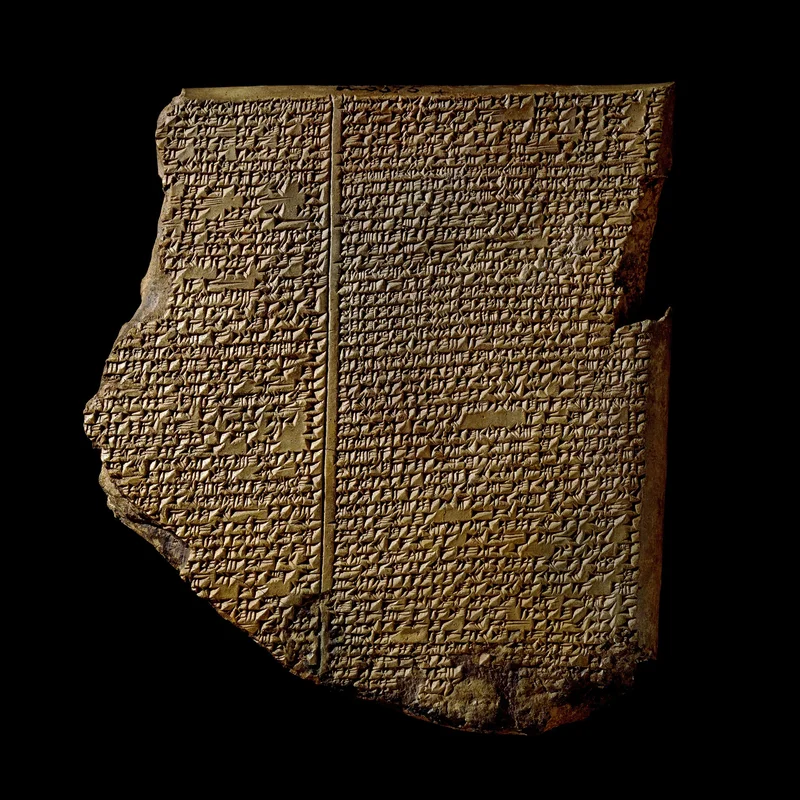
Name the art/ what time period/ where/ what?
The Flood Tablet, part of the Epic of Gilgamesh (7th century BCE) Ancient mesopotamia, clay: cuniform babylonian Flood Story, it provides an ancient Mesopotamian account of a Flood that predates the biblical story of Noah's Ark by centuries

Name the art/ what time period/ where/ what?
warka vase (3200-3000 BC) Ancient mesopotamia, alabaster: warka=uruk narritive art expressing hierarchy of Inanna sumerian goddess (water crops animals and men carrying offerings up to inanna) relief sculpture

Name the art/ what time period/ where/ what?
Ziggurat-Ur (2100 BCE) Ancient mesopotamia, mud brick: a sacred religious temple complex and an administrative center dedicated to the Sumerian moon god Nanna, axis mundi, provide offerings to Nana
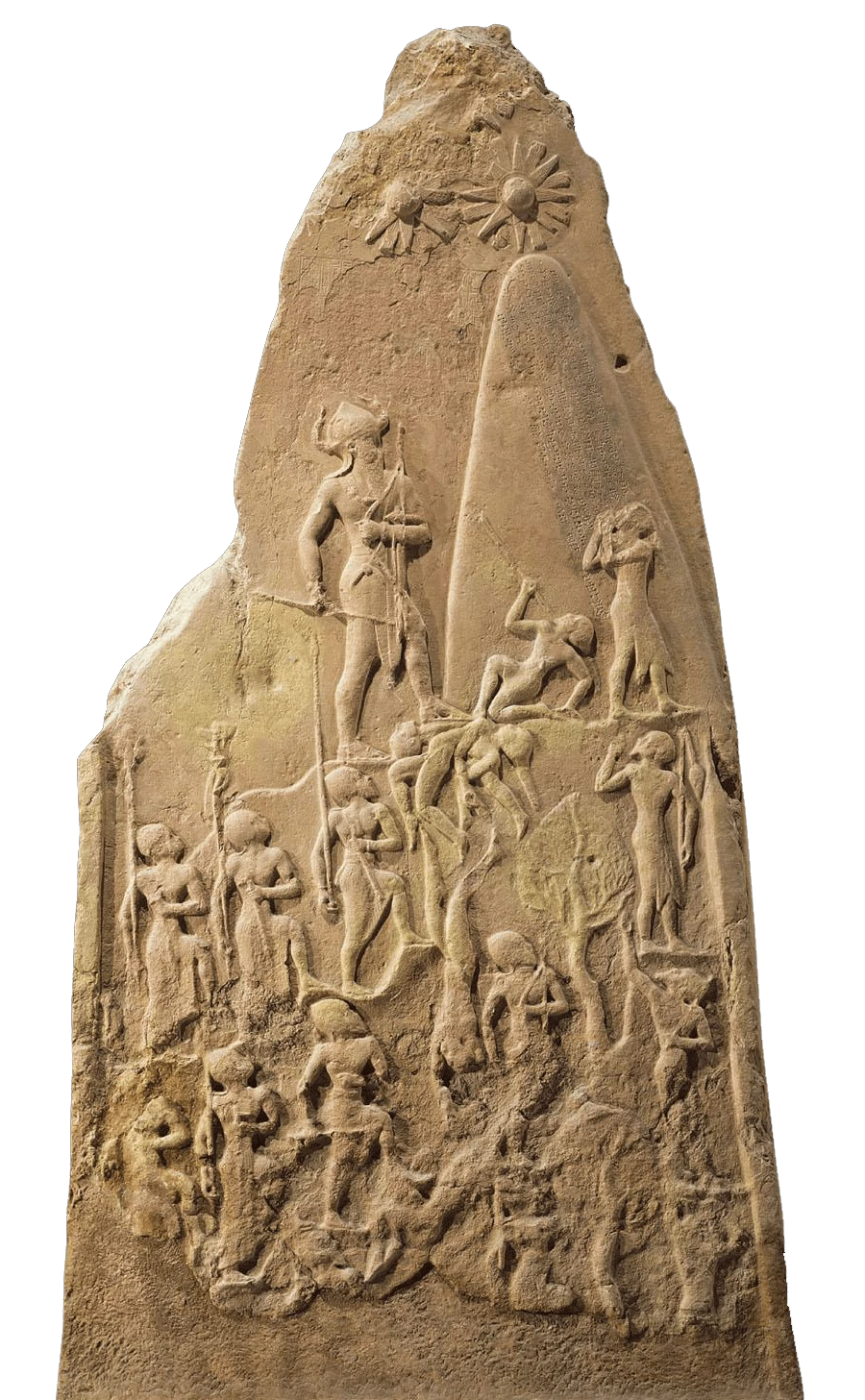
Name the art/ what time period/ where/ what?
Victory stela (stela of Naram-Sin) 2250 BCE Ancient Mesopotamia, sandstone: stela major size work of art, political propaganda showing Naram-sin victorious, cuniform raining down from gods saying the king has divine right to rule/approval- military society more violent

Name the art/ what time period/ where/ what?
Stela with law code, (1780 BCE) Ancient mesopotamia, basalt: Hammurabis code (first official law), shared agreements punishment must fit the crime, divine right to rule by God Shamash, made with very durable stone to perserve

Name the art/ what time period/ where/ what?
Lamassu (human-headed-winged bull) 720 BCE Ancient mesopotamia, limestone: Made to be intimidating/ gaurd royal places to ward off evil, protective diety, twisted perspective: have 5 legs so at both perspectives you can see 4 legs
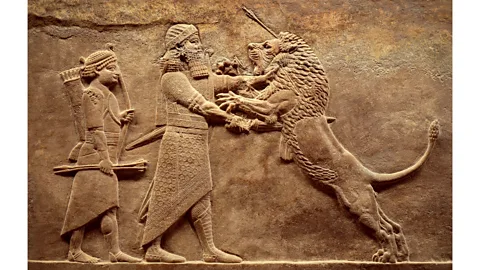
Name the art/ what time period/ where/ what?
Lion hunt (645 BC) ancient Mesopotamia, limestone: many reliefs as you walk through royal palace, political propaganda depicting king Ashrubanipal killing lions to portray his braveness, power, and intelligence

Name the art/ what time period/ where/ what?
Ishtar Gate (575 BCE) ancient mesopotamia: patroned by Nebuchadnezzer II made for god Marduke (ritual of pulling ears and being slapped) Blue glazed brick to convey wealth and power of babylonians
Ancient Mesopotamia
Emphasis on power and kingship: rulers depicted as larger-than-life, often engaged in heroic or divine acts.
Religious representation: depiction of gods, divine agency, and ritual scenes across temple reliefs and seals.
Narrative art illustrating events, myth, and daily life, with a characteristic blend of written text and imagery.

Name the art/ what time period/ where/ what?
Palette of Narmer (3000 BCE), Ancient Egypt Period, Slate: told in register represents the unification of Upper and Lower Egypt under King Narmer

Name the art/ what time period/ where/ what?
Great Pyramids (2551-2472 BCE), Ancient Egyptian, Giza, Granite and Limestone: Khufu, Khafre, Menkaure, pharohs were viewed as living gods in egypt so they were very important to eqyptians. The pyramids were religous and made for the kings’ KA (spirit) to ascend into the sky. Axis mundi- stairway to heaven. the construct of these massive monuments displayed the kings’ wealth wealth and power.

Name the art/ what time period/ where/ what?
The Great Sphinx (2570-2544 BCE) Ancient Egyptian, Sandstone: act as spiritual gaurdian for the royal tombs/temples representing power and authority of the pharoh

Name the art/ what time period/ where/ what?
Khafre 2520-2494 BCE, Ancient Egyptian, Diorite: It served as a ka statue designed to house the pharaoh's life force in his funerary temple, sculpture is very ideal body standards, appearing strong.

Name the art/ what time period/ where/ what?
Menkaure and His Wife, 2490-2472 BCE Ancient Egyptian, Slate (Graywacke): represents ancient egyptian body standards and gender equality (both are powerful and respected) KA sculpture to ensure the pharaoh's safe rebirth and eternal survival in the afterlife
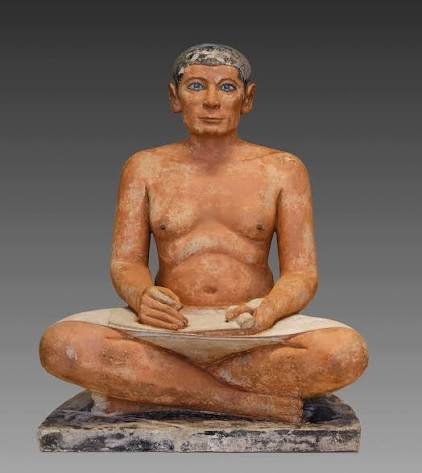
Name the art/ what time period/ where/ what?
Seated Scribe, 2400 BCE, Ancient Egyptian, Painted Limestone: Scribes were exceptionally respected because very few people could read and write, unlike rigid, flawless, and divine statues made for pharaohs, the Seated Scribe shows natural human traits realism

Name the art/ what time period/ where/ what?
Hatshepsut,1473-1458 BCE Ancient Egyptian, Limestone: first female pharoh, very powerful and successful
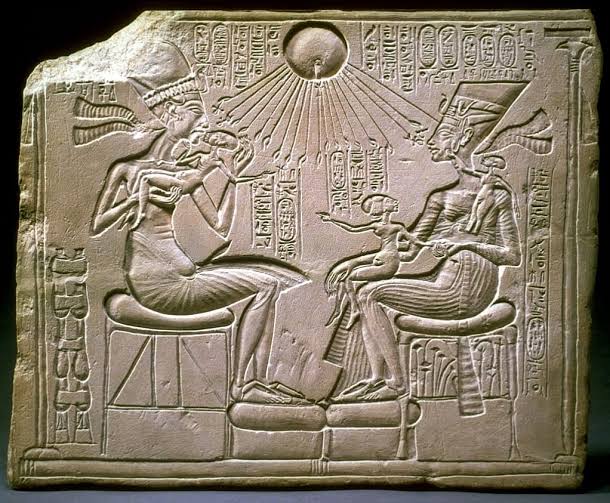
Name the art/ what time period/ where/ what?
Akhenaten and His Family, Ancient egyptian 1350 BCE, Limestone: marked a change in traditional art standard, Amarna style. And replacing a polytheistic religion with a near-monotheistic focus on the sun god Aten
Ancient Egyptian
book of the dead
Ka (spirit)
Iconography of gods, pharaohs, and the afterlife, often rendered with idealized clarity and strict proportions.
Symbolic use of color and hieroglyphs to convey spiritual and cultural concepts (fertility, rebirth, divinity).
Funerary and monumental art designed to ensure immortality, eternal order, and divine legitimacy

Name the art/ what time period/ where/ what?
Figurine of a woman (c. 2500-2300 BC) Ancient Aegean, Greece Marble: Folded arms and small pointed feet- meant to be carried as a symbol of fertility and hope

Name the art/ what time period/ where/ what?
Bull Leaping, Palace at Knossos (c. 1500 BC), Ancient Aegean, Greece, fresco: coming of age/becoming a citizen athletic event to prove yourself worthy- depicts both a man and women performing the bull leaping. Emphasis on competition

Name the art/ what time period/ where/ what?
Lion Gate (c. 1300-1250 BC), Ancient Aegean, Greece, Limestone: representing divine protection, royality, intimidation and the political dominance of the Mycenaean city

Name the art/ what time period/ where/ what?
Dipylon Krater (740 BC), Ancient Greece, terra-cotta: used as a grave marker for elite men- depicts procession of chariots and warriors (military tributes)- funeral procession showing women pulling hair (grieving) means the death was very sad and the man was very respected

Name the art/ what time period/ where/ what?
Achilles and Ajax Playing a Dice Game (540-530 BC), EXEKIAS, Ancient Greece, painted ceramic: two of the most famous warriorsn of trojan war- speaks too intellect/strategy “the total package” smart and strong

Name the art/ what time period/ where/ what?
Herakles Wrestling Antaios (510 BC), EUPHRONIOS, Ancient Greece, painted ceramic: Herakles winning over antaios is a significant myth in Greek and Berber tradition because it- symbolizes the triumph of intellect and strategy/composure, over brute/barbarian

Name the art/ what time period/ where/ what?
Kroisos (530 BC), Ancient Greece, marble: erved as a grave marker for a young warrior named Kroisos, rigid art style, archaic smile, strong/ideal

Name the art/ what time period/ where/ what?
Doryphoros (Spear Bearer) (450-440 BC - original), POLYKLEITOS, Ancient greece, marble: contrapposto stance, became the definitive blueprint for idealized male beauty and athletic mathematical proportions

Name the art/ what time period/ where/ what?
Diskobolos (Discus Thrower) (c. 450 BC - original), MYRON, Ancient greece, marble copy: represents ideal male beauty, athletisism and perfectionism, face remains calm and free of strain

Name the art/ what time period/ where/ what?
Erectheion (421-405 BC), Ancient Greece, marble, Athens, Greece: women golding up building, site where Athena and Poseidon competed for patronage of the city
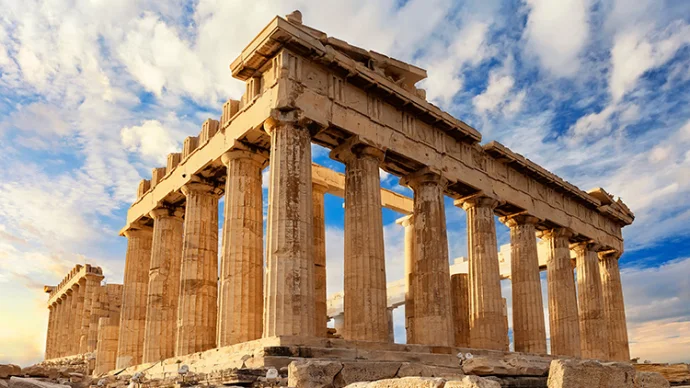
Name the art/ what time period/ where/ what?
Parthenon (447 - 438 BC), KALLIKRATES and IKTINOS, Ancient greece, marble: dedicated to Athena, Doric order archetecture inspired many other government buildings in the future, structure provides optical illusions that make it appear stable and strong

Name the art/ what time period/ where/ what?
Battle of a Lapith and a Centaur (447-438 BC), Ancient greece, marble: Mythical conflict of Lapith and centaur- greek cultural conflict of civilization and barbarism

Name the art/ what time period/ where/ what?
Aphrodite of Knidos (350 - 340 BC), PRAXITELES, Ancient greece, marble copy: broke convention as the first statue of a female goddess portrayed entirely in the nude- showing her preparing for a bath in contrapossto stance, still conveys her modesty

Name the art/ what time period/ where/ what?
Altar of Zeus (175 BC), Ancient greece, marble, Pergamon, Turkey: High relief mythical battle between the Olympian gods and the Giants, intense emotion, symbolized political triumph

Name the art/ what time period/ where/ what?
Winged Victory (Nike) of Samothrace (190 BC), Ancient Greece, marble: depicting goddess Nike, powerful outstretched wings, dramatic drapery

Name the art/ what time period/ where/ what?
Seated Boxer (c. 100 BC), Apollonios, Ancient Greece, bronze:an exhausted, athlete after a brutal boxing match-showcasing raw human pain, vulnerability, and realism rather than traditional physical perfection

entasis
a slight convex curve or swelling built into the shaft of a classical column to make it look straight and solid
provenance
place of origin, source of ownership object/artwork

what order
doric order: oldest and most simple of the three classic greek archetecture
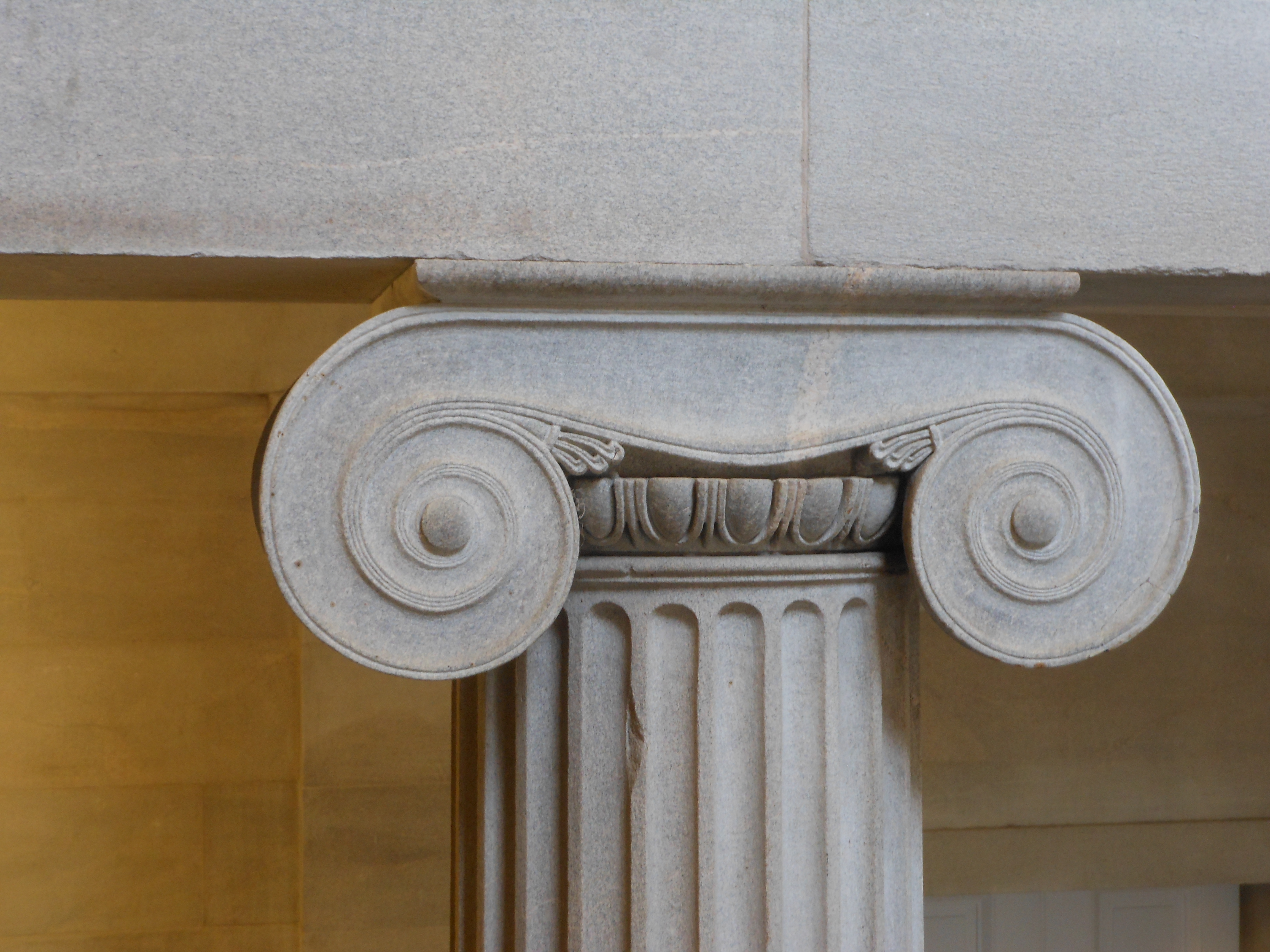
what order
ionic: volutes of swirls
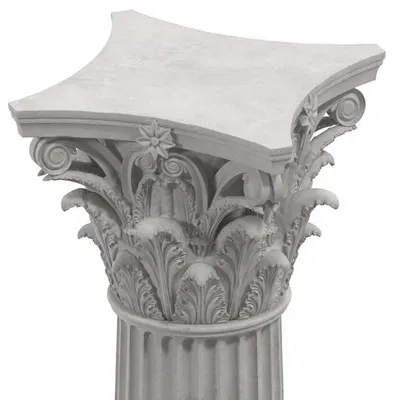
what order
corinthian: final and most ornate/detailed of the three classical orders
ancient greece
Emphasis on mythological narratives, gods, and heroes, embodying human virtues and philosophical ideals.
Celebration of civic and athletic pride: public monuments, athletic imagery (Olympic games), and democracy.
Idealism and humanism: pursuit of perfect proportions, the "Golden Ratio," and representation of beauty, movement, and eventually emotion.

Name the art/ what time period/ where/ what?
Aule Metele (L’Arringatore) (early 1st c BC), Etruscan/Roman Culture, bronze: contrapposto stance with his right arm raised to address a public crowd, older gentleman which represents his high political rank and status

Name the art/ what time period/ where/ what?
Patrician Man with Portrait Busts of His Ancestors (late 1st c. BC), Roman , Marble: Shows a Roman man holding portraits of his ancestors. Represents family lineage, ancestry, and Roman values. Romans valued ancestry and tradition as proof of social status. realistic showing age and individual features.

Name the art/ what time period/ where/ what?
Augustus of Primaporta (1st CAD copy of a bronze original of 20 BC), Roman Period, marble: Youthful image depicting Augustus (even though he was older when it was made- wanted to keep his young image) figure of Cupid riding a dolphin sits at his feet. This shows his family's claim of descent from the goddess Venus, one hand raised as he is speaking
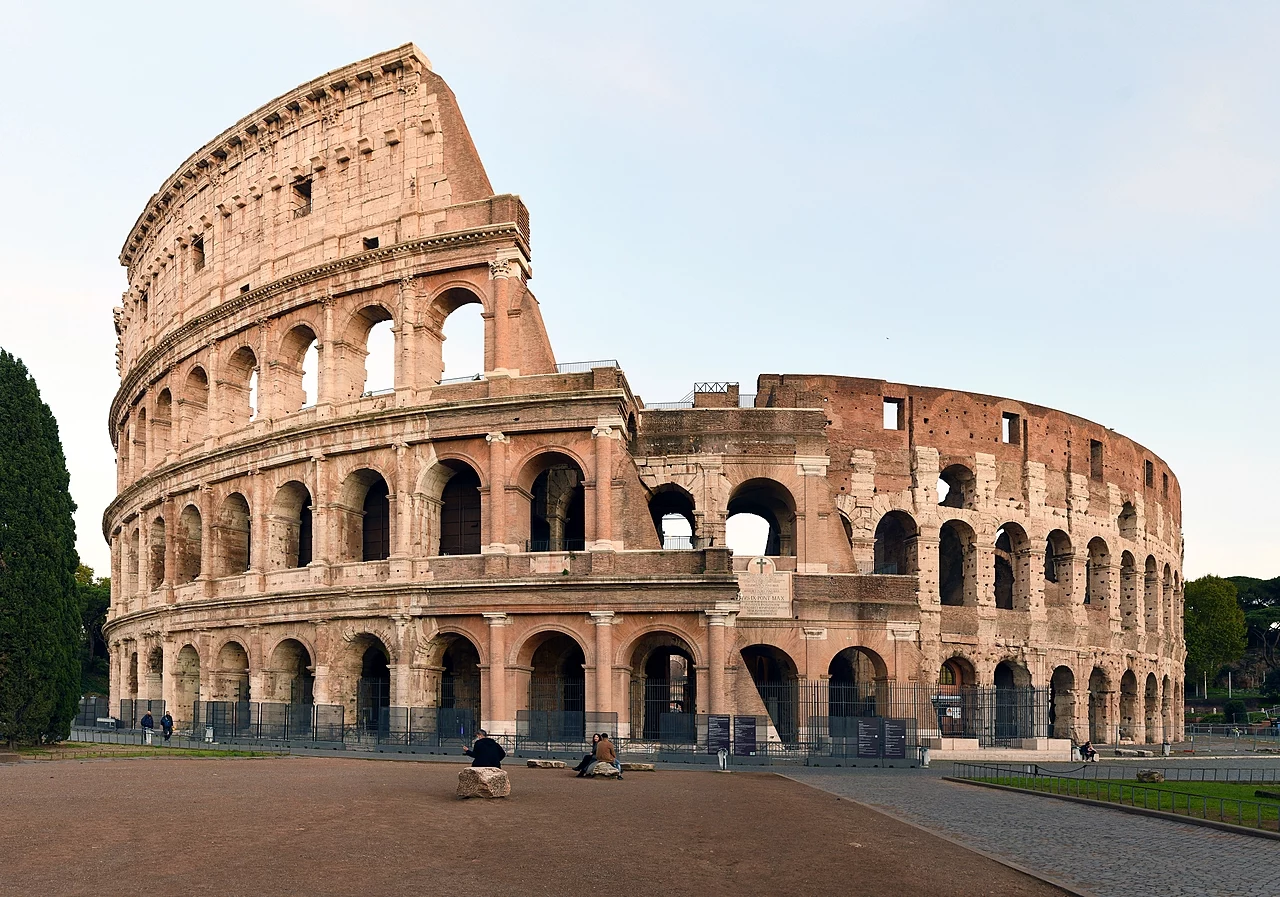
Name the art/ what time period/ where/ what?
The Colosseum (70-80 AD), Roman, concrete and marble: Huge amphitheater used for gladiatorial games, animal hunts, and public spectacles. Demonstrates Roman engineering using concrete and arches. Shows the emperor's ability to provide entertainment for the population. Also represents the power and wealth of the Roman Empire.

Name the art/ what time period/ where/ what?
Pantheon (118 - 125 AD), Rome, concrete and marble: Temple dedicated to all the gods. Famous for its enormous concrete dome and central oculus. Demonstrates Roman mastery of engineering, concrete, and architecture. The oculus allows light into the interior. Interior creates a powerful sense of space and grandeur.
Name the art/ what time period/ where/ what?
The Tetrarchs (305 AD), Roman, porphyry: Shows four rulers known as the Tetrarchs. created when Diocletian divided the empire into four rulers to make it easier to govern. figures are not individualized or realistic. their identical appearance emphasizes unity and shared authority. represents the shift away from Classical Roman naturalism toward abstract/stylized art.
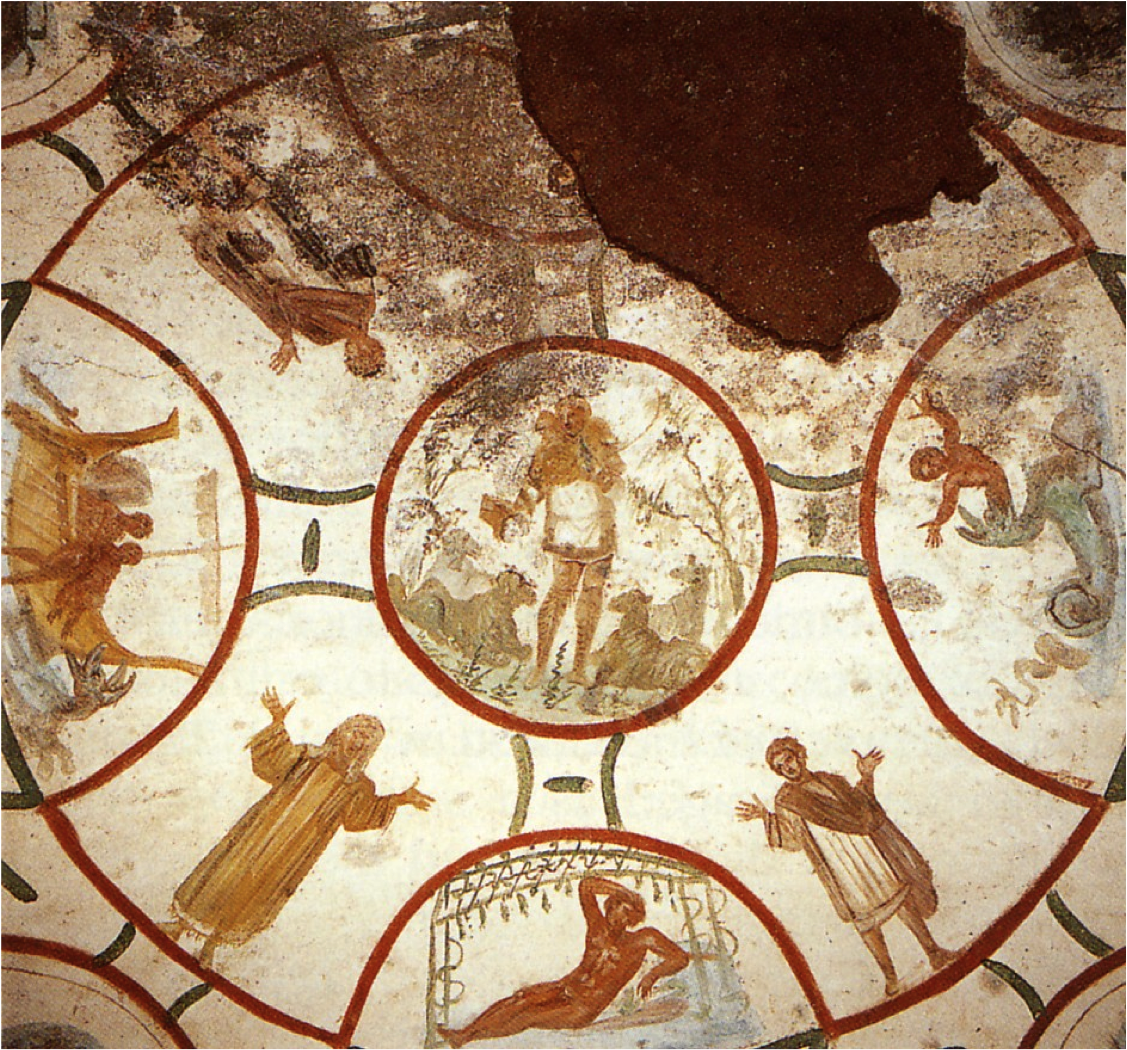
Name the art/ what time period/ where/ what?
Good Shepherd, Orants, and Story of Jonah (early 4th C.), Early Christian Period, fresco: Early Christian, found in Roman catacombs. combines several Christian symbols and biblical stories. good Shepherd = Christ as protector/savior. orants = praying figures. Jonah = symbol of death, resurrection, and salvation. Shows how early Christians used symbolism to communicate religious ideas.
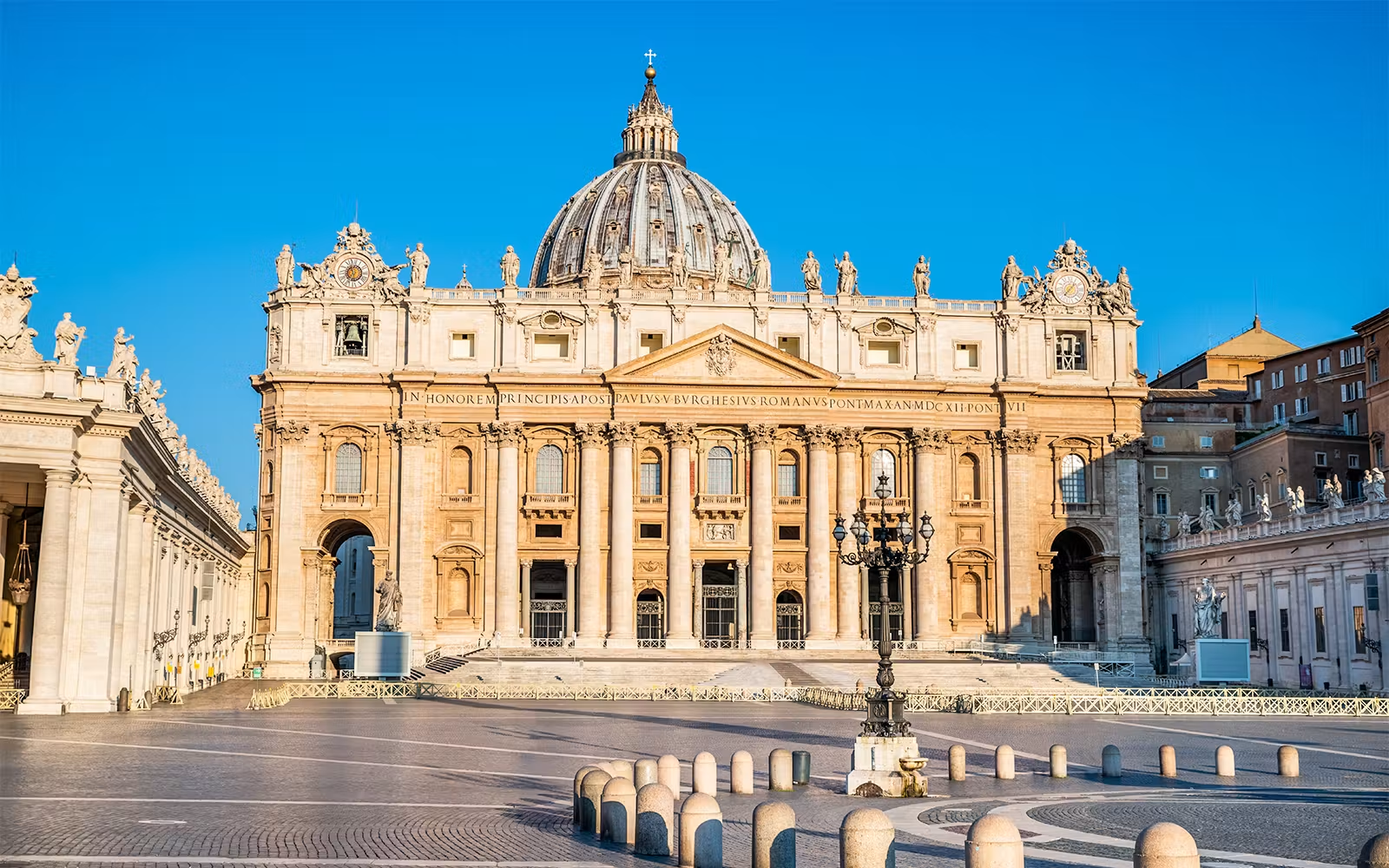
Name the art/ what time period/ where/ what?
Old St. Peter's Basilica (c. 320), Roman: one of the first major Christian basilicas in Rome. Commissioned under Emperor Constantine after Christianity became accepted in the Roman Empire. Built as a place for Christian worship and pilgrimage.
Ancient Rome
Power and propaganda: monumental architecture and sculpture glorifying emperors, military triumphs, and civic identity.
Emergence of Christianity and development of appropriate visual symbols
Split of the Roman Empire into East and West
mount vesuvius
famous for its catastrophic eruption in 79 AD that buried Pompeii.
Apothesis
literal or formal act of making a mortal person into a god
chi rho
one of the oldest Christian symbols, formed by overlapping the first two capital Greek letters of the word "Christ"
Name the art/ what time period/ where/ what?
Hagia Sophia 532-537), ANTHEMIUS OF TRALLES and ISIDORUS OF MILETUS, Early Byzantine Period, Constantinople (Istanbul, Turkey): Built under Emperor Justinian. Originally a Christian church. Famous for its enormous dome, pendentives, and huge interior space. Combines Roman engineering with Byzantine Christian architecture. Creates a feeling of heavenly/light-filled space.

edict of milan
313 AD agreement that permanently established religious toleration for Christianity and all other faiths within the Roman Empire

Name the art/ what time period/ where/ what?
Emperor Justinian and His Attendants (547), Early Byzantine Period, mosaic: A golden halo hovers over Justinian's head, and he carries a bread-divine right to rule, art standard changes: depicted very slender, long noses, emotionless, “floating feet”- gold is prominant, and purple robe that means he is emporor

Name the art/ what time period/ where/ what?
Empress Theodora and Her Attendants (547), Early Byzantine Period, mosaic: she holds a large golden chalice designated for the wine of the Eucharist, mirroring her husband Emperor Justinian on the opposite wall who carries the bread- clock depicts Thee wise men carrying gifts to Christ, aligning her status with those who brought gifts to the savior
byzantine period
sylized portrayals of Christ, Mary, and saints, meant for contemplation and spiritual engagement.
Gold backgrounds and flattened figures: emphasis on divine light, metaphysical reality, and spiritual transcendence.
Elaborate frescoes and mosaics: biblical narratives arranged hierarchically in sacred spaces, symbolizing order and divine authority.