chapter 7: Physical and Cognitive Development in Early Childhood

0.0(0)
Studied by 0 people
call kaiCall Kai
Locked
learnLearn
examPractice Test
spaced repetitionSpaced Repetition
heart puzzleMatch
flashcardsFlashcards
GameKnowt Play
Card Sorting

1/41

encourage image

There's no tags or description

Looks like no tags are added yet.

Last updated 8:55 AM on 8/31/26
Name
Mastery
Learn
Test
Matching
Spaced
Call with Kai
Chat

No analytics yet

Send a link to your students to track their progress

42 Terms

1
New cards

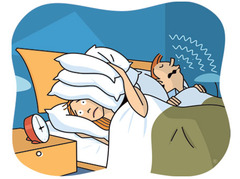
night terror

- Abrupt awakening from a deep sleep in a state of agitation, generally occurs in young children.

- Abrupt awakening from a deep sleep

- The child may scream, cry, or thrash around but usually has no memory of it afterward.

- “I looked terrified, but I wasn't really awake.”

Example: A child suddenly sits up, screams, looks terrified, and pushes their parents away—but the next morning says, “I don't remember anything.” memory of it afterward.

<p>- Abrupt awakening from a deep sleep in a state of agitation, generally occurs in young children.</p><p>- <strong>Abrupt</strong> <strong>awakening</strong> from a <strong>deep sleep</strong></p><p>- The child may scream, cry, or thrash around <u><mark data-color="blue" style="background-color: blue; color: inherit;">but usually has no memory of it afterward.</mark></u></p><p>- “I looked terrified, but I wasn't really awake.”</p><p><strong>Example:</strong> A child suddenly sits up, screams, looks terrified, and pushes their parents away—but the next morning says, “I don't remember anything.” memory of it afterward.</p>
2
New cards

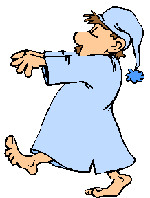
sleepwalking

- Walking around and sometimes performing other functions while asleep.

example: A child walks around the house while still asleep and does not remember doing it the next morning.
<p>- <strong>Walking around </strong>and sometimes performing other functions while asleep<strong>.</strong></p><p><strong>example:</strong> A child walks around the house while still asleep and does not remember doing it the next morning.</p>
3
New cards

sleeptalking

Talking while asleep.

<p><strong>Talking </strong>while asleep.</p>
4
New cards

nightmare

- “I had a scary dream.”

- The child wakes up and can usually tell you what happened.

- A bad dream, sometimes brought on by staying up too late, eating a heavy meal close to bedtime, or overexcitement

- A frightening dream that usually causes the child to wake up.

Example: “Mommy, I dreamed that a monster was chasing me!”

<p>- “I had a scary dream.”</p><p>- The child wakes up and can usually tell you what happened.</p><p>- A bad dream, sometimes brought on by staying up too late, eating a heavy meal close to bedtime, or overexcitement</p><p>- A <strong>frightening dream</strong> that usually causes the child to wake up.</p><p><strong>Example: </strong>“Mommy, I dreamed that a monster was chasing me!”</p>
5
New cards

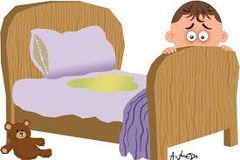
enuresis

- Repeated urination in clothing or in bed.

- involuntary urination during sleep

- Preschool children normally recognize the feeling of a full bladder while asleep and awaken to empty it.
<p>- Repeated <strong>urination </strong>in clothing or in bed.</p><p>- involuntary urination during sleep</p><p>- Preschool children normally recognize the feeling of a full bladder while asleep and awaken to empty it.</p>
6
New cards

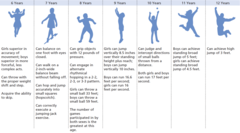
gross motor skills

- Physical skills that involve the large muscles.

- Uses large muscles: arms, legs, whole body

- Requires balance, strength, and movement

EXAMPLE: jumping, running, climbing, throwing a ball
<p>- Physical skills that involve the <u><mark data-color="green" style="background-color: green; color: inherit;">large muscles</mark></u>.</p><p>- <strong>Uses large muscles:</strong> arms, legs, whole body</p><p>- Requires balance, strength, and movement</p><p><strong>EXAMPLE:</strong> jumping, running, climbing, throwing a ball</p>
7
New cards

fine motor skills

- Physical skills that involve the small muscles and eye-hand coordination.

- Uses small muscles: Hands, fingers, wrists

- Requires precision and coordination

EXAMPLE: cutting with scissors, drawing, buttoning clothes, writing

<p>- Physical skills that involve the <u><mark data-color="#f6e8fc" style="background-color: rgb(246, 232, 252); color: inherit;">small muscles and eye-hand coordination</mark></u>.</p><p>- Uses <strong>small muscles</strong>: Hands, fingers, wrists</p><p>- Requires precision and coordination</p><p><strong>EXAMPLE: </strong>cutting with scissors, drawing, buttoning clothes, writing</p>
8
New cards

systems of action

- Increasingly complex combinations of motor skills, which permit a wider or more precise range of movement and more control of the environment.

<p>- <u><mark data-color="red" style="background-color: red; color: inherit;">Increasingly complex combinations of motor skills</mark></u>, which permit a wider or more precise range of movement and more control of the environment.</p>
9
New cards

handedness

Preference for using a particular hand.

<p><strong>Preference </strong>for using a <strong>particular hand</strong>.</p>
10
New cards

dental caries

Tooth decay, cavities.

<p>Tooth decay, cavities.</p>
11
New cards

preoperational stage

In Piaget's theory, the second major stage of cognitive development, in which symbolic thought expands but children cannot yet use logic effectively.

<p>In Piaget's theory,<strong> the second major stage of cognitive development</strong>, in which <u><mark data-color="#e2f8f7" style="background-color: rgb(226, 248, 247); color: inherit;">symbolic thought expands but children cannot yet use logic effectively.</mark></u></p>
12
New cards

Use of symbols

Understanding of identities

understanding of cause and effect

ability to classify

understanding of number

empathy

theory of mind

6 Cognitive Advances during Early Childhood

13
New cards

Centration: inability to decenter

Irreversibility

Focus on states rather than transformations

Transductive reasoning

Egocentrism

Animism

Inability to distinguish appearance from reality

Immature Aspects of Preoperational Thought (According to Piaget)

14
New cards

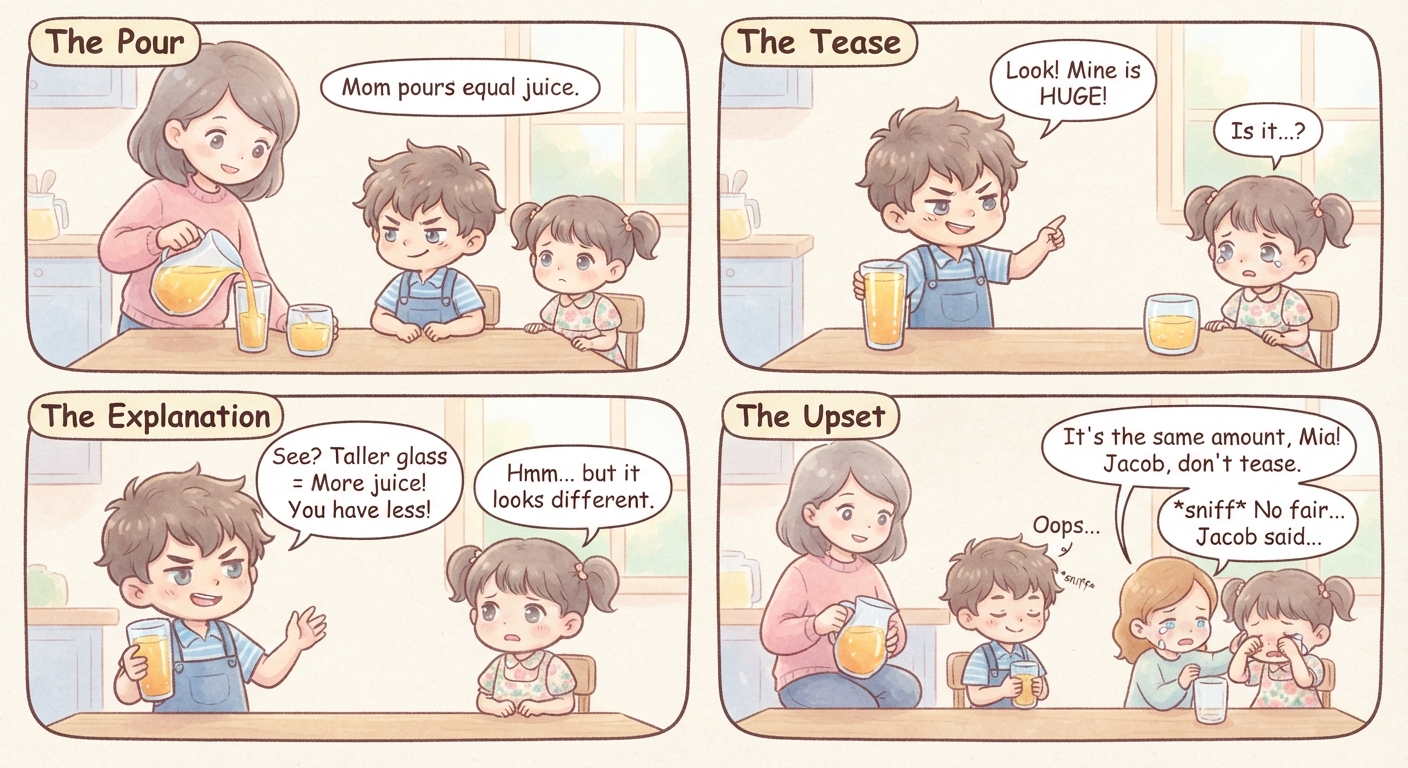
Centration

- inability to decenter

- Children focus on one aspect of a situation and neglect others.

- The child focuses only on one part & ignores the rest
<p>- <strong>inability to decenter</strong></p><p>- Children <u><mark data-color="#e7f4d4" style="background-color: rgb(231, 244, 212); color: inherit;">focus on one aspect of a situation and neglect others.</mark></u></p><p>- The child focuses only on one part &amp; ignores the rest</p>
15
New cards

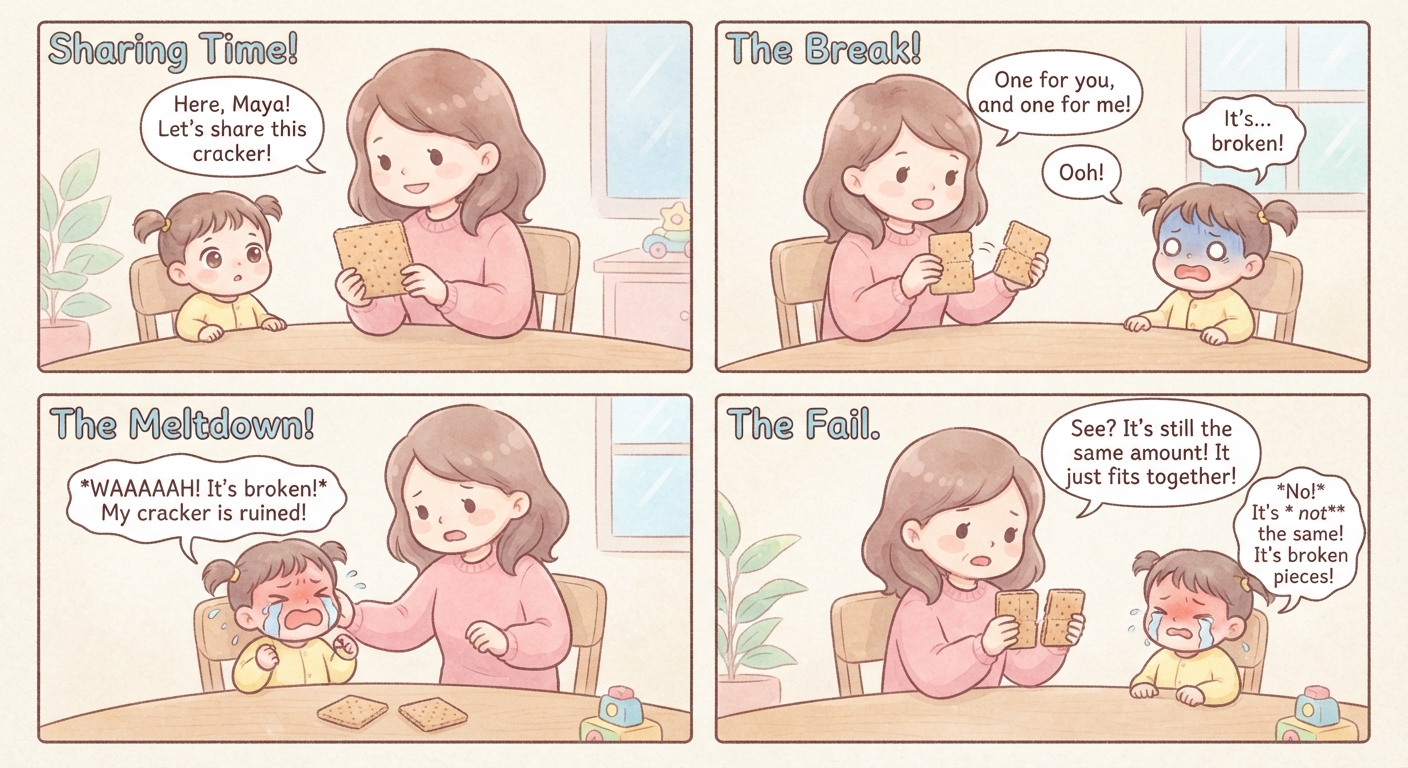
Irreversibility

- Children fail to understand that some operations or actions can be reversed, restoring the original situation.

- The child cannot mentally reverse an action
<p>- Children <strong>fail </strong>to understand that<u><mark data-color="#fde3ee" style="background-color: rgb(253, 227, 238); color: inherit;"> some operations or actions can be reversed, restoring the original situation.</mark></u></p><p>- The child cannot mentally reverse an action</p>
16
New cards

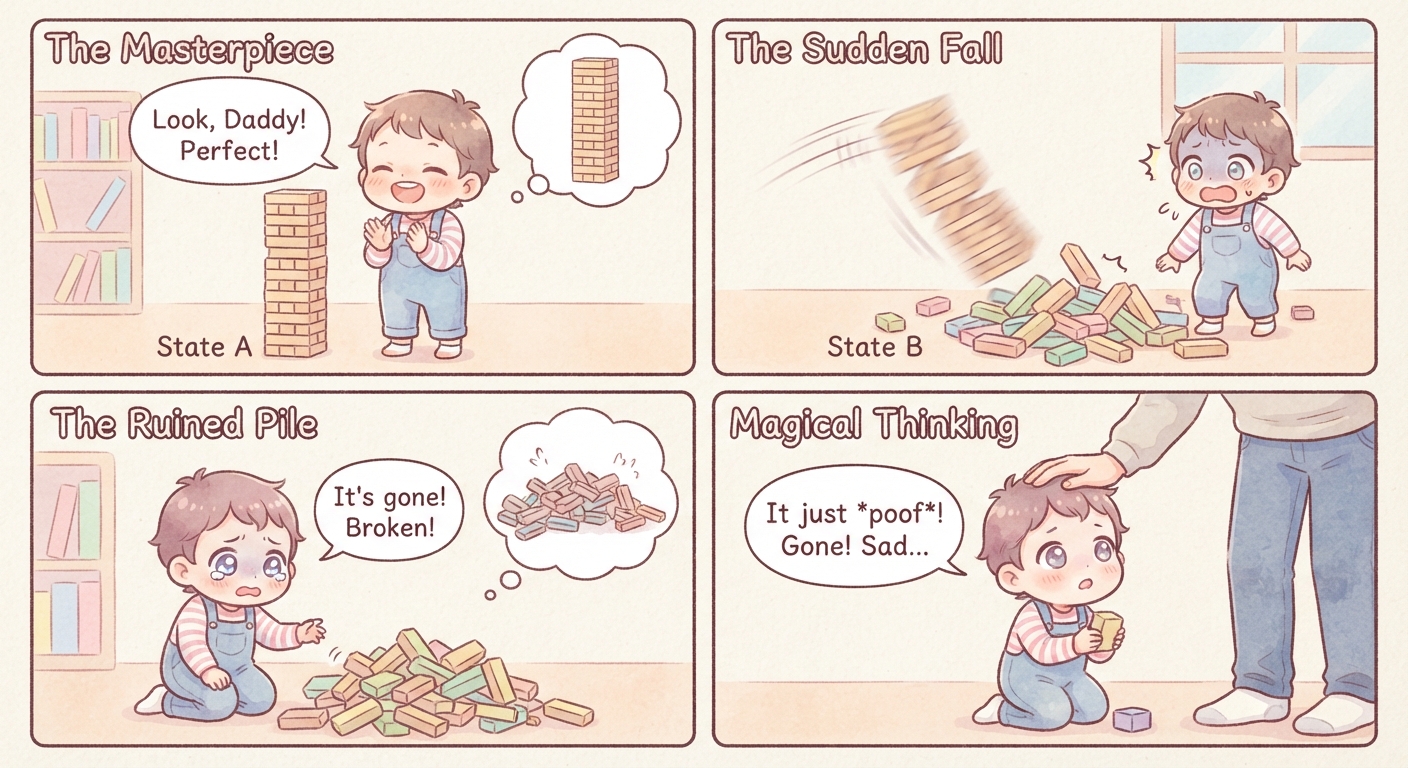
Focus on states rather than transformations

- Children fail to understand the significance of the transformation between states.
<p>- Children <strong>fail </strong>to understand the <u><mark data-color="#f2efd6" style="background-color: rgb(242, 239, 214); color: inherit;">significance of the transformation between states.</mark></u></p>
17
New cards

Transductive reasoning

- Children do not use deductive or inductive reasoning; instead, they see cause where none exists.

- Reasoning from one specific event to another specific event, often based on an incomplete connection

<p>- Children do not use deductive or inductive reasoning; instead,<u><mark data-color="#edfde7" style="background-color: rgb(237, 253, 231); color: inherit;"> they see cause where none exists</mark></u>.</p><p>- Reasoning from one specific event to another specific event, often based on an incomplete connection</p>
18
New cards

Egocentrism

- Children assume everyone else thinks, perceives, and feels as they do.

- The child has difficulty understanding that others may see things differently

<p>- Children <strong>assume </strong>everyone else thinks, perceives, and feels <strong>as they do</strong>.</p><p>- The child has <u><mark data-color="#e5f9fd" style="background-color: rgb(229, 249, 253); color: inherit;">difficulty understanding that others may see things differently</mark></u></p>
19
New cards

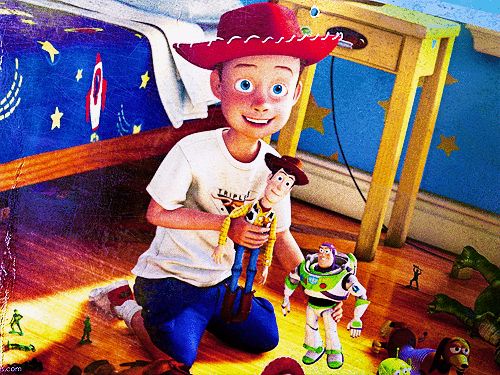
Animism

- Children attribute life to objects not alive.
<p>- Children <u><mark data-color="#f8f4d5" style="background-color: rgb(248, 244, 213); color: inherit;">attribute life to objects not alive.</mark></u></p>
20
New cards

Inability to distinguish appearance from reality

- Children confuse what is real with outward appearance.

ex: Courtney believes that if she wears blue-tinted glasses, then everything she sees really did turn blue.

<p>- Children <u><mark data-color="blue" style="background-color: blue; color: inherit;">confuse what is real with outward appearance.</mark></u></p><p><strong>ex:</strong> Courtney believes that if she wears blue-tinted glasses, then everything she sees really did turn blue.</p>
21
New cards

Conservation

- Understanding that quantity stays the same despite changes in appearance

<p>- Understanding that <u><mark data-color="#ebeffb" style="background-color: rgb(235, 239, 251); color: inherit;">quantity stays the same despite changes in appearance</mark></u></p>
22
New cards

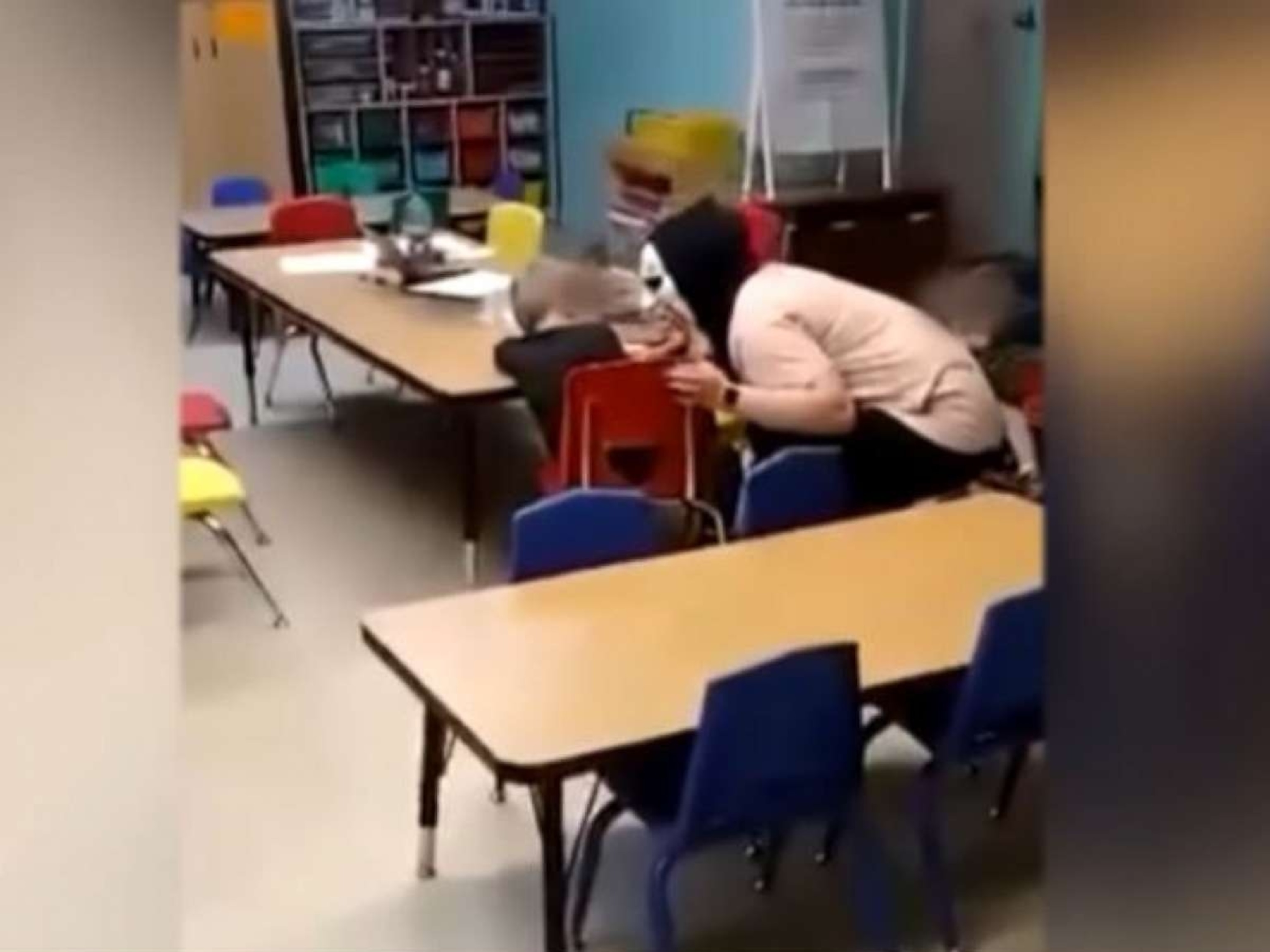
Appearance vs. reality

Judging things based on how they look rather than what they really are
<p><strong>Judging </strong>things based on how they look rather than what they really are</p>
23
New cards

symbolic function & pretend play

- Piaget's term for the ability to use mental representations (words, numbers, or images) to which a child has attached meaning.

- Using an object, word, or idea to represent something else

<p>- Piaget's term for the <u><mark data-color="#f4ebdd" style="background-color: rgb(244, 235, 221); color: inherit;">ability to use mental representations (words, numbers, or images)</mark></u> to which a child has attached meaning.</p><p>- Using an object, word, or idea to<u><mark data-color="yellow" style="background-color: yellow; color: inherit;"> represent something else</mark></u></p>
24
New cards

pretend play

Play involving imaginary people and situations; also called fantasy play, dramatic play, or imaginative play.

<p>Play involving <u><mark data-color="#f4e6d8" style="background-color: rgb(244, 230, 216); color: inherit;">imaginary people and situations</mark></u>; also called <strong>fantasy play, dramatic play, or imaginative play.</strong></p>
25
New cards

Bilateral integration

Ability to use both sides of the body together effectively

<p>Ability to <u><mark data-color="#f9e6fa" style="background-color: rgb(249, 230, 250); color: inherit;">use both sides of the body</mark></u> together effectively</p>
26
New cards

sensory memory

Holds sensory information very briefly

<p>Holds <strong>sensory </strong>information <strong>very briefly</strong></p>
27
New cards

Working memory

Holds information temporarily while we use or work with it

<p>Holds information <strong>temporarily </strong>while we use or work with it</p>
28
New cards

Long-term memory

Stores information for a long period

<p>Stores information for a<strong> long period</strong></p>
29
New cards

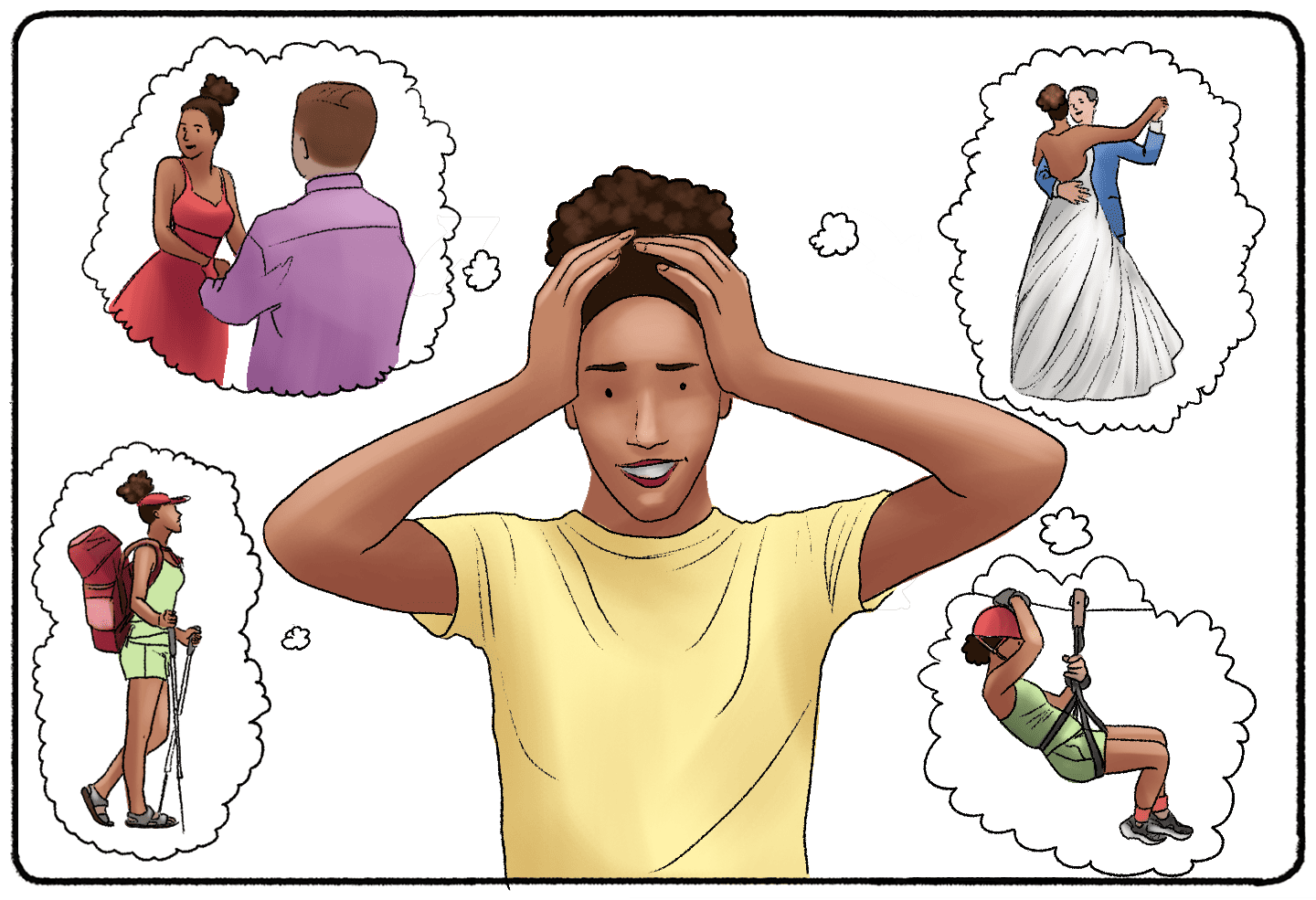
Autobiographical memory

Memories about your own life experiences
<p>Memories about your <strong>own life experiences</strong></p>
30
New cards

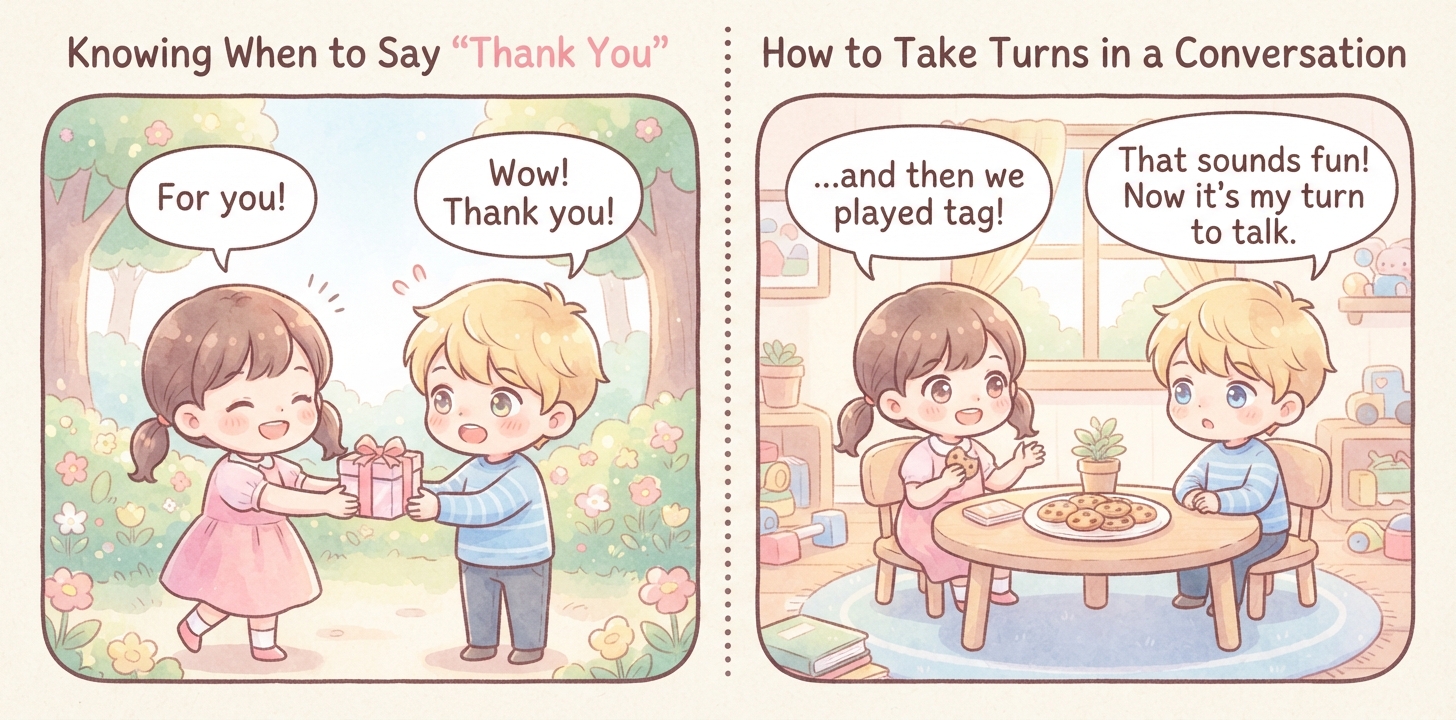
Pragmatics

How we use language appropriately in social situations
<p>How we use language appropriately in <strong>social situations</strong></p>
31
New cards

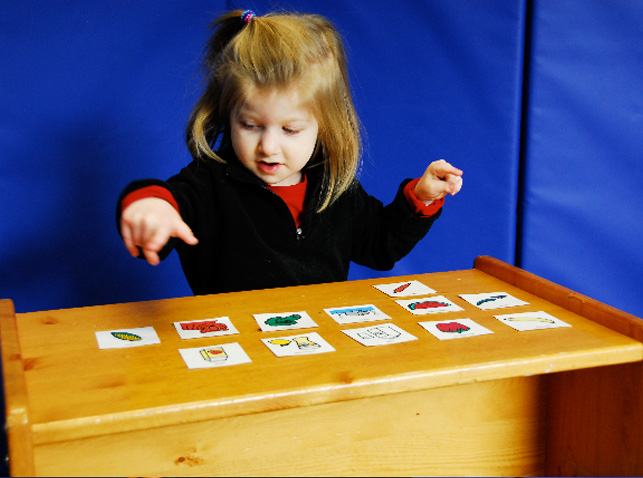
private speech

- Talking to yourself to guide your actions or thinking

- when children talk to themselves out loud to guide their own thinking or behavior.
<p><strong>- Talking to yourself</strong> to guide your actions or thinking</p><p>- when children talk to themselves out loud to guide their own thinking or behavior.</p>
32
New cards

Episodic memory

- Memory for personal experiences/events

- Personal experiences/events

<p>- Memory for<strong> personal experiences/events</strong></p><p>- Personal experiences/events</p>
33
New cards

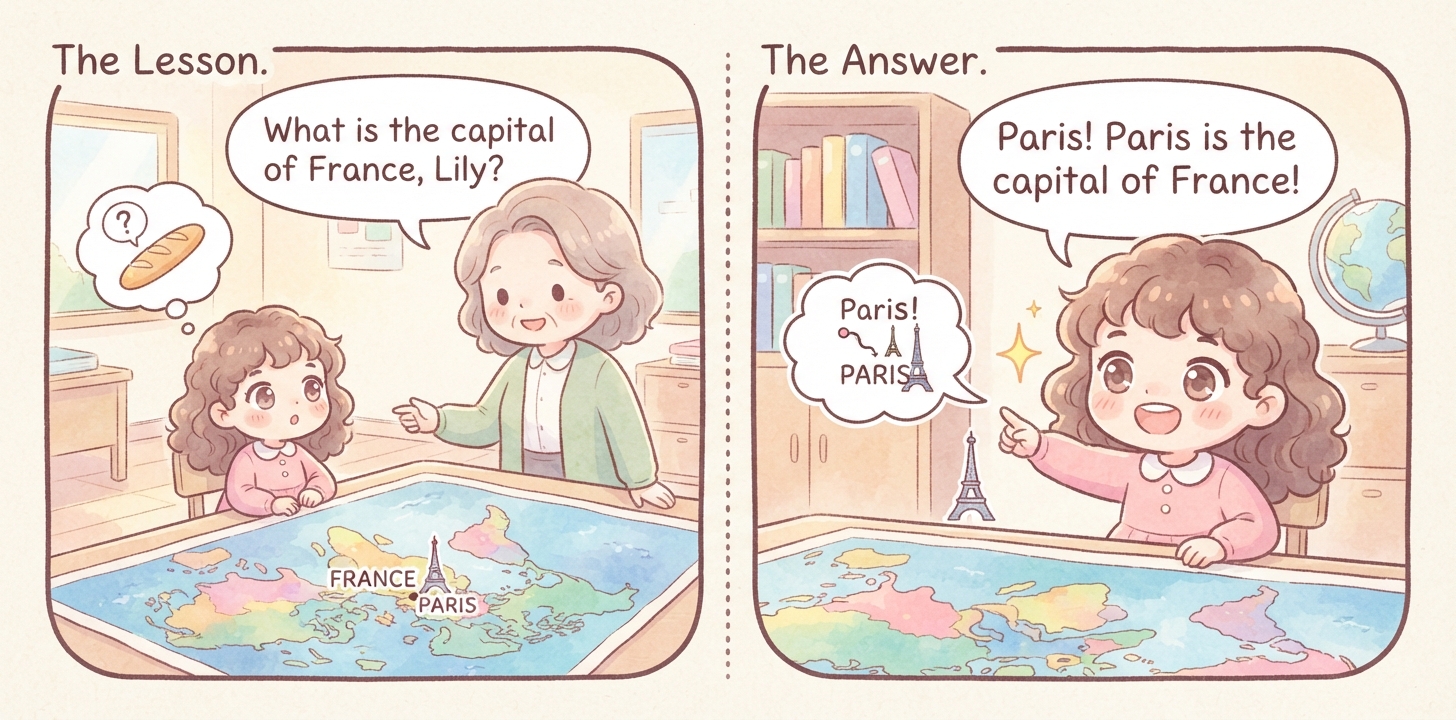
Semantic memory

Facts and general knowledge
<p><strong>Facts </strong>and<strong> general knowledge</strong></p>
34
New cards

Generic memory

Memory for general/repeated events

<p>Memory for<strong> general/repeated events</strong></p>
35
New cards

Encoding

- Taking in and changing information into a form the brain can remember

example: The child sees and focuses on the picture of the dog.

36
New cards

Storage

- Keeping the information in memory

Example: The child retains what the picture looked like.

37
New cards

Retrieval

Bringing stored information back when needed

example: Later, the child remembers what the picture looked like.

38
New cards

CENTRAL EXECUTIVE

- Manages attention and coordinates mental processes while solving a problem.

<p>- Manages attention and coordinates mental processes <u><mark data-color="#faeed2" style="background-color: rgb(250, 238, 210); color: inherit;">while solving a problem</mark></u>.</p>
39
New cards

METACOGNITION

Thinking about and monitoring your own thinking.

<p><strong>Thinking </strong>about and <strong>monitoring </strong>your own thinking.</p>
40
New cards

Stanford-Binet Intelligence Scales

measures: Intelligence/cognitive abilities

- Broad age range, including children

- used for ages 2 and up and take 45 to 60 minutes.

- used to measure fluid reasoning, knowledge, quantitative reasoning, visual-spatial processing, and working memory.

<p><strong>measures:</strong> Intelligence/cognitive abilities</p><p>-<u><mark data-color="#e0f7e8" style="background-color: rgb(224, 247, 232); color: inherit;"> Broad age range, including children</mark></u></p><p>- used for <strong>ages 2</strong> and up and <strong>take 45 to 60 minutes.</strong></p><p>- used to<u><mark data-color="#e4f7e3" style="background-color: rgb(228, 247, 227); color: inherit;"> measure fluid reasoning, knowledge, quantitative reasoning, visual-spatial processing, and working memory.</mark></u></p>
41
New cards

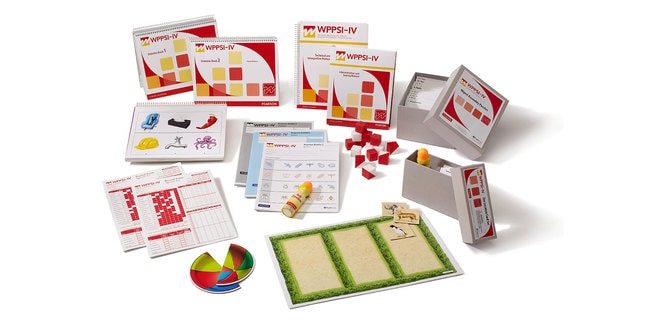
Wechsler Preschool and Primary

Scale of Intelligence, Revised (WPPSI-IV)

measures: Intelligence/cognitive abilities

- Young children/preschool-aged children

- An individual test that takes 30 to 60 minutes

- It yields separate verbal and performance scores as well as a combined score.
<p><strong>measures:</strong> Intelligence/cognitive abilities</p><p>- Young children/preschool-aged children</p><p>- An individual test that takes <strong>30 to 60 minutes</strong></p><p>- It <u><mark data-color="purple" style="background-color: purple; color: inherit;">yields separate verbal and performance scores</mark></u> as well as a combined score.</p>
42
New cards