5- Manufacturing of Sterile Dosage Form
 Call Kai
 Learn
Learn Practice Test
 Spaced Repetition
 Match
Match Flashcards
 Knowt Play
1/106

Earn XP
Description and Tags
Proverbs 16:3
Name | Mastery | Learn | Test | Matching | Spaced | Call with Kai | Chat |
|---|
No analytics yet
Send a link to your students to track their progress
107 Terms
b. Clean Room
[Sterile Production Area]
Room in which concentration of airborne particles are controlled
a. Airlock
b. Clean Room
c. Quarantine Area
d. Sterile Chamber
c. Positive pressure air flow
[Sterile Production Area]
Type of air flow supplied in clean rooms
a. Negative pressure air flow
b. Neutral pressure air flow
c. Positive pressure air flow
d. Laminar air flow
c. HEPA filter
[Sterile Production Area]
Filter that removes 99.97% of particles (≥0.3 μm) from air
a. Membrane filter
b. Sintered-glass filter
c. HEPA filter
d. Cotton filter
b. Diocylphthalate Test
[Sterile Production Area]
QC test for HEPA filter
a. Bubble Point Test
b. Diocylphthalate Test
c. Sterility Test
d. Kirby-Bauer Test
b. Airlock
[Sterile Production Area]
Space with interlocked doors used for entry into clean rooms
a. Buffer Zone
b. Airlock
c. Antechamber
d. Vestibule
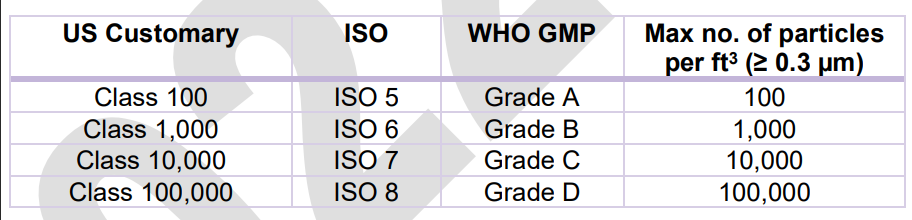
[Sterile Production Area]
Classification of Clean Rooms:
Terminal Sterilization
Aseptic Processing
[Sterile Manufacturing Operations]
Categories for Sterile Manufacturing Operations [2]
b. Terminal Sterilization
[Categories for Sterile Manufacturing Operations]
Product is prepared, filled and sterilized
a. Aseptic Processing
b. Terminal Sterilization
c. Depyrogenation
d. Membrane Filtration
b. Terminal Sterilization
[Categories for Sterile Manufacturing Operations]
Method of choice whenever possible
a. Aseptic Processing
b. Terminal Sterilization
c. Depyrogenation
d. Membrane Filtration
a. Aseptic Processing
[Categories for Sterile Manufacturing Operations]
Components are sterilized separately and assembled
a. Aseptic Processing
b. Terminal Sterilization
c. Depyrogenation
d. Membrane Filtration
Moist Heat
Dry Heat
Membrane Filtration
Gas
Ionizing Radiation
Sterilization Methods for Sterile Manufacturing Operations [5]
c. Moist Heat
[Sterilization Methods for Sterile Manufacturing Operations]
Sterilization method using autoclave or steam under pressure (121°C, 15psi, 15-20 minutes)
a. Dry Heat
b. Membrane Filtration
c. Moist Heat
d. Ionizing Radiation
c. Protein coagulation
[Sterilization Methods for Sterile Manufacturing Operations]
MOA of moist heat sterilization
a. Oxidation
b. Alkylation
c. Protein coagulation
d. DNA mutation
b. Bacillus stearothermophilus
[Sterilization Methods for Sterile Manufacturing Operations]
Biological indicator for moist heat sterilization
a. Bacillus subtilis
b. Bacillus stearothermophilus
c. Bacillus pumilus
d. Brevudimonas diminuta
b. Dry Heat
[Sterilization Methods for Sterile Manufacturing Operations]
Sterilization method using oven (160-170°C for 2-4 hours)
a. Moist Heat
b. Dry Heat
c. Gas
d. Ionizing Radiation
c. Oxidation
[Sterilization Methods for Sterile Manufacturing Operations]
MOA of dry heat sterilization
a. Protein coagulation
b. DNA mutation
c. Oxidation
d. Alkylation
d. Bacillus subtilis
[Sterilization Methods for Sterile Manufacturing Operations]
Biological indicator for dry heat sterilization
a. Bacillus stearothermophilus
b. Bacillus pumilus
c. Brevudimonas diminuta
d. Bacillus subtilis
c. Membrane Filtration
[Sterilization Methods for Sterile Manufacturing Operations]
Sterilization method using membrane filters (0.22 μm); for heat-labile solutions
a. Moist Heat
b. Gas
c. Membrane Filtration
d. Ionizing Radiation
b. Physical separation
[Sterilization Methods for Sterile Manufacturing Operations]
MOA of membrane filtration sterilization
a. DNA mutation
b. Physical separation
c. Alkylation
d. Oxidation
c. Brevudimonas diminuta
[Sterilization Methods for Sterile Manufacturing Operations]
Biological indicator for membrane filtration sterilization
a. Bacillus subtilis
b. Bacillus stearothermophilus
c. Brevudimonas diminuta
d. Bacillus pumilus
b. Gas
[Sterilization Methods for Sterile Manufacturing Operations]
Sterilization method using ethylene oxide, formaldehyde or β-propiolactone
a. Moist Heat
b. Gas
c. Ionizing Radiation
d. Dry Heat
c. Alkylation
[Sterilization Methods for Sterile Manufacturing Operations]
MOA of gas sterilization
a. Protein coagulation
b. Oxidation
c. Alkylation
d. DNA mutation
d. Bacillus subtilis
[Sterilization Methods for Sterile Manufacturing Operations]
Biological indicator for gas sterilization
a. Bacillus stearothermophilus
b. Brevudimonas diminuta
c. Bacillus pumilus
d. Bacillus subtilis
c. Ionizing Radiation
[Sterilization Methods for Sterile Manufacturing Operations]
Sterilization method using gamma or cathode rays
a. Gas
b. Moist Heat
c. Ionizing Radiation
d. Dry Heat
d. DNA mutation
[Sterilization Methods for Sterile Manufacturing Operations]
MOA of ionizing radiation sterilization
a. Alkylation
b. Oxidation
c. Protein coagulation
d. DNA mutation
b. Bacillus pumilus
[Sterilization Methods for Sterile Manufacturing Operations]
Biological indicator for ionizing radiation sterilization
a. Bacillus subtilis
b. Bacillus pumilus
c. Bacillus stearothermophilus
d. Brevudimonas diminuta
a. Autoclave (Steam under pressure)
[Sterilization Methods for Sterile Manufacturing Operations]
121°C, 15 psi, 15-20 minutes
a. Autoclave (Steam under pressure)
b. Oven
c. Dry heat
d. Filtration
b. Oven
[Sterilization Methods for Sterile Manufacturing Operations]
160-170°C for 2-4 hours
a. Autoclave (Steam under pressure)
b. Oven
c. Dry heat
d. Filtration
180°C for 4 hours
250°C for 45 minutes
650°C for 1 minute
[Sterilization Methods for Sterile Manufacturing Operations]
Oven setting for Depyrogenation [3]
Cleaning
↓
Product Preparation
↓
Filtration
↓
Filling
↓
Sealing
Steps in preparing Sterile Dosage Forms [5]
b. Cleaning
[Steps in preparing Sterile Dosage Forms]
Involves:
Manual cleaning and sterilization of equipment
Sanitation of clean rooms
Sterilization of components for aseptic processing
a. Product Preparation
b. Cleaning
c. Filtration
d. Filling
c. Product Preparation
[Steps in preparing Sterile Dosage Forms]
Considered the critical process, done in Class 100
a. Cleaning
b. Filtration
c. Product Preparation
d. Sealing
Spray-drying
Freeze-drying (lyophilization)
[Steps in preparing Sterile Dosage Forms]
Method used for DRY SOLIDS in product preparation
a. Filtration
b. Spray-drying or freeze-drying (lyophilization)
c. Sealing
d. Depyrogenation
Dissolution
Tonicity adjustment
Preservation
Filtration
[Steps in preparing Sterile Dosage Forms]
Method used for SOLUTIONS in product preparation
a. Dissolution, tonicity adjustment, preservation and filtration
b. Dissolution only
c. Tonicity adjustment only
d. Preservation only
Clarification
Cold Filtration
[Steps in preparing Sterile Dosage Forms]
Filtration methods for preparing Sterile Dosage forms include _______ [2]
b. Clarification
[Steps in preparing Sterile Dosage Forms]
Filtration method for 2-3 μm particles
a. Cold Filtration
b. Clarification
c. Membrane Filtration
d. Sterile Filtration
b. Cold Filtration
[Steps in preparing Sterile Dosage Forms]
Filtration method for 0.2-0.3 μm particles
a. Clarification
b. Cold Filtration
c. Terminal Filtration
d. Gravity Filtration
Gravity Filling
Pressure Filling
Vacuum Filling
[Steps in preparing Sterile Dosage Forms]
Filling methods for preparing Sterile Dosage forms include _______ [3]
c. Gravity Filling
[Steps in preparing Sterile Dosage Forms]
Filling method that is hand-operated
a. Pressure Filling
b. Vacuum Filling
c. Gravity Filling
d. Automatic Filling
b. Pressure Filling
[Steps in preparing Sterile Dosage Forms]
Filling method that is semi-automatic
a. Gravity Filling
b. Pressure Filling
c. Vacuum Filling
d. Manual Filling
c. Vacuum Filling
[Steps in preparing Sterile Dosage Forms]
Filling method that is fully automated
a. Pressure Filling
b. Gravity Filling
c. Vacuum Filling
d. Semi-automatic Filling
Tip-Seal (Bead-Seal)
Pull-Seal
[Steps in preparing Sterile Dosage Forms]
Ampoule Sealing methods for preparing Sterile Dosage forms include _______ [2]
b. Tip-Seal (Bead-Seal)
[Steps in preparing Sterile Dosage Forms]
Ampoule sealing method made by melting the tip of the neck of an ampoule to form a bead
a. Pull-Seal
b. Tip-Seal (Bead-Seal)
c. Heat-Seal
d. Fusion-Seal
c. Pull-Seal
[Steps in preparing Sterile Dosage Forms]
Ampoule sealing method made by heating the neck of a rotating ampoule below the tip and pulling the softened glass away
a. Tip-Seal (Bead-Seal)
b. Fusion-Seal
c. Pull-Seal
d. Heat-Seal
c. Packaging
An economic way of protecting, preparing, identifying, and containing the drug products, composed of container and closure
a. Storage
b. Labeling
c. Packaging
d. Sterilization
Primary Packaging
Secondary Packaging
Types of Packaging [2]
a. Primary Packaging
[Types of Packaging]
In direct contact with product
a. Primary Packaging
b. Secondary Packaging
a. Primary Packaging
[Types of Packaging]
Considered as immediate container, affects stability
a. Primary Packaging
b. Secondary Packaging
a. Primary Packaging
[Types of Packaging]
This may provide means of administration
a. Primary Packaging
b. Secondary Packaging
Bottles
Caps
Liners
Filler
Desiccant
[Types of Packaging]
Examples of primary packaging
a. Carton box, sticker label, inserts
b. Bottles, caps, liners, filler, desiccant
c. Conjugated box
d. Shipping container
b. Secondary Packaging
[Types of Packaging]
Outer packaging (not always present)
a. Primary Packaging
b. Secondary Packaging
b. Secondary Packaging
[Types of Packaging]
Encloses primary packaging
a. Primary Packaging
b. Secondary Packaging
Carton box
Sticker label
Inserts
Conjugated box
[Types of Packaging]
Examples of secondary packaging
a. Bottles, caps, liners
b. Filler, desiccant
c. Carton box, sticker label, inserts, conjugated box
d. Ampoules, vials
f. Well-Closed Container
[Classification of Container According to Protection Ability]
Protects content from extraneous solids
a. Tamper-Resistant Container
b. Child-Resistant Container
c. Light-Resistant Container
d. Hermetic Container
e. Tight Container
f. Well-Closed Container
e. Tight Container
[Classification of Container According to Protection Ability]
Protects contents from extraneous solids, liquids, and vapors
a. Tamper-Resistant Container
b. Child-Resistant Container
c. Light-Resistant Container
d. Hermetic Container
e. Tight Container
f. Well-Closed Container
e. Tight Container
[Classification of Container According to Protection Ability]
Protects from deliquescence, efflorescence, evaporation
a. Tamper-Resistant Container
b. Child-Resistant Container
c. Light-Resistant Container
d. Hermetic Container
e. Tight Container
f. Well-Closed Container
d. Hermetic Container
[Classification of Container According to Protection Ability]
Impervious to air or any other gas
a. Tamper-Resistant Container
b. Child-Resistant Container
c. Light-Resistant Container
d. Hermetic Container
e. Tight Container
f. Well-Closed Container
c. Light-Resistant Container
[Classification of Container According to Protection Ability]
Protects from photochemical degradation
a. Tamper-Resistant Container
b. Child-Resistant Container
c. Light-Resistant Container
d. Hermetic Container
e. Tight Container
f. Well-Closed Container
a. Amber bottle
[Classification of Container According to Protection Ability]
Example of Light-Resistant Container
a. Amber bottle
b. Clear glass bottle
c. Plastic container
d. Metal container
b. Child-Resistant Container
[Classification of Container According to Protection Ability]
Difficult for children under 5 years of age to open:
press down and turn
squeeze and turn
alight the ar
latch top
a. Tamper-Resistant Container
b. Child-Resistant Container
c. Light-Resistant Container
d. Hermetic Container
e. Tight Container
f. Well-Closed Container
press down and turn
squeeze and turn
alight the ar
latch top
[Classification of Container According to Protection Ability]
Mechanisms used in child-resistant containers include _____ [4]
a. Tamper-Resistant Container
[Classification of Container According to Protection Ability]
Uses an indicator which if breached or missing can provide evidence that tampering has occurred:
shrink seal/ wrap
breakable caps
tape seal
bottle seal
aerosol → only true tamper-resistant packaging
a. Tamper-Resistant Container
b. Child-Resistant Container
c. Light-Resistant Container
d. Hermetic Container
e. Tight Container
f. Well-Closed Container
shrink seal/ wrap
breakable caps
tape seal
bottle seal
aerosol
Mechanisms used in tamper-resistant containers include _____ [5]
c. Aerosol
[Classification of Container According to Protection Ability]
Only true tamper-resistant packaging
a. Shrink seal/wrap
b. Bottle seal
c. Aerosol
d. Breakable caps
a. Single Unit Container
[Classification of Container According to Quantity Held]
Contains a single dose only and packaged in nonresealable containers
a. Single Unit Container
b. Multiple Unit Container
a. Single Unit Container
[Classification of Container According to Quantity Held]
No antimicrobial agent added
a. Single Unit Container
b. Multiple Unit Container
b. WFI or SWFI
[Classification of Container According to Quantity Held]
Type of water used in single unit containers
a. BWFI
b. WFI or SWFI
c. Distilled water
d. Deionized water
b. 1000 mL
[Classification of Container According to Quantity Held]
USP limit for single unit containers
a. 30 mL
b. 1000 mL
c. 500 mL
d. 100 mL
Ampoules
Prefilled syringes
[Classification of Container According to Quantity Held]
Examples of single unit containers
a. Vials
b. Ampoules, prefilled syringes
c. Bottles
d. Multi-dose vials
Low cost
Not Breakable
Light weight
Chemically inert
Advantages of Single Unit Container [4]
Permeable
Low heat resistance
Not as clear as glass
Poor physical stability
Disadvantages of Single Unit Container [4]
b. Multiple Unit Container
[Classification of Container According to Quantity Held]
Contains multiple doses and packaged in resealable containers
a. Single Unit Container
b. Multiple Unit Container
b. Multiple Unit Container
[Classification of Container According to Quantity Held]
With antimicrobial agent added
a. Single Unit Container
b. Multiple Unit Container
b. BWFI
[Classification of Container According to Quantity Held]
Type of water used in multiple unit containers
a. WFI or SWFI
b. BWFI
c. Distilled water
d. Purified water
c. 30 mL
[Classification of Container According to Quantity Held]
USP limit for multiple unit containers
a. 1000 mL
b. 500 mL
c. 30 mL
d. 100 mL
c. Vials
[Classification of Container According to Quantity Held]
Example of multiple unit container
a. Ampoules
b. Prefilled syringes
c. Vials
d. Single-dose syringes
b. Glass
[Classification of Container According to Material Used]
This is the most widely used container material
This is made up of inorganic compounds (major component: SiO₂)
a. Plastic
b. Glass
c. Rubber
d. Metal
Rigid and transparent
Impermeable
Chemically resistant
Can be easily sterilized
[Classification of Container According to Material Used]
Advantage of Glass as Container material [4]
High cost
Fragile
Relatively heavy
Prone to leaching
[Classification of Container According to Material Used]
Disadvantage of Glass as Container material [4]
a. Silica (SiO₂)
[Classification of Container According to Material Used]
Major component of glass
a. Silica (SiO₂)
b. Soda (Na₂O)
c. Lime (CaO)
d. Alumina (Al₂O₃)
c. Type I
[Type of Glass]
Highly Resistant Borosilicate Glass
a. Type II
b. Type III
c. Type I
d. Type IV/NP
b. Boron
[Type of Glass]
Component of glass that decreases coefficient of expansion
a. Silica
b. Boron
c. Sodium
d. Calcium
Pyrex
Borosil
[Type of Glass]
Brand names of Highly Resistant Borosilicate glass
a. Soda Lime Glass
b. Pyrex, Borosil
c. General Soda Lime Glass
d. Treated Soda Lime Glass
c. Type II
[Type of Glass]
Treated Soda Lime Glass
a. Type I
b. Type III
c. Type II
d. Type IV/NP
c. Type III
[Type of Glass]
Soda Lime Glass
a. Type I
b. Type II
c. Type III
d. Type IV/NP
c. Type III
[Type of Glass]
Type of glass used for Dry Powder Packaging
a. Type I
b. Type II
c. Type III
d. Type IV/NP
d. Type IV/NP
[Type of Glass]
General Soda Lime Glass
a. Type I
b. Type II
c. Type III
d. Type IV/NP
b. Plastic
[Classification of Container According to Material Used]
Container material composed of organic polymers of HMW
a. Glass
b. Plastic
c. Rubber
d. Metal
b. Thermoplastic
[Types of Plastic]
Soft when heated and hard when cooled
Flexible and squeezable
a. Thermoset
b. Thermoplastic
a. Thermoset
[Types of Plastic]
Permanently hard
Rigid
a. Thermoset
b. Thermoplastic
e. Polyethylene Terephthalate (PET)
[Types of Polymers for Plastic]
For beverages
a. Polypropylene (PP)
b. Low-density Polyethylene (LDPE)
c. Polyvinyl Chloride (PVC)
d. High-density Polyethylene (HDPE)
e. Polyethylene Terephthalate (PET)
d. High-density Polyethylene (HDPE)
[Types of Polymers for Plastic]
Used as hard thermoset for solid dosage forms
a. Polypropylene (PP)
b. Low-density Polyethylene (LDPE)
c. Polyvinyl Chloride (PVC)
d. High-density Polyethylene (HDPE)
e. Polyethylene Terephthalate (PET)
c. Polyvinyl Chloride (PVC)
[Types of Polymers for Plastic]
Used for blister packs
a. Polypropylene (PP)
b. Low-density Polyethylene (LDPE)
c. Polyvinyl Chloride (PVC)
d. High-density Polyethylene (HDPE)
e. Polyethylene Terephthalate (PET)
b. Low-density Polyethylene (LDPE)
[Types of Polymers for Plastic]
Used as thermoplastic for squeeze bottles and medicine droppers
a. Polypropylene (PP)
b. Low-density Polyethylene (LDPE)
c. Polyvinyl Chloride (PVC)
d. High-density Polyethylene (HDPE)
e. Polyethylene Terephthalate (PET)
a. Polypropylene (PP)
[Types of Polymers for Plastic]
Used for autoclave containers
a. Polypropylene (PP)
b. Low-density Polyethylene (LDPE)
c. Polyvinyl Chloride (PVC)
d. High-density Polyethylene (HDPE)
e. Polyethylene Terephthalate (PET)
b. Metal
[Classification of Container According to Material Used]
Container material used in aerosol cans and collapsible tubes
a. Rubber
b. Metal
c. Paper
d. Foils
c. Foils, Films and Laminates
[Classification of Container According to Material Used]
Container material used in blister packs and strip packs
a. Rubber
b. Metal
c. Foils, Films and Laminates
d. Paper
b. Rubber
[Classification of Container According to Material Used]
Container material used in vial stoppers and syringe plugs
a. Metal
b. Rubber
c. Foils
d. Paper
d. Paper
[Classification of Container According to Material Used]
Container material used for divided powders
a. Rubber
b. Metal
c. Foils
d. Paper
e. Cold
[Storage Conditions]
NMT 2 to 8°C
a. Excessive Heat
b. Warm
c. Controlled Room Temperature
d. Cool
e. Cold
f. Refrigerator
g. Freezer
h. Room Temperature