LING 313 Quiz #3
 Call Kai
 Learn
Learn Practice Test
 Spaced Repetition
 Match
Match Flashcards
 Knowt Play
1/60

There's no tags or description
Looks like no tags are added yet.
Name | Mastery | Learn | Test | Matching | Spaced | Call with Kai | Chat |
|---|
No analytics yet
Send a link to your students to track their progress
61 Terms
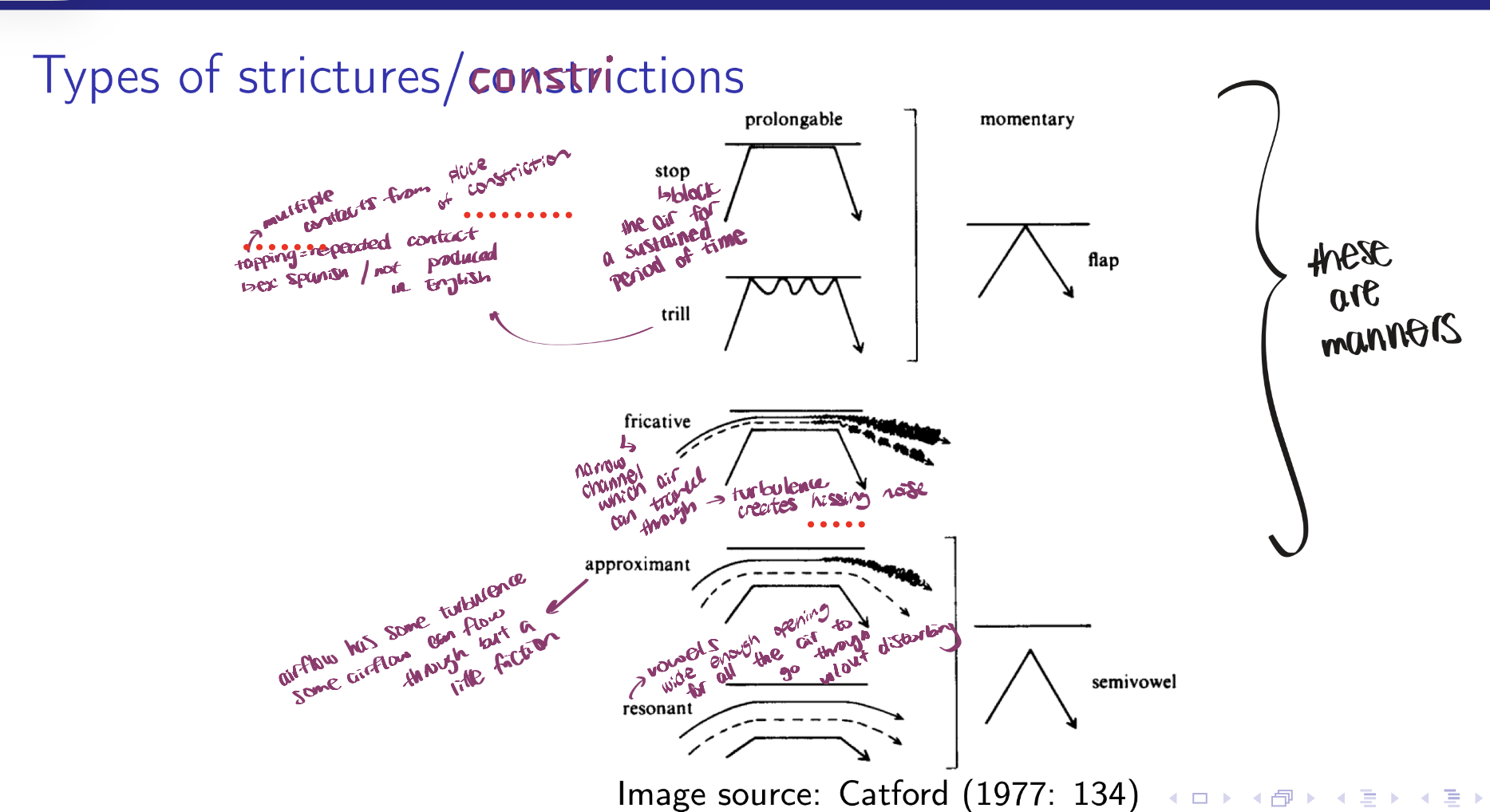
Explain the types of strictures/constrictions
Stop sounds
stop sounds involve a complete obstruction of the airflow in the vocal tract
the blockage can be sustained for a longer stretch of time
gemination
prolonged stop
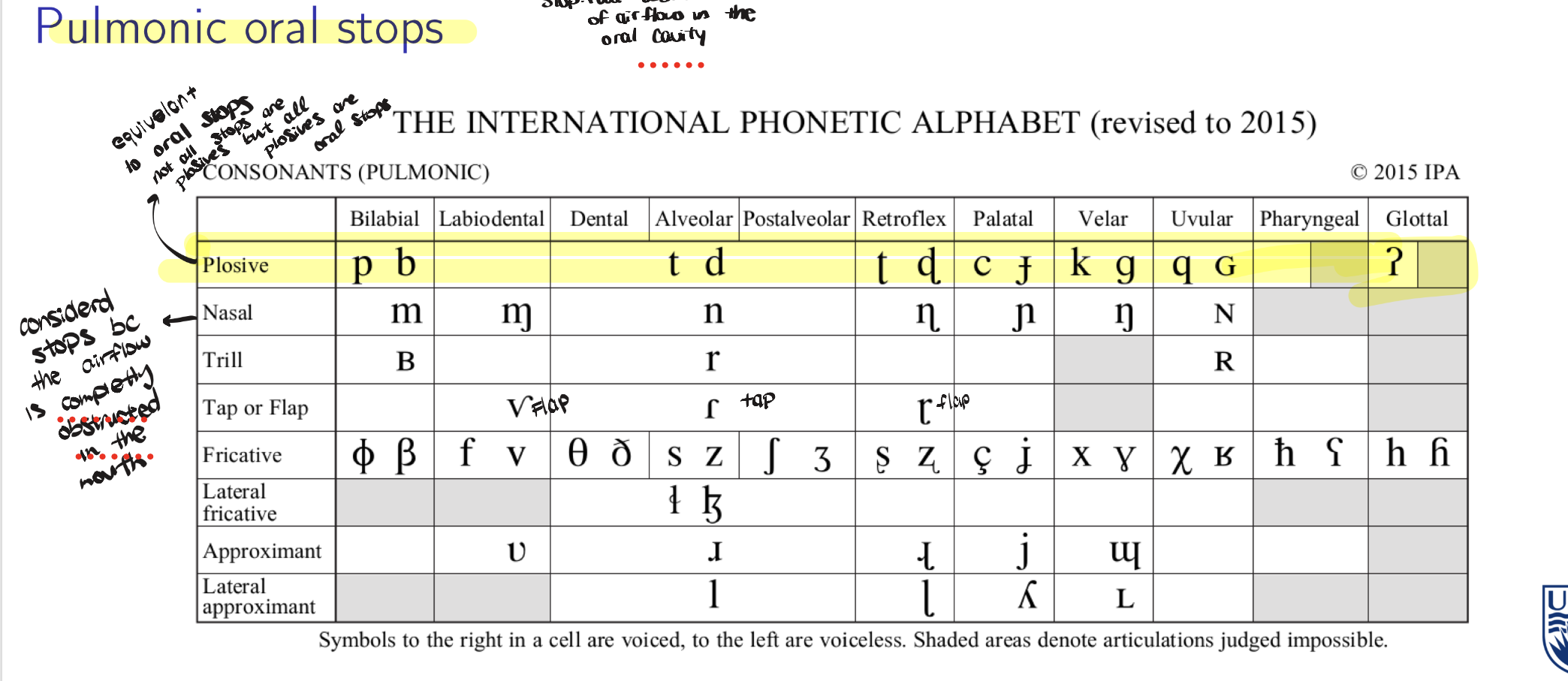
What types of sounds count as stops
Plulmonic Oral stops
Pulmonic Nasal Stops
All non-pulmonic stops
ejectives
implosives
clicks
Explain Pulmonic Oral Stops
Tap vs Flap
Tap: The tongue strikes its point of contact directly in an up-and-down motion, acting like a very brief stop.
Flap: The tongue starts retracted (often curled or pulled back) and strikes the ridge in passing with a forward or sweeping motion.

Labials
almost all languages have bilabial pulmonic stops
Labio Dental Stops
not in the ipa
hard to make these sounds - with teeth and lips
rumoured to exist in a few Bantu languages but most people cannot make a complete occlusion between their lower lip and upper teeth
Linguo Labial Stops
requires a lot of effort
lips and tongue sounds
need to significantly protrude the tongue to make sure you have a full seal
occur in Vao and V’enen Taut (Austroneisan languages)
linguo dental
its possible but complete obstruction is not easy
What are Coronals
sounds that are produced by closing the tongue tip or blade against a location on the upper front surface of the hard palate
flexible moveable part
Coronal Stop types
many languages have more complex sets of coronal stops with the location of contact on the upper surface can be different
dental, alveolar, post-alveolar (3 regions, languages tend to pick only 1)
the part of the tongue that makes the contact in Coronals
can be different
tip or blade
shape of the tongue profile in coronals
flat, domed, tip turned up can be different
Apical Stops
coronal stops made by the tip of the tongue
extra classification under coronal
Laminal Stops
coronal stops made by the blade of the tongue
extra classification under coronal
Palatogrpahy
how we can see where the constrictions are being made
protrude the tongue, paint the tongue w activated charcol, make sound and check with a mirror where the contact was made
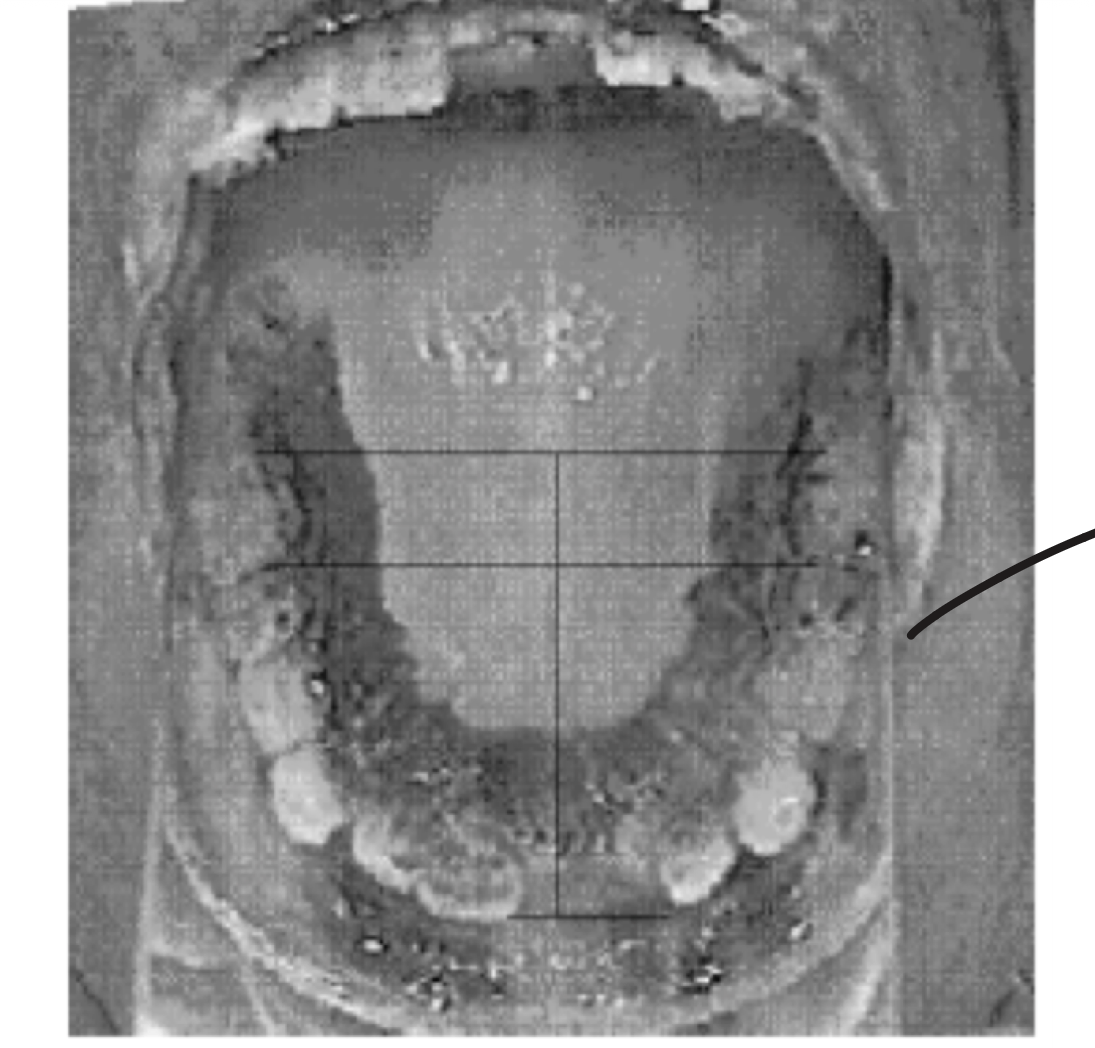
laminal dental (coronal)
broad contact all along the inside the suface of the upper teeth and beyond

Laminal post-alveolar
broad contact well behind the upper teeth
more behind → post alveolar
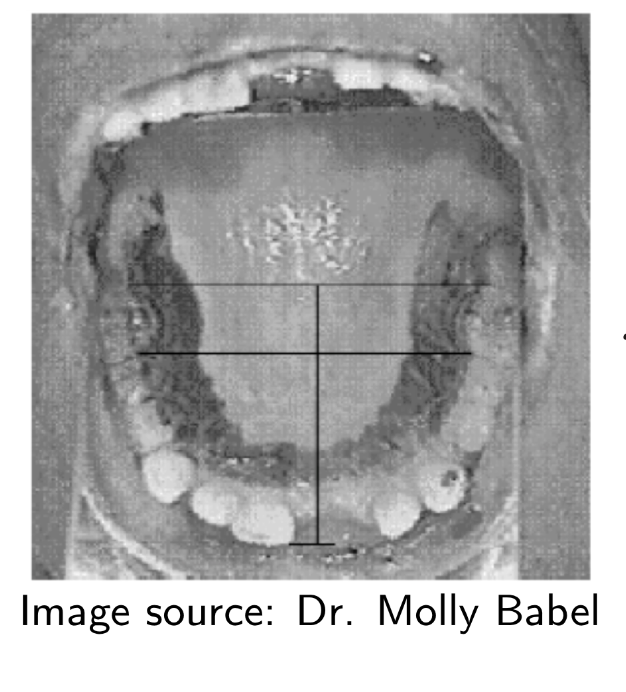
apical alveolar
narrow contact just behind the upper teeth
more alveloar bc more contact with the teeth
retroflexsion contact point
contact between the alveolar ridge and the hard palate
the degree varies for retroflex
typically think of retroflexsion as a curled tongue but that is not always the case

Dorsal Stops
dorsal stops involve the tongue body either front or back
for most languages this is in the velar region but languages also have palatal and uvular stops
Palatal stops
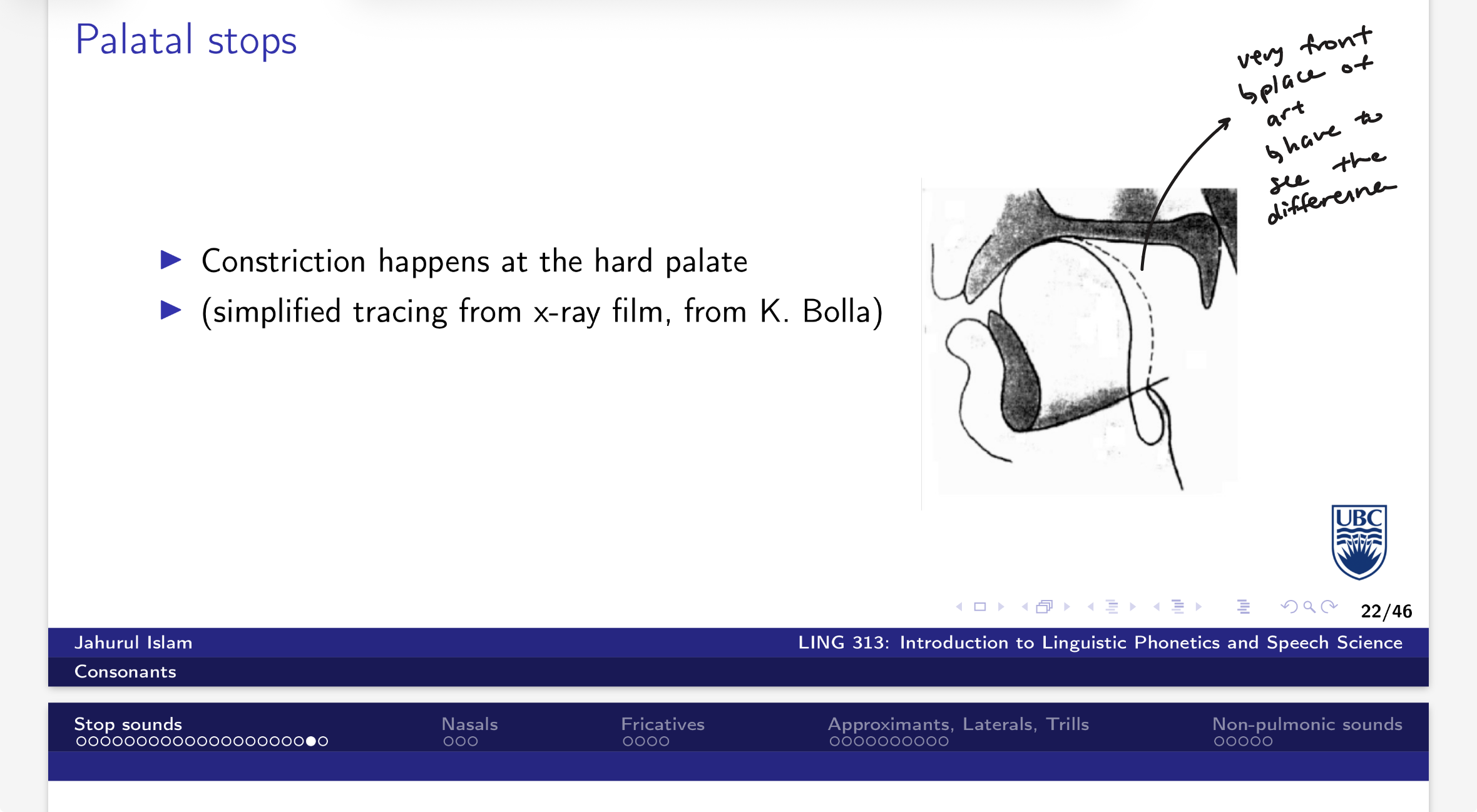
constriction happens at the hard palate
Uvular stops
these are common in many languages of the americas, semitic languages, and causacsion languages
Glottal Stops
produced by closing the vocal folds firmly together
closure in continueous speech can often be incomplete just a tightening may indicate a glottal stop
Nasals explain
closure remains the same as in stops
but the air is now allowed to flow through the nasal passage by lowering the velum
the oral cavity then forms a side cavity
Where is there no nasal sounds (place)
Pharyngeal and gottal PoA
How many nasal sounds is typical for a language
2 nasal sounds
usually (m, n, Ng)
Fricatives
can happen at all PoA
and voiced or unvoiced
9 in English
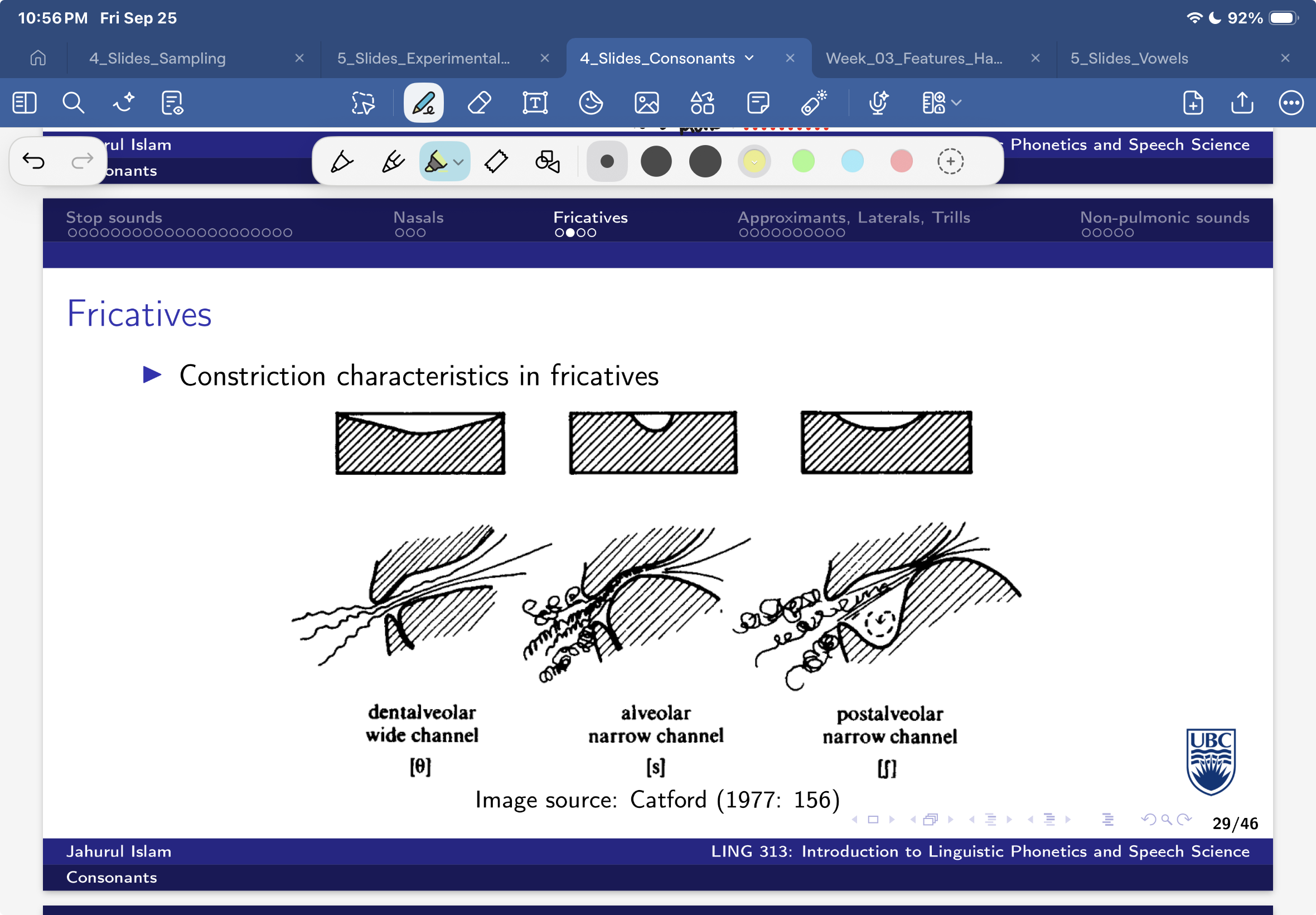
Constriction characteristics in Fricatives
Sublingual Cavity
for fricatives
how much pocket of air is right below the tongue blade
Fricatives
typologically speaking languages generally have either bilabial or labiodental fricatives ‘
english have [f]
approximates
made with a relatively open vocal tract
these are quite similar to vowels and in many languages there is variation between approximant consonats and vowels
vowel vs approximant
question can often be a matter of phonology and not phonetics
often unlike vowels approximates are not syllable nucleus
Laterals explain
tongue makes a constriction in the center bue the tongue is open Laterally
the tongue is lowered on at one or both sides to let air pass
location of laterals
location of the central constrcition can vary between dental and velar positions
lateral fricative
when lateral opening is narrow enough to create turbulece
lateral approximate
when lateral opening is wider
a stop closure can be released by lowering one side of the tongue
Medial bracing
alveolar ridge; and side of the tongue
trills
are aerodynamic
vibrations of one articulator against another within the oral cavity
trills involve a series of occlusions with seperate muscle contractions for each
the lips, tongue tip and uvula can all be set in vibration if the articulator positions and the airflow conditions are right
Trills Frequency
tongue trills are quite common /r/
bilabial and uvular trills are comparatively rate /B, R/
trills often do not have multiple contacts (as in their canocical form) in casual speech
Taps and Flaps
these sounds are made with quick movements of the articulators to a contact position
Taps vs Flaps
while many use these two terms interchangeable they are technically different
Tap: movement is directly up and down “potty”
Flap: more of a passing movement from behind “party”
non pulmonic sounds
clicks
implosives → control and mvoe the larynx high
ejectives
Vowel chart shape explain
more gradient and less categorical than consonants
mimicks the tongue/oral cavity
Articulatory reference points for vowels
tongue height, backness, and lip position
How do we actually describe vowels
So although we describe vowels using tongue height, backness, and lip rounding, linguists usually don’t determine the vowel by literally measuring where the tongue is.
Auditory evaluation → listen to the vowel and judge what IPA vowel it sounds closest to.
Acoustic measurement → analyze the sound wave, especially its formant frequencies.
What is the vowel chart based off of
Daniel Jones concept of cardinal vowels
Position #1
tongue body as high and forward in the mouth as possible
Position #5
tongue as low and as far back as possible; jaw wide open
Position #8
tongue as high and back in the mouth as possible lips tightly pursed
Primary Cardinal Vowels

Secondary Cardinal Vowels

Cardinal Vowels bais
biased towards french
system chosen for the cardinal voewls were influenced by the contemporary french vowel system
How is the cardinal vowel system used
primary means to transcribe/describe vowels before modern computers came into being
vowels from a new languages were described in reference to the cardinal vowels
ex: a vowel between CV1 and CV2
a vowel a little lower and more retracted than CV2 etc
CV not the vowels of any language but reference points for the comparison of vowel qualities of particular languages
Limitations of the cardinal vowels
central vowels are missing (except for the two high ones)
especially low central vowels
other phonologically contrastive vowels are attested in world languages and it’s useful to have symbols for them
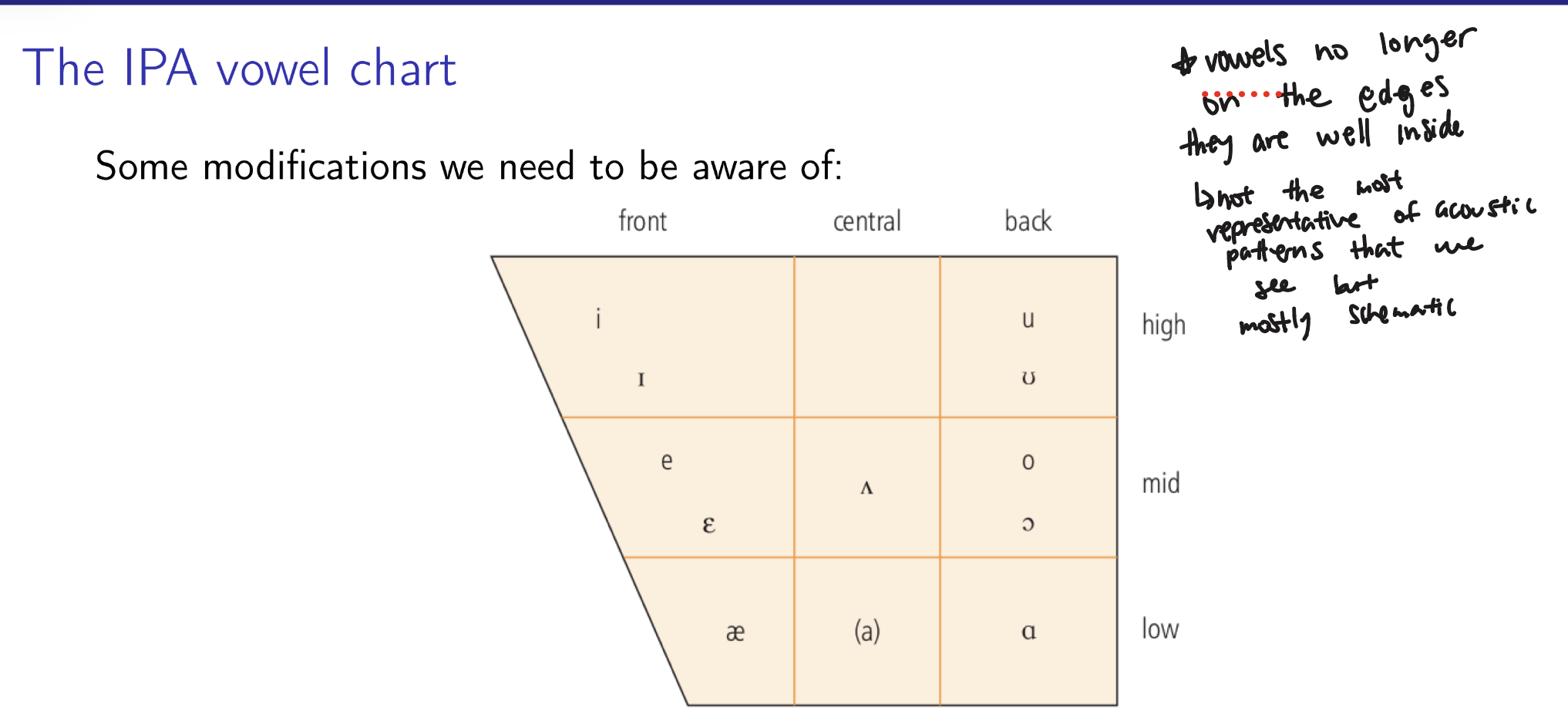
Modifications IPA Vowel Chart

More modefications
What do the vowel symbols refer to
refer to articulatory positions (high, low, front, back)
auditory impressions are laregly based on acoustic characteristics
acoustic descriptions allow us to quantify intermediate soudns
Nasal vowels
mostly oral but they may be nasalized
nasalization commonly occurs in vowels next to nasal consonants but can be a contrastive property of vowel systems
types of vowels length
