Chapter 1 - The microbial world
 Studied by 0 people
 Call Kai
 Learn
Learn Practice Test
 Spaced Repetition
 Match
Match Flashcards
 Knowt Play
1/56

There's no tags or description
Looks like no tags are added yet.
Name | Mastery | Learn | Test | Matching | Spaced | Call with Kai |
|---|
No analytics yet
Send a link to your students to track their progress
57 Terms
Microbial culture vs. a medium
Culture: A collection of cells that have been grown in or on a nutrient medium.
A medium is a liquid or solid nutrient mixture that contains all of the nutrients required for a microorganism to grow.
Specific prokaryotic organelles
Magnetosome → a compass needle for a prokaryote, senses the magnetic field of the Earth
Anammoxosome → A type of vacuole found in ammonium-oxidizing bacterium
Bacterial microcompartment (BMC) → A compartment surrounded by a protein shell where certain reactions take place that often have a toxic intermediate.
Who first observed microbes?
Antonie van Leeuwenhoek
Made his own lenses
First microscope.
Who first observed eukaryotic microbes?
Robert Hooke
First to describe cells
Introduced the term cell
Developed the already existing microscope
What are microbes
Single-celled microscopic organisms
Are essential for the well-being and functioning of other life forms and the planet.
Eukaryotes vs. Prokaryotes
Prokaryotes | Eukaryotes |
Do not have a nucleus, the DNA is free in the cytoplasm → concentrated in the nucleoid | Has a nucleus |
Protein synthesis all happens at similar times in the cytoplasm. | mRNA must travel through the nucleus membrane (transcription and translation are physically separated) |
Exists of bacteria & archaea | |
One circular chromosome + plasmids (replicate independently) | Multiple chromosomes |
No mitochondria, no chloroplasts, no endoplasmic reticulum | Has all of those |
Bacteria Have a peptidoglycan cell wall, archaea don’t | No cell wall in animals and a simple cell wall in plants |
Ribosomes is 70S → Ribosomes make amino acid chains, peptides | Ribosomes is 80S, except when the ribosomes is in a mitochondria and chloroplast. |
Have no membrane-enclosed organelles | Has membrane-enclosed organelles |
DNA is circular | DNA is linear |
Two types of prokaryotes
Bacteria
Archaea → very different from bacteria but similar to eukarya
Genome
Possessed by all cells
The full set of genes in a cell.
Chromosomes
A condensed and organized way to store the genes.
DNA storage eukaryotes vs prokaryotes
Eukaryotes: DNA is present as several linear molecules within the membrane-enclosed nucleus.
Prokaryotes: Chromosomes aggregate to form the nucleoid, which is not visible in the electron microscope and is not enclosed by a membrane.
Most prokaryotes have only a single chromosome, but many also contain one or more small circles of DNA
These are known as plasmids.
Plasmids contain no essential genes but more additional ones.
Metabolism
All cells do this
Process through which nutrients are acquired from the environment and transformed into new cellular materials and waste products
Transcription
The process by which the information encoded in DNA sequences is copied into an RNA molecule
Translation
The process whereby the information in an RNA molecule is used by a ribosome to synthesize a protein.
Horizontal gene transfer
When prokaryotic cells can exchange genes with neighboring cells.
Size prokaryotic cells
Between 0.5 and 10 micrometers
can vary, smallest can be 0.2 micrometer and largest can be more than 600 micrometers long.
size eukaryotic cells
Between 5 and 100 micrometers.
Smallest known is 0.8 micrometers and the largest can be multiple centimeters.
What influences cell size
Cell structure
Eukaryotes, which are more intracellularly complex, can actively transport molecules and macromolecules within the cytoplasm.
Prokaryotes, rely on diffusion for transport through the cytoplasm and this limits their size.
If prokaryotes are too big, diffusion will take much longer.
Cell size and transport
Big cells are not fit for diffusion as it will be super slow
Instead as cell size increases, it becomes advantageous to have cellular structures that facilitate transport and compartmentalize cellular activities.
Cells size and surface area ratio (S/V)
As cell size increases, its S/V ratio decreases
The larger the S/V ratio, the better
Some cells have a larger surface area which will increase their ratio.
Importance of S/V ratio
The S/V ratio of a cell controls many of its properties
Including how fast it grows and shape
As cell size decreases, the S/V ratio of the cell increases, and this means that small cells can exchange nutrients and wastes more rapidly than can large cells.
As a result smaller cells are more efficient
Properties of all cells
Structure
All cells have a cytoplasmic membrane, cytoplasm, a genome made of DNA and ribosomes.
Metabolism
Cata and anabolism occurs in all cells.
Growth
DNA is converted into proteins which can be used to grow.
Evolution
Chance mutations in DNA cause new cells to have new properties, thereby promoting evolution.
Properties of some cells
Differentiation
Some cells can form new cell structures such as a spore
Communication
Cells interact with each other by chemical messengers
Motility
Some cells are capable of self-propulsion
Horizontal gene transfer
Cells can exchange genes by several mechanisms.
Name of a cell that is spherical or ovoid in morphology
Coccus (plural, cocci)
Cylindrically shaped cell
Known as a rod or a bacillus (plural, bacilli)
A spiral shaped cell
Is known as a spirillum
Cell that is slightly curved and comma-shaped
Vibrio
Spirochetes
Looks like a spirilla due to its spiral shape.
Is different from spirilla because its much more flexible than a spirilla.
Multiple cocci together
In pairs: diplococci
Long chains: streptococci
In three-dimensional cubes: tetrads or sarcinae
Grapelike clusters: Staphylococci
The three domains
Bacteria
Archaea
Eukarya
Properties of bacteria
Undifferentiated
Single celled (mostly, some are multicellular)
Between 0.5 and 10 micrometers
Properties of archaea
Live in extreme environments, but can also be found outside of them
Lacks any known disease-causing species.
Eukarya
Relatively young compared to prokaryotes and archaea
The major lineages of eukarya are traditionally called kingdoms instead of phyla.
Characteristics of viruses
Smaller than bacteria
Non-living because they need a host to multiply
Lack cytoplasmic membrane, cytoplasm, and ribosomes.
Carry out no metabolic processes, instead they take over the metabolic systems of infected cells and turn them into vessel for producing more viruses.
Instead of having a genome composed of double stranded DNA, viruses have genomes composed of DNA or RNA that can be either double or single stranded.
The genome is usually very small
Evolution of microbial groups
Initially no oxygen was present so the first microbes were anaerobic. (Between 2.8 and 4.3 billion years ago)
After a billion years, anoxygenic phototrophic microbes, which harvest energy from sunlight appeared. (These do not produce oxygen)
Afterwards Cyanobacteria appeared, which are differentiated versions of the anoxygenic phototrophs, these did oxygenic photosynthesis, producing oxygen.
Then we got modern eukaryotes
Influence of microbes on the earth as it is now
Microbes, especially bacteria/archaea are the oldest form of life on earth (3,8 billion years)
They have created the environmental conditions as they are now.
LUCA
The last universal common ancestor
All cellular organisms share certain characteristics, therefore certain genes are found in all cells
60 genes are universally present in cells of all three domains.
Microbial abundance and activity in the biosphere
There are an estimated 2×1030 microbial cells on earth.
The total amount of carbon present in all microbial cells is a significant fraction of Earth’s biomass.
Additionally, the total amount of nitrogen and phosphorus within microbial cells is almost four times that in all plant and animal cells combined.
Microbes also represent a major fraction of the total DNA, about 31%
Extremophiles
Microbes that are abundant in habitats that are much too harsh for other forms of life.
Oxygen, microbes and water
Excess nutrients added to a habitat can cause aerobic microorganisms to grow rapidly and consume O2, rendering the habitat anoxic.
For example due to human activities excess nutrients can enter the ocean, stimulating excessive microbial growth, causing the anoxic zones.
The anoxic zones can cause massive mortality of fish and shellfish in coastal oceans worldwide.
Effect of microbes on disease
At the beginning of the twentieth century, more than half of all humans died from infectious diseases caused by bacterial and viral pathogens.
Today, infectious diseases are largely preventable due to advances in our understanding of microbiology
Advances in:
Medicine: vaccination and antibiotic therapy
Engineering: water and wastewater treatment
Food safety: pasteurization
Better understanding of how microbes are transmitted.
Microbes, agriculture, and human nutrition
Microbes can help in cycling of nitrogen, sulfur and carbon compounds
E.g. legumes live in close association with bacteria that form structures called nodules on their roots.
In the nodules these bacteria convert atmospheric nitrogen into ammonia through nitrogen fixation.
Works as a natural fertilizer
Rumen also have microbes in their colon to ferment cellulose.
Microbes and food
Can cause spoilage
Therefore microbial food safety is important.
Microbes can also be beneficial with regards to food, to improve food safety and to preserve foods
Some foods are made by fermentation and can improve shelf life
Can be used for brewing too
Magnification and resolution
Magnification; Describes the capacity of a microscope to enlarge an image
Resolution: The ability to distinguish two adjacent objects as distinct and separate
Differential stains: the gram stain
A method to divide bacteria into two groups
Gram positive: appear purple violet
Gram negative: appear pink
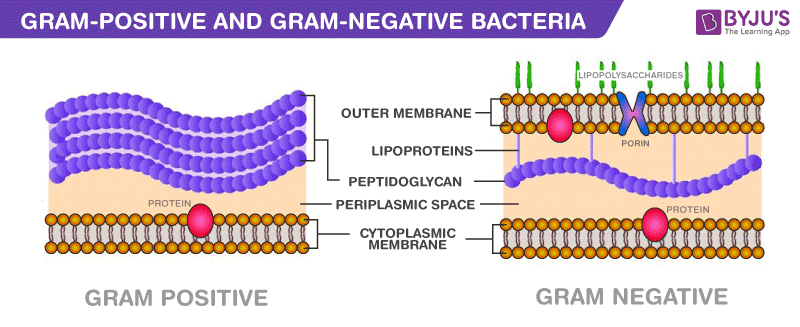
Louis Pasteur experiment
Did an experiment to debunk spontaneous generation
Heated liquid in a swan neck flask to make it sterile
Due to the bended opening, no microbes were able to get in.
Liquid did not get contaminated.
Beggiatoa
Large sulfur oxidizing bacteria found in marine sediments
Cannot grow on richt nutrient media used by other microbiologists.
Winogradsky
Designed a medium that chemically imitated the environment in which Beggiatoa lived.
Showed that Beggiatoa are able to grow in the absence of organic nutrients and that their growth requires on only inorganic substances
In this way, Winogradsky was the first to define chemolithotrophy, which is any metabolic process in which energy for growth is produced using only inorganic chemical compounds.
Chemolithotrophy
Any metabolic process in which energy for growth is produced using only inorganic chemical compounds
These chemolithotrophic bacteria obtain their carbon from CO2, much like plants, though they get their energy from chemical reactions rather than from light.
How was the phylogenetic tree determined? and why was that chosen?
By analyzing rRNA
Because:
Its present in all cells
Functionally constant
Highly conserved (slowly changing) in their nucleic acid sequence
Adequate length to provide a deep view of evolutionary relationships
Type of rRNA used for the phylogenetic tree in prokaryotes vs. eukaryotes
Prokaryotes: 16S rRNA
Eukaryotes: 18S rRNA
Chemoorganotrophs
Energy source: Organic compounds (e.g., glucose, acetate)
Example: E. coli (uses glucose for energy)
Microbial sterilization is used to…
Kill all microbes in or on objects
Louis Pasteur accomplisments
Determined that the alcohol-making process was mediated by microbial fermentation and thus refuted the theory of spontaneous generation
Developed heat sterilization techniques that involved the creation of a specialized swan-necked flask
Developed the first rabies vaccine and treated thousands of individuals
Phase contrast microscopy
Enhances contrast in transparent specimens without the need for staining
Best for: observing live, unstained cells and their internal structures.
Transmission electron microscopy
Uses a beam of electrons transmitted through a thin specimen to produce high-resolution images with fine details
Best for: examining the ultrastructure of cells, viruses and nanoparticles at a nanometer scale.
Bright field microscopy
Simplest form of optical microscopy, where light passes through a specimen to form an image.
Best for: Observing stained specimens such as bacteria, tissues, and fixed cells but not ideal for live, transparent cells.
Bright field can have living cells but staining often kills cells.
Scanning electron microscopy
Scans a specimen with a focused beam of electrons to create a detailed 3D image of the surface
Best for: examining surface structures of cells, materials and microorganisms at high magnifications.
 Note
Note  Flashcards (44)