Female Reproductive
 Call Kai
 Learn
Learn Practice Test
 Spaced Repetition
 Match
Match Flashcards
 Knowt Play
1/246

There's no tags or description
Looks like no tags are added yet.
Name | Mastery | Learn | Test | Matching | Spaced | Call with Kai | Chat |
|---|
No analytics yet
Send a link to your students to track their progress
247 Terms
What are the major female genital organs?
vulva
vagina
uterus
fallopian tubes
ovaries.
three layers of the uterus?
Perimetrium – outer protective layer
Myometrium – thick smooth muscle layer - contractions for childbirth
Endometrium – inner mucosal lining
implantation of fertilized ovum
fetal develop
initiation of labour
menstruation
puberty and adolescence - common problems
amenorrhea - absence of menstruation
dysmenorrhea - cramping pain during menstruation
HPV vaccination
reproductive age - common problems
birth control
pap smears
pregnancy
infertility
sexually transmitted diseases
pelvic inflammatory diseases
dysfunctional uterine bleeding
endometriosis
polycystic ovary syndrome
45-55yrs - common problems
dysfunctional uterine bleeding
menopause
benign tumour
rare malignant tumours
55 yrs + - common problems
cancer
uterine prolapse
Define menarche.
first menstrual period experienced by a female.
Define amenorrhea.
absence of menstruation.
Define menorrhagia.
excessive menstrual bleeding.
Define metrorrhagia.
irregular uterine bleeding occurring between menstrual periods.
Define vaginal spotting.
small amount of vaginal bleeding that is not associated with a normal menstrual period.
Define dysmenorrhea.
Painful cramping during menstruation.
How long is the menstrual cycle?
What amount of bleeding is considered normal?
When does menarche occur?
When does menopause typically start?
What is Dysfunctional Uterine Bleeding (DUB)?
abnormal vaginal bleeding that is NOT caused by a structural abnormality.
results from hormonal dysregulation of the ovulatory cycle.
What causes Dysfunctional Uterine Bleeding?
hormonal regulation of ovulation is disrupted, leading to abnormal endometrial growth and unpredictable bleeding.
What conditions must be ruled out before diagnosing DUB?
Nutritional causes
Endocrine disorders
Structural abnormalities
Neoplastic (cancerous) causes
Describe the pathophysiology of Dysfunctional Uterine Bleeding.
Failure to ovulate = no corpus luteum development = no progesterone
estrogen continues stimulating endometrium = overgrowth
endometrium outgrows blood supply = necrosis + heavy bleeding
Why does failure to ovulate cause DUB?
Failure to ovulate prevents formation of the corpus luteum, resulting in progesterone deficiency. Without progesterone, estrogen continuously stimulates the endometrium, leading to excessive growth and eventual heavy bleeding.
Why is progesterone important in the menstrual cycle?
stabilizes and prepares the endometrium after ovulation. Without progesterone, estrogen stimulation continues unchecked, resulting in abnormal endometrial proliferation and bleeding.
What clinical manifestations are associated with Dysfunctional Uterine Bleeding?
Amenorrhea
Menorrhagia - excessive menstrual bleeding
Metrorrhagia - irregular bleeding from uterus between menses
Iron-deficiency anemia
Hemorrhagic shock
Unpredictable menstrual cycles
Infertility
Why can DUB cause infertility?
Persistent anovulation prevents normal ovulation and fertilization, reducing fertility.
What are common causes of Dysfunctional Uterine Bleeding?
Anovulation (especially during adolescence and perimenopause)
Hormonal imbalance
Contraceptive medications
Early pregnancy complications
Which populations are most likely to experience anovulatory DUB?
Adolescents and women in perimenopause commonly experience anovulatory dysfunctional uterine bleeding.
How is Dysfunctional Uterine Bleeding treated?
Hormone therapy
Oral contraceptives
Hysterectomy (in severe or refractory cases)
What is primary dysmenorrhea?
Painful menstruation that is directly associated with ovulation and occurs without underlying pelvic disease.
What causes primary dysmenorrhea?
increased prostaglandin F2α production.
Describe the pathophysiology of primary dysmenorrhea.
Increased prostaglandin F2α = increase myometrial contractions = contacts endometrial blood vessels = ischemia + PAIN
Besides pain, what symptoms are caused by prostaglandins during dysmenorrhea?
Prostaglandins may also produce:
Nausea
Diarrhea
Headaches
Treatment for primary dysmenorrhea?
What is secondary dysmenorrhea?
painful menstruation caused by an underlying pelvic pathology rather than normal ovulation.
Define primary amenorrhea.
failure to achieve menarche.
When is primary amenorrhea diagnosed?
No menstruation AND absent or poor secondary sexual characteristics by age 13
OR
No menstruation by age 15 regardless of secondary sexual characteristic development.
What are possible causes of primary amenorrhea?
Congenital CNS defects
Hypothalamic-pituitary-gonadal (HPG) axis abnormalities
Acquired CNS lesions
Anatomical abnormalities
Genetic disorders = Turner’s syndrome
What is secondary amenorrhea?
absence of menstruation after menstrual cycles have previously been established.
dx secondary amenorrhea
No menstruation for ≥ 3 months with no previous menstrual irregularities
No menstruation for ≥ 6 months in women with previous menstrual irregularities
The absence of menstruation within 5 yr of breast development
When is secondary amenorrhea considered physiologic (normal)?
Early adolescence
Pregnancy
Lactation (breastfeeding)
Perimenopausal period
other causes of secondary amenorrhea
What is Polyendocrine Metabolic Ovarian Syndrome (PMOS)?
previously called Polycystic Ovarian Syndrome (PCOS)
hormonal and metabolic disorder
characterized by
excess androgen production
ovulatory dysfunction
insulin resistance
polycystic ovaries.
Is PMOS hereditary?
inherited or associated with
Adrenal dysfunction
Thyroid dysfunction
Androgen-producing ovarian tumors
Hyperprolactinemia
Insulin resistance
Obesity
Patho of PMOS?
excess androgens = inhibit ovulation by preventing normal follicular maturation
impaired follicle maturation = no ovum = chronic anovulation
excess androgen + estrogen = con’t stim endometrium
dysfunctional uterine bleeding (DUB) + irregular menstrual cycle
Insulin resistance further suppresses ovulation.
Multiple enlarged cystic follicles remain on the ovary because ova are not released.
Why do ovarian cysts develop in PMOS?
Follicles mature incompletely and fail to rupture, allowing multiple enlarged cystic follicles to remain on the ovarian surface.
What are the diagnostic criteria for PMOS?
Diagnosis requires at least TWO of the following:
Irregular menstrual periods
Clinical or biochemical evidence of excess androgen (e.g., hirsutism)
Polycystic ovaries on imaging
What are the clinical manifestations of PMOS?
Amenorrhea or irregular menstrual cycles
Hirsutism
Infertility
Insulin resistance
Increased risk of diabetes mellitus
PMOS treatment
What is perimenopause?
transition period before menopause that generally lasts 7–10 years
characterized by fluctuating hormone levels.
What is menopause?
permanent cessation of menstruation caused by declining ovarian function and decreased production of female hormones.
decrease in female hormones
cessation of menstrual activity
surgically induced - removal of ovaries
At what age does menopause usually occur?
45 and 55 years of age.
What hormonal changes occur during menopause?
There is a significant decline in estrogen and other female reproductive hormones, leading to permanent cessation of menstrual activity.
What are the clinical manifestations of menopause?
Hot flashes
Anxiety
Insomnia
Memory problems
Mood changes
Vaginal dryness
Vaginal itching (pruritus)
Pain during sexual intercourse (dyspareunia)
Headaches
Depression
Why does menopause cause vaginal dryness?
Reduced estrogen causes thinning and decreased lubrication of vaginal tissues, resulting in dryness, irritation, and discomfort during intercourse.
Why are mood changes common during menopause?
Declining estrogen affects neurotransmitters involved in mood regulation, increasing the risk of anxiety, depression, irritability, and emotional lability.
treatment - menopause
What is hormone therapy (HT)?
Hormone therapy replaces estrogen, with or without progesterone, to reduce menopausal symptoms.
What are the benefits of hormone therapy?
Relief of menopausal symptoms
What short-term health benefits are associated with hormone therapy?
protects against
Osteoporosis
Colorectal cancer
What long-term benefits may hormone therapy provide?
UTI prevention
vaginal dryness
What are the risks associated with hormone therapy?
Blood clots
Small increase in breast cancer risk
Endometrial cancer
Heart disease
Deep vein thrombosis (DVT) + Pulmonary thromboembolism (PTE/PT)
Stroke
Gallstones
Why do the dose and route of hormone therapy matter?
Different doses and routes (oral, transdermal, etc.) influence the balance between therapeutic benefits and adverse effects, affecting overall safety.
What is vulvitis?
inflammation of the skin of the vulva (external female genitalia).
What causes vulvitis?
Irritating hygiene products
Allergic reactions
Spread of vaginal infections
How is vulvitis treated?
Removing the irritant or allergen
Sitz baths
Topical cortisone cream
What is Bartholinitis?
inflammation of one or both Bartholin gland ducts.
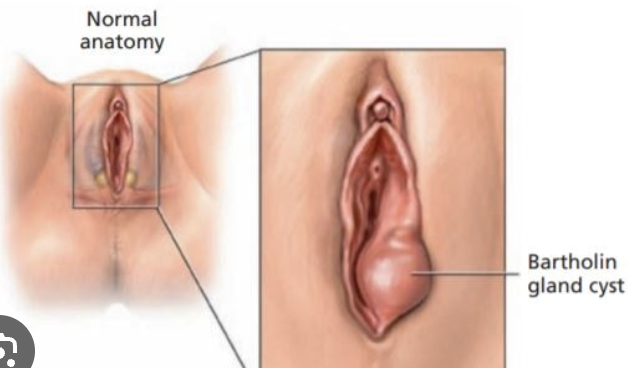
Describe the pathophysiology of Bartholinitis.
Inflammation obstructs the Bartholin duct = secretions to accumulate = formation of a Bartholin cyst that may become infected and develop into an abscess.
What symptoms are associated with Bartholinitis?
Many patients are asymptomatic, but symptoms may include:
fever
swelling
pain
malaise
How is Bartholinitis treated?
Sitz baths
Surgical drainage
Antibiotics
What is vaginitis?
inflammation of the vaginal mucosa.
What factors contribute to vaginitis?
Altered vaginal pH (high pH) - local defence mech d/t
Antibiotic use
Poor overall health status
pH of vagina
normal = 4-5
low <4 = reduced infertility (acidic)
high >5 = risk of infection (alkaline)
What is the most common cause of vaginitis?
sexually transmitted or infectious pathogens (trichomoniasis or Candida albicans (yeast infection)).
What are the clinical manifestations of trichomoniasis?
frothy, malodorous, green/yellow discharge
strawberry spots on cervix
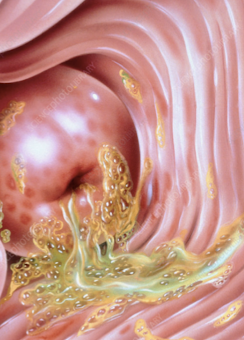
What are the clinical manifestations of vaginal candidiasis?
itching + pain
discomfort with intercourse
thick, white discharge (cottage cheese)
How is vaginitis diagnosed?
hx + PE (physical exam)
culture of vaginal discharge
How is trichomoniasis treated?
Metronidazole.
How is vaginal candidiasis treated?
Fluconazole.
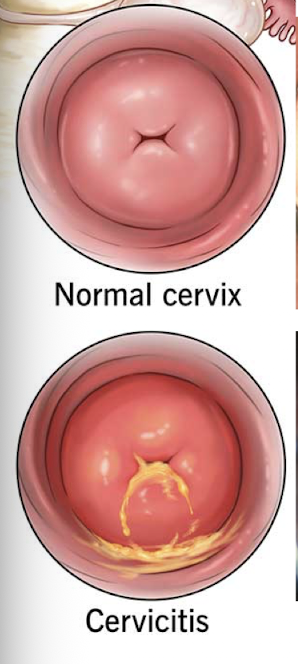
What is cervicitis?
infection and inflammation of the cervix.
Which organisms most commonly cause cervicitis?
Chlamydia trachomatis
Neisseria gonorrhoeae
What does the cervix look like in cervicitis?
Red
Edematous (swollen)
mucopurulent exudate (draining from external os)
How is chlamydial cervicitis treated?
Azithromycin.
How is gonococcal cervicitis treated?
Intramuscular Ceftriaxone plus Azithromycin.
Why is partner treatment important in cervicitis?
Treating sexual partners prevents reinfection and limits ongoing transmission of sexually transmitted infections.
Why are chlamydia and gonorrhea considered important public health diseases?
Both infections are reportable diseases because they can spread easily, cause serious reproductive complications, and require surveillance and partner notification by public health authorities.
What resource was referenced regarding reportable diseases?
Toronto Public Health Reportable Diseases of Public Health Significance document, which lists infections that must be reported to public health authorities.
What is Pelvic Inflammatory Disease (PID)?
Acute inflammation of 1+ organs in the upper female genital tract caused by ascending bacterial infection.
oophoritis (ovaries)
salpingitis (fallopian tubes)
uterus also
can affect entire peritoneal cavity
How does PID develop?
bacteria ascend from the vagina or cervix into the upper genital tract, causing infection and inflammation.
Describe the pathophysiology of PID.
STI infects the cervix or vagina.
Bacteria ascend into the uterus and fallopian tubes.
Acute inflammation develops.
Tissue damage and edema occur.
Healing leads to fibrosis and scar tissue.
Tubal obstruction and infertility may result.
What are the clinical manifestations of PID?
hard to dx
Sudden severe abdominal pain
Fever
Dysuria
Dyspareunia
Mucopurulent vaginal discharge
Abnormal vaginal bleeding
Why is PID difficult to diagnose?
Symptoms are often nonspecific and range from absent to severe, making diagnosis challenging.
What long-term complications occur in approximately 15–20% of PID cases?
Infertility
Ectopic pregnancy
Chronic painful intercourse (dyspareunia)
Pelvic adhesions
Perihepatitis (Fitz-Hugh-Curtis syndrome)
Tubo-ovarian abscesses
How is PID treated?
Treatment includes broad-spectrum antibiotics.
Ceftriaxone
Doxycycline
What are pelvic relaxation disorders?
result from progressive weakening of the pelvic support structures separating the vagina from surrounding organs.
What causes pelvic relaxation disorders?
aging
trauma
childbirth
surgery - pelvic
Which organs may become displaced in pelvic relaxation disorders?
Bladder
Urethra
Rectum
Uterus
What disorders are included under pelvic relaxation disorders?
Cystocele - prolapsed bladder
Rectocele - prolapsed rectum
Uterine prolapse
How are pelvic relaxation disorders treated?
Kegel exercises
Pelvic floor physiotherapy
Reducing heavy lifting
Pessary placement - device inserted into vagina for support
Surgical repair
cystocele
anterior wall prolapse - descent of bladder/anterior vaginal wall into vaginal canal
What are the clinical manifestations of a cystocele?
Visible prolapse
Pelvic pressure
Urinary urgency
Urinary frequency
Urinary leakage (incontinence)
Incomplete bladder emptying
What is a rectocele?
posterior vaginal wall prolapse in which the rectum bulges into the vaginal canal.