LEC 3: Soil Texture
 Call Kai
 Learn
Learn Practice Test
 Spaced Repetition
 Match
Match Flashcards
 Knowt Play
1/61

Earn XP
Description and Tags
MODULE 2
Name | Mastery | Learn | Test | Matching | Spaced | Call with Kai | Chat |
|---|
No analytics yet
Send a link to your students to track their progress
62 Terms
Which of the 12 textural classes have the following:
• Particle size: large/coarse
• Pore Size: large
• Reactivity: weak
sandy, loam sand, sandy loam
Which of the 12 textural classes have the following:
• Particle size: medium
• Pore Size: medium
• Reactivity: moderate
Sandy clay loam, silty clay loam, silt clay loam, loam
Which of the 12 textural classes have the following:
• Particle size: fine/small
• Pore Size: small
• Reactivity: strong
Clay loam, sandy clay, silty clay, clay
Which of the Three separates have the > 2.0 mm?
sand
Which of the Three separates have the 0.05 mm - 2.0 mm?
silt
Which of the Three separates have the < 0.05 mm?
clay
What are the Three soil separates?
Sand
Silt
Clay
Soil texture serves as an indicator for which four physical characteristics?
pore size
surface area
water movement
reactivity
How many distinct soil texture classes are recognized based on the relative abundance of separates?
12 classes
Which manual assessment method uses grittiness and plasticity to estimate texture?
texture-by-feel
What mathematical law is used to determine the settling rates of particles from water?
Stokes’ Law
In Stokes’ Law, how does particle size relate to settling velocity?
large particles settle quickly, while small particles settle slowly
What is the formula for Stokes’ Law?
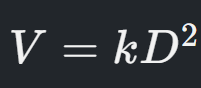
In the Stokes’ Law formula, what value is given for the constant k?
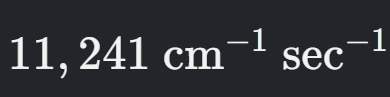
What is the settling velocity (V) for a 1 mm sand particle?
112 cm/sec
What is the settling velocity (V) for a 0.05 mm silt particle?
0.281 cm/sec
What is the settling velocity (V) for a 0.002 mm clay particle?
0.0004 cm/sec
The arrangement or grouping of individual soil particles into larger secondary units or aggregates.
Soil Structure
What are the individual secondary units of soil structure called?
Aggregates
What are the 7 soil structures?
granular
platy
wedge
prismatic
columnar
subangular blocky
angular blocky
What chemical force allows clay and organic matter to bind particles together?
Electrostatic attraction
Which biological agents aid in the compression and binding of particles via hyphae and exudates?
Roots and fungal hyphae
How do macro-organisms contribute to the formation of soil structure?
Through burrowing, tunneling, and waste production
The ability of soil aggregates to avoid disintegration when disturbed by tillage or erosion.
Aggregate Stability
The dry weight of soil divided by its volume, used as an indicator of soil compaction.
Bulk Density
Variations in soil bulk density are primarily caused by differences in total _____
pore space
Which type of pores are located within individual soil aggregates?
Intra-aggregate pores (small pores)
Which type of pores are located between distinct soil aggregates?
Inter-aggregate pores (large pores)
How does water behave in inter-aggregate pores?
It moves easily and is poorly retained.
How does water behave in intra-aggregate pores?
It moves slowly and is strongly retained.
List the two primary causes of soil color.
humus content
iron compounds
What can soil color indicate about the soil's environment?
Physical and chemical characteristics or specific soil types.
What are the factors that affect Aggregate Stability?
amount of clay
chemical elements
organic matter
biological activity
What are the factors that affect Soil Structure?
organic matter
soil organisms
tillage
freezing and thawing
water movement
___is the arrangement or grouping of individual soil particles into larger secondary units
Structure
___possess natural electrical charge which can electrostatically bind particles together
Clays and organic matter
____can aid in binding of individual particles into larger aggregates
Macro-organisms and microorganisms
____allows for both movement and retention of water via macropores and micropores, repectively
Aggregation
____structure can inhibit infiltration of water, water movement, growth of roots
Poor soil

Which of the 7 Soil Structure is this?
Granular

Which of the 7 Soil Structure is this?
Platy

Which of the 7 Soil Structure is this?
Wedge

Which of the 7 Soil Structure is this?
Subangular Blocky
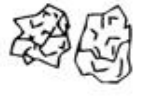
Which of the 7 Soil Structure is this?
Angular Blocky

Which of the 7 Soil Structure is this?
Prismatic

Which of the 7 Soil Structure is this?
Columnar
Why is it impossible to determine bulk density for subsurface horizons using an auger profile?
determining bulk density requires an exposed horizon to push a collection can into the soil
Why measure bulk density?
it gives information on the ease with which roots can grow and water will filter through the different soil horizons of a profile
A good soil for growing plants should generally contain about (1)___% pore space and (2) ___% solids. The pore space should consist of (3)___air and (4)___water, and the solids should be made up mostly of (5)___(sand, silt, and clay particles) mixed with some (6)____
50%
50%
half (25%)
half (25%)
minerals (45%)
organic matter (5%)
In the soil, (1) ___and (2)___are found (3)___the pore spaces (4)___ the particles. If this ideal soil were dried out, and all the pore space were (5)___so that there was no air and no more space, all that would remain would be the (6) ___portion of the soil
air
water
within
between
compressed
solid
To calculate bulk density, we would measure the (1)___of the total (2)___ of a (3)___sample
mass
volume
soil
To calculate particle density, we would measure the (1)___of the (2)___of only the (3)___ in the (4)___sample
mass
volume
solids
soil
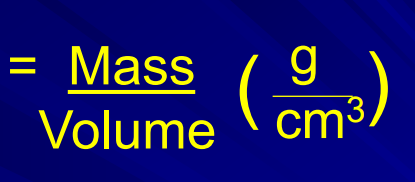
Accepted ___of soil mineral particles: 2.65 g/cm³
Density

Density of soil including the particles and the pore spaces
___ranges between 1.1 and 1.6g/cm³
(for mineral soil with 1-5% organic matter)
Bulk Density
Factors Affecting Bulk Density
Porosity
organic matter
aggregation
arrangement of particles
compaction
depth in profile
Factors Affecting Bulk Density:
(1)___are weightless
Pores (Porosity)
Factors Affecting Bulk Density:
(2)
Typical Mineral Soil: 1-5% ___ (bulk density = 1.1 - 1.6 g/cm³)
Organic Soils: > 20% ____ (bulk density = 0.1 - 0.6 g/cm³)
Organic Matter

Factors Affecting Bulk Density:
(3)____generally increases overall porosity, decreases density
Aggregation

Factors Affecting Bulk Density:
(4)
(5) compaction
packing arrangement

Factors Affecting Bulk Density:
(5) compaction
(6)
(1) ___of typical mineral soils range between 1.0 and 1.6 g/cm³.
(2) ___increases porosity, (3) ___ BD
(4) ___can have BD as low as 0.1 g/cm³.
(5)___decreases porosity, (6)___ BD
(7) ___increases porosity, (8) ___ BD
(9) ___in profile decreases porosity, (10) ___ BD
Bulk densities
Organic matter
decreases
Organic soils
Compaction
increases
Aggregation
decreases
Depth
increases