Week 3: Pediatric Tests and Measures
 Call Kai
 Learn
Learn Practice Test
 Spaced Repetition
 Match
Match Flashcards
 Knowt Play
1/39

There's no tags or description
Looks like no tags are added yet.
Name | Mastery | Learn | Test | Matching | Spaced | Call with Kai | Chat |
|---|
No analytics yet
Send a link to your students to track their progress
40 Terms
what are the components of the subjective that should be taken in a pediatric setting?
birth history, pregnancy
medical history
surgical history
education level
daily activities (dependent/independent)
environmental information (assistive devices)
what are components of the objective that should be taken?
pain (FACES, FLACC)
range of motion (joint integrity)
posture (structural vs musculature)
muscle strength (functional positions)
motor planning
muscle tone (hypotonic vs hypertonic)
balance (dynamic vs static)
gait
standardized testing
what scales are used in pediatrics for pain?
FLACC
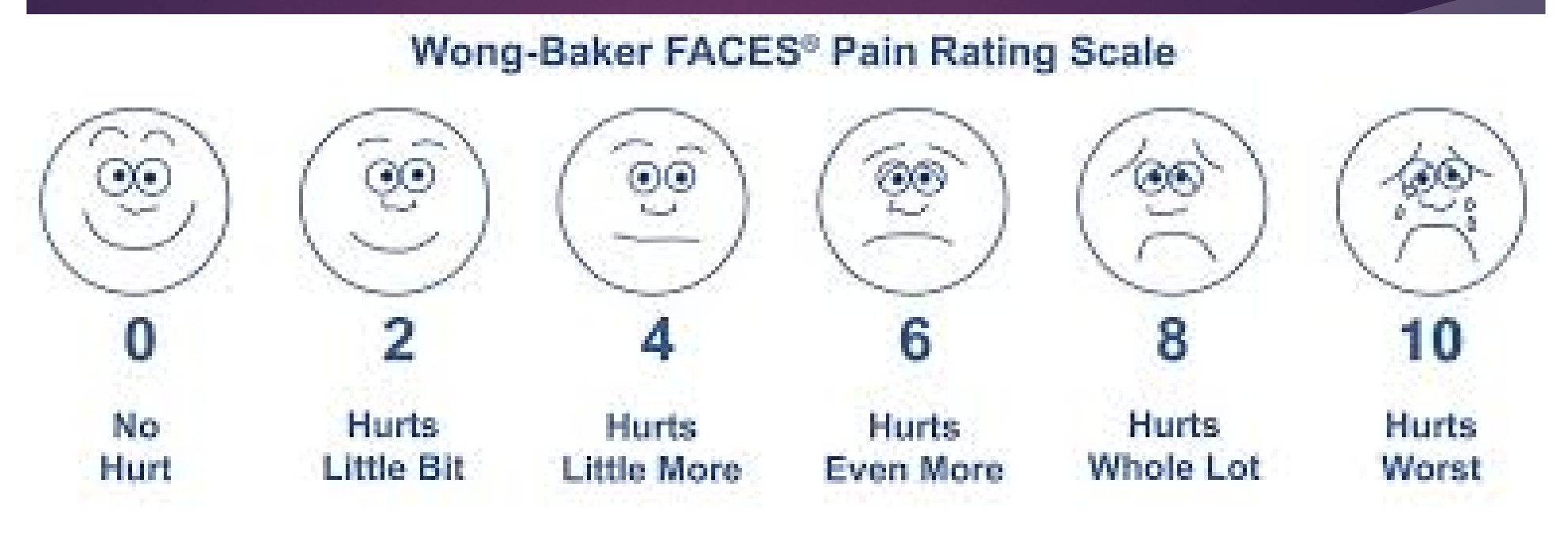
Wong-baker FACES pain rating scale
numeric rating scale
visual analog scale
FLACC scale
most reliable pain rating scale for younger pts, based on observation of the child’s face, legs, activity, cry, or consolability

Wong-baker FACES pain rating scale
a pain assessment tool using facial expressions to indicate pain severity, often used with children
is goniometry very reliable or valid with pediatric patients?
can be less valid or reliable for ped patients, can be useful for contractures or with child athletes though
what needs to be taken into consideration with testing for MMTs?
age
developmental level
cognitive level
ability to follow instructions
attention span
motivation
motor planning skills
sensation
proprioception
pain
what are components of the pediatric assessment?
strengths
contextual factors (able to participate in therapy, caregiver support, follow through)
impairments
activity limitations
goals
short/long term
what are details to consider in pediatric goal making?
family/caregiver goals
patient goals
educational setting goals
also need to be achievable, measurable, time related, and specific to the child's needs and abilities. (short and long term goals)
what is the time frame for short and long term goals in outpatient peds?
typically 3 months short term, then 6 months
what should be included in the plan of care?
frequency and duration of treatment
possible follow up with further standardized testing
treatment interventions
forever changing, dep on pathology
tool box of ideas
equipment, bracing, splinting, taping
suggested referrals
home program
1-3 exercises/ideas
what are the pros of standardized tests?
ID infants at an early age that are at greater risk
predictive of motor outcome
ID a child in an educational setting that needs interventions
determine eligibility/change over time
plan a program
determine efficacy/efficiency
research
what are the cons of standardized testing?
lengthy test
limited knowledge about measures and measurement principles
inadequate training
what is test selection based off of?
primary complaint and family goals
child’s age and dx
current functional status
history and systems review
current evidence on the use of the tool
therapist knowledge and experience
purpose of testing
ICF model
integration of individualized outcome measures
what are the common screening assessments?
Alberta Infant motor scale (AIMS)
neuro-sensory motor developmental assessment (NSMDA)
what are the common motor assessments?
test of infant motor performance (TIMP)
peabody developmental motor scales (PDMS-2)
Bruninks-Ostertsky Test and Motor proficiency (BOT 2)
what are the common functional assessments?
gross motor function measure (GMFM-66)
pediatric evaluation of disability inventory (PEDI)
the functional independence measure for children (WeeFIM)
the school function assessment (SFA)
what are some criterion referenced standardized tests?
GMFM-66 and the PEDI
what are some norm referenced standardized tests?
PDMS-2, Bayley
what age range is the PDMS-3 used for?
used for children from birth to 5 years of age, assessing fine and gross motor skills.
what are the advantages of the PDMS-3?
easy to administer since has kit, instruction manual
validated
reliable
scoring software
norm-referenced
well constructed
what are the disadvantages of the PDMS-3?
basal level can be difficult to obtain
limited age rang ein reliability studies
cost
what age range is the PEDI used for?
6 mo to 7 years (also with children greater than 7.5 with significant functional delays)
what are the three domains assessed in the PEDI?
self care, mobility, social function
what are the advantages of the PEDI?
assess functional skills over time
norm-referenced AND
criterion referenced
judgement based
scoring software
(parents can fill out the form too)
what are the disadvantages of the PEDI?
ceiling effect on mobility terms
which population is used for the BOT-3 test?
school age pop (4-21)
what are the 5 domains covered by the BOT-3?
fine motor control, manual coordination, body coordination, and strength and agility.
what are the advantages of the BOT-3?
large age range
contains photos for items
face validity reflects typical childhood activity
excellent test-retest reliability
low sensitivity
high specificity
short form combines gross and fine motor items
what are the disadvantages of the BOT-3?
time to score
numerous charts to review
difficulty of motor planning for 4 y/o
what is the SFA used for>?
used for children K-6, measures a student’s performance of functional tasks, gives support for his/her participation in the academic and social aspects of school, and designed to facilitate collaboration of program planning for students with a variety of disabling conditions
what are the 3 parts of the SFA?
participation, task supports, activity performance
what are the advantages of the SFA?
completed by school professionals that know the student well
determine eligibility for special ed services (IDEA)
set specific goals
criterion referenced
what are the disadvantages of the SFA?
only used in educational settings '
no norm reference
takes into consideration many adaptations not just motor
only standardized until 6th grade
what population is the GMFM-88/66 designed for?
for children with cerebral palsy and other motor impairments (also can be used for children with down’s syndrome), assessing their gross motor function. (6 mos to 16 years)
what are the 5 dimensions of the GMFM-88/66?
lying/rolling
sitting
crawling/kneeling
standing
walking, running, jumping
GMFS levels I-V
are classifications of gross motor function in children with cerebral palsy, indicating their ability to perform various movements and activities independently. can get classification from the GMFM-66
what are the advantages of the GMFM-88/66?
can perform with or without AD or orthotic
validated and reliable with populations outside of CP
GMFM-66 allows for missed responses
what are the disadvantages of the GMFM-88/66?
CP only for GMFCS levels
what is the difference between corrected age and chronological age?
Corrected age is the age of a preterm infant based on their due date, while chronological age is the actual age since birth. This distinction helps assess development more accurately in premature infants. After 2 years of age chronological age becomes the primary measure for development (don’t do corrective anymore)