Basics of Osteology
 Call Kai
 Learn
Learn Practice Test
 Spaced Repetition
 Match
Match Flashcards
 Knowt Play
1/48

There's no tags or description
Looks like no tags are added yet.
Name | Mastery | Learn | Test | Matching | Spaced | Call with Kai | Chat |
|---|
No analytics yet
Send a link to your students to track their progress
49 Terms

Epiphysis/ Head
End of long bones

Diaphysis/ Shaft
Shaft of long bones

Articular Surface/ Cartilage
Covers the part of the bone forming a joint

Epiphyseal Growth Plate
Between epiphysis and diaphysis; how long bones grow. Fuse when growth stops

Medullary (spongy) bone
Inside, contains marrow, very porus

Cortical (compact) bone
Hard outer layer

Periosteum
External covering of the bone
Characteristics of the periosteum
Rich blood supply, many nerves
Attachments of the periosteum
ligaments and tendons attach (not cortical bone)
Stress fractures
Overuse injury
Bone breaks down faster than it can heal
stress fracture
How do stress fractures progress?
Starts at periosteal inflammation then progresses to a full fracture if untreated
What is the root of Osteo + perosis
Porus bone
Osteoporosis
Decreased bone density making bones fragile and prone to fracture (Hormones play a key role in bone density)
Retaliative Energy deficiency Syndrome (RED-S) Components?
Common in individuals with a uterus, but affects all genders
Low energy (with or without eating disorder)
Decreased/lack of menstruation (or other signs of impaired sex hormones)
Low bone density (osteoporosis, stress fractures)
Retaliative Energy deficiency Syndrome (RED-S) broader impacts?
Psychological issues, cardiovascular problems, decreased athletic performance
What does RED-S stand for?
Retaliative Energy deficiency Syndrome
PT role in RED-S
Tend to first identify RED-S due to longer patient interaction
Wolff’s law
Bones respond to forces. More stress (weight-bearing) through a bone, with adequate energy, leads to stronger bone
Trabeculae
Spongy bone forms lines/patterns aligned with force vectors (compression and release) through the bone
How does trabeculae form?
Activity
How does trabeculae resorb?
inactivity

Trochanter
Very big bump, large muscles attach

Tuberosity
medium bump, some muscles attach

tubercle
small bump, less powerful muscles or ligaments attach

Fossa
Shallow surface/hallow, broad muscle attach
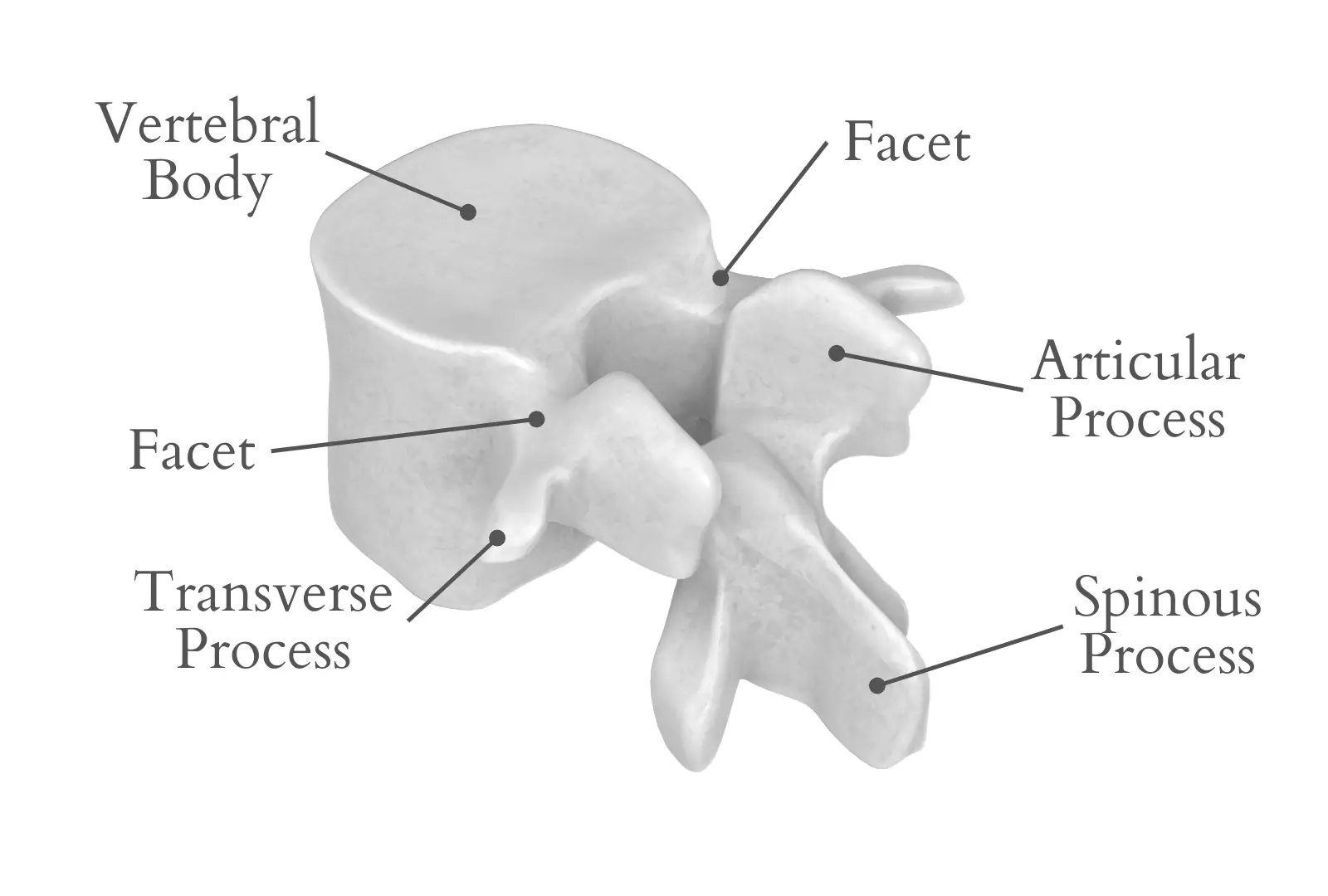
Facet
Flat articular surface at some joints
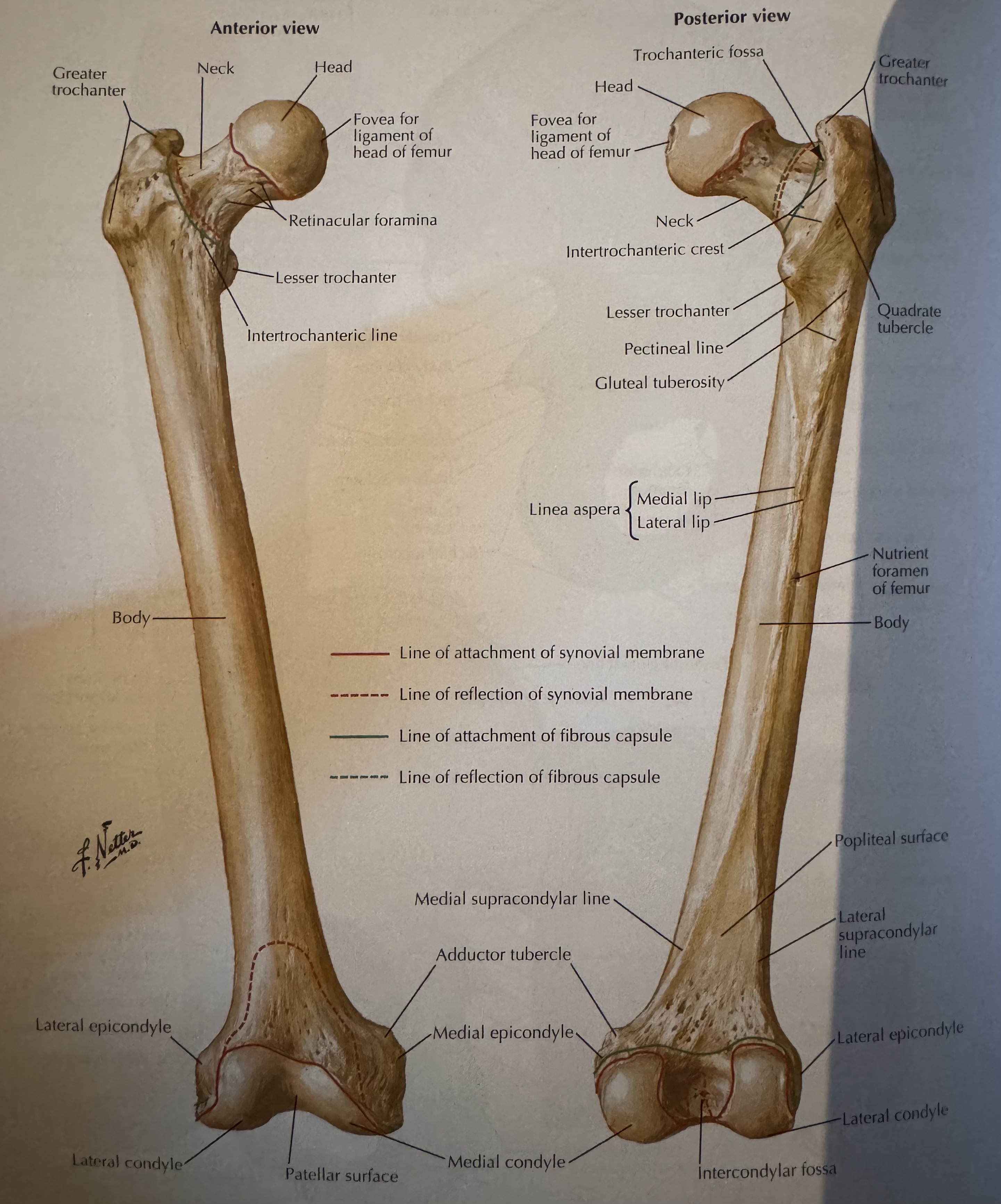
Condyle
Rounded protuberance at the end of long bone
Epi
above or upon
Location of Articular (hyaline) cartilage
Covers ends of bones at synovial joints
appearance of Articular (hyaline) cartilage
whitish, slippery
Blood supply of Articular (hyaline) cartilage
No blood vessels
how does Articular (hyaline) cartilage receive nutrients?
from synovial fluid
what is the structure of fibrocartilage?
dense collagen tissue
What are examples of fibrocartilage?
ears, nose, intervertebral discs, hi/shoulder labrum, knee menisci
What is the function of fibrocartilage?
absorbing shock and stabilizing joints
Blood supply of fibrocartilage?
Some blood vessels. healing depends on blood supply and synovial fluid
Synovial joint characteristics
allow movement, have articular cartilage, surrounded by a joint capsule filled with synovial fluid
synovial joint function
“form dicates function” they move the way you think they’ll move
Ligament connection
bone to bone
Ligament injury
Sprain
Ligament function
stabilizes joint, resist motion in specific directions (parallel fibers). not contractlie
what cells do ligaments contain
sensory cells; containing proprioceptors (feedback to the brain about movement)
connection of tendons
Bone to muscle
tendon injury
strain
tendon function
connect muscles to bones for movement. contractile
Dermatomes (nerves)
skin sensation areas
Myotomes (nerves)
Muscle groups innervated by a single spinal nerve root
Tome
Meaning slice