NPTE Lymphatics
 Studied by 0 people
 Call with Kai
 Learn
Learn Practice Test
 Spaced Repetition
 Match
Match Flashcards
 Knowt Play
1/23

There's no tags or description
Looks like no tags are added yet.
Name | Mastery | Learn | Test | Matching | Spaced | Call with Kai |
|---|
No study sessions yet.
24 Terms
Most commonly used amount of compression for stage II UE lymphedema ?
30-40 mmHg
Typical amount of compression used in stage II LE lymphedema?
40-50 mmHg
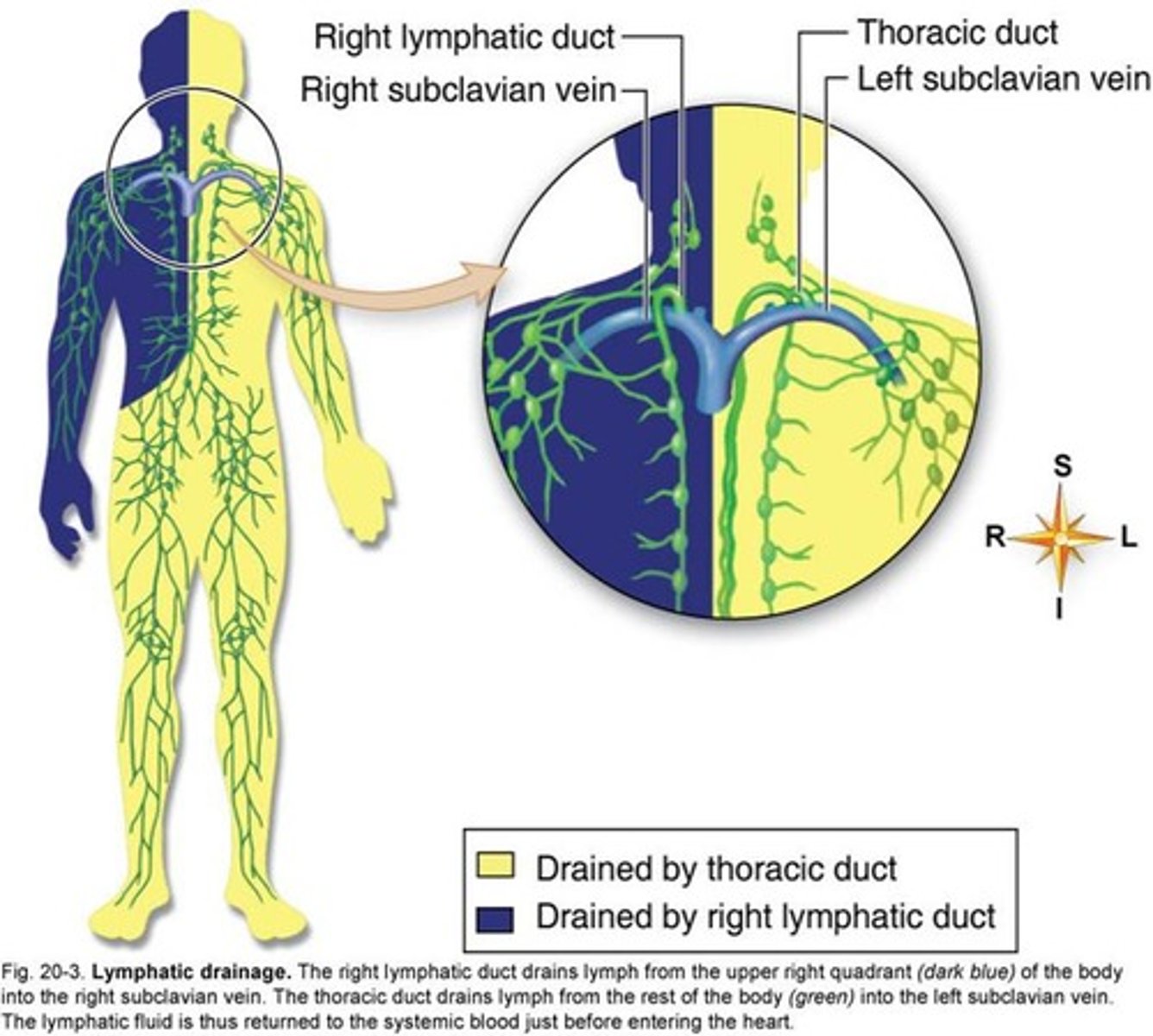
Lymph flow
1. Excess fluid goes into lymphatic capillaries
2. Lymphatic collecting vessels
3. Along length of vessels, lymph nodes occur to filter lymph
4. Lymphatic trunks
5. Lymphatic collecting ducts
6. Subclavian vein
Lymphatic load
Amount of lymphatic fluid transported
Transport capacity
maximum amount of fluid that lymphatic system can transport
Lymphedema
A decrease in transport capacity with either same amount of lymphatic load or increased load
Primary vs Secondary lymphedema
Primary: Congenital or heredity cause (Milroy's disease- malformation of lymphatic system)
Secondary: injury to one or more components of lymphatic system (cancer, radiation, node removal)
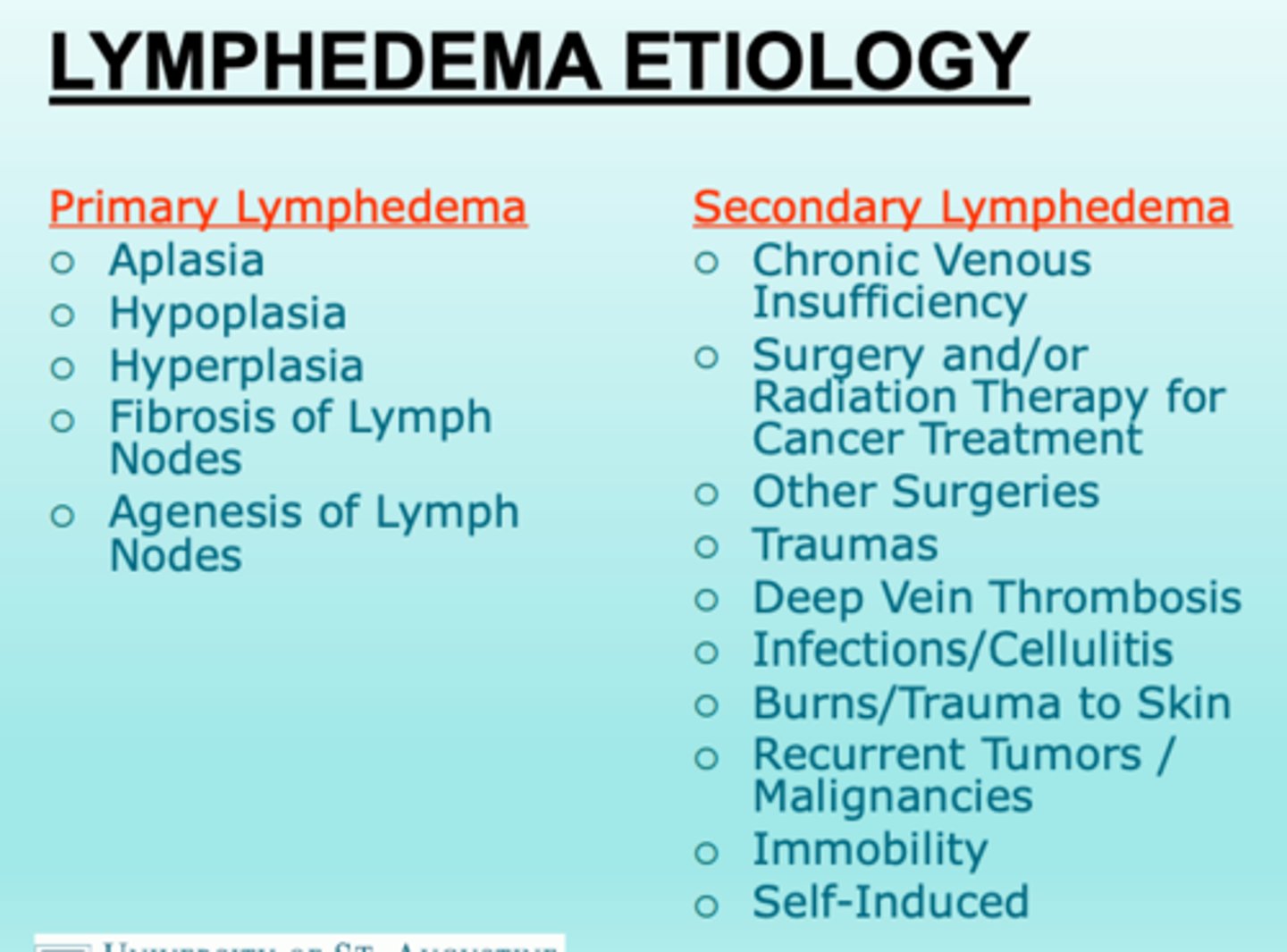
What are the three severities of lymphedema?
Pitting edema: found in Stage 1 and early Stage 2, makes a pit but indentation resolves
Brawny edema: (like brawny paper towel =strong) tissue is hard and severe with fibrotic changes to subcutaneous tissue
Weeping edema: most severe and long duration form, fluid leaks from cuts or sores, almost exclusively in LE and in Stage 3
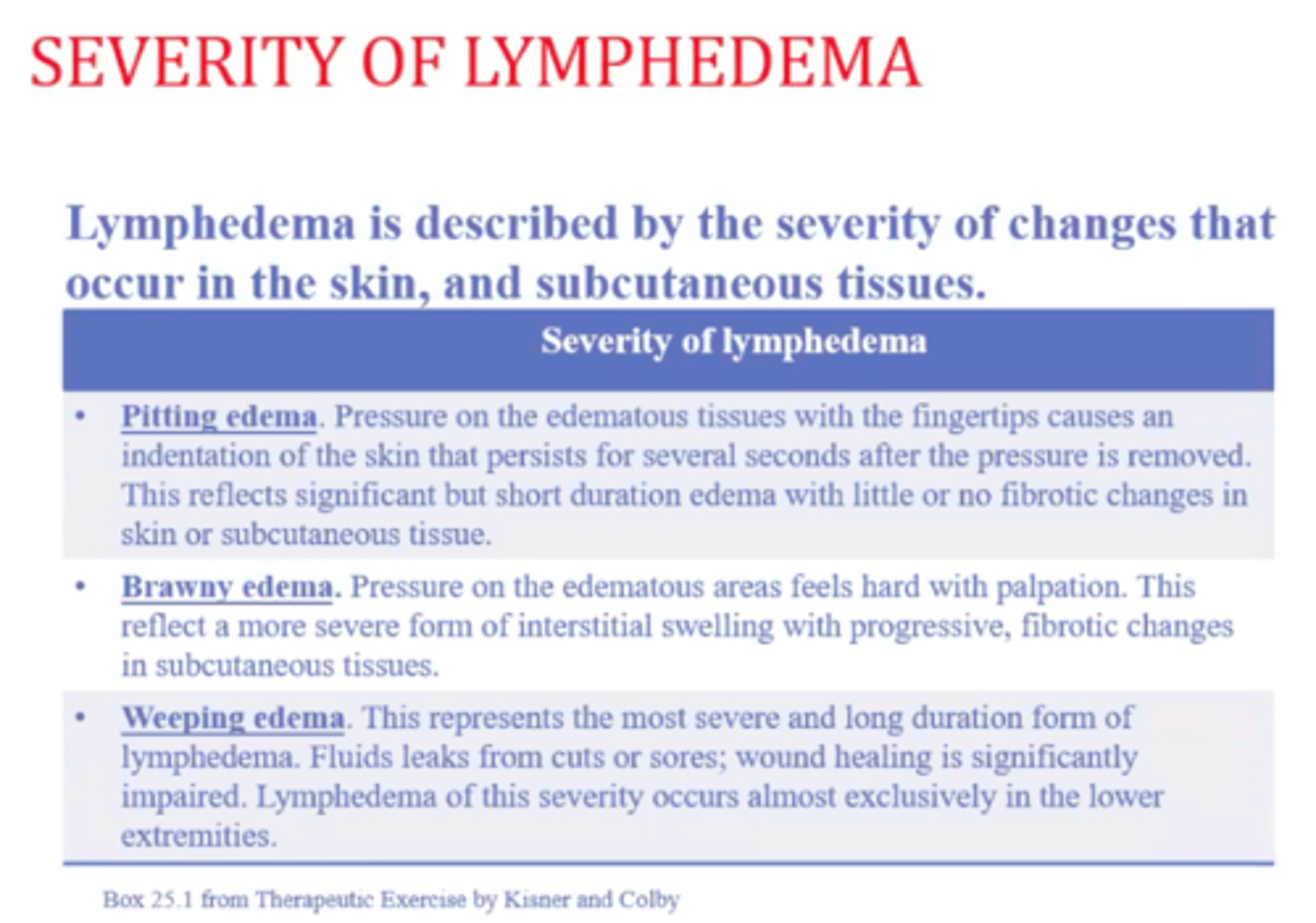
Stemmer sign
What: used to indicate worsening of lymphedema
Tests for: severity of lymphedema
How to preform: pinch skin on the dorsum of fingers or toes
(+)= cannot pinch/lift skin compared to uninvolved limb
Lymph03dema =
How to remember lymphedema stages start at 0 and go to 3
(4 levels but starts at 0-3)
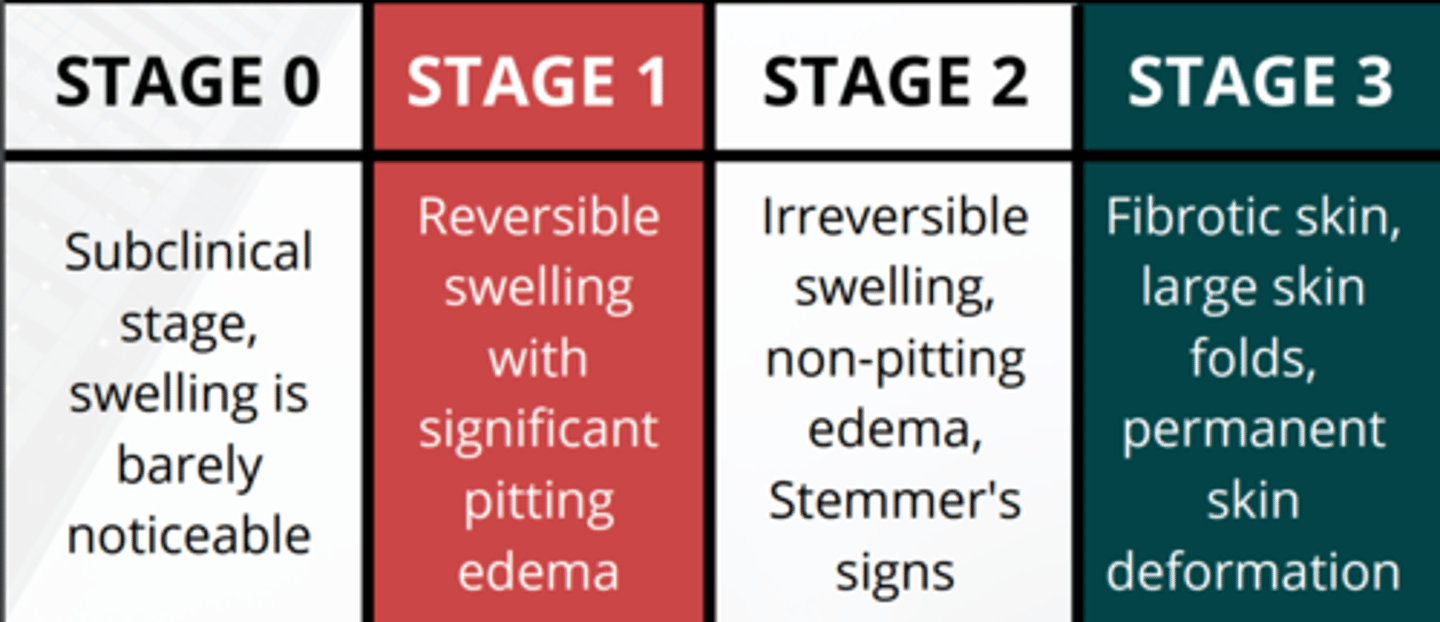
Stage 0: Latency
-No clinical edema
-Stemmer sign = (-)
-Tissue and skin appears normal
-Reports heaviness
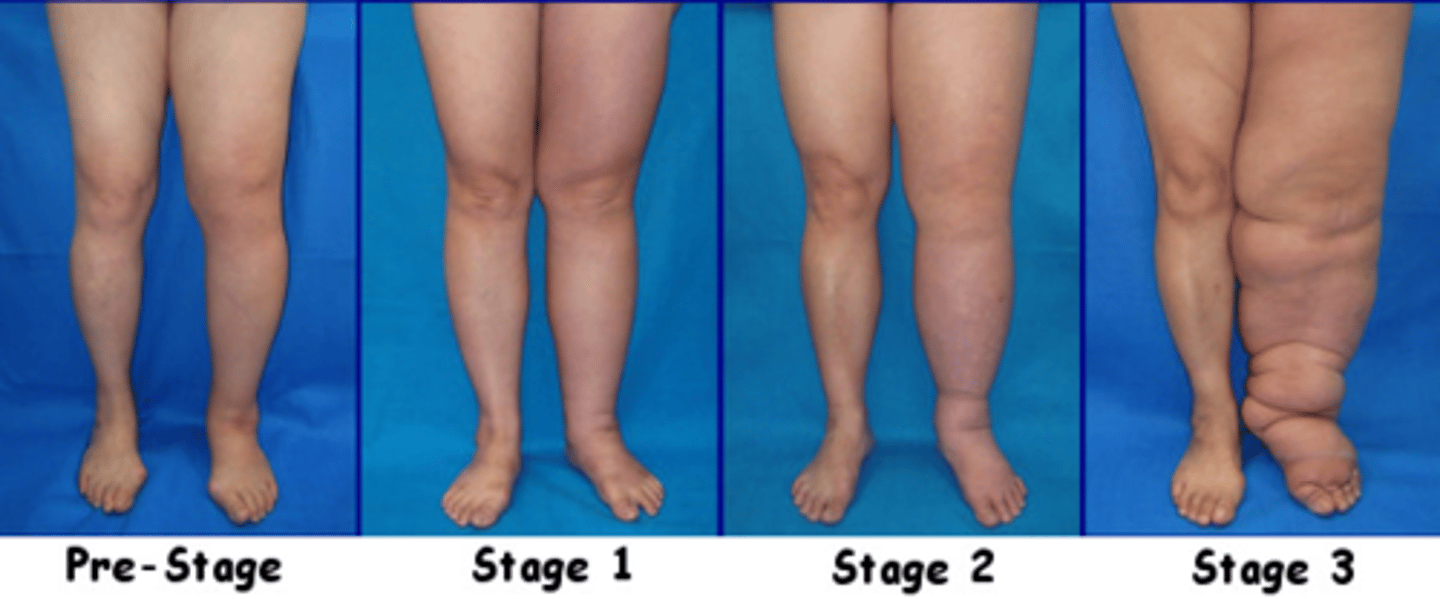
Stage 1: Reversible Stage
-Reversible
-soft and pitting edema
-Increases with standing but reduces with elevation
-Stemmer sign = (-)

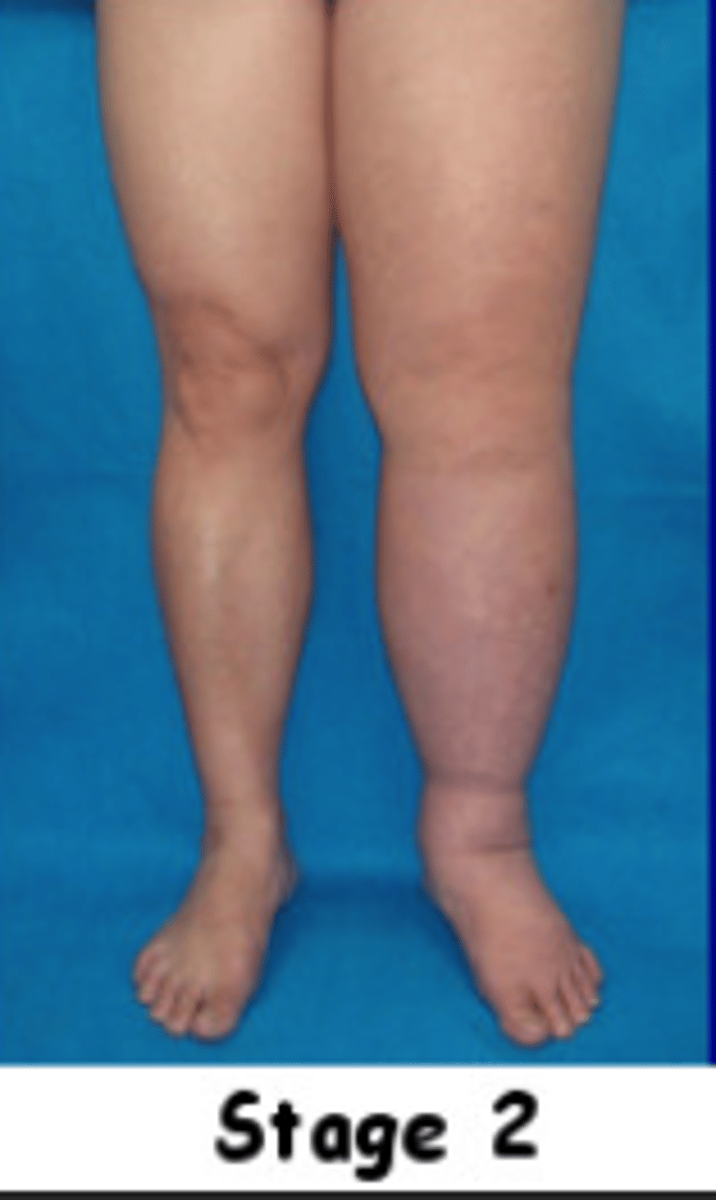
Stage 2: Spontaneously Irreversible
-Irreversible
-May have pitting edema that progresses to hard/brawny edema
-Stemmer sign = (+) --> but may be (-) in early stage 2
-Tissue appears fibrosclerotic and proliferation of adipose tissue
Stage 3: Lymphostatic Elephantiasis
- Skin changes - papillomas, deep skin fold, warty protrusions, hyperkeratosis, mycotic infection
-Brawny edema
-Stemmer sign = (+)
-bacterial and viral infections are common

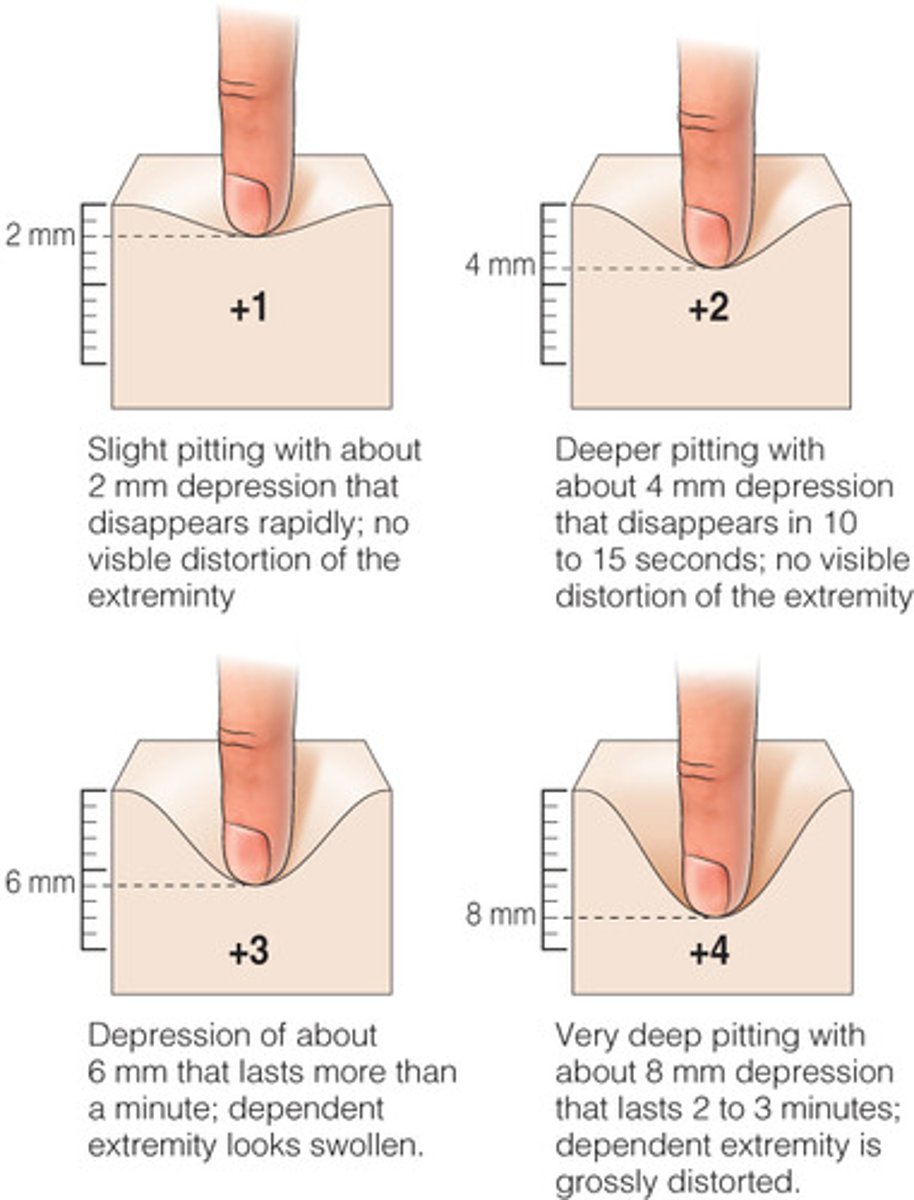
Pitting Edema Scale
1+ = mild, 0.25 in, 0 sec pit
2+ = moderate, 0.25-0.50 in, < 15 sec pit
3+ = severe, 0.50-1.0 in, 15-30 sec pit
4+ = very severe, 1.0 in, > 30 sec pit
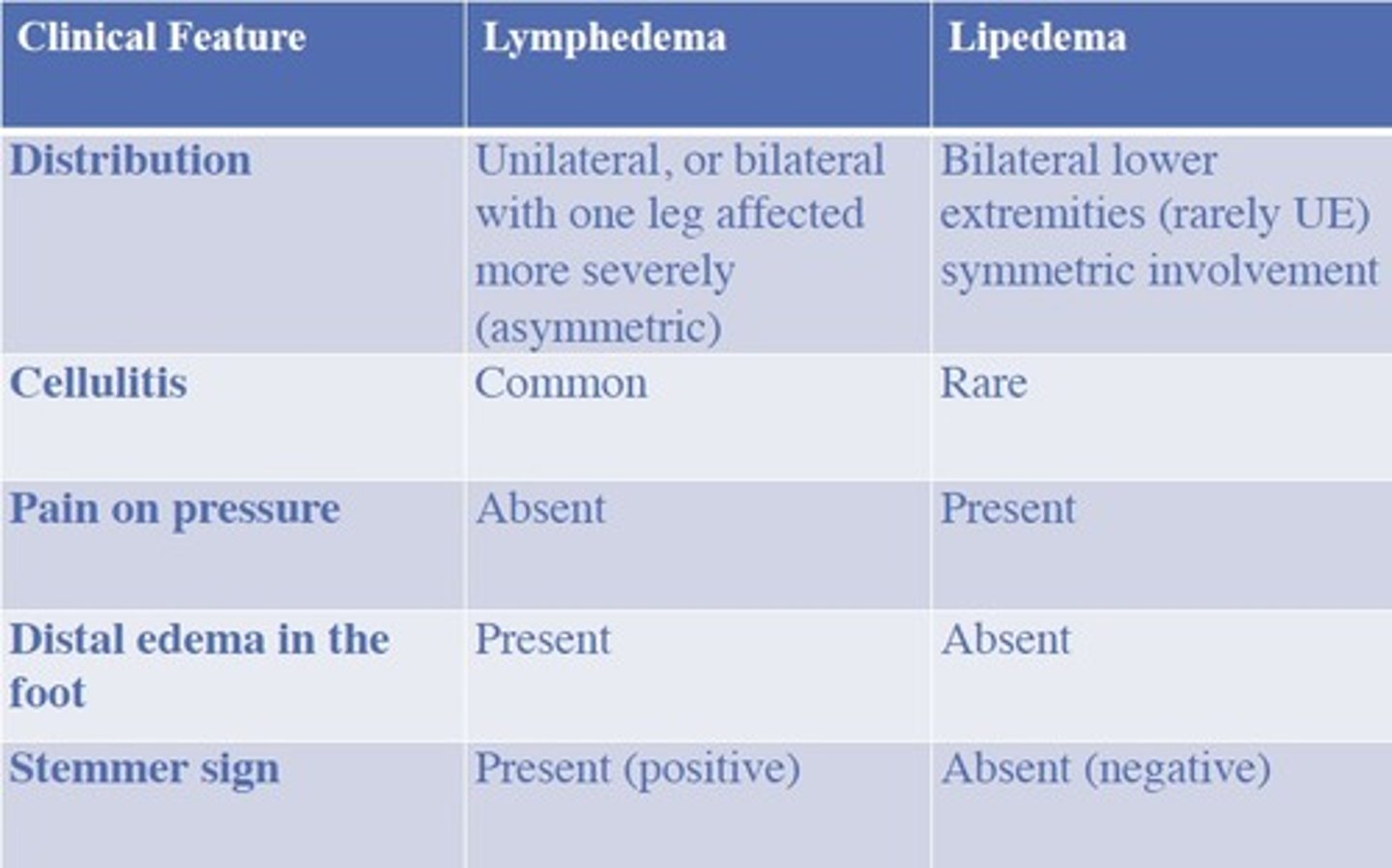
Lipedema
-bilateral condition affecting LE with excess fat deposit in proximal areas such as buttocks and thighs but NOT DISTAL such as feet
-affects skin's elasticity - skin is sensitive to pressure and touch, which makes it easier to bruise and is painful to palpation

Lipedema vs. Lymphedema
Lymphedema: UL, can have cellulitis, not painful to touch, has distal edema, (+) stemmer sign
Lipedema: BL, no cellulitis, painful to touch, no distal edema, stemmer sign (-)
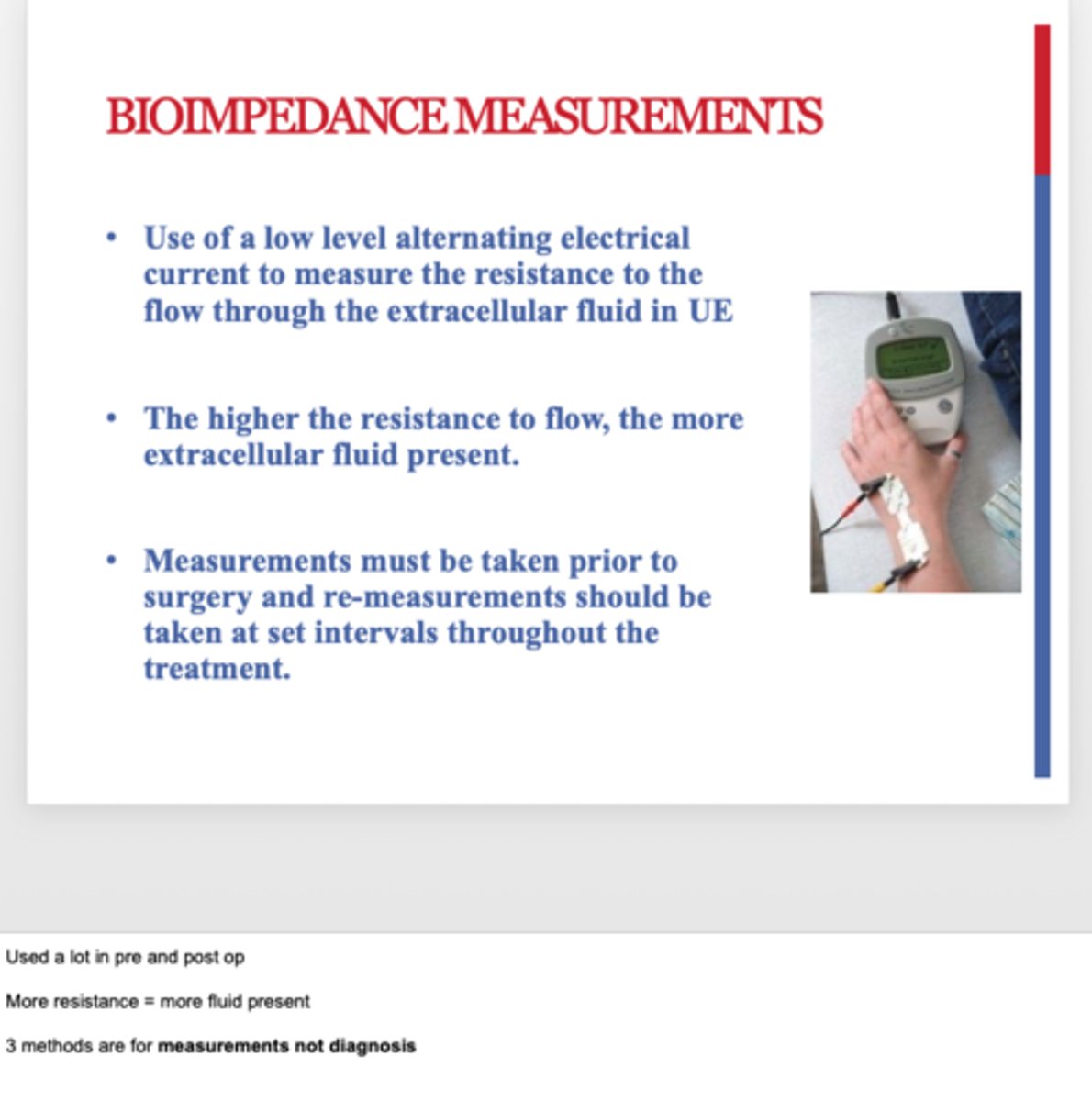
Bioimpedance measurements:
What: use of a low level alternating electrical current to measure resistance to flow through extracellular fluid in UE
When: pre and post surgical intervention
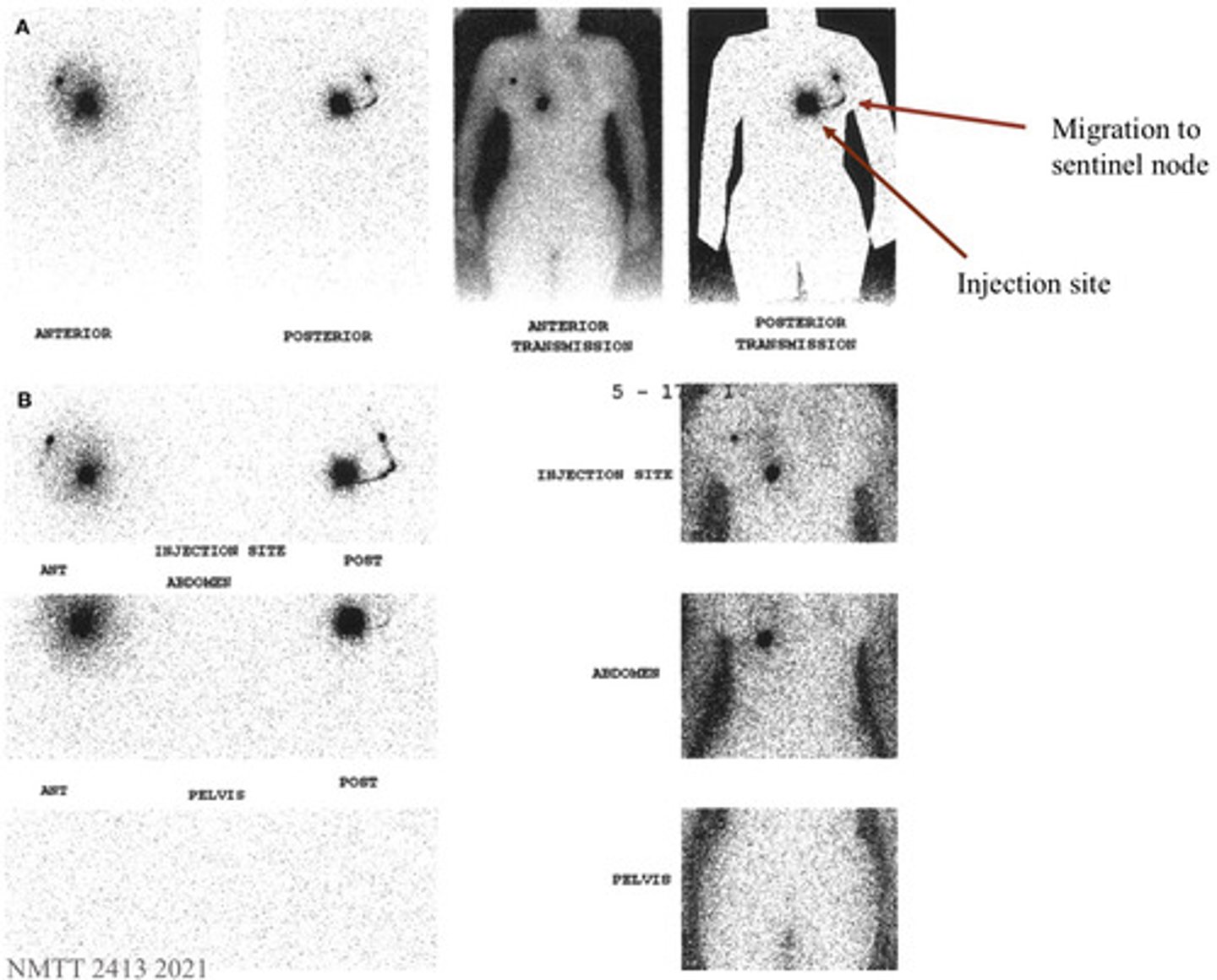
lymphoscintigraphy
Measured during rest and exercise - identifies lymphatic insufficiency
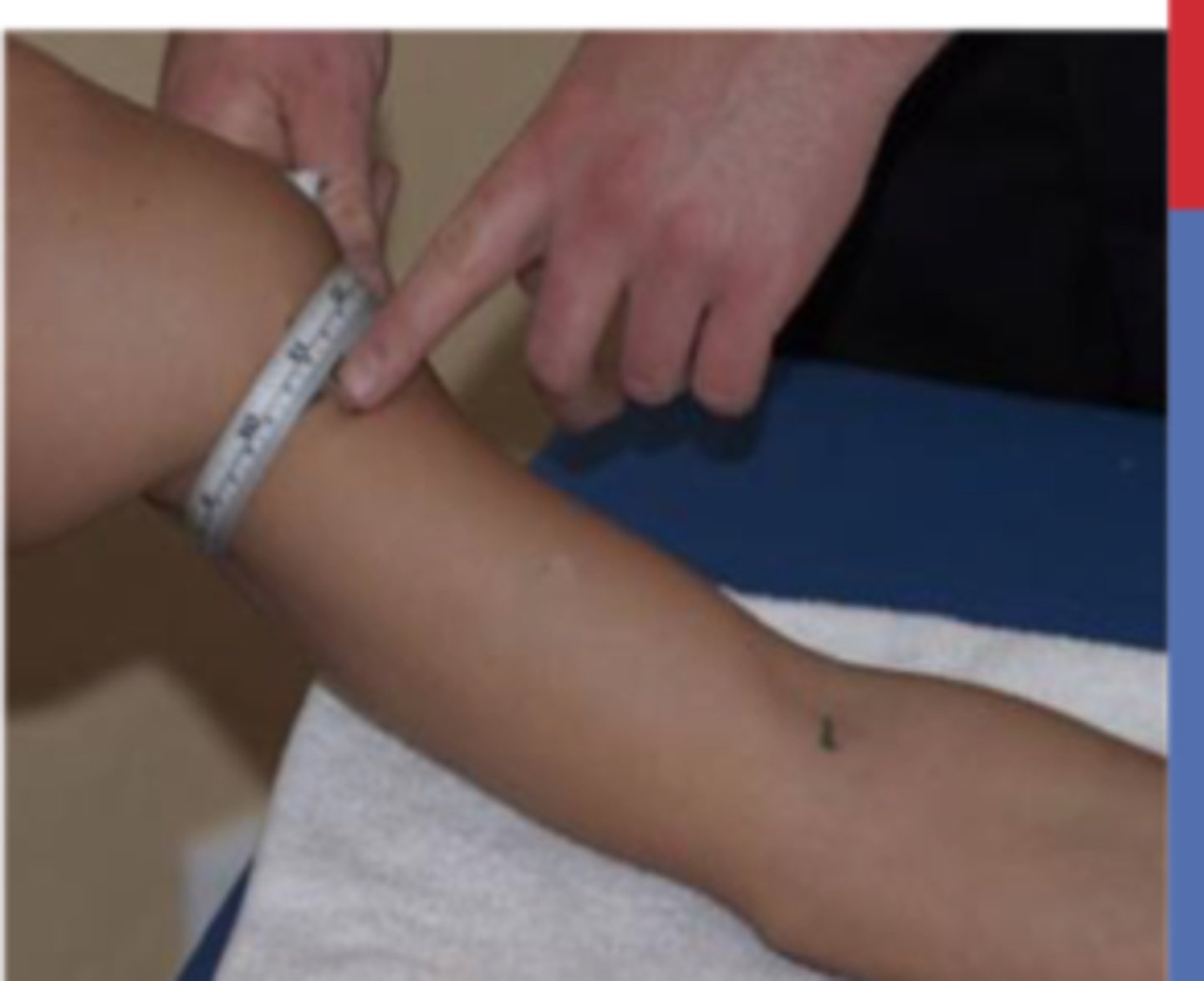
If the stem of the question asks about Proximal measurements -
Use girth measurement (every 10 cm landmarks)
If the stem of the question asks about distal UE/LE measurements -
Use volumetric
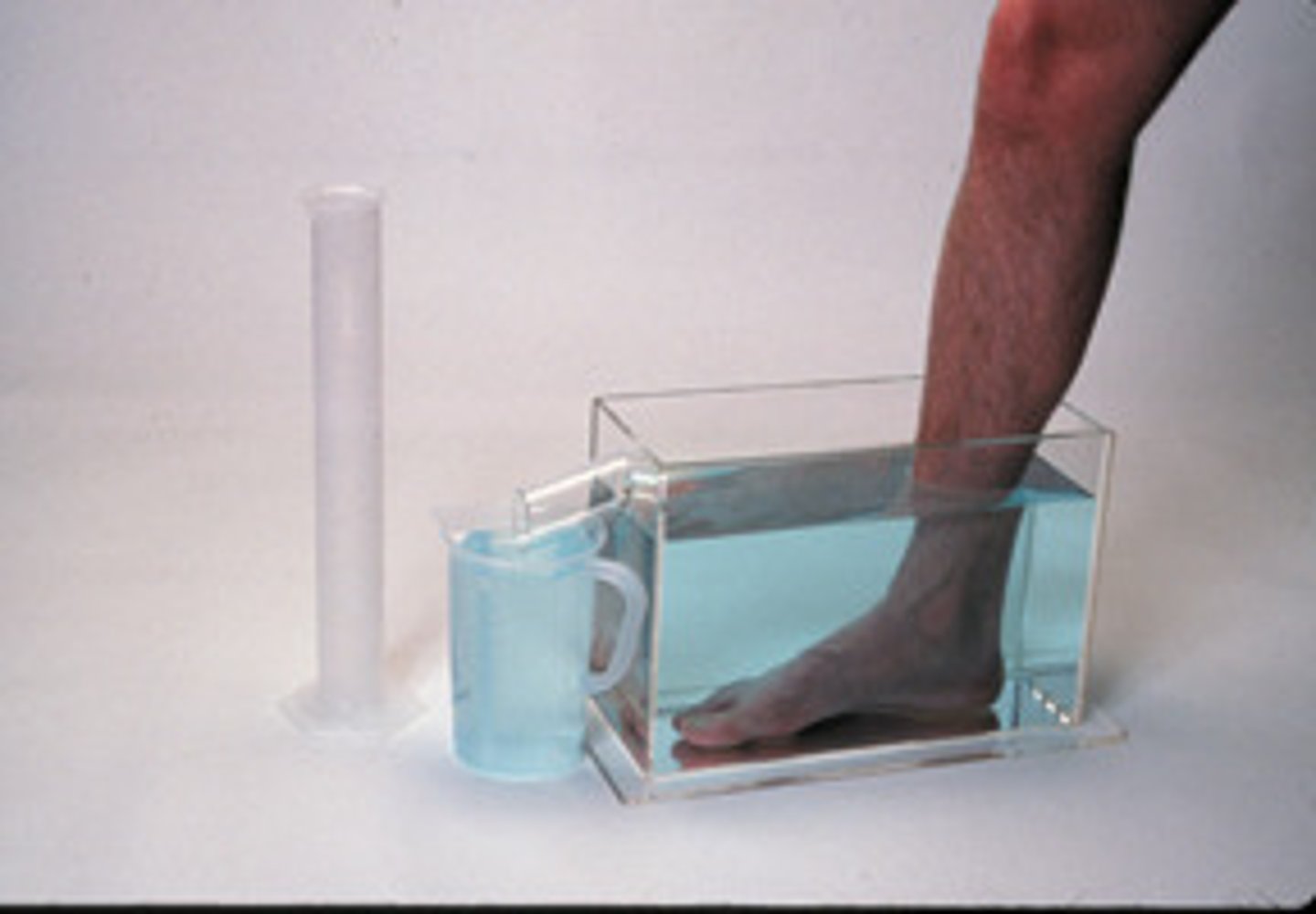
If the stem of the question asks about pre-post surgery -
Use bioelectric impedance
If the stem of the question asks about lymphatic insufficiency -
use lymphoscintigraphy
Lymph node palpation
Normal: soft, non tender, non palpable, < 1 in diameter
Abnormal:
-Tender
-Hard and immobile and rubbery