Water/Writing
 Call Kai
 Learn
Learn Practice Test
 Spaced Repetition
 Match
Match Flashcards
 Knowt Play
1/21

There's no tags or description
Looks like no tags are added yet.
Name | Mastery | Learn | Test | Matching | Spaced | Call with Kai | Chat |
|---|
No analytics yet
Send a link to your students to track their progress
22 Terms
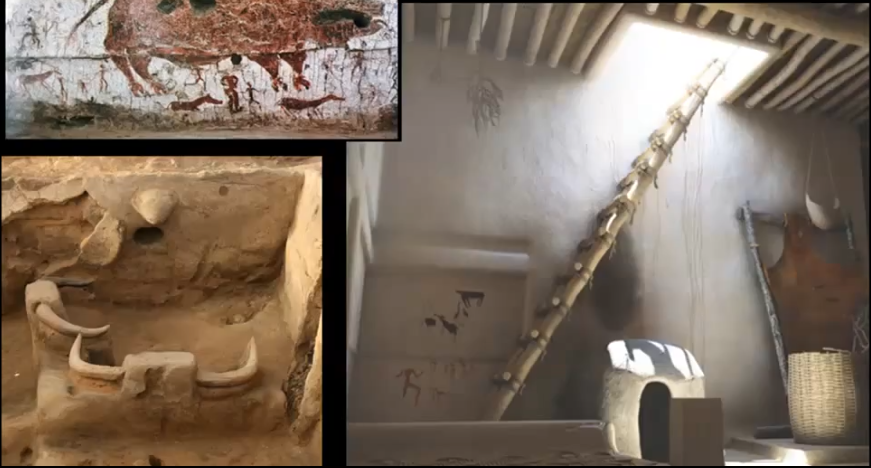
Catalhoyuk house interior, Neolithic Makers, 7500-5700 BCE
neolithic/agricultural revolution- people are settling down in one place
domesticating animals, so is shown in art and interior decoration

Carved Trough, Sumerian Late Uruk Period Makers, 3300-3000 BCE
votive object
representing animal domestication and breeding
votive object
an object representing a utilitarian item in a “fancy” or reverent way
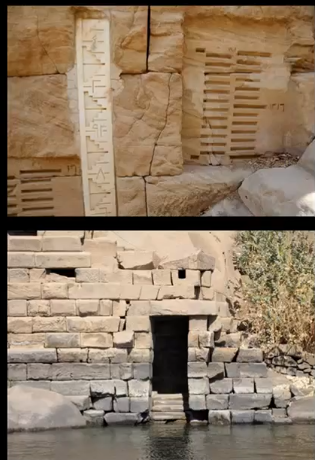
Renovated Nilometer, original 1550 BCE, renovated Greco-Roman Makers 200 BCE
measurement device to see how high the water was during flood period
used for thousands of years and was important, hence renovation
access restricted, only officials could access in order to decide how much to tax the people
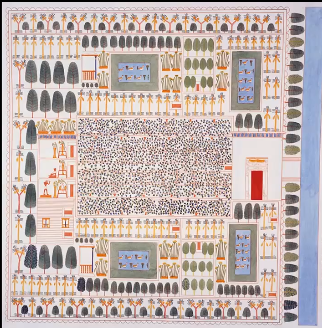
(copy of) Mural of a Planned Garden, New Kingdom (dynasty 18) Makers, 1427-1397 BCE
humans in control of the Nile, using irrigation systems
Sennefer showing his success, prestige, and control (with the use of walls separating from others)
growing artisanal crops rather than just food crops (grapes for wine, papyrus, lotus, palm and sycamore trees..)

Khufu’s Solar Barge, Old Kingdom (dynasty 4) Makers, 2500 BCE
very large, extravagant boat meant solely for transporting Khufu’s dead body to a pyramid and buried afterwards
private, covered cabin to hide the dead while exaggerated features to make the boat highly visible
Khufu’s pyramid the largest Giza pyramid
pyramids built very close to channel of the Nile to make transport easier
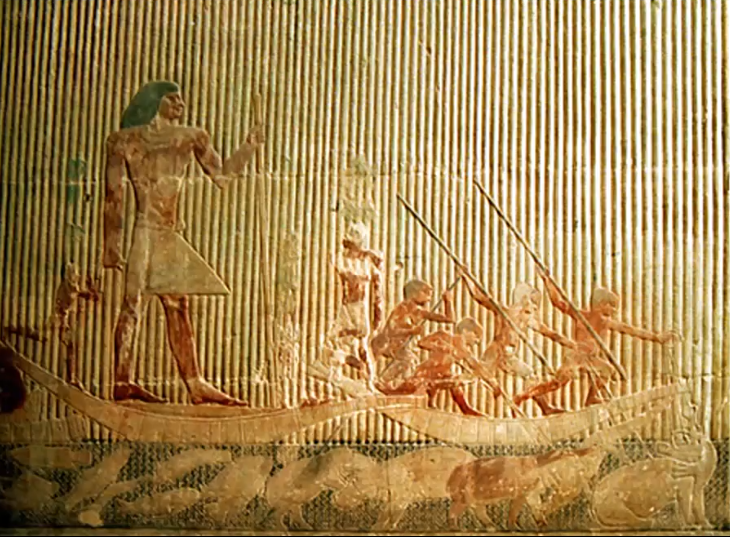
Painted Relief of Official Ti Hunting, Old Kingdom (dynasty 5) makers, 2500s-2450 BCE
personal, small boats made of reeds rather than wood for hunting on the river
a team is being directed by Ti, a government official, to hunt hippos
resources from the river. boats are an expression of the importance of the river

Relief of Agricultural Scenes, Old Kingdom (dynasty 5-6) Makers, 2231-2281 BCE
labor associated w/ agriculture, digging, sickles, bundles of crops
showing status of an individual’s agricultural success (taken from someone’s tomb)
shows induation season
distinguishes man and woman in clothes, but shows that both engaged in labor

Guennol Lioness, Sumerian Makers of Iraq, 3000 BCE
represents the outsides of the city, wilds and chaos
not reverent, shows how scared the people were

Cup with Hero, Sheep, and Lions, Sumerian Period Makers, Iraq, 3100-2750 BCE
naked hero saving sheep from lions, “taming the wild” by killing it
considered half wild himself, so he’s able to fix the chaos
shows that civilization at the time was so petrified of the wild getting to them, and that they needed to find a way to tame it
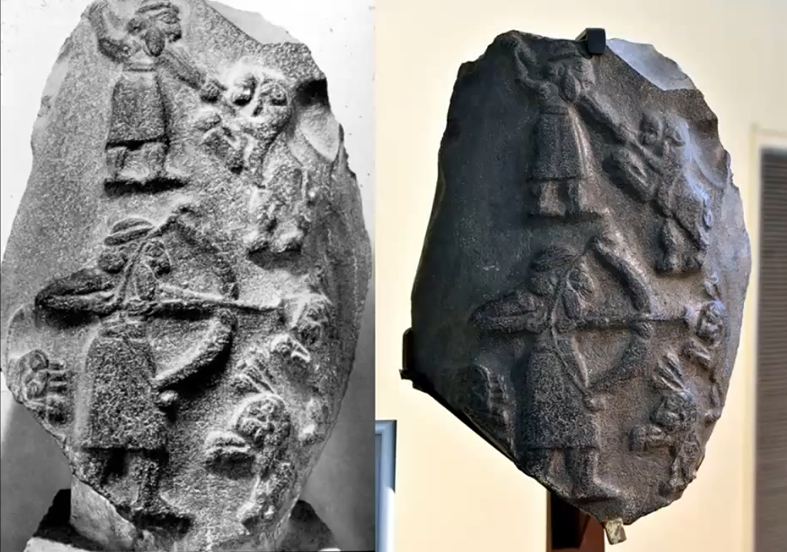
Lion Hunt Stele, Sumerian Period Makers of Uruk, 3000 BCE
non nude man with a headpiece representing a king, moving from the naked hero to kings going out to kill and tame the wild instead
the image of kings killing lions persists throughout ancient art
controlling the wild is civilization
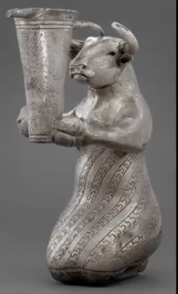
Kneeling Bull w/ Vessel, Proto-Elamite Makers, 3100-2900 BCE
represents the idea of animals serving people

Inlay on Queen’s Lyre Soundbox, Early Dynastic III Makers, Ur, Iraq
hypericon
animals controlled and serving, not mythological story, rather representation
not only domesticated animals serving, showing theyve tamed the wild to make it subservient
hypericon
iconography including an image of what the image is on, self-referential
bullae
sphere made of clay with impressions made from tokens, where tokens would then be put into the sphere. ancient receipt
cuneiform
flat tablets with impressions of tokens as well as use of a stylus to write additional information alongside imagery
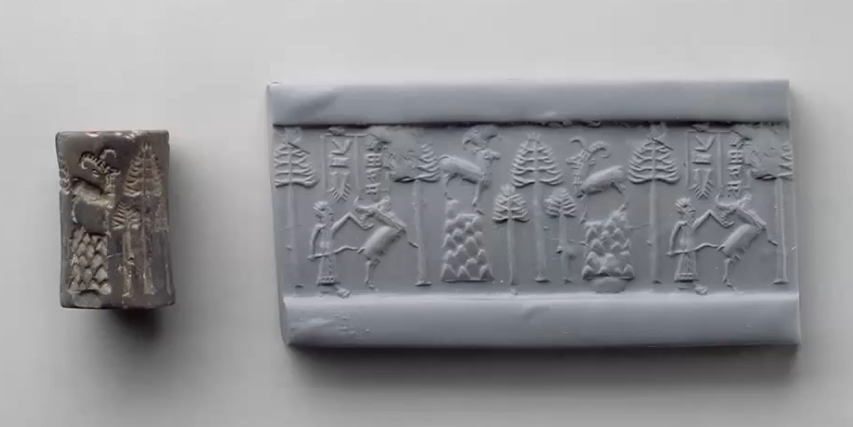
Hunting Scene Cylinder Seal and Modern Sealing, Akkadian, 2250-2150 BCE
a repeatable seal with engravings used to make multiple copies of the same thing
very small, cuneiform alongside imagery, meant to look closely, intimate
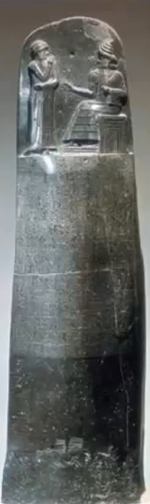
Stele of Hammurabi, Old Babylonian Period, 1754 BCE
very large, 7.5’ tall, where part would be buried in the ground for the text to be eye-level
inscription of praises of Hammurabi followed by legal doctrine/punishments for crimes
divided into registers, reading from top to bottom left to right
buried after takeover of Babylon to destroy Hammurabi’s legacy
red land vs black land
referring to the Nile, where the soil flooded by the nile and closest to it would be black, fertile soil. Egyptians thought of this land as life sustaining, where crops and civilization could live. The outside desert was the the red land, where it was dry, wild, uncontrolled, and where they buried the dead. Separation of life and death. They would bury the dead away from cities because of health concerns, but also so that the souls of the dead could “conquer” the untamed land that they were so afraid of
how was water important for ancient civilizations
water provided life. when people settled into place rather than traveling for food, they needed water to grow crops so they could eat, water to drink and water for animas they bred and ate as well. The NIle was so important to the ancient Egyptians they built their season around it, and to ancient Mesopotamia, where they settled between the Tigris and Euphrates rivers. Beyond water, in desert, was chaos, wild, and death for ancient people
examples, guennol lioness that showed the fear of what was beyond civilization. renovated nilometer shows how deeply important water was and how it was measured every year to track how the nile was behaving and therefore influencing the lives of people
writing and imagery
writing was invented to keep track of items bought/traded. writing appeared alongside imagery often which is what modernly considered “art” rather than pure writing and cuneiform
examples like stele of hammurabi show that imagery coincided with writing to show the importance of a certain figure, what was going on, what the writing represented, since most people were illiterate
the concept of showing success
success is shown in many artworks to accompany people in tombs
examples solar barge, mural of a planned garden, painted relief of official Ti hunting. all showed status related to agriculture and the control of the river, taking resources from it or growing resources along it, the more you could do that the more powerful you were