Lecture 7 - Blood
 Call Kai
 Learn
Learn Practice Test
 Spaced Repetition
 Match
Match Flashcards
 Knowt Play
1/88

There's no tags or description
Looks like no tags are added yet.
Name | Mastery | Learn | Test | Matching | Spaced | Call with Kai | Chat |
|---|
No analytics yet
Send a link to your students to track their progress
89 Terms
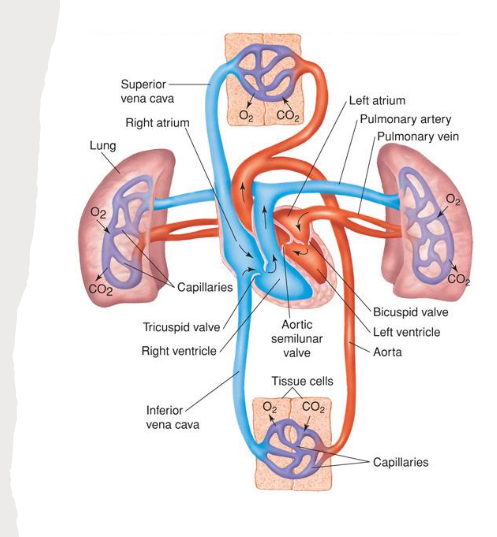
What drives many features of the cardiovascular system?
Pressure gradients
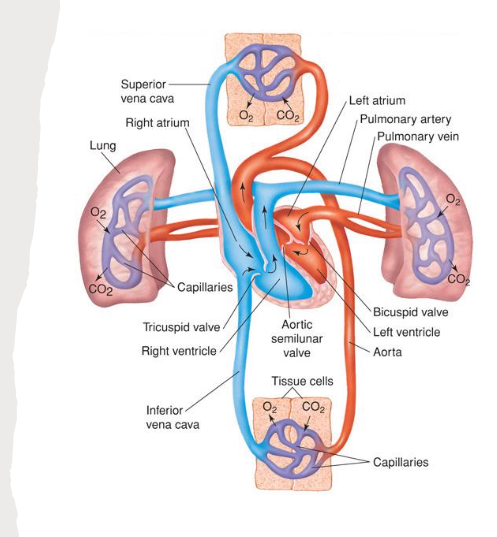
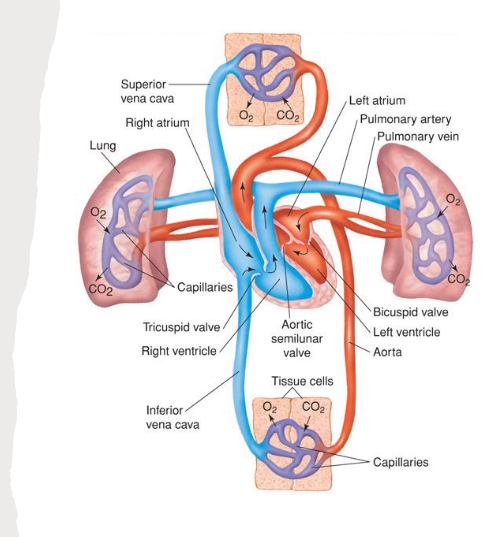
What does the pulmonary circuit handle?
Blood between the heart and lungs
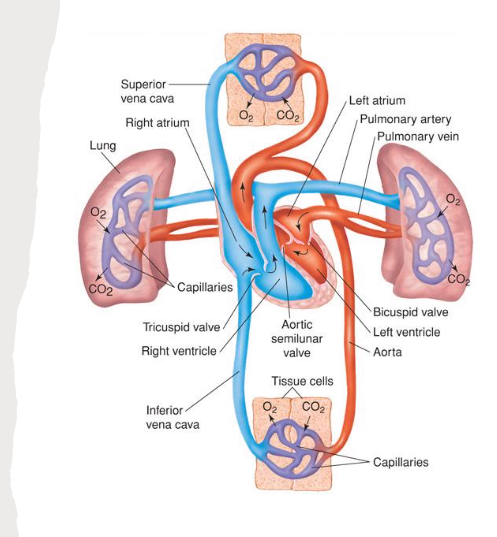
What does the systemic circuit carry blood between?
The heart and organ systems
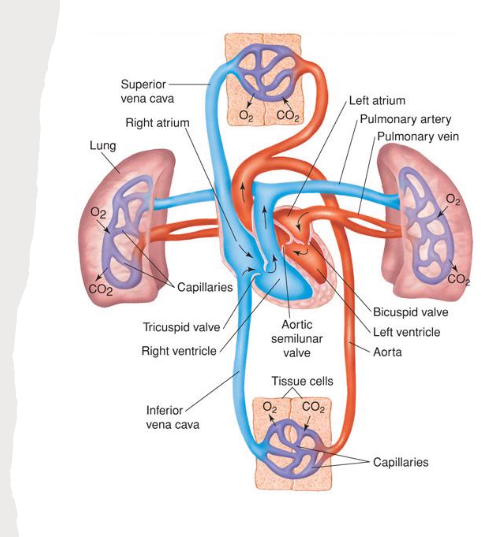
What is the function of the lymphatic system?
To absorb excess interstitial fluid
Where do lymph ducts drain into?
Veins
What do blood vessels have in terms of total length and surface area?
A staggering total length and surface area
Is blood evenly distributed within the vessels?
No — blood is not evenly distributed in the vessels
What drives blood from 1 vessel to another?
Pressure gradients
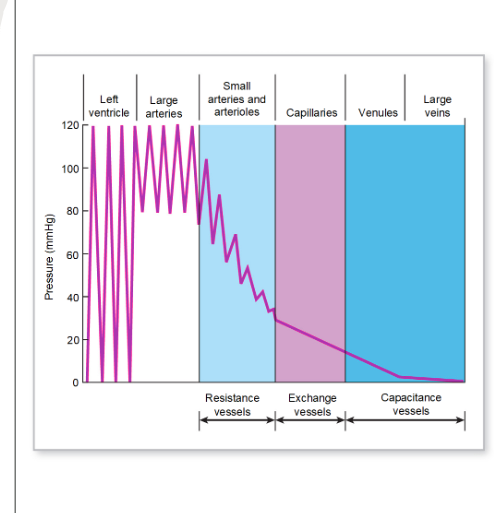
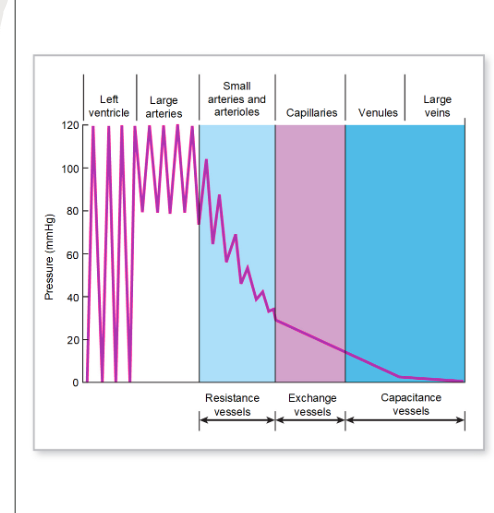
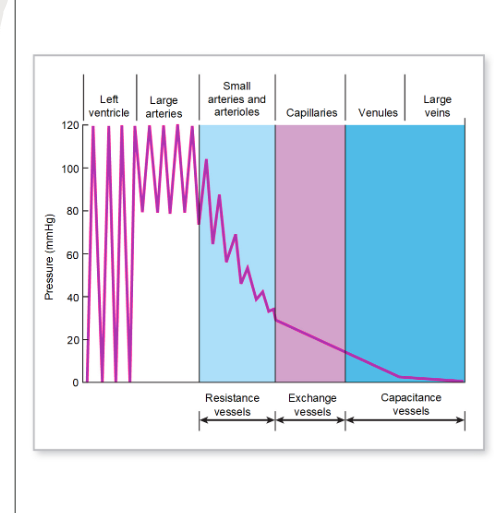
What does a pressure gradient drive? What creates pressure gradients?
Flow from high pressure to low pressure.
The heart.
What is the equation for flow in blood flow physics?
Flow = ΔP/R (change in pressure between two points divided by resistance).
What effect does resistance have on flow?
Resistance hinders flow.
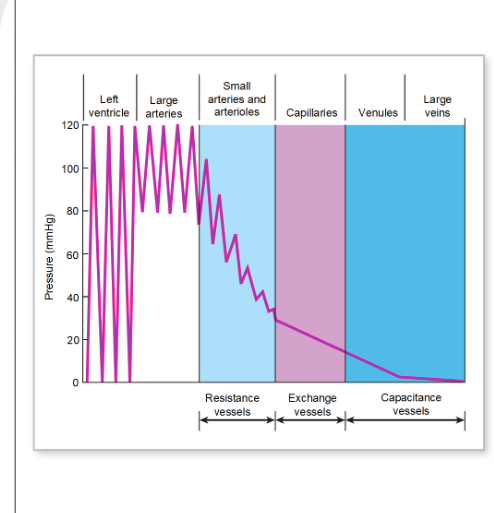
What are the pressure and resistance levels in the pulmonary circuit?
Low pressure, low resistance.
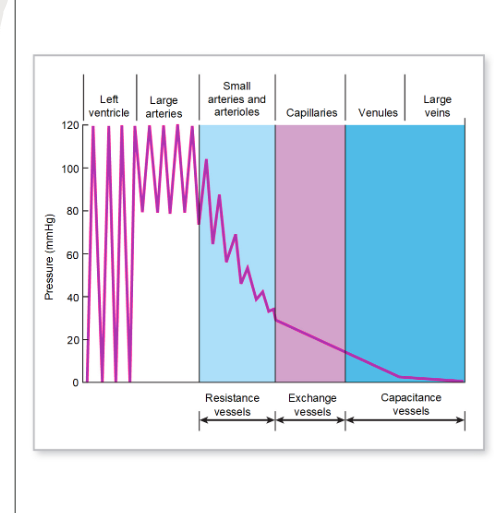
What are the pressure and resistance levels in the systemic circuit?
High pressure, high resistance.
What role does the heart play in pressure gradients?
It's a pump that sets up the difference in pressure.
How does the heart increase MAP?
By pumping blood into the aorta.
What is MAP (in the systemic circuit)?
The average pressure in the aorta during the cardiac cycle.
What is the approximate value of MAP?
~85 mm Hg.
How does the systemic circuit's ΔP compare to the pulmonary circuit's?
It's far greater than the pulmonary circuit's.
Despite the difference in ΔP, how does flow compare between the pulmonary and systemic circuits?
Flow through both circuits =equal.
What does resistance help explain about the pulmonary circuit?
Why it has the same blood flow as the systemic circuit despite lower pressure (lower resistance).
What are the three factors affecting resistance?
Radius of vessel, length of vessel, viscosity of fluid.
Where can radius be regulated, and what type of vessels are these?
Arterioles and small arteries.
How does vessel length typically behave?
Does not spontaneously change.
What does blood viscosity depend on (2 things), and how stable is it?
The amount of RBCs and proteins; usually constant.
Which factor modifies resistance the most?
Radius.
What are the two main functions of arteries?
Conduct blood away from the heart; act as a pressure reservoir.
Why are arteries a rapid transport pathway (2 things)?
Large diameter and little resistance.
What do arterial walls contain, and what role does this serve?
Elastic & fibrous tissue; serves as a storage site for pressure.
What type of walls do arteries have (2 CHARACTERISTICS)?
Thick, elastic walls.
What does "low compliance" mean for arteries?
Small blood volume increase → large pressure increase (shorter)
What happens to arteries during systole?
What happens to arteries during diastole?
expand as blood enters, storing energy like a spring.
They recoil.
Why does this expand-and-recoil behavior matter?
It allows for continual blood flow even under diastole.
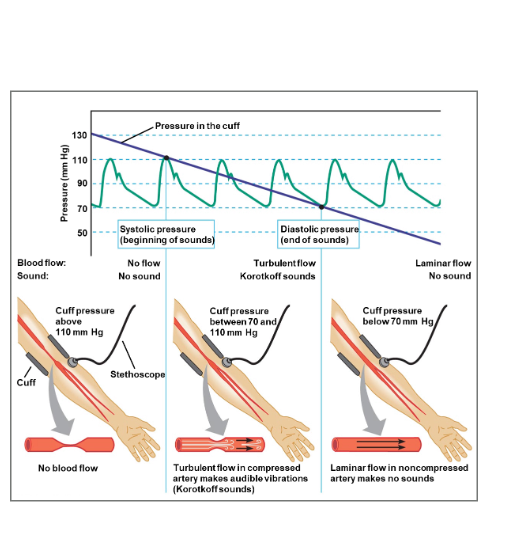
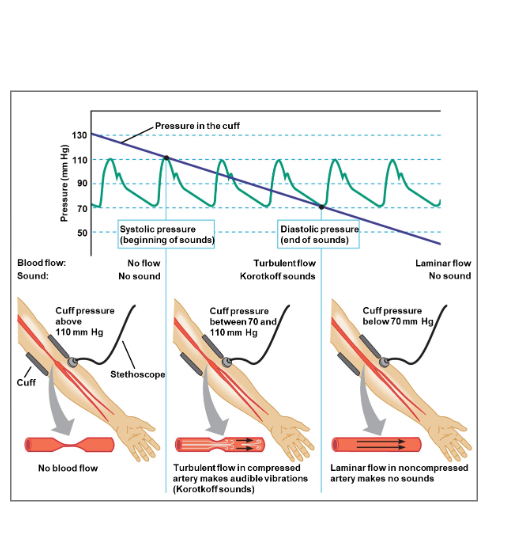
How is arterial blood pressure measured?
Estimated pressure cuff & stethoscope
measured in the brachial artery.
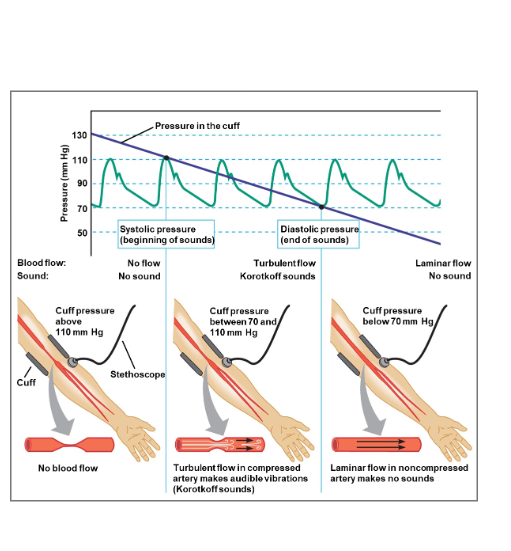
What is the average BP, and what are the systolic/diastolic values?
Average BP = 110/70 mm Hg; systolic = 111, diastolic = 70.
What is the formula for MAP?
Example: Using the average BP values, what does MAP calculate to?
MAP = [Systolic + (2 × diastolic)] / 3.
83.3 mm Hg = 250/3
What do arterioles provide?
What forms rings around arterioles?
greatest resistance
largest pressure drop
Circular smooth muscle.
How is resistance in arterioles regulated?
contraction & relaxation of smooth muscle by the sympathetic NS.
What is the functional role of arterioles in the vasculature?
The passageway to capillaries.
What happens when contraction increases?
The radius of the lumen decreases → vasoconstriction → increased resistance → decreased blood flow.
What happens when relaxation increases?
The radius of the lumen increases → vasodilation → decreased resistance → increased blood flow.
What also regulates arteriole radius, and in response to what?
Local factors, in response to ECF (extracellular fluid) conditions.
What changes are associated with vasodilation (local control)?
Changes associated with increased metabolic activity — increase in wastes and decrease in oxygen.
What changes are associated with vasoconstriction (local control)?
Changes associated with decreased metabolic activity.
What do intrinsic mechanisms control?
Localized blood flow — they alter resistance of blood flow to individual organs or capillary beds.
What do extrinsic mechanisms regulate?
Mean arterial pressure (MAP), by maintaining a perfusion pressure gradient that drives blood flow.
How do extrinsic mechanisms control MAP?
What are the two main extrinsic mechanisms listed?
By regulating the radius of arterioles.
Sympathetic activity and hormones.
What does norepinephrine (norepi) trigger?
What does epinephrine (epi) trigger?
Vasoconstriction.
Vasodilation.
What hormone is also called ADH, and where is it secreted from?
Vasopressin; secreted by the posterior pituitary gland.
What does vasopressin (ADH) do?
Increases water reabsorption by the kidney and promotes vasoconstriction.
What does angiotensin II do?
Causes vasoconstriction and increases TPR.
What controls blood pressure long-term (days to weeks)?
Hormonal mechanisms; salt balance and blood volume.
What controls blood pressure short-term (moment to moment)?
The baroreceptor reflex.
Where are baroreceptors located, and what do they detect?
Stretch receptors in the aorta and elastic arteries.
What does high stretch indicate, and what happens in response?
High stretch = high pressure → steps are taken to lower BP.
What does low stretch indicate, and what happens in response?
Low stretch = low pressure → steps are taken to raise BP.
Steps of Baroreceptor Reflex (BP) dropping
Let’s say we stand up and our BP drops…
Drop in pressure is detected by arterial baroreceptors and is transmitted to the brain
This triggers a decrease in parasympathetic activity and an increase in sympathetic activity
Causes an increase in action potentials at the SA node, causing heart rate to increase
Increases stroke volume by increasing venous return
All of this results in an increased MAP
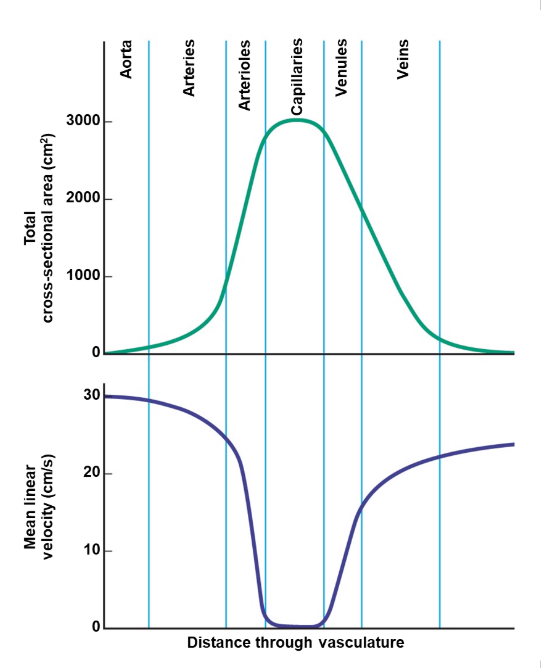
What is the main function of capillaries?
What are the walls of capillaries like?
What other key feature do capillaries have?
What can pass through the pores between capillary cells?
Site of exchange between blood and tissue.
1 cell layer; small diffusion barrier.
High surface area.
Large polar molecules/ions, except proteins.
What do the two types of capillaries differ in?
"Leakiness."
What are continuous capillaries, and how common are they?
Small gaps between endothelial cells ; The most common type.
What can pass through continuous capillaries, and what is their permeability to proteins?
Small water-soluble molecules can move through small gaps between endothelial cells; permeability to proteins is low.
What form the pores in fenestrated capillaries?
Large gaps between endothelial cells.
What can move through fenestrated capillaries?
Proteins and sometimes blood cells.
Where are fenestrated capillaries found?
Kidneys, intestines, and endocrine glands.
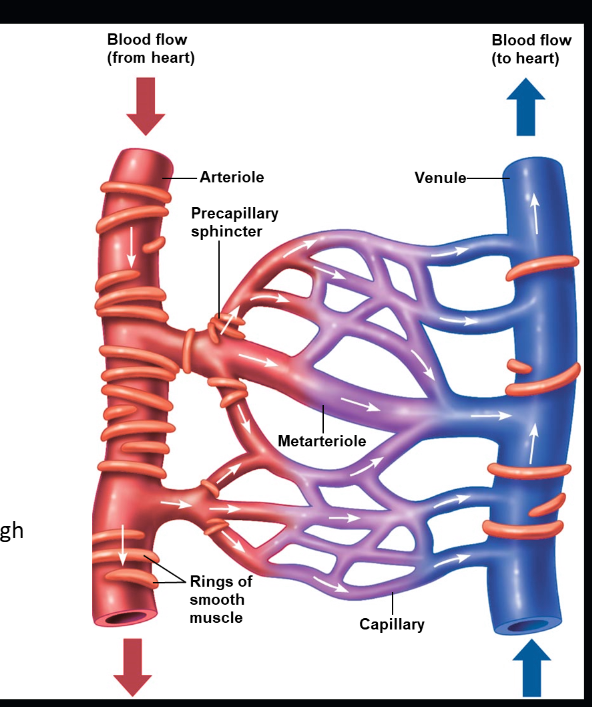
What is local control of capillaries provided by?
Metarterioles
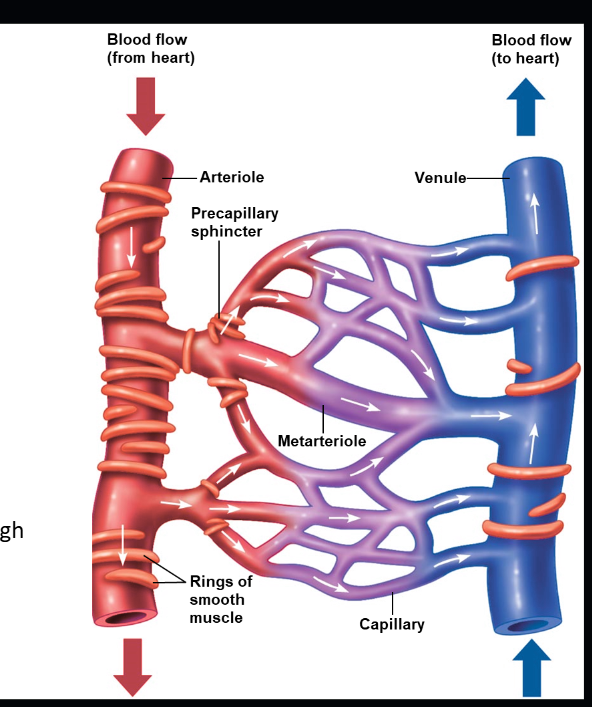
What are metarterioles, structurally and functionally?
Vessels between arterioles and capillaries that connect arterioles to venules; function as shunts to bypass capillaries.
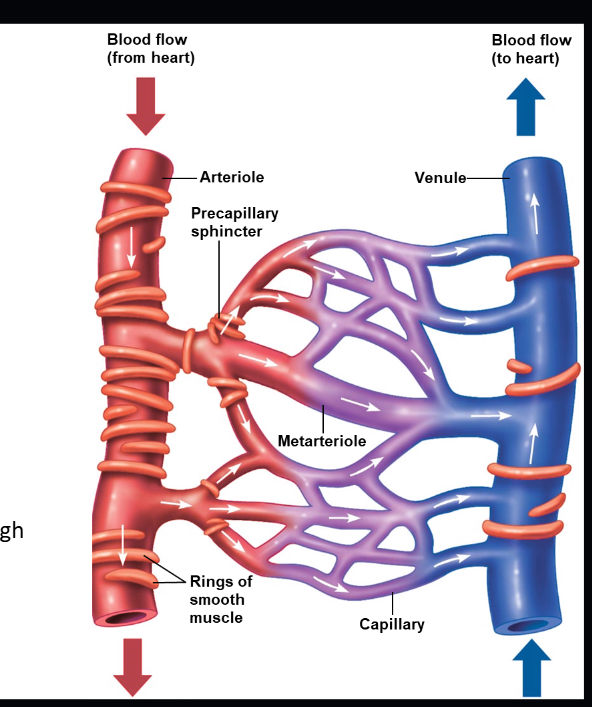
What ring of smooth muscle is found at strategic locations on metarterioles?
Precapillary sphincters.
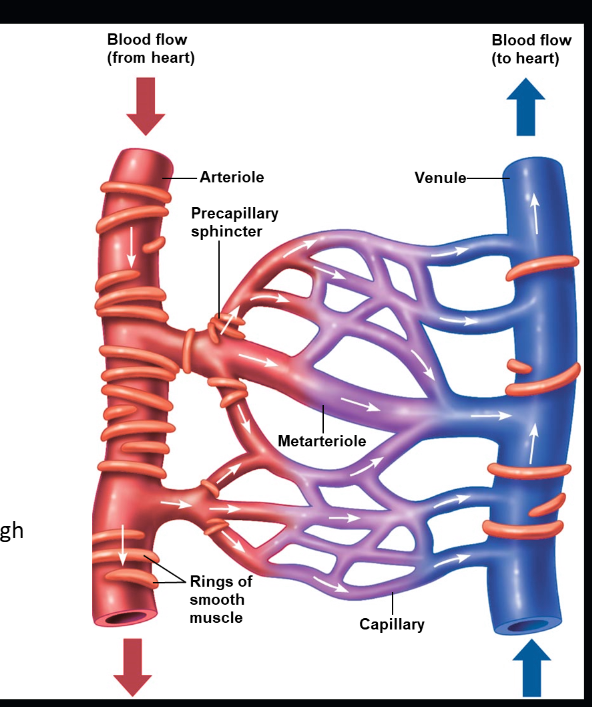
What do precapillary sphincters do in response to local factors?
Contract and relax.
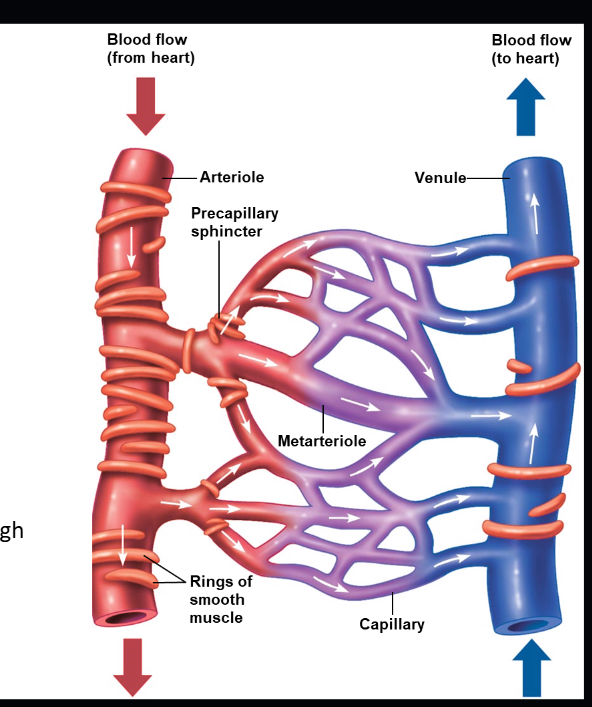
What happens to blood flow through capillaries when precapillary sphincters contract?
Blood flow through capillaries increases.
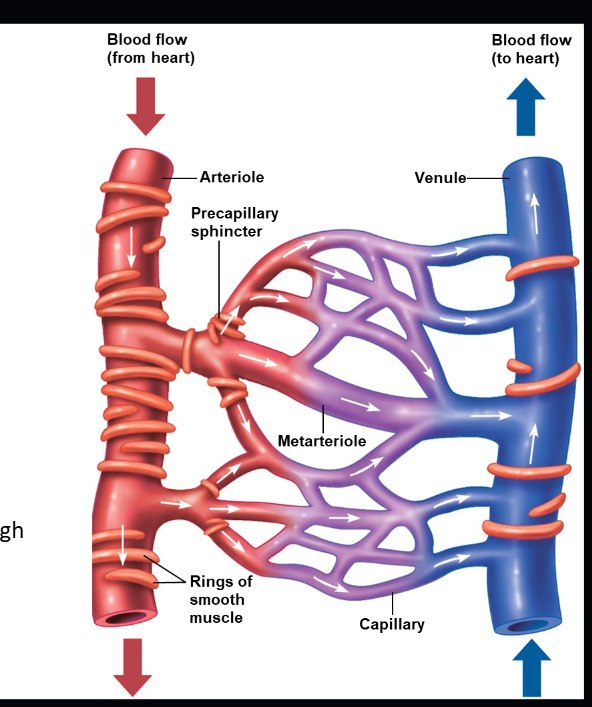
What happens to blood flow through capillaries when precapillary sphincters relax?
Blood flow through capillaries decreases.
How do venules compare in size to arterioles?
Smaller than arterioles.
What do venules connect?
Capillaries to veins.
What is in the walls of venules?
Thin smooth muscle.
Do venules exchange material with interstitial fluid?
Yes, some exchange occurs (not as much as capillaries).
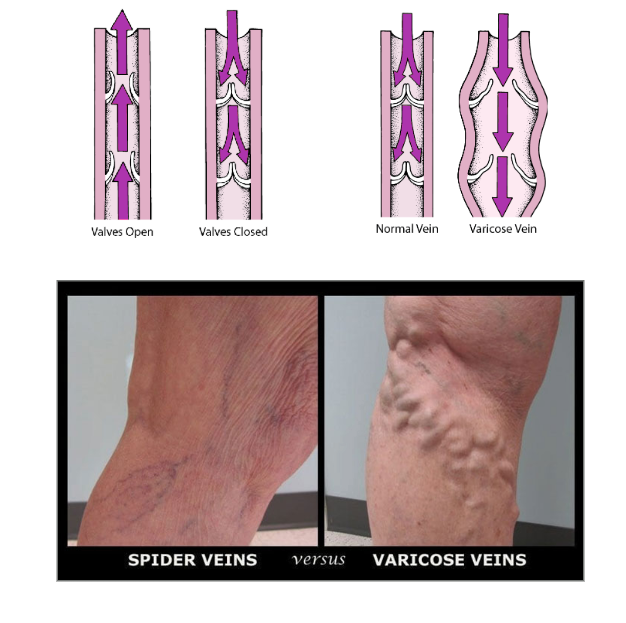
What is notable about vein diameter and wall thickness?
Largest diameter but thin walls — could be larger than arteries.
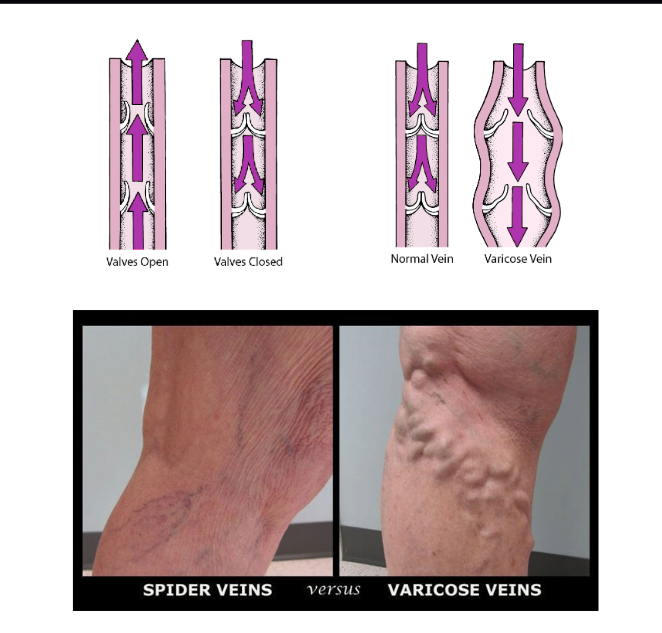
What do thin walls in veins reflect?
Lower blood pressure.
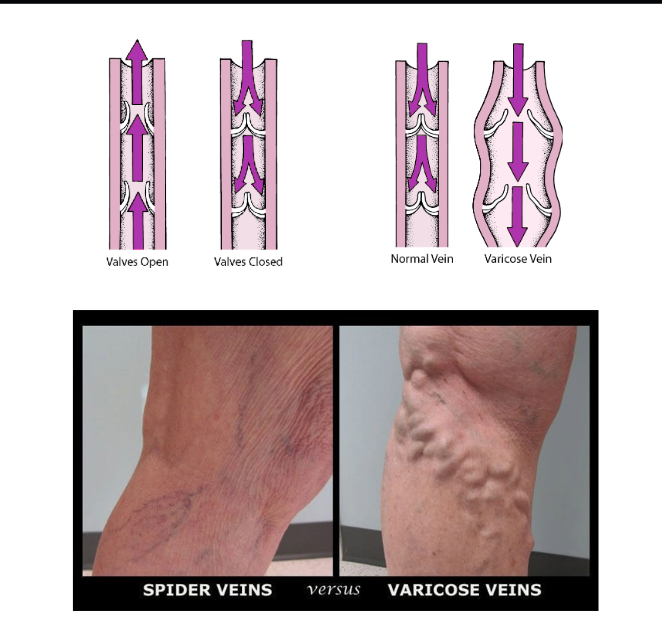
What structure do many veins have?
One-way valves.
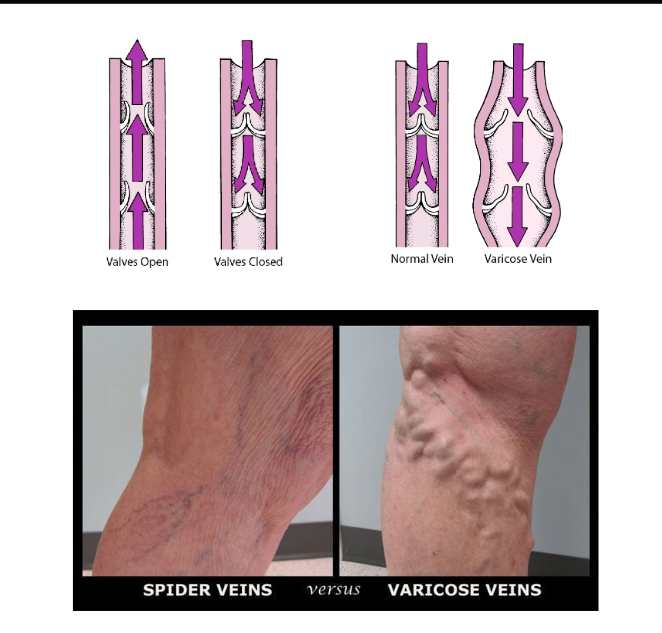
What can failing valves cause?
Spider veins and varicose veins.
What do veins hold large volumes of, and what happens with little change in pressure?
Blood; with little change in pressure, veins expand — earning the nickname "blood reservoir."
What percentage of total blood volume do systemic veins hold at rest?
60%.
Why can veins accommodate large volumes?
Thin walls easily stretch.
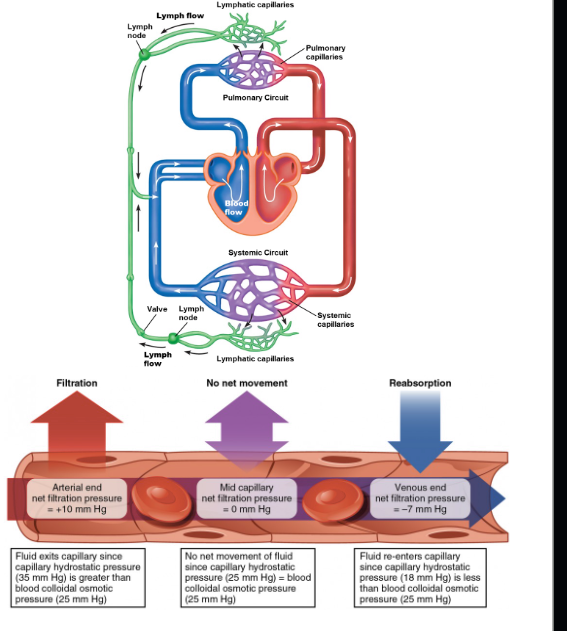
What is the lymphatic system?
A system of vessels, nodes, and organs that returns excess fluid to circulation.
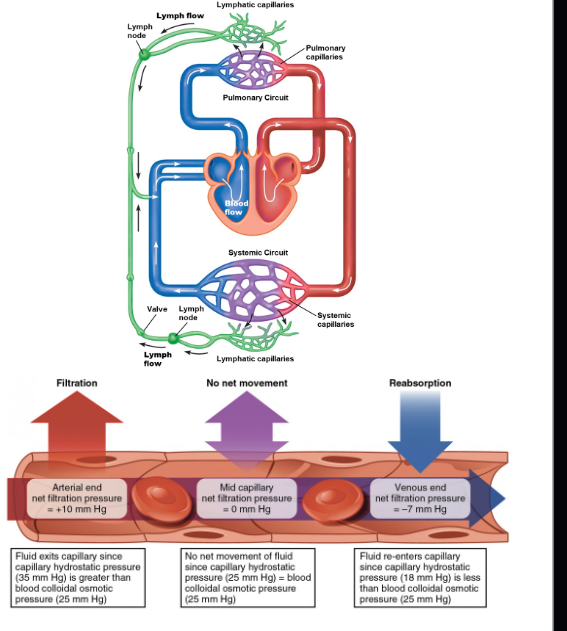
Why does excess fluid need to be returned to circulation?
Because more fluid moves out of capillaries than moves back in (plasma without proteins).
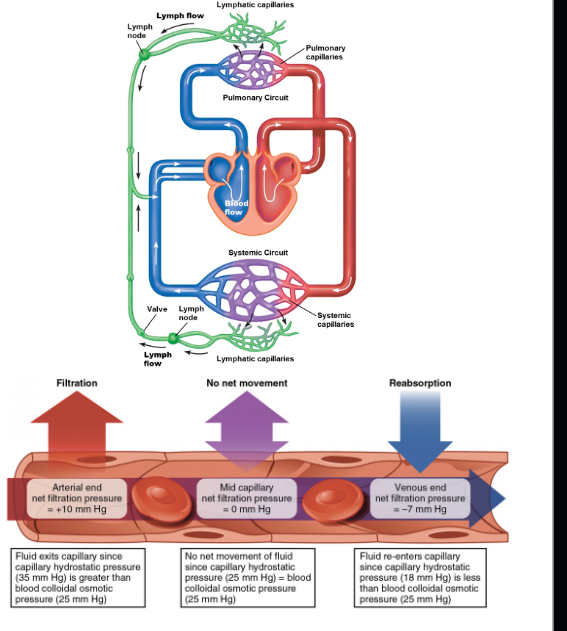
What is the total net filtration pressure?
3 mm Hg out of the capillary.
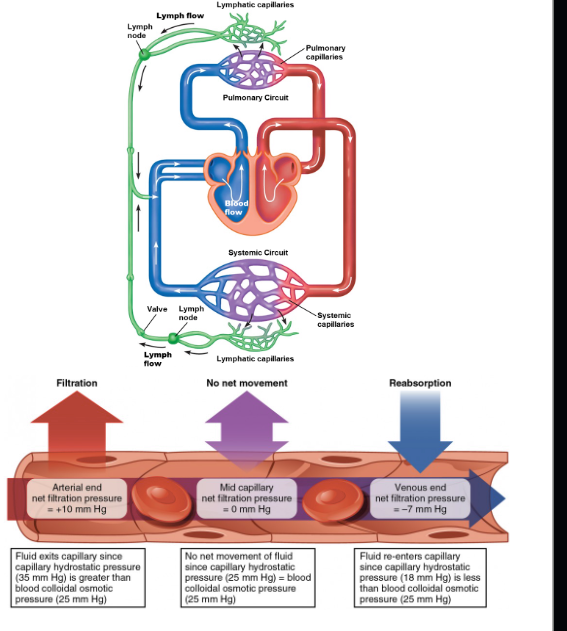
Where do lymphatic vessels start and end?
Start at capillary beds, drain into veins.
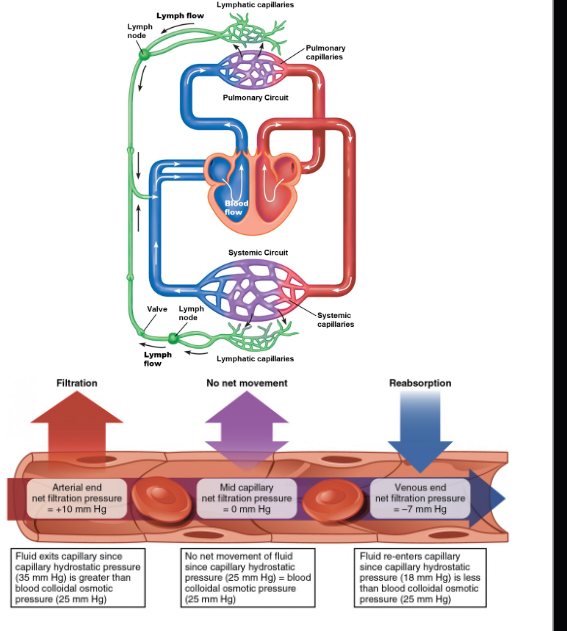
How does lymphatic fluid ultimately return to the bloodstream?
Drains into the thoracic duct, which empties into the right atrium.
What is lymph?
Fluid picked up by lymph vessels.
How much lymph is collected per day, and where does it return to?
3 L/day; returns to systemic veins.
Where is the main immune system location?
Lymph nodes.
What common problem is caused by blocked lymph drainage?
Edema.