Art History Exam 1
 Call Kai
 Learn
Learn Practice Test
 Spaced Repetition
 Match
Match Flashcards
 Knowt Play
1/94

There's no tags or description
Looks like no tags are added yet.
Name | Mastery | Learn | Test | Matching | Spaced | Call with Kai | Chat |
|---|
No analytics yet
Send a link to your students to track their progress
95 Terms
Why did women in the 70s decide to pursue “craft”
Many young women artists in the 70s decided to do craft because “maybe that’s what women really should be doing since it’s women’s work”
Rozsika Parker and Griselda Pollock
Said before we embrace craft, let’s look at the relationship between women and craft
Wrote “Old Mistresses,”
Flower painting
History of embroidery
It’s not because they are women that they make craft. Because they are women, what they do is craft.

Allegorical Portrait of an Artist
Michiel van Musscher
She is a flower, so she painted a flower, so the painting is an extension of herself

Woman Embroidering
Georg Friedrich Kersting
Is it craft because it’s a woman, or because she is just sitting at home
No studio, not public
Linda Nochlin
Asked why have there been no great women artists
It’s not about women, it’s about how art and women has been defined by society
Myth of the great artist: A good artists’ skills show up early on. This has never shown for women. However, it’s because men have the privilege.
Nude models
Idea of a true lady’s accomplishments (caretaker, busy work). Didn’t have the space or time to develop their skills.
Why have there been no great women artists
Women create life, men create art. Leave this to the men
Women are the muse of the artist, not the creator
“Women were great in different ways.” Soft. Feminine
What made Rosa Bonheur successful
Dad was an artist → got training and education
Time period: Many could be successful even when you couldn’t paint nude. More emphasis on smaller, simpler paintings.
Independent. Didn’t dedicate her like to a man and have to sacrifice
Dressed in male attire, helped her study animals
Mom died when young → Didn’t have someone to teach her how to be ladylike
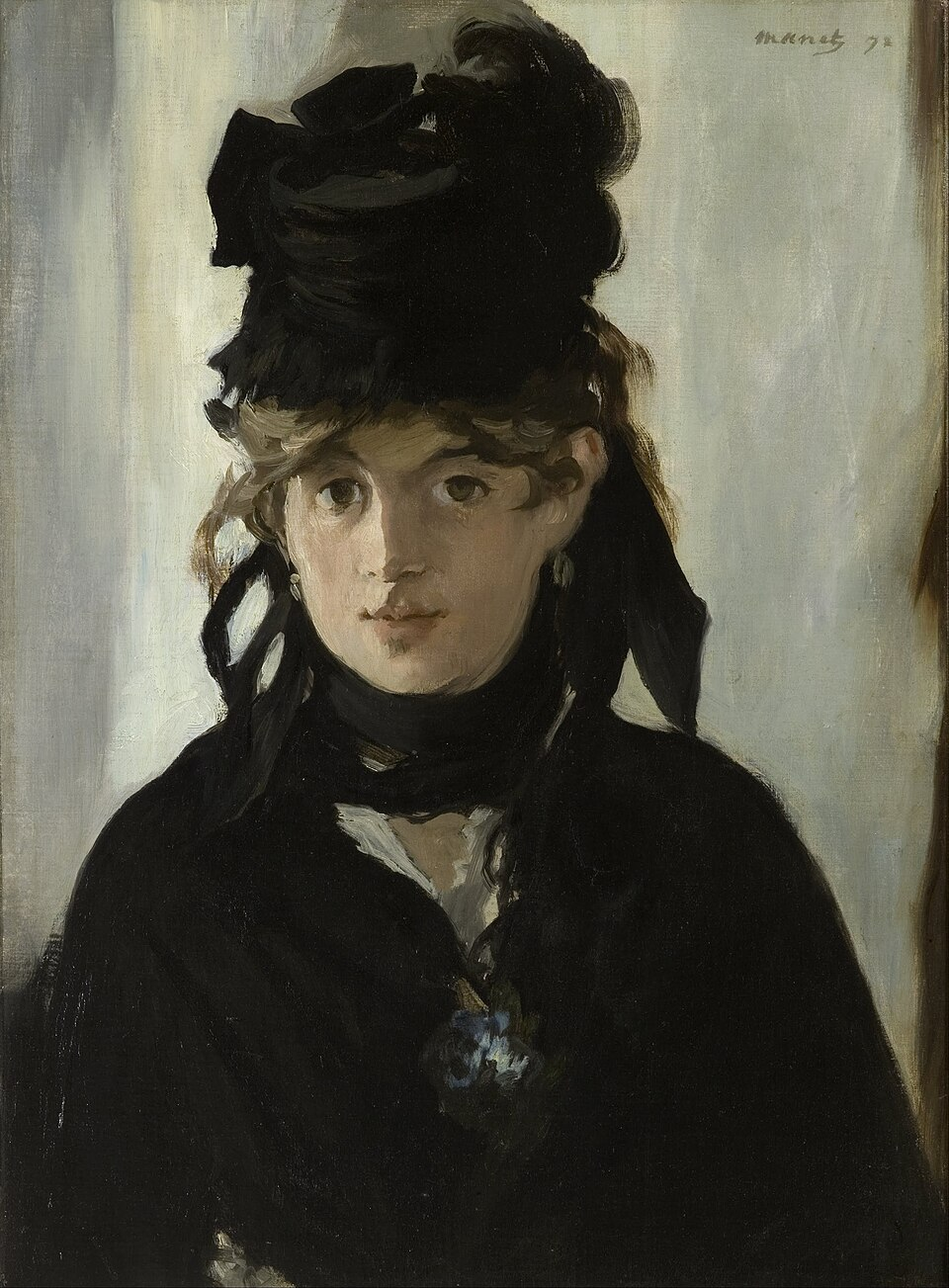
Berthe Morisot Background
Impressionist
She was a female impressionist. Many famous impressionist works she couldn’t have painted due to being a woman. A world curated for men. All her paintings family or friends (weird for a woman to paint strangers or crowds)
Upper bourgeoisie
Sister, both raised like women of the upper class at the time. Both loved painting and skilled. Mom concerned they’re taking it too seriously. Berthe very stubborn
Accepted at salon
Berth Morisot and Edouard Manet
Met through connections at Louvre
Controversial because of his Olympia painting
She becomes his model and protegee, has a huge liking for him despite being married
Manet was a slow painter, kept in her studio to paint her for days.
She has no time to paint, but wants to learn from him

Olympia
Edouard Manet
Controversial because it depicted a prostitute, was more realistic over idealized, not as smooth, can see brush strokes

The Mother and Sister of the Artist
Berthe Morisot
Berthe invited Manet to tea while painting this
He completely took over the painting
Made her mother happy because she had little confidence in her daughter
“My only hope is that I shall be rejected”
He’s trying to help, not realizing it’s problematic
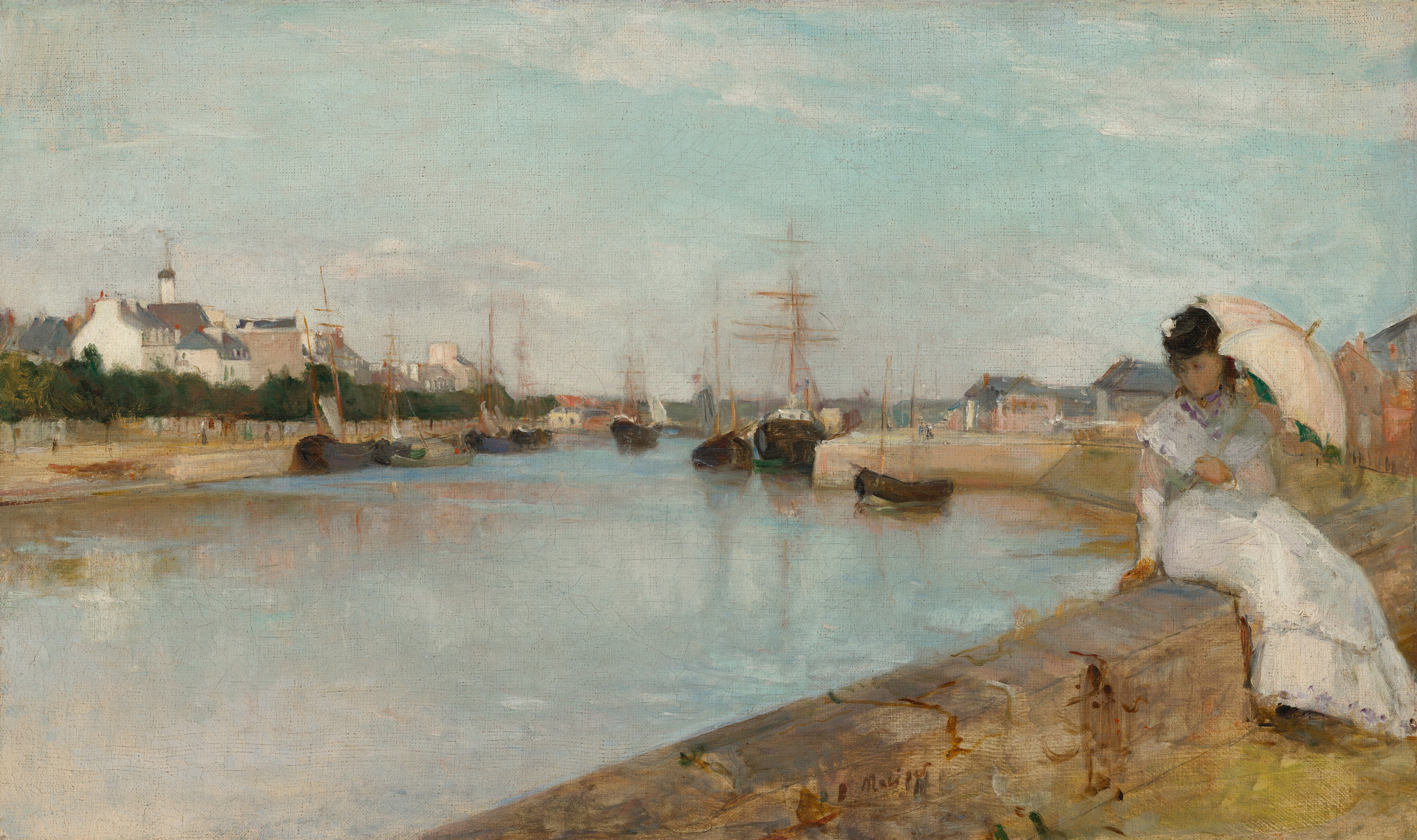
The Harbor at Lorient
Berthe Morisot
Each object is getting its own treatment
Manet saw this work and really loved it, so she gave it to him where he kept it in his studio until death
Example of how her style hasn’t changed much since meeting Manet
However, his work heavily changed, transitioning to impressionist works
She changed him, not the other way around
Morisot marriage and conflicted
Morisot was a very conflicted woman.
Really wanted to be an artist, but her family needed her to get married
Her sister gave up painting, got married and had kids
Berth decided not the get married
Mother wrote to her concerned, she won’t have financial support. If you get married, you fall into poverty. She needs to marry urgently or her beauty will fade
Berth moves back in with mom and works on her art in the living room
Her mom would invite all these people to afternoon tea, making it impossible for her to work
Would refuse to eat as blackmail
Overall, her mother and manet weren’t trying to harm her. Just wanted what’s best

Portrait of Madame Pontillon
Berthe Morisot
Painting is a portrait of her sister in all black, hiding her pregnancy
During when her sister went home to be with her parents since she was pregnant
Pregnancy is not a time where you go out, you hide
Berthe Morisot and Eugene Manet
Edouard’s brother comes along and falls in love with Berthe
Tells her he will support her as an artist, they would buy a house and she would have a space to work. She agreed to marry him
Bought a house where she had her own studio. He would install exhibitions and frame her work
Had a daughter together. He took care of their daughter so she could paint.
Morisot, a modern, independent artist
Part of the popularity of impressionism
Monet’s impressionist painting controversial because the brush strokes were obvious, it was unfinished, and not a lot of color
Nobody liked this work, so artists created their own impressionist exhibition. Berth was a big part of this.
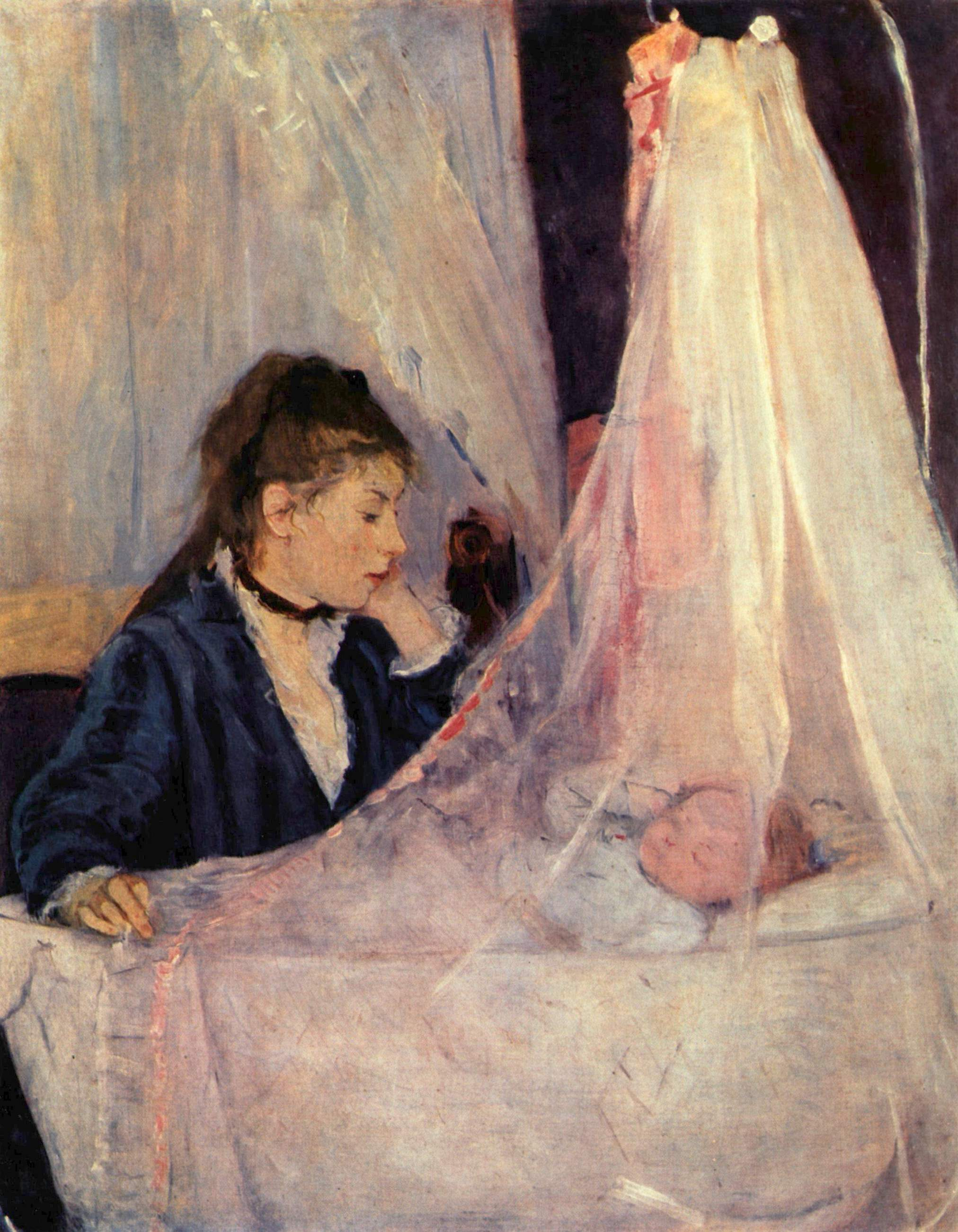
The Cradle
Berthe Morisot
Depicts her sister with her second child
Can see that Berthe’s work was very modern. Her sister is tired, disheveled
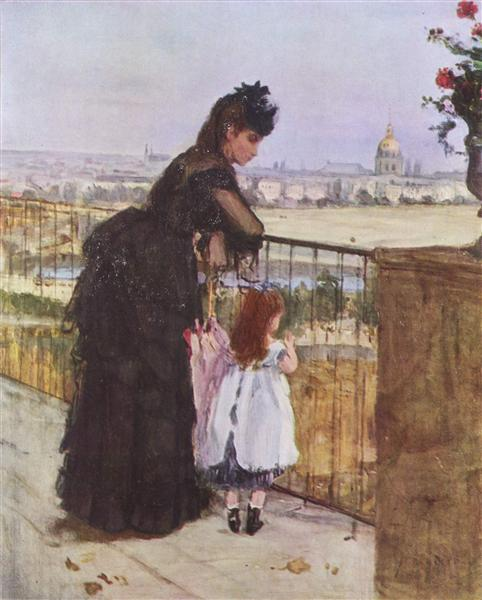
Woman and Child on the Balcony
Berthe Morisot
Shows a real woman
Depiction of the child is different from how children were painted during this time (naked babies)
More natural, less theatrical

The Wet Nurse and Julie
Berthe Morisot
Morisot’s wet nurse and daughter
An image by a working mother
A modern image of a mother representing her daughter
Fierce brushstrokes
A female artist, rather than a male artist, painting a woman breastfeeding her child, not out of nurturing instinct, but for money

Eugene Manet and his daughter at the garden
Berthe Morisot
The father taking care of his daughter so the mother can work and paint them
How many men during this time would have played with his daughter, in public, being painted by a woman?
He’s doing all this without feeling deminished
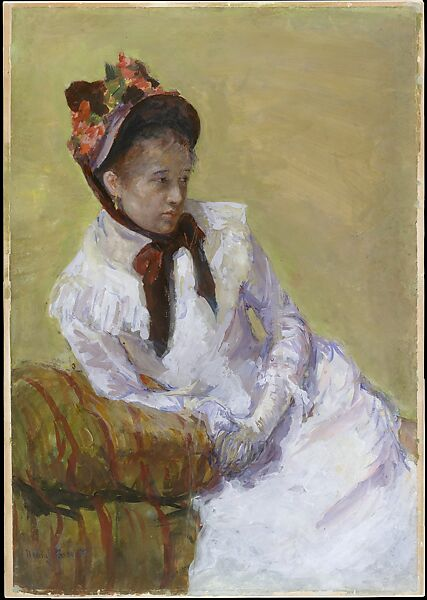
Mary Cassatt background
An ambitious, academic American artist trained in academic way
Belongs to a very wealthy family, has a lot of money
Doesn’t receive as much pressure to get marries since she has funds (wasn’t conflicted)
Her works were very typical, but still amazing

Mary Cassatt Pre shift
Mary Cassatt shift toward modernity
Moved to France to become a better artist: Studied and took classes
Has a turn towards modern life which takes place in the louvre
Meets Degas who really likes her and thinks she’s good
Supportive but critical of her work. Introduces her to other artists and friends

Little Girl in a blue armchair
Mary Cassatt
Post shift towards modernism
Very natural, appropriate pose for a little girl
Modern spatial positioning

Woman reading
Mary Cassatt
Shift toward impressionist movement
Color palette much lighter now, not as realistic
Later work is less staged and more natural
Loose brushstrokes we can see
Woman is reading fashion magazine, which was just taking off

The Artist’s Mother
Mary Cassatt’s mother reading a newspaper
Representation of her proto-feminism
Not a young beautiful woman, but an older woman with glasses which isn’t common at all during this time
Shows a woman not interested in her own beauty, but politics
Representing not just modern women, but active women

A woman and a girl driving
Mary Cassatt Proto-feminism
Woman driving a buggy, very modern
The man in the painting is in the back
Mary Cassatt and modern motherhood
Very real depictions
Part of a debate about breastfeeding
Her work trying to push women to take care of their own children
It used to be frowned upon for women to nurse their own kids as it could mess up their figures, etc.
Usually depictions of upper class women

Maternity
Mary Cassatt
A real depiction
Trying to influence women to take of their babies
Focus is on the baby
Paula Modersohn-Becker background info
German, expressionist movement
Colors of this era more muted than impressionism, nostalgia and emotion
Comes from educated background, being an artist is a good job for women in this period

Paula Modersohn-Becker’s colony
Paula was an artist of the worpswede colony
Many artists would go and live and work together because it was cheap
Most of her work here had muted colors, not very bright. Not realistic.
Decides she wants to have a career and see something else
Leaves and goes to Paris
Paula Modersohn-Becker and Paris
brought the discovery that there is indeed something else
Influenced by Cezanne
Paint what you see with your eyes or paint what you see with your mind
Not “well painted.” You can see brushstrokes
Influenced by Van Gogh (use of color in an expressive way)
Overall sees artists that emphasize expressing yourself, paint what’s in your mind

Self portrait
Paula Modersohn-becker
Painted once she came to Paris
More simplistic, symbolic
Colorful
Obvious influence from the artists she’s inspired by
Wants to make art more modern in composition
Not soft at all, rough
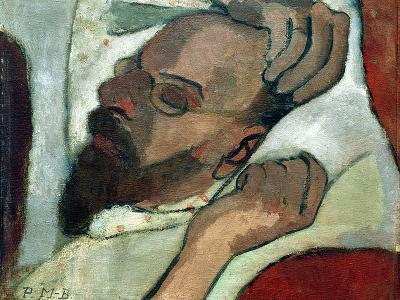
Otto Modersohn Asleep
Paula Modersohn-becker
She goes back to her colony and paints this man
He asks her to marry him, she has a stepdaughter
She loves him, but doesn’t really want to get married (means she would have to give up her passion to focus on family life)
Paula Modersohn-Becker and Images of motherhood
Upsurge in painting mothers she sees in countryside
*Many female artists paint this subject because they didn’t have much else they could paint

Silent mother
Paula Modersohn-Becker
Mother looks tired
Baby is older, not an infant
Mother has been doing this for 10 months (based on size of kid), probably has other children
Holding baby’s hand
She’s tired, not really making lovingly eye contact, but still holding onto him
Just about recognizing the reality of motherhood
Depicts lower class compared to Cassatt
Focused on the woman rather than the baby (same as Morisot)

Mother and Child
Paula Modersohn-Becker
A lot conveyed with not a lot of detail
Very rare to have a nude by a female artist; Woman painting a nude
Realistic, body hair
Adding clothes is just adding unnecessary pieces
Wanted to keep the spirituality by removing much detail in the woman and background, wanted the focus to be on the child and mother
Usually in paintings of women breastfeeding, she is sitting
Laying down is actually more natural
Texture is crusty and thick, can really feel it’s a creation
More of a story in Cassatt’s Bath, emphasis on connection with mom and child
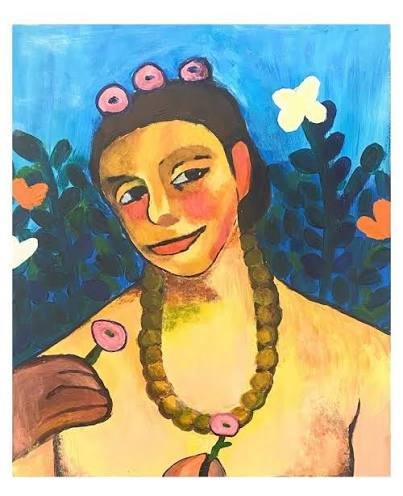
Nude Self Portraits
Paula Modersohn-Becker
Presenting herself as flower growing
Uses flower as an extension of herself
Women always being associated with flowers, seeing this as their personal power
Trying to prove herself as a woman, we have a quality men don’t have
Compared with self portrait of Cassatt
Cassatt more reserved, Impressionist (painting what she sees literally)
Modersohn expressionist, how she feels
Cassatt painting herself in a lying more relaxed and less lady-like (had to conform to male)
Modersohn very confident in her femininity
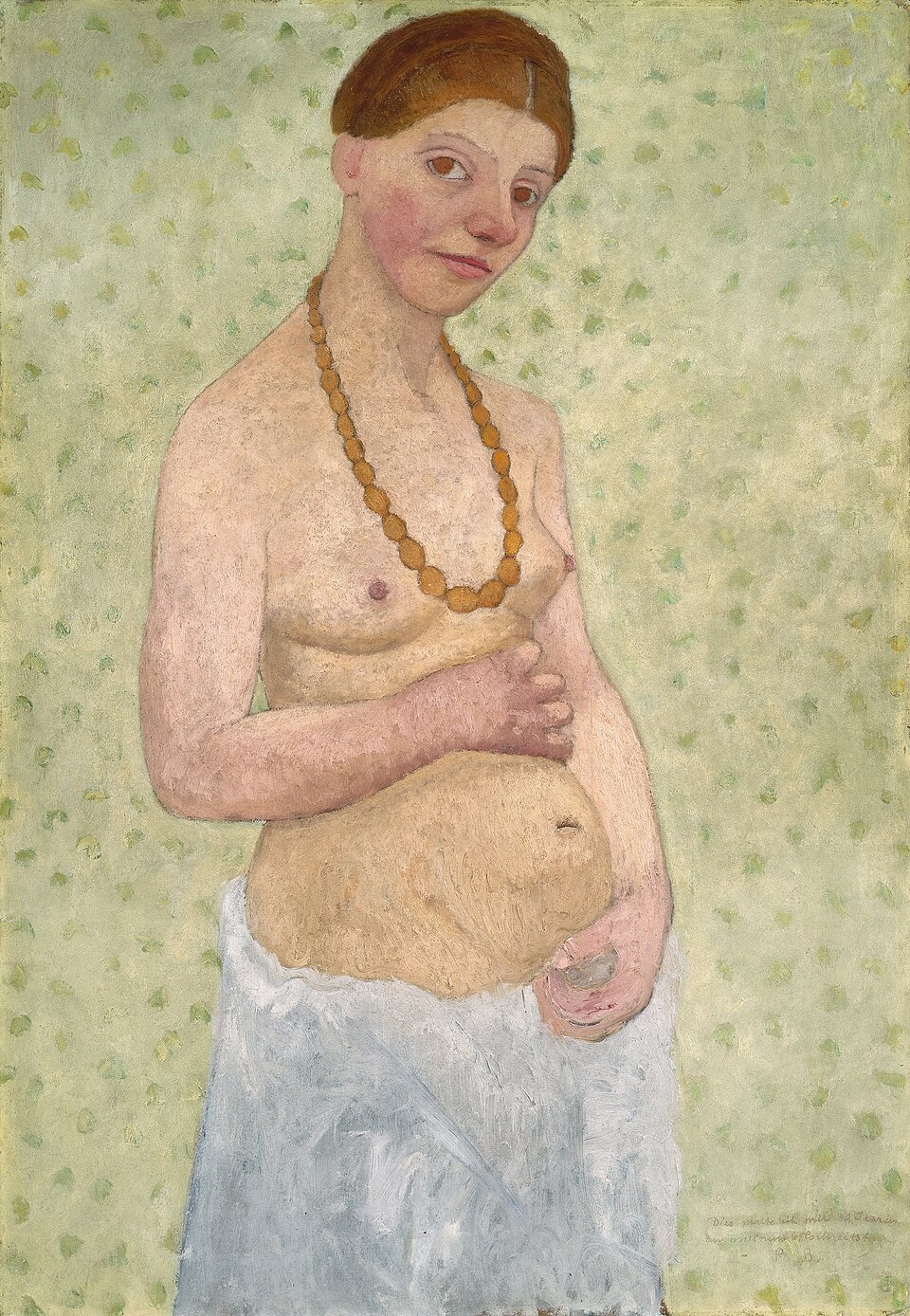
Self portrait on sixth wedding anniversary
Usually pregnant women are supposed to hide themselves away and not do anything (compare with Morisot pregnancy portrait)
Not as modest compared to Morisot piece
She is looking down at us, and seems very proud
Compared with Albrecht Durer Self portrait
Same text in the background
Seems she is comparing her artistry to that of Durer
She isn’t actually pregnant during this time
She is pregnant with art (usually men are the creation of art and women are the creation of man)
During time she left her husband and went to Paris
Using her sexuality as a reflection of her creativity, something men usually did
She doesn’t want her creation to be babies, but art

Naked Woman Breastfeeding Her Child
Paula Modersohn-Becker In Paris after leaving her husband, but decides to return to Germany for him and has daughter
Spotlight on the child, she is dark
Represent sacrifice that mother will represent
Not realist representation, but a symbol of sacrifice
Letting the baby grow is taking the life/light out of the mother (plants in the background)
She is giving up her career and work to be devoted to her child
Mother is smiling, she’s not unhappy, but realizing the consequence of what is happening
During a time when woman couldn’t choose not the be pregnant, children always chosen to be saved during childbirth over the mother (this was very common)
She died of an embolism three weeks after child’s birth
Kathe Kollwitz background
German expressionist
Come from educated bourgeois background
Studied in art school for women
Married family medical doctor Karl Kollwitz
Both very socially aware, didn’t want to make money but wanted to help the poor
Most of his clients could not pay
Mostly did print making and lithograph
The fate of the proletariat (the poor people) her main subject matter
Also captured death

Pregnant Woman
Kathe Kollwitz
The fate of the proletariat (poor)
Sad, may not have the money to take care of the child
Shadowing very sad
Compare with Morisot
Upperclass, I’ve given up my life as an artist to become a mother
Lowerclass: Can I feed another mouth?

Worker woman with sleeping child
Kathe Kollwitz
The fate of the proletariat (poor)
Woman transferred her energy to the baby
Woman is not well fed, exhausted
Compared with Modersohn’s breastfeeding child

Woman with dead child
Kathe Kollwitz
Captured death
Focusing heavily on the grief
Feel the child is very lifeless
Can see through the way the mother is holding the kid
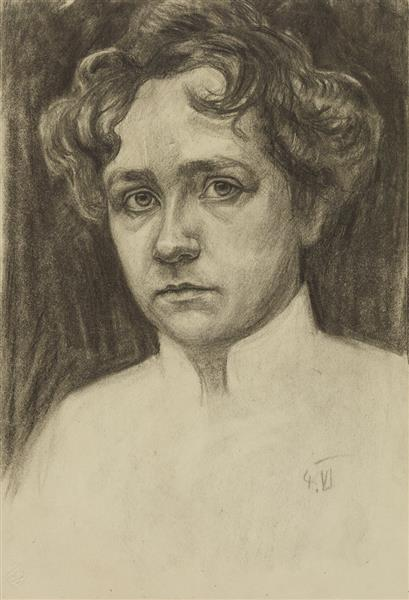
Gabriele Munter background and self portrait
German. Not super wealthy, but comfortable
Education of girls was valued
Became an orphan at a young age, no one to hold her back
Went to the US at 18 years old to visit family by herself
Took photographs, placed her shadow in some of her photos
Came back to Germany and enrolled in an art school for women
Wasn’t satisfied with the simple things they taught the women
Gabriel Munter and Kadinsky
Became student and lover to Wassily Kadinsky
He came from a very good background, lawyer, educated
He left everything to come to Germany and become an artist
He’s teaching, she was his student (and lover)
They start to have an affair even though he’s married. She can’t live with him.
They start traveling together since they can’t be together in Germany
Travels through North Africa and Europe
She completely adopted impressionist style from Kandinsky. More modern
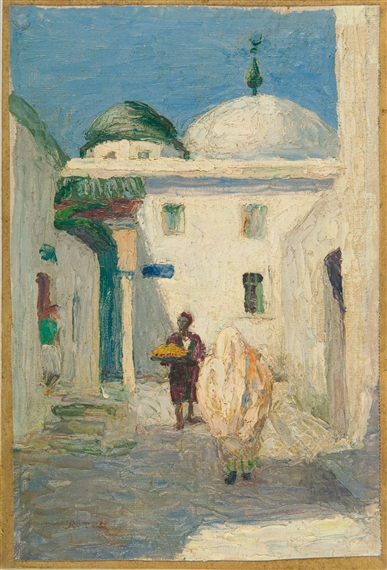
Gabriel Munter
Impressionist influence from Kadinksy
More focused on what she actually sees, light and shadow
Brush strokes less individualized
Gabriele Munter and Paris and the Salon d’Automne
An artist exhibit, movement Fauvism
Matisse, Derain
Colors arbitrary, crazy unrealistic and contrasting colors
Forgets all the rules of painting
Munter and Kandinsky see this style and movement
Fauvism and Women
Men could afford to paint badly while women couldn’t
If there were certain weird distortions on a painting, A man would be told he was crazy, but a woman would be told she needs to go back to school. It’s difficult for a woman to be that free
Fauvism and Gabriele Munter
She completely moves from impressionism to expressionism as a result of the fauvism movement
Subjects change
Colors not as realistic (used shadows before but not with her newer stuff)
Brush strokes more individualize; brush strokes next to other brush strokes on her new stuff

Autumn Trees in Tutzing
Gabriele Munter
Expressionist/fauvism era
Something more expressive and want to create the strongest effect possible, not based on what she sees
Brush strokes more individualize; brush strokes next to other brush strokes on her new stuff
No shadowed

Marianne Werefkin
Gabriele Munter portrait of her friend
Example of her shift to expressionism/fauvism
Focus on the face
Very different from her old self portrait
Her self portrait suggests she wants to be seen as a professional and wanted to capture the reality and what she saw, emphasized accuracy and realism
Doesn’t care about all that on the friend portrait: She wants to capture the spirit, wanted to create something that is her own vision, wants to be unique
Outlined, expressive, color
Gabriele Munter and abstraction
Munter was the partner of Kandinsky while he was transitioning towards abstraction and spirituality
Only did one abstract painting, despite living with a man who focused on abstraction and was surrounded by people who also did
If she started to do abstraction, people might say she is copying him and that she’s not unique
She wanted to stay unique, she wasn’t interested in spiritual ideas
People also thought those who moved towards abstraction were crazy and weren’t taken seriously

Boating
Gabriele Munter
Kadinsky in blue
Her friend Marianne on the right and Marianna’s daughter on the left
Munter rowing, man in the back not doing anything/passive position
She is making things work and taking care of the house, etc.
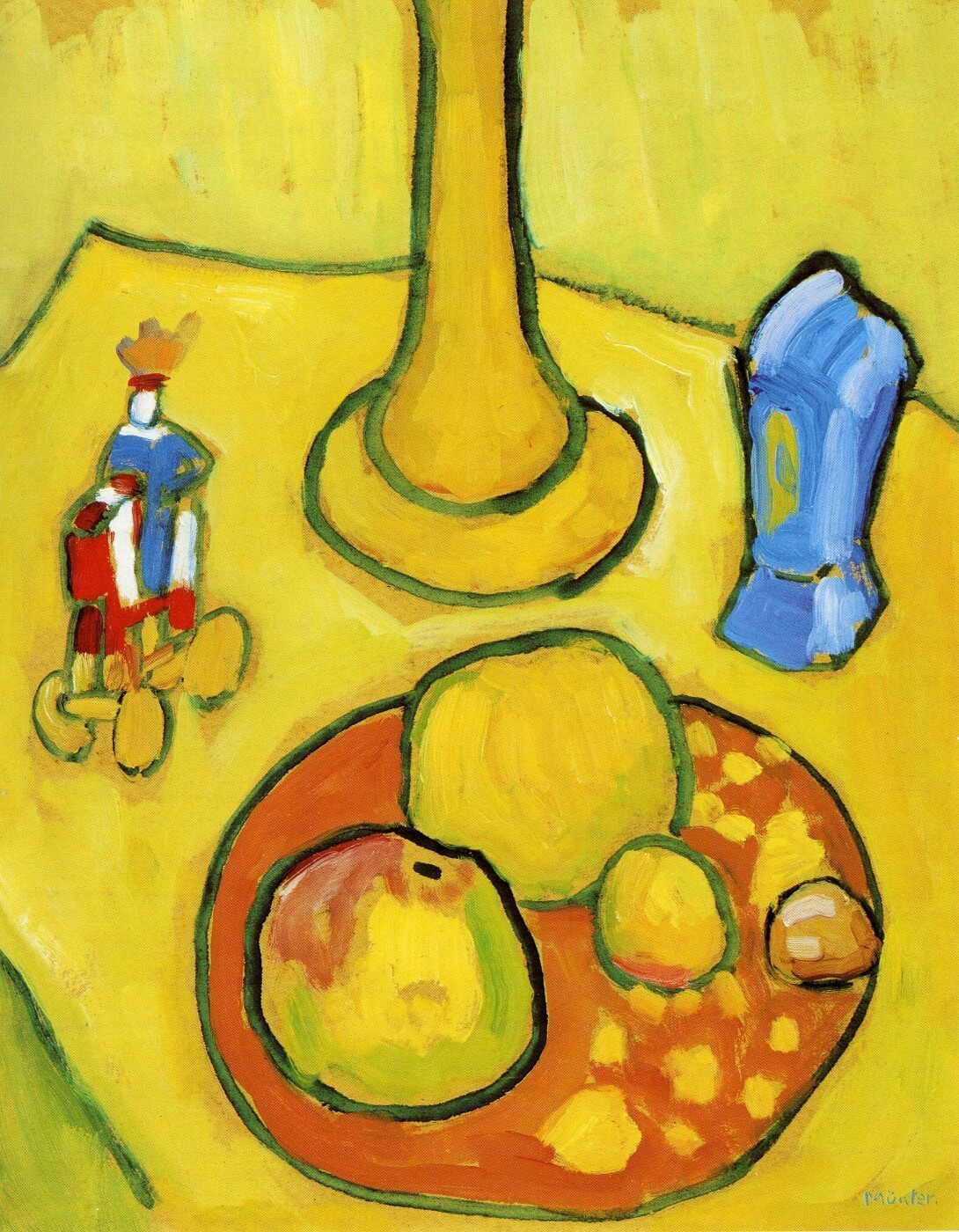
Gabriele Munter German Folk Art
Depicted objects, still life
While her man is transitioning towards weirder styles, she is going in the opposite direction
He has big compositions floating in the air, while she is drawing things on tables and surfaces
Gabriele munter and Kadinsky’s departure
WW1, Russia and Germany are at war
Kadinsky had to leave, said goodbye in Stockholm and didn’t see each other again
Munter hears nothing of Kandinsky,
She receives a letter from his lawyer asking her to return his painting he gave her
He had come back to Germany to work on bath house with his new wife
She told him she would give it back if he came and met her
He didn’t so she kept all of his work
Sonia Delaunay Background
From Russia, Jewish family
Had an Uncle with no children so they adopted her, causing her to grow up in a fancy way

Sonia Delaunay in Paris
She goes to Paris
Discovers Fauvism, color for the sake of color
Lots of outline, simplification, intense color.
Sonia and Robert Delaunay Marriage
He was in between cubism and fauvism
Interested in light, movement, color
Has a son
Sonia Delaunay working in the applied arts
Robert didn’t enjoy competition, and became nervous when anyone works next to him
Her work is influenced by his which he obviously doesn’t like
Began textile work (Robert encouraged her since there was no competition)
Did a lot of book illustration, advertisement
Did not limit herself, but found other outlets to express herself

Blanket Sonia Delaunay made for her son
Robert painting influence
Still adapting Robert’s style but in textile


Prose of the Trans-Siberian and of Little Jehanne of France
Sonia Delaunay
Book illustration
Applied art: Applied her skill and made money

Sonia Delaunay painting on the side after applied arts
Go to Spain so that Robert doesn’t have to fight in the war
She gets a little more freedom because he is in a bad position, shifting the power dynamic a little
She needs to make a living, as their funds are taken

Sonia Delaunay Fashion Design
Begins fashion designing as a way to make money
Clothes for the modern woman
Very successful
Did a lot of fabric design
Her work in fashion influenced later painting
Instead of letting this break her passion for painting, she used it was an influence and extension
Sophie Taeuber-Arp Applied Arts and Dance
From Switzerland
Trained in Applied Arts and Dance
Artists trained to be professional and sell
Traditional embroidery and textile
Symmetry
She was part of a generation of textile makers who wanted to make it modern
Wanted to elevate it to just art and for its own sake rather than as a couch, practical use, etc.
There is no spirituality in her work, it’s about working with the mediums and working with the art
Trained in Rudolf von Laban’s dance school
Wanted to work and reveal the body
He was one of the first to work on rotation system for dancers (think of body in a geometric way)
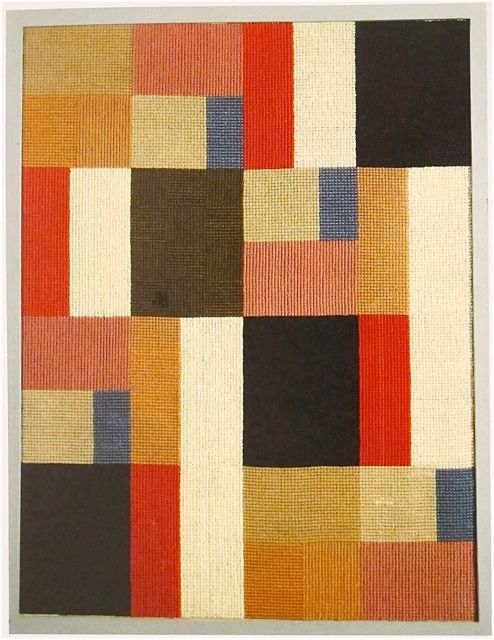
Vertical and Horizontal Composition
Sophie Taeuber-Arp
Embroidery
No longer as symmetrical as traditional embroidery
Geometric, abstract
Really following line
Usually try to hide these lines and 2d elements in traditional textile
Modern wants to be able to see the texture
Instead of fighting the making and structure/texture, you reveal it
Easier to move to abstract work with textile than with painting as you don’t have the rules of painting, have more freedom
Art for art sake, rather than as a functional use like a blanket
Sophie Taeuber- Arp and Dada
Dada emerged during WW1
Started as a silly night club with event
Because WW1 was presented as rational and manly
They said if rationality is rolling around in the mud and fighting, than we don’t want to have anything to do with reality and want to be crazy
Adopted it because they were at a time where ppl were killing each other for nationalism
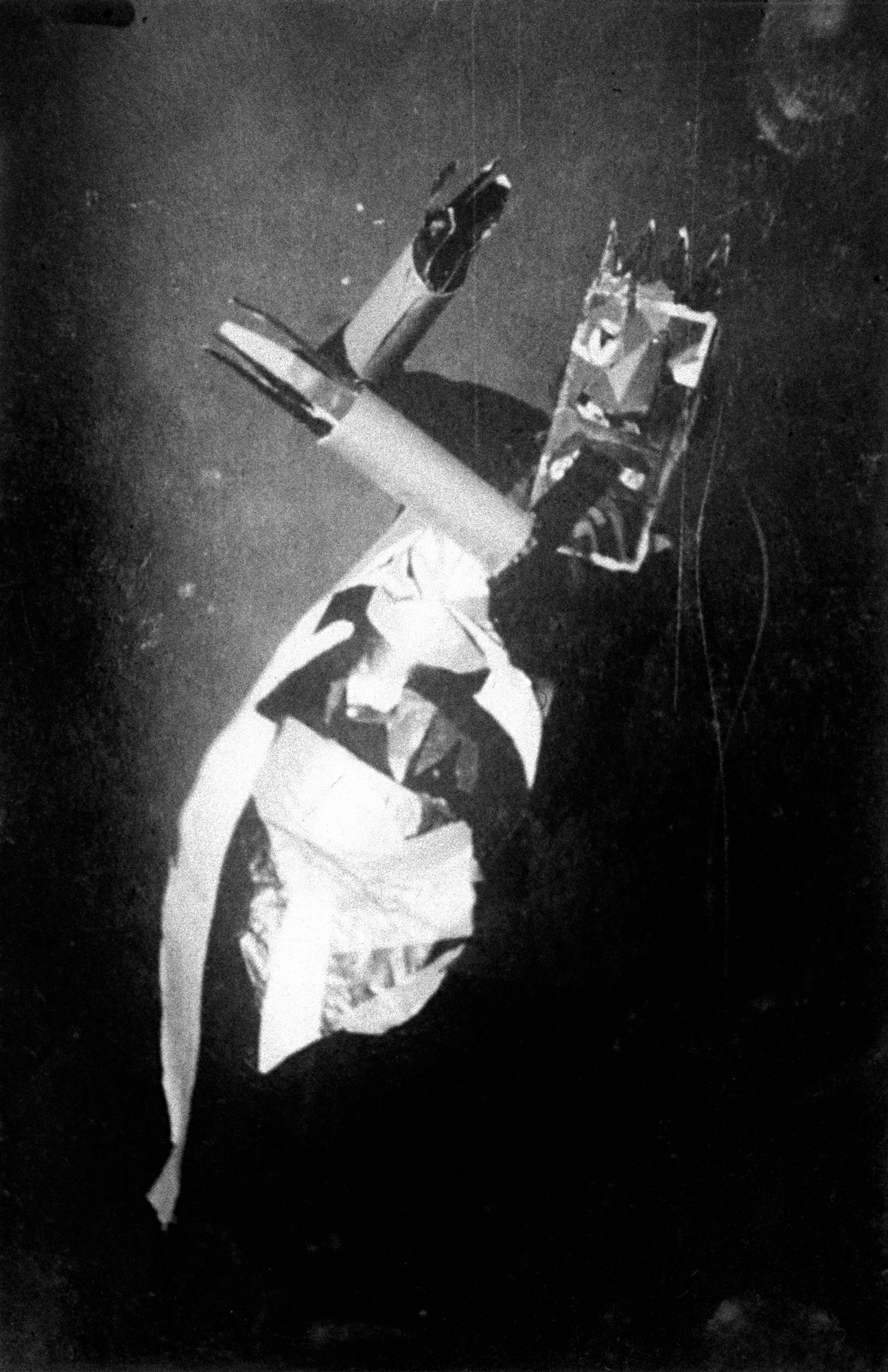
Sophie Taeuber-Arp Performance at Cabaret Voltaire club
Mocking the military
She’s transforming herself into an image of military to make fun of it

Sophie Taeuber-Arp Puppet Shows at club
also did puppet shows (ppl said they were treated like puppets during WW1)
The Dada Aesthetics
The night club died out and it became an aesthetic
Tristan Tzara the face of this and Jean Arp
Instead of logic and planning, go with chance and craziness

Dada Tapestry
Sophie Taeuber Arp
Attempt at breaking from the rigidity of the loom (very different from the strict geometry of her earlier textile)
Desire to do no symmetry, random color. Dissonance
Embroidery and symmetry of the loom move away from traditional to geometry, then dadaism

Elementary Forms
A lot of movement, like it’s pushing on all sides
Not creating that is completely random, but something to break free from the rigidity of the frame
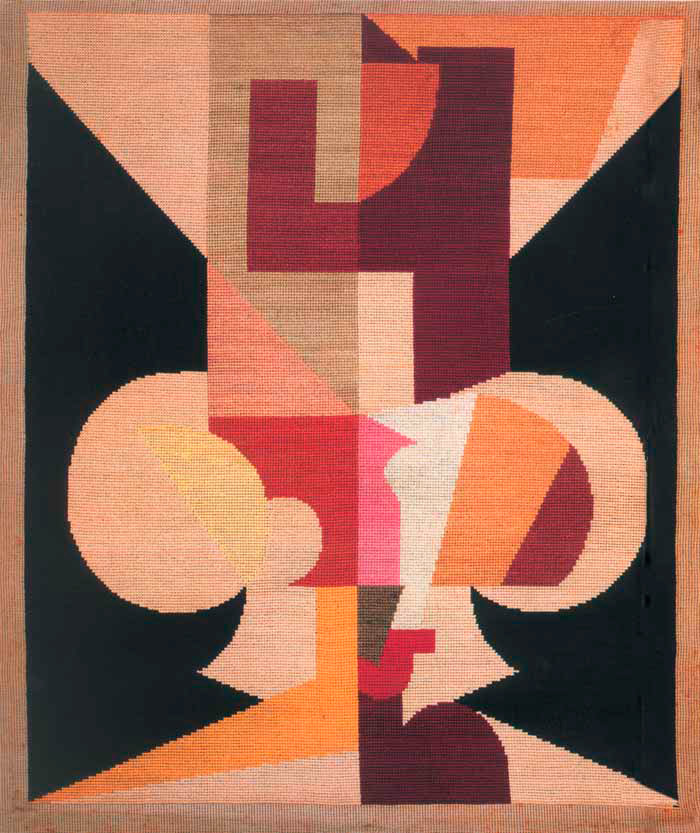
Pathetic Symmetry, Sophie and Hans/Jean Arp
Sophie worked with Jean Arp and eventually married him
Embroidered by both Sophie and Hans Arp
Amazing because they are working alongside each other
Crazy for male artist to collaborate with a woman, let alone her own style (textile)
Sophie taeuber arp and Navigation between Art, Design, various different media
Did interior design and painting, textile
Fashion design
Performance
She was really trained as an applied artist and did everything. She wasn’t forced into doing a different thing
Hannah Hoch and applied arts
German
Big desire in Germany to educate women from upper class so that they would have a job
Heavily trained in drawing, painting, graphic design, etc
Worked for a long time at German magazine, Die Dam
Designed patterns for ladies embroidery that they would publish
She wrote a manifesto on modern embroidery in 1918
Emphasizing it as an art rather than a craft
Doesn’t want people to repeat old patterns. Modern woman should know that embroidery reflects who you are, not 1700 patterns
Don’t repeat what has been done, that has nothing to do with your life (flowers, birds)
It should be a documentation of you
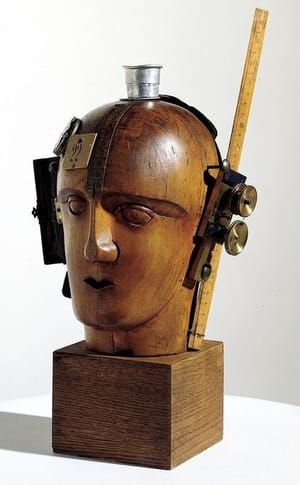
Hannah Hoch and Dada in Berlin
Major figure of the German dada was Raoul Hausmann, who she married
Image shows Hausemann's Mechanical Head the Spirit of our age
Representation of Bourgeois German who doesn’t see anything doesn’t hear anything. Just wallet.
This influenced Hoch
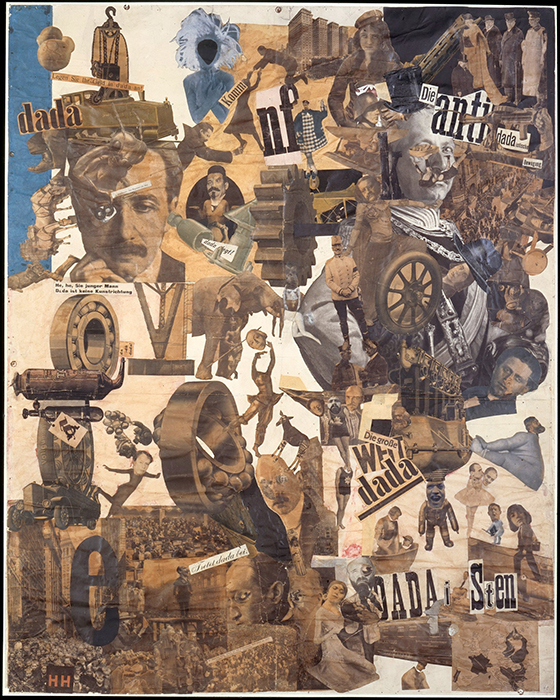
Cut with the Dada Kitchen Knife through the Last Era of the Weimar Beer-belly Culture
Hannah Hoch
Exhibited at the first international dada fair
Clear influence from Hausemann
Hannah Hoch and The New Woman
A big subject of her work
Conservative party was in power in Germany and women were given the right to vote because they would vote who their pastor told them to (conservative)
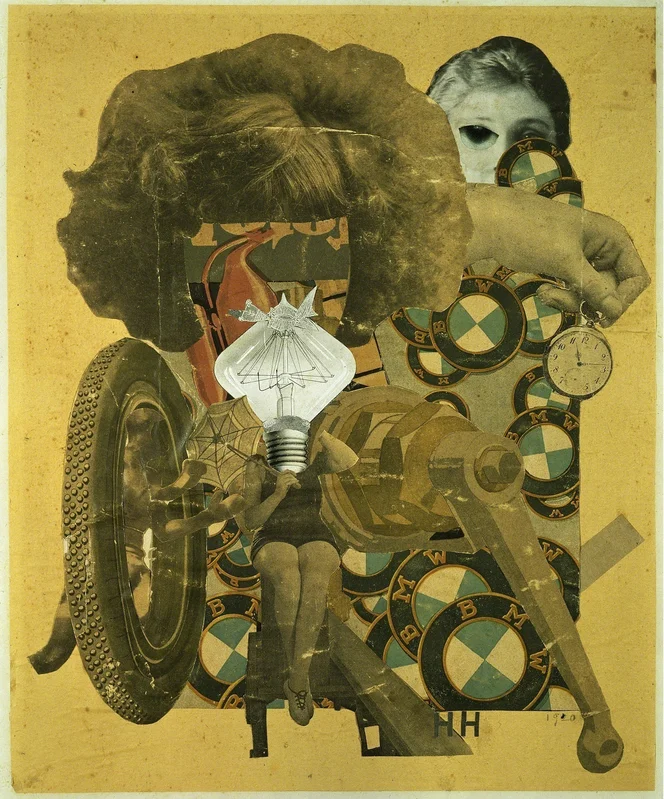
The Beautiful Girls
Hannah Hoch
BMW cars, lightbulb above woman body (all very new things)
If you want to be the new woman, you must buy the new things
Commodification of this idea of the new woman. The new woman has become like a product that you sell to women
Women have disappeared completely, it’s just a symbol of women being products

Marlene
Hannah Hoch
Against objectification of German Actress
Men looking up at a pedestal of legs
Displaying Marlene’s body as a product (“We don’t need a head, we don’t need a person, we just need this”)

Made for a party
Woman’s eyes removed from her body
The swimsuit is very sexy for its time
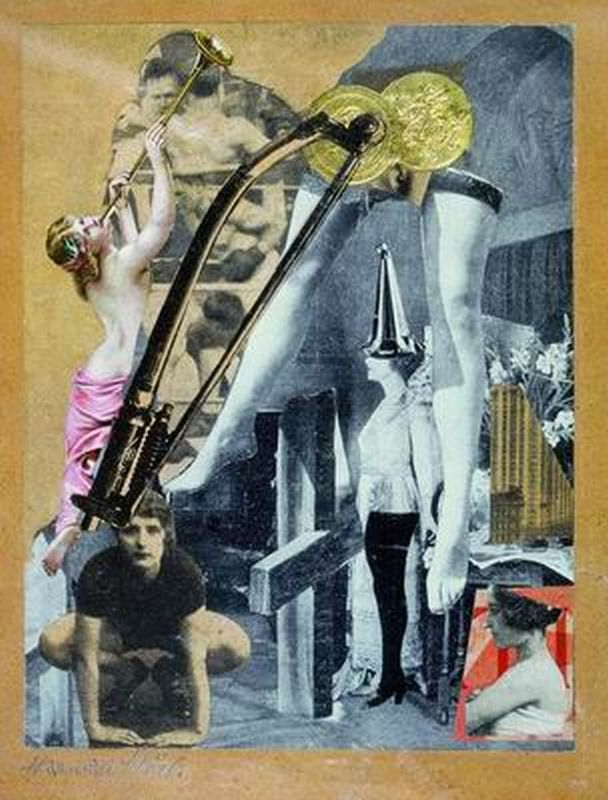
Dada Ernst
Hannah Hoch
Feminist critique of Dada
Image of the seriousness of Dada

Da Dandy
Hannah Hoch
Women together making up the face of a man
Portrait of her husband
Talking about how he was obsessed with women because of his affairs
She asked him to marry her and divorce his wife
Told her she was so bourgeoise. “You are a modern woman, why would you want this?” She should be happy because she is free.
Compared with artist rowing with her husband: Main subject is a man in each, but making fun of them. Both a self portrait of sorts.
Hannah Hoch and blurring gender lines
Got with Dutch author Til Brugman. They dressed like each other a lot, her crossdressing
Collages of man holding infant
John Berger and the evolution of the nude in western art
Shame arose seeing each other naked after adam and eve ate apple
Shame shifted from being a result of each other to shame produced by the watcher
Nudity was a subject that specifically represented women, and the purpose shifted to the own pleasure of the artist and viewer, becoming objects of vanity for men
This emphasis on beauty became a reason for judgment and competition. If men didn’t judge a woman as beautiful, than she wasn’t beautiful

Allori, Susanna and the Elders
Nude woman with an elder
Men were often added as an excuse to paint a woman nude

Rubens Venus before a mirror
A common theme is a woman with a mirror, which was also used as an excuse to depict nude women
Mirror was used as symbol of vanity
The artist made her naked for his own pleasure, but he put a mirror in her hand and called it vanity
Woman is very happy with what she sees, but most women look at themselves more critically than that

Rubens, The judgment of paris
Venus, Juno, Aphrodite. Shephard had to pick out the most beautiful of all goddesses and they get the apple, causes trojan war
Can be accepted as reasonable because it’s a historical painting and depiction
John Berger explanation for what a nude is in the western art tradition
To be nude is to be a different person. It’s a costume and is meant to cater to the male protagonist outside the painting.
Meant for the men to feel like men and for women to give up their femininity to the spectator
Woman often looking out to the viewer, ignoring what’s going on in the background
Suggestive gaze and position, giving all sexual power to man. This is why many women are depicted as clean and done up, as to have things like body hair means having sexual passion which is reserved for the man
Nudity vs Nakedness according to Berger
Nakedness is a process, a quick moment in passing that won’t last. It’s more of an action, not on display for the viewer. Imperfections are highlighted.
Nudity is a state, not just a quick moment in time. Highly posed and on display, catering to the spectator. In a constant state for the viewer rather than in the middle of an action
For example, Paula Modersohn-Becker’s self portrait is for the pleasure of no one but the artist/subject herself
What questions does Carol Duncan raise in her Virility and Domination essay and why is this important
How avant garde artwork portrays relationships between sexes, specifically looking at themes of sexual domination and virility in male artists
This era of art if often idealized for being free and rebellious, but it only appeals to the freedom of middle class men
To be truly creatively independent and free for a traditional bourgeois lifestyle, they had the break the rules of society by having many mistresses
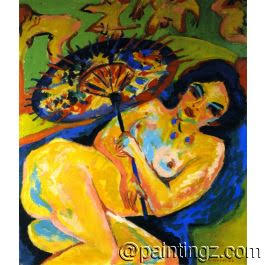
Kirchner’s Girl Under a Japanese Umbrella
Represented as powerless and no identity
Heavily sexualized, catered to the male viewer
The perspective has the artist in a position over her, suggesting male power and dominance
A representation of his own virility, as the model and face don’t matter and her breasts and butt are what’s emphasized. She is merely flesh.
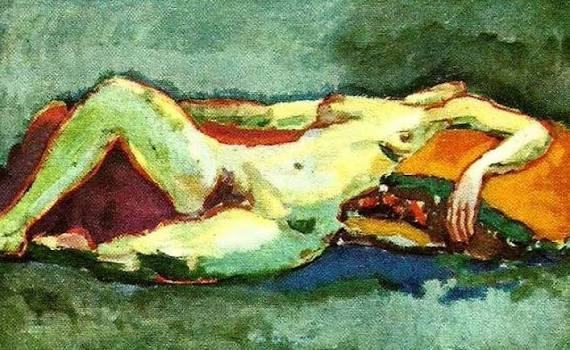
Dongen’s Reclining Nude
Represented as powerless and no identity
Heavily sexualized, catered to the male viewer
She is reduced to just her body, no face
“So much animal flesh, a headless body”

Kirchner’s Self portrait with model, what messages these works convey
Suggests the idea that bold and creative art was linked with male erotica and sexuality and submission of women
Woman is submissive in power, cringing while Kirchner holds a thick paintbrush at groin level
Woman is in lingerie while he is only in a robe
All phallic

How did avant-garde artists represent their female models
the women were often depicted as lower class, disposable
The women were going studio to studio merely acting as the model and decor for these male artists
The artists didn’t take them seriously. They exert dominance over women to be successful in avant garde
The woman can be changed, it doesn’t matter who they are, as long as they have their body.
Some women depicted as savages and animals