Prostate cancer and antieoplastic agents
 Call Kai
 Learn
Learn Practice Test
 Spaced Repetition
 Match
Match Flashcards
 Knowt Play
1/36

There's no tags or description
Looks like no tags are added yet.
Name | Mastery | Learn | Test | Matching | Spaced | Call with Kai | Chat |
|---|
No analytics yet
Send a link to your students to track their progress
37 Terms
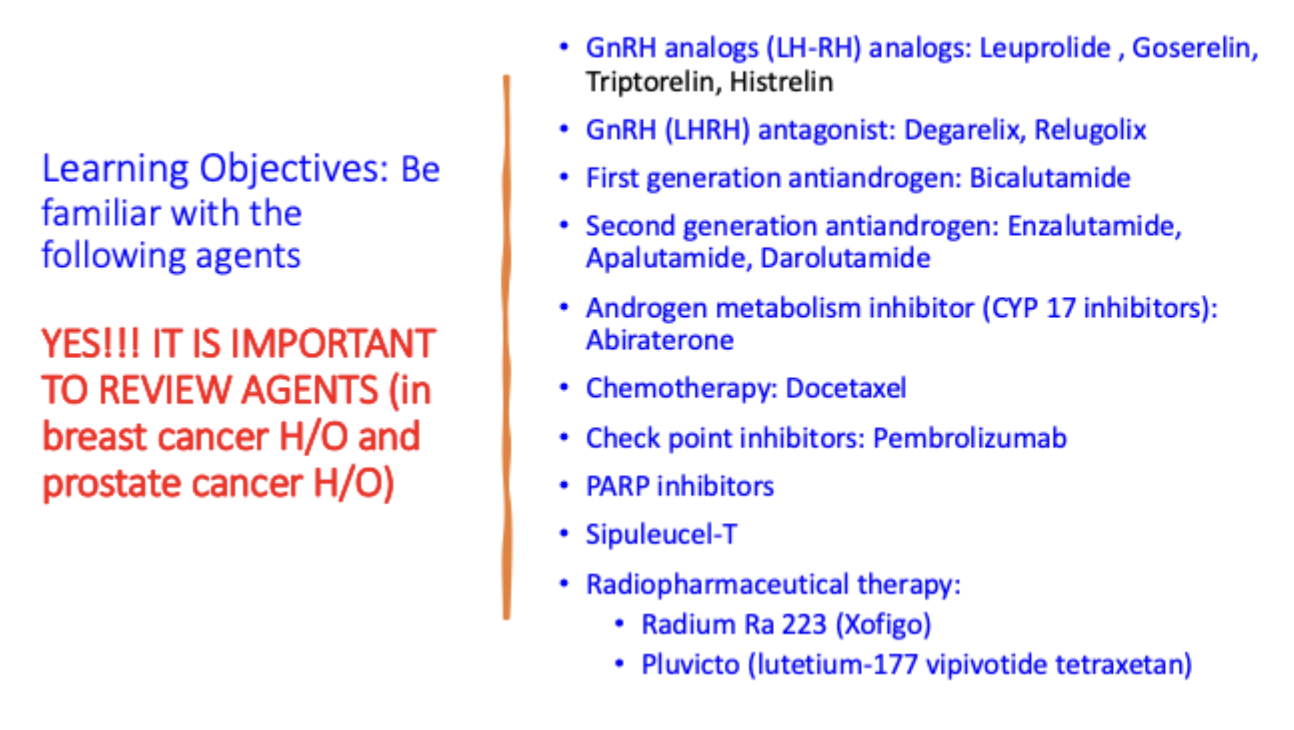
Be familiar with the following agents:
GnRH analogs (LH-RH)
GnRH (LHRH) antagonists
First generation antiandrogen
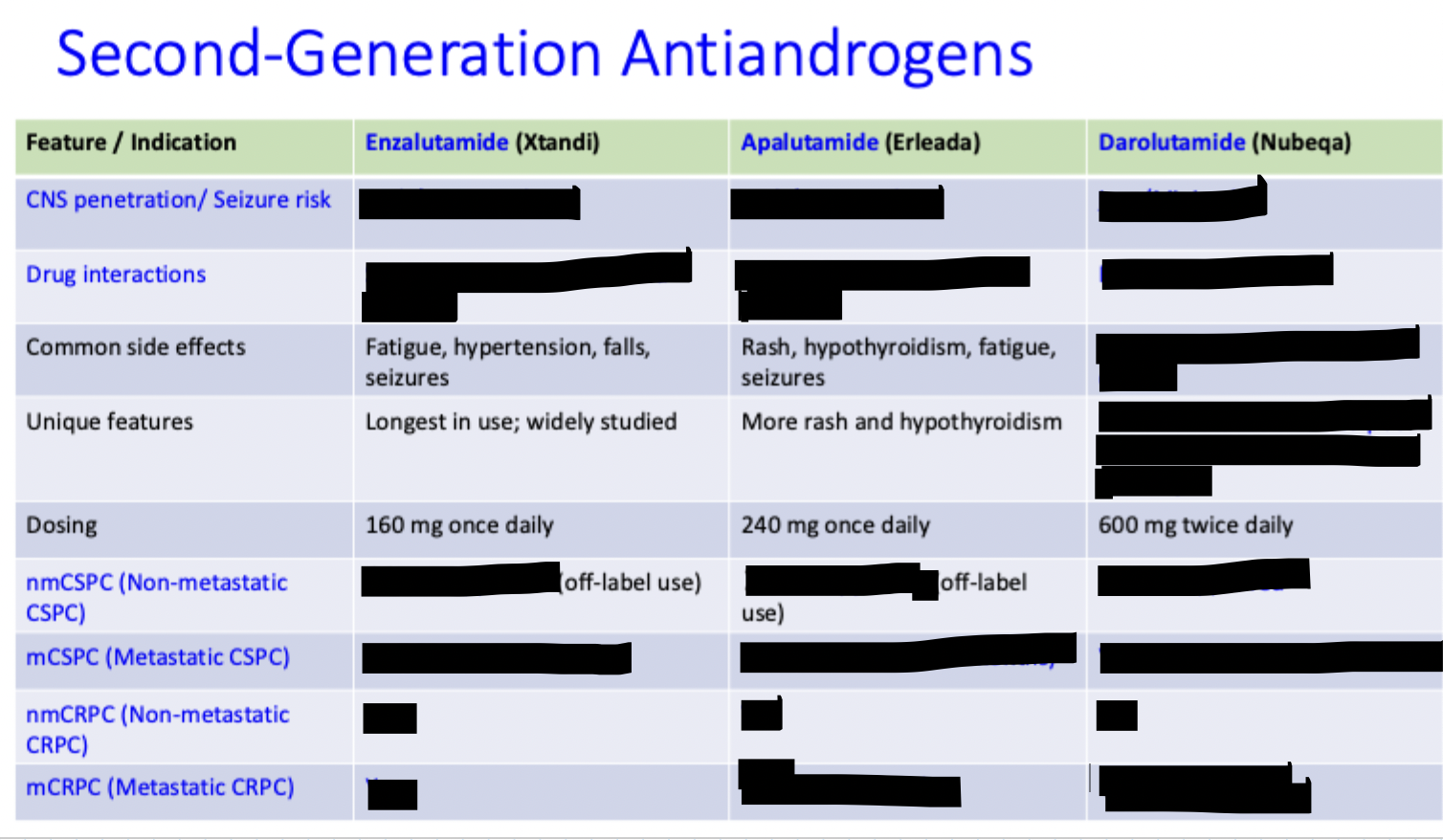
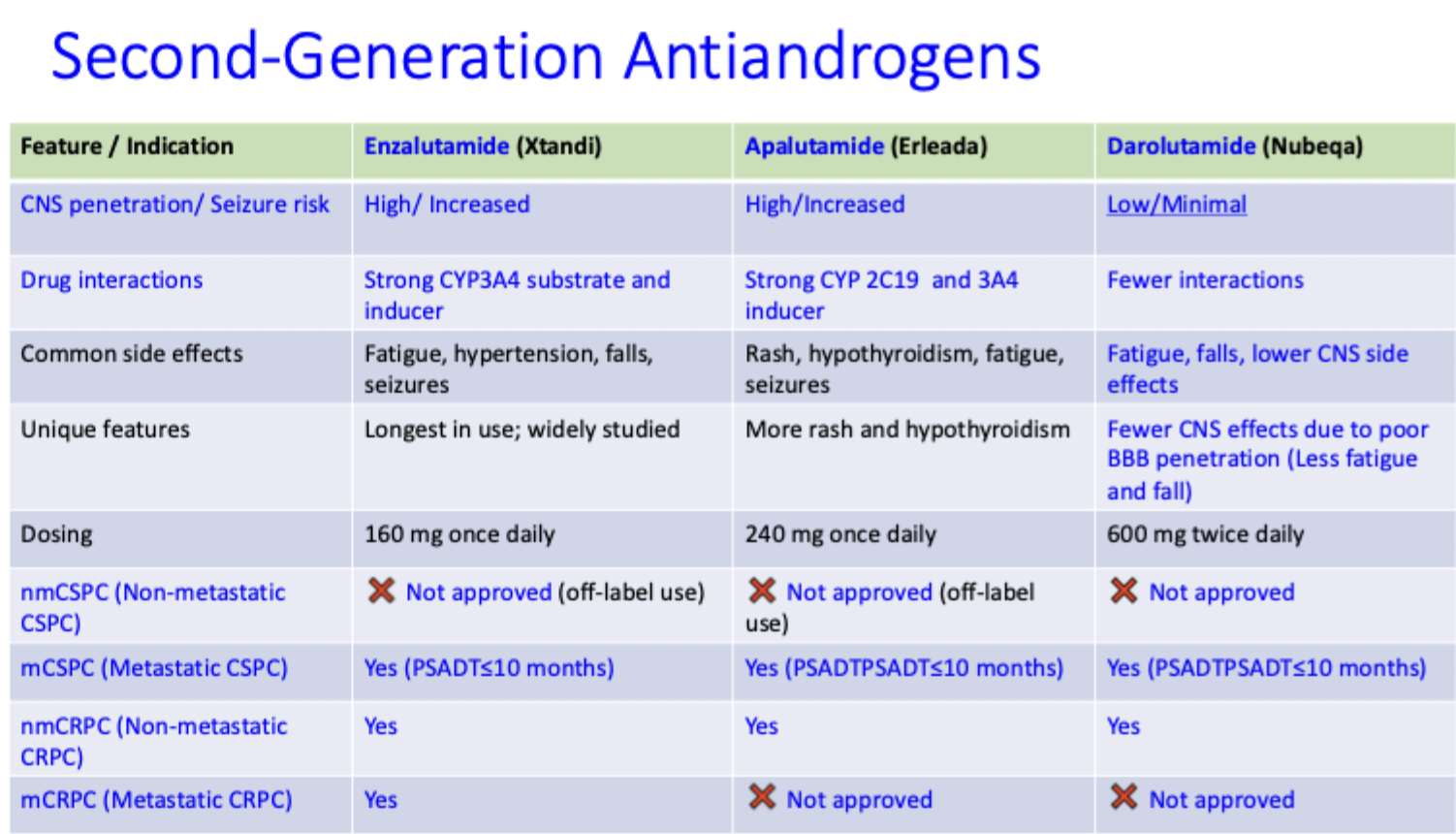
Second generation antiandrogen
Androgen. metabolism inhibitor (CYP 17 Inhibitors)
Chemotherapy
Check point inhibitors
PARP inhibitors
Sipuleucel-T
Radiopharmaceutical therapy
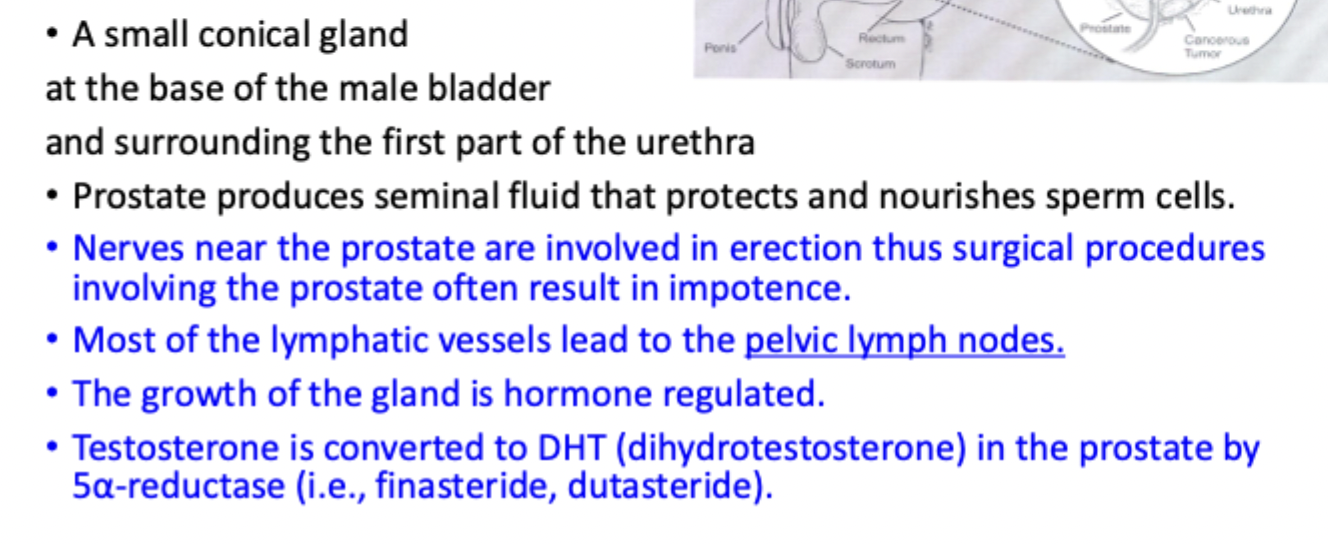
Prostate physiology
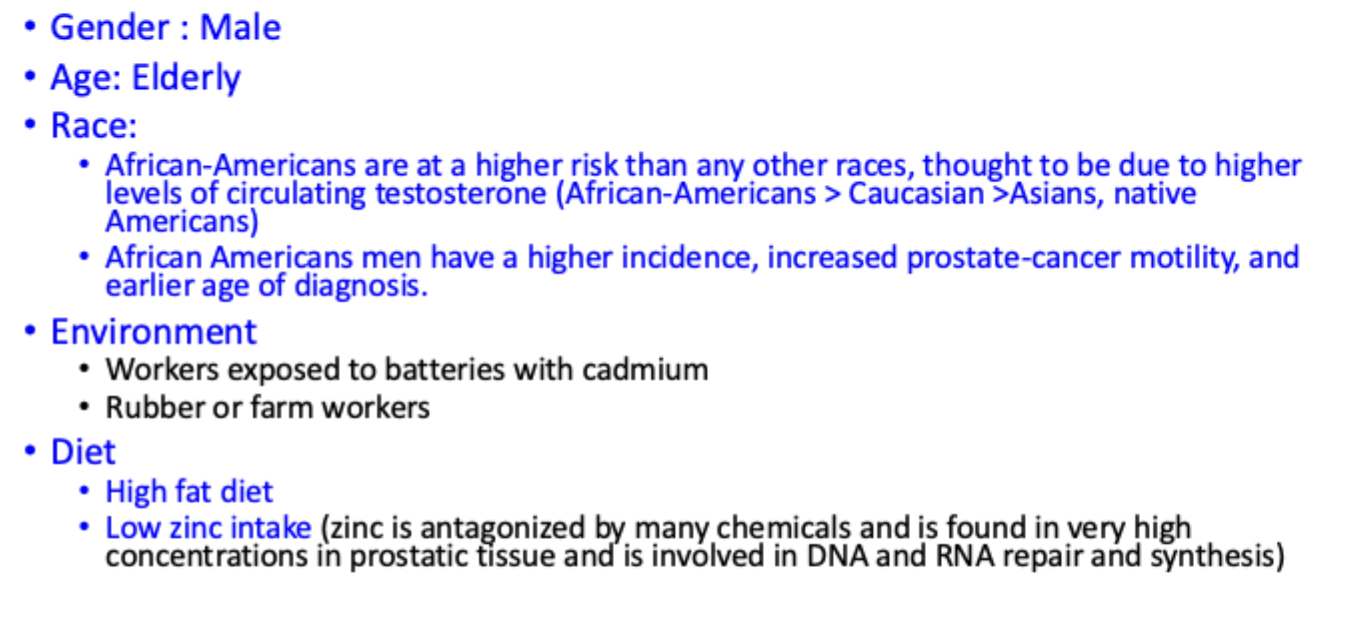
RFs
What gender, age, race, diet
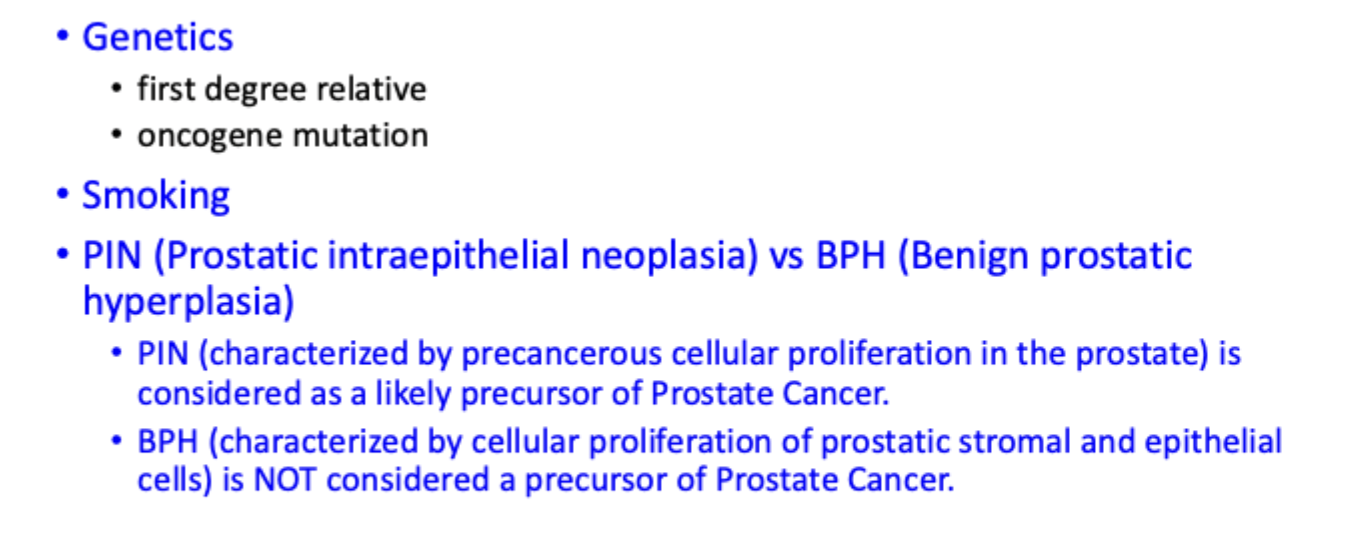
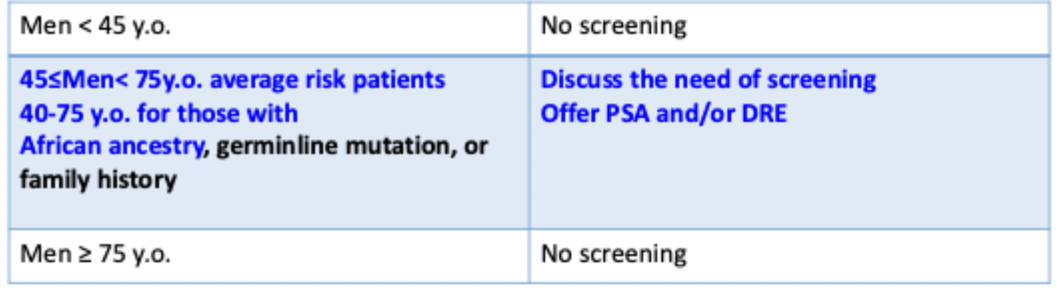
Screening and prevention
Average-risk men 45–74 years | 💬 Talk with your doctor about screening | Together, decide if screening is right for you based on your preferences and risks. |
High-risk men 40–75 years (African ancestry, inherited gene mutation, or strong family history) | 💬 Start the discussion earlier | These men have a higher chance of developing prostate cancer, so earlier screening may help. |
Chemoprevention
what agents is not recommended to use for the reduction of prostate cancer risk
when should they be prescribed
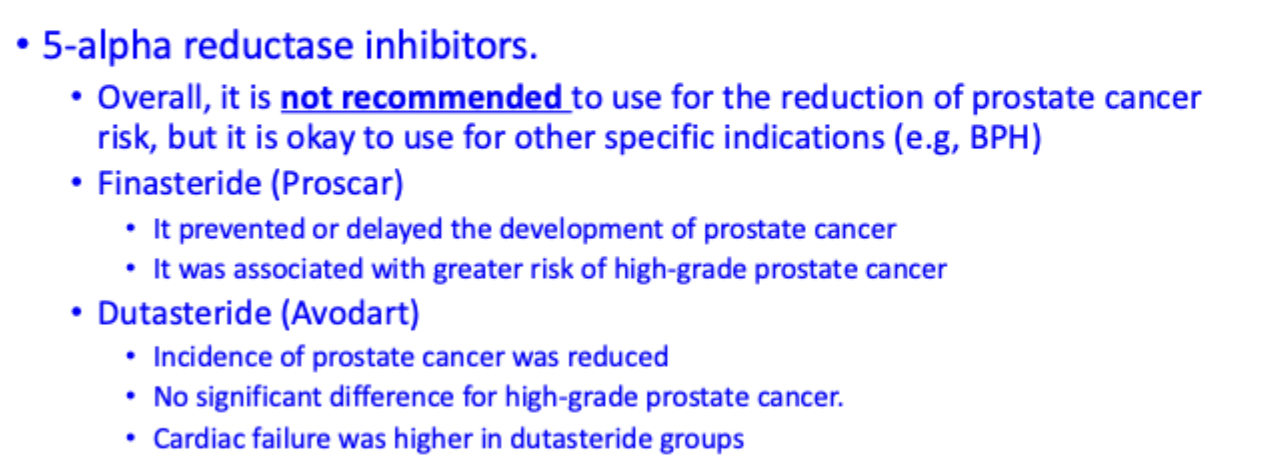
Do not prescribe finasteride or dutasteride solely to prevent prostate cancer.
Do prescribe them when indicated for BPH, where their benefits clearly outweigh the risks.
Prostate Specific Antigen (PSA)
Is this a reliable test
what agents decrease PSA
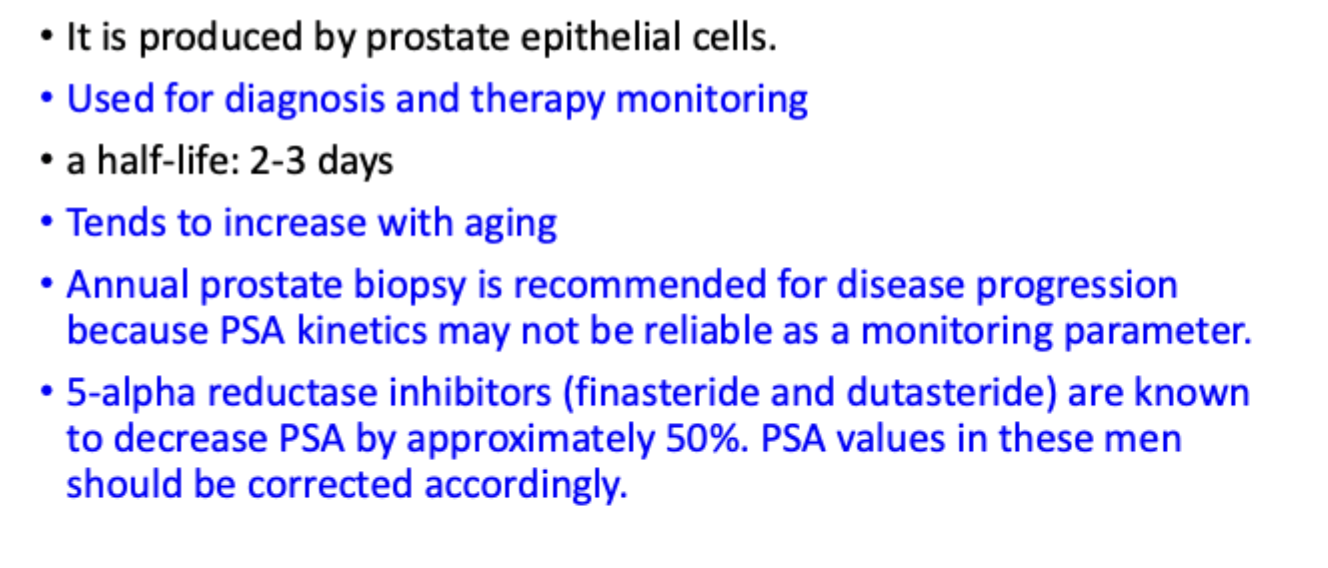
PSA
High PSA
Inconclusive cutoff
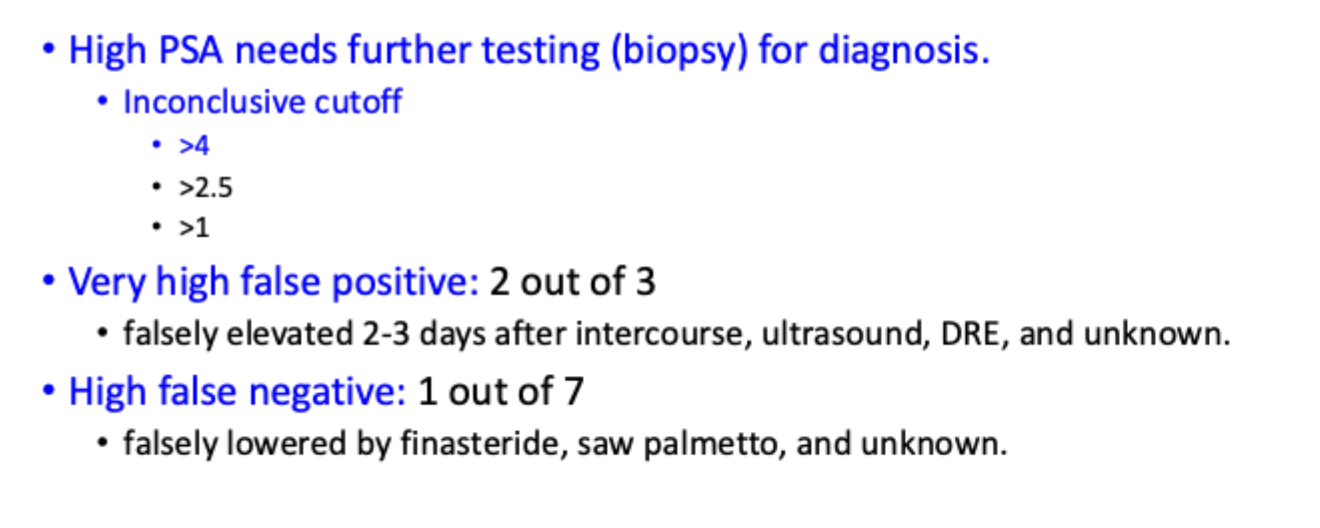
High PSA does not automatically mean prostate cancer - needs further testing
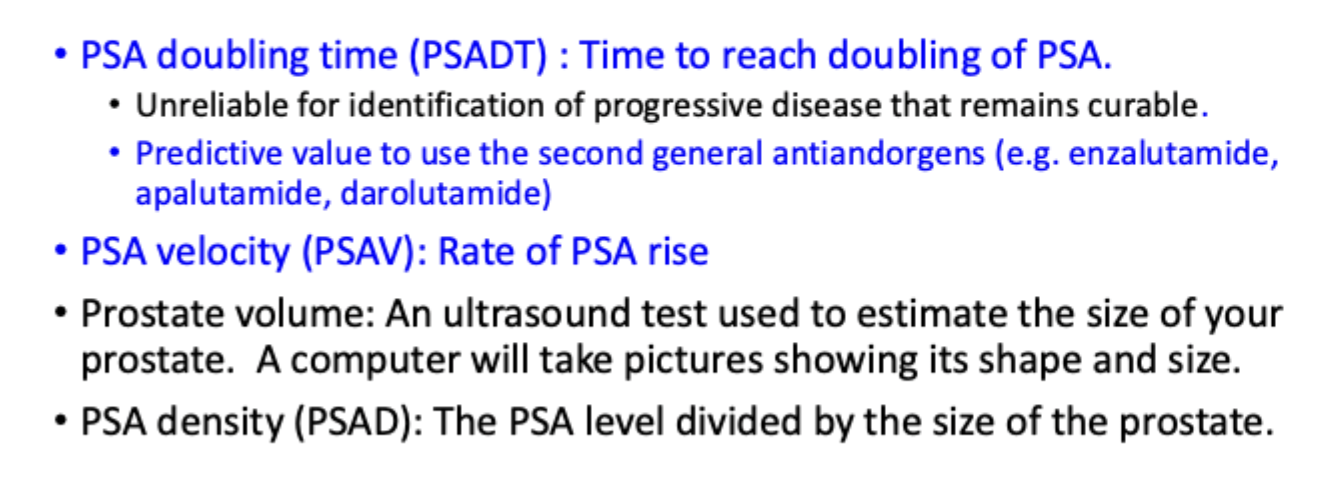
PSA doubling time (PSADT)
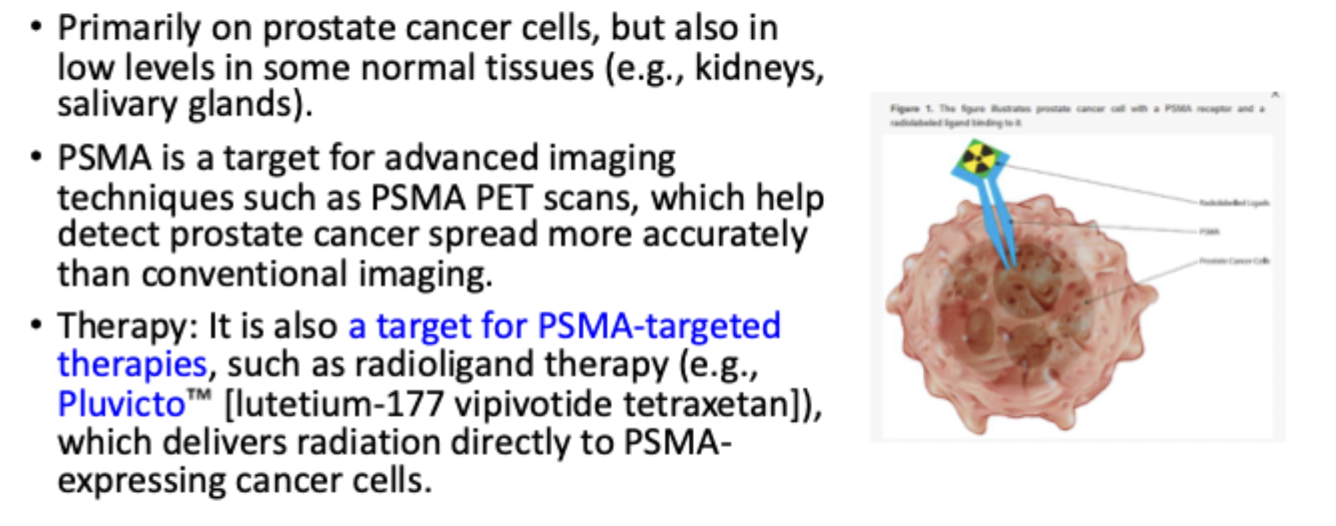
Prostate-Specific Membrane Antigen (PSMA)
a target for advanced imaging techniques such as PSMA PET scans, which help detect prostate cancer spread more accurately than conventional imaging
therapy
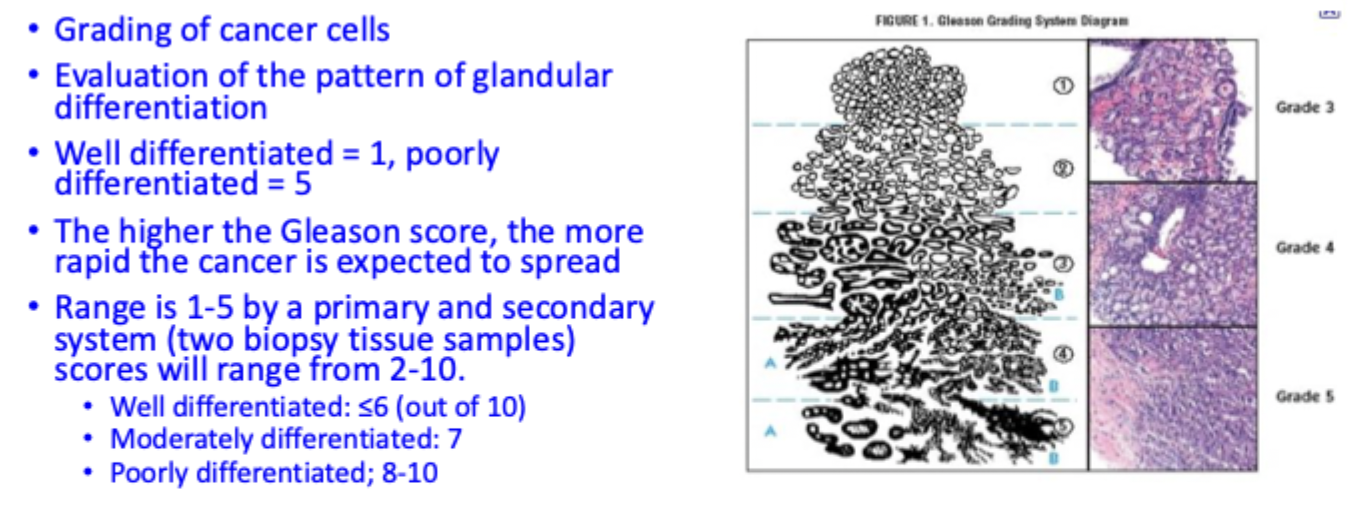
WHat is a gleason score
What is the staging of prostate cancer based on
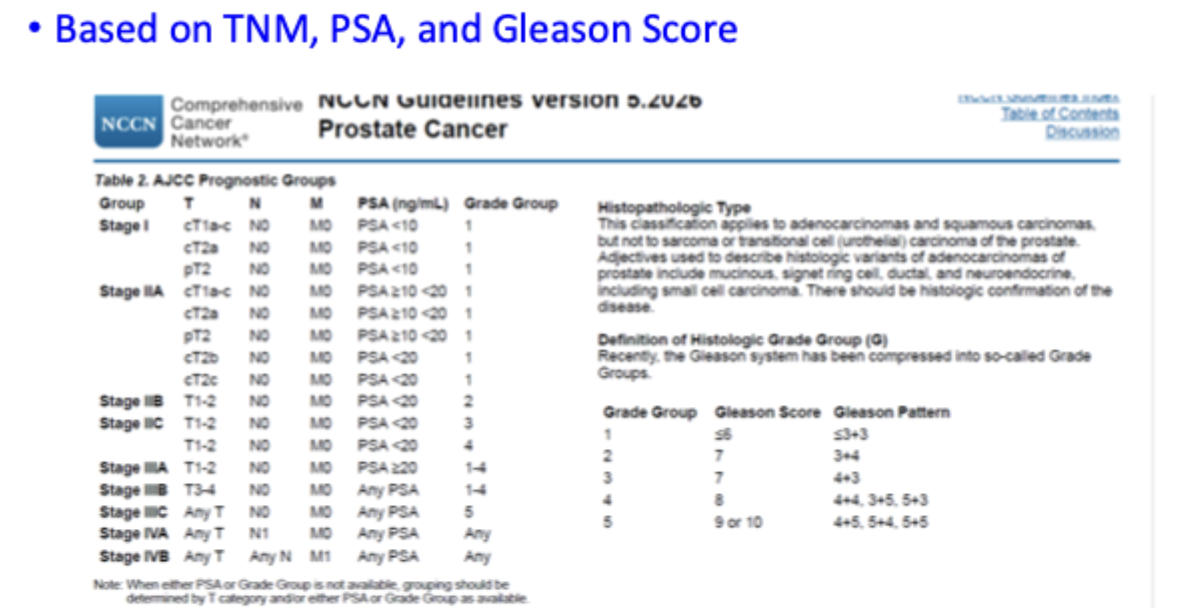
Management and treatment of prostate cancer depends on what factors

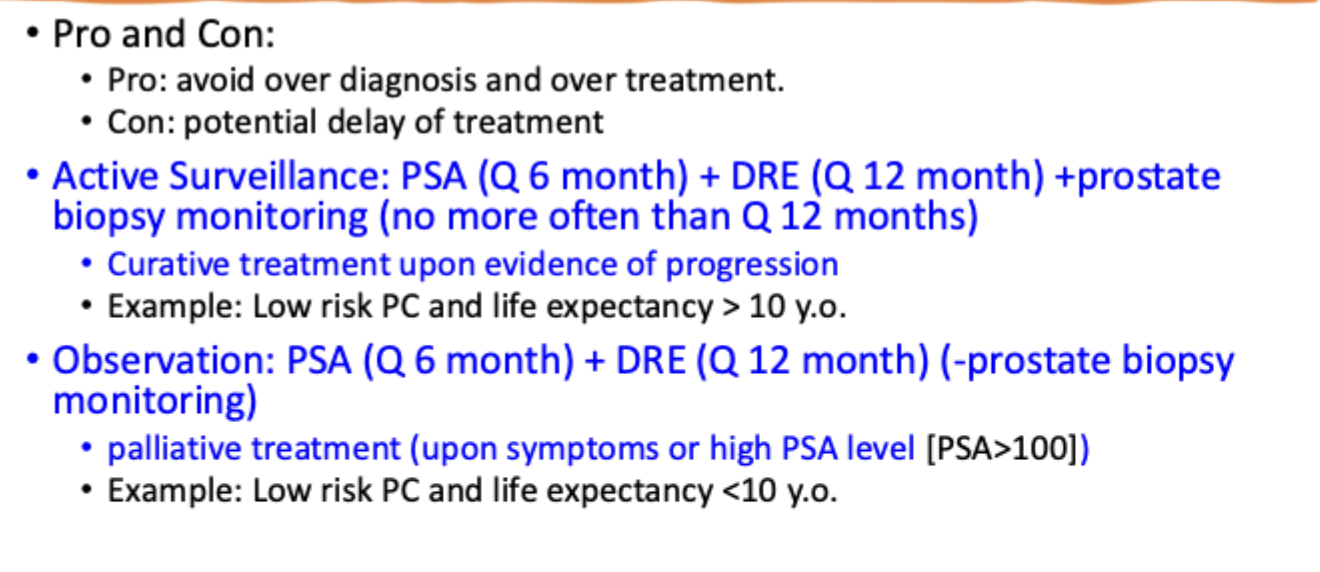
Monitoring - active surveillance vs observation
Androgen deprivation therapy (ADT) - Castration therapy
when is this indicated
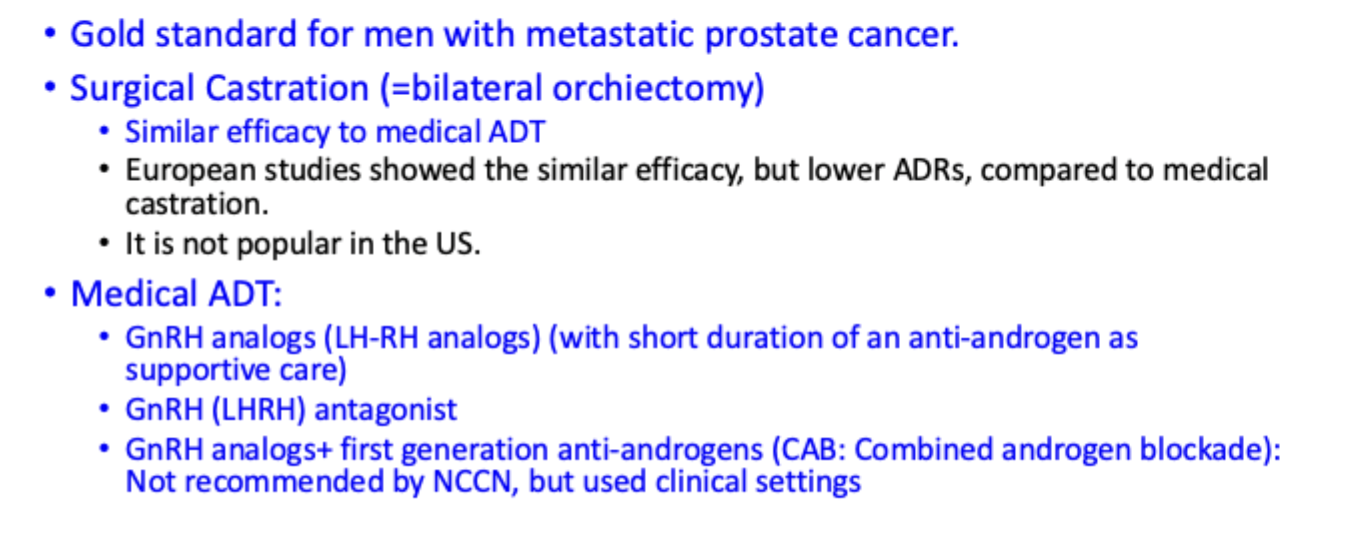
ADT - Castration therapy
testosterone level monitoring
whats less effective
combination
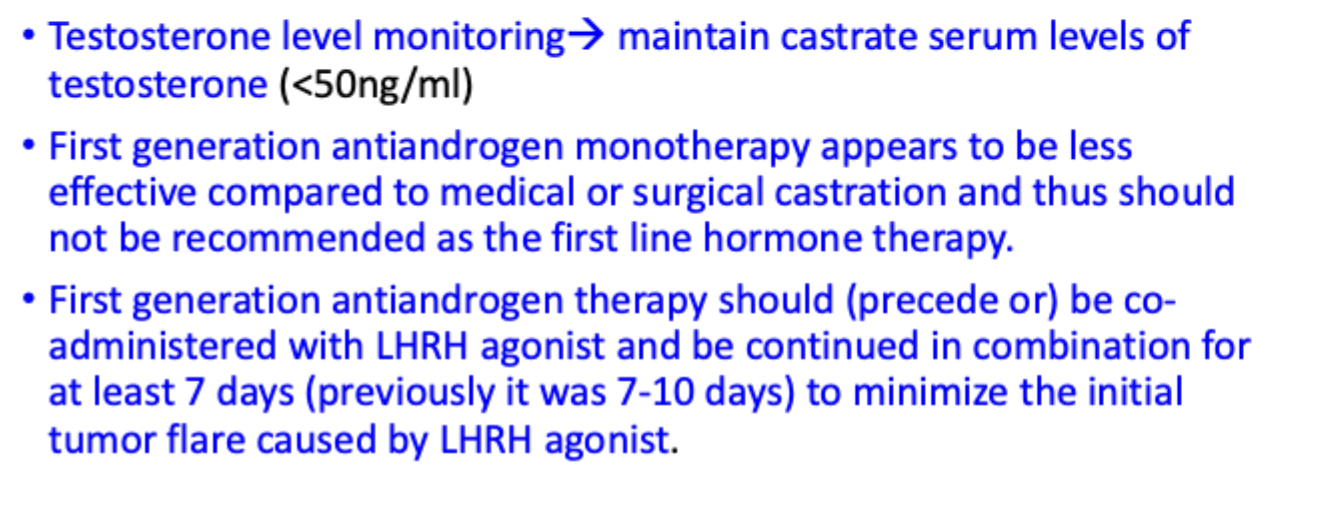
ADT - Castration therapy
what agent is discouraged
risks with ADT
Osteoporosis prevention
Risks
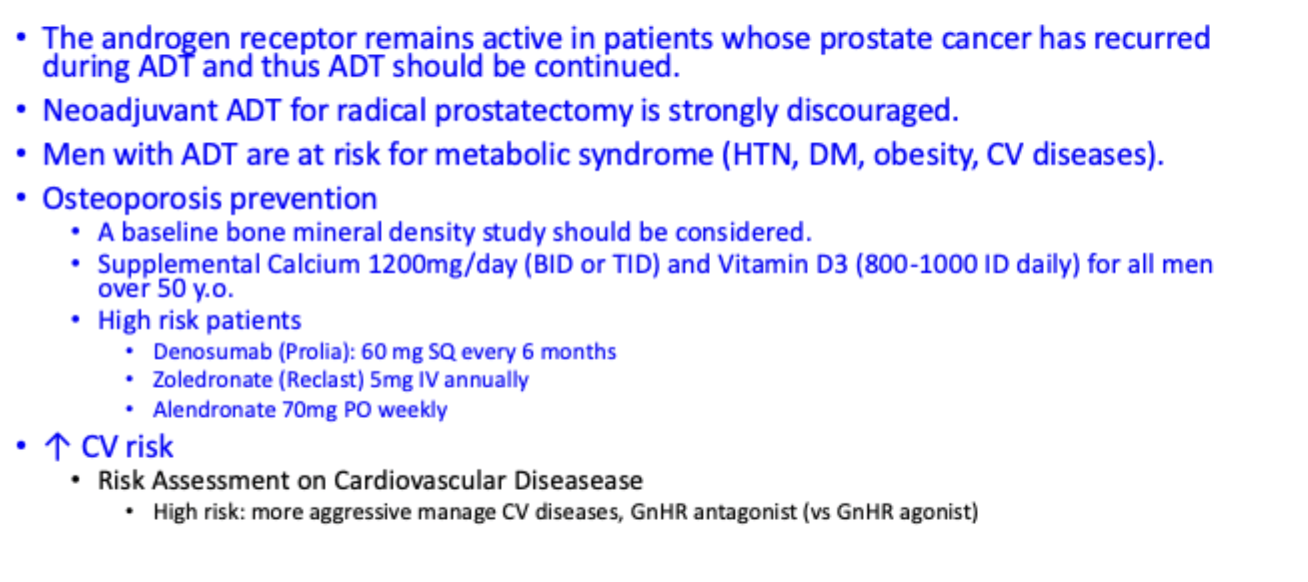
Continuous ADT (CAD) Vs IAD (intermittent ADT)
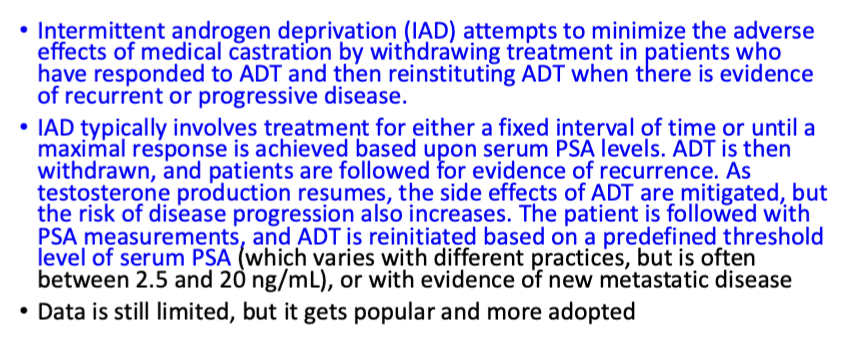
HRD and BRCA
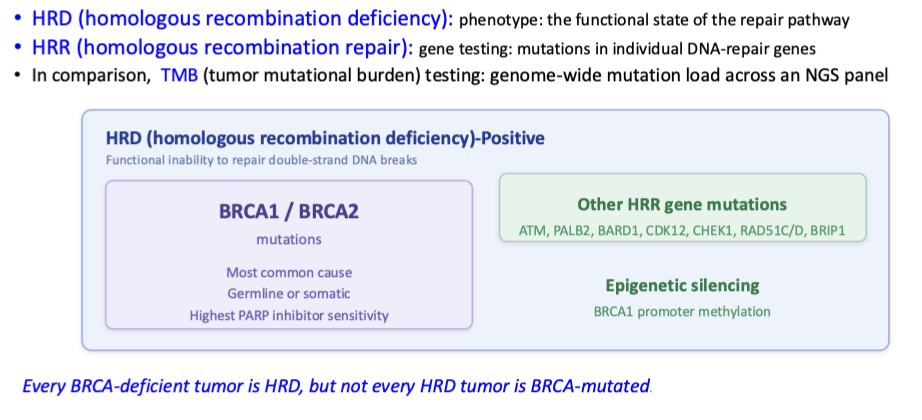
Castration-Sensitive NonMetastatic (M0) PC
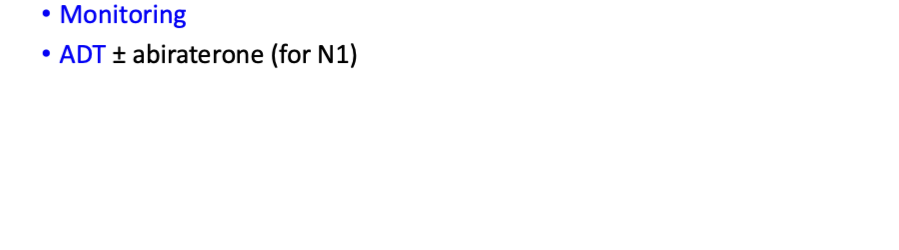
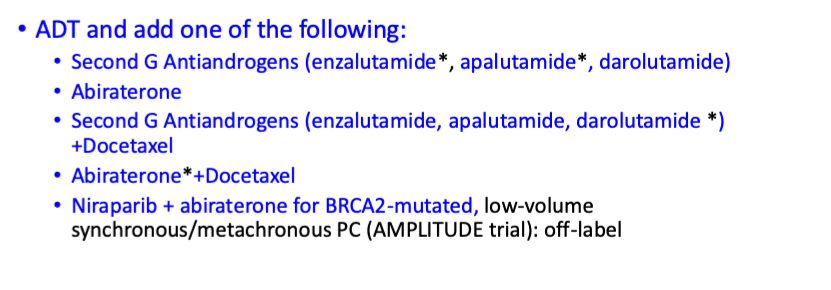
Castration-Sensitive Metastatic (M1) PC
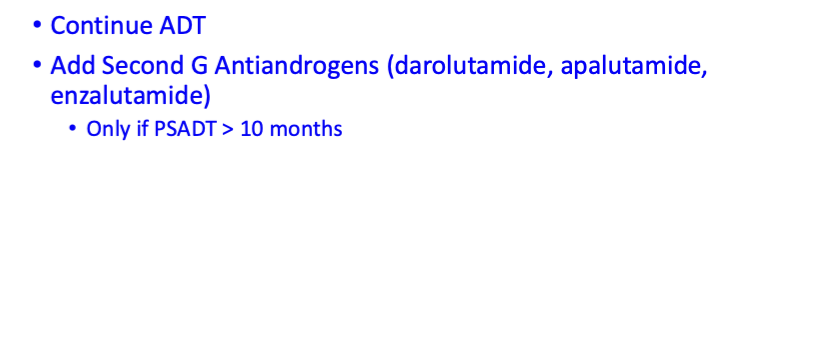
NonMetastatic Castration-Resistant (M0) PC
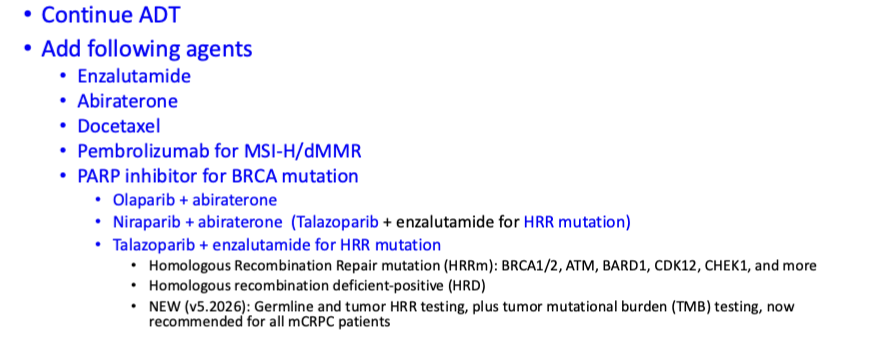
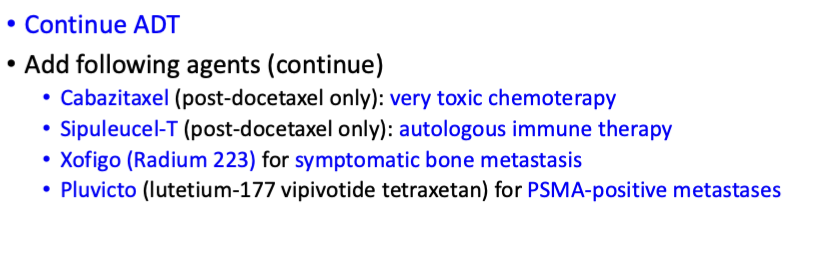
Metastatic Castration-Resistant (M1) PC
LHRH agonists = GnRH agonists
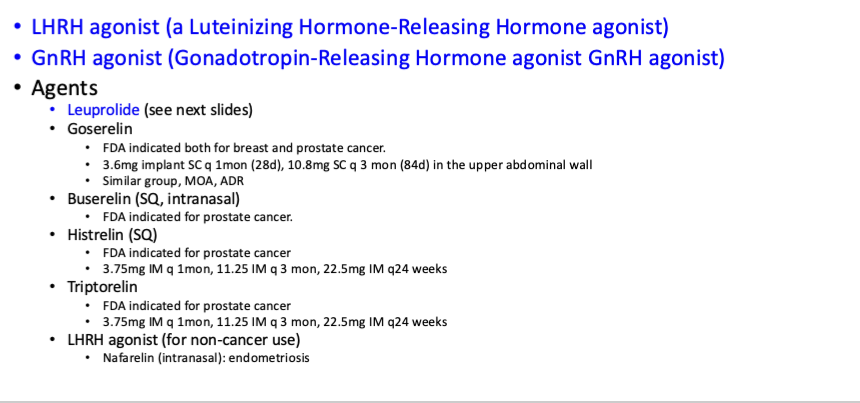
LHRH (GnRH) agonists
MOA Males v Females
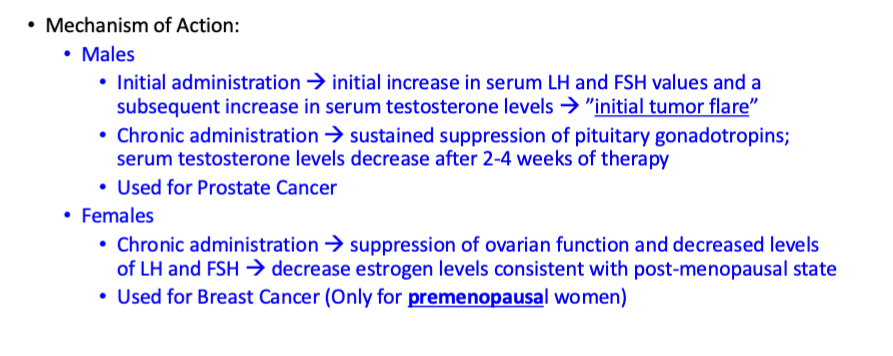
Leuprolide
Indication
Routes of admin
Admin time
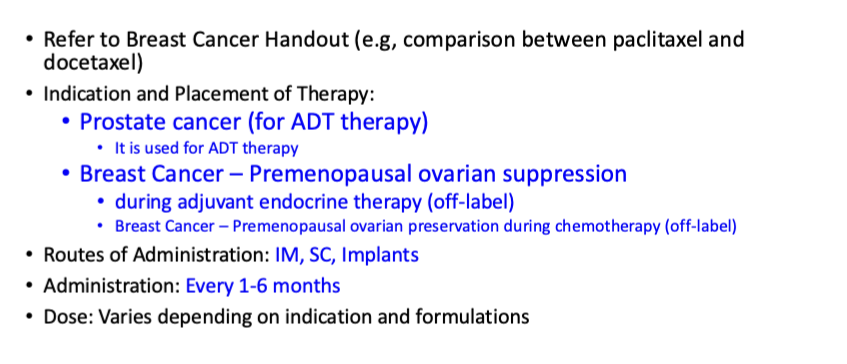
Leuprolide
Potential ADRs and Supportive Care
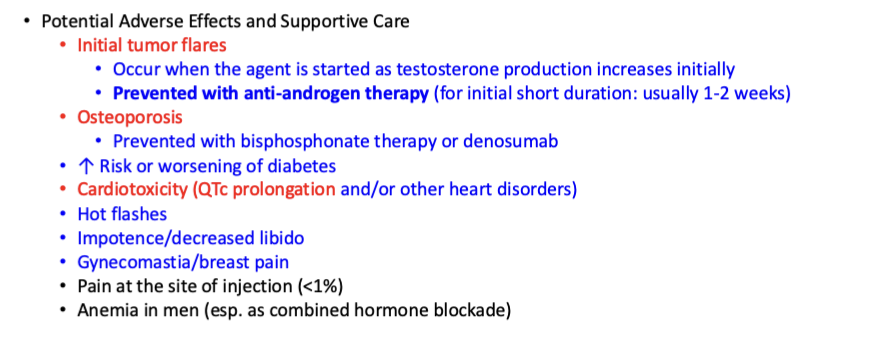
Leuprolide
DDIs
Monitoring
Clinical pearls
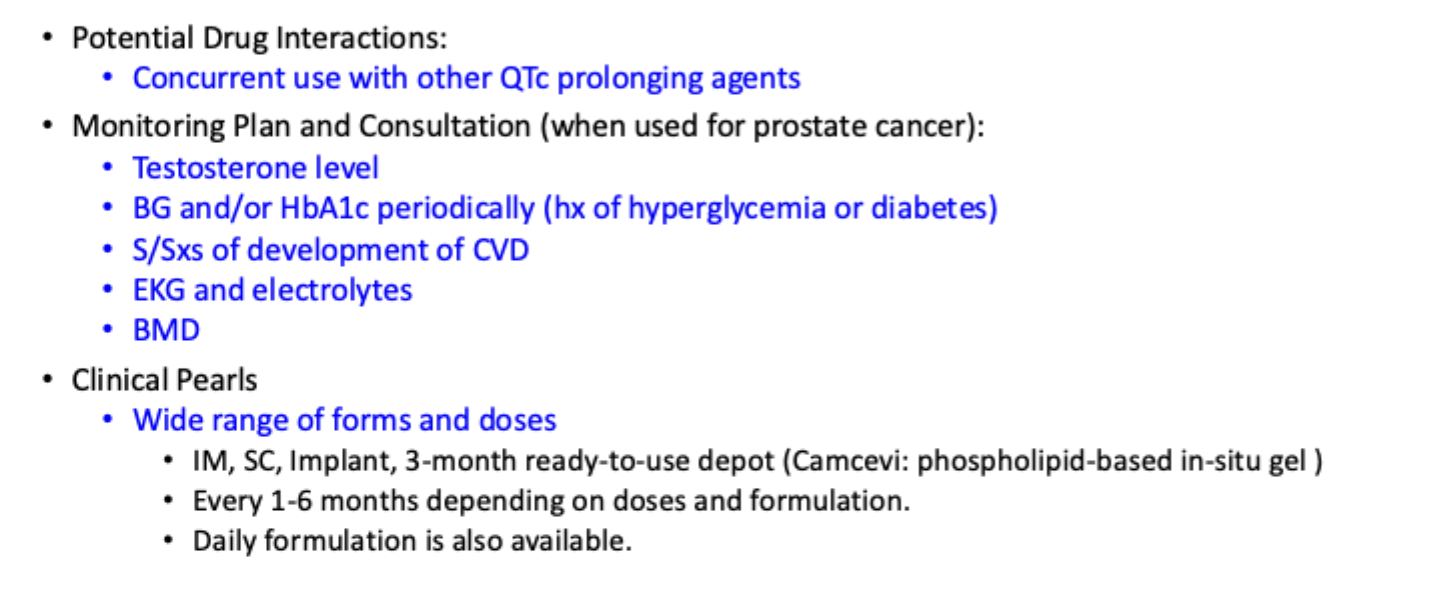
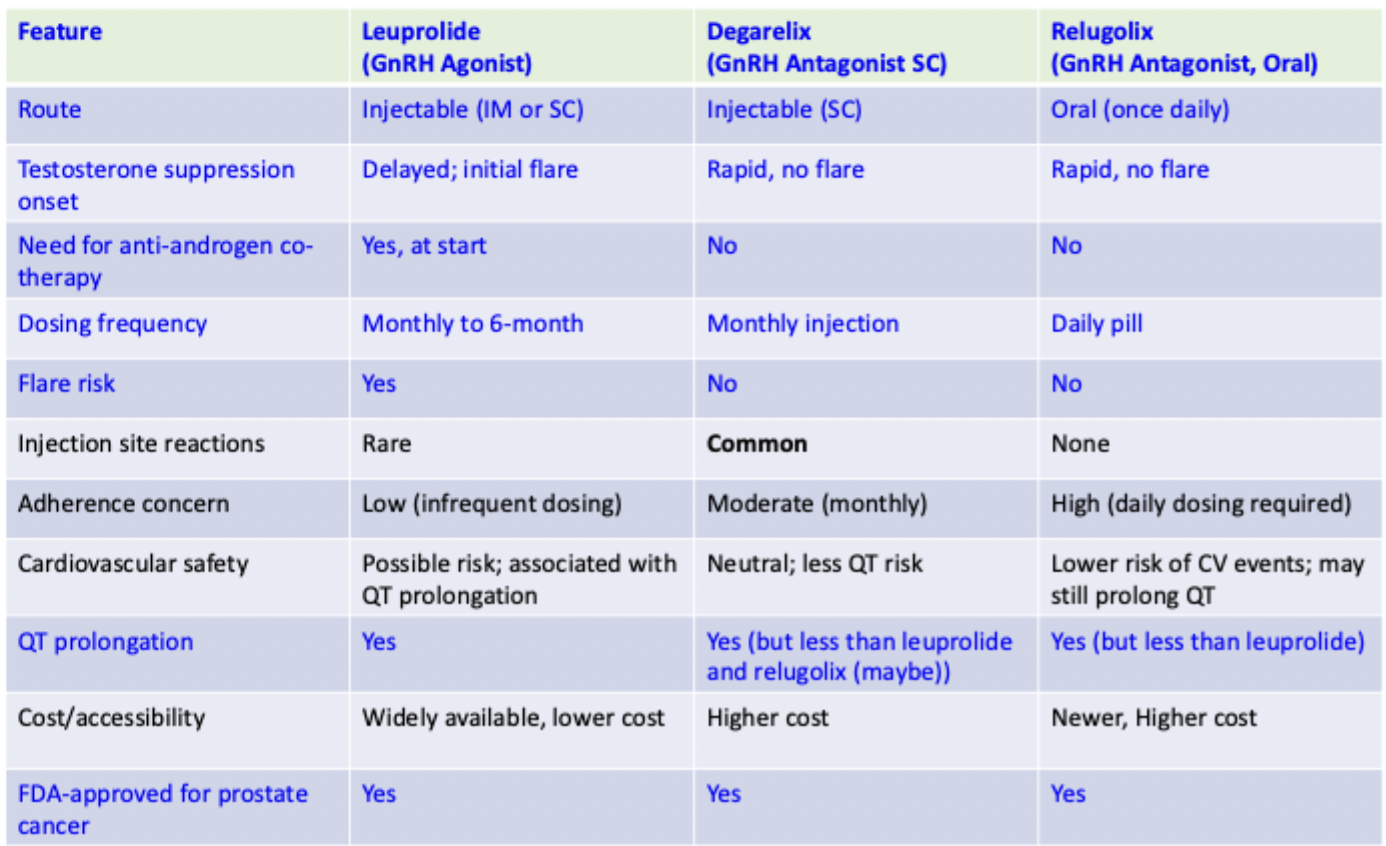
LHRN (GnRH) Antagonists
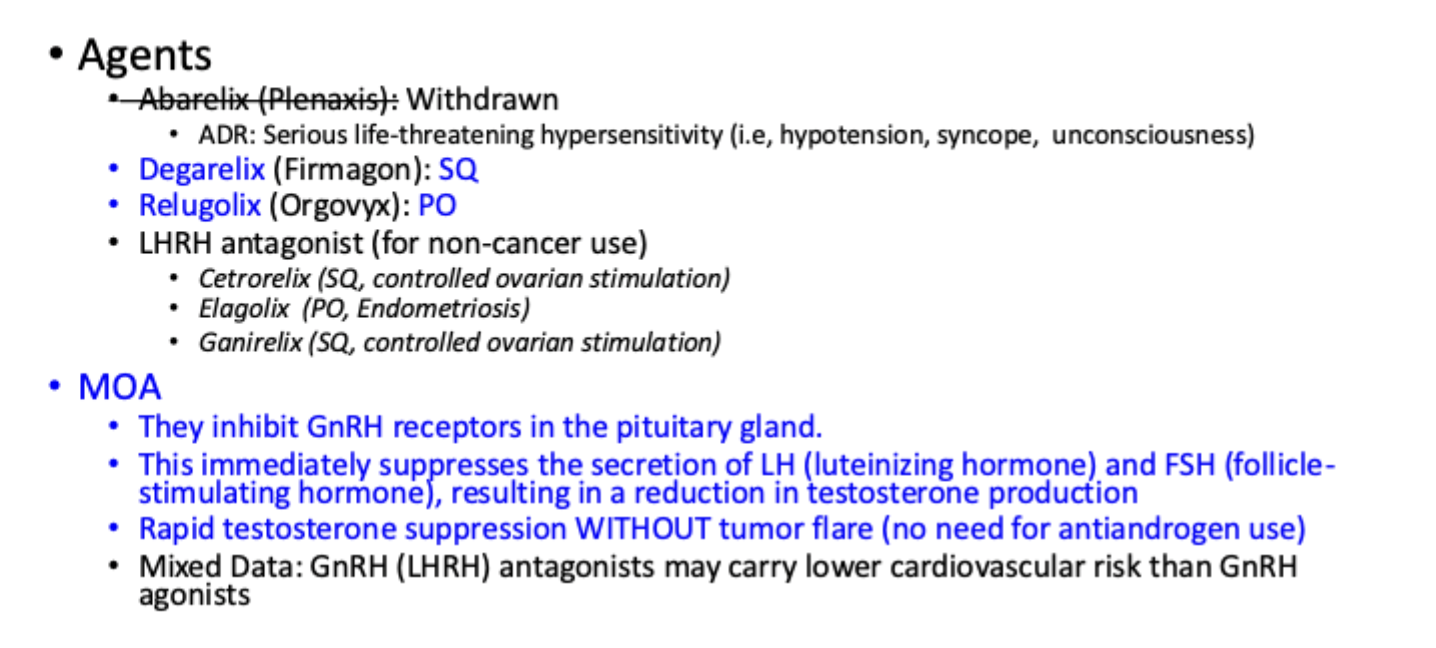
Agents
MOA
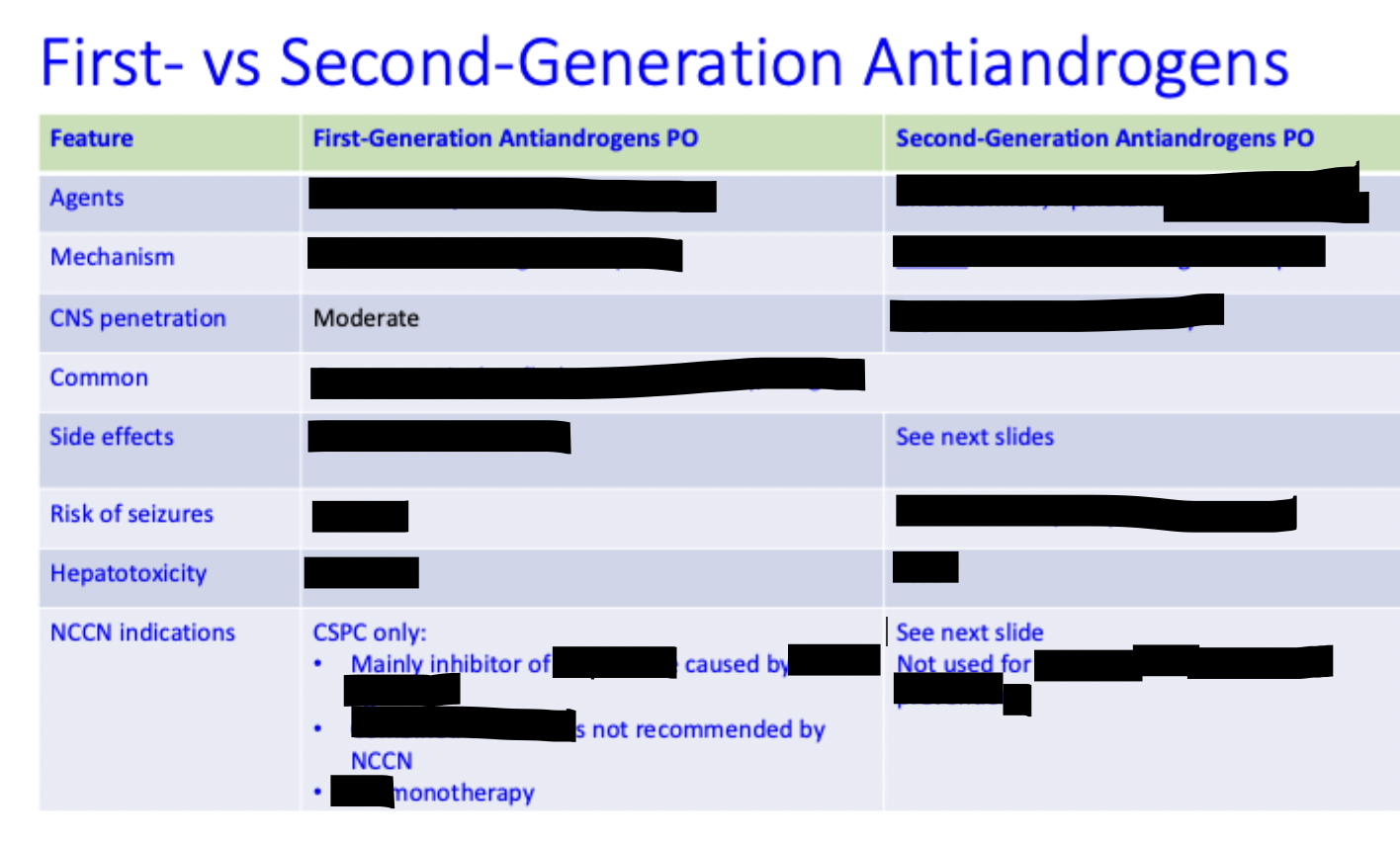
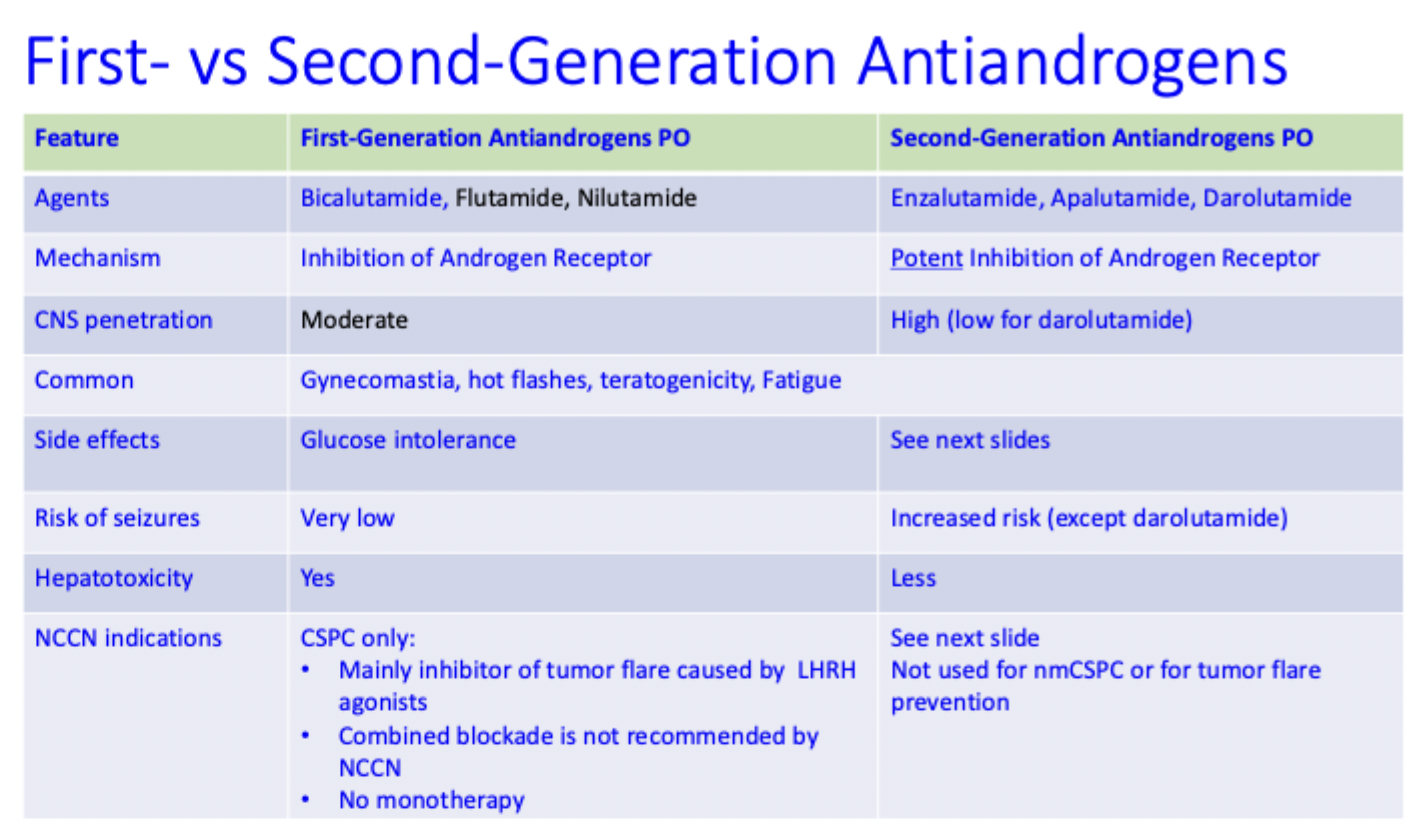
Anti-androgens
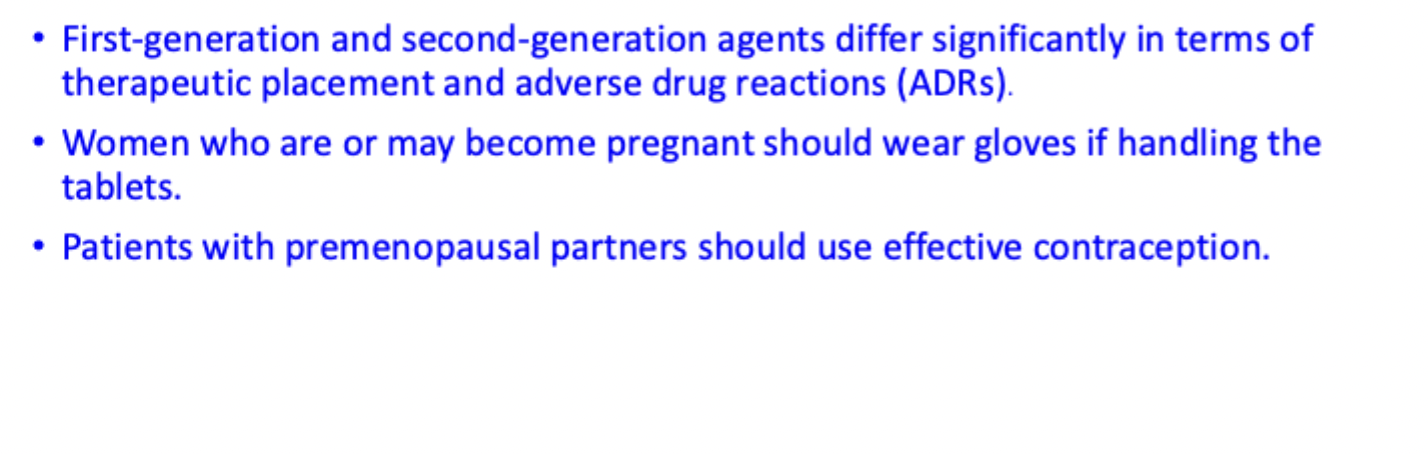
how do 1st and 2nd generation agents differ
handling
partners
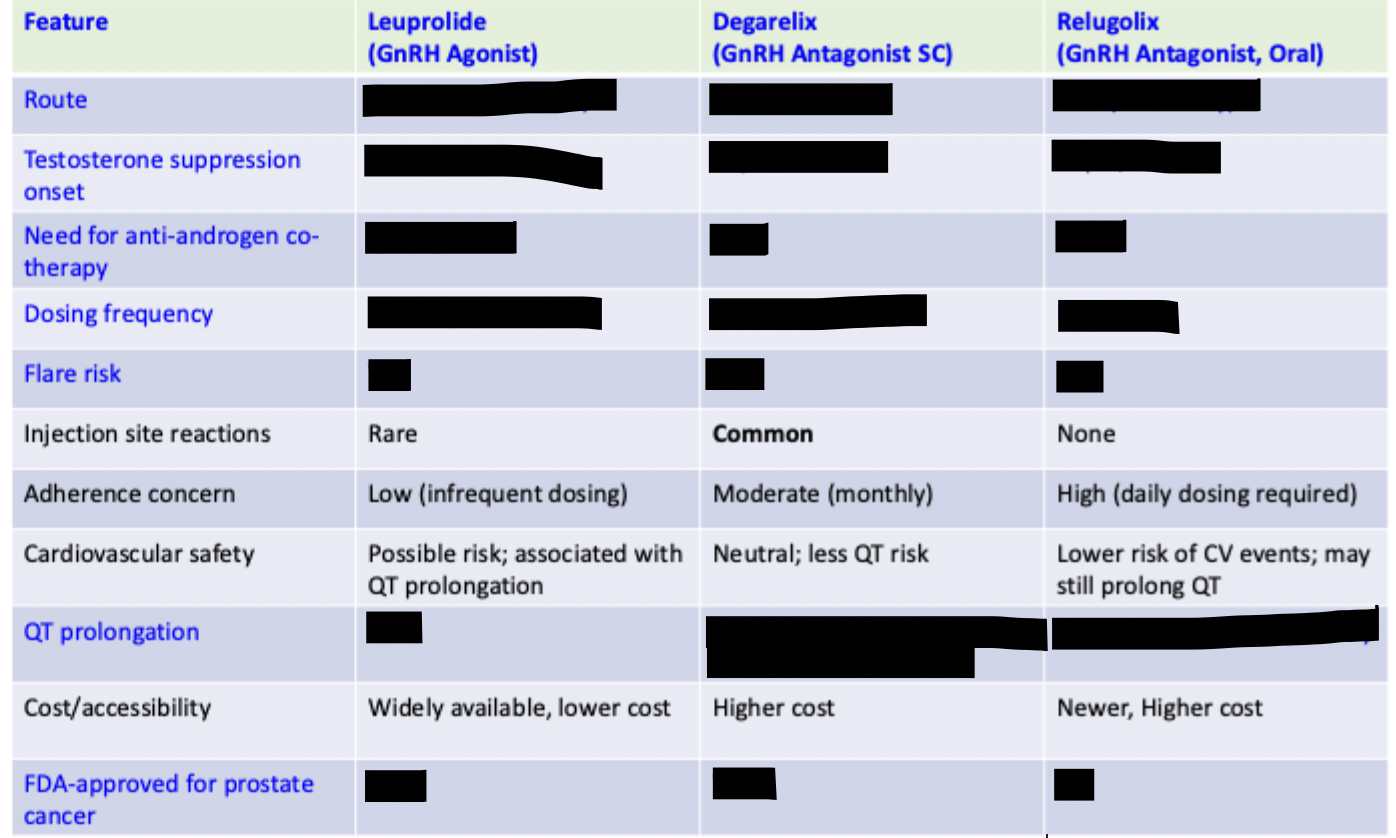
Abiraterone
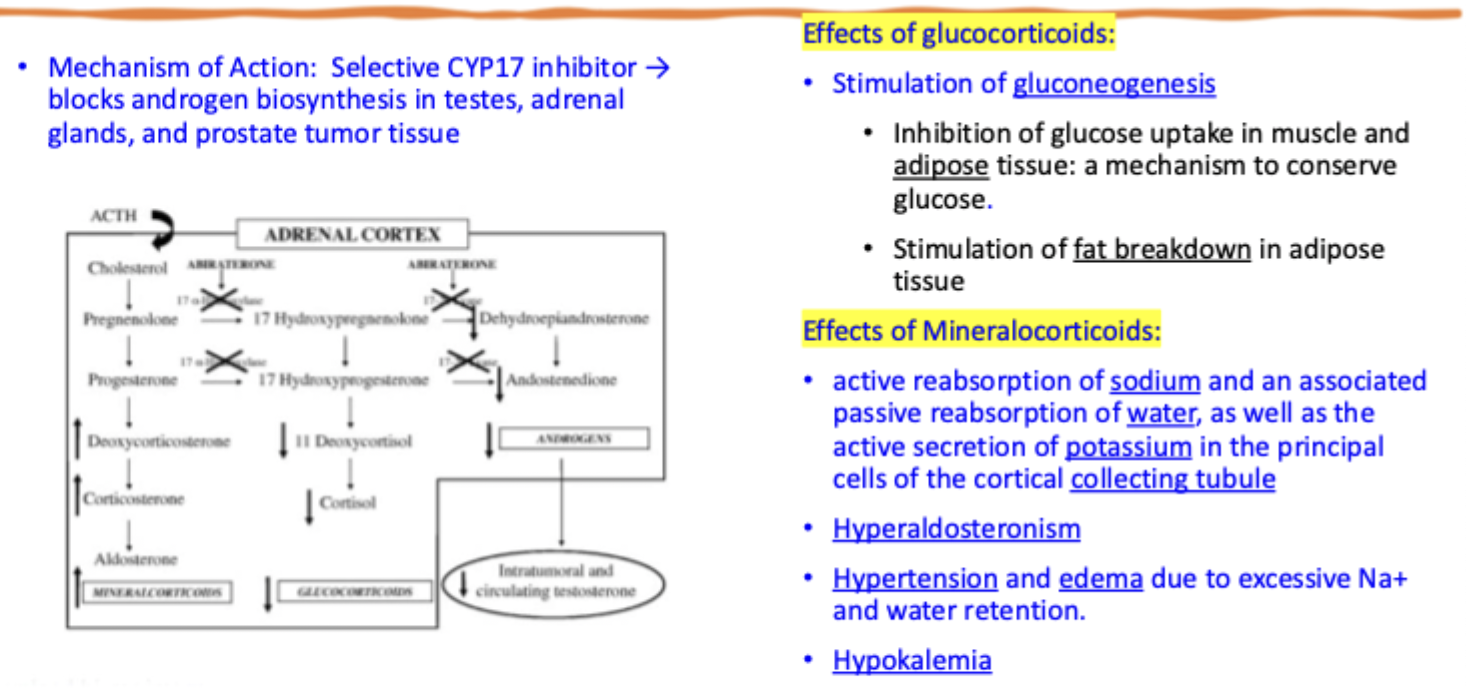
MOA
effects of glucocorticoids
effects of mineral-corticoids
Abiraterone
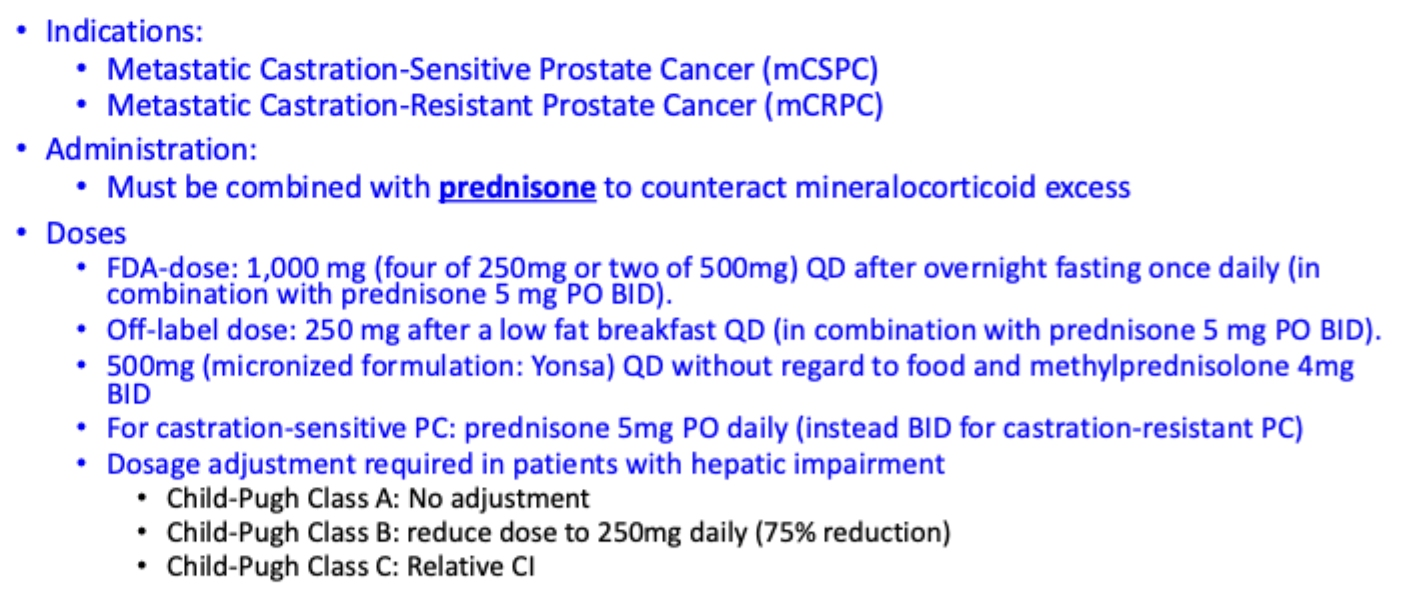
Indication
Admin
Dosing
Abiraterone
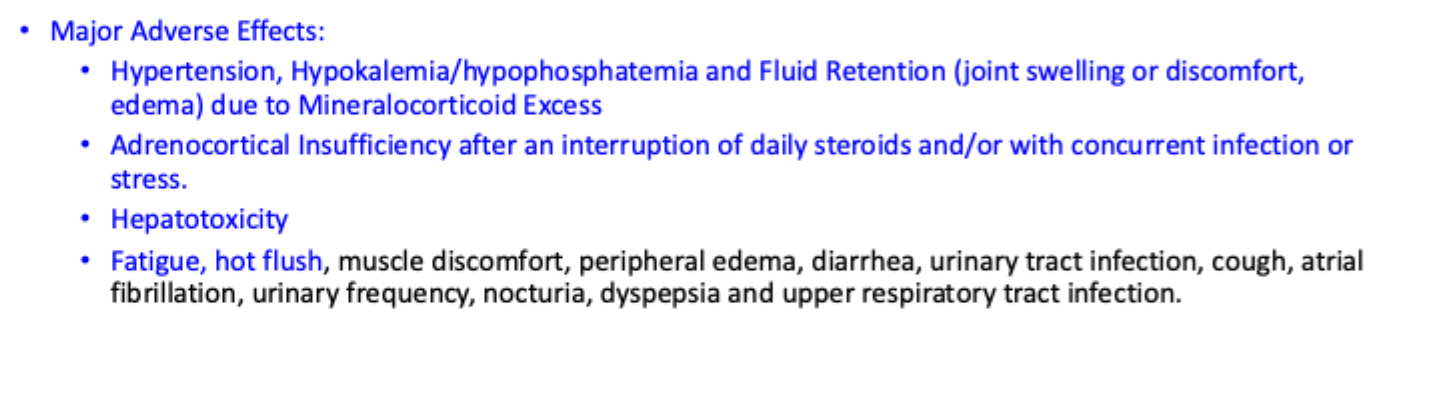
major ADRs
Abiraterone
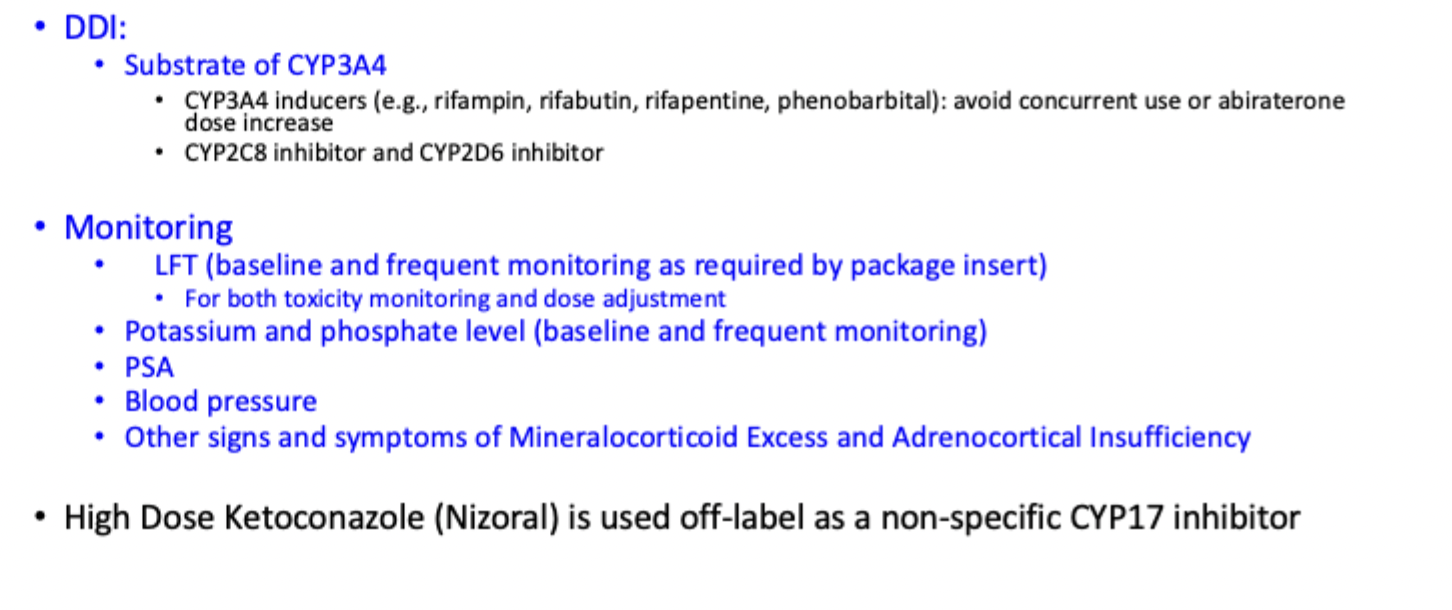
DDI
Monitoring
Pembrolizumab and PARP inhibitors