Mediterranean Translations: Cairo, Constantinople, Venice, and Beyond
 Call Kai
 Learn
Learn Practice Test
 Spaced Repetition
 Match
Match Flashcards
 Knowt Play
1/42

There's no tags or description
Looks like no tags are added yet.
Name | Mastery | Learn | Test | Matching | Spaced | Call with Kai | Chat |
|---|
No analytics yet
Send a link to your students to track their progress
43 Terms
Architecture as Translation
Translations of Architectural form and function
Reflections of the cross-cultural entanglements of the Mediterranean created by: trade, diplomacy, warfare, religion, geography
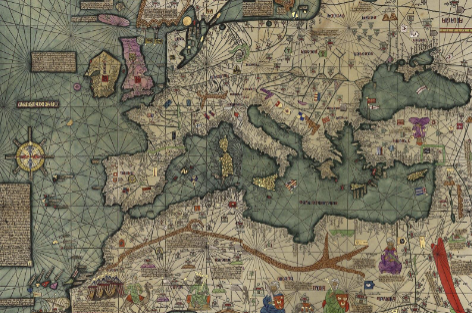
Detail of the Catalan Atlas, Elisha ben Abraham Cresques, Majorca, 1375.
(1959 copy of original Catalan map of the medieval world)
identifies connections between people across the Mediterranean and their different architectures
mediterranean region as a cultural plexus, site of global migration, entanglement
Key cities of the Italian Maritime Republics
Umayyad Dynasty (661-750) | Andalusian Umayyad Dynasty (756-1031)
Abbasid Dynasty (750-1258) | Fatimid Dynasty (909-1171) | Mamluk Dynasty (1250-1517
Key Changes in the Mediterranean Region 11th-14th centuries
Revival in international trade
Largest commercial centers
Cairo
Constaninople
Italian Maritime Republics:
Venice
Amalfi
Genoa
Venice and Cairo emerge as the cities with the greatest power
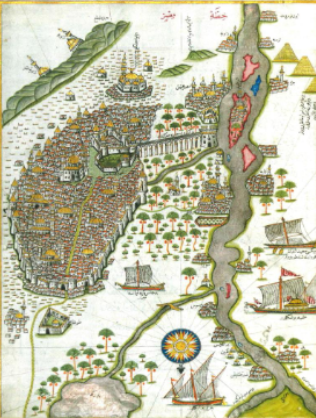
Map of Cairo from Book of Navigation (Kitab-ı Bahriye)
by Piri Reis, presented to Ottoman Sultan Suleiman,
c. 1500.
cairo emerges as a trading city as it sits on the crux of South Asia and Europe
hostile to christian crusaders, still welcomed european merchants (mostly Venetians) at the port of Alexandria
only europeans allowed to enter alexandria were highly ranked ambassadors/merchants.
cairo contained many golden domes (see map below).
major street cut through middle of palace compound
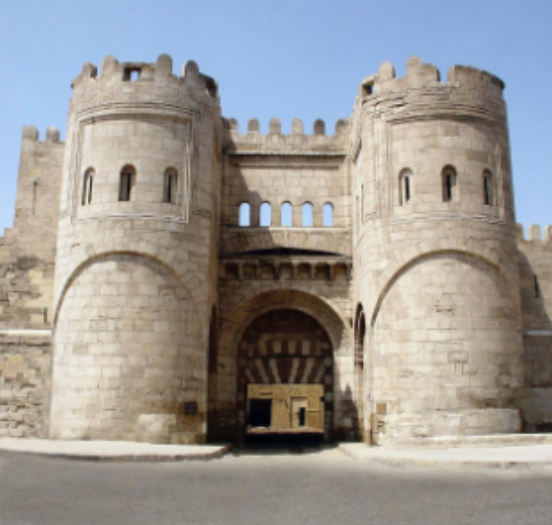
What is this?
bab al-futub, northern gate, Cairo, c. 1100. Fatimid Dynasty.
Purpose of the Bab al-futub
gate served as part of palace compounds’ fortifications (alothough it was also used to defend the city).
rounded towers = defensive
ornamentation = interlocking geometric forms
no figures, Islamic arch
ablaqs on interior
“Eyebrow” motif
Broad recessed arches imported by Armenian masonry
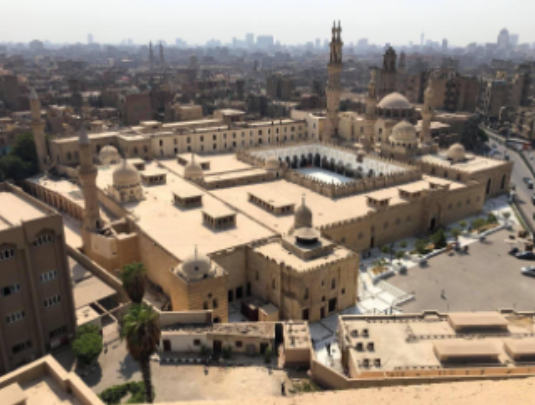
What is this?
Al-Azhar Mosque, Cairo, established in the 970s. Fatimid Dynasty
What is the significance of the Al-Azhar Mosque?
columns were spolia, each w slightly different capitals.
political function: reclaiming materials from past empires to assert power/dominate
Shagar al-Durr (r. 1250–1257)
The first woman to rule a
pre-modern Islamic state; reigned for 80 days.
Sultan Qalawun
(r. 1279-1290)
Murdrasa
Islamic educational Institution
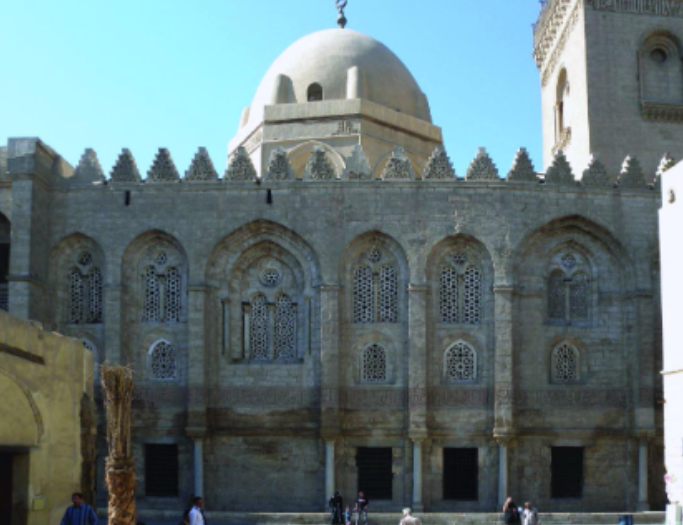
What is this?
Madras and tomb of Qalawun, Cairo, 1285, Mamluk Dynasty.
What is the significance of MADRASA + TOMB of QALAWUN, CAIRO, 1285, MAMLUK DYNASTY?
ablaq frames portal as an entrance
calls attention to it w familiar patterning
pointed arches (influence of european cathedrals + crusader churches)
laborers were commissioned to work on the project and added elements from their home
mamluk rulers couldnt pass down their money to heirs, so they spent the last of their money before they died constructing large funerary monuments.
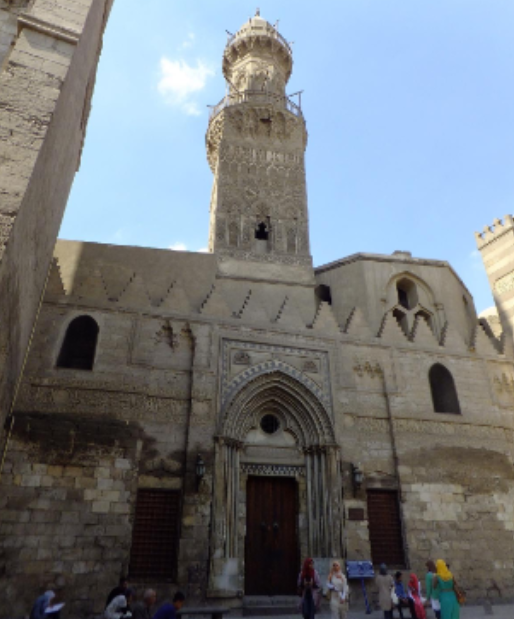
What is this?
Madrasa of Nasir, Cairo, 1310. Mamluk Dynasty.
Al-Malik an-Nasir
r.1293-1340
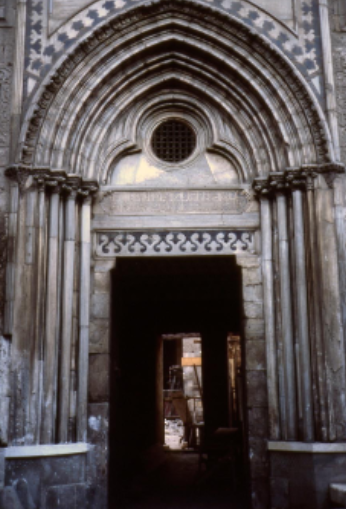
What is the signifigance of Madrasa of Nasir?
front door of this structure was a large peice of spolia from a christian cathedral
exterior was decorated with muqarnas + khufic script
christian portal framed with islamic contexts - parallel reflects relationship bewteen cairo + rest of world
Iwan
Vaulted hall/ space
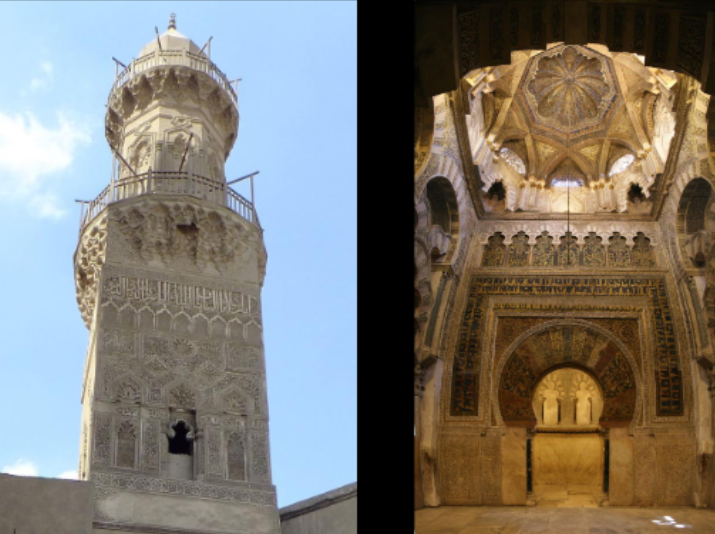
Detail of minaret of madrasa of Nasir, Cairo, 1310 with view of mihrab of Great Mosque at Córdoba, 962-966.
minaret was decorated with more muquarnas.
madrasa = synthesis of conquered and admired cultures and their building styles
trade had a large influence on Cairo's architecture.
filled with hostels for foreign traders
hotel-like compounds, specific to Islamic cities
cairo calls them "wekalas."
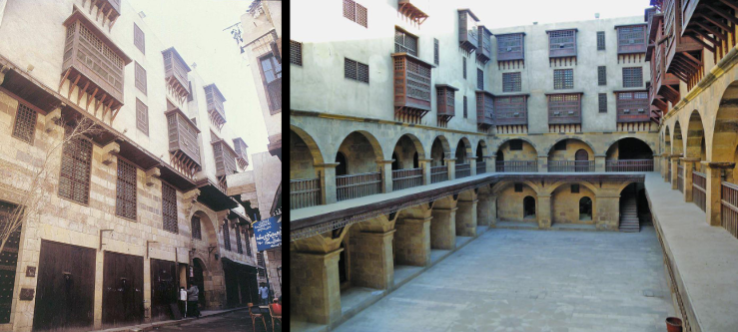
What is this?
Al-Bazar Wekela, Cairo, c. 1600. Views of exterior (left) and interior courtyard (right).
fondouk
hostel for foreign traders in an Islamic city, known as a
wekela in Cairo
Mashrabiyya
a perforated screen set over windows in traditional Islamic houses to regulate interior temperatures, ensure privacy
Herat
typical urban neighborhood, gathered around a blind alley
Fondouks in Cairo
allows for windows looking into courtyard, normally not allowed in courtyard houses of the time but it served a commercial function
the courtyards would often turn into markets which are topped with living spaces/apartment
wooden screens were used to ensure that women couldn’t be seen by the public eye
Abbasids were the first to seclude women (face coverings, separate mosques, ect.)
enable women to look out of houses without being seen
complex negotiation of privacy and discretion
calling out the presence of women, but simultaneously protecting them from view
screens would also diffuse light + keep living spaces cool
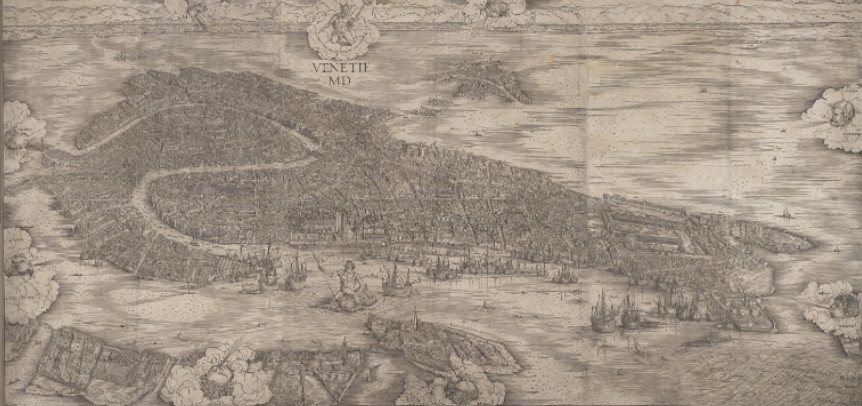
Jacopo de’ Barbari, View of Venice, 1500
Republic of Venice as the most powerful of the Italian Maritime Republics; established treaties with eastern Mediterranean ports.
Venice known as: La Serenissima – “the most serene”; given in reference to its political stability.
Venice as collection of islands: circulation through city occurs primarily through canal system; Grand Canal almost 100 feet across.
Venice Notes
venice kept up with Cairo as a force of transnational trade
most powerful italian maritime empire, cerated through treaties it established with neighboring ports
connection with Byzantine powers enabled it to secure its own political autonomy
only italian city not aligned with the holy roman empire
extremely cosmopolitan city - site of many cultural interactions
compiles byzantine, European, and Muslim influences
venice’s wealthy merchant class = city's nobility
managed the city’s democratic govt.
head of city = doge
Venice is known as la serenissima—"the most serene”—given in reference to its political stability.
originated as one of a group of lagoon communities in the Adriatic
venice is actually a collection of islands that is connected by bridges and canals.
process of consolidating islands = mazelike urban form
circulation through both canal systems and streets
grand canal = city’s main thoroughfare
100 ft across, wider than most main streets in europe
wealthy merchants built palaces on the sides of the Grand Canal.
glorify status of merchants, cinematic backdrop for citizens + govt affairs
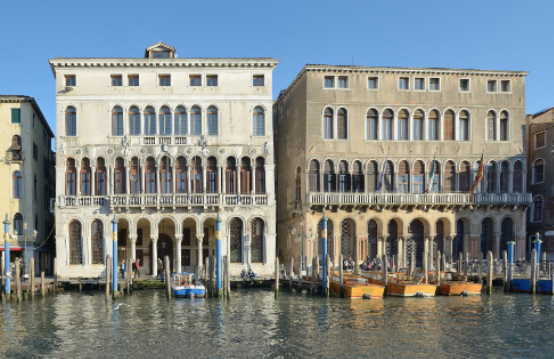
What is this?
Ca’ Loredan and Ca’ Farsetti, Venice, 13th century.
Constructed along the Grand Canal.
Significance of Ca’ Loredan and Ca’ Farsetti, Venice, 13th century?
mostly windows
ability to cultivate a maritime empire = dependency on byzantine to not invade
lots of arch crossover
facades on ca’loredan + ca’farsetti = nods to Tekfur Palace/Byzantine arch
v. open facades due to windows; openness of facades shows how peaceful + serene the city is
Openness also served structural purpose - makes the building lighter, which is important when building on marshy lands.
foundation tech = 10ft wooden piles into marshy soil
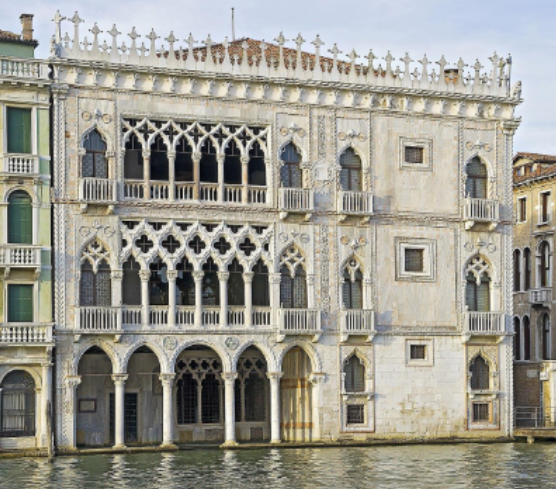
what is this building?
palazzo Santa Sofia (ca’ d’Oro), Venice, 1430
What is the significance of Palazzo Santa Sofia?
less byzantine, more cathedral
pointed, heavily decorated arches
would often have warehouses/commercial spaces on ground floors with living spaces above
Venetian state would sponsor creation of fondouk-like structures for visiting merchants
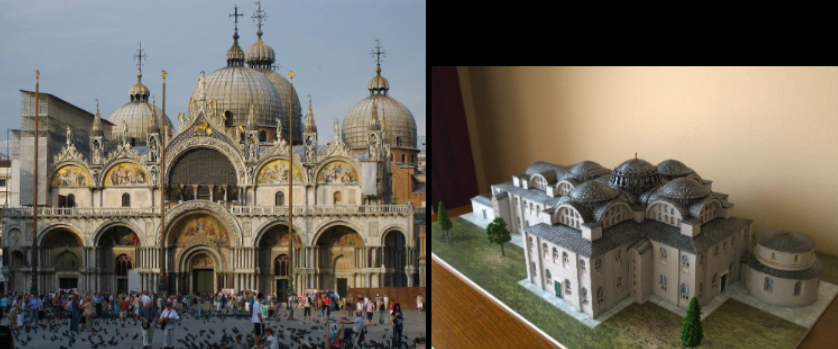
What is this?
Basilica of San Marco, Venice, 1063, and model of Church of the Holy Apostles, Constantinople, 4th-15th centuries, demolished in 1456.
Located in Piazza San Marco, Venice’s main square
Piazza
an italian public squares
What is the significance of Basilica of San Marco, Venica, 1063?
piazza: an italian public square
plan was taken from the church of holy apostles in Italy and commissioned for Constantine.
can be seen in the way that both structures have domes ornamenting the exterior
lots of Byzantine spolia worked into construction (esp. in the arches)
domes in san marce are more elongated than its precedent, showing it could have been influenced by cairo’s domes.
What is the significance of Fondaco dei Tedeschi?
hostel for German merchants
courtyard typology
arched arcades w/ more recessed upper levels that were used as dwelling spaces
arcades as frames for courtyard, openness is key as it was a mercantile space that needed ways to display wares
no screens covering windows because that level of privacy wasn’t prioritized in Venice.
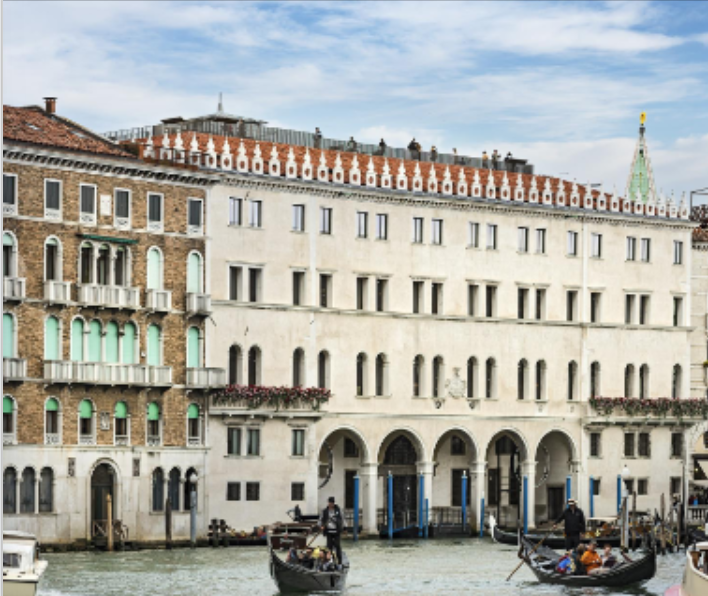
What is this?
Fondaco dei Tedeschi, Venice, built in 1225, rebuilt following a fire in 1508.
Views of the recently restored exterior and interior.
Fonduk El Attarine,
Tunis Medina (upper left).
Al-Bazar Wekela,
Cairo (upper right).
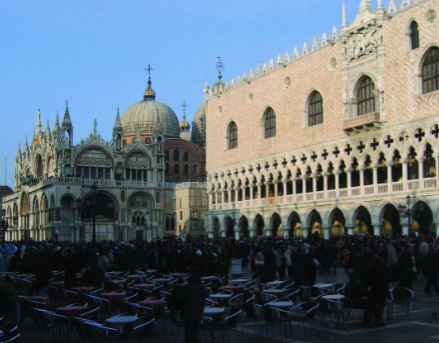
What is this?
DOGES PALACE, VENICE, 1170s
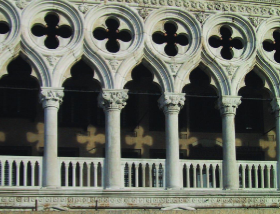
Quatrefoil
a four-lobe motif often used in Gothic window decoration
Significance of Doges palace?
parallels between madrasa + tomb of qalawun in cairo
tower, perforations, pointed arches
quatrefoil: a four-lobe motif often used in gothic window decoration
the two key monuments of venice reflect:
gothic, byzantine, and islamic influences
The two key monuments of venice reflect?
Gothic, Byzantine, and islamic
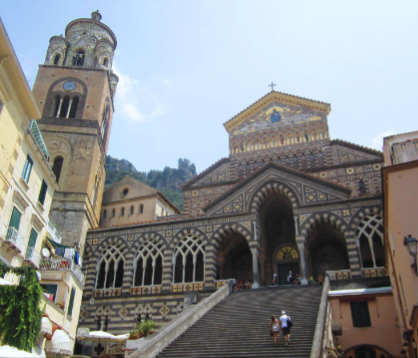
What is this?
Amalfi Cathedral, Amalfi, 11th century
Significance of the Amalfi Cathedral?
locatedon western side of italian peninnsula
amalfi = pointed arch, forst city to have a significant naval trading post in italy
Cathedral of San Lorenzo
different elements show cross-cultural exchanges that were fostered by both trade, diplomatic strategies, and religious turmoil throughout the mediterranean
Key features
Translations of architectural form and function
• Form: stilted domes, pointed and lobed arches, ablaq
• Function: fondouk/wekela/fondaco
Reflecting Islamic, Byzantine, Gothic influences
• Cairo: Fatimid Dynasty, Mamluk Dynasty
• Constantinople: Byzantine Empire
• Venice: Venetian Republic
• All intermingling via trade, diplomacy, war…