31 Disorders of the Nasal Cavity
 Call Kai
 Learn
Learn Practice Test
 Spaced Repetition
 Match
Match Flashcards
 Knowt Play
1/75

There's no tags or description
Looks like no tags are added yet.
Name | Mastery | Learn | Test | Matching | Spaced | Call with Kai | Chat |
|---|
No analytics yet
Send a link to your students to track their progress
76 Terms
UPPER
Are FHV and FCV *upper or lower* respiratory infections?
a. Feline Herpes Virus aka Feline Rhinotracheitis Virus
This feline upper respiratory infection causes *corneal ulceration*, dermatitis, abortion, and neonatal death
a. FHV (feline herpes virus, rhinotracheitis)
b. FCV (feline calicivirus)
c. Chlamydophila felis
d. Bordetella bronchiseptica
b. Feline Calici virus
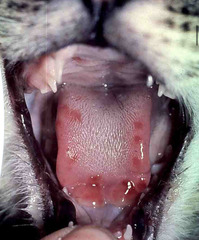
This feline upper respiratory infection causes oral ulceration, interstitial pneumonia, and polyarthritis (the cat will sit on their back paws like a dog not wanting to put weight on their front)
a. FHV (feline herpes virus, rhinotracheitis)
b. FCV (feline calicivirus)
c. Chlamydophila felis
d. Bordetella bronchiseptica
Upper = ulcerations
Is this more typical of *upper or lower* feline respiratory infection?
Acute
Which is more common, *acute or chronic* feline upper respiratory infections?
Upper
Is Chlamydophila felis an *upper or lower* respiratory infection of cats?
Upper respiratory infection
Is Bordetella bronchiseptica an *upper or lower* respiratory infection of cats?
c. Chlamydophila felis
This upper respiratory infection of cats commonly causes conjunctivitis-conjunctival inclusion body
a. FHV (feline herpes virus, rhinotracheitis)
b. FCV (feline calicivirus)
c. Chlamydophila felis
d. Bordetella bronchiseptica
d. Bordetella bronchiseptica
This upper respiratory infection of cats commonly causes coughing and pneumonia in young kittens
a. FHV (feline herpes virus, rhinotracheitis)
b. FCV (feline calicivirus)
c. Chlamydophila felis
d. Bordetella bronchiseptica
*signalment and clinical presentation*, though commercial PCR respiratory panels can be useful
How do you primarily diagnose feline upper respiratory infection?
Steroids because they will prolong clinical signs and inc. shedding of virus
What treatment should you absolutely NOT GIVE feline upper respiratory infection patients? Why?
Supportive for clear nasal discharge (vaporizer), antibiotics for secondary infection (*doxycycline*)
What treatments SHOULD you give feline upper respiratory infection patients?
SECONDARY = from inflamed and compromised mucosa
Majority of bacterial rhinitis is *primary or secondary*? Why?
7-10 days
A typical bacterial rhinitis infection is resolved in how many days?
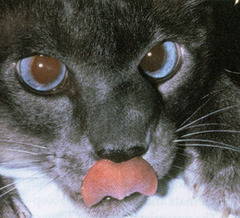
Fungal nasal disease: Cryptococcus neoformans
What is this a typical presentation of (nasal swelling in younger cats)?
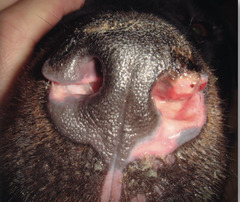
Fungal nasal disease: Aspergillus fumigatus
What is this a typical presentation of (depigmentation and ulceration in a dog)?
Feline Cryptococcus (cryptococcus neoformans)
This saprophytic yeast-like organism is found in avian excrement, has *large polysaccharide capsules* and typically presents as a nose issue in cats that may or may not have immunosuppression (immunosuppression does not predispose)
a. facial swelling/deformity
b. sneezing
e. mucopurulent discharge
f. ulcerative lesion on nasal planum
Select which of the following signs are CLASSIC for feline cryptococcus:
a. facial swelling/deformity
b. sneezing
c. systemic lameness
d. anisophoria
e. mucopurulent discharge
f. ulcerative lesion on nasal planum
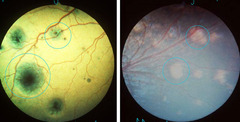
Fungal
Seeing things like this on a fundic exam is more typical of *bacterial or viral or fungal* disease.
CYTOLOGY (FNA of facial lesion, nasal discharge) AND SEROLOGY (cryptococcal latex agglutination capsular antigen titer)
What diagnosis can you do for Feline Cryptococcus?
Feline Cryptococcus
Which problem can be diagnosed thru *cytology* FNA of facial lesion or nasal discharge and *serology* cryptococcal agglutination capsular antigen titer (positive is DIAGNOSTIC)?
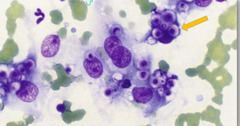
Feline Cryptococcus cytology
What is this?
Fluconazole
Which is the best antifungal used to treat feline cryptococcus?
MINIMUM of 2 months
How long do you need to treat feline cryptococcus with fluconazole?
FALSE
TRUE OR FALSE: magnitude of positive antigen titer of feline cryptococcus is prognostic
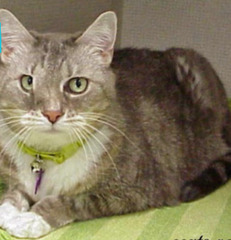
Cryptococcus
What is this unilateral presentation typical of?
Dogs
Aspergillosis is a more common fungal disease of *cats or dogs*
Aspergillosis
This fungal disease in dogs causes destruction of the nasal turbinates, but luckily is often specific to the nasal cavity (not systemic)
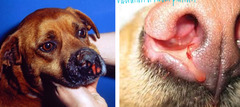
Ulceration of nasal planum: think fungal nasal disease like Blastomycosis and Aspergillosis
What is happening here and name a few things it could be
Mesocephalic to dolichocephalic
What type/shape of dog is Aspergillosis commonly seen in?
NO
Is immunosuppression a predisposing factor in Aspergillosis?
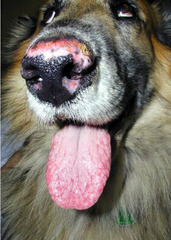
Ulceration/depigmentation of the nares: Aspergillosis top differential
A dog is shy or painful when touching the bridge of the nose and it looks like this. What is this presentation? What are you thinking?
a. radiographs
b. CT
c. rhinoscopy
d. serology
e. cytology and histopath
Select the diagnostic methods you can use for Aspergillosis:
a. radiographs
b. CT
c. rhinoscopy
d. serology
e. cytology and histopath
f. pharyngeal wash
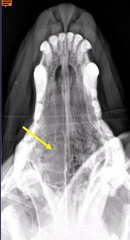
Aspergillosis (x-ray)
What is this being used to diagnose, where there is loss of nasal turbinates, increase in soft tissue density, but NO lysis or deviation of the vomer or frontal bones (typically)
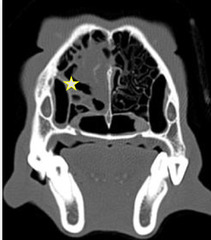
Aspergillosis (CT)
note: but remember neoplasia would also be a top
What is this being used to diagnose, showing you destruction of the turbinates and overall integrity of turbinates and cribriform plate?
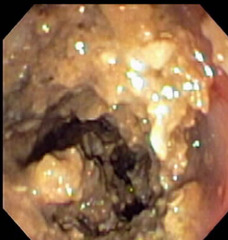
Aspergillosis (rhinoscopy)
What is this being used to diagnose, showing you white mats, plaques, or granulomas which need to be debulked prior to treatment?
Aspergillosis
What is this being used to diagnose, showing braching hyphae?
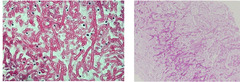
Aspergillosis: serology CANNOT be used to assess response to treatment
Cryptococcus: serology used to monitor response to therapy (Cryptococcal latex agglutination capsular antigen titer)
What is the difference between using serology for diagnosis of Aspergillosis versus Cryptococcus?
Topical treatment: Clotrimazole and Enilconazole
What is the BEST treatment for Aspergillosis?
c. clotrimazole
e. enilconazole
Select the best topical treatments used for Aspergillosis:
a. dexamethazone
b. banamine
c. clotrimazole
d. oseltamivir
e. enilconazole
f. apomorphine
Trephination
What is this alternative treatment for Aspergillosis, placing tubes into the sinuses and nasal cavities?
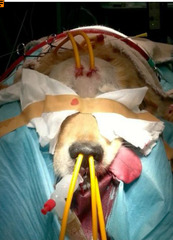
If cribriform plate is disrupted or other systemic involvement
When is systemic therapy indicated for alternative Aspergillosis treatment?
80-90% cure rate with topical clotrimazole under anesthesia
*What is the prognosis like for Aspergillosis?*
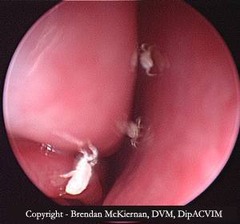
Nasal mites: paroxysmal and violent sneezing
What is this, treated with milbemycin or selemectin? What would the dog most likely present with clinically?
CATS
Are nasopharyngeal polyps more common in *cats or dogs*?
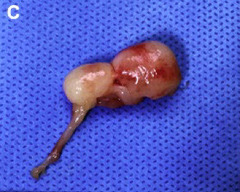
Feline nasopharyngeal polyps
These are inflammatory polyps or benign growths that occur in young cats and kittens that attach to the base of the eustachian tube and extend into the external ear canal or middle ear most commonly
a. Obstructive breathing pattern
c. stertor
e. mucopurulent discharge
f. head tilt, nystagmus and Horner's if in ear canal
Select some of the *most common clinical signs* of feline nasopharyngeal poylps:
a. Obstructive breathing pattern
b. epistaxis
c. stertor
d. anatomical anomaly of the nasal bridge
e. mucopurulent discharge
f. head tilt, nystagmus and Horner's if in ear canal
Feline
Which animal's tympanic membrane has a septum in health?
You have to go behind and pull up the soft palate
Normally you cannot see feline nasopharyngeal polyps if you just look orally. So how do you get go them?
Normal feline skull
Is this normal or abnormal?
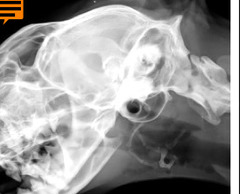
Feline nasopharyngeal polyp
What is this?
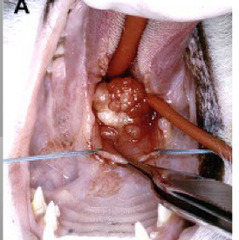
Surgical excision by traction via oral cavity + prednisolone
What is the best way to treat feline nasopharyngeal polyps?
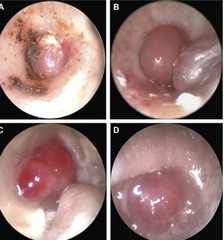
Feline aural/otic inflammatory polyps
What is this?
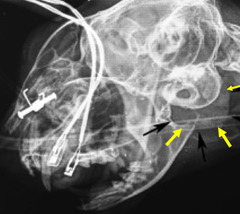
Abnormal =soft tissue opacity in pharyngeal area is nasopharyngeal polyp
Is this feline skull normal or abnormal?
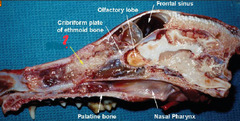
Tumor (nasal adenocarcinoma = common tumor at caudal aspect of nasal cavity)
What is this?
MALIGNANT (80-90%)
Most nasal neoplasia are *benign or malignant*
Adenocarcinoma
What is the most common nasal neoplasia in dogs?
Nasal neoplasia (first thought should be adenocarcinoma)
A dog presents with nasal discharge, sneezing, nasofacial deformity that looks like this, stertor, and open mouth breathing. Thoughts?
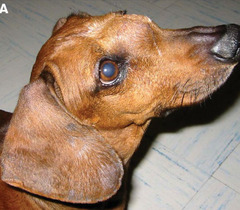
Nasal neoplasia (lymphoma in cat)
Though it doesn't say it a good differential would probably also be cryptococcus if history matches
A cat presents with enopthalamia, nasofacial deformity that looks like this, open mouth breathing, sneezing, and nasal discharge. Thoughts?
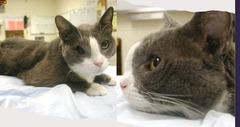
Nasal neoplasia (probably adenocarcinoma)
A dog presents with nasal turbinate destruction, soft tissue opacity, and some bony lysis. Thoughts?
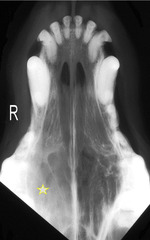
Erosion of vomer bone and turbinates = nasal neoplasia (adenocarcinoma)
What is happening in this dog and differential?
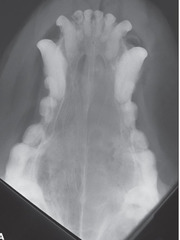
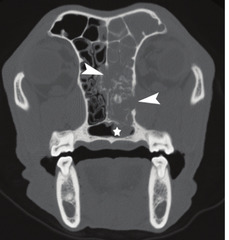
Nasal neoplasia = lysis bone into orbit
What are you seeing on this CT?
Lymphoma
What is the most common nasal neoplasia in cats?
Squamous cell carcinoma
What is the most common neoplasia on the nasal planum, especially in WHITE cats?
Histopath
note: remember histopath is the study of entire tissues collected thru means like biopsy, whereas cytology is the study of cells collected thru means like swabs or washes
Though CT, rhinoscopy, and x ray may be great for seeing nasal neoplasia, what is the ONLY definitive diagnostic tool?
Radiation therapy
What is the treatment of choice for carcinomas and sarcomas?
12-16 months = longest prognosis of other treatments
What is the survival time like after using radiotherapy on nasal neoplasias like carcinoma and sarcoma?
Allergic rhinitis
This is hypersensitivity to airborne allergens in cats and dogs, treated by controlling allergens and giving antihistamines/corticosteroids
4 weeks
When we say something is "chronic", how long has it been going on for at least?
Idiopathic chronic feline rhinosinusitis
This *chronic mucoid or mucopurulent discharge for months to years* is typically a diagnosis of exclusion, showing sneezing and nasal discharge most consistently in cats
Idiopathic rhinitis
The number 1 cause of chronic mucoid or mucopuruelnt discharge in the nose is neoplasia. What is the second most common cause?
Chronic inflammation leads to turbinate destruction
What is the problem of the chronic inflammation associated with feline chronic rhinosinusitis?
Cetirizine
What antihistamine is commonly used for feline chronic rhinosinusitis management?
Canine lymphoplastic rhinitis
This is a diagnosis of exclusion in dogs, not related to CAV2, Parainfluenza, Chlamydophila or Bartonella, with bilateral nasodischarge, damage to turbinates, and sneezing
Dogs
You will likely need higher immunosuppressive doses of prednisone for management of *dogs or cats* with idiopathic rhinitis
Into the Eustachian tube
Where does the long stock on the feline nasopharyngeal polyp normally extend?