04. Behavioral Tests in Rodents
 Call Kai
 Learn
Learn Practice Test
 Spaced Repetition
 Match
Match Flashcards
 Knowt Play
1/154

There's no tags or description
Looks like no tags are added yet.
Name | Mastery | Learn | Test | Matching | Spaced | Call with Kai | Chat |
|---|
No analytics yet
Send a link to your students to track their progress
155 Terms
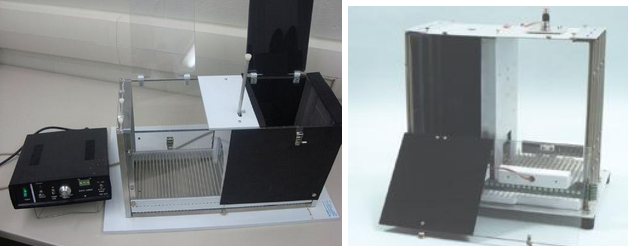
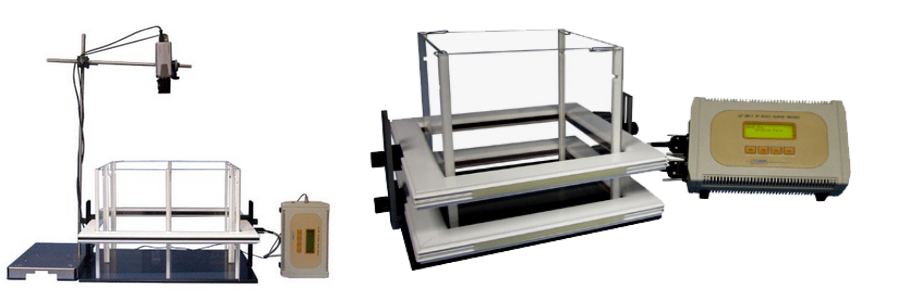
Allows the study of spontaneous locomotor activity, rearings and optionally hole-board test parameters for exploration in rodents. A reliable system for easy and rapid drug screening and phenotype characterization in both day and night lighting conditions. The system is basically composed by a two dimensional (X and Y axes) square frame, a frame support and a control unit. Each frame counts with 16 x 16 infrared beams for optimal subject detection.
infrared IR Actimeter
Infrared (IR) Actimeter (mice & rats) tests for what?
Locomotor Activity and Exploration
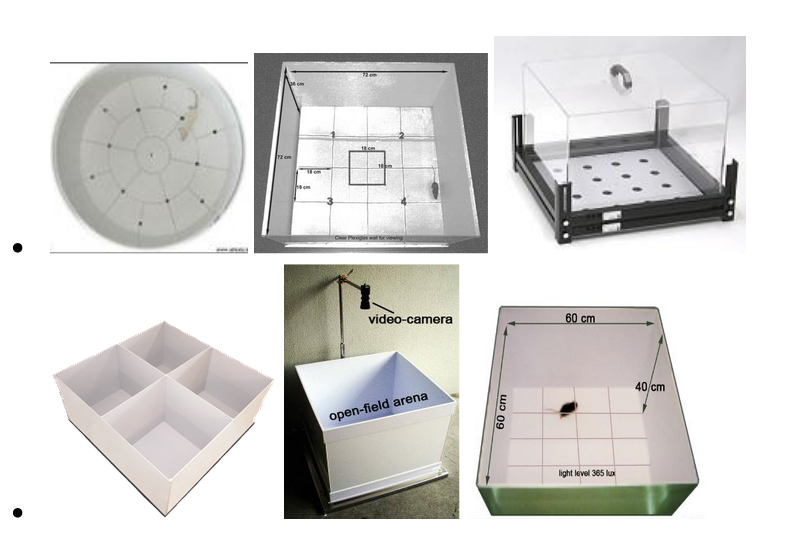
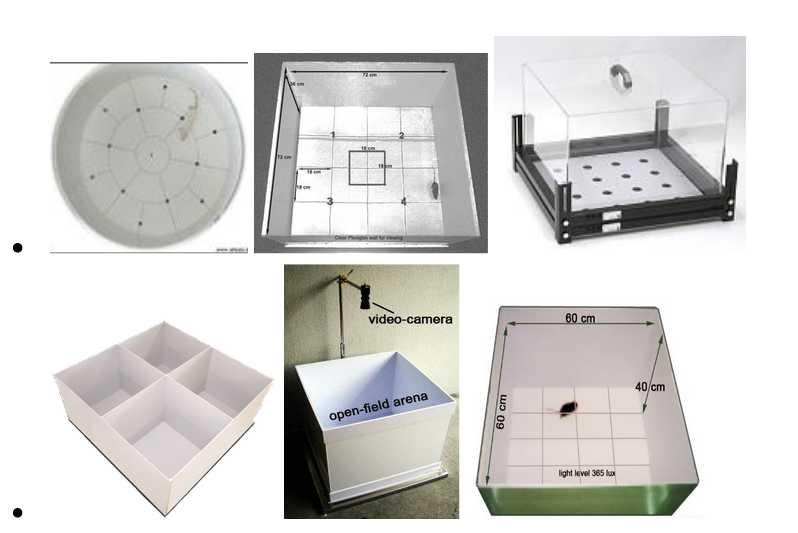
commonly used qualitative and quantitative measure of general locomotor activity and willingness to explore in rodents. However, the extent to which behavior in this tests correlates with general locomotor activity in other situations (e.g., in a home cage or on an activity wheel) is controversial. This test is an arena with walls to prevent escape. Commonly, the field is marked with a grid and square crossings. Rearing and time spent moving are used to assess the activity of the rodent.
open field activity
What does open field activity test for?
Activity/ Exploration, Response to Novelty, Anxiety
Different spin on open field test - measures how often a rodent sticks its nose into a novel hole
hole board exploration
ease of use, activity measurements can take place in the Home Cage as well as in Open Field, and that the animal, mouse or rat, is unrestrained during the experiment. Using food and a bottle, activity measurement experiments can be conducted over a very long period of time.
Activimeter
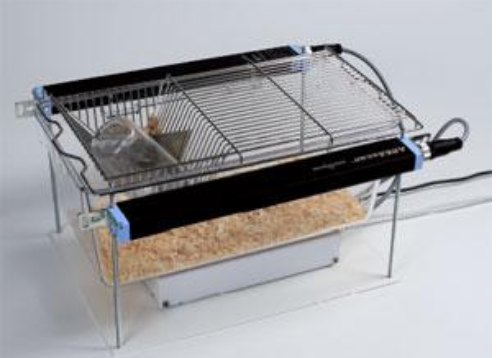
What does activimeter test for?
Movement, Motionless Activity (including tremor), Immobility ability to quantify all 3 parameters
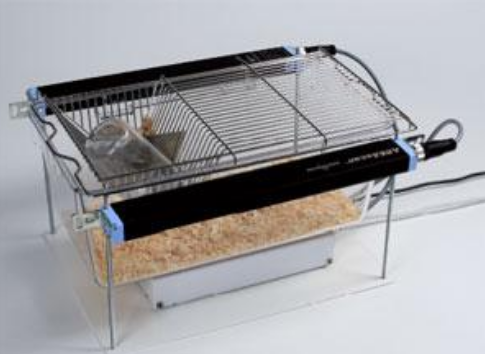
Sensitive Test for (psychotropic) drugs! Observe effects on exploratory behavior in mice
The normal mouse of either gender will explore holes in the substrate of its environment by plunging its head in and out of the hole a few times, then moving on to the next hole. This is a natural exploratory behavior, and very stereotypical of mice
hole board test
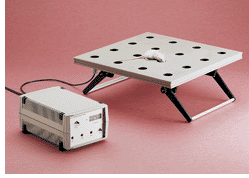
What does hole board test for?
activity and exploration
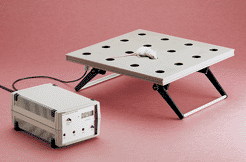
Easy way to quantify rodents Spontaneous Activity in their home cage environment.
Measurements include: Wheel turns, average speed, acceleration, total time in the wheel, ... all recorded with the period of occurrence.
Rodent activity wheel
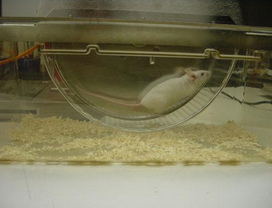
What does rodent activity wheel test for?
Sensory Motor (Voluntary Exercise)
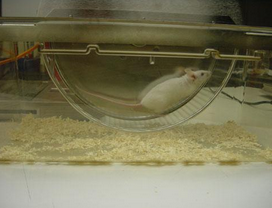
Mice run inside a wheel attached to the home cage
Wheel running follows daily rhythm that is quantitated over time by an automated data analysis
system
Differences in wheel running correlate with body
temperature and EEG activity
Pulse of light can be used to measure visual acuity - if
a light pulse does not reset the circadian activity rhythm in an animal housed in continuous darkness, they must be blind
circadian wheel running
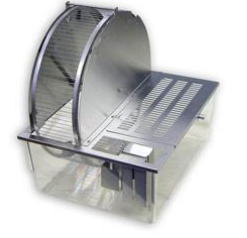
What does circadian wheel running test for/
daily rhythmicity
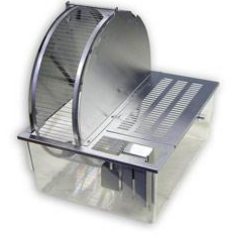
tests the ability of mice to maintain balance
Once the mouse falls from the the device, no beam is broken and the animal’s final run time is recorded.
Variables: Rod acceleration speed, Rod rotation of clockwise or counterclockwise Maximum rotation speed, Passive rotation documentation: defined as a mouse slipping but not falling off the rotating rod. Beams that go unbroken for fewer than 5 seconds signal the software to record run time on the rod after the period as “passive.”
Rotarod
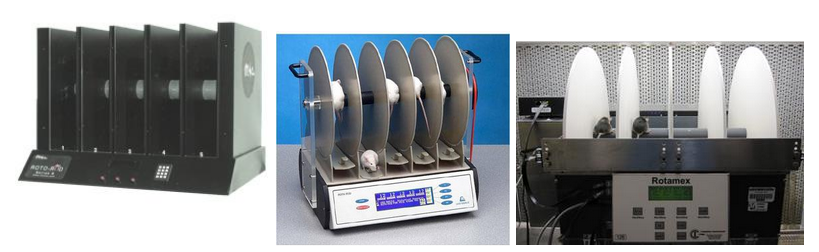
What does rotarod test for?
Sensory/Motor (Coordination and Equilibrium)
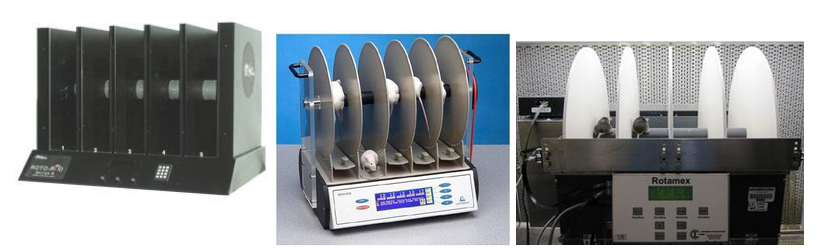
What defect results in performance deficits in rotarod?
cerebellar defect
Coordination & balance
Measures motor coordination and balance
Mice transverse square or circular beams of decreasing diameter to reach a safe box
Latency to traverse each beam and number of times feet slip off each beam are recorded
Or latency to fall
balance beam test
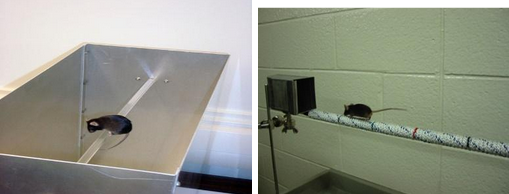
coordination and balance
Mouse is placed at the center of the pole held horizontally, and the pole is gradually lifted to a vertical position
Latency to fall is measured
Deficits in motor coordination cause the mouse to fall off usually before the pole reaches 45°
Vertical pole test
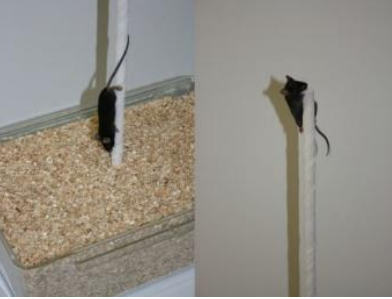
balance and grip strength (ie motor strength)
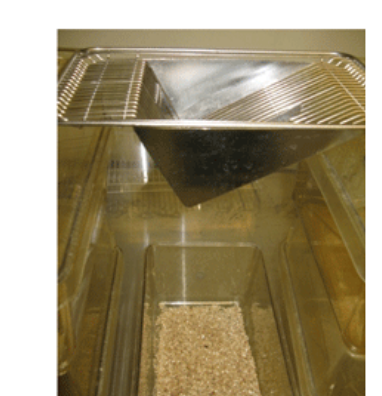
Mouse is placed on top of a wire lid, and then the lid is turned upside down
Latency to fall is measured, usually with a 60 sec standard cutoff
May be automated (mainly for grip strength) or non-automated
hanging wire
sensory motor test and exercise training
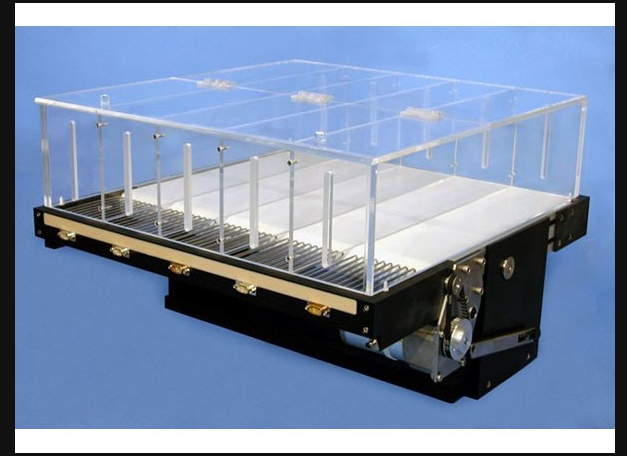
treadmill
Sensory Motor (Rotation After Lesioning)
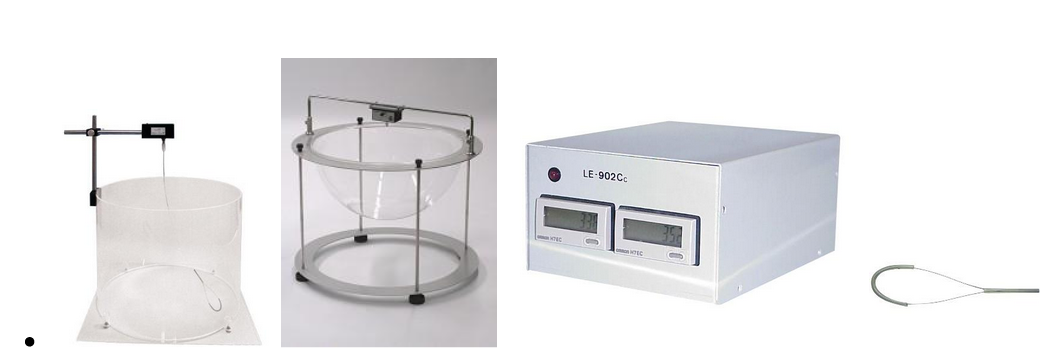
Rotational behavior has proved a popular technique for screening the behavioral effects of a wide variety of lesions, drugs, and other experimental manipulations on the brain of rodents.
subject wears an adjustable harness with a soft ring connected to the rotation sensor by a flexible tie. The subject is then placed into a transparent container (cylinder or bowl) with a lateral support for a vertical stand. A bi-directional rotation sensor provides a double (right and left turns) output with adjustable regulation of pulses/turns (between 4 and 36 pulses per complete turn). Parameters Measured: Number of partial and complete left and right turns. Transparent cylinder or bowl, mouse or rat harness, counter (single or double, double pictured)
rotameter
Seen in animals with unilateral lesions of the nigrostriatal dopaminergic pathway
With a rotameter the circling in a round chamber is highly biased towards the ___ side
lesioned side
Rotameter is often used in animal models of ____ disease with unilateral lesions in dopamniergic nigrostriatal pathway
parkingson’s disease
Quantifies ataxia and gait abnormalities
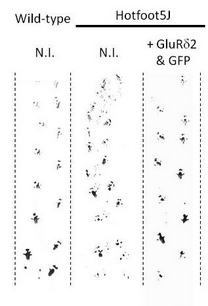
Feet are dipped in ink, and the mouse is allowed to walk across a tunnel, leaving footprints on white paper
Footprint pattern is analyzed - measure distance between strides, variability in stride length, variability around a linear axis, hindbase width, frontbase width, ability to walk in a straight line
Ataxic mice have high variable stride length and path
footprint pattern
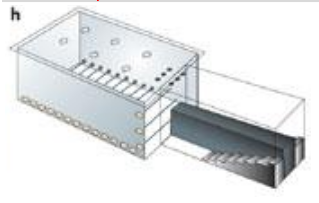
motor coordination and paw reaching
Measures the number of steps that a mouse can climb up to reach food pellet reinforcers
Used to separate locomotion from anxiety-like behavior seen with benzodiazepines and neuroactive steroids
staircase walking test
Emotional behavioral tests
emotional behavioral tests
is a biological reflex in response to a startle-eliciting stimulus. It can be used to evaluate the general health of the auditory system. In addition, it can be used to evaluate simple reflex learning via habituation.
startle response
allows the recording and the analysis of the signal generated by the animal movement through a high sensitivity Weight Transducer system. The analogical signal is transmitted to the software through the load cell unit for recording purposes and posterior analysis in terms of activity/immobility (fear conditioning) or startle response characterization (startle reflex).
startle and fear response
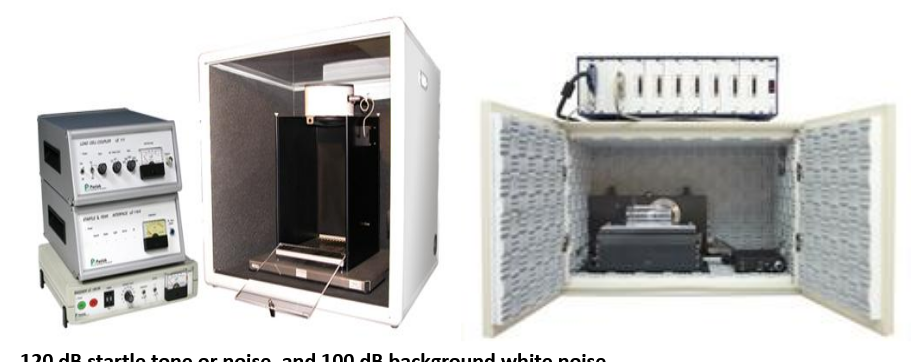
Parameters monitored in startle/fear test
Time of experiment at which each activity event has occurred (fear conditioning)
• Duration of each inactivity event (fear conditioning)
• Latency until the maximum amplitude of startle response (startle reflex)
• Duration of the startle response (startle reflex)
• Latency until the beginning of the startle response (startle reflex)
• Average of the startle response (startle reflex)
Sound of startle noise vs background white noise in startle and fear response
120dB and 100dB white noise
test evaluates the ability of the auditory system to gate incoming auditory information. A low intensity “prepulse” precedes a startle-eliciting noise burst. Under normal neurological/physiology conditions, presentation of the prepulse reduces the startle response-elicited by the startle eliciting stimulus. Abnormalities are exhibited when the prepulse fails to reduce the startle response. This paradigm is often used to evaluate the general health of the auditory system as well as psychiatric conditions such as schizophrenia.
Prepulse Inhibition of the startle response (PPI)
behavioral paradigm that can be used to evaluate learning and memory through Pavlovian fear conditioning. When an initially neutral stimulus such as a white noise, light, or tone is repeatedly paired with an aversive unconditioned stimulus (US) such as a shock, the neutral stimulus becomes a conditioned stimulus (CS) that predicts the onset of the shock US. During testing, startle-eliciting noise bursts are presented alone and preceded by the CS. Reflects an elevation of the startle response when the startle stimulus is preceded by the CS compared to the startle response elicited by presentations of the startle stimulus alone
Fear potentiated startle
Can bury a piece of food and measure latency to located the buried food
Fast mouse overnight and place in a new clean cage with litter or sand; place a treat 1-4cm below the surface
Latency to locate the same food placed on the surface is a control for visual recognition of an olfactory stimulus
Buried food test
Can infuse ____ into the nasal cavities of a normal mouse or perform a surgical olfactory bulbectomy
zinc sulfate
Odorant is painted onto the side of the test cage or soaked into a cotton ball
Cumulative time spent sniffing the odorant is quantitated
Cumulative time spent sniffing a neutral location is a control comparison
novel odor
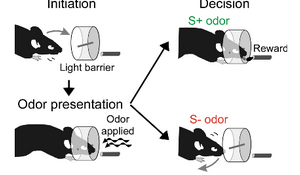
Distinct odors are delivered in a jet of forced air through ports in a radial maze
Animal pokes its nose through the odor outlet tube to receive a food award
Used to measure sensitivity to smells and olfactory learning
odor discrimination apparatus
Mouse is held by its tail and gradually lowered to a surface
Mouse should extend its paws to make a “soft landing” onto the surface
Blind mouse will not see the surface and only extend its paws when its whiskers touch
Visual placing test
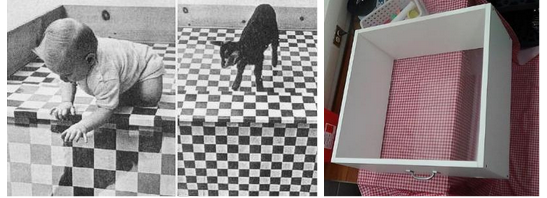
Measures gross visual ability and depth perception
Evaluates the mouse’s ability to see a drop-off at the edge of a horizontal surface
A sheet of Plexiglass is placed over a horizontal surface extending over a vertical drop off
If an animal is blind, it will not see the visual illusion of the drop off and will continue forward without stopping
May be confounded by whiskers and other sensory information
amount of time spent in the portion over the empty space is recorded. A visual and neurocognitively appropriate mouse won’t go across.
visual cliff test
Mice are trained to press a lever in the presence of a small light on the wall of the cage to obtain a food reward
Sensitive visual discrimination tasks require the rodent to make a choice between two complex visual stimuli
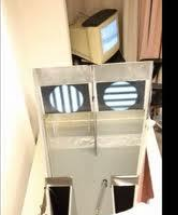
Measures gross hearing ability and auditory threshold
A sudden loud noise will cause the subject to flinch (reflex)
In mice, measure whole body flinch
Includes Preyer test - flinch response to the sound of a clicker
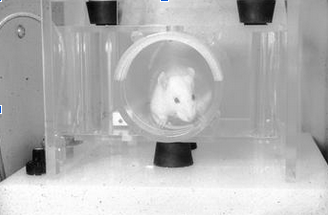
In automated systems, mouse is placed in a cylinder and subjected to sounds of various volume
Eventually the volume will get loud enough that even a deaf mouse will detect the vibrations rather than the sound
Acoustic startle threshold = minimum decibel level that elicits a flinch
acoustic startle test
Most sensitive measure of auditory threshold in mice
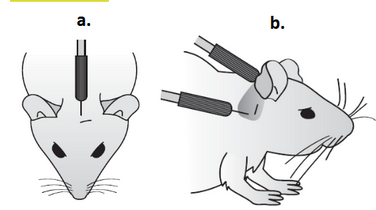
Anesthetized mice are acutely implanted with stainless steel electrodes SQ below the pinna, and click stimuli tones are presented through earphones over both ears
System calculates the neurophysiological response and presents the data as a wave form for each tone
Auditory-evoked brainstem response (ABR)
lowest stimulus intensity at which a normalized ABR wave can be identified
auditory threshold
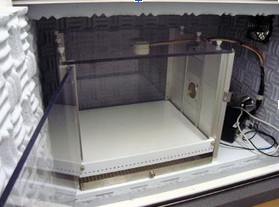
measures susceptibility to seizures induced by audio stimulation during development. An alarm is turned on in the soundproof testing chamber and the latency to begin seizing is measured
audiogenic seizure test
Measures ability to detect tastes
Different taste solution is placed in each of two identical water bottles in a home cage or different foods a placed in different hoppers
Measure the volume of each solution consumed over time
taste choice test
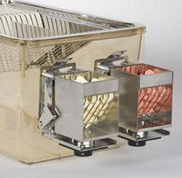
Tactile version of the acoustic startle test
Puff of compressed air is directed at the animal’s body
touch flinch response test
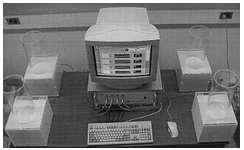
Spinal reflex where mouse moves its tail out of the path of a focused light beam
Animal is placed on a platform and its tail extended in a straight line along a narrow groove where the beam of light will concentrate
Latency to move the tail away from the light beam is measured
Cutoff time of 10-30sec is generally used
tail flick test
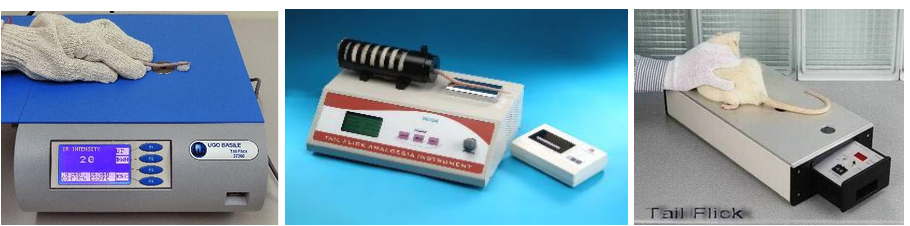
Similar to tail flick test
Focused beam of light is directed to the hindpaw (instead of tail)
Latency to withdraw paw is measured
Quantifying changes in thermal pain indicative of hypersensitivity on one side of the body
A pilot light (∼ 5% maximum intensity) helps accurately position the stimulus below the appropriate hindpaw
paw-withdrawal test allows the independent testing of both sides of the body, affording an internal control (i.e., ipsilateral vs. contralateral paw), increasing power, and reducing the number of animals required for a given experiment
hargreaves test
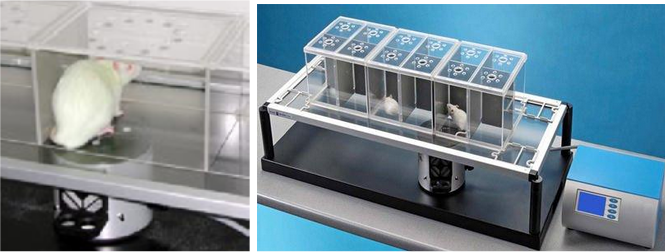
Measures latency to withdraw tail when immersed in a beaker of water maintained at 52.5°C
hot water tail flick
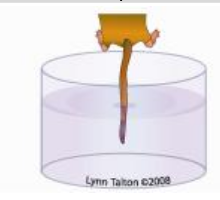
Measures latency to withdraw tail when immersed in a beaker of ice water
cold water tail flick
Measures a reflex that requires circuitry in the brain as well as spinal cord
Mouse is placed in a cylinder on a hot plate
Latency to lick a rear paw (or jumping up and down and vocalizing) is indicative of discomfort
Cutoff time of 30-60 sec is generally used
hot plate test
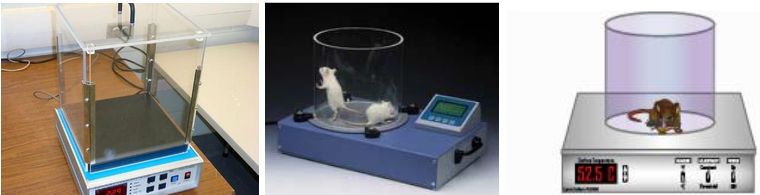
can be complemented by a software allowing for temperature "ramps" and “loops”, predefined by the user. This feature is mainly used for studies with telemetry implants
Cold hot plate analgesia meter
Much less reliable than thermal tests, but arguably far more important, since mechanical hypersensitivity (unlike thermal hypersensitivity) is a major clinical problem.
mechanical assays
In this test a constant, suprathreshold pressure stimulus is applied to the tail.
The animal is briefly restrained and a metal artery or binder clip is applied to the tail near its base.
The test animal is then immediately released and the latency to lick, bite, grab, or bring the nose to within 1 cm of the clip is recorded.
assay is extremely sensitive to repeated testing, so only one measurement per animal may be obtained.
the exact angle and position at which the clip is applied may vary across test subjects.
Finally, the test is subject to confounding by motor ataxia, and it may be difficult to dissociate whether a target drug has affected an animal’s pain sensitivity, or simply its physical ability to make goal-directed movements.
tail clip test
Set of very fine gauge calibrated metal wires
Withdrawal threshold to mechanical stimulation is measured
Animal stands on an elevated wire mesh platform, and inserted from below to poke the undersurface of the hindpaw
At threshold, the mouse will flick its paw away from the hair and usually lick the paw
Mechanical withdrawal threshold = minimum gauge wire stimulus that elicits withdrawal reactions in two out of three consecutive trials
Von frey hairs
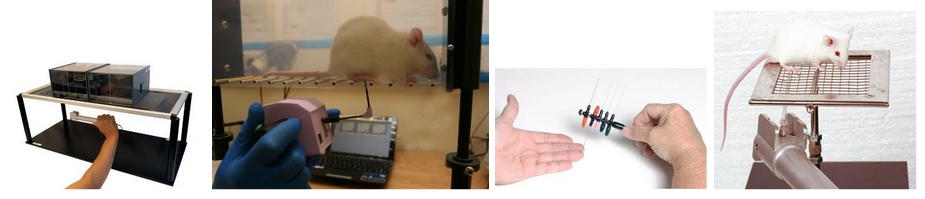
requires the application of increasing pressure on the paw between a flat surface and a blunt pointer.
one paw inflamed by an injection, and one normal paw, to evaluate drugs for analgesic action.
The device exerts a steadily increasing force (16 grams per second) on the rat paw until the animal makes a stereotyped flinch response.
*ONLY RELEVANT IN RATS, NOT MICE!!!
rat paw pressure AKA Randall Selitto Test
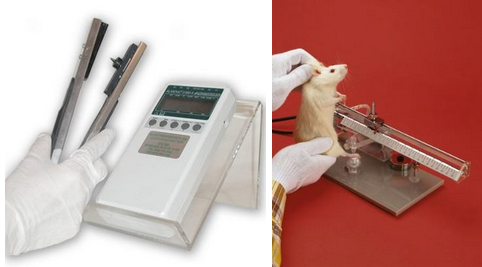
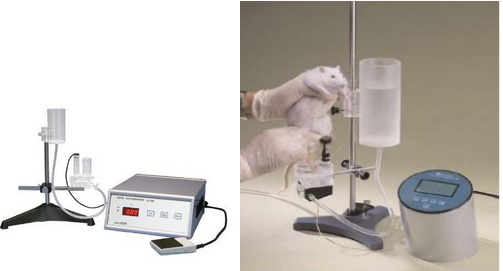
for evaluating paw volume during inflammation in rodents
measurement of small volume changes
screen potential anti-inflammatory or anti-edema properties of pharmacological substances.
water displacement produced by the immersion of the animal paw in the measuring tube is reflected into the second tube
volume displacement measured (0.01 ml resolution).
Plethysmometer
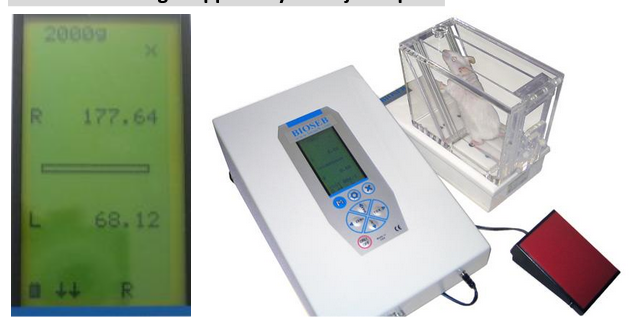
unsurpassed method for assessing spontaneous pain in model w/ inflammation or nerve injury in one hind paw (neuropathy, carrageenan, incision).
studies allows assessment of only a pain sensitivity level, not a spontaneous pain level, in the absence of experimental nociceptive stimuli.
In the incapacitance test, the animal is located in a holder specially designed to maintain the animal comfortably positioned on two separated sensor plates.
enables then to quantify the spontaneous postural changes reflecting spontaneous pain by independently measuring the weight that the animal applies each hind paw on two separate sensors.
In the absence of hind paw injury, rats applied equal weight on both hind paws, indicating a postural equilibrium.
After unilateral hind paw tissue injury, a change in the weight distribution on the sensor can be detected, with a lower weight applied by the injured paws
incapacitance test
Model of tonic inflammatory pain associated with tissue damage.
noxious chemical injected into a hindpaw
Phase 1 = 1st 10 minutes following injection - represents acute burst of activity from pain fibers
Phase 2 = b/w 20 min to 1 hr following injection - represents responses to tissue damage, including inflammatory hyperalgesia
Behaviors are generally scored for 40–90 minutes post injection, and occur in a biphasic temporal pattern
with an “early” or “acute” phase of licking/biting (5–10 minutes), followed by a quiescent period (10–20 minutes)
“late” or “tonic” phase of licking/biting behaviors occurring in bouts of a few minutes each.
Formalin test
What test - In the rat, other behaviors are commonly seen, including hindpaw lifting and flinching, but licking/biting is all that needs to be scored in the mouse.
formalin
visceral pain- although poorly suited as such because it involves the muscle wall of the abdomen as well
bradykinin, magnesium sulfate, phenylquinone, hyper- or hypotonic saline, and adenosine triphosphate (ATP).
Historically, acetic acid has been the most commonly used irritant.
Animals are scored for the presence or absence of “writhing”—a stereotypic behavior
lengthwise stretching of the torso with concomitant concave arching of the back and extension of the hind limbs—for 30–40 minutes post injection.
criticized for its lack of specificity, as nonanalgesic drugs have been shown to effectively reduce writhing behavior;
important - unique sensitivity to weak analgesics
The test has also been criticized for its relatively high proportion of nonresponders, although this proportion can be reduced by using higher doses of acetic acid.
abdominal constriction test
(2.5μg) injection into the skin produces apparent spontaneous pain behaviors (licking, biting) which last for 5–10 minutes, followed by a hypersensitivity lasting for a few hours.
acts directly at thetransient receptor potential, family V, member 1 (TRPV1) channel, an important transducer
capsaicin
licking/biting behaviors followed by hypersensitivity.
honey bee venom
repeated ___ into muscle, cyclophosphamide cystitis of the bladder and colorectal distention with or without irritant injection
hypertonic saline injections
lasting more than a few hours - ongoing inflammation or nerve damage.
chronic pain
arthritis, chronic inflammatory pain models
Clinically, arthritis is characterized by inflammation of the joint(s), and features spontaneous pain and hypersensitivity to evoking stimuli
inflammatory models
systemic administration of adjuvant -- polyarthritis with severe side effects
not reflective of arthritis pathology in humans
replaced by various models of unilateral monoarthritis - Administration (directly into a peripheral joint)
adjuvent induced arthritis
model of rheumatoid and osteoarthritis in the rodent
injected directly into the hindpaw induce inflammation
induces changes in thermal pain sensitivity
A correlation between inflammation and hypersensitivity is lacking in this model, although this is not necessarily unexpected, as there is a very poor correlation between joint degeneration/inflammation and pain in human arthritis
complete Freund’s adjuvant (CFA)
What is the difference between CFA and incomplete Freund’s adjuvent?
incomplete does not have mycobacterium
Other forms of chronic pain that is chemically induced - ypically injected into the hindpaw rather than intra-articularly (so they can do von frey testing)
very little evidence that these compounds produce spontaneous pain, but they all produce robust hypersensitivity and edema over a time course of several hours to days.
carrageenan, endotoxin, mustard oil, zymosan, and kaolin
most neuropathic pain syndromes result from ____
partial nerve injury, not complete transections
common is that only some of the afferent information from the hindpaw (although some of these models have been adapted to study orofacial pain) has been disrupted.
This has allowed the very interesting study of the relative roles of the damaged fibers (i.e., loss of input) and the undamaged fibers (i.e., plasticity) in producing the gain-of-function that is pain and hypersensitivity.
All these models produce at least behavioral evidence of mechanical hypersensitivity using punctate stimuli (i.e., von Frey filaments), +/- thermal (hot and cold) hypersensitivity
little effort has been made to accurately assess spontaneous pain in animals
partial deafferentation model
exposing the sciatic nerve at mid-thigh level, and tying loose ligatures around the sciatic nerve.
The ligatures are not tied tight enough to transect the nerve, but instead produce local inflammation that effectively strangles some proportion of the afferent fibers.
In rats, the model reliably induces mechanical and thermal hypersensitivity
less reliable changes in pain behavior in mice
lifting of the hind paw evidence of spontaneous pain – behavior just as easily be due to the animal attempting to avoid mechanical hypersensitivity associated with placing weight on the paw (e.g., when walking).
Licking behavioris probably more likely related to spontaneous pain in thehindpaw but rarely observed
chronic constriction injury (CCI)
sciatic nerve exposed at high thigh level and one-third to one-half of the diameter of the nerve is isolated and tightly ligated, leaving the remainder of the nerve intact.
This manipulation results in rapid onset (1 day), sustained (7–10 weeks) mechanical and thermal hypersensitivity, and apparent spontaneous pain characterized by guarding, and sudden lifting, licking, and biting of the ipsilateral paw.
was the first of these models to be specifically adapted to the mouse
considerable variability due to the inability to standardize the number of injured fibers
model produces highly reproducible behavioral changes and is less technically difficult
Partial sciatic nerve ligation (PSL)
tightly ligating the L5 and L6 spinal nerves, proximal to the dorsal root ganglion, leaving the L4 spinal nerve subserving the hind paw intact.
quick onset of both mechanical and thermal hypersensitivity (evident 4–7 days post surgery)
causes sudden bouts of ipsilateral paw licking and toe pulling,- spontaneous pain.
ability to specifically injure separate spinal nerves offer an advantage
procedure is considerably more invasive and more technically difficult.
spinal nerve ligation (SNL)
A tight ligature is tied around the common peroneal and tibial branches of the sciatic nerve, leaving the sural branch intact
Robust and sustained (up to 6 months) mechanical hypersensitivity and hypersensitivity to cold (but not heat) stimuli is observed within 1 week of surgery
“sudden sustained spontaneous withdrawal” - spontaneous pain.
spared nerve injury (SNI)
neuropathic symptoms are generally produced using doses lower than those required to cause axonal degeneration in peripheral nerves via their actions on ___.
microtubules
produce neuropathic pain symptoms in the rat In mice, animals are injected IP.
initial small dose of ___, followed by a significantly higher dose administered twice weekly for 6 weeks. Four weeks after the initial injection 🡪increased thermal pain sensitivity on the tail-flick test
vincristine
used in mice (as in rats) 🡪 mechanical and cold hypersensitivity (but no heat hypersensitivity).
paclitaxel (taxol)
Sex Differences: In human F>>>M w/ regard to sensitivity. Difficult or easy in rodents to consistently find these differences?
difficult
ge Differences Important in human, data not available in rodents *vast majority of current pain studies in mice use ___ of age
young-adult subjects, between 6 weeks and 4 months
Circadian Effects: Decreased sensitivity to thermal pain in rodents’ ___phase in the clear majority of existing studies
dark (active)
tonic assays like the formalin and abdominal constriction test, the mere presence of a ____ is sufficient to greatly inhibit pain-related behaviors
human being in the testing room
Within-cage order of testing significantly affected thermal pain sensitivity, with ___ mice showing decreased withdrawal latencies.
later-tested
We found that mice tested on the formalin or abdominal constriction test, visually observing their conspecifics also in pain, displayed increased pain behaviors. only seen when mice were observing their ____.
cagemates
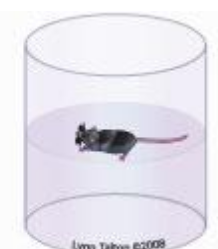
Forced swim test. Depression. The test is most frequently used to examine the "learned helplessness" response common in animal models of depression.
Porsolt/learned helplessness
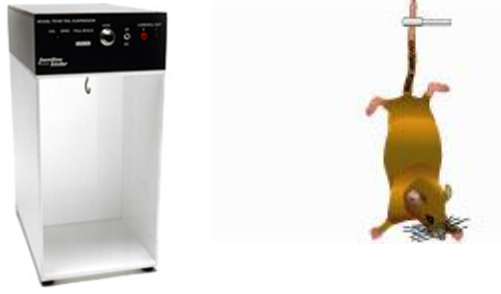
Depression The subject is suspended by the tail for a set interval the percentage of time the subject spends still versus moving is examined for evidence of the "learned helplessness" response
tail suspension
spatial learning and memory
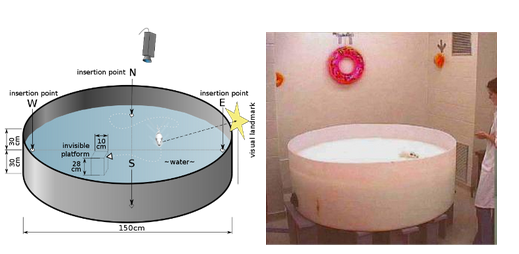
Immersion in water at or a few degrees above room temperature to motivate animals to swim to a hidden or visible platform. Because water has potential to evoke stress, time animal is in the water should be minimized.
Should drying modalities afterwards.
Requires animals to visualize extramaze visual cues.
Reduced visual abilities can affect this test
Morris water maze
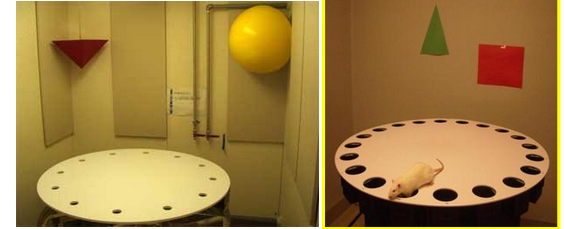
animal is placed on a large platform in a well-illuminated room. Tendency to avoid bright light exposure.
The behavior is finding the hole that lead to the darkened escape tunnel located beneath the platform.
Some research to suggest this is less stressful for rats than food/water restriction (and hence this test may NOT be the best choice for rats!).
For mice +/- add of an aversive stimuli (fan, bright light).
barnes circular platform maze
Unlike the T maze and radial maze, ____ does not require food restriction and is less stressful than the Morris water maze
Barnes maze
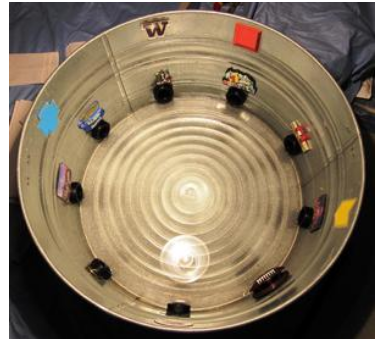
Pair light aversion and swimming aversion in this test
mice are introduced to a 30 inch galvanized, circular tub with nine holes cut in the side at regular intervals. Eight of the holes are decoys which lead to dead ends. One of the holes leads to a dark, escape “safe box” hosting a comforting heating pad.
tub is filled with ~ 1 inch of water and a bright light is positioned directly over the entire apparatus.
Mouse introduced into center of maze containing unique visual images and objects along its side functioning as spatial cues for the animal.
The mouse is then required to find the escape route from the enclosure.
Three metrics are used in this task: latency to escape, number of errors, and distance traveled to reach the escape hole. Once the animal finds the escape route
four-day training period before a test on the fifth day.
search period is 3 minutes, after which the animal is guided gently to the correct escape route by hand.
Radial water tread maze (RWT)
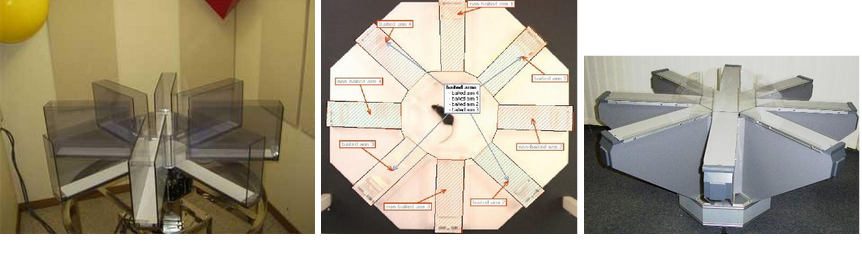
Uses food and water restriction to get mouse to explore each arm of maze
eight equidistantly spaced arms, each about 4 feet long, and all radiating from a small circular central platform, each arm there is a food site, (not visible from platform)
assesses reference memory and working memory.
Reference memory is assessed when the rats only visit the arms of the maze which contains the reward.
The failure to do so will result in reference memory error.
Working memory is assessed when the rats enter each arm a single time.
Re-entry into the arms would result in a working memory error.
after checking for food at the end of each arm, the rat is always forced to return to the central platform before making another choice.
Radial arm maze
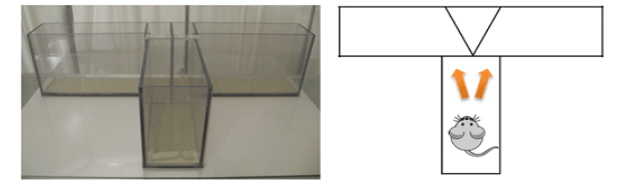
behavioral test for measuring exploratory behavior in animals, especially rodent models for CNS disorders.
Subjects are first placed in the start arm
Upon leaving the start arm, subjects choose between entering either the left or the right goal arm.
With repeated trials, the animals should show less of a tendency to enter a previously visited arm.
This test is used to quantify cognitive deficits in transgenic strains of mice and evaluate novel chemical entities for their effects on cognition.
T maze
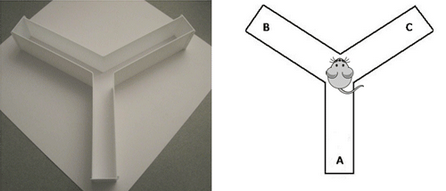
start in center
Mice are expected to remember which arms they just visited
ie they should go from A 🡪 B 🡪 C rather than A 🡪 B 🡪 A
measured as “spontaneous alternation”
evaluates working (short-term) memory
Y maze
s a test of learning and memory.
Mice are exposed to specific objects in an enclosure over a number of training trials.
During a test trial, one familiar object is removed and replaced with a novel object.
The amount of time spent exploring the novel object is recorded
A normal animal should spend more time examining the novel object
novel object recognition
Food restricted animals are conditioned to a odor and then placed in an apparatus where they have to chose either the conditioned odor or a novel odor
olfactory conditioning test
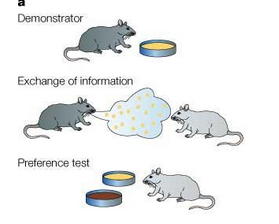
A “demonstrator” is placed in a test cage and given chow with a novel flavor like chocolate; it is then placed back with its cagemate where the “observer” sniffs the demonstrator
The “observer” is placed into a test cage and given the choice between the previously chocolate flavored chow and a new chow
Observers tend to pick the chow the demonstrator previously consumed
Hippocampal lesions severely impair this test
social transmission of food preference
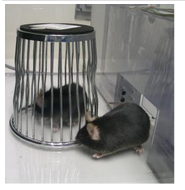
Focuses on degree of familiarity between two animals
A test rat is placed in a cage containing two chambers: one with a familiar conspecific and one with a novel conspecific
Time spent by the test rat investigating each conspecific is recorded - normal rats will spend more time with the novel rat
Employs olfaction and other sensory modalitie
social recognition
mouse refrains from entering the chamber in which the footshock was previously applied
passive avoidance
requires the mouse to exit from the chamber where the footshock was delivered
active avoidance
learning and memory
classical Pavlovian conditioning
The passive avoidance chamber is partitioned into two sections, one light and one dark.
As the mouse moves into the dark section a mild foot shock is delivered through the floor of the chamber.
One day following training, mice are again placed into the illuminated portion of the chamber, and the time required for the mouse to move into the dark section is recorded.
passive avoidance