Mechatronic design of a 3 DOF long stroke motion stage
 Call Kai
 Learn
Learn Practice Test
 Spaced Repetition
 Match
Match Flashcards
 Knowt Play
1/18

There's no tags or description
Looks like no tags are added yet.
Name | Mastery | Learn | Test | Matching | Spaced | Call with Kai | Chat |
|---|
No analytics yet
Send a link to your students to track their progress
19 Terms
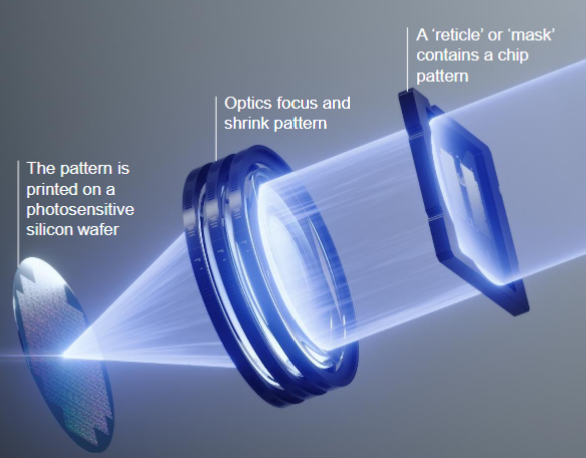
particles on the reticle - repeat for each die on the wafer
particles on the wafer - can kill the action of dies
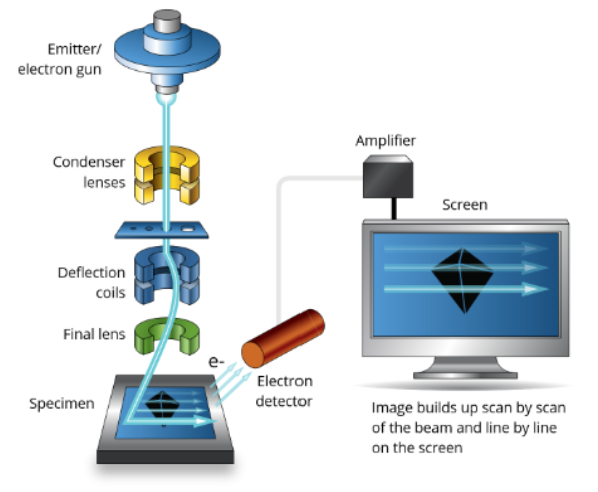
current state-of-the-art
+high resolution inspection and metrology capabilities
-slow, limited to small areas of interest
challenges of SEM
high resolution → smaller field of view
high vacuum environment
very sensitive to variations in external magnetic field
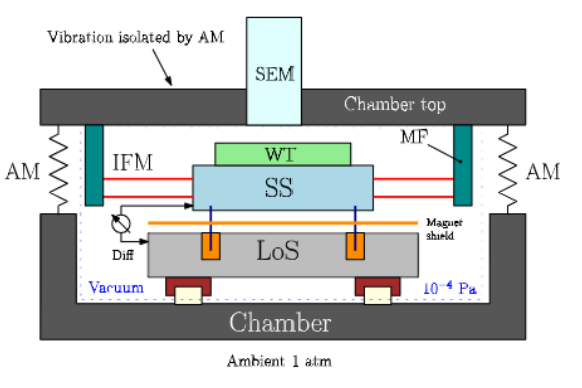
LoS - SS concept
inside the vacuum chamber
Lorentz actuator in SS
linear roller guides in LoS
active cooling with water
magnetic fields
→ costs
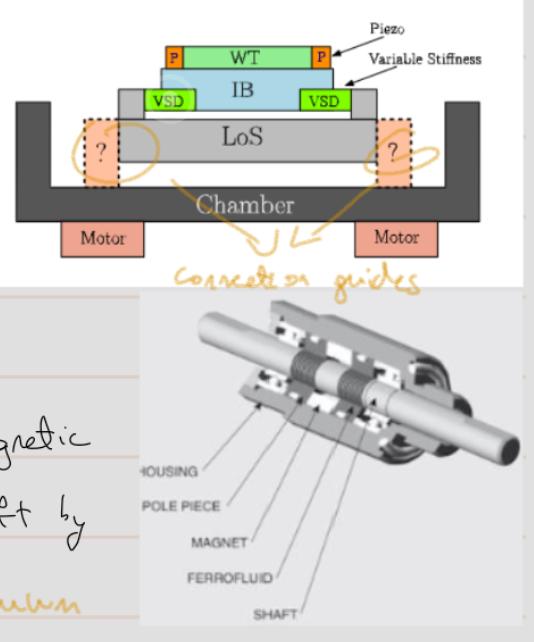
LoS outside chamber with piezoelectric short stroke
+magnetic fields reduced, motors in ambient, reduction of cooling hoses, motor cables in vacuum
-position dependent behvaior, only rotary vacuum moton feedthrough
→ ferrofluid seal - uses a magnetic fluid placed around a rotating shaft by a ring of permanent magnets = vacuum (has friction)
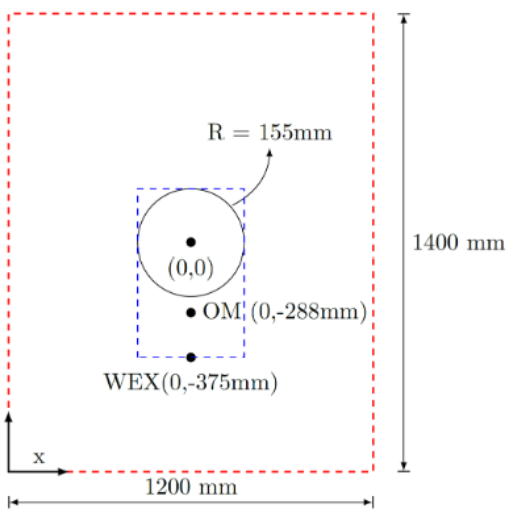
requirements of the new system
reach wafer position
accurately position it under SEM
fit inside vacuum chamber
LoS actuation outside of the chamber
high voltage and magnetically compatible materias
bigger lifetime and sevice intervals
not higher costs
high-speed dynamically balanced robotic manipulator
favorable dynamics due to symmetry
only rotational bearings
vaccum compatible components
dynamic balance using passive counterweights
workspace matches purpose
→ dual purpose: actuatos in-plane DoF (x, y, Rz) and constraints out-of-plane DoF (z, Rx, Ry)
kinematics of the high-speed dynamically balanced robotic manipulator
Uses a Jacobian matrix (position dependent) for actuators:
velocity
relative changes in position
torque (force)
singularities
In a singularity, Jacobian matrix loses rank
0=singularity
1=equal in all directions
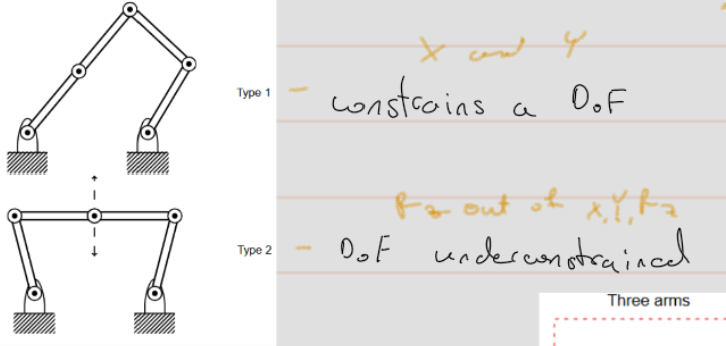
three arms vs four arms
fourth arms add out-of-plane stiffness, creates symmetry, less out-of-plane rotations
eliminates singularities with LoS inside the chamber
good dynamics
less position dependent (no worst case)
kinematic design (first order modelling)
what dimensions? where to place motors? can we reach all positions? does it fit inside the chamber?
parameters: vertical displacement due to gravity, torque index, accuracy index, relative angle between arms
vary link length and actuator placement
high eigenfrequency = good overall results
→ only configurations that fit inside chamber and cover workspace
→ minimal position dependent vertical deflections due to gravity
→ minimal position dependent eigenfrequency
→ minimal position dependent torque
design considerations in vacuum and SEM environments
outgassing
virtual leaks
chamber deformation
ferromagnetic properties
bearings design
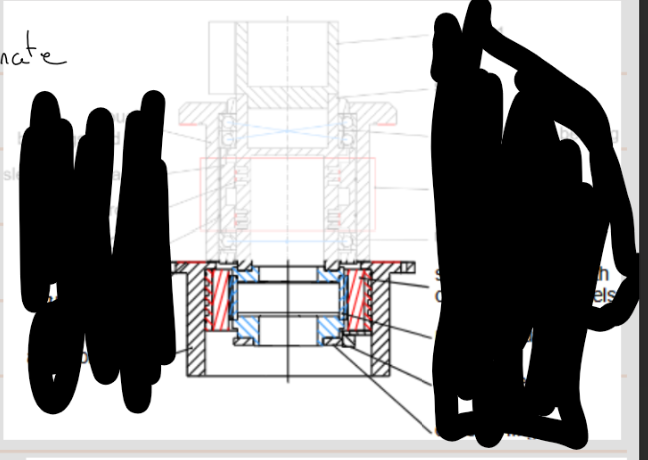
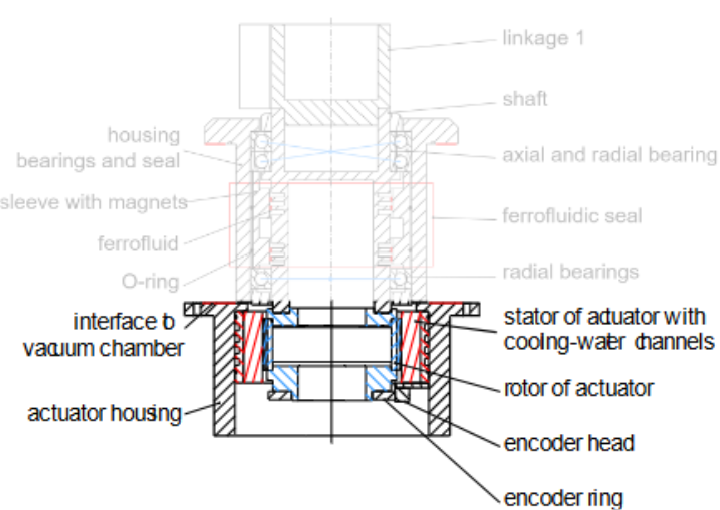
carrier-arm connection
analogy to giving a hand
carrier compliant in torsion
mismatch in constraints due to angle between Ry, car and Ry, arm
linkage 2
compliant in torsion to avoid overconstraint
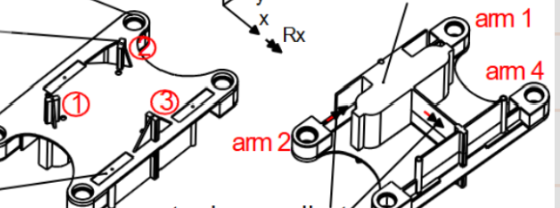
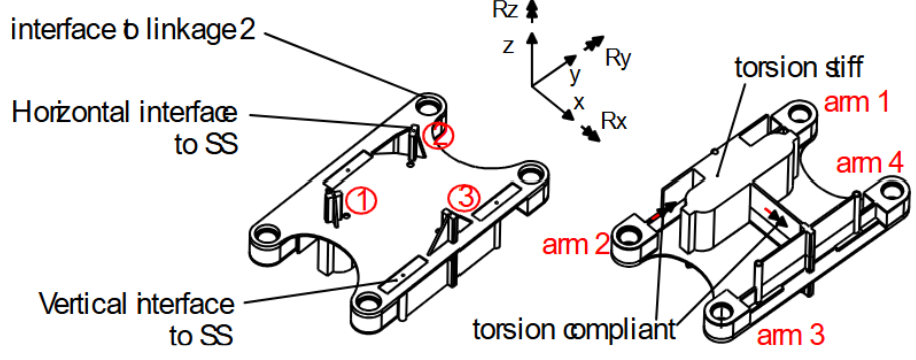
tolerances
on bearing and components lead to Ry rotations, resulting in z
sensitivity matrix - to calculate required vertical actuator displacement
dynamic balancing
trade-off torque/mass/size
divide mass carrier over 4 arms
eigenfrequency decreases due to addition of required balance mass