Lesson 2: Organizational Structure
 Call Kai
 Learn
Learn Practice Test
 Spaced Repetition
 Match
Match Flashcards
 Knowt Play
1/18

There's no tags or description
Looks like no tags are added yet.
Name | Mastery | Learn | Test | Matching | Spaced | Call with Kai | Chat |
|---|
No analytics yet
Send a link to your students to track their progress
19 Terms
Basic Definition
Formal system of 1) Tasks & 2) Forming Relationships
A pillar of Organizational Architecture
3 Tasks:
Grouping Tasks into Individual Jobs
Grouping Jobs to specific functions
Allocating authority over functions and divisions
Extremely resource intensive to change
6 Key Elements
Work Specialization
Departmentalization
Span of Control
Chain of command
Centralization and Decentralization
Formalization
Work Specialization
Division of Labor
Degree to which tasks are subdivided into specialized jobs
High Specialization = Efficiency that can lead to boredom
Formalization
Degree of Standardization for Tasks & Roles
Higher = Stronger Bureaucracy
Departmentalization Definition
How the different Units of a company are structured
Functional Structure Definition (Departmentalization)
All Activities grouped by function/department (Marketing)
Best Environment:
Stable, Few Competitors, Simple Product/Services, Non Innovative
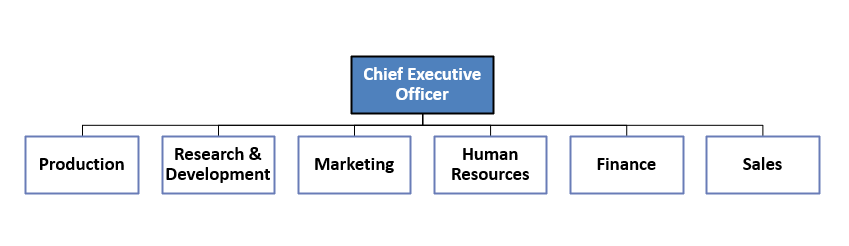
Pro’s Functional Structure
Pros:
Economies of scale + Specialization
Strong communication, coordination, control inside the function
Managers can monitor, evaluate and teach effectively
Cons Functional Structure
Cons:
Cross Function communication is difficult (Sometimes they don’t even work together and compete for resources)!
Workers more focused on function than their Organizational Goals
Adaptation takes a long time
Divisional Structure
Company has Separate Business Units (Divisions based on region, product etc.) → Each contain functions (Marketing/HR etc.)
Works for: Innovative, Large or International Organizations
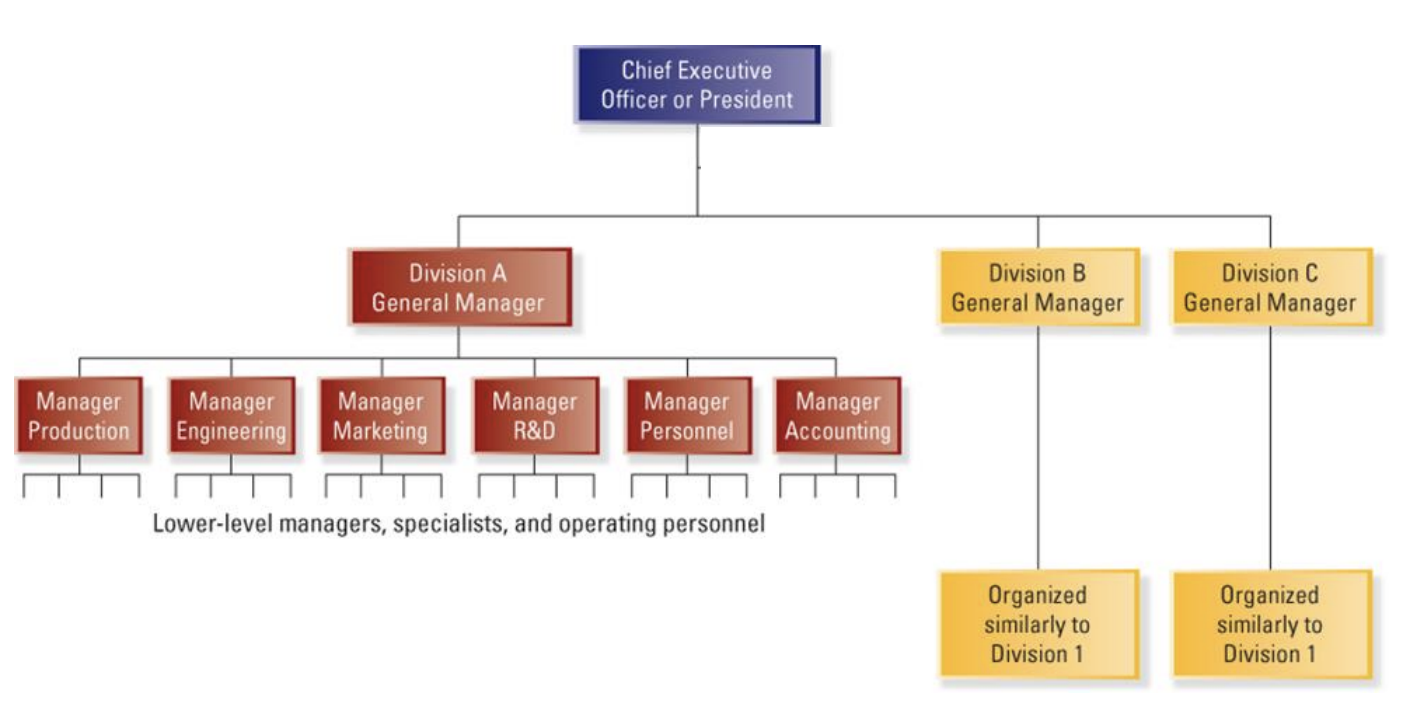
Divisional Structure Pro’s and Cons
Pros:
Flexibility: Quick reactions to external changes
Easy resource sharing across functions
Cons:
Expensive
Difficult to communicate across Divisions
Causes: Duplication of Labor
Divisions may follow own interests
Matrix Structure
People grouped by Function and Product (Work in Marketing Function and Product A)
Pro’s: Flexible Structure, Efficient Resource Use, Responds well to change
Cons: Complex Working Relationships (Two Bosses), Tough/Expensive Coordination
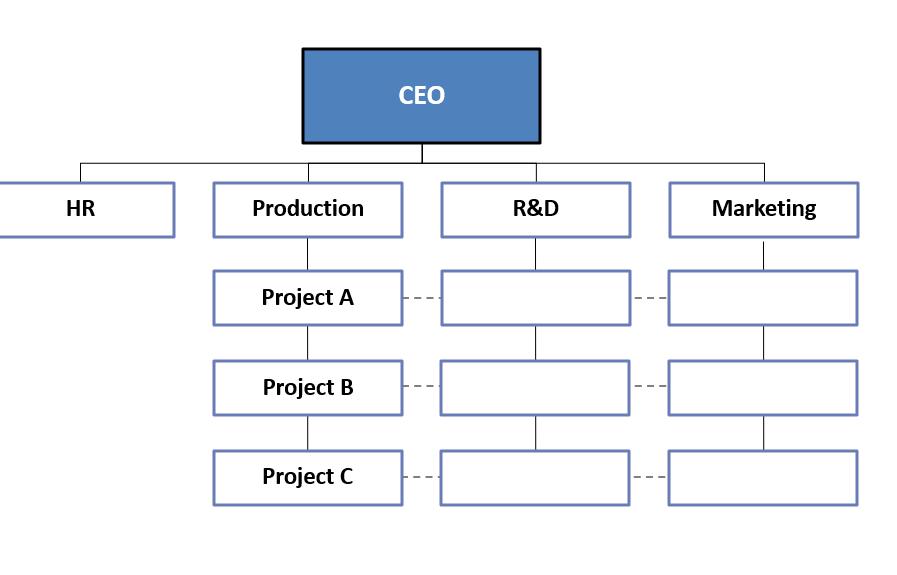
Matrix Apple + Microsoft Restructure
Apple:
Organized like a startup (Centralized CEO surrounded by positions)
Structured after Products Functions (Matrix)
Fosters Innovation
Microsoft:
Complete Restructuring 2000-11 (One Microsoft)
Divisional → Functional
Before: Divisions in Conflict and Compete for resources: Lack Collaboration, Innovation (Silo Thinking: Every Department focuses on own goals)
(Products aren’t cross compatible)
After: Centralized Functions (HR, Marketing) + 4 Decentralized Engineering groups (Cloud, OS etc.)
Decentralization better for innovative tech
Opportunity for Integrated Product Offering but risk of Resistance to change, Lack of accountability
Span of Control
How many workers does a manager Manage
Every additional worker managed causes exponentially more relationships
Small Span:
Costly but good for complex/unique tasks (Innovation)
Lots of Subordinate/Manager Interactions
Large Span:
Routine/Similar tasks → No Guidance Needed
Chain of Command
How many level of hierarchy’s are there
Flat Structure: Few levels, Wide span of Control
Quick Communication (Easy to talk to the top levels), Managers overworked
Tall Structure: Clear Responsibilities and Hierarchies
Specialization Advantages (High Division of Labor)
Time consuming communication (Can’t reach top)+ Too much Bureaucracy+ Managers don’t take responsibility
Decentralization, when is it good + Pros and Cons
Subunits make decisions (Often in Flat Organizations)
Good in Dynamic Environments/International Corporations, Easy Inter-Unit Communication, Autonomy Motivates
Subunits Pursue own Goals, Don’t communicate with other Subunits/HQ
Centralization, what are the pitfalls, where does it work well?
Concentrated Decision Making at top
Managers get strong control and can make uniform decisions
However this can lead to power abuse, Inflexibility, Management Bottlenecks and Slow responses
Works Well: Resource Intensive, Stable, Consistent Environments
The Best Corporations have Both!
Autonomy Motivates, Flexibility → Decentralized
Control, Profit, Learning, Profit from Synergy Effects → Centralized
Example (Subsidiaries report to HQ)
John Deeres Reorganization: Old vs New and Smart Industrial
Old Matrix:
Based off of Regions/Products, Small Span, Many Levels
New Matrix:
Production Systems/Functions, Larger Span, Few Levels
Faster Decisions, Flatter Hierarchy, Better Alignment across functions
Risk: Resistance, Overworked Managers, Lack of regional expertise
Smart Industrial:
Initiative: How can machines help with every step of farming → Tech Stack (Apps, Software Integration) → Standardized chain of vehicles and software for entire farming cycle
Volkswagen Decentralization
Post Dieselgate, Brands take responsibility for each region (Audi→ Asia/Pac)
Decisions are made efficiently, More quality in the markets, Limits centralized power abuse