Genes and Inheritance
 View linked note
 Call Kai
 Learn
Learn Practice Test
 Spaced Repetition
 Match
Match Flashcards
 Knowt Play
1/24

Earn XP
Description and Tags
These flashcards cover basic genetic concepts, including definitions of mutation, homozygous, alleles, lactate persistence, as well as dominant and recessive traits.
Name | Mastery | Learn | Test | Matching | Spaced | Call with Kai | Chat |
|---|
No analytics yet
Send a link to your students to track their progress
25 Terms
Mutation
A change in the DNA sequence of an organism.
Homozygous
An individual with two identical alleles for a particular gene.
Allele
A variant form of a gene that may produce distinguishable characteristics in the phenotype.
Eukaryote
An organism whose cells contain a nucleus and have two kinds of DNA
Chromosome
A thread-like structure of nucleic acids and protein found in the nucleus of most living cells, carrying genetic information in the form of genes. Contains DNA.
Homologous Chromosomes
A pair of chromosomes (one from each parent)
Diploid
A cell or organism that has two sets of chromosomes, one from each parent.
Haploid
A cell or organism that has a single set of unpaired chromosomes.
Gametes
Reproductive cells (sperm or egg) that are haploid, meaning they contain only one set of chromosomes.
Somatic Cells
Any cell of the body except sperm and egg cells. Somatic cells are diploid and contain two sets of chromosomes.
DNA
A molecule that carries the genetic instructions and is composed of two chains of nucleotides
Nucleotide
The basic building block of nucleic acids (DNA and RNA), consisting of a nitrogenous base, sugar, and phosphate.
Gene
A specific sequence of DNA or RNA that codes for a specific protein or an RNA molecule.
Allele
Variant form of a gene that may produce distinguishable characteristics in the phenotype.
DNA Replication
The biological process of producing two identical replicas of DNA from one original DNA molecule, ensuring that genetic information is passed accurately from one generation of cells to the next.
Mitosis
A type of cell division that results in two daughter cells each having the same number and kind of chromosomes as the parent nucleus, typical of ordinary tissue growth.
Meiosis
A type of cell division that reduces the number of sets of chromosomes in the parent cell by half and produces four haploid gamete cells.
Variation
It arises from factors such as mutations, genetic recombination during meiosis (e.g., crossing over and independent assortment), and the random combination of parental gametes during sexual reproduction.
Mutations
Errors in replication or damage to DNA that can lead to changes in the genetic sequence of an organism. (Meosis)
Hormones
Chemical messengers produced by endocrine glands.
Enzymes
Biological catalysts, typically proteins, that significantly speed up the rate of specific biochemical reactions without being consumed in the process.
Antibodies
Proteins produced by the immune system in response to the presence of foreign substances (antigens).
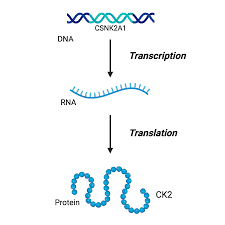
Transcription
The first step in gene expression, where genetic information from a gene (DNA) is copied into a messenger RNA (mRNA) molecule by an enzyme called RNA polymerase.
Translation
The process by which messenger RNA (mRNA) is decoded in a ribosome to produce a specific amino acid chain, or polypeptide, which then folds into an active protein. This is the second step in gene expression, following transcription.
DNA to RNA to Protein