Unit 2: Cell Structure & Function
 Call Kai
 Learn
Learn Practice Test
 Spaced Repetition
 Match
Match Flashcards
 Knowt Play
1/41

There's no tags or description
Looks like no tags are added yet.
Name | Mastery | Learn | Test | Matching | Spaced | Call with Kai | Chat |
|---|
No analytics yet
Send a link to your students to track their progress
42 Terms
Prokaryotic vs. Eukaryotic Cells
Prokaryotes lack a nucleus and membrane-bound organelles; eukaryotes possess them.
Pinocytosis
extracellular fluid
Transport proteins
specialized transmembrane proteins that move ions, small molecules, and nutrients across biological cell membrane
Ribsomes in cytsol
Only function in the cytosol (enzymes) and are known as free ribosomes
What types of molecules require protein?
Ions and large polar molecules require transport proteins; very large materials use vesicular transport.
Glycoproteins
Carbohydrate-tagged proteins used in cell recognition, signaling, and identification
Secretory Pathway
Ribosome on RER → transport vesicle → Golgi → secretory vesicle → plasma membrane → exocytosis.

Rough Endoplasmic Reticulum (RER)
Synthesizes and begins the modification and folding of proteins for secretion or membranes.

Smooth Endoplasmic Reticulum (SER)
Performs lipid synthesis, alcohol/drug detoxification, and metabolism.

Golgi Apparatus
Modifies, sorts, and packages proteins and lipids into vesicles.
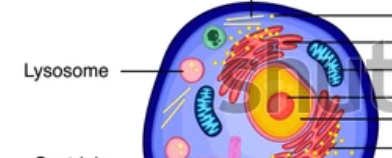
Lysosome
Contains hydrolytic enzymes to digest macromolecules, pathogens, and cellular waste.

Mitochondrion
Produces ATP via cellular respiration; inner folds increase surface area for reactions.

Chloroplast
Performs photosynthesis; internal thylakoid membranes increase surface area.
Plant vs. Animal Cells
Plants have cell walls, chloroplasts, and central vacuoles; animals commonly have lysosomes and centrosomes.
Compartmentalization
Membranes create specialized environments and increase usable surface area, improving reaction efficiency and
material exchange
Endosymbiotic Theory Evidence
Mitochondria and chloroplasts have circular DNA, prokaryotic ribosomes, double membranes, and binary fission.
How does an altered shape affect transport proteins like aquaporins or CFTR
It reduces or completely prevents transport.
Can water cross the lipid bilayer without aquaporins?
Yes, but it moves slowly since aquaproins speed up water movement
Do ions require membrane proteins to cross the bilayer?
Yes, ions cannot cross without membrane proteins.
In enzymes, what can a changed active site do?
reduce catalysis and cause the substrate or a toxic intermediate to accumulate.
What hydroxyl functional group does alcohol contain?
-OH
Effect of Gene Mutation
Alters mRNA codons, amino acid sequence, primary structure, protein folding, 3D shape, and function.
Phospholipid Bilayer Structure
Amphipathic molecules with hydrophilic phosphate heads facing water and hydrophobic tails facing inward.
Membrane Cholesterol
Fits among phospholipid tails to help stabilize membrane fluidity.
Direct Membrane Passage
Small nonpolar molecules like O₂ and CO₂ cross the lipid bilayer most readily.
Active Transport
Moves substances against a concentration gradient using energy, typically ATP, and a carrier protein.
Simple diffusion
own a concentration gradient; no ATP; small nonpolar molecules and some small uncharged polar molecules.
osmosis
Diffusion of water, water moves from an area of low solute concentration to an area of high solute concentration through a semipermeable membrane.
Facilitated diffusion
Down a gradient through a channel or carrier; no ATP; used by ions and polar solutes
Exocytosis
Vesicle fuses with plasma membrane to release products such as proteins or glycoprotein-containing mucus
Endocytosis
Membrane brings material into cell
Sodium-Potassium Pump
Transports 3 Na⁺ out and 2 K⁺ into the cell per ATP hydrolyzed.
Animal Cell in Hypotonic Solution
Swells and may lyse due to net inward water movement.
Animal cell in a hypertonic solution
Shrivels, net water out of cell
Plant Cell in Hypertonic Solution and their net water movement
Plasmolyzes, resulting in reduced turgor pressure and wilting, net water out of cell
Plant cell in hypotonic solution
Turgid; increased turgor pressure
Plant and animal cell in isotonic solution
Flaccid, Normal; no net movement
Water Potential Equation
Ψ = ΨP + ΨS (Water potential equals pressure potential plus solute potential).
IONIZATION CONSTANT
SODIUM=2 SUCROSE=1
Water Movement Direction
Water moves from higher water potential (less negative) to lower water potential (more negative).
Surface Area-to-Volume Ratio (SA:V)
Smaller cells have a larger SA:V ratio, allowing for more efficient material exchange.