5.0 being a professional
 Studied by 0 people
 Call Kai
 Learn
Learn Practice Test
 Spaced Repetition
 Match
Match Flashcards
 Knowt Play
1/11

There's no tags or description
Looks like no tags are added yet.
Name | Mastery | Learn | Test | Matching | Spaced |
|---|
No study sessions yet.
12 Terms
Professionalism means
demonstrating a set of values, behaviours, and attitudes that reflect your commitment to the role you play in healthcare.
As future pharmacists, professionalism is about
maintaining high standards,
ensuring patient safety,
collaborating with healthcare teams,
and acting with integrity and respect.
From a sociological perspective some of the identified characteristics of a professional include:
The confidential nature of the professional - patient/client relationship
Shared ethical values i.e. a set of rules that regulates the profession
Theoretical knowledge that underlies the practice of the professional
A professional culture where there is some broad agreement on how a member of the profession should behave and how this is passed on to new members of the profession
The wider community sanction the power and privilege of professionals
Pharmacy professionals play a vital role in delivering care and helping people to maintain and improve their health, safety and wellbeing.
The professionalism they demonstrate is central to maintaining trust and confidence in pharmacy.
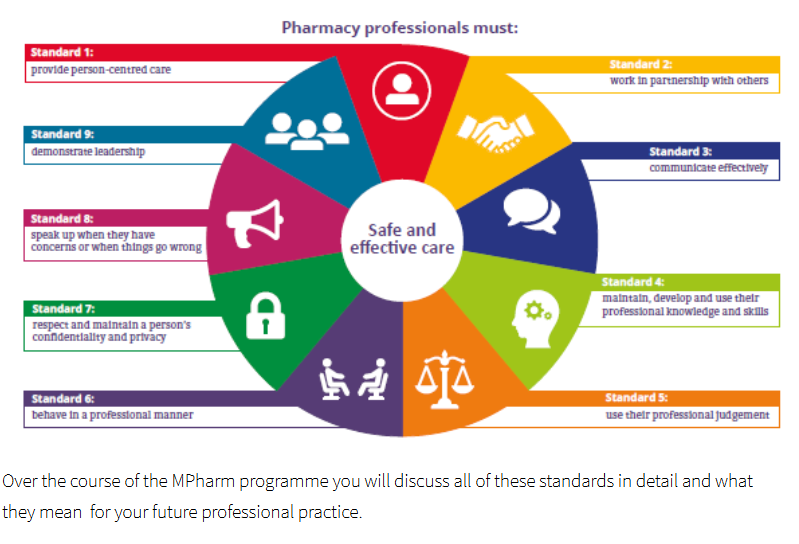
Standard 6: Pharmacy professionals must behave in a professional manner.
here are many ways that could demonstrate that you are meeting this standard and some examples include:
Are polite and considerate
Are trustworthy and act with honesty and integrity
Show empathy and compassion
Treat people with respect and safeguard their dignity
Maintain appropriate personal and professional boundaries with the people you provide care to and with others
Pharmacists work closely with other healthcare professionals, such as doctors, nurses, and dietitians.
Effective teamwork requires professionalism, including clear communication, respect for the expertise of others, and a willingness to collaborate for the best patient outcomes.
In complex cases, like managing liver disease or cancer,
professionals must share information efficiently, work toward common goals, and respect each other’s input.
trust + accountability
Patients and healthcare colleagues rely on pharmacists for accurate information and sound clinical judgment.
Pharmacists are held accountable for their actions, which means they must take responsibility for any decisions or errors
patient centered care
Patients and healthcare colleagues rely on pharmacists for accurate information and sound clinical judgment.
Pharmacists are held accountable for their actions, which means they must take responsibility for any decisions or errors
ethical decision making
Pharmacists often face ethical dilemmas, such as navigating difficult decisions and conflicts of interest. Acting with ethical integrity means prioritizing the patient’s well-being and adhering to ethical standards set by the regulatory body (GPhC)
Being professional ensures that pharmacists act impartially, without letting personal beliefs impact on patient care.
lifelong learned competence
Pharmacy is rapidly evolving with new medications, technologies, and research emerging regularly. A professional pharmacist commits to lifelong learning to stay updated on the latest developments.
video