Common Polyatomic Ions
 Call Kai
 Learn
Learn Practice Test
 Spaced Repetition
 Match
Match Flashcards
 Knowt Play
1/14

There's no tags or description
Looks like no tags are added yet.
Name | Mastery | Learn | Test | Matching | Spaced | Call with Kai | Chat |
|---|
No analytics yet
Send a link to your students to track their progress
15 Terms
Ammonium cation
NH4+, formed when ammonia gains a proton.
Hydronium cation
H3O+, formed when water gains a proton.
Hydroxide anion
OH− , a negatively charged ion formed when a hydroxyl group loses a proton.
Acetate anion
C₂H₃O₂⁻ , a negatively charged ion formed from acetic acid when it loses a proton.
Cyanide anion
CN− , a negatively charged ion formed from hydrogen cyanide when it loses a proton.
Peroxide anion
O22−, a negatively charged ion consisting of two oxygen atoms bonded together, commonly found in compounds like hydrogen peroxide.
Carbonate anion
CO32− , a negatively charged ion composed of one carbon atom and three oxygen atoms, often found in rocks and minerals.
Nitrate anion
NO3− , a negatively charged ion consisting of one nitrogen atom and three oxygen atoms, commonly found in fertilizers and explosives.

Phosphate anion
PO43−
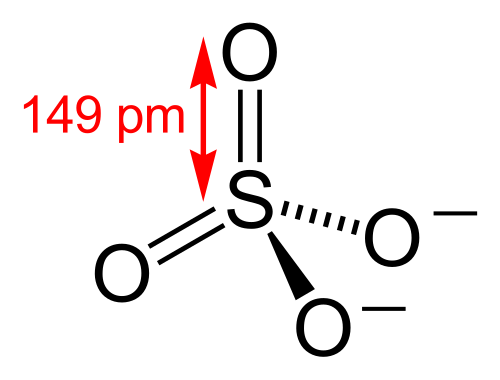
Sulfate anion
SO42−

Chlorate anion
ClO3−

Bromate anion
BrO3−
Iodate anion
IO₃⁻
chromate anion
CrO42–
Permanganate anion
MnO4−
