Aggregates and Vulnerable Populations PPT
 Call Kai
 Learn
Learn Practice Test
 Spaced Repetition
 Match
Match Flashcards
 Knowt Play
1/48

There's no tags or description
Looks like no tags are added yet.
Name | Mastery | Learn | Test | Matching | Spaced | Call with Kai | Chat |
|---|
No analytics yet
Send a link to your students to track their progress
49 Terms
what do you need to know abt strength vs needs base?
needs come before strengths
objectives:
§Recognize factors that threaten health of aggregates and vulnerable populations.
§Apply the nursing process to reduce health risks and promote health in aggregates and vulnerable populations.
§Discuss National Health Goals as they relate to aggregates and vulnerable populations.
§Explore health promotion and prevention strategies (primary, secondary, and tertiary) for aggregates and vulnerable populations.
§Evaluate community health educational initiatives that address major health problems in aggregates and vulnerable populations.
§Recognize characteristics of healthy families.
§Examine the dynamics and signs of violent behaviors in the community.
§Identify health disparities in specific genders and populations.
§Evaluate strategies that nurses can use to improve health outcomes and eliminate health disparities for individuals who have experienced violence.
objectives
define aggregates
special populations with a common characteristic
what are the following:
•Children and families
•Older adults
•Vulnerable populations such as:
•Violence survivors
•Persons with substance use disorder
•Individuals with mental illness
•Unhoused
•Rural residents
•Migrant clients
•Veterans
•Persons with a disability
•Pregnant adolescents and other vulnerable pregnant patients
•Incarcerated persons
LGBTQIA clients
aggregates (that will be the focus for this class)
define families
Individuals who identify as family members with interdependent relationships
what are the following characteristics of:
•Commitment and support to each other
•Appreciation and affection
•Respect and trust
•Positive Communication
•Enjoy time together, humor
•Shared values / spiritual beliefs / traditions
•Ability to cope with stress and crisis (help-seeking)
a family
define strength-based nursing
•Shifts focus from "what's wrong" to "what's right"
•Emphasizes recognizing and developing strengths of families and communities to promote health and healing
what are the sub-portions of strength-based nursing?
•Strengths Assessment
•Empowerment
•Relational focus
•Goal Setting
Holistic
what are the different portions that make up a family-risk appraisal?
•Biological
•Use genogram to assess for genetic conditions
•Environmental
•Ecomaps
•Behavioral
•Values, habits
•Risk perceptions (Tobacco, alcohol, etc.)
what is a family genogram?
•Family diagram to depict relationships over generations
•Includes:
—•Family structure
—•Health conditions
•Identify specific individual risks and provide appropriate prevention.
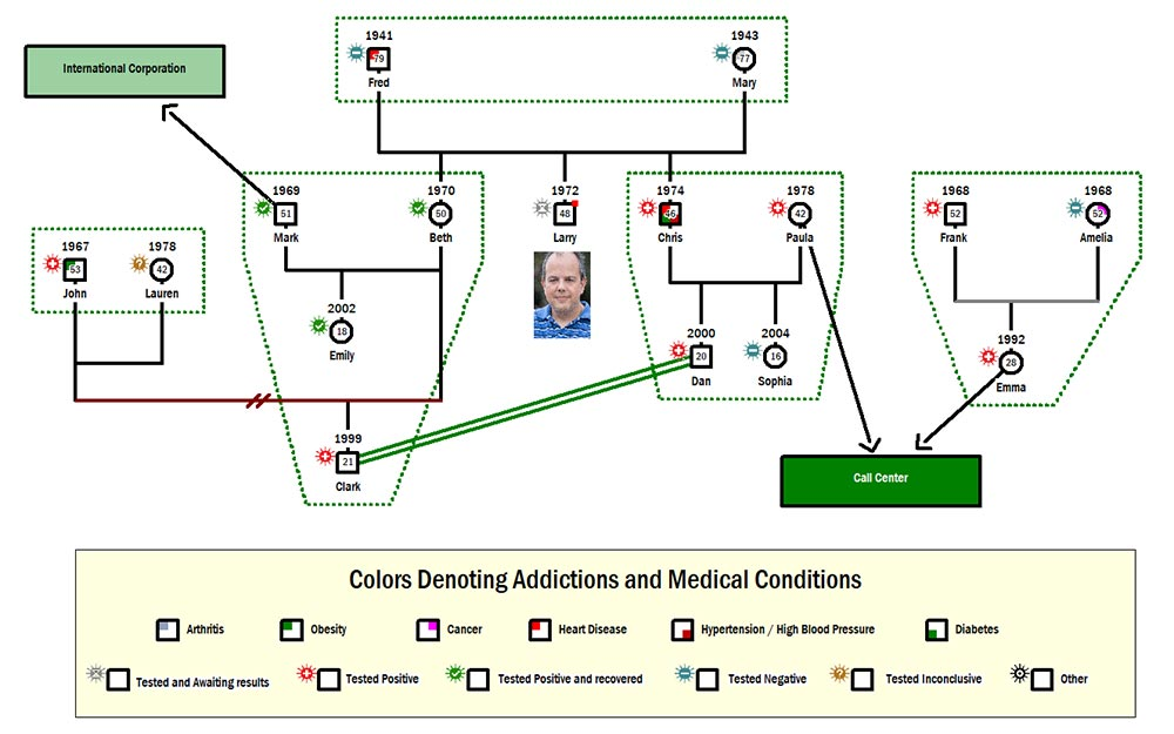
family genogram
family genogram
MALE, FEMALE. WHO IS MORE LIKELY TO DIE FROM BREAST CANCER
MALE
what are the “genetic red flags” of a genogram?
•Family history of a known or suspected genetic condition
•Ethnic predisposition to certain genetic disorders
•Consanguinity (blood relationship of parents)
•Multiple affected family members with the same or related disorders
•Earlier than expected age of onset of disease
•Diagnosis in less-often-affected sex
•Multifocal or bilateral occurrence of disease (often cancer) in paired organs
•Disease in the absence of risk factors or after application of preventive measures
•One or more major malformations
•Developmental or cognitive delays
•Abnormalities in growth (growth restriction, asymmetric growth, or excessive growth)
•Recurrent pregnancy losses (two or more)
what are the characteristics of family ecomaps?
•Visual illustration of family in relation to community resources
•Type of line depicts strength of the relationship
•Depicts resources, strengths, and needs
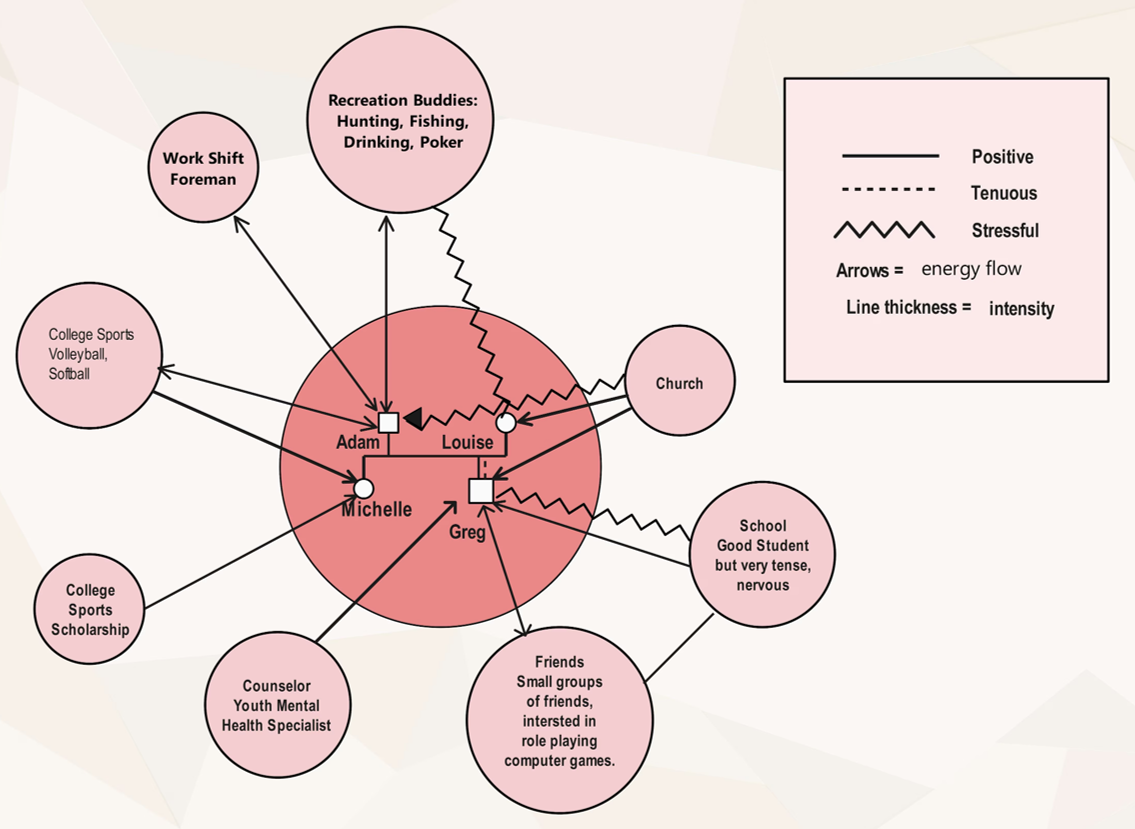
family ecomap
family ecomap
know safety net features in disasters
know safety net features in disasters
identify diff types of advocacy a case manager needs to have and be able to identify who needs greatest need for case management
identify diff types of advocacy a case manager needs to have and be able to identify who needs greatest need for case management
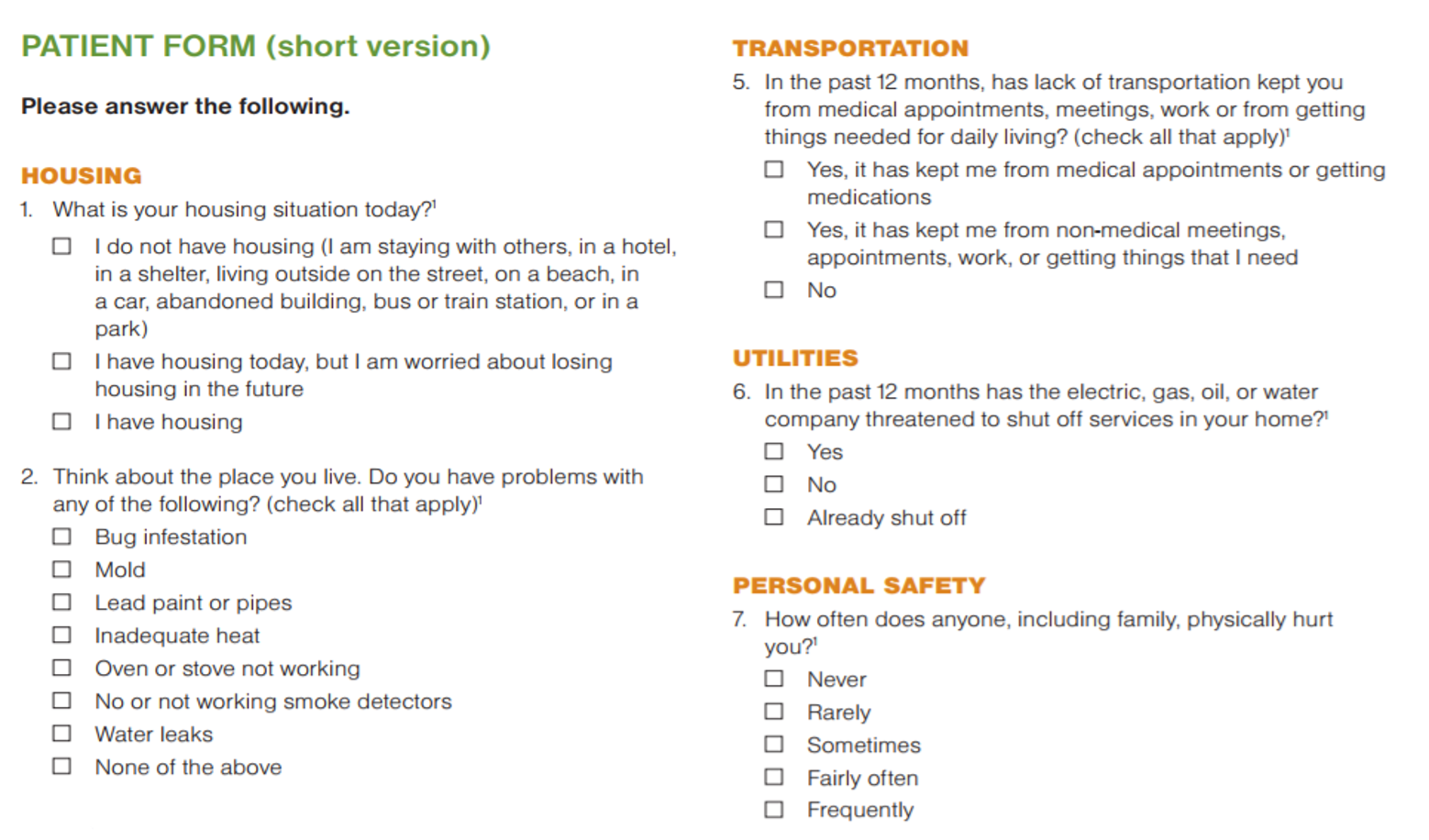
SDOH screen
SDOH screen
what are the national health goals for families
•reduce barriers to access health care
•allergens
•families unable to have children/maintain pregnancy
•passive smoke exposure
•household hunger
•intimate partner violence
•increase positive parenting
•health education
•home testing for radon
•health insurance coverage
•primary care provider
•family health literacy
what are the health concerns, national health goals, and community education for children?
•Health Concerns: Perinatal conditions, congenital anomalies, SUID, unintentional injuries
•National Health Goals: Reduce dental caries, obesity, infant mortality; increase newborn screenings, access to medical home, childhood immunizations
•Community Education: Anticipatory guidance, breastfeeding, sleeping positions, nutrition, injury prevention
what are the health concerns, national health goals, and community education for adolescents?
•Health Concerns: Unintentional injuries, homicide, suicide
•National Health Goals: Reduce violent crimes, substance use, motor vehicle deaths; increase school breakfast programs, extracurricular activities, wellness checkups
•Community Education: Substance use disorders, sexual behavior, nutrition, injury prevention
what happens to academic achievement in chronic disease?
it decreases
what are the casues of absenteeism?
1.Illness, family responsibilities, housing instability, need to work, involvement in juvenile justice system
2.Bullying, unsafe conditions, harassment and embarrassment
3.They or their parents don’t see value in attending
what is associated w absenteeism?
with health risk behaviors: smoking, alcohol and drug use, risky sexual behaviors
public health legislation:
•IDEA – Individuals with Disabilities Education Act (2012).
•TANF – Temporary Assistance for Needy Families
•SNAP – Supplemental Nutrition Assistance Program
•WIC – Women’s Infants and Children
•CHIP –Children’s Health Insurance Program
•NSLP – National School Lunch Program
•Medicaid – Children’s Health Insurance
public health legislation
KNOW THIS!!!
ALSO GO OVER PRIMARY, SECONDARY, AND TERTIARY IN PPT
what’re the major health concerns for adults?
•Heart disease
•Diabetes
•mental health disorders
•STIs
•colorectal cancer
•Stroke
•Obesity
what’re the national health goals for adults?
•Reduce bone diseases
•death from cancer
•sexual violence
•HIV/AIDS incidence
•Injuries
•unplanned pregnancies
•substance use
•increase contraception use
•prenatal care
•identification of heart attack/stroke indicators
breakdown male vs female health
•Females: Reproductive health, cancer, osteoporosis.
•Males: Unintentional injuries, erectile dysfunction, cancer
what’re the health disparities of LGBTQ+ community?
•Health Disparities:
•Social support (discrimination, oppression, stigmatized, safe environment)
•Legal discrimination (definition of family/insurance, adoption)
•shortage of healthcare providers who are culturally competent
•Higher incidence of:
•Cancers
•Depression
•HIV/AIDS
•STIs
what’re the major health concerns for OLDER adults?
•Chronic Diseases:
•Heart Disease
•Cancer
•Arthritis
•Diabetes
•Mental Health:
•Dementia and Alzheimer's Disease
•Depression
•Other Concerns:
•Obesity
•Hypertension
•Mobility Issues
what’re the national health goals for older adults?
•Reduce functional limitations
•Hospitalizations (heart failure, pressure injuries)
•Inappropriate medication use
•Falls
•Need to increase use of clinical preventive services, "Welcome to Medicare" benefit
•elder abuse
•physical activity
•access to diabetes self-management
•geriatric certifications for nurses and providers
what are the following exemplifying:
•Can’t live independently
•Chronologic age is a determinant of oldness
•Most have diminished intellectual capacity or senility
•All content and serene
•Can’t be productive
•Resistant to change
•No social security or retirement
Many live independently
Many are healthy and active into 90s and beyond
Can still learn new things and create new memories
Have frustrations and needs
Still part of workforce and service
Always navigating life changes
Many have saved and are money-savvy
Ageism: Common Misconceptions About Older Adults
what is the following:
federally funded
benefits elderly and disabled
particpants pay deductibles and part of coverage costs
medicare
what is the following:
state and federally funded program
benefits pregnant women, people w disabilities, and low income
participants pay little of northing for coverage
medicaid
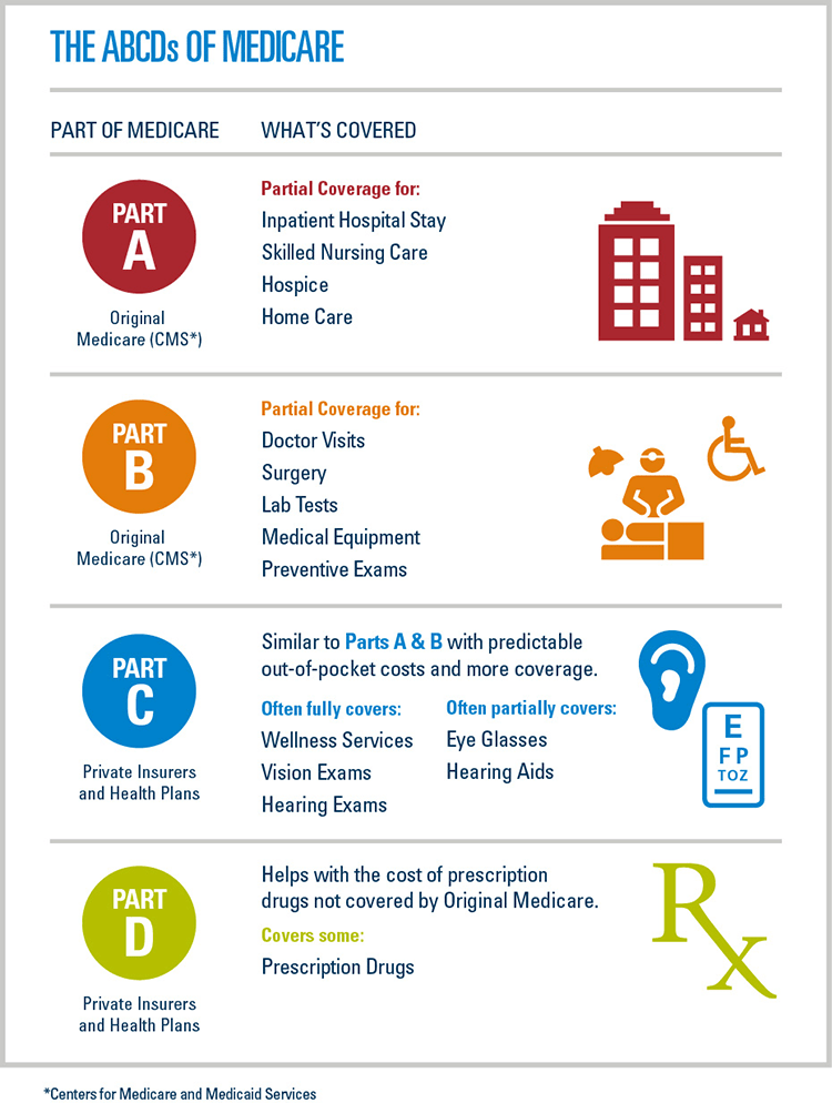
ABCDs of medicare
what is a big portion of family caregiving?
•Caregiver burden (Care giver Role Strain – sandwich generation
what is the TLC of family caregiving?
•T = training in care techniques, safe medication use, recognition of abnormalities, and available resources
•L = leaving the care situation periodically to obtain respite and relaxation and maintain their normal living needs
•C = care for themselves (the caregiver) through adequate sleep, rest, exercise, nutrition, socialization, solitude, support, financial aid, and health management
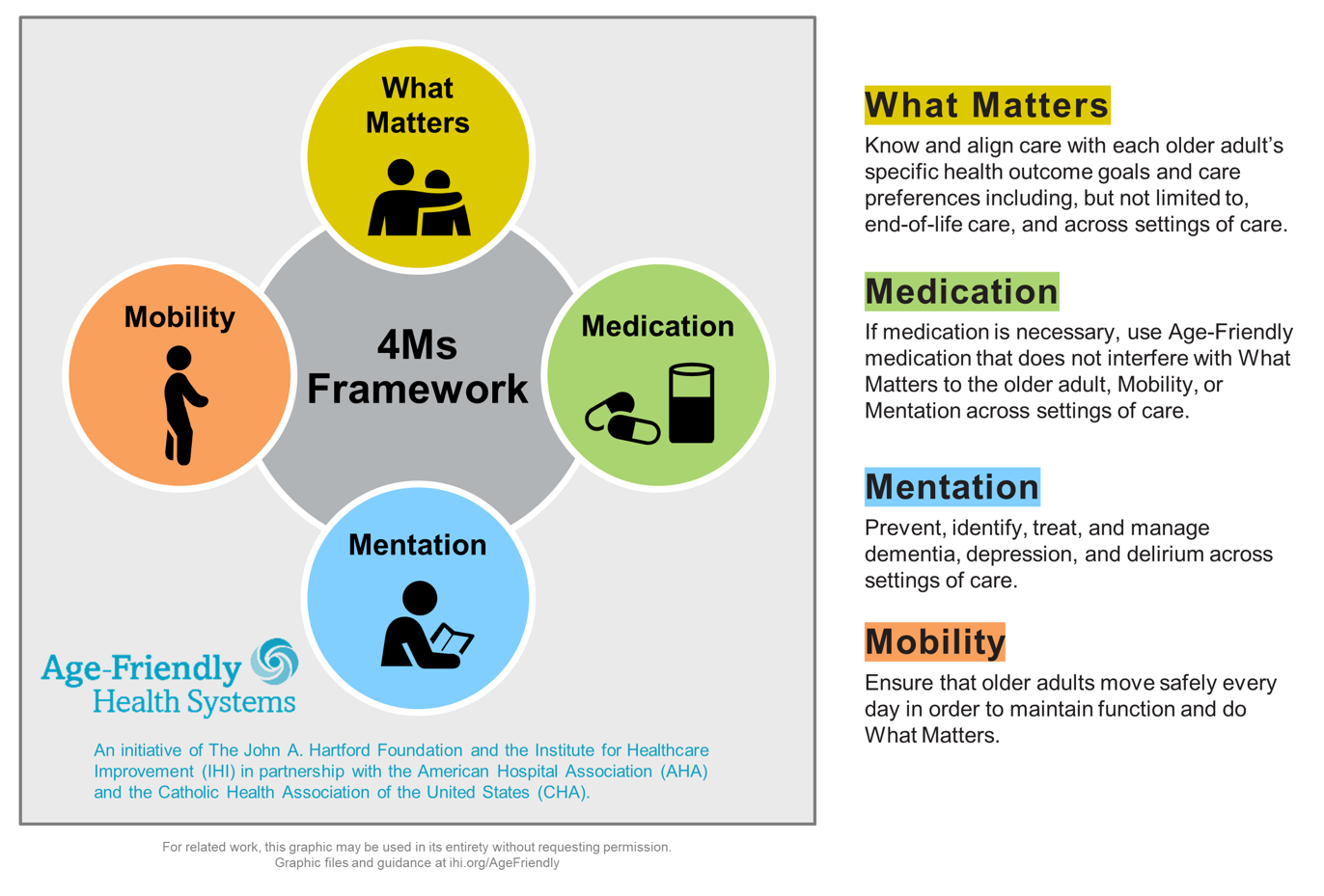
4 Ms framework
break down the following for the vulnerable population that is victims and perpetrators of violence:
types, individual risk factors, and community risk factors
•Types
•Homicide
•Assault
•Rape
•Human trafficking
•Individual Risk Factors
•History of abuse/violence
•Low self-esteem
•Fear/distrust
•Poor self-control
•Inadequate social skills/support
•immature motivation for marriage/childbearing
•Poor coping skills
•Community Risk Factors
•Work stress
•Unemployment
•Media exposure to violence
•Crowded living conditions
•Poverty
•Powerlessness
•Social isolation
•Lack of community resources
what are the signs of violent behaviors in a community?
•Physical Aggression
•Hitting, shoving, or using physical force to harm others.
•Verbal Aggression
•Insults, threats, or shouting.
•Escalation of Tension
•Increased irritability, anger, or hostility, can indicate a potential for violence.
•Community Violence
•Assaults, fights, and shootings in public places
break down the following for the vulnerable population that is communities w substance use disorders:
types, individual risk factors, and community risk factors
•Risk Factors:
•Individual: Genetics?, Mental illness, early exposure
•Dysfunctional relationships, peer influence
•Community of high crime, poverty, easy access, lack of resources
•Cultural norms and attitudes
•Dependence Indicators
•Tolerance
•Withdrawal
•Denial (defensiveness, lying, minimizing, blaming, etc.)
•Health Problems to look for
•Low birth weight, congenital abnormalities
•Accidents and Unintentional death due to overdose
•Homicides, suicides
break down the following for the vulnerable population that is communities w mental health disorders:
types, individual risk factors, and community risk factors
•Biological Factors
•Genetic Predisposition
•Chronic Medical Conditions
•Substance Use
•Psychological Factors
•Traumatic Experiences
•Stressful Life Situations
•Low Self-Esteem
•Social Factors
•Social Isolation
•Bullying and Discrimination
•Poverty
•Environmental Factors
•Unsafe Living Conditions
•Lack of Access to Healthcare
•Community Disorganization
what are the health problems and social determinant issues of migrant health care?
•Health Problems
•Dental disease
•Tuberculosis and chronic conditions (anemias, cancers)
•Stress/anxiety
•Lack of prenatal care, higher infant mortality rates
•STIs
•Pesticide and environmental exposures
•Social Determinant Issues
•Food insecurity
•Inconsistent income
•Poor working/housing conditions
•Access to services
•Language barriers/cultural aspects
•Discrimination and fear of deportation
•Higher risk for harassment/sexual abuse.
what are the health issues for veterans (a vulnerable pop)?
•Mental health (PTSD, stress reactions, anger, depression)
•Substance use disorders
•Suicide
•Infectious diseases
•Exposures to herbicides/chemicals/radiation
•Traumatic brain injuries, spinal cord injuries, traumatic amputations
•Cold injury
what are the strategies for veteran health care (a vulnerable pop)?
•Coordinate referrals to veteran resources
•Advocate for strengthening the Veterans Health Administration
•Assist with transitioning from active duty to veteran status
•Ensure continuity of care
•Develop partnerships with local agencies.
what are the effects and nursing actions for community w disability (a vulnerable pop)?
•Effects
•Cost of chronic management
•Decreased employment/household income
•Increased poverty rates
•Decreased opportunity for physical activity
•Isolation/self-image issues
•Altered family roles
•Increased risk for abuse/comorbidities
•Possible inability to live independently
•Nursing Actions
•Implement primary prevention measures
•Identify disability/chronic disease early
•Connect clients with resources
•Connect families with respite care/counseling
•Advocate for rights
•Ensure accessible public buildings
•Implement programs to improve quality of life
what are the health risk factors and nursing actions for pregnant adolescents (a vulnerable pop)?
•Health Risk Factors
Lack of prenatal care
Higher risk of PIH, Preeclampsia
Nutritional deficiencies
Low birth weight
Preterm birth
Mental Health issues
Socioeconomic challenges
•Nursing Actions
•Early and regular prenatal care
•Nutritional counseling
•Education on healthy behaviors
•MH counseling
•Resource referrals (financial, transportation, etc.)
•Parenting classes
•Community outreach
what are the effects and nursing actions for incarcerated community (a vulnerable pop)?
•Effects
•Infectious diseases (HIV, hepatitis, STIs, TB)
•Mental health issues
•SUD
•Hypertension and diabetes
•Respiratory issues
•Violence and trauma
•Access to care
•Nursing Actions
•Regular health screenings
•Vaccinations
•Mental health referrals
•SUD treatment
•Health literacy programs
•Infection control measures
•Multidisciplinary collaboration
•Advocate for improved conditions and research