Homeostasis: Thermoregulation
 Call Kai
 Learn
Learn Practice Test
 Spaced Repetition
 Match
Match Flashcards
 Knowt Play
1/18

There's no tags or description
Looks like no tags are added yet.
Name | Mastery | Learn | Test | Matching | Spaced | Call with Kai | Chat |
|---|
No analytics yet
Send a link to your students to track their progress
19 Terms
What is thermoregulation?
Thermoregulation involves the regulation of body temperature to keep the body's core temperature within its tolerance limits.
What is heat gain and heat loss?
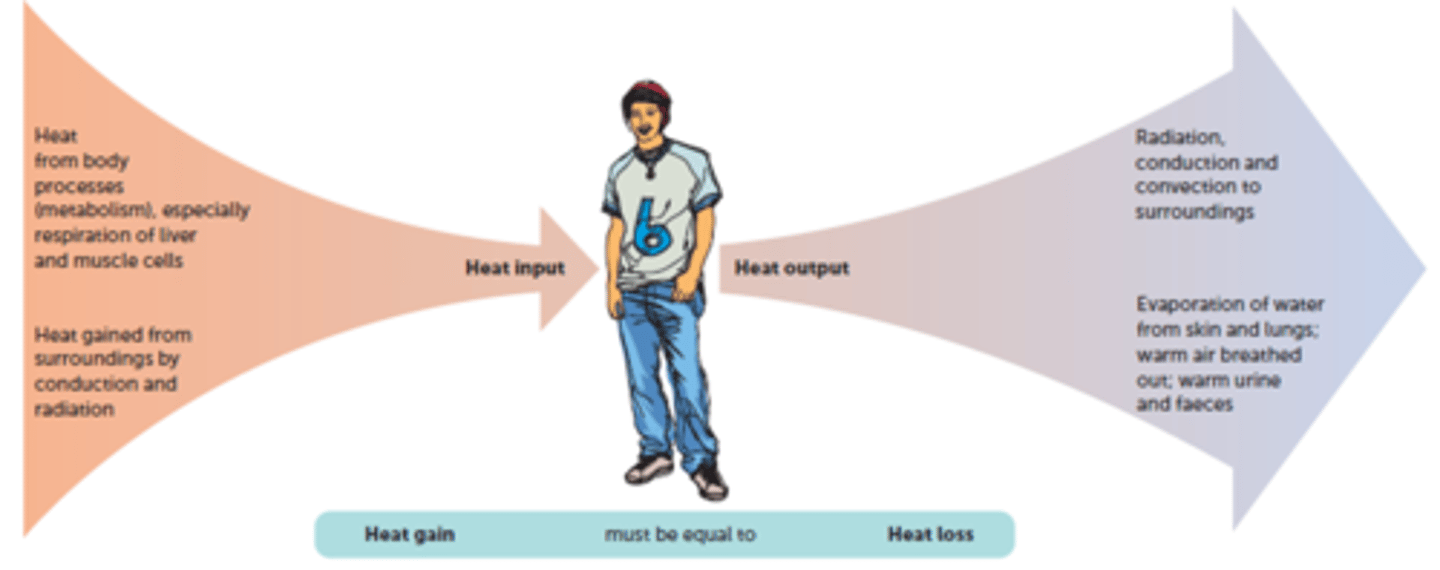
The body temperature of humans remains constant at about 36.8*C
This temperature of is optimum for cellular reactions, and so cells maintained at this temperature function in a stable manner.
To achieve this temperature, the heat gained by the body must exactly equal the heat lost from the body
Maintaining this balance is thermoregulation
Although body temperature remains fairly constant, variation does occur as a matter, for example during strenuous activity or changes in external temperature.
What is heat production?
The carbohydrates, proteins and lipids that we eat contain energy, which is released when the food is oxidised during cellular respiration, mostly in the form of heat.
The rate at which energy is released by the breakdown of food is called the metabolic rate.
Many factors, such as exercise, stress and body temperature, affect the metabolic rate of an individual.
What are temperature receptors?
The body has temperature receptors, or thermo-receptors.
Those in the skin and in some mucous membranes are called peripheral thermo receptors.
- They detect temperature changes in the external environment and send this information to the hypothalamus.
Others are located in the hypothalamus and are called central thermo receptors.
- These receptors detect the temperature of the internal environment.
What are the types of thermo receptors?
There are two types of thermo receptors:
Cold receptors: stimulated by temperatures lower than normal. When cold receptors are stimulated, the hypothalamus receives this information and initiates heat conservation and heat production mechanisms.
Heat receptors: detect temperature higher than normal. If heat receptors are stimulated, mechanisms operate to reduce heat production and increase heat loss.
How can heat be lost from the skin?
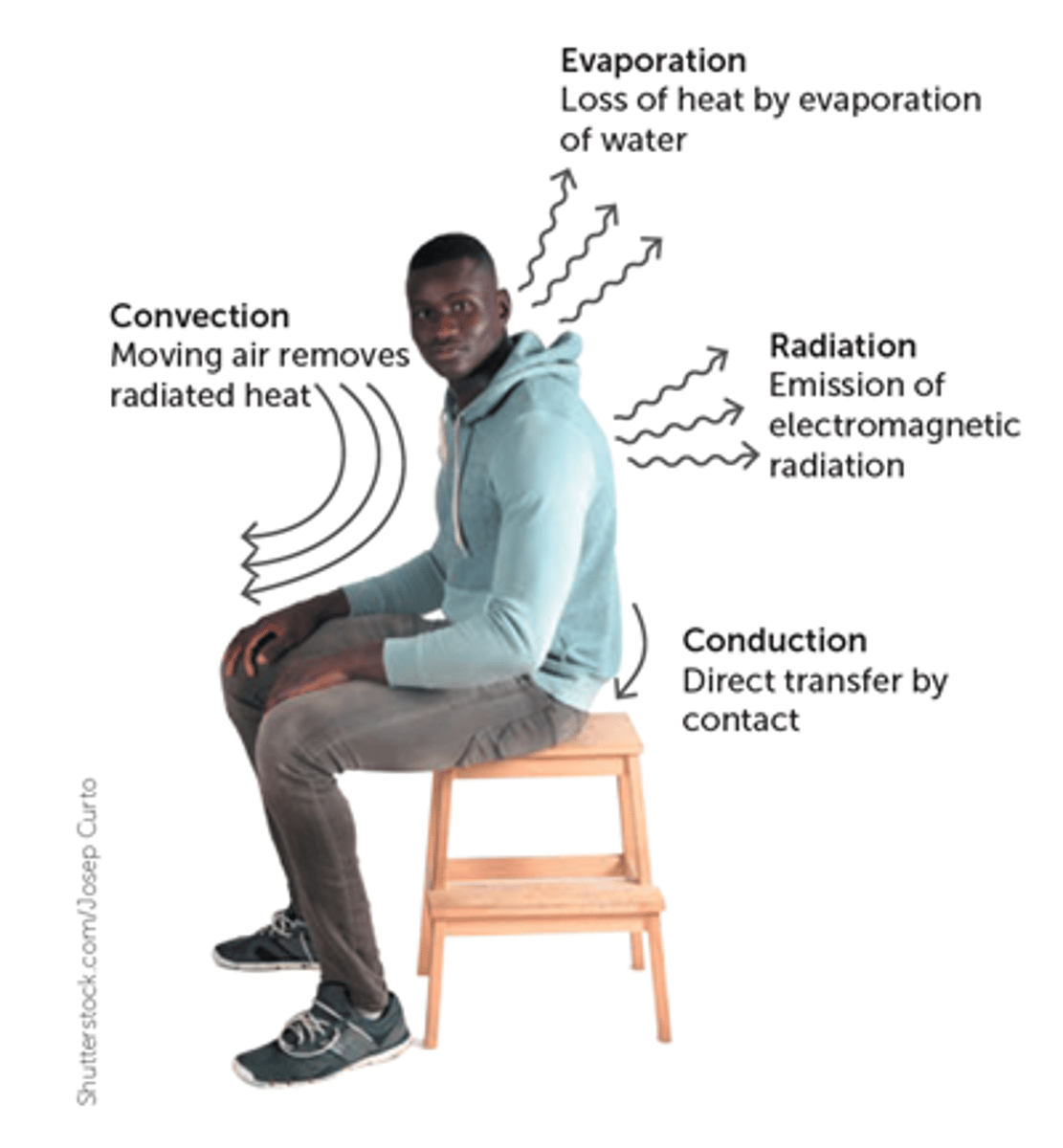
Heat can be lost from the skin by conduction, convection, radiation and evaporation.
Therefore, changes in the skin can speed up or slow down the rate at which heat is lost from the body.
What is conduction?
Transfer of heat by direct contact between particles.
What is convection?
The transfer of heat by the movement of a liquid or gas.
What is radiation?
The transfer of heat by infrared radiation being emitted by objects.
What is evaporation?
The process of a liquid forming a gas, which absorbs heat energy.
Blood vessels and heat loss?
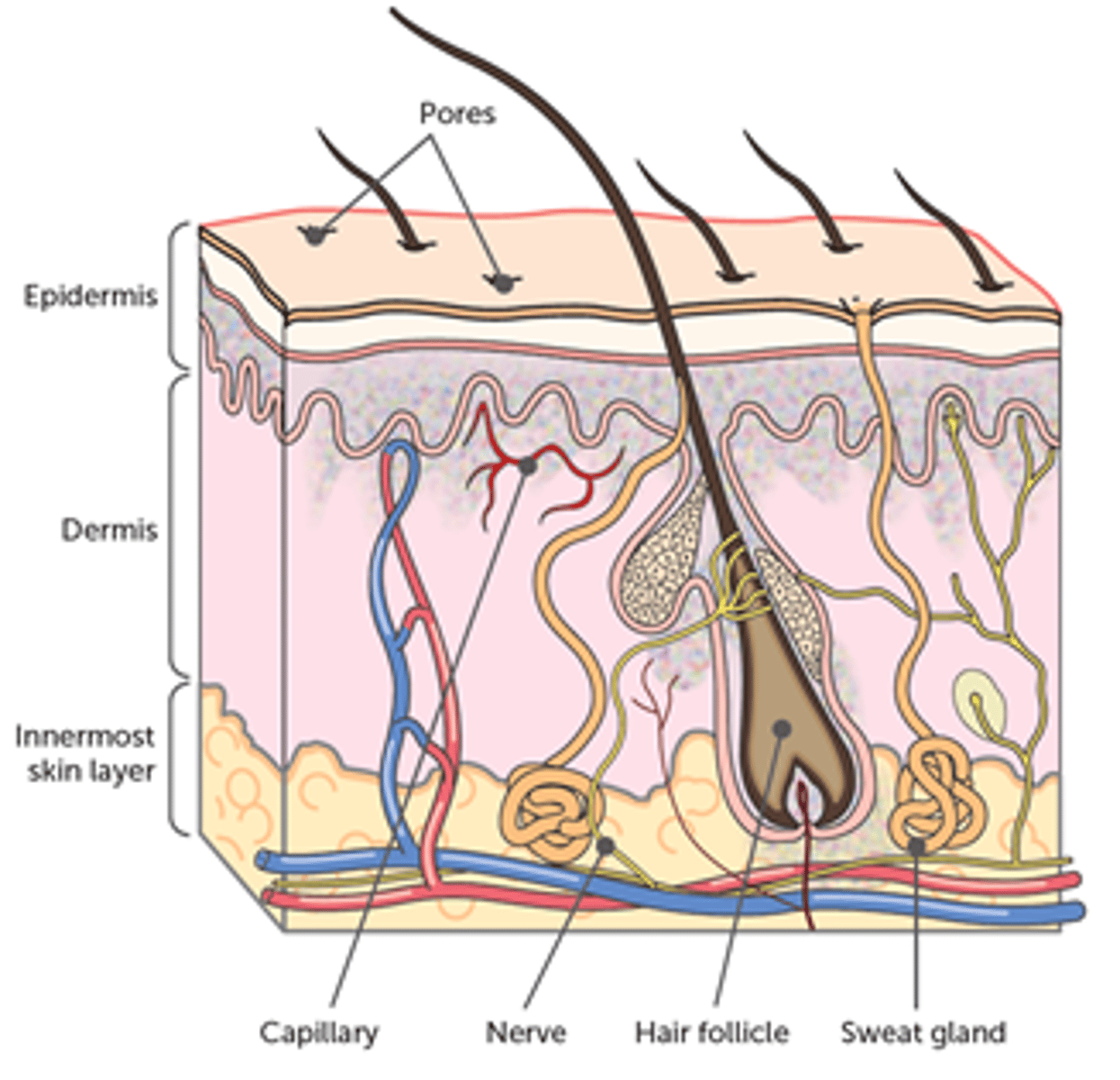
Blood vessels located in the dermis of the skin carry hate to the skin from the core of the body.
The diameter of these arterioles is controlled by autonomic nerves.
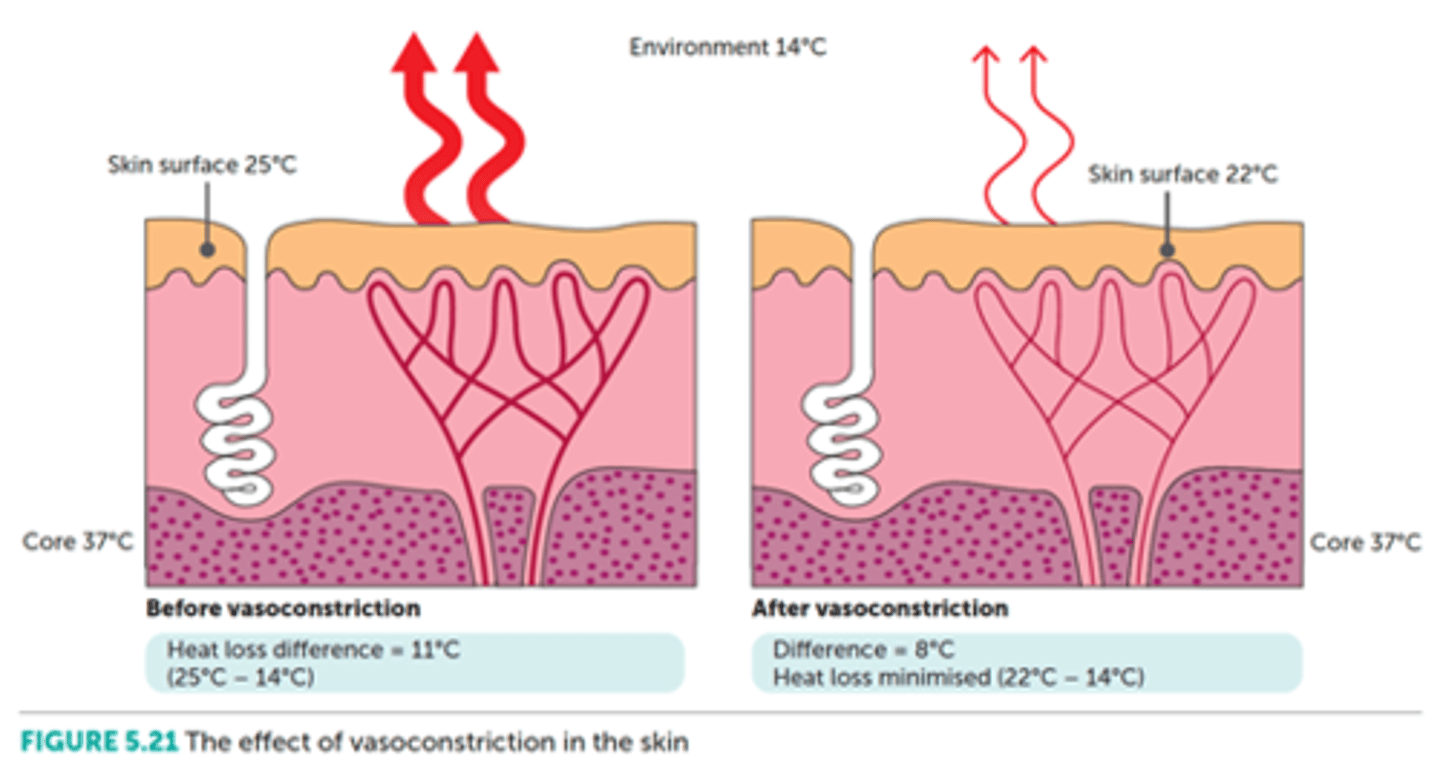
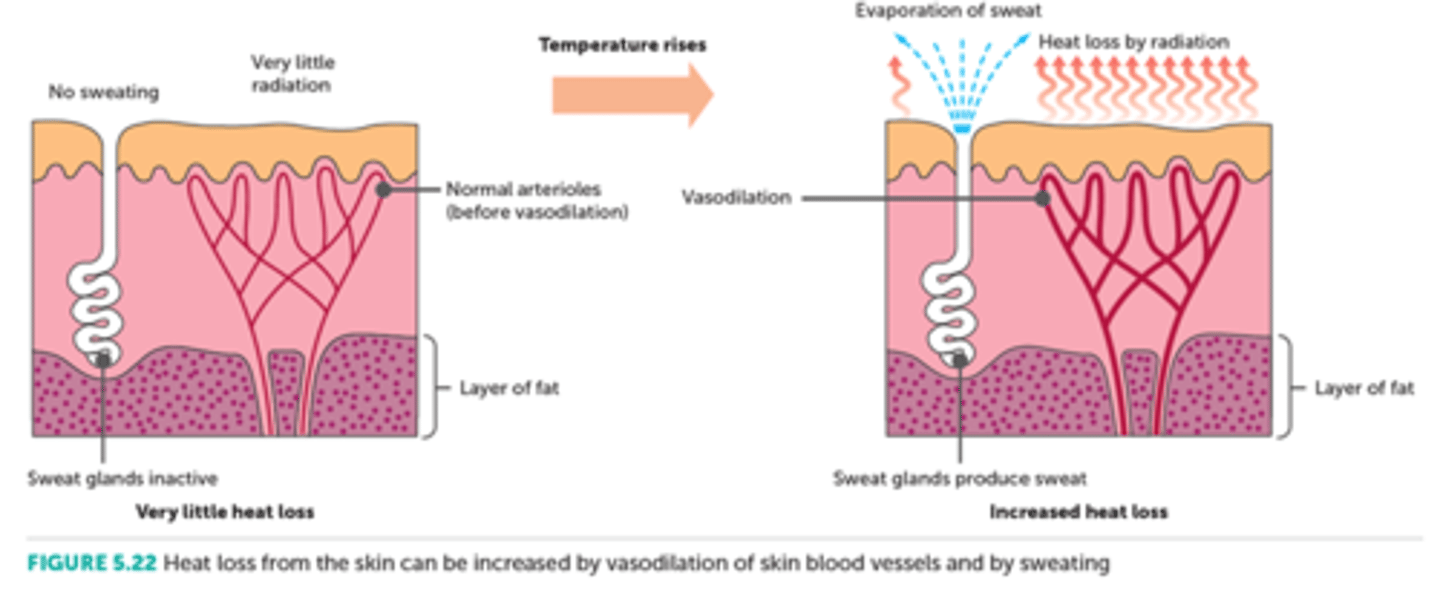
If the diameter is increased by vasodilation, more blood is transported to the capillaries in the skin and the rate of heat loss increases.
Alternatively, if the diameter is reduced by vasoconstriction, less blood is transported to the capillaries in the skin and the rate of heat loss decreases.
What is sweating and heat loss?
Sweating must occur when large amounts of body heat must be lost and the skin blood vessels are already at maximum dilation.
Sweating is the active secretion of fluid by the sweat glands and the periodic contraction of cells surrounding the ducts to pump the sweat to the skin surface.
The production and transport of sweat to the skin surface is stimulated by sympathetic nerves.
Sweat is water containing dissolved substances, primarily sodium chloride along with small amounts of urea, lactic acid and potassium ions.
Evaporation of sweat from the skin has a cooling effect: heat is removed from the skin when liquid sweat changes into vapour.
Cooling of the skin results in cooling of the blood flowing through the skin.
What is shivering and heat gain?
Shivering is due to an increase in skeletal muscle tone, producing rhythmic muscle tremors that occur at a rate of around 10 to 20 per second.
As no work is being done, the heat produced by the muscles is released as heat.
How do we prevent body temperature falling?
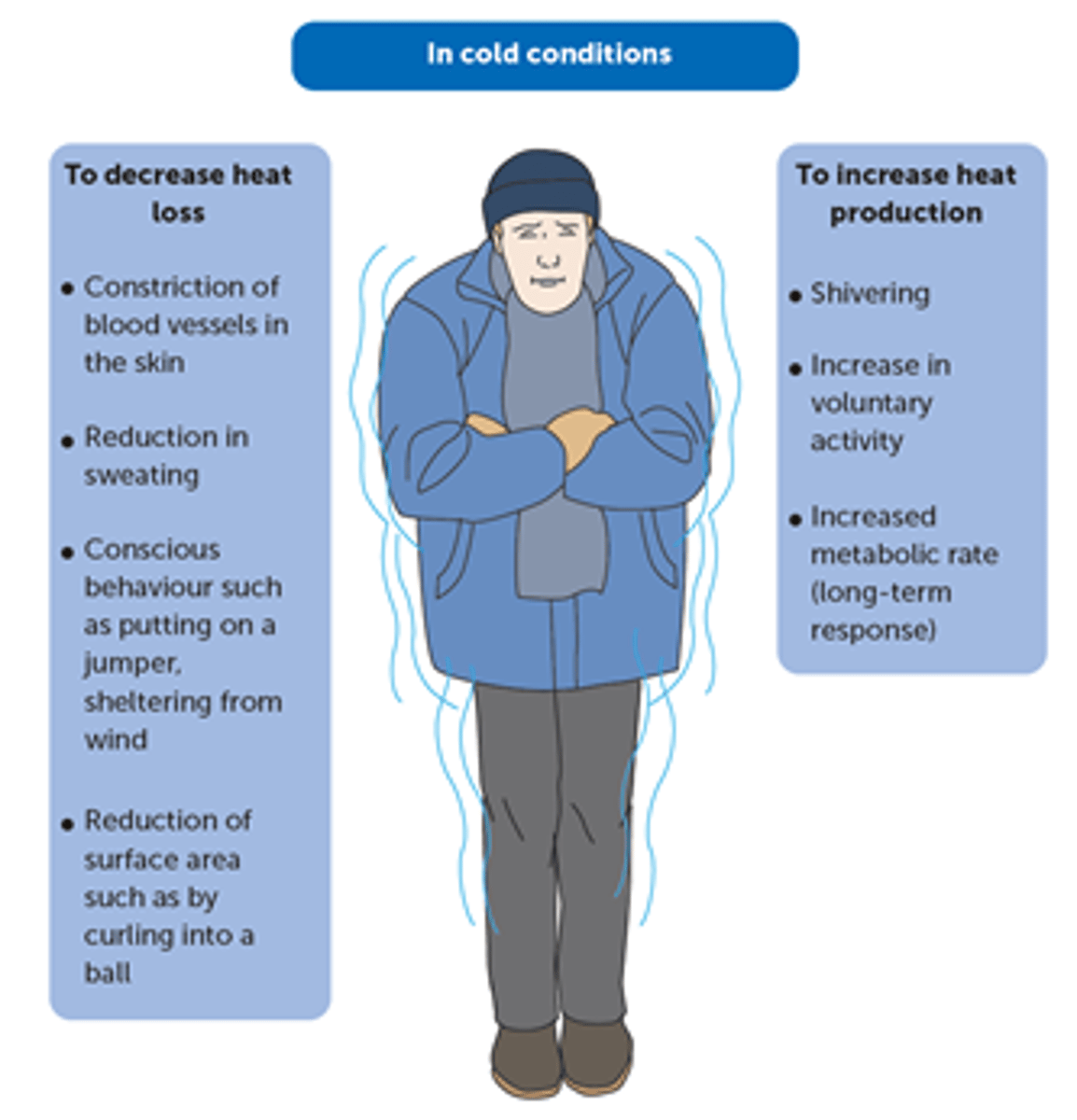
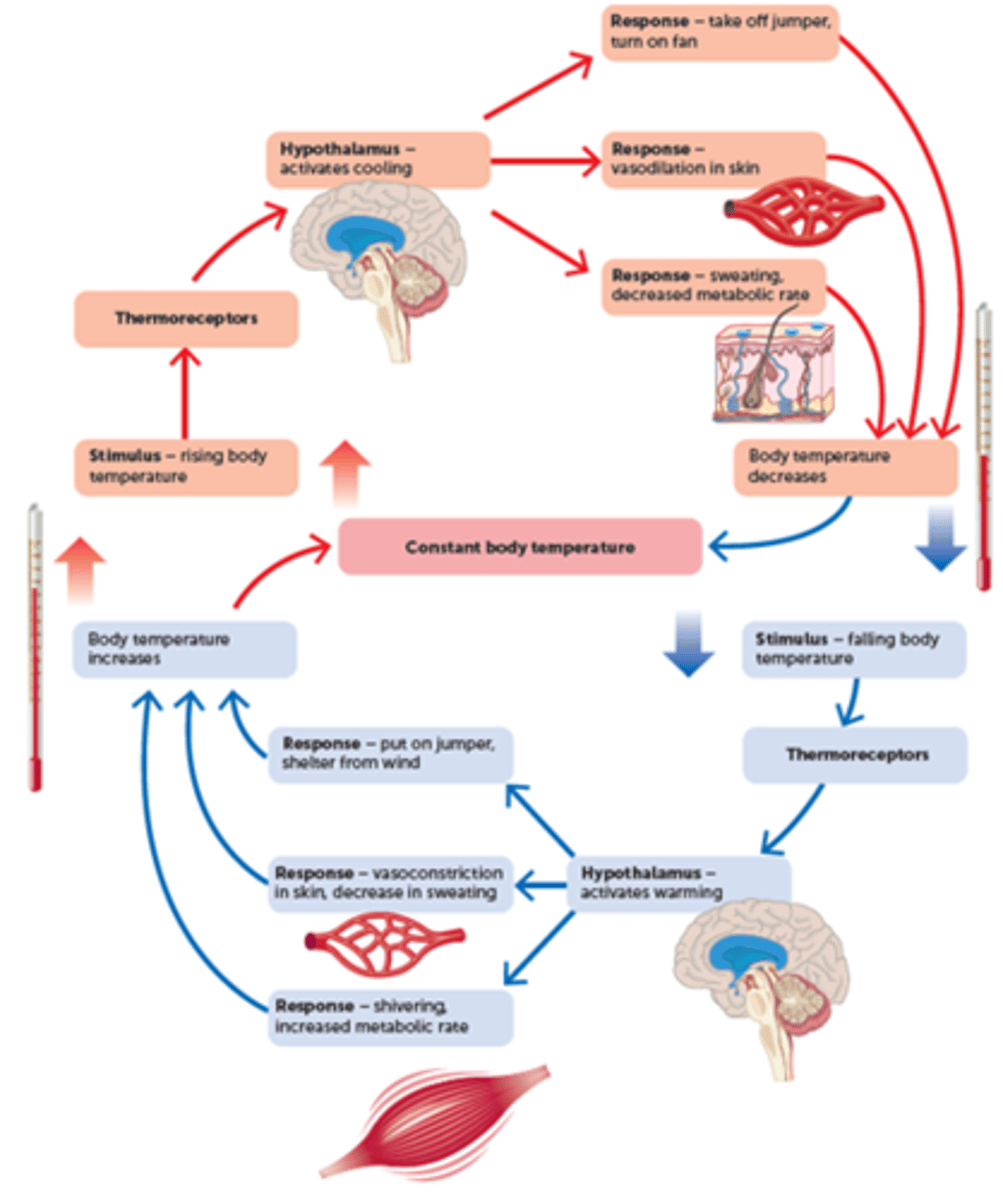
If the environment temp falls, or if a person goes from a warm room into a cold environment, the cold receptors in the skin send messages to the hypothalamus. The hypothalamus then sends out impulses aimed at reducing heat loss and increasing heat production so that body temperature is maintained.
The body can respond by making physiological changes (body functioning) and behavioural changes.
How do we prevent body temperature rising?
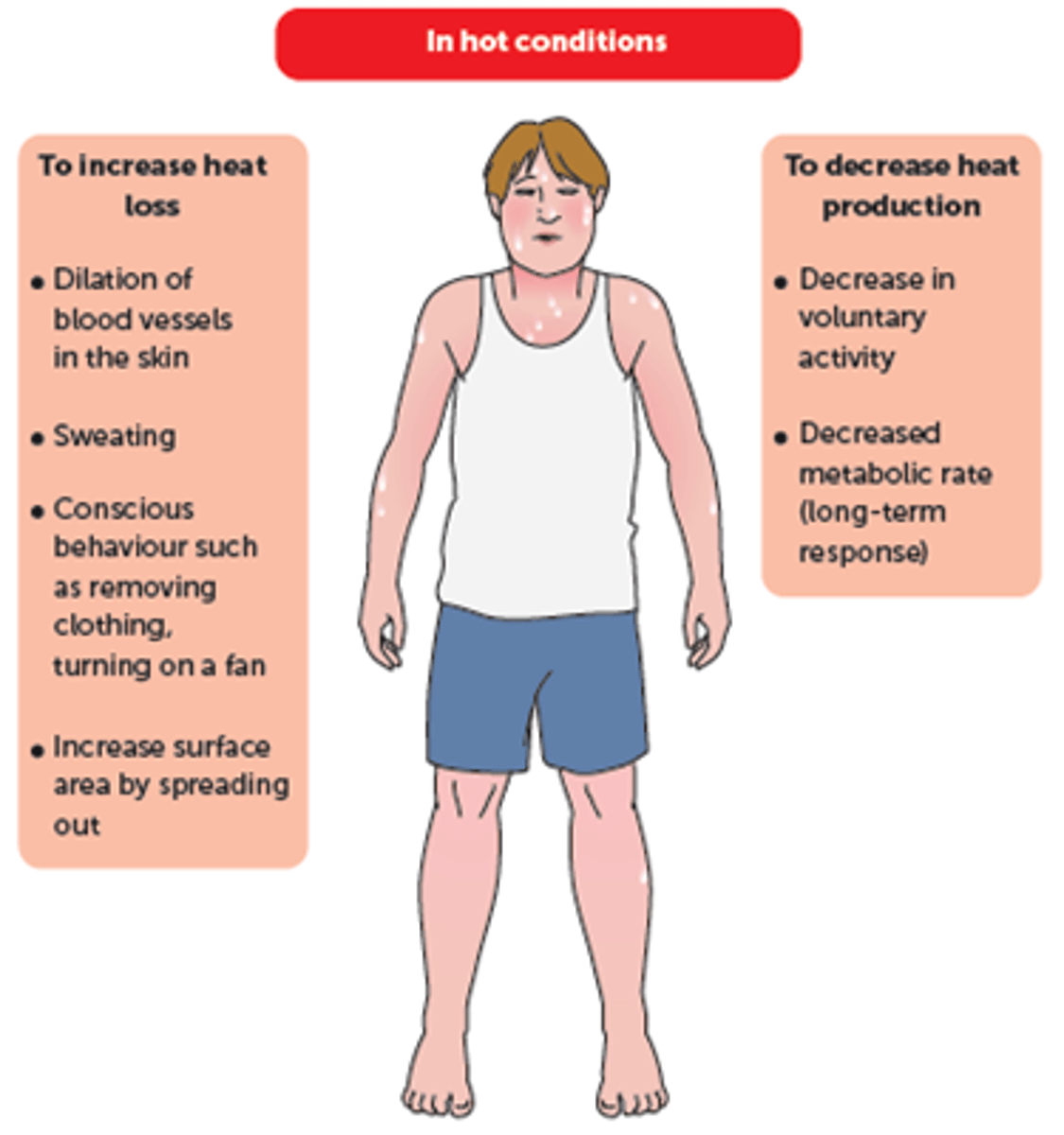
When the weather is warm, or when we exercise, the heat produced by metabolism is greater than that needed to maintain a constant body temperature. This excess heat needs to be lost from the body, otherwise the core temperature will rise. Most heat loss occurs through the skin, although smaller amounts of heat are lost with the gases breathed out from the lungs, and with the faeces and urine.
How do we control thermoregulation?
The hypothalamus exercises control over the various mechanisms involved in Thermo regulation
How is temperature tolerance of heat stroke controlled?
A core body temperature over 42°C is dangerous and death usually occurs if it rises above about 45°C. High body temperature can result from a fever, but it can also occur in certain environmental conditions. When the temperature and relative humidity are high, it is difficult for the body to lose heat by radiation or evaporation. In this case, body temperature rises and the regulatory mechanisms cease, which is called heat stroke. Treatment consists of cooling the body as quickly as possible by immersing the the patient in cold water.
How is temperature tolerance of heat exhaustion controlled?
Heat exhaustion occurs as a result of extreme sweating and vasodilation to lose heat. The loss of water in sweating reduces the volume of blood plasma and the vasodilation reduces resistance to blood flow. Blood pressure is thus reduced and output of blood from the heart decreases.
How is temperature tolerance of hypothermia controlled?
Extreme cold can also cause death.
If a person's core temperature falls below 33°C, the metabolic rate is so low that heat production is unable to replace the heat lost and body temperature continues to fall. This condition is called hypothermia.