Biology Unit: Neuron and the Brain (Jeopardy 1/9 Friday)
 Studied by 0 people
 Call with Kai
 Learn
Learn Practice Test
 Spaced Repetition
 Match
Match Flashcards
 Knowt Play
1/116

There's no tags or description
Looks like no tags are added yet.
Name | Mastery | Learn | Test | Matching | Spaced | Call with Kai |
|---|
No study sessions yet.
117 Terms
Nature vs Nurture
name for a controversy in which it is debated whether heredity genetics or environment is responsible for driving behavior
Nature: genetics
Nurture: environment
Heredity
Genetic or predisposed characteristics that influence physical, behavioral, and mental traits and processes
Genetics = NATURE
Environmental factors
NUTURE: external factors, such as family interactions or education.
These "nonbiological" factors that are involved in a person's surroundings such as the relationship of the person's parents, the person's friends, and the person's behavioral choices.
Evolutionary perspective
applies evolution's "natural selection" and "survival of the fittest" to psychology
our behavior and mental processes TODAY are because of how it helped our species survive thousands of years ago. Those survival traits were passed down and influence us today.
Eugenics
A discredited, unethical, and scientifically flawed idea based on improving human populations based on the ideas of "superior" and "inferior" people
THIS idea was totally unethical - discriminatory policies, including forced sterilization of people with intellectual disabilities (at that time labeled "feeble-minded")
Scientifically flawed and racist
Chemical messengers (systems(
The brain uses two separate chemical messenger systems to communicate with the body and to experience the world.
One system is the nervous system- it uses neurons (cells) that communicate with each other with chemical messengers called neurotransmitters
The other system is the endocrine system - it uses glands that produce hormones. Hormones are chemical messengers that move through the bloodstream.
The nervous system is faster than the endocrine system, but they both might relay the same messages.
Neurotransmitters
Chemicals that enable neurons to communicate and effect our mood, memory, sleep, alertness, pain, and all sorts of psychological processes
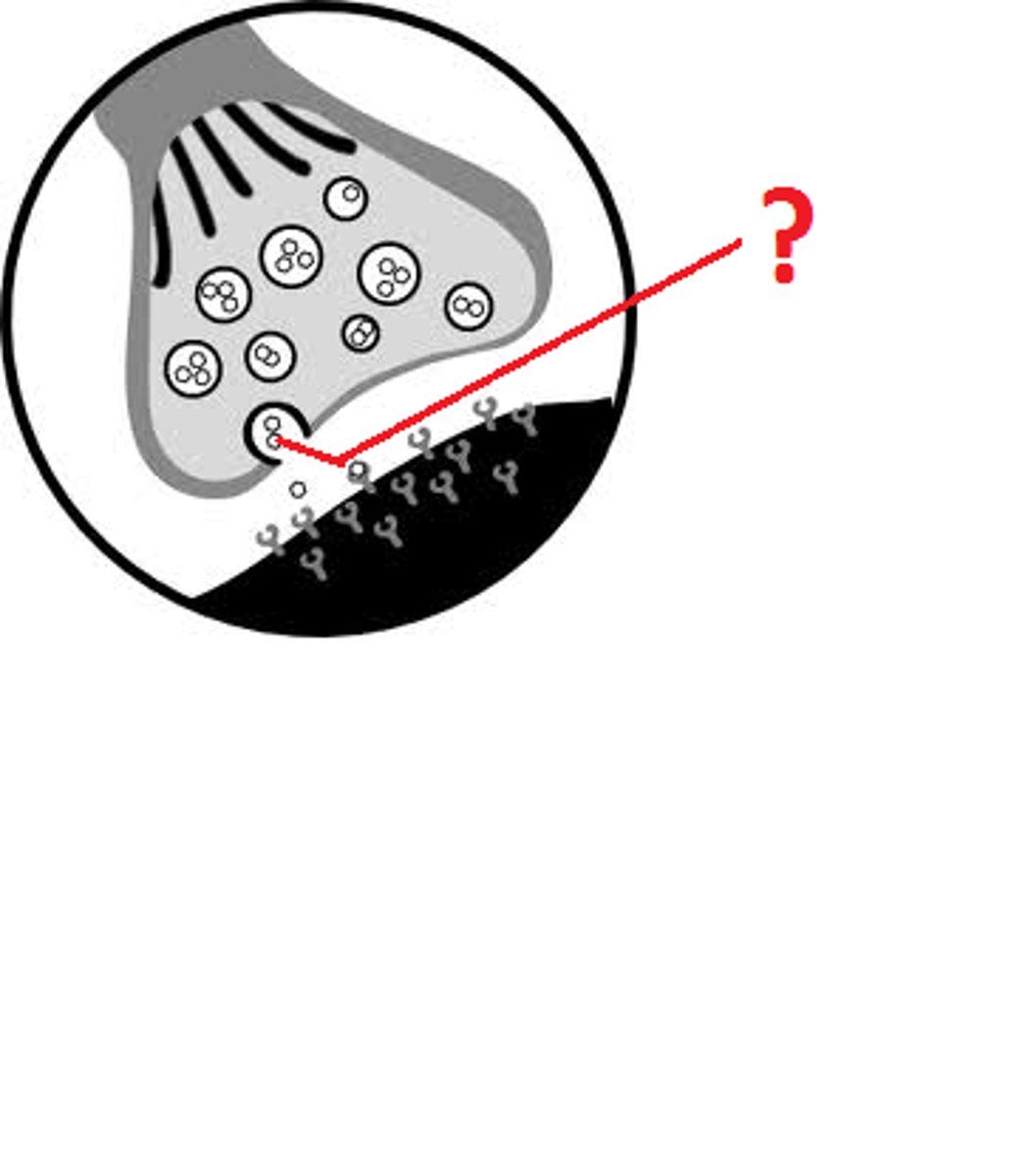
Neurons (the single cells of the brain) send THESE to each other fit into receptor sites on the dendrites of neurons like a key fits into a lock.
The gap between two neurons is called the synapse. This gap is where these chemical messengers move from one neuron to the next.
Chemical messengers: It's basically how two neurons communicate with each other
Examples include dopamine, endorphins, and substance p
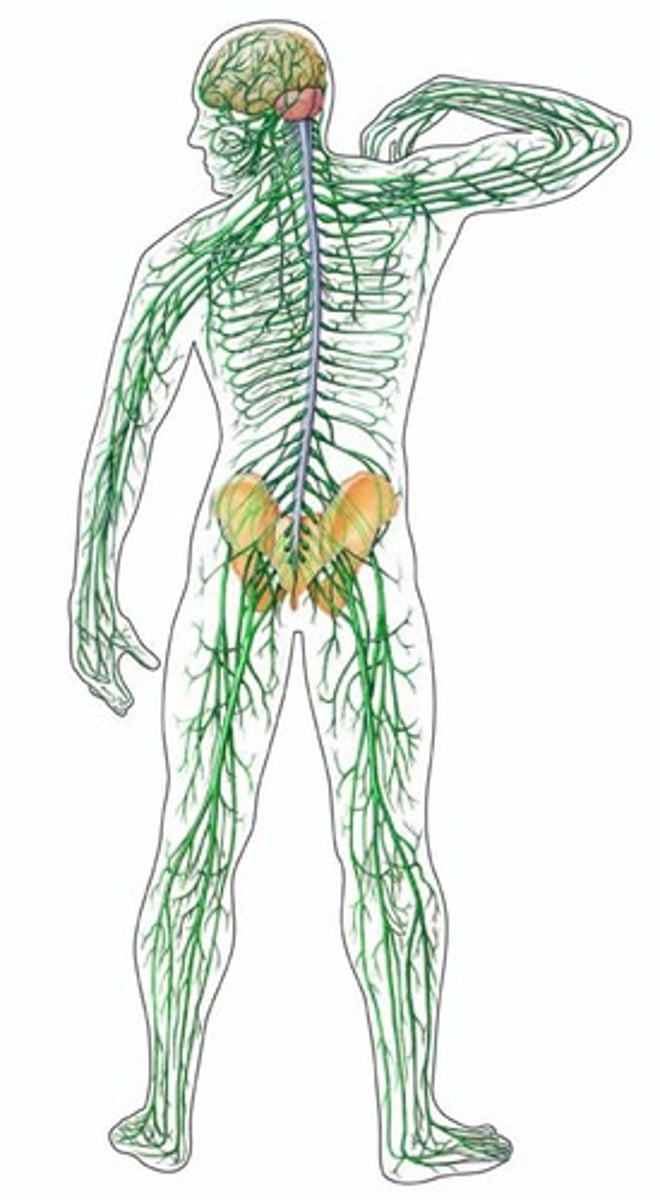
Nervous system
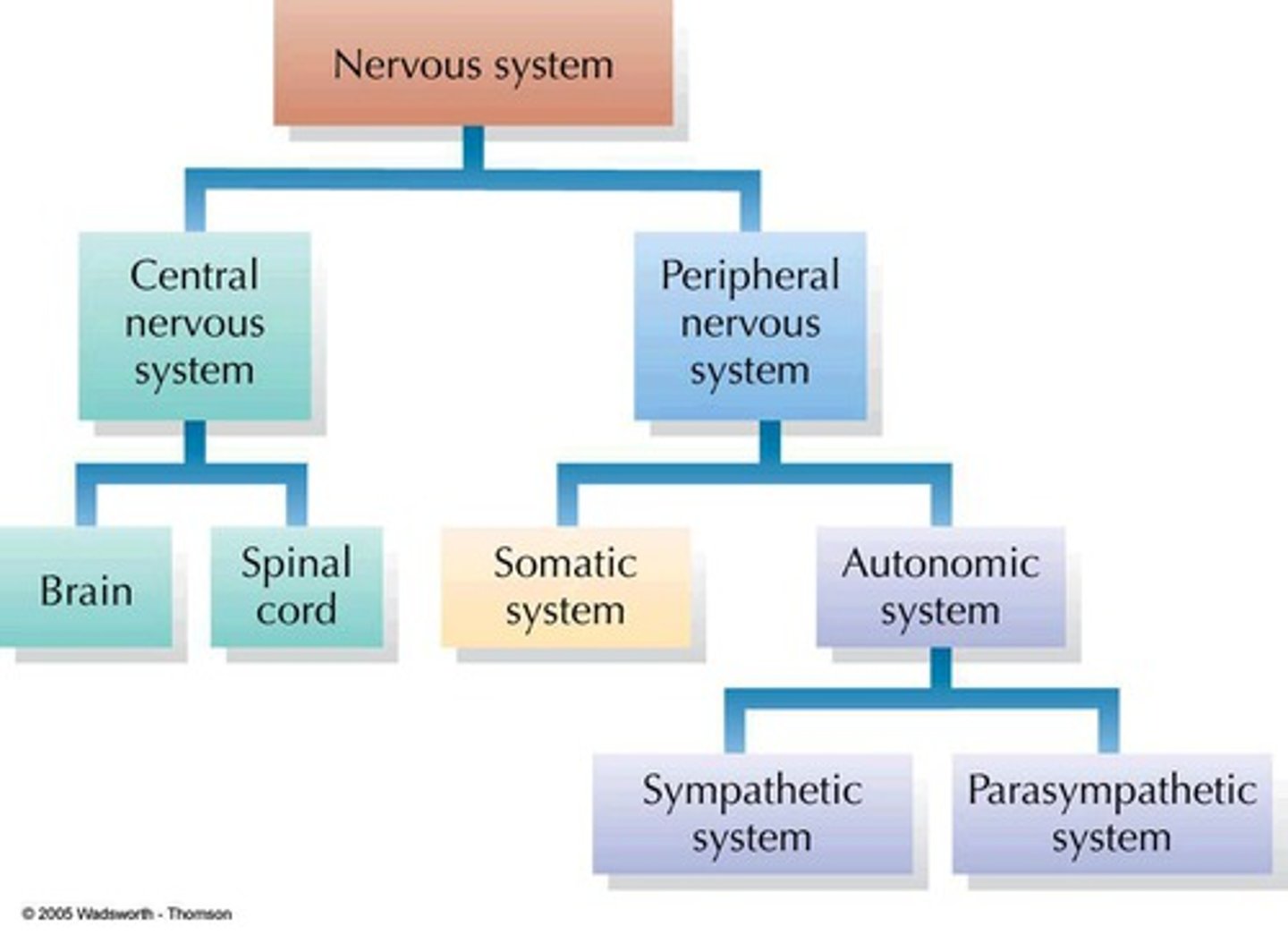
How your body communicates with the brain: it's the speedy, electrochemical communication network, consisting of all the nerve cells of the peripheral and central nervous system
Know this Figure 10.1
Central Nervous System (CNS)
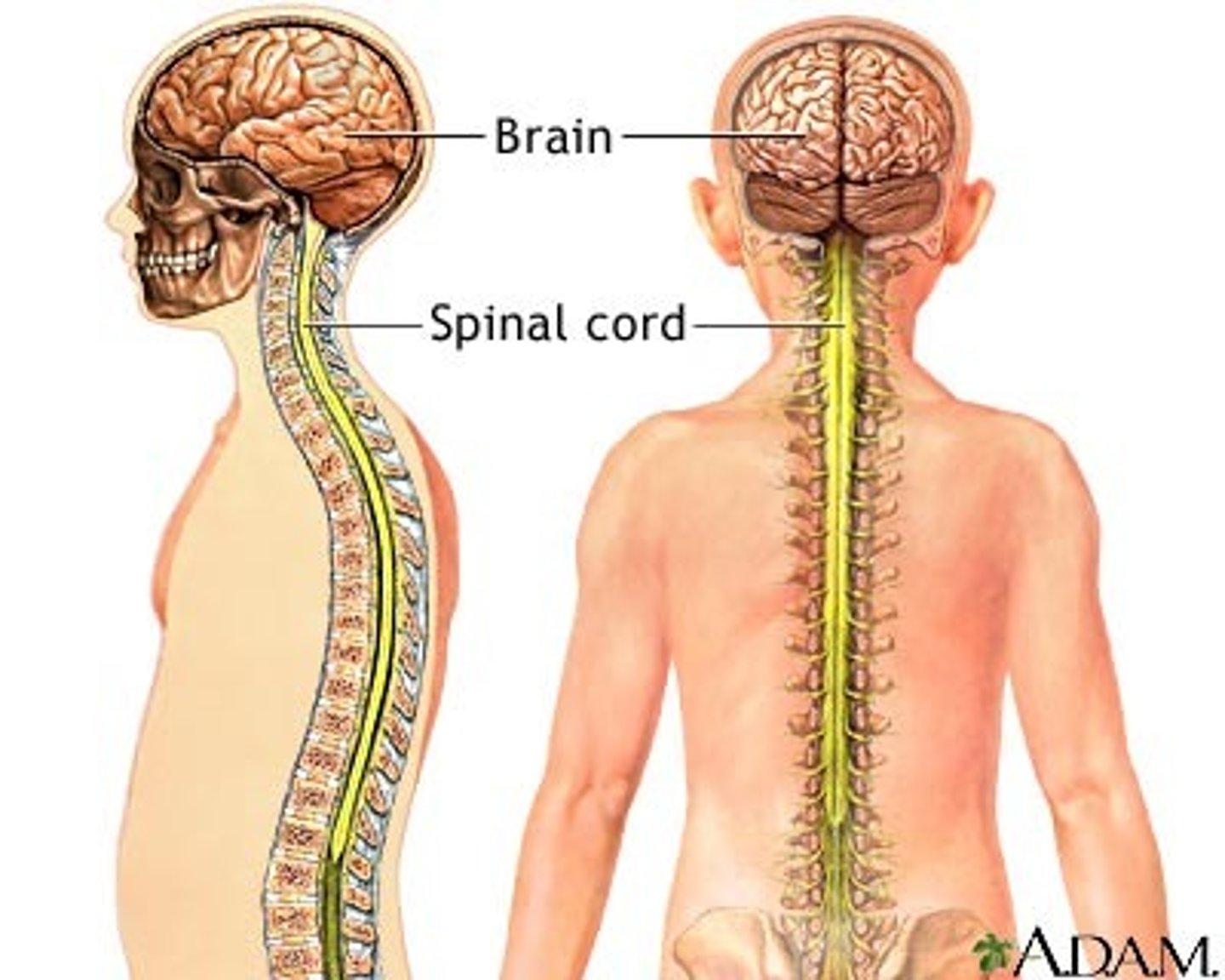
The decision maker: this nervous system only includes the brain and spinal cord
"Housed in bone" - BONE protects both the brain (skull) and spinal cord (vertebrae "backbone")
peripheral nervous system (PNS)
the sensory and motor neurons that connect the central nervous system (CNS) to the rest of the body
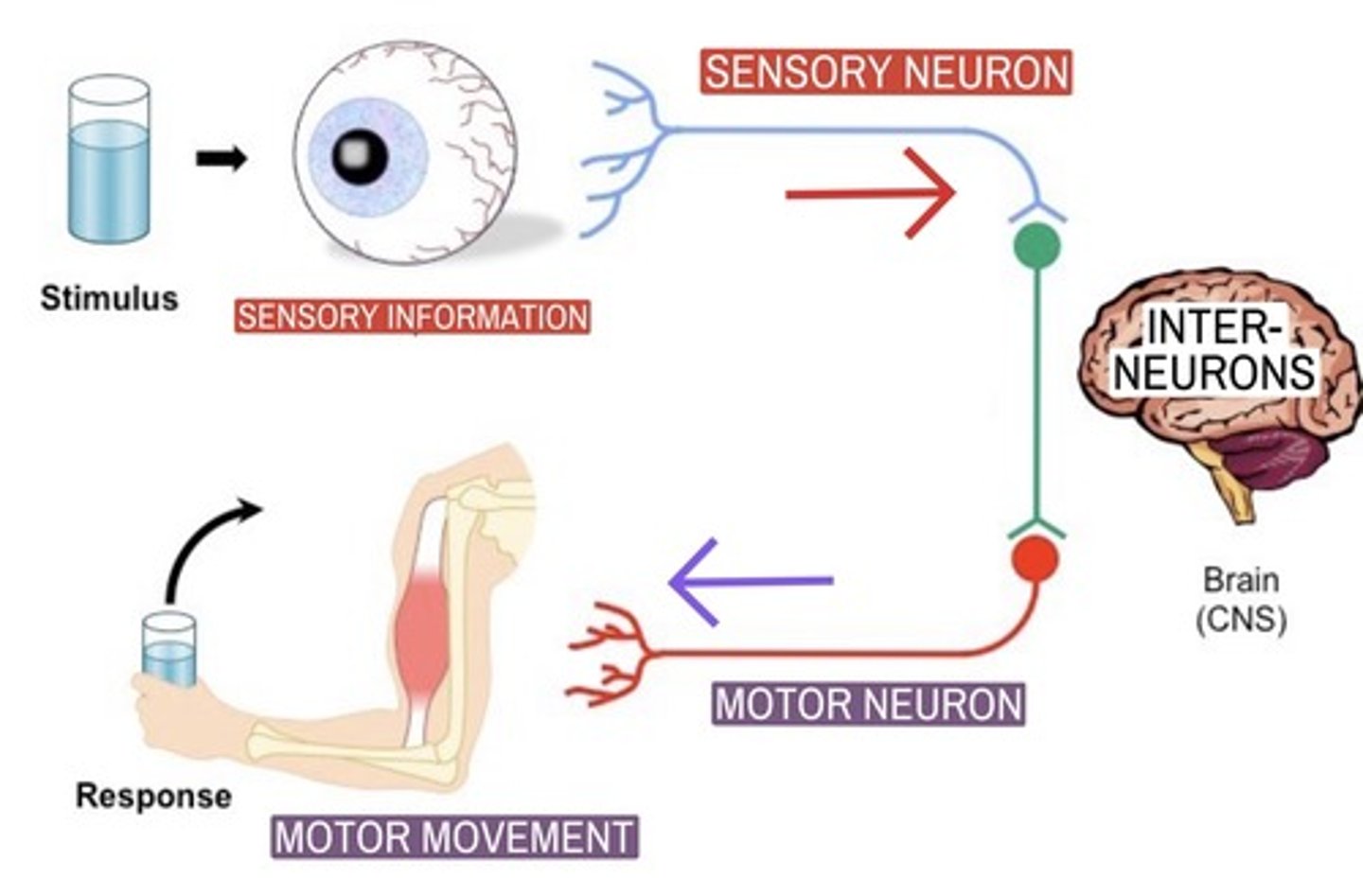
sensory neurons
neurons that carry incoming information from the sensory receptors to the brain and spinal cord
Example: When you touch something, these neurons send a message to the brain so you feel it
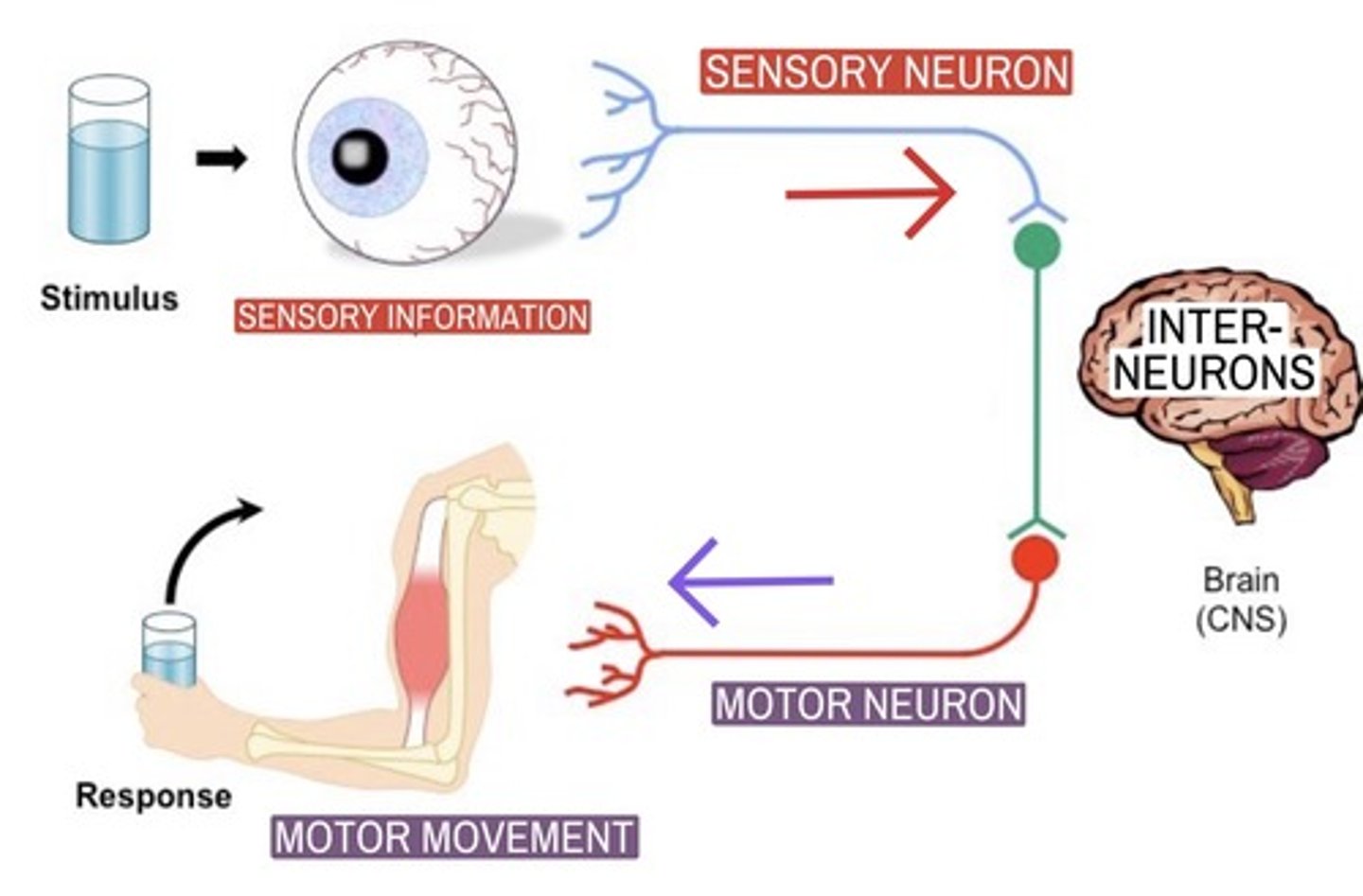
motor neurons
neurons that carry outgoing information from the brain and spinal cord to the muscles and glands
Example: When you decide to move your arm, you send a message that FROM the brain that moves your arm

interneurons
neurons within the brain and spinal cord that communicate internally and intervene between the sensory inputs and motor outputs
The "in between" neurons
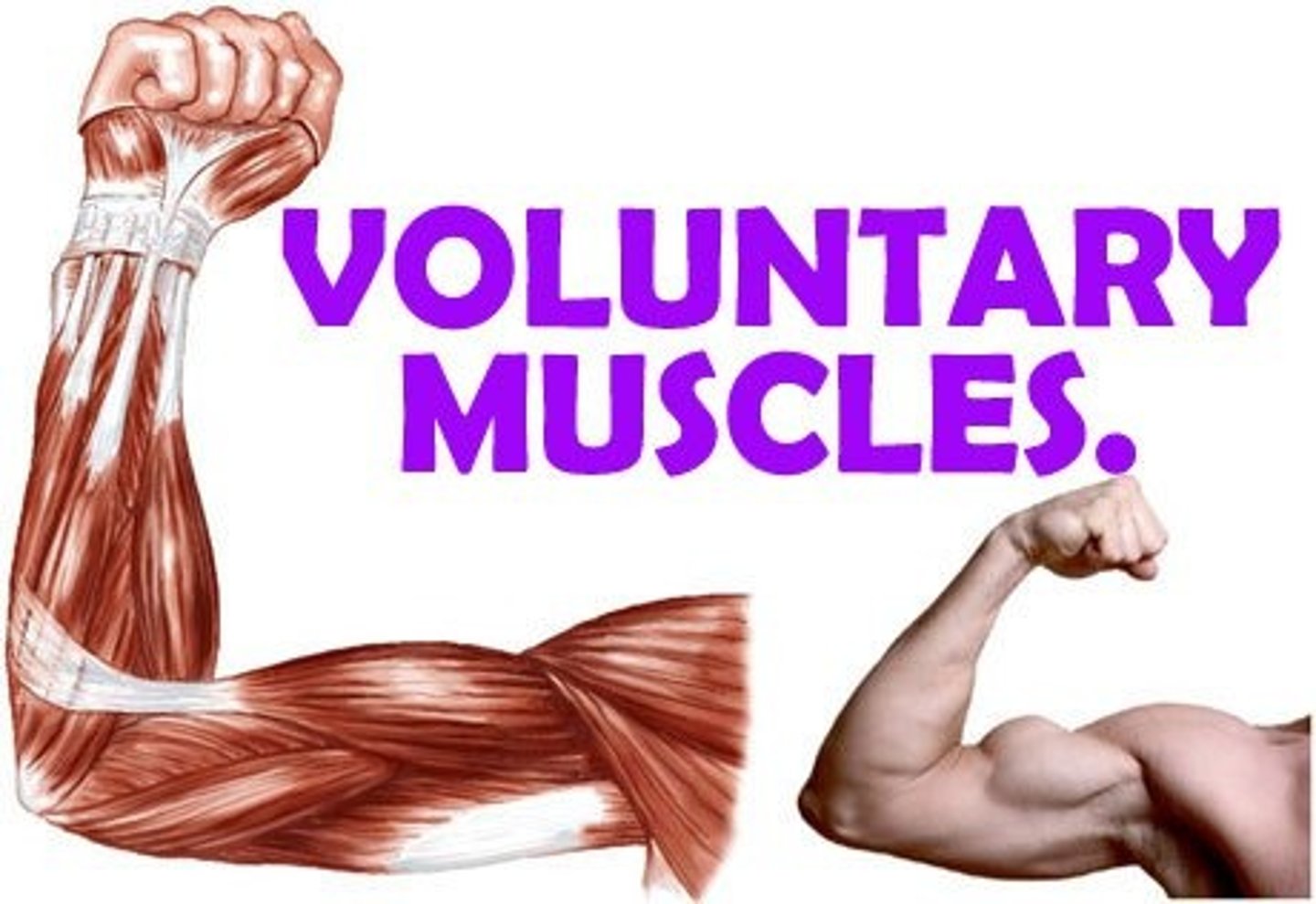
somatic nervous system
the division of the peripheral nervous system that controls the body's skeletal muscles
VOLUNTARY muscle moments

autonomic nervous system
All the "automatic" stuff that happens without you having to think about it - the part of the peripheral nervous system that controls glands and the muscles of the internal organs. Like your heart is beating automatically - you don't even think about it
Divided into sympathetic and parasympathetic
Know this Figure 10.2
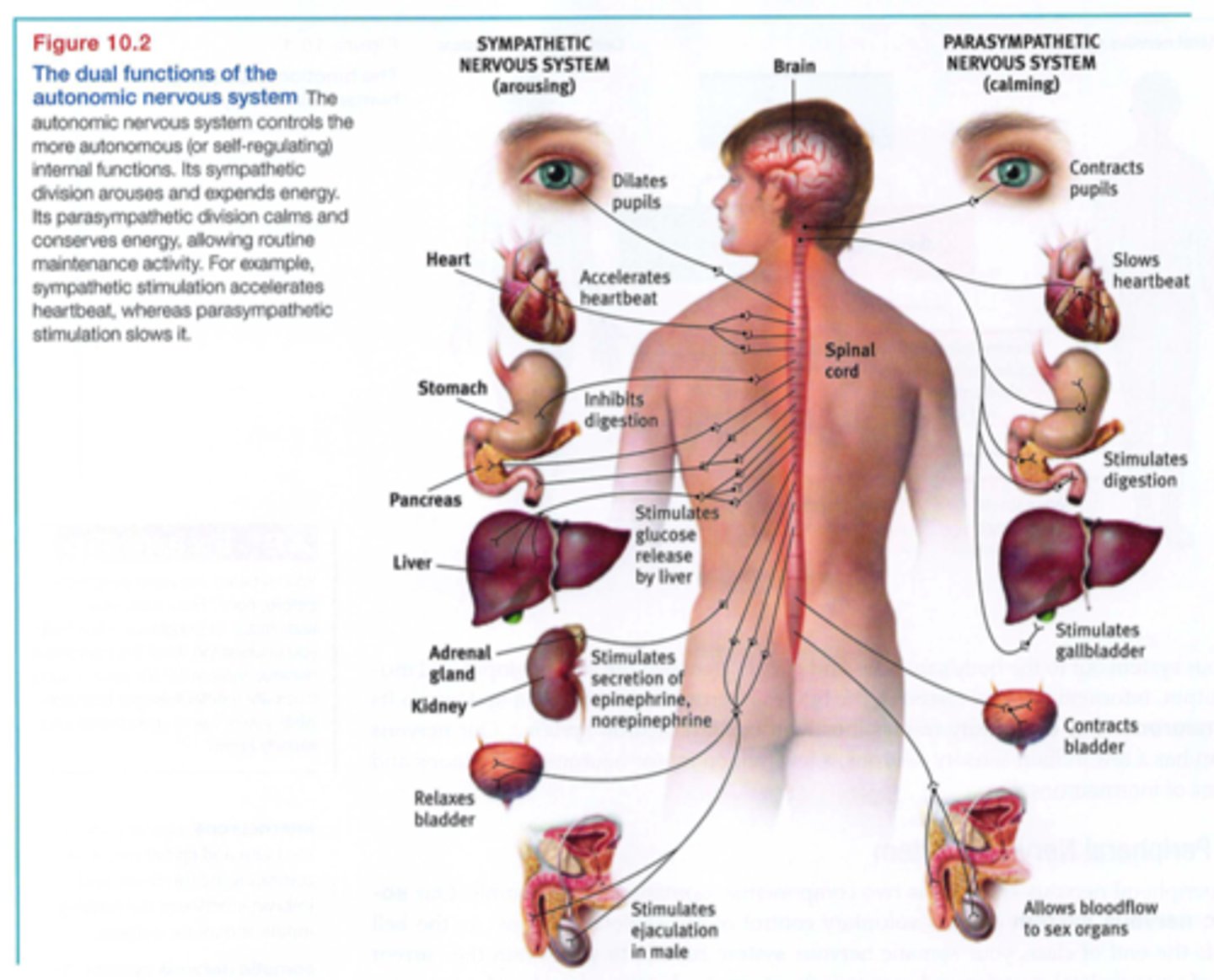
sympathetic nervous system
Nicknamed: Fight or Flight
GETS YOU READY FOR A STRESSFUL SITUATION
The amygdala in the brain sounds this fight or flight alarm
the division of the autonomic nervous system that arouses the body, mobilizing its energy in stressful situations
To save energy sources to be used for fighting the stress, THIS will:
· Dilate pupils
· Accelerate heart rate and blood pressure - and blood is re-routed to more essential organs, like legs to kick or run
· Release sweat (sweaty palms)
· Inhibit saliva (dry mouth)
· Inhibit digestion (might even throw up contents of stomach)
· Sends energy to the leg muscles
· You get the chills (goosebumps!) with less blood in the skin to keep you warm
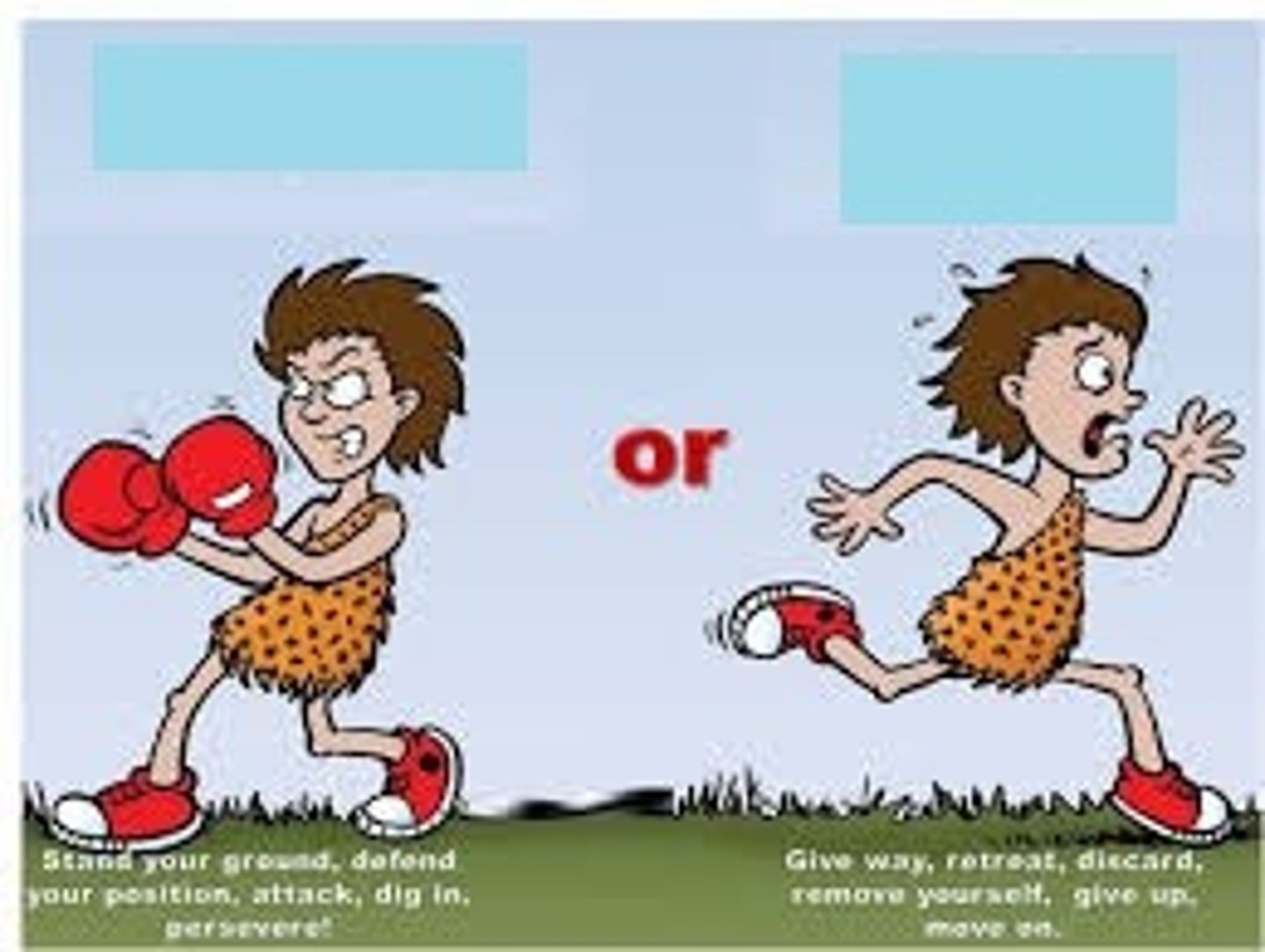
parasympathetic nervous system
Nicknamed: Rest and Digest
the division of the autonomic nervous system that calms the body after the stressful event, conserving its energy.
Since your body no longer needs to save the energy to fight the stress, THIS will:
· Constrict pupils
· Return heart rate and blood pressure to normal
· Stop sweating
· Stimulate saliva
· Stimulate digestion
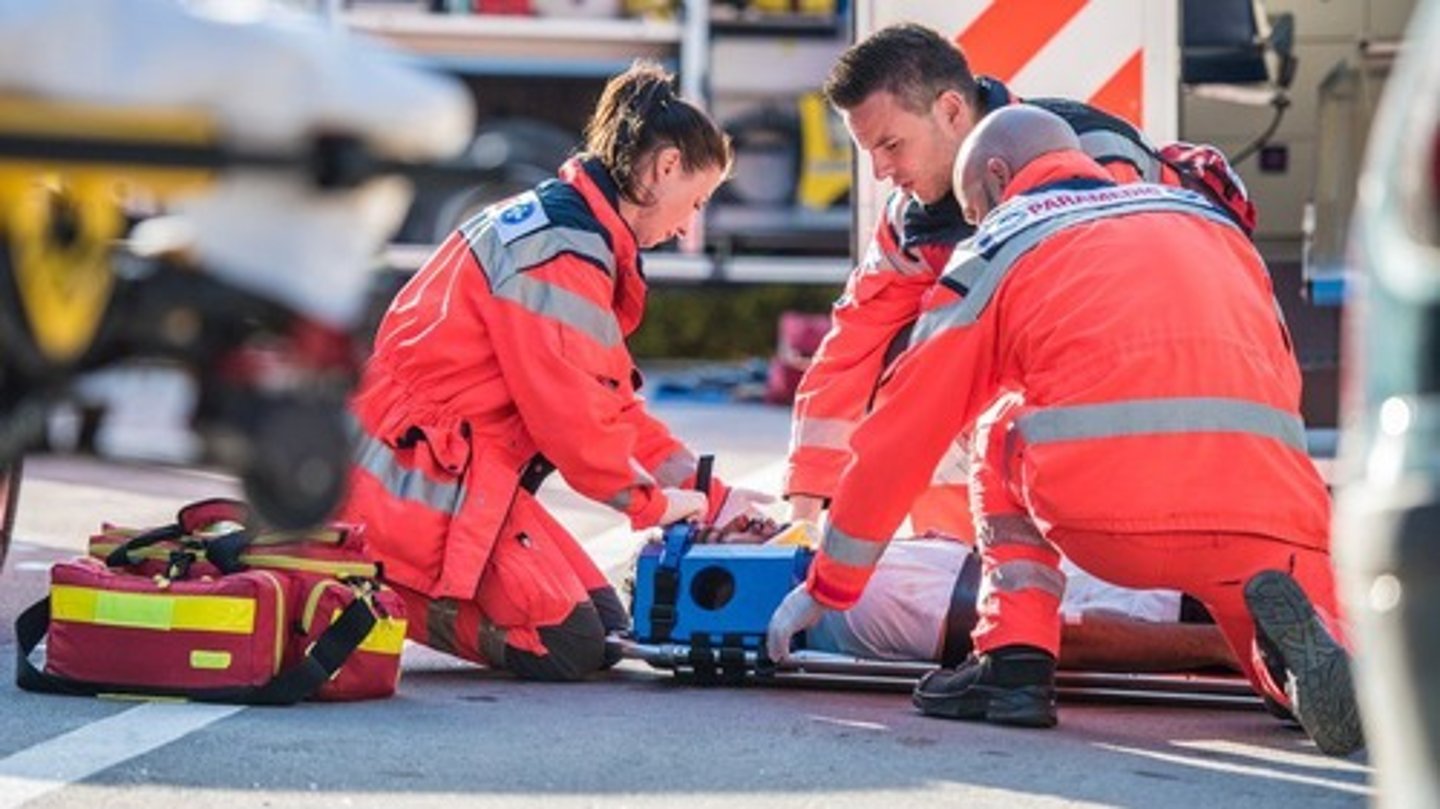
THINK PARA-medics calm you down after you've been in a stressful situation, just like this nervous system calms you down after stress
Deep breathing
A WAY TO STOP THE AMYGDALA HIJACK! If you feel anxiety, your amygdala has activated your sympathetic nervous system. DEEP BREATHING will begin to activate your parasympathetic nervous system. So in a stressful situation DEEP BREATHING will help calm your anxiety
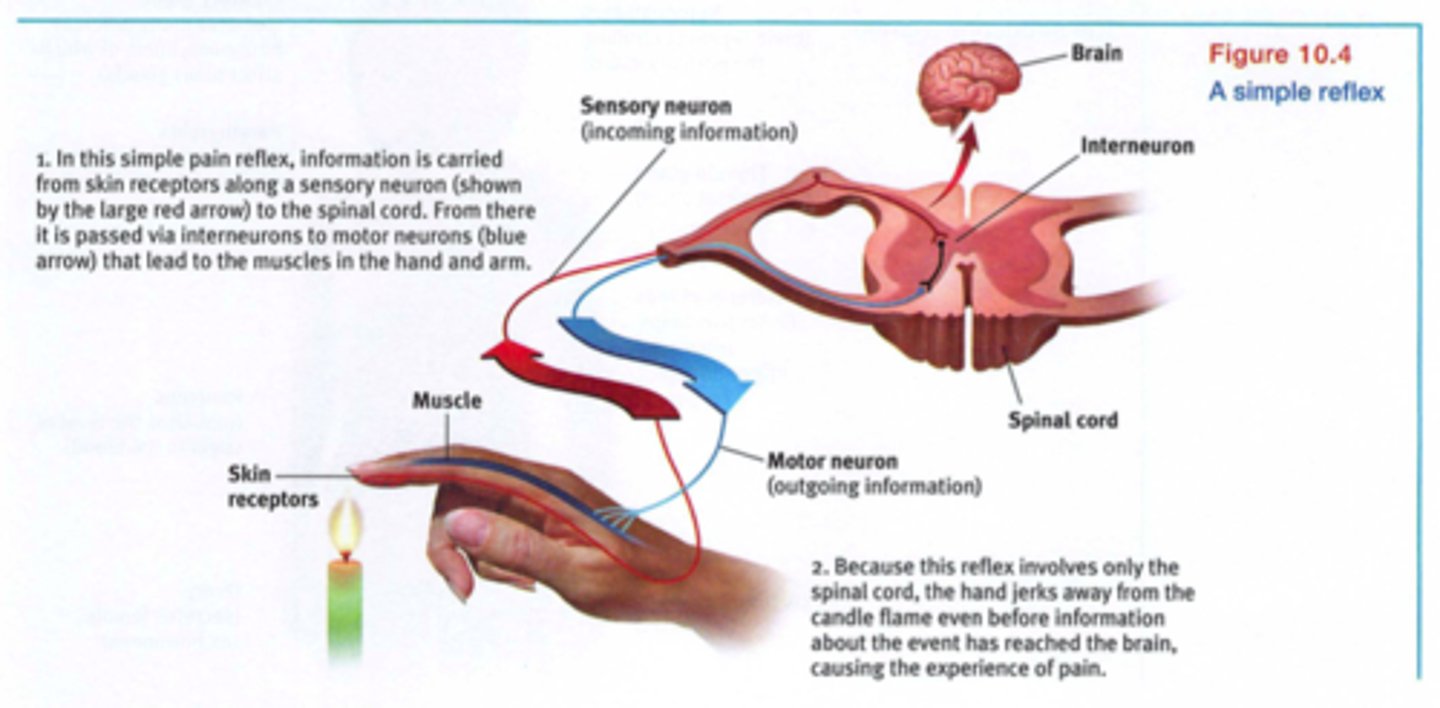
Reflex arc
a simple, automatic response to a sensory stimulus, such as the knee-jerk response
In this rare case, YOUR SPINAL CORD DOES THE "THINKING"! For speed, the interneurons that are in the spine make the decision to pull your hand away from danger
Know this Figure 10.4
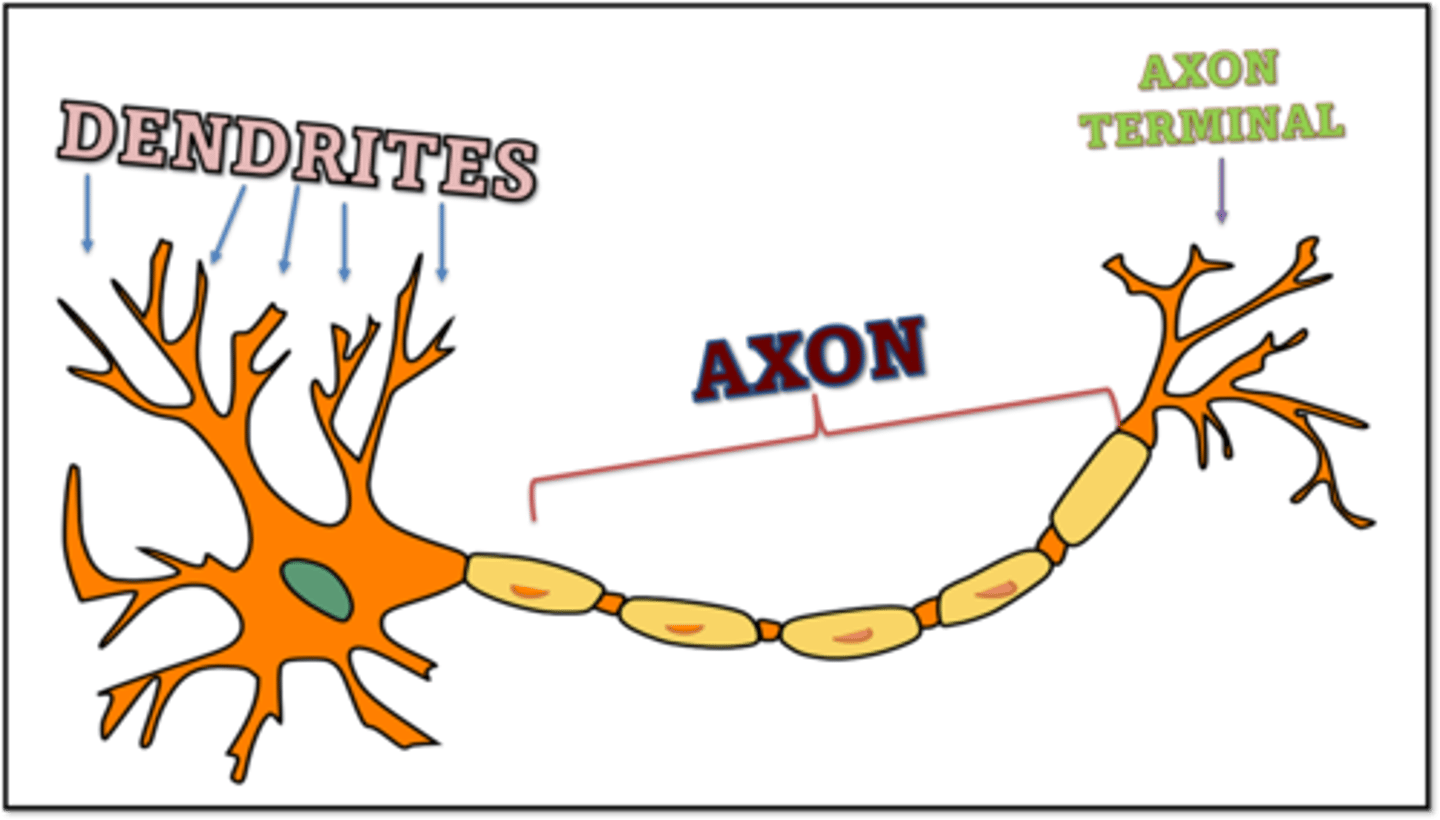
Neuron
a nerve cell; the basic building block of the nervous system
From the picture: Know the dendrites, the axon, and the axon terminal
Neural transmission
This a two step process:
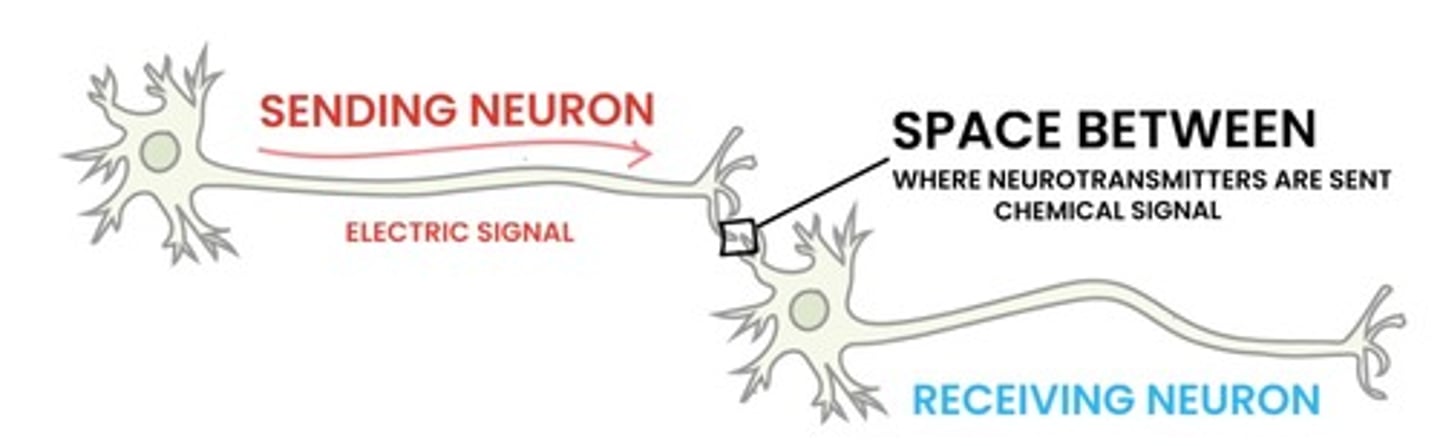
1. Electric signal within the neuron- the message shoots down the length of the neuron - the neuron "fires"
2. Chemical signal in between - Then, between two neurons there's a space called the SYNAPSE where chemical messages called neurotransmitters are sent
So electricity travels within the cell and chemicals (neurotransmitters) travel between cells in the synapse. Electricity does not jump between neurons.
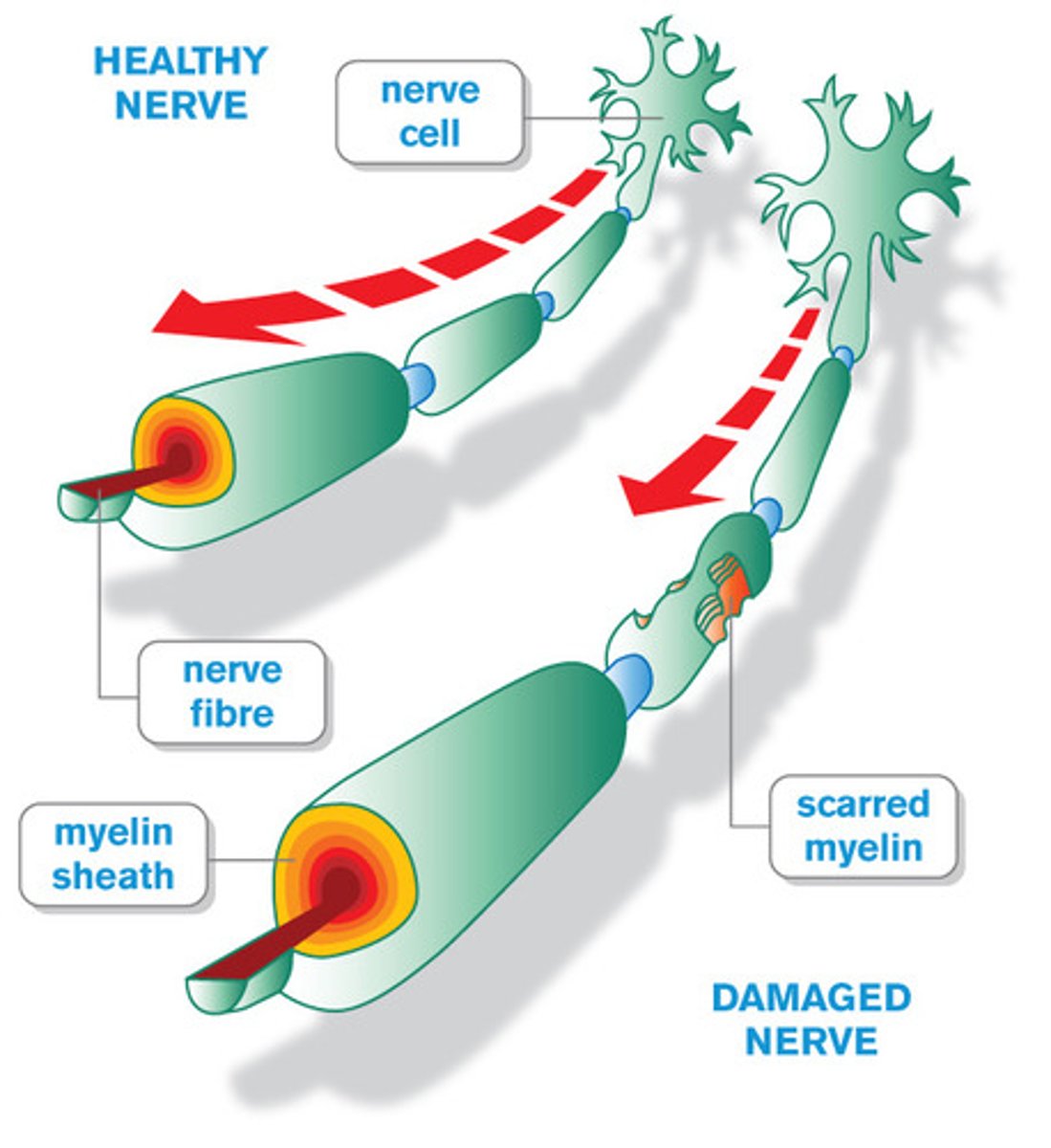
multiple sclerosis (MS)
A chronic disease of the central nervous system marked by scar damage to the neuron's axon which disrupts neural transmission - the neuron can't fire properly
Scar tissue plaques occur in the brain and spinal cord causing tremors, weakness, in coordination, paresthesia (the feeling of tingling, numbness or “pins and needles.”), and disturbances in vision and speech
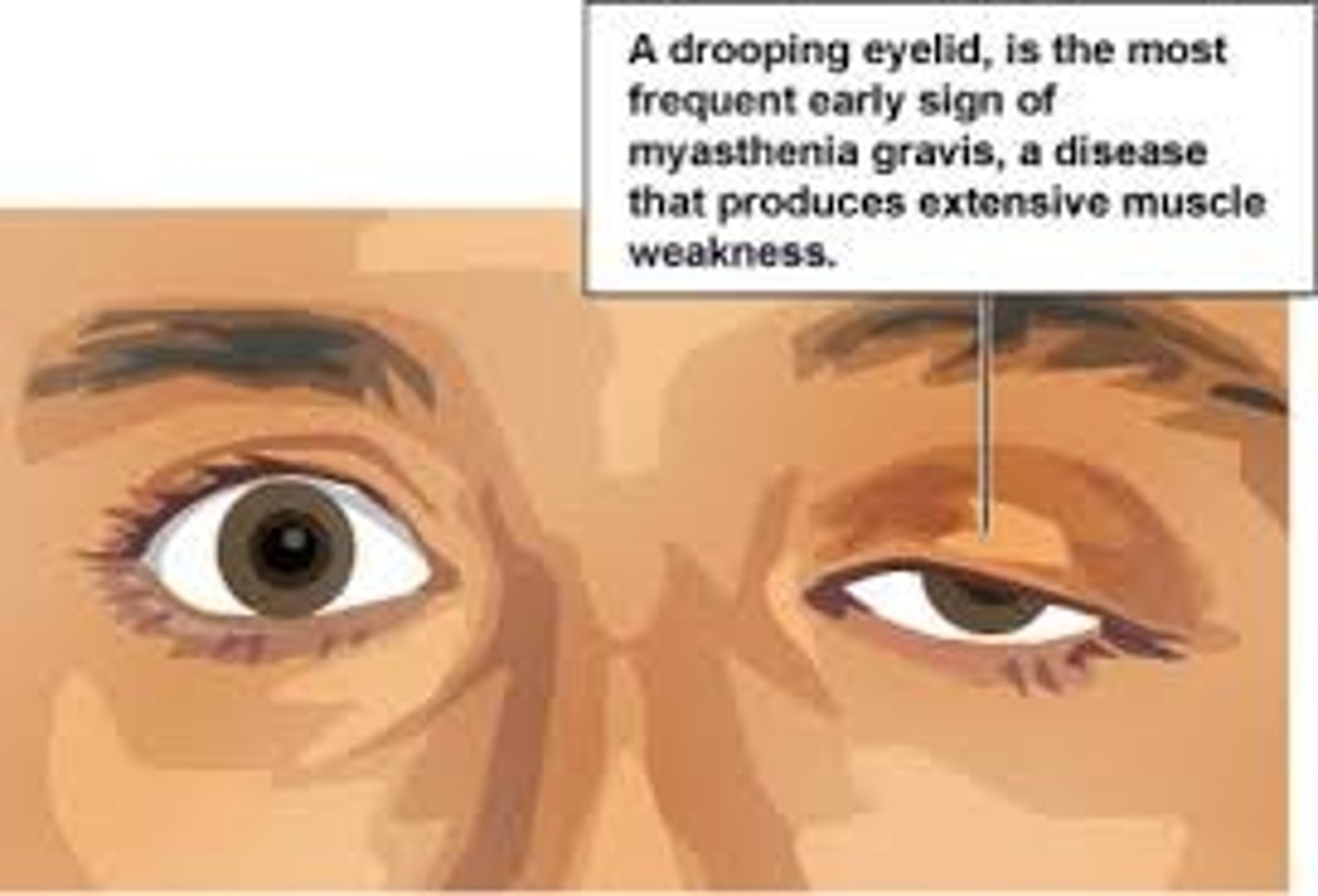
myasthenia gravis (MG)
autoimmune neuromuscular disorder characterized by weakness of voluntary muscles - the body produces antibodies against the neurotransmitter acetylcholine, which is a neurotransmitter responsible for motor movement
this disease disrupts neural transmission of acetylcholine
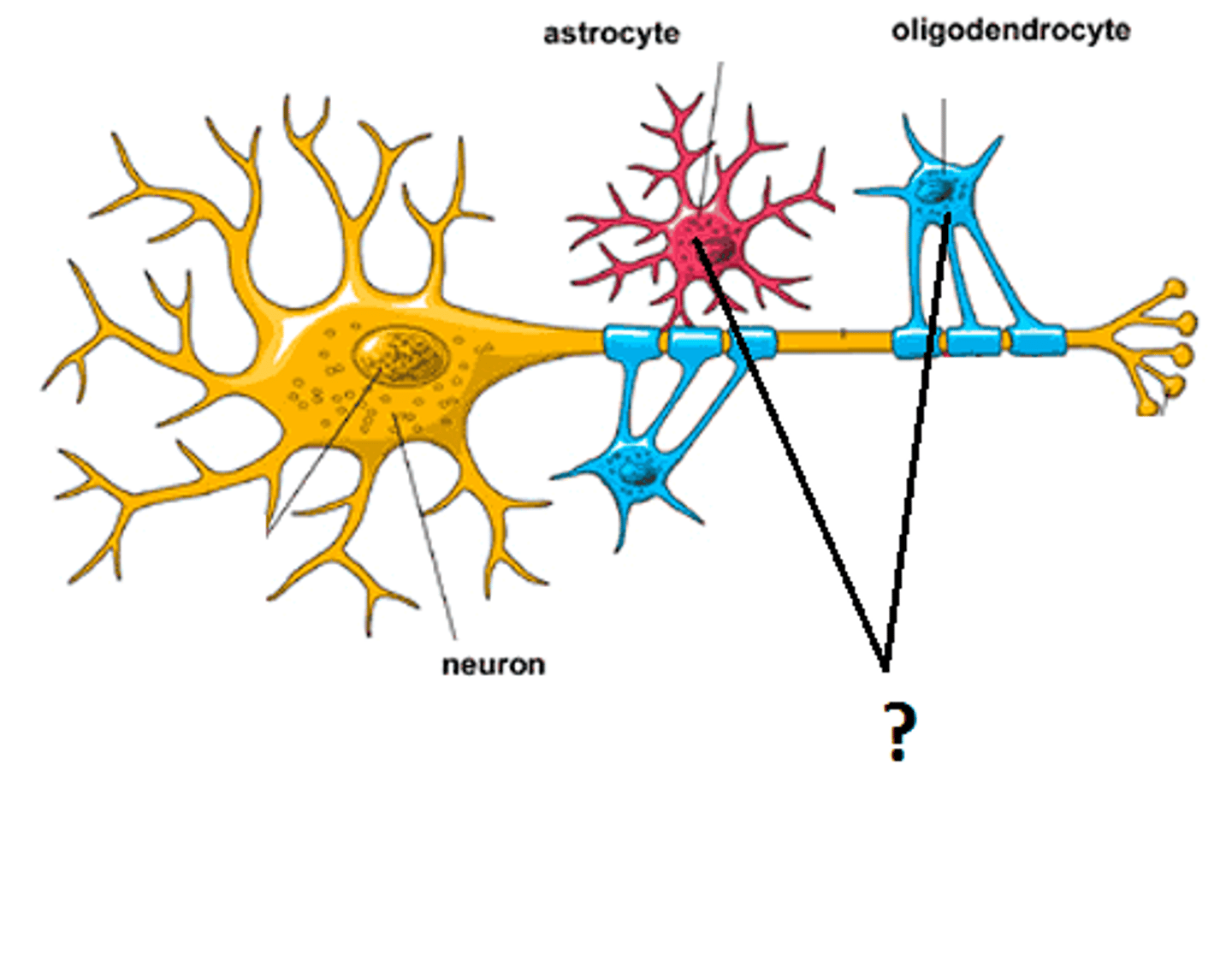
Glial Cells
The repair cells for the neuron. Like the pit crew at a car race. Greek for "glue"
These cells provide structure, insulation, communication, and waste transport
all-or-none response
a neuron's reaction of either firing (with a full-strength response) or not firing at all
A neuron firing is like a bullet from a gun - it either travels out of the gun at 100% speed or it does not come out at all
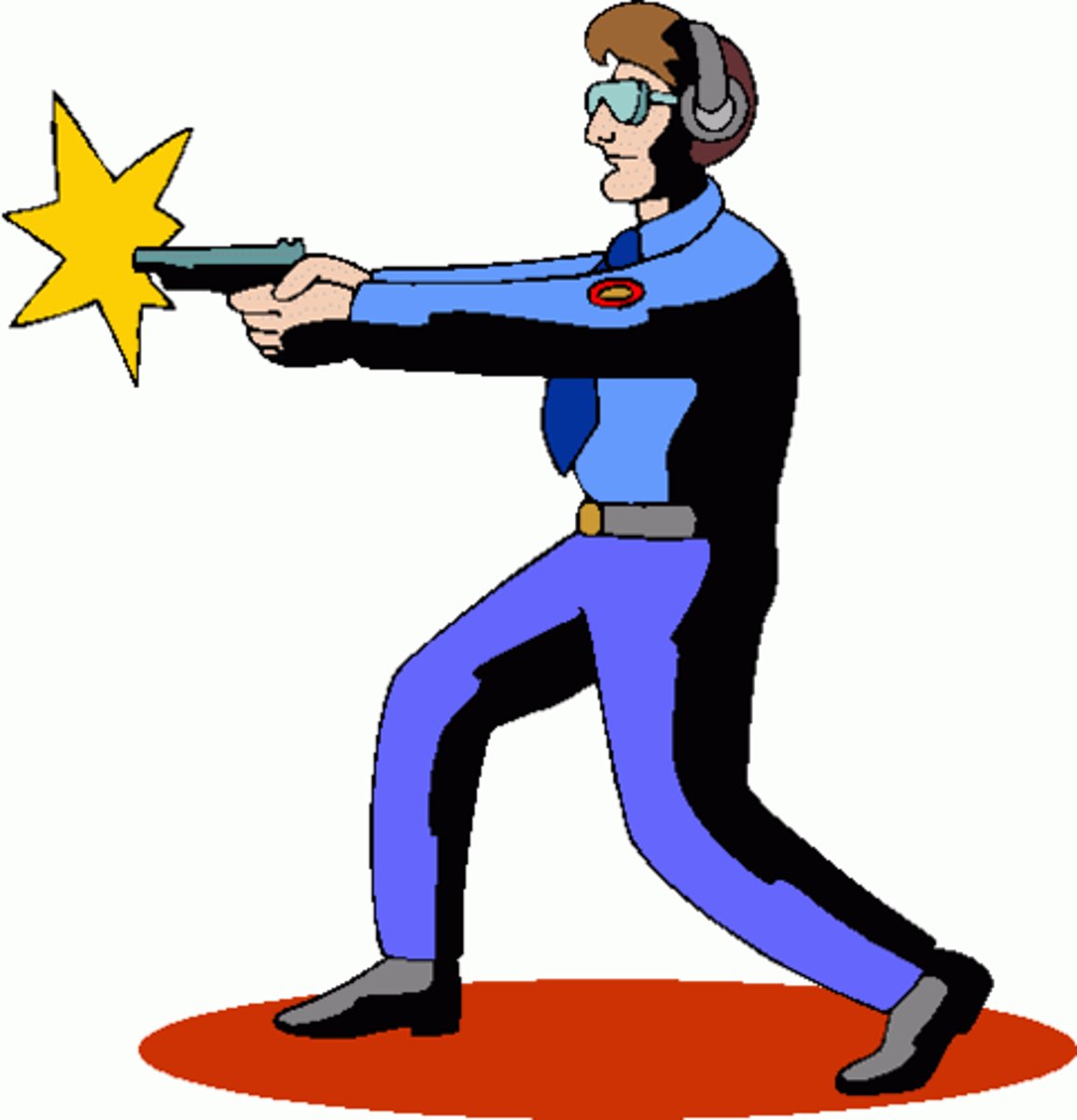
Intensity of neuron firing: How can we tell the difference between a whisper and a scream if neurons fire "all-or-none"?
Hearing a whisper vs a scream requires neurons firing
Signals can be less intense or more intense if you think of a neuron firing being similar to a gun firing.
Bullets, just like neurons, only travel "all or none"
However, more damage can be done with either (1)more guns or (2)one gun shooting multiple times - so a neuron firing representing a whisper has very few neurons firing very few times - but a neuron firing representing a scream will have many more neurons firing many more times
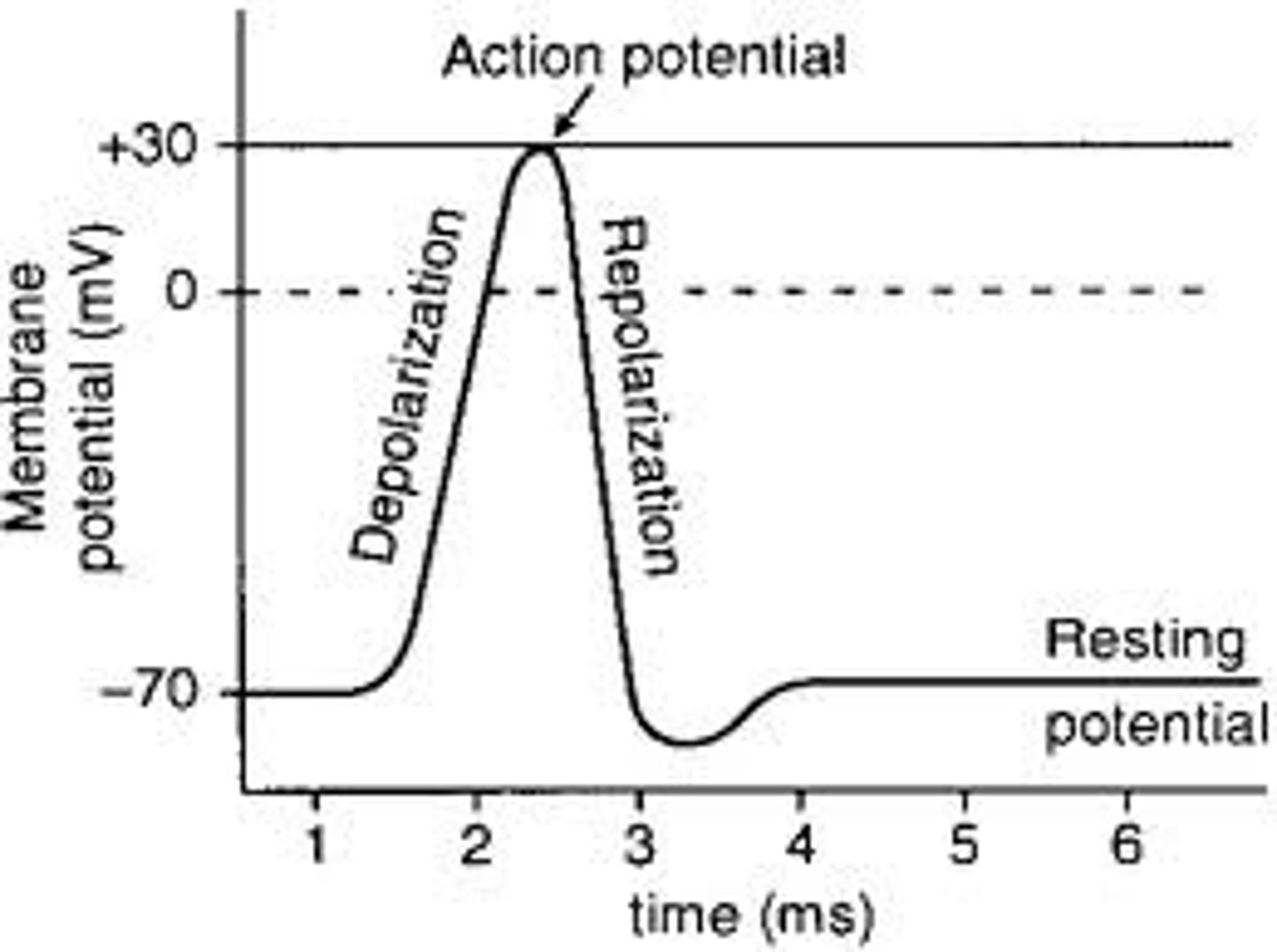
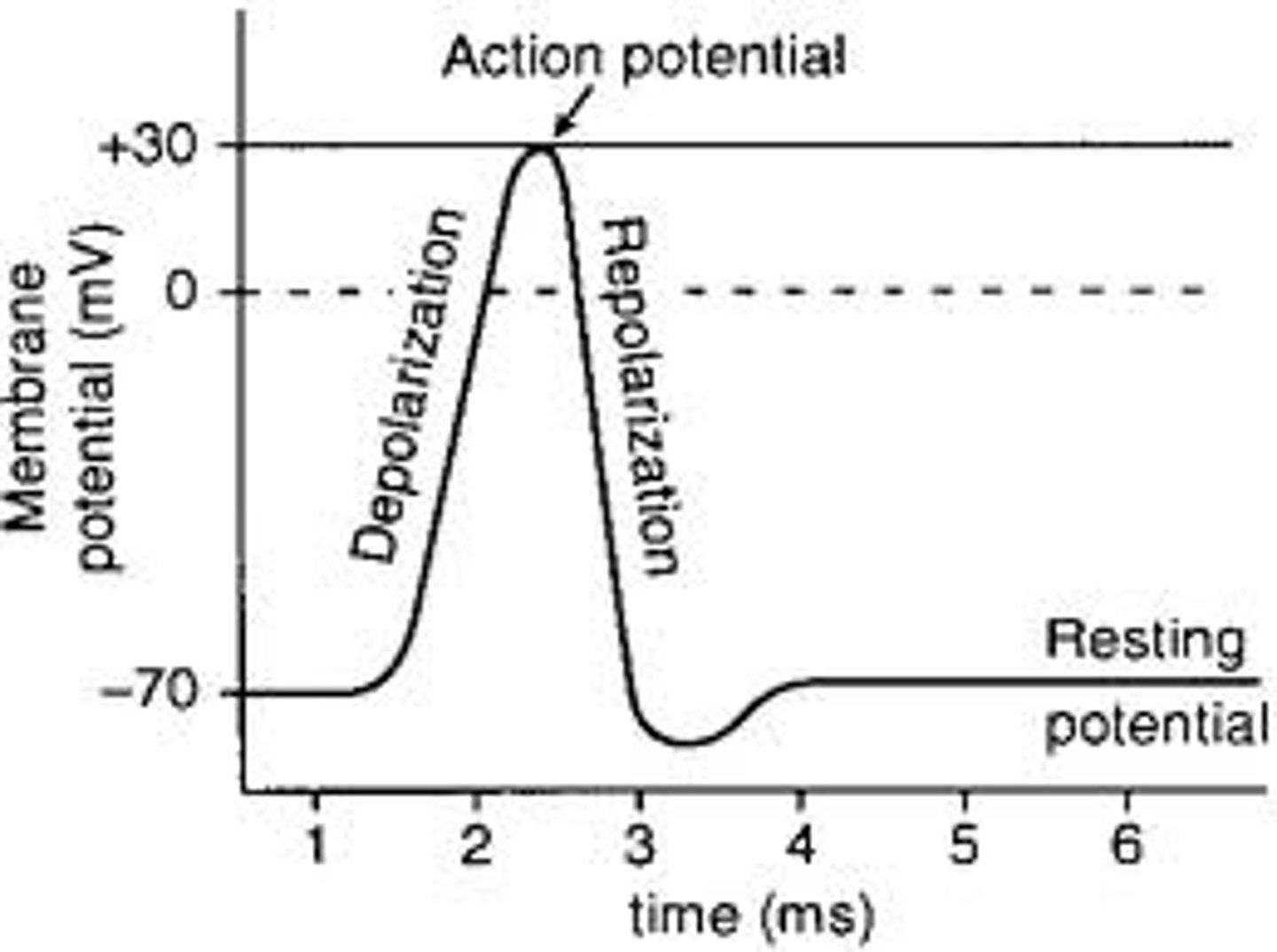
Resting potential
BEFORE THE NEURON FIRES: When the neuron is at THIS state, the charge is positive on the outside and negative on the inside
THE SIGNAL IS ELECTRIC SO WHEN THERE IS NO SIGNAL IT'S ACTUALLY LESS THAN ZERO ELECTRIC! -70mv
threshold
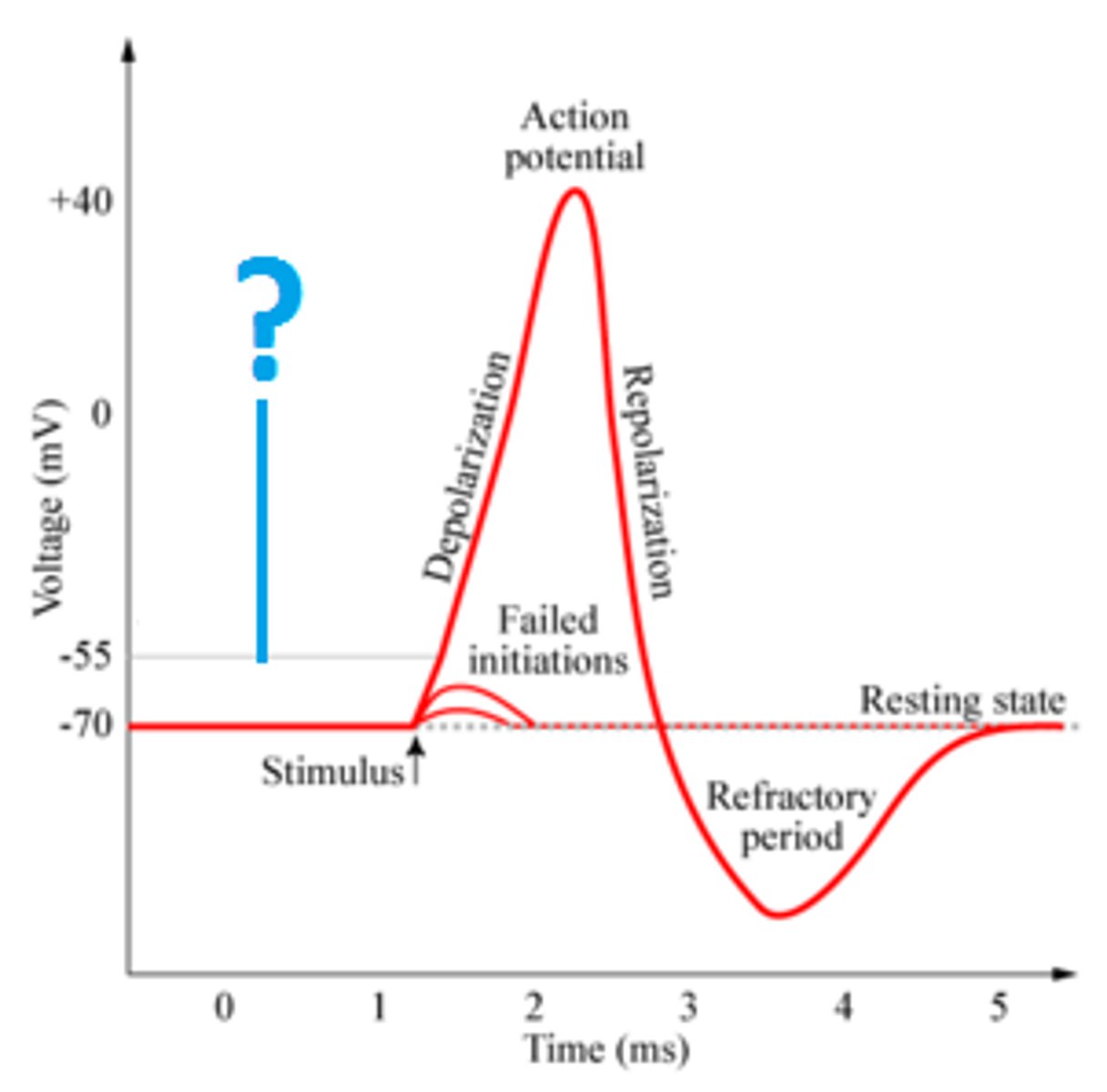
the level of stimulation required to trigger a neural impulse - the neuron to "fire" it needs this level reached
Usually around -55mv is THIS
The neuron will fire "all" if THIS is reached. It won't fire at all if THIS is not reached.
Depolarization
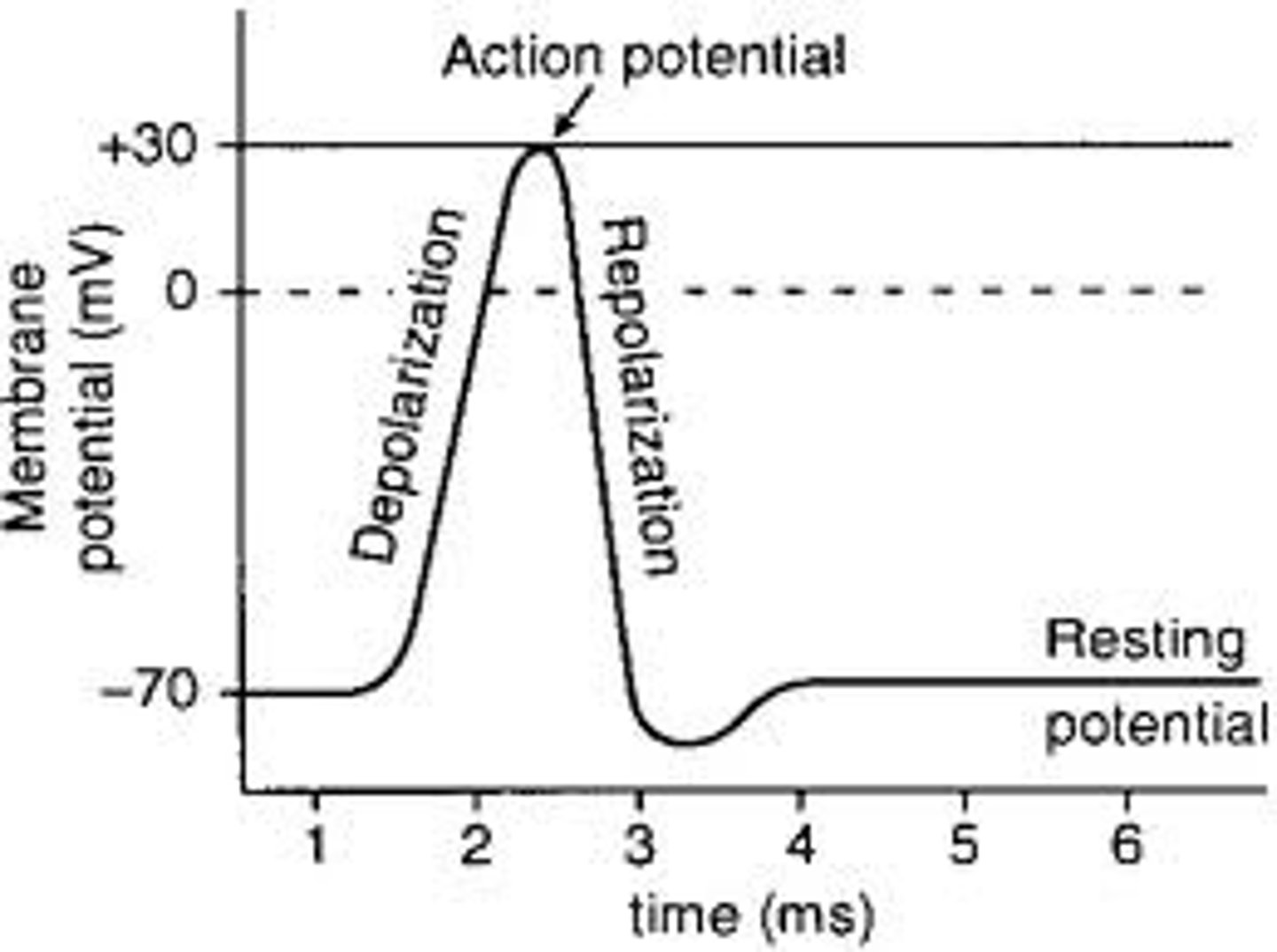
THE NEURON IS GETTING READY TO FIRE: Sodium ions rush in and causes the inside of the axon to become positive
If the inside depolarizes enough to hit -55mv, then it will fire a signal which will travel down the length of the axon like a bullet from a gun
Refractory period
The refractory period is a state of recovery that occurs after a neuron has fired. During this period, it cannot fire again.
excitatory signals
These are the neurotransmitter signals that tell the next neuron to fire. These signals make an action potential in the next neuron more likely.
Like an accelerator - THESE try to get the next neuron to fire
inhibitory signals
THESE neurotransmitter signals are like the break pedal. These signals make an action potential in the next neuron less likely.
They tell the next neuron NOT to fire
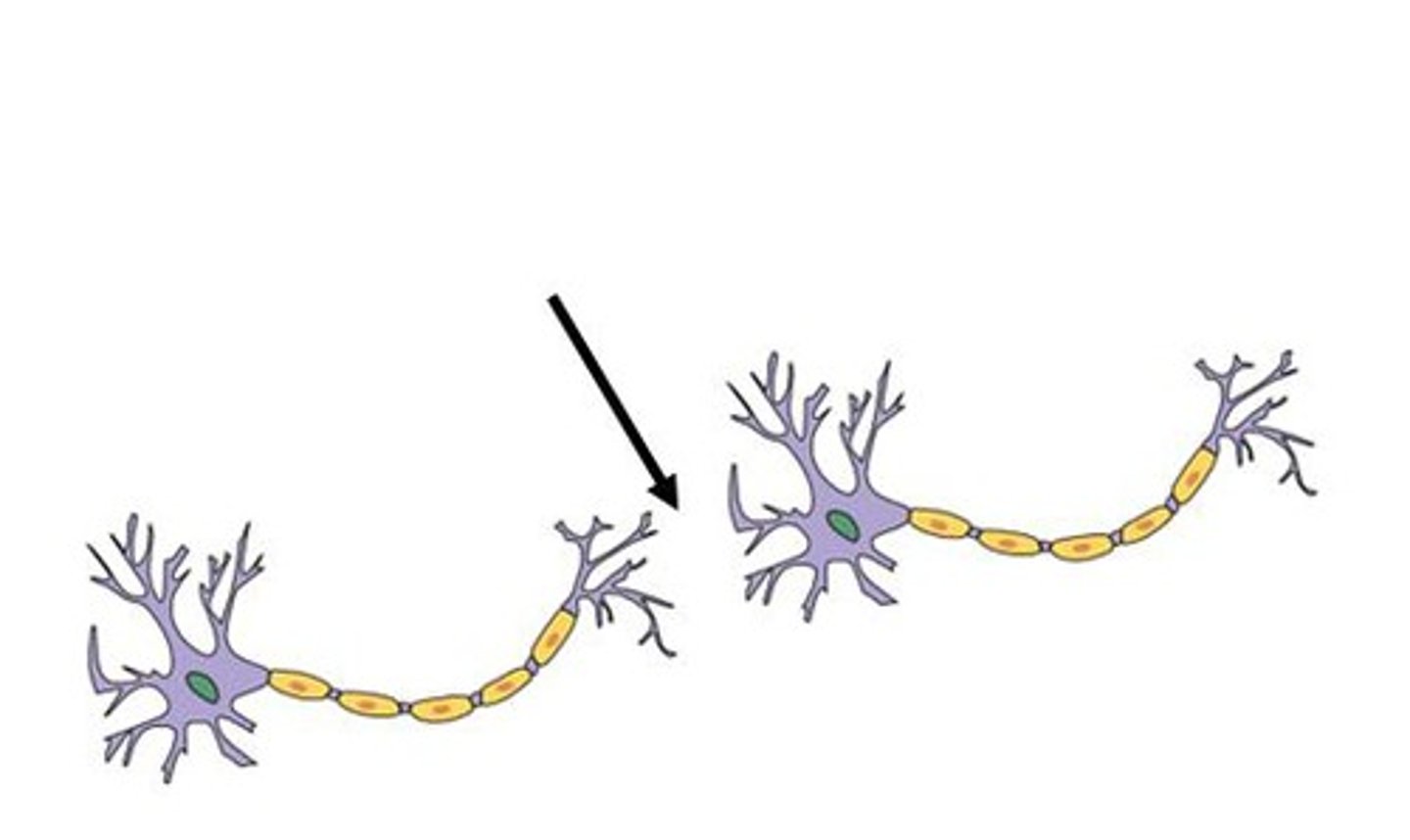
synapse
the tiny space between the axon terminal of the sending neuron and the dendrite of the receiving neuron where the neurotransmitters carry messages
Acetylcholine (ACh)
A neurotransmitter that enables muscle action, learning, and memory
A lack of it can cause memory problems with Alzheimer's disease
Also, when this is blocked, it can lead to paralysis
Botox can block THIS in facial muscles, causing paralysis of facial muscles that lead to smoother skin
MG is an autoimmune neuromuscular disorder characterized by weakness of voluntary muscles. MG makes the body produce antibodies against THIS neurotransmitter.
Alzheimer's disease
a progressive and irreversible brain disorder characterized by gradual deterioration of memory, reasoning, language, and, finally, physical functioning
Causes include a decrease of Acetylcholine
Neurotransmitters
Chemicals (such as dopamine, endorphins, and serotonin) contained in terminal buttons that enable neurons to communicate and effect our mood, memory, sleep, alertness, pain, and all sorts of psychological processes
THESE travel through the synapse (the gap between two neurons) and then fit into receptor sites on the dendrites of neurons like a key fits into a lock
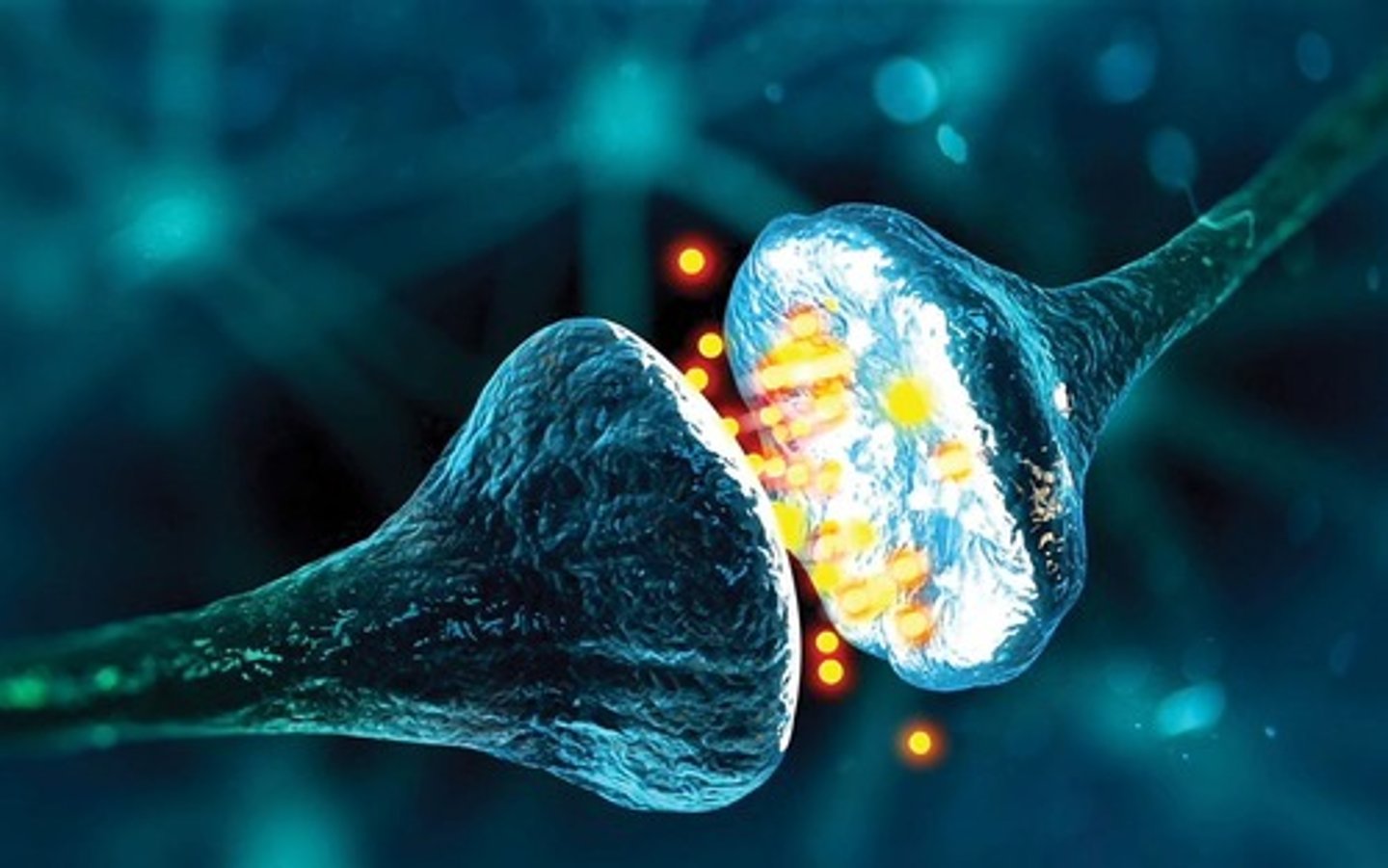
Synapse
Gap between two neurons - the space between the sending neuron's axon terminal and the receiving neuron's dendrites - where the neurotransmitters travel from one neuron to the next
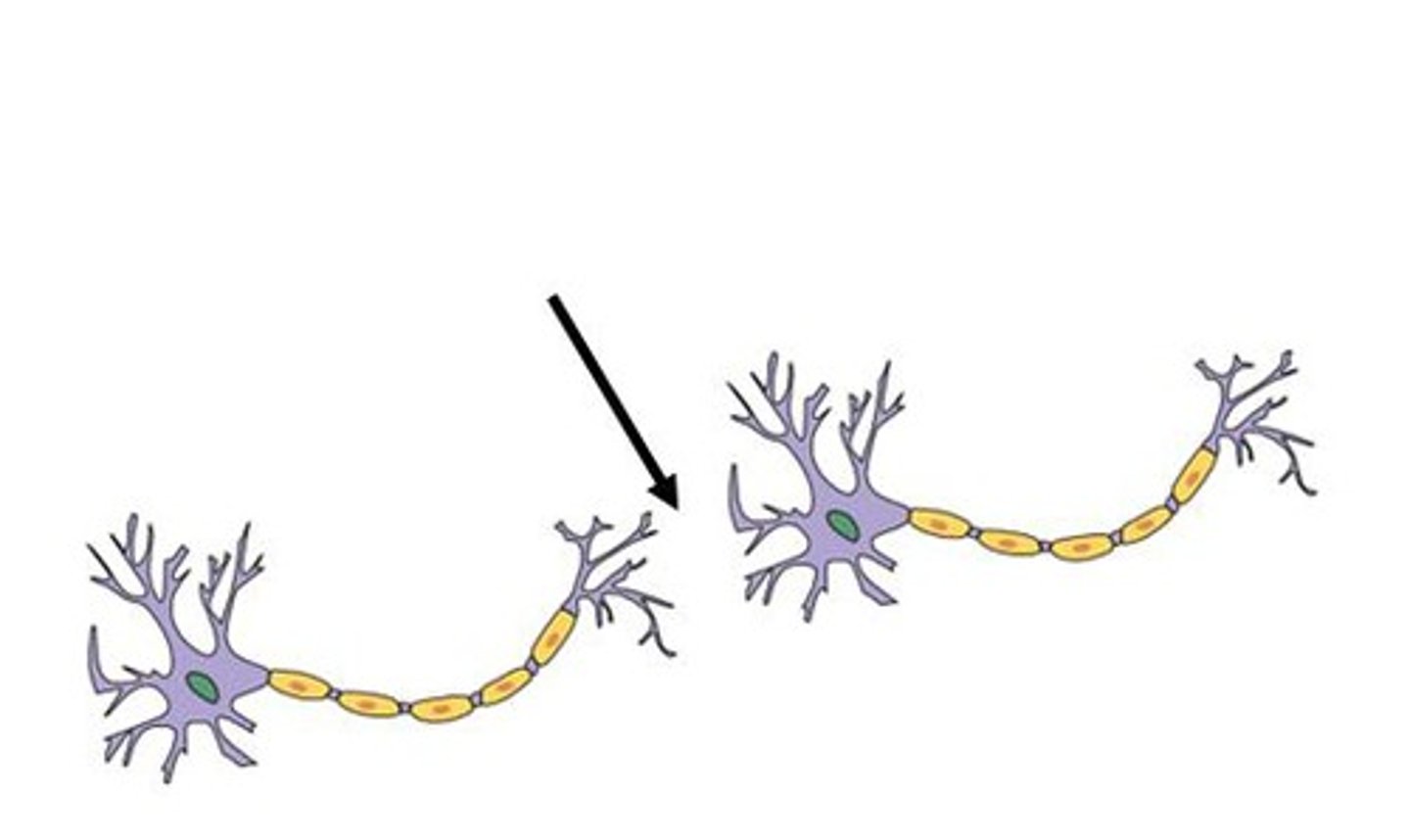
Reuptake
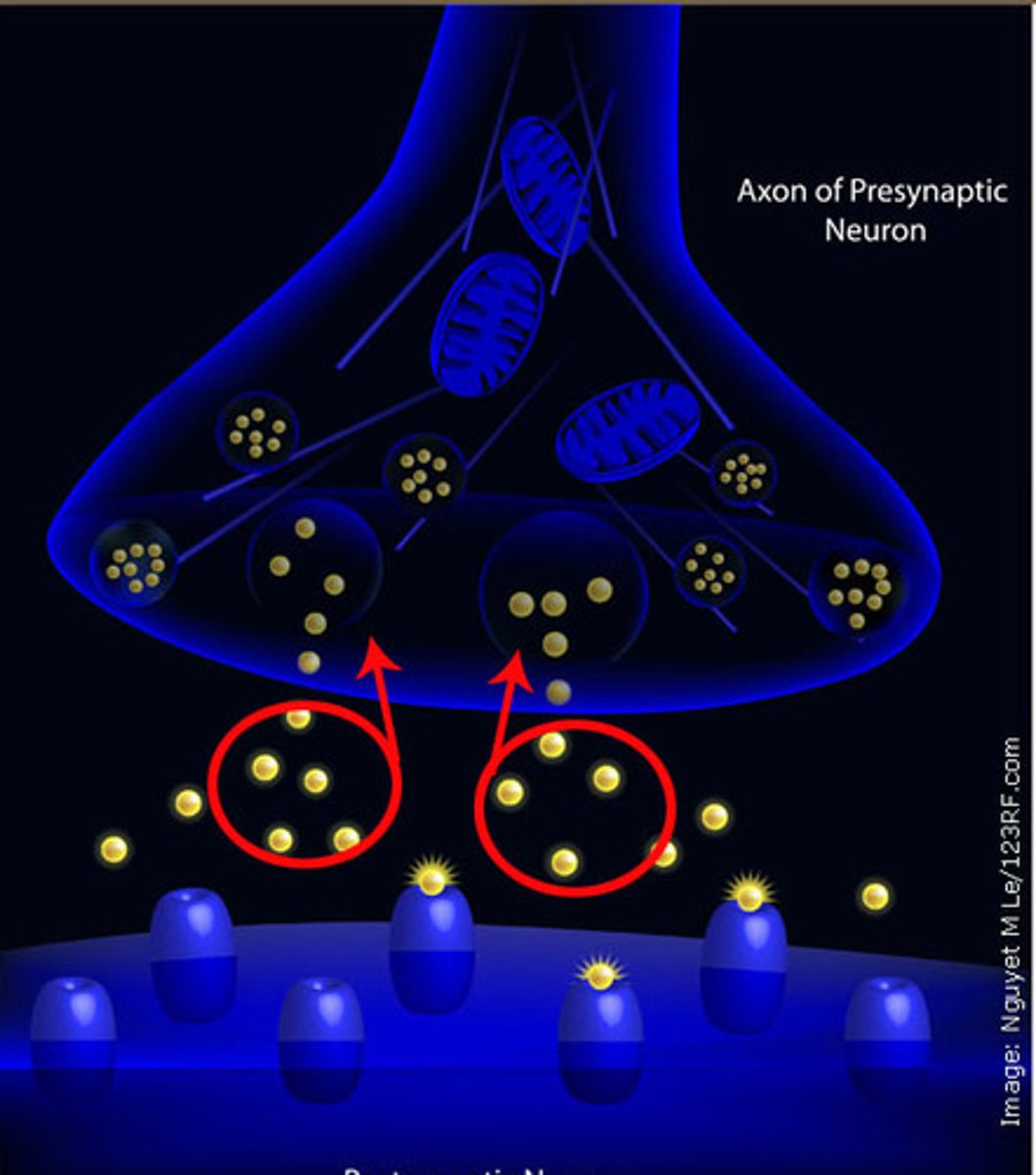
The sending neuron reabsorbs excess neurotransmitters and reuses them.
Medication for depression: SSRIs block the reuptake of serotonin, leaving more serotonin in the synapse (the gap between two neurons), which helps with mood for people who are depressed
Dopamine
Neurotransmitter associated with motor movement, alertness, and feeling of pleasure from a reward
Too little of this causes Parkinson's disease; Too much of this causes schizophrenia
The "pleasure" neurotransmitter - you eat pizza when you're hungry, your team scores a goal, you find out that guess was right on the test, you hit a slot machine jackpot, or you get 50 likes on a social media post - all of these give you an instant pleasure reward
Drugs like cocaine give you too much of this
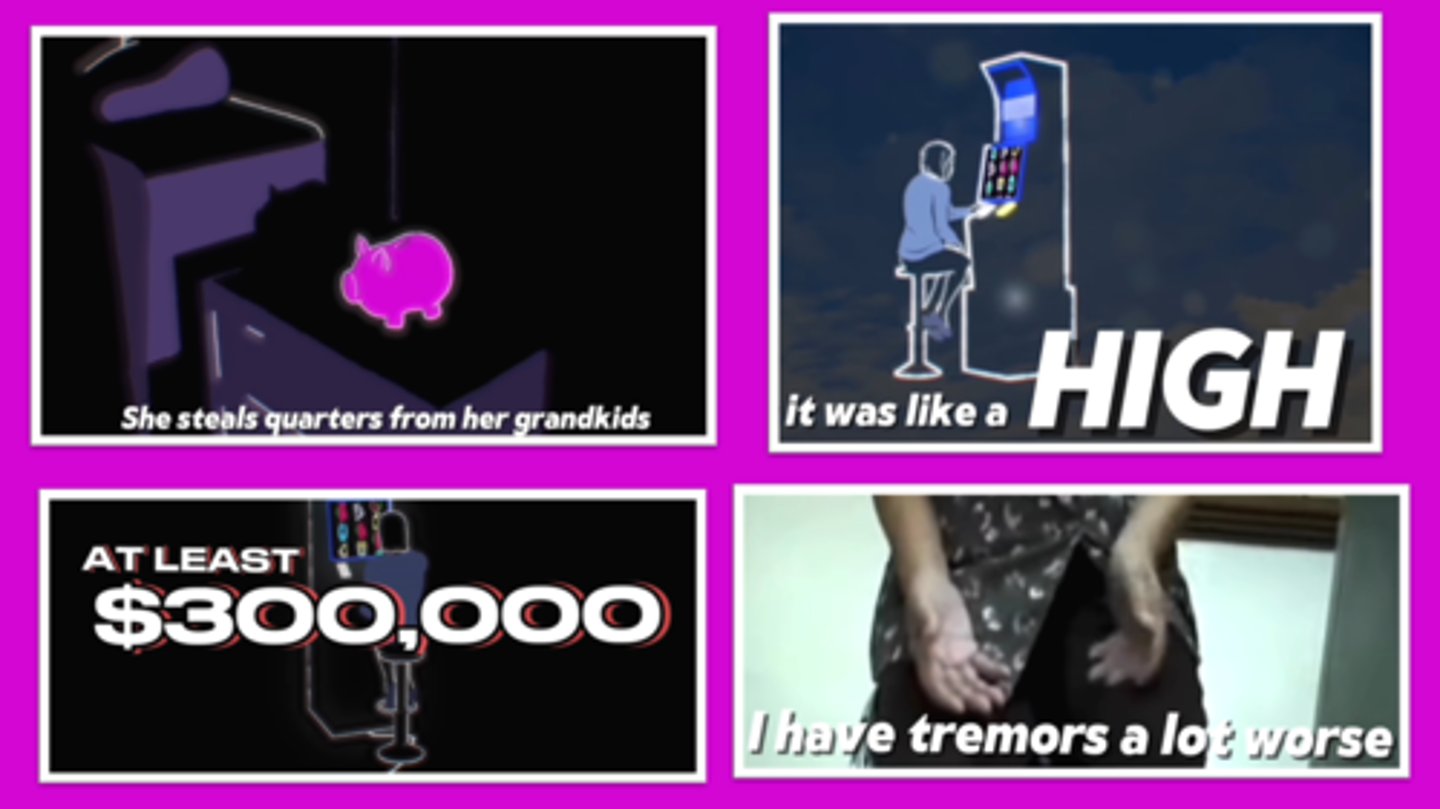
How could Parkinson's medication have a side effect of compulsive gambling?
In class, we saw the story of Ann, who took medication for Parkinson's that INCREASED HER DOPAMINE.
This increase made her also her have MORE DOPAMINE REWARD from the "pleasure" of a slot machine REWARD
Acetylcholine
Neurotransmitter associated with motor movement and memory
Some South American tribes use a poison that works as an antagonist for THIS so it paralyzes muscles. Botox also paralyzes muscles by blocking this neurotransmitter
Too little of this causes Alzheimer's disease
The body might produce antibodies against these receptors causing a disease called myasthenia gravis (MG)

Endorphins
Neurotransmitter associated with pain control.
Opioid drugs, like prescription pain killers or heroin, overuse these neurotransmitters
Released while exercising - "runner's high" - athletes might not feel soreness or even injuries during workouts or games until the next day
Substance P sends the pain signals and THESE block those signals so together they regulate pain perception
Serotonin
Neurotransmitter associated with mood control , sleep, and memory
Provides well-being and happiness
Lack of it is associated with clinical depression
An antidepressant SSRI would block the reuptake of THIS so that you would have more of it

GABA (gamma-aminobutyric acid)
• Neurotransmitter
• The major inhibitor
• Helps you to relax, helps you to learn, helps your memory, and helps you sleep
Not enough of this would cause you to worry and have anxiety
Glutamate
A major excitatory neurotransmitter that helps with memory and learning
Norepinephrine
Neurotransmitter involved in arousal and alertness (includes heart rate and blood pressure in the "fight or flight")
Too much of this - agitated! Over alert
Drugs like meth and cocaine abuse these causing the users to feel energetic but also agitated and not being able to sleep
Substance P
A neurotransmitter that is involved in the transmission of pain messages to the brain.
Low levels - decreases pain
High levels - increase pain
THIS sends the pain signals and endorphins block these signals so together they regulate pain perception
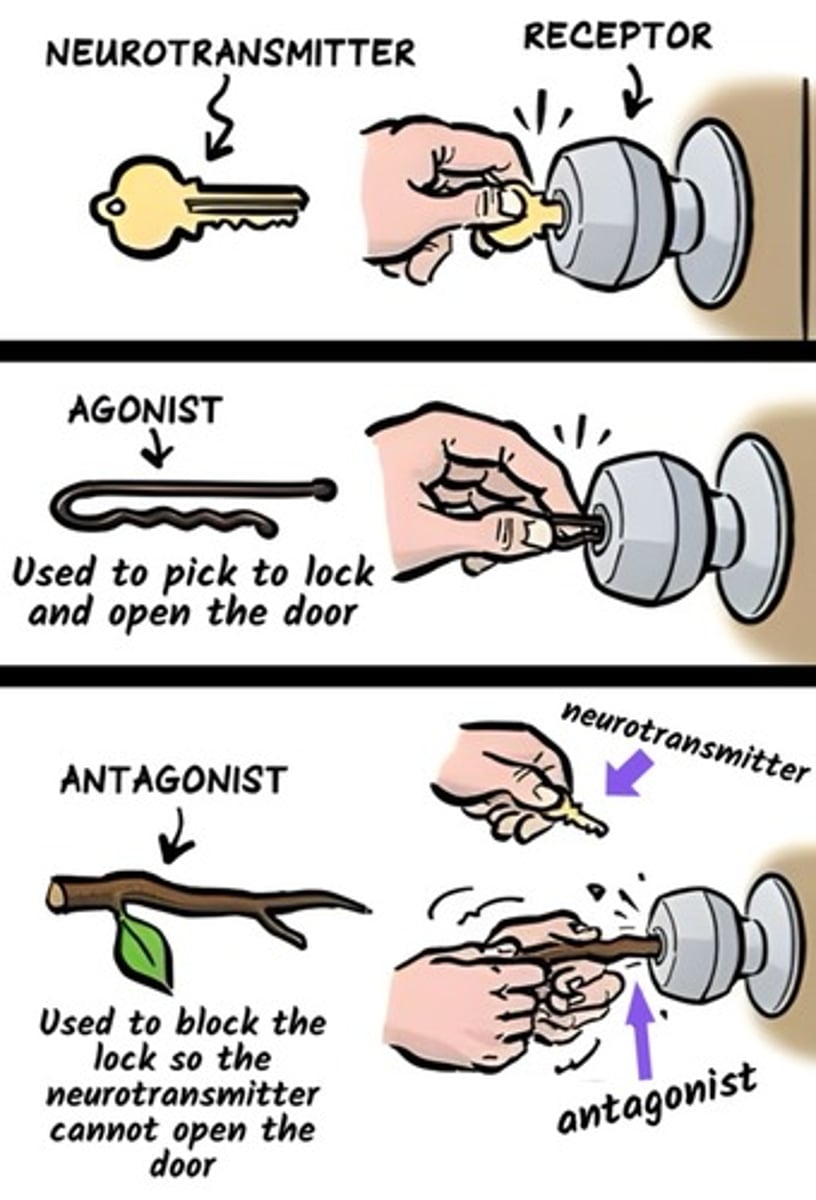
Agonists
Drugs that MIMIC neurotransmitters- they pretend they are neurotransmitters and "pick the lock" of the next neuron
Function as that neurotransmitter normally would affecting everything from sleep, alertness, and mood.
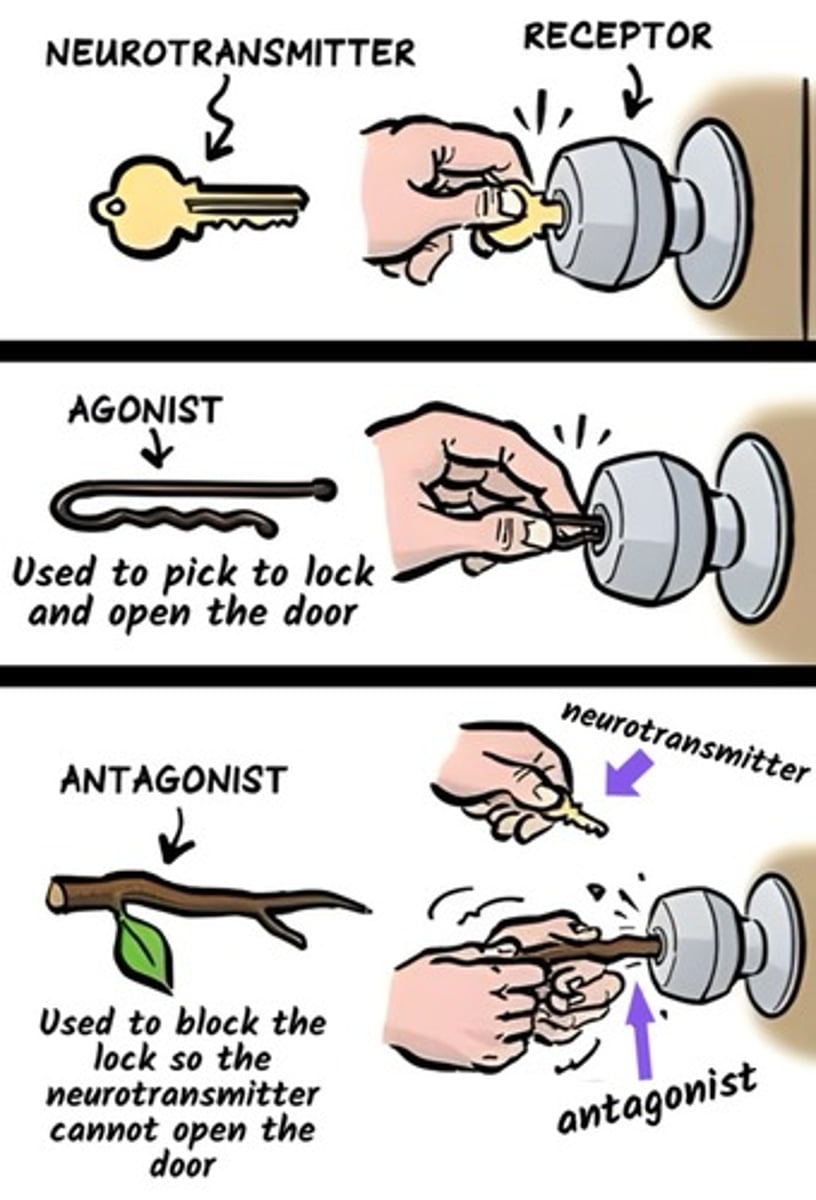
Antagonists
Drugs that BLOCK neurotransmitters: Fit over the receptor sites - blocks the lock
Instead of acting like the neurotransmitter, they prevent and block natural neurotransmitters from using the the next neuron, which also can effect your sleep, alertness, and mood.
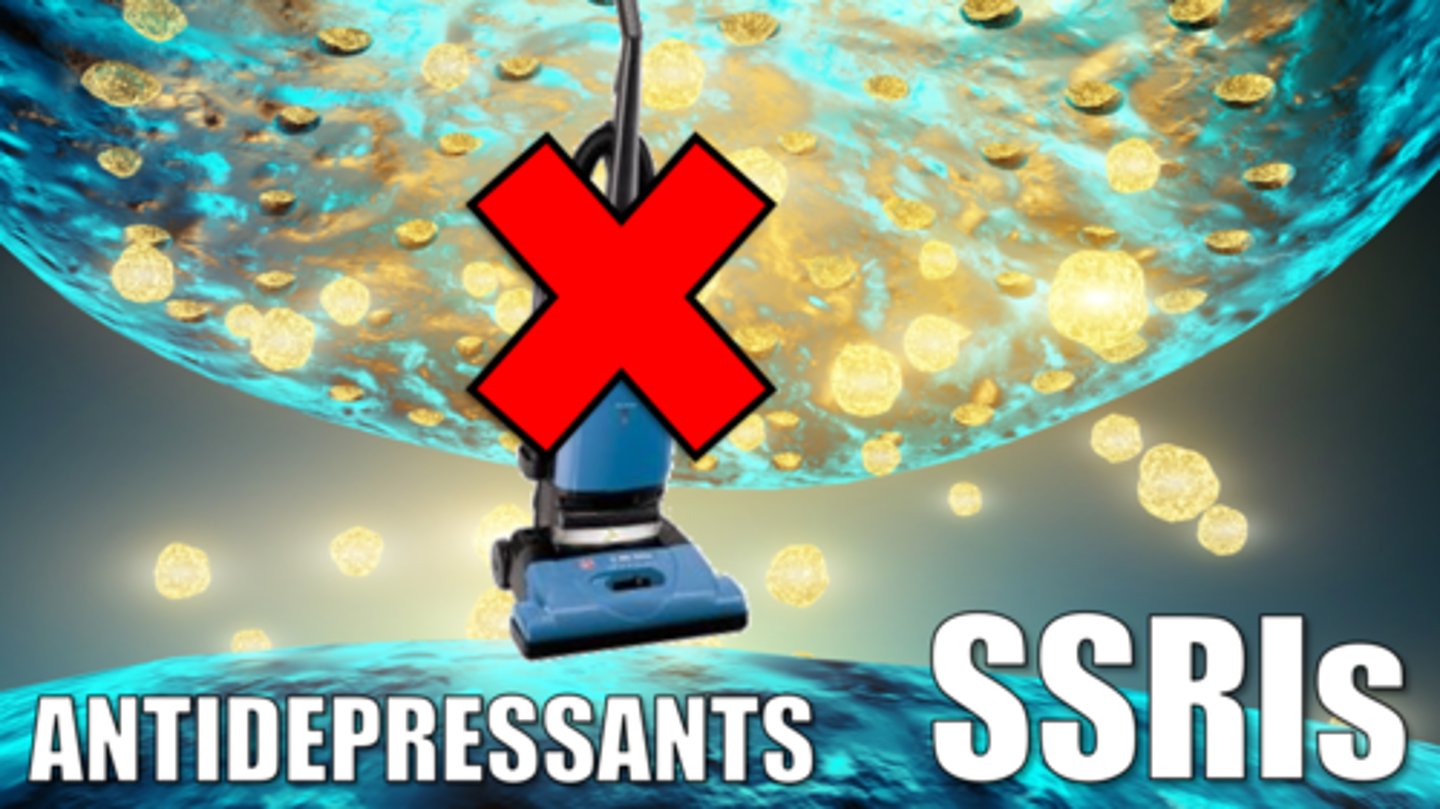
Reuptake inhibitors
Drugs that interfere with the reuptake of neurotransmitters so that a greater amount remain to therefore be reused
Example: A drug known as a Selective Serotonin Reuptake Inhibitor (SSRI) blocks the reuptake of serotonin which causes extra serotonin to fight depression
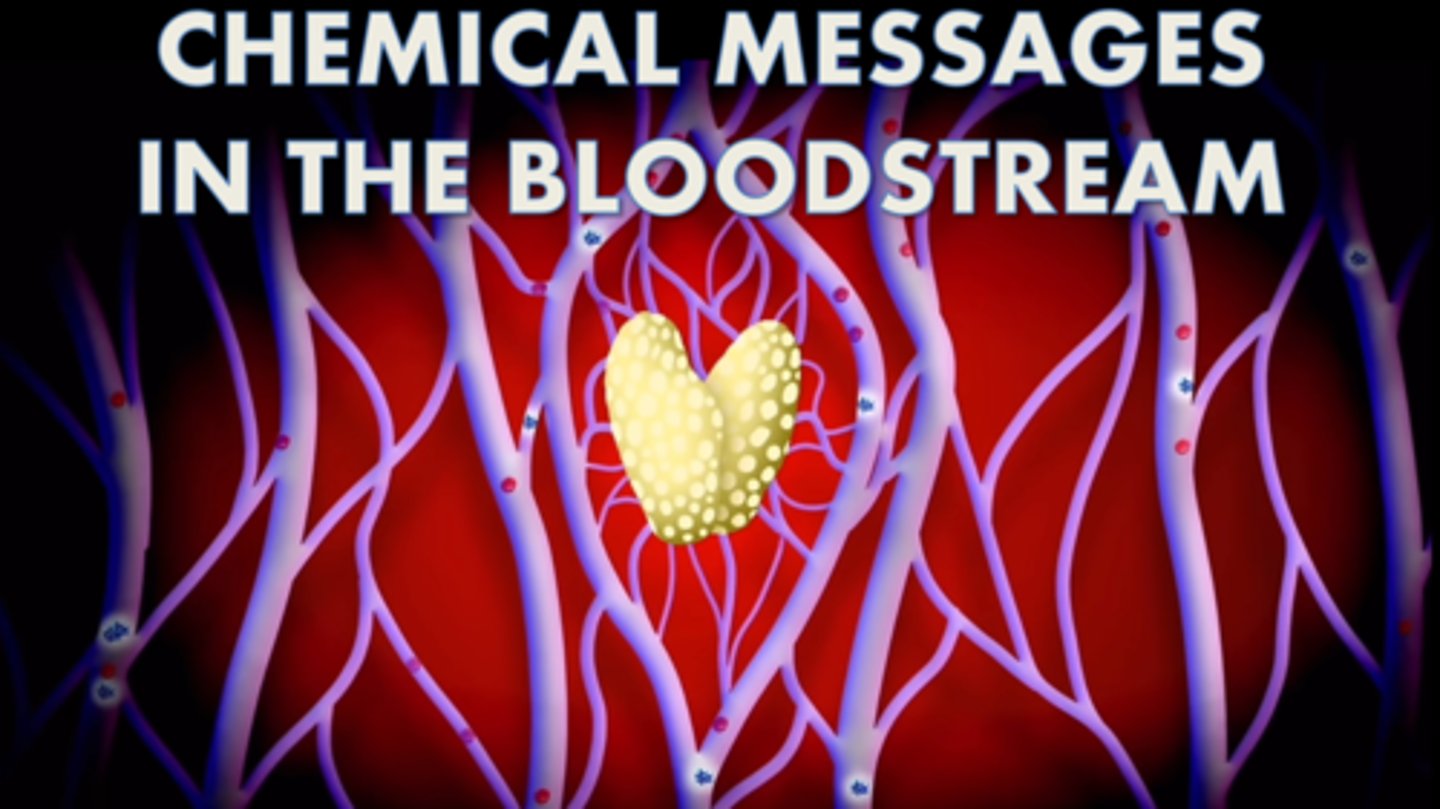
Hormones
chemical messengers that are manufactured by the glands, travel through the bloodstream, and affect other tissues - includes adrenaline, leptin, ghrelin, oxytocin, and melatonin
pituitary gland
The endocrine system's most influential gland. THE MASTER GLAND - Under the influence of the hypothalamus, the pituitary regulates growth and controls other the glands that release hormones.
Adrenaline
A hormone (chemical messenger in the bloodstream) released into the bloodstream in response to physical or mental stress - the fight or flight hormone that works in a different system than the sympathetic nervous system
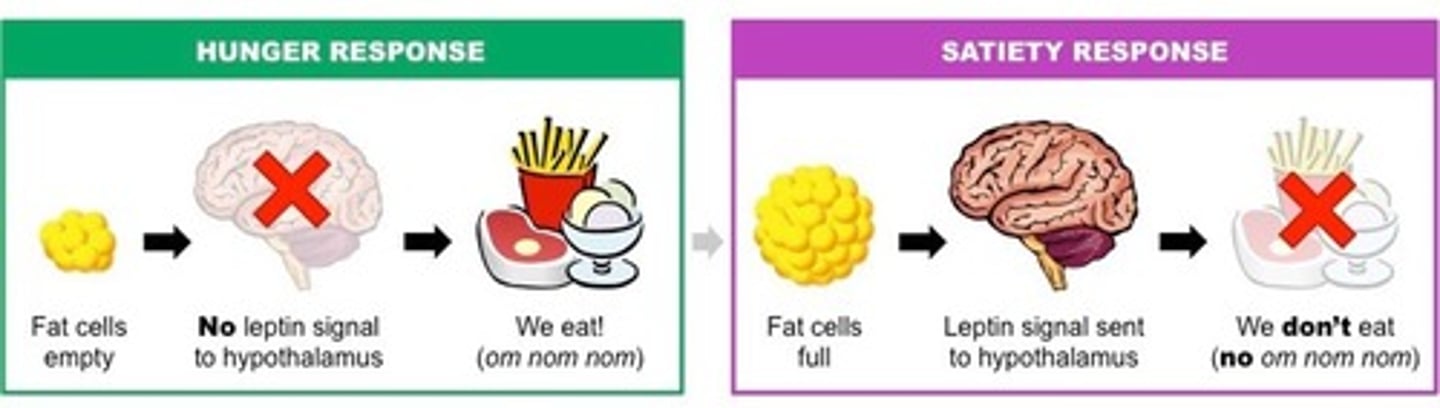
Leptin
hormone (chemical messenger in the bloodstream) that signals the hypothalamus and brain stem to reduce appetite and increase the amount of energy used - feelings of being full SATIETY
Satiety means "I'm full!"
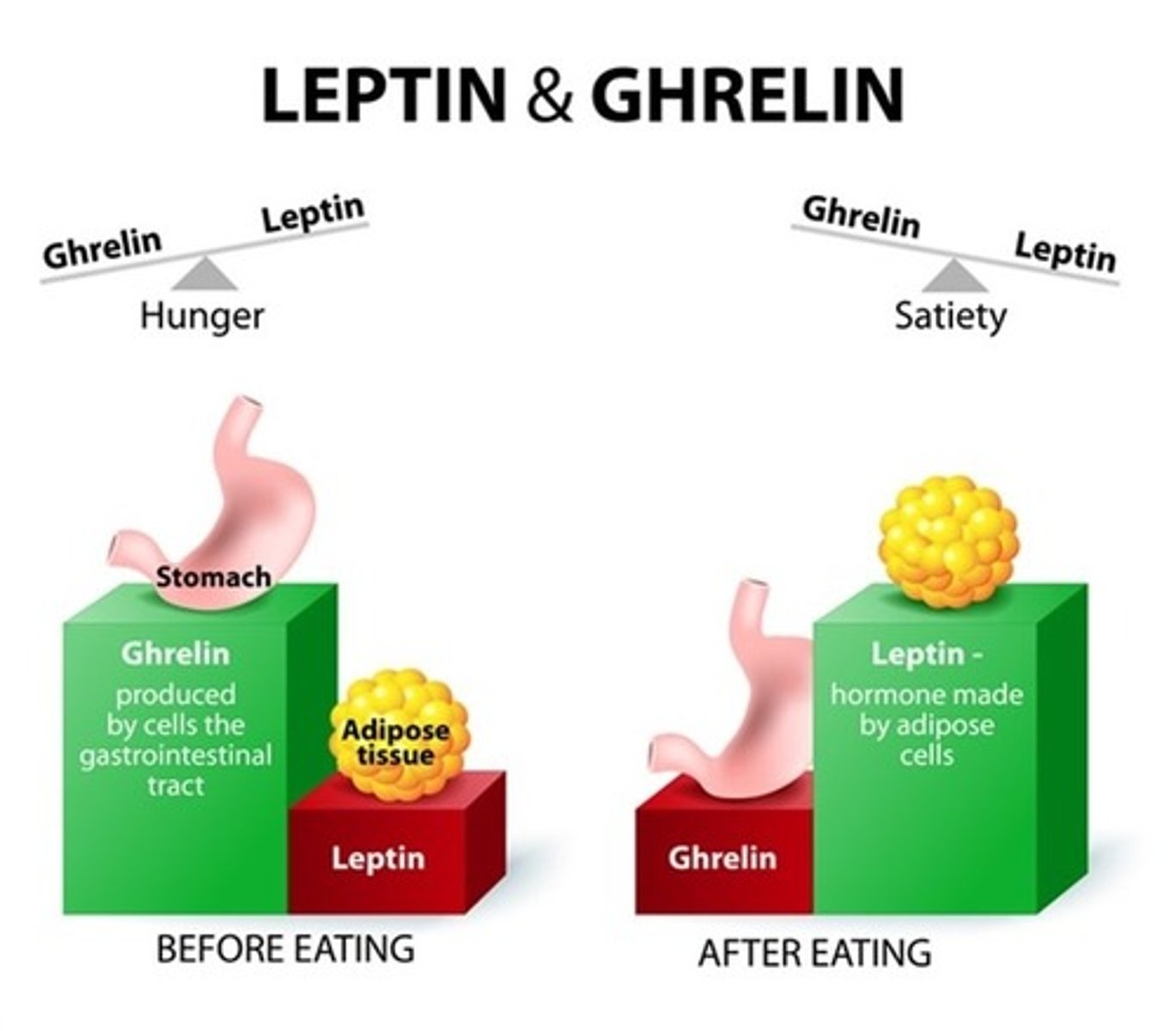
Ghrelin
A hunger-arousing hormone (chemical messenger in the bloodstream) secreted by an empty stomach
"I'm hungry!"
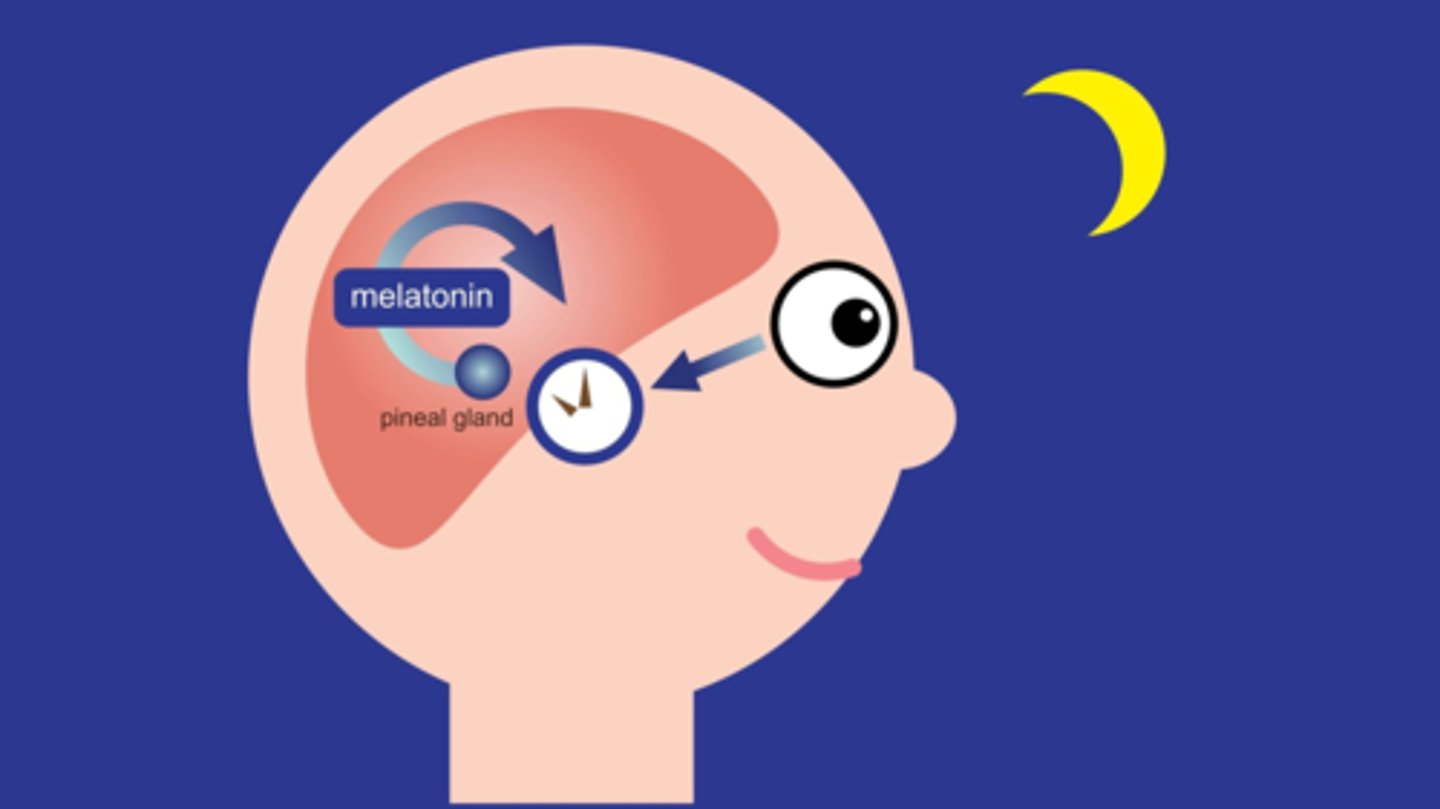
Melatonin
A hormone (chemical messenger in the bloodstream) that produces sleepiness.
When your brain sees less light as night approaches, this hormone will be released to make you tired. As light returns, less and less is released.
CAREFUL! If you use a screen before bed, the light will mess up the release of melatonin! You won't feel as tired or you won't stay asleep.
Oxytocin
powerful hormone (chemical messenger in the bloodstream) plays an important role in reproduction, initiating contractions before birth as well as milk release.
And it is thought to be involved in
> social cognition and behavior
> mother-infant bonding
> romantic connections
Sometimes called the "love hormone," the "trust hormone," or the "cuddle hormone"

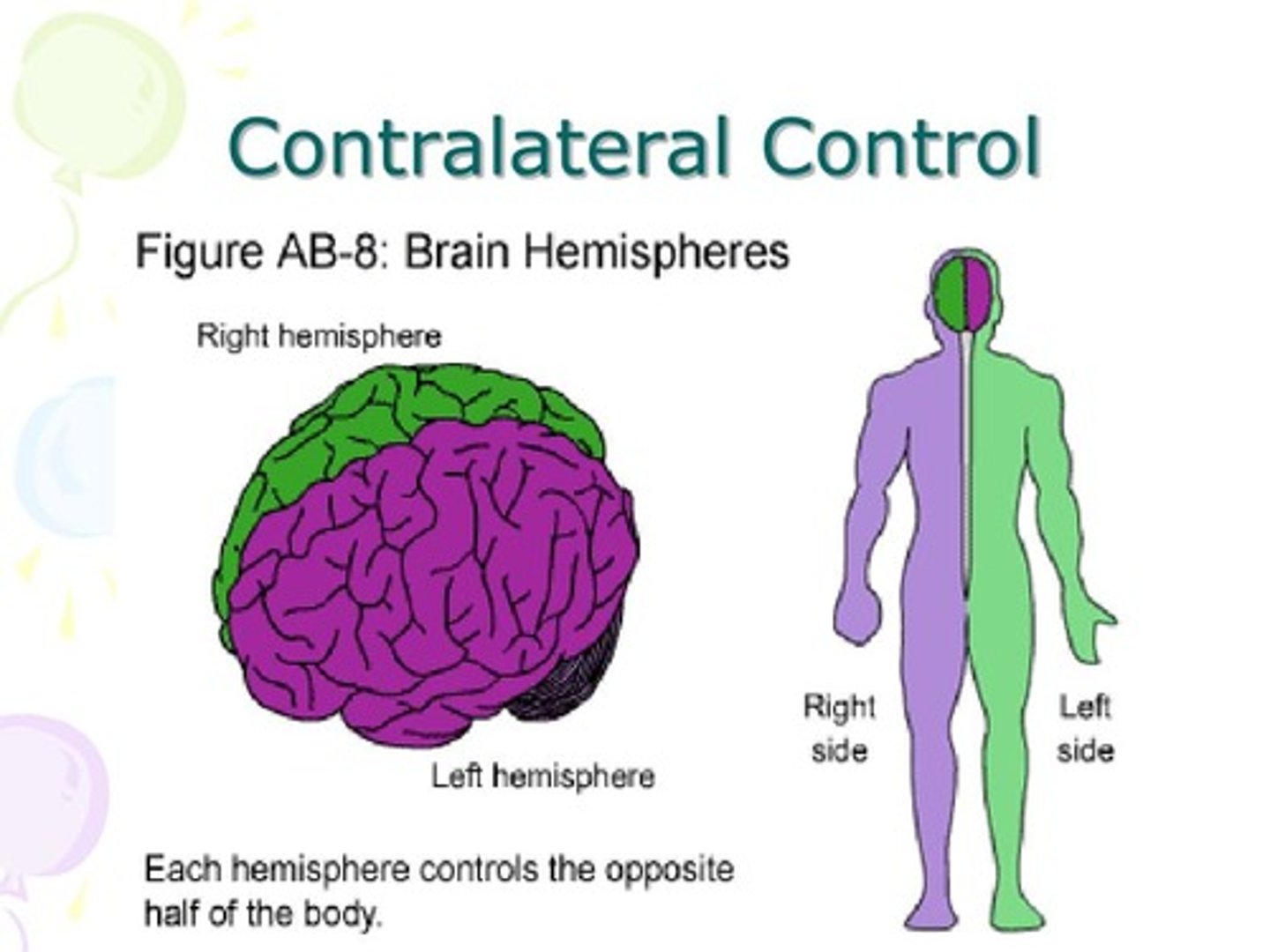
contralateral control
each hemisphere of the brain controls the opposite side of the body - left brain controls the right side of the body and vice versa
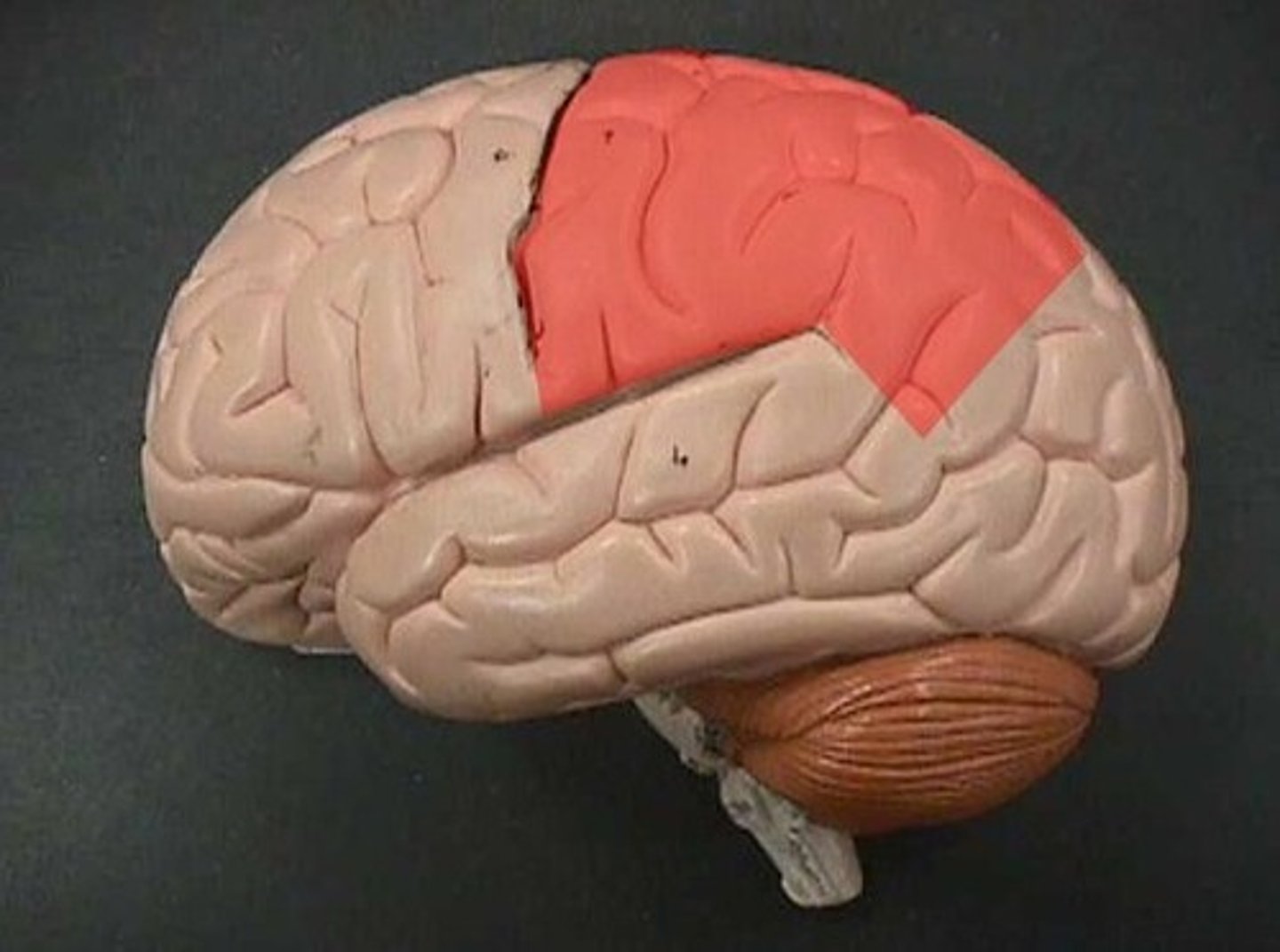
Parietal Lobes
Helps with you knowing where things are and where you are: Integrates sensory info, spatial awareness (3D representation), and navigation of the space around you so you don't bump into things
These lobes generally control association areas, which process and organize information
ALSO: Contains the somatosensory cortex - processes touch sensitivity
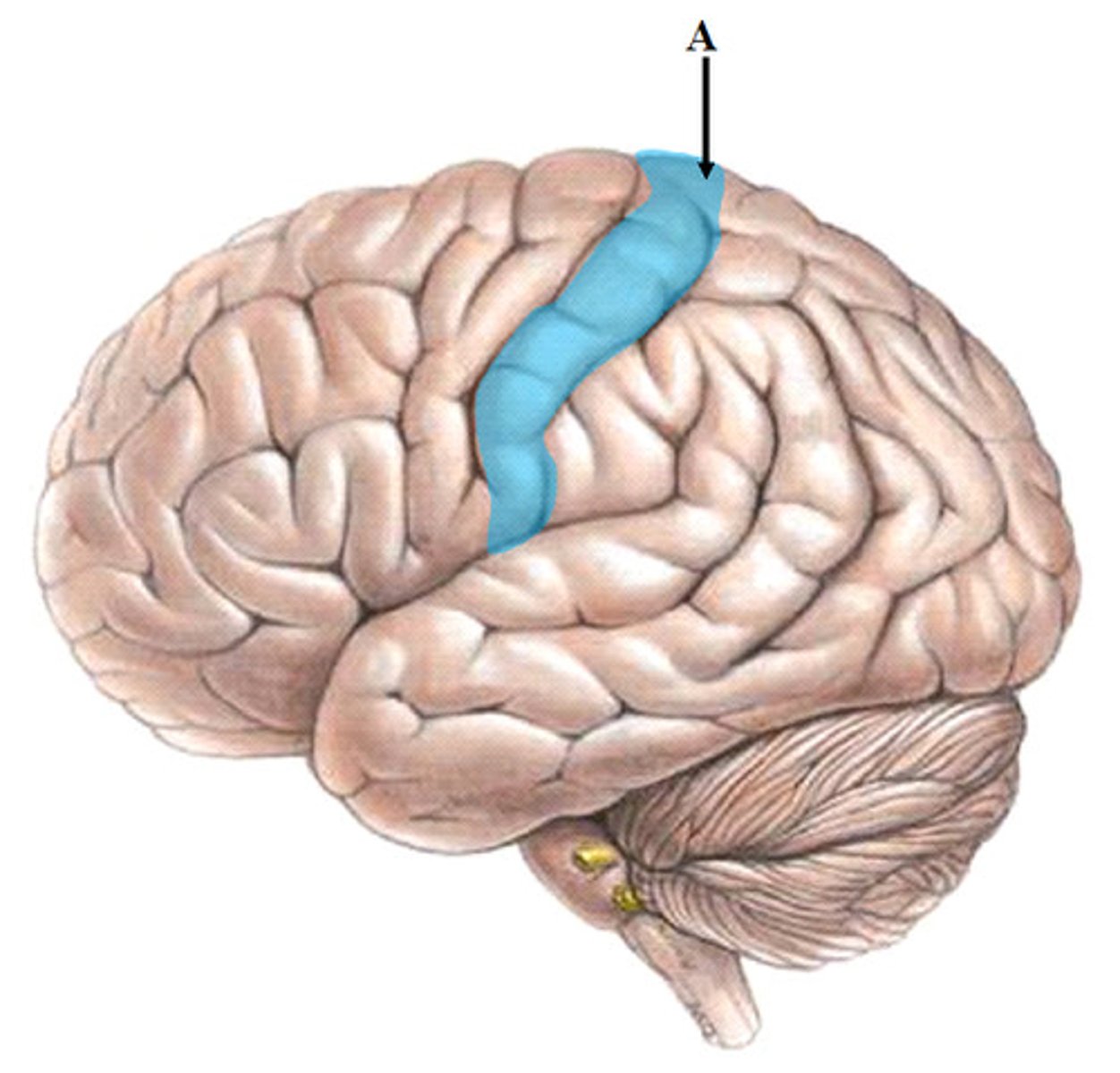
Somatosensory Cortex
Thin vertical strip of the parietal lobe that receives incoming touch sensations from the rest of the body
TOUCH SENSITIVITY (sensory) information is sent to the brain and goes to THIS area. Example- if you touch something with your hand, that information is sent to the hand section of this part of the brain
Those with phantom limb are feeling missing arms, hand, legs, or feet because this section is still active in the brain
In the parietal lobe which is part of the cerebral cortex
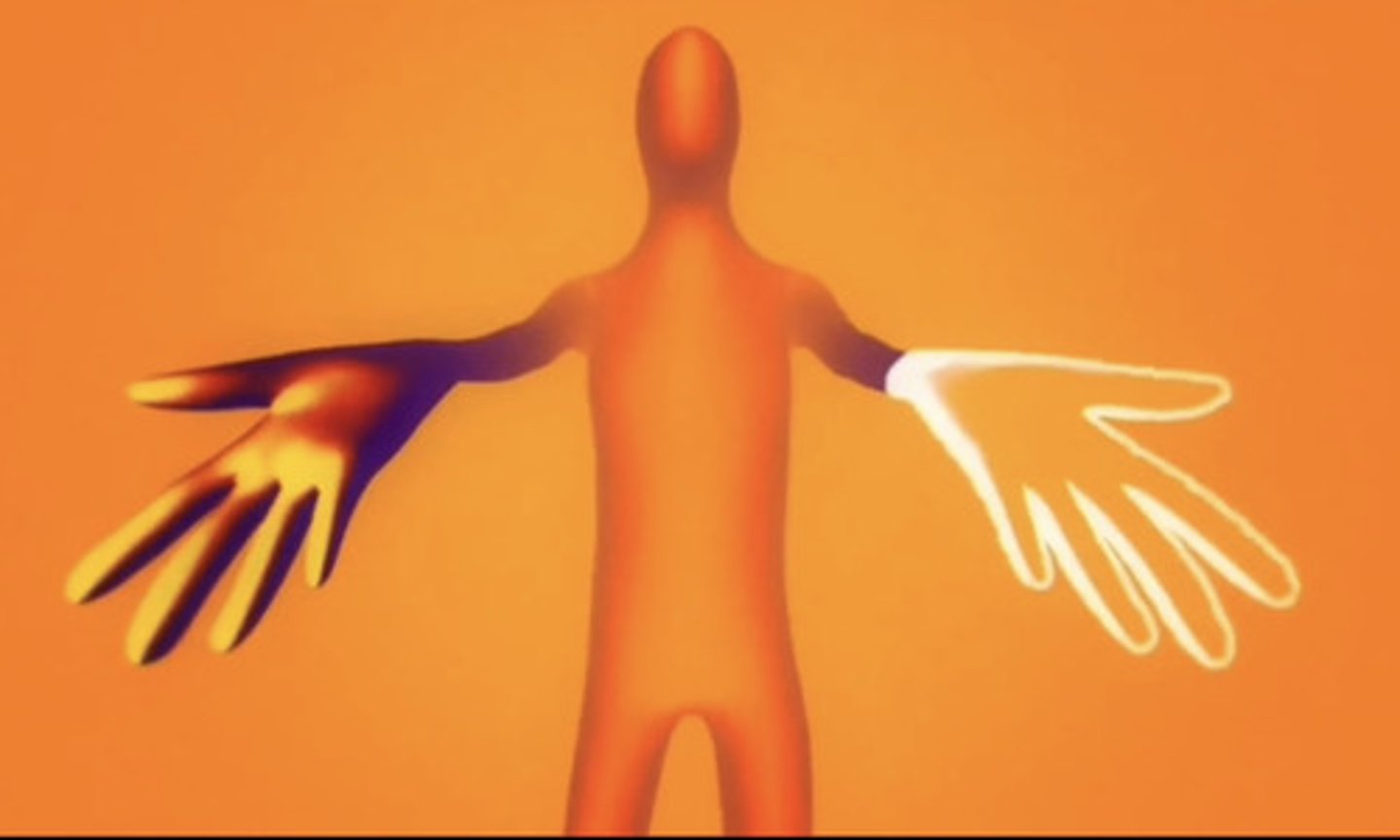
Phantom limb
perceived sensation and feeling following amputation of a limb, (like an arm, hand, foot, or leg) that the limb still exists
Pain can even occur in these limbs even though the limbs are no longer there
Caused by a still very active somatosensory cortex
VS Ramachandran studied the relief of pain in patients with this condition
Occipital Lobes
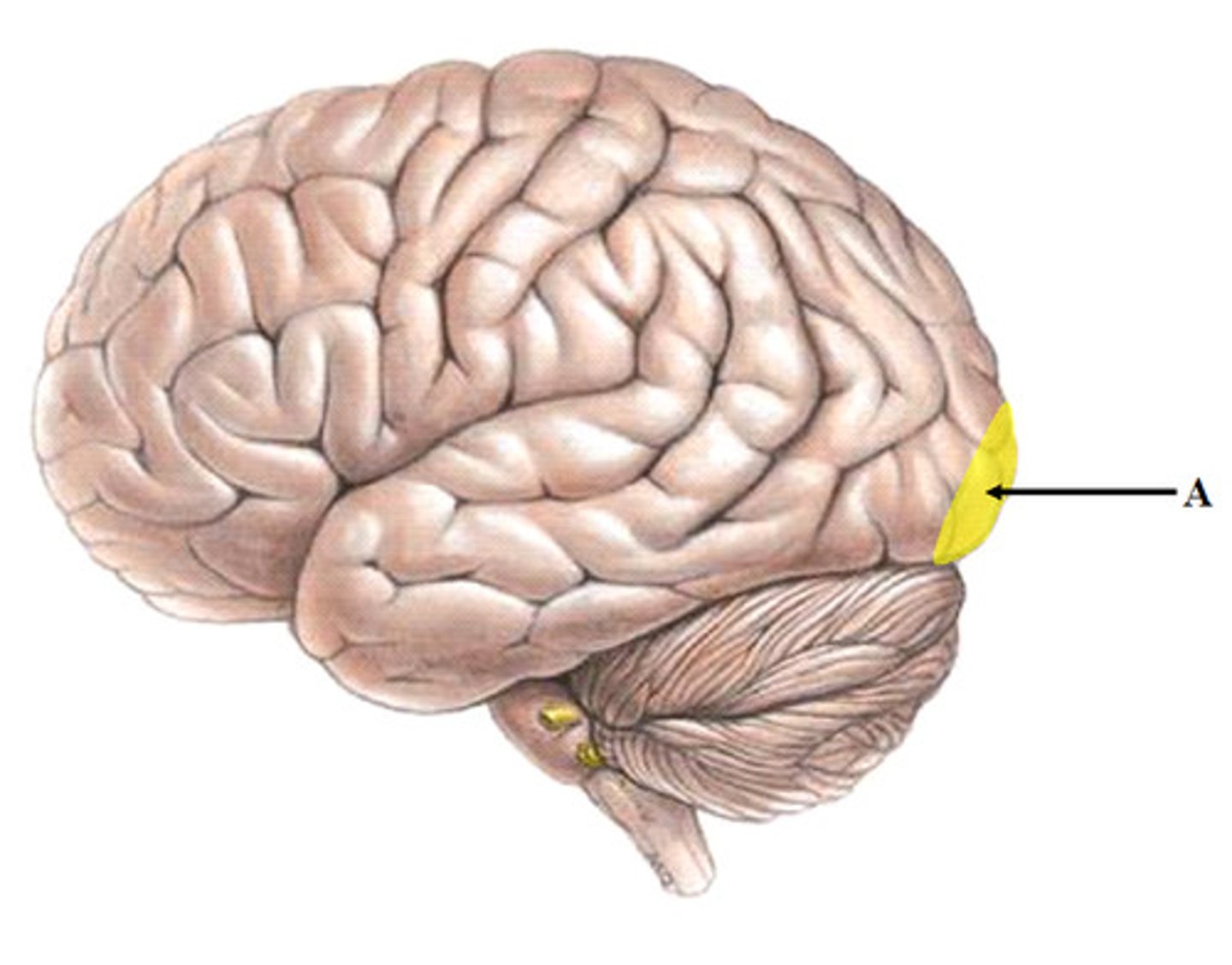
PROCESSES SIGHT: Located at the very back of our brain on the cerebral cortex, farthest from our eyes. One of the major functions of this lobe is to interpret messages from our eyes in our visual cortex.
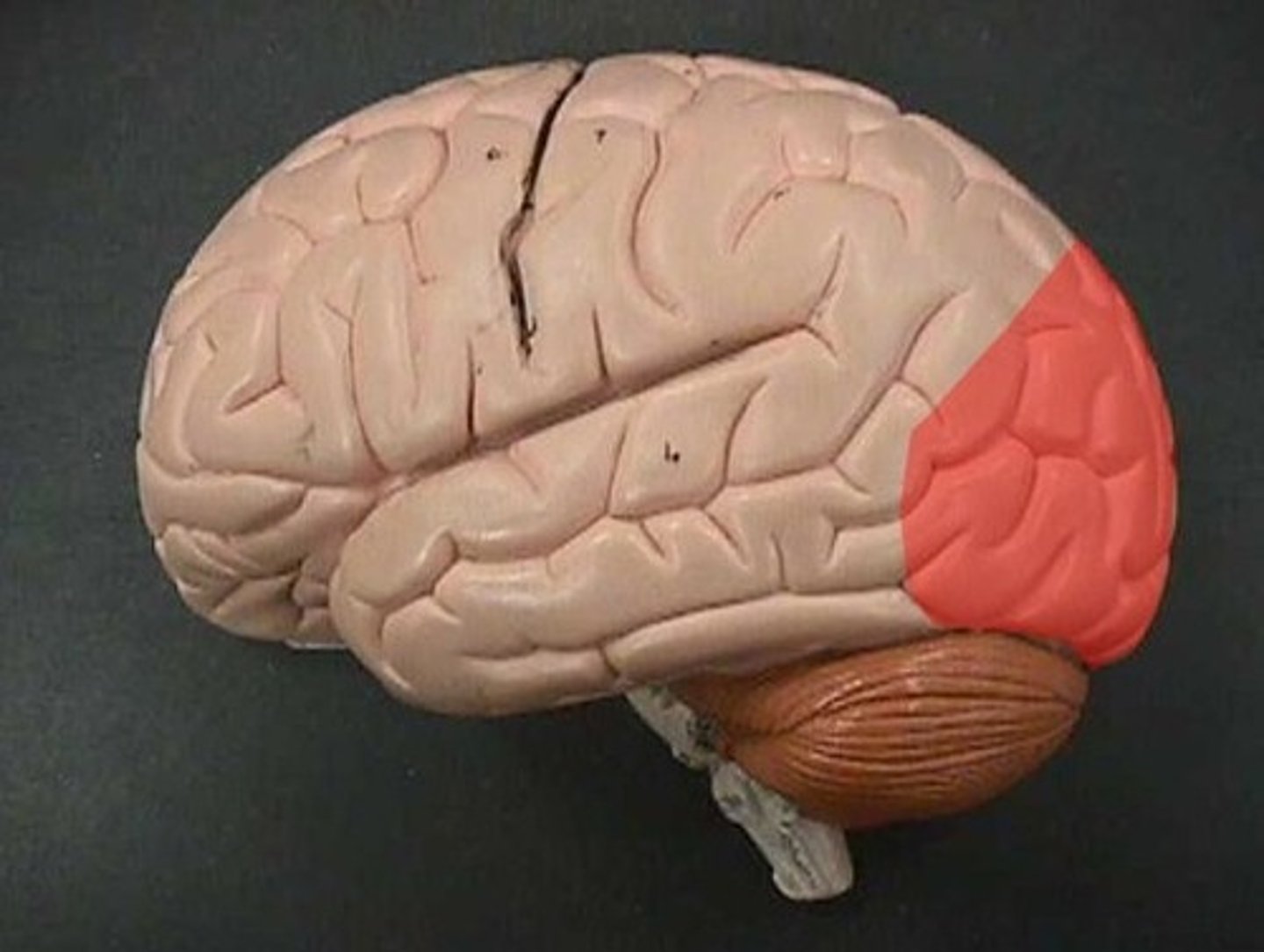
Visual Cortex
Impulses from the retinas in our eyes are sent here to be interpreted.
Part of the occipital lobe on the cerebral cortex
blindsight
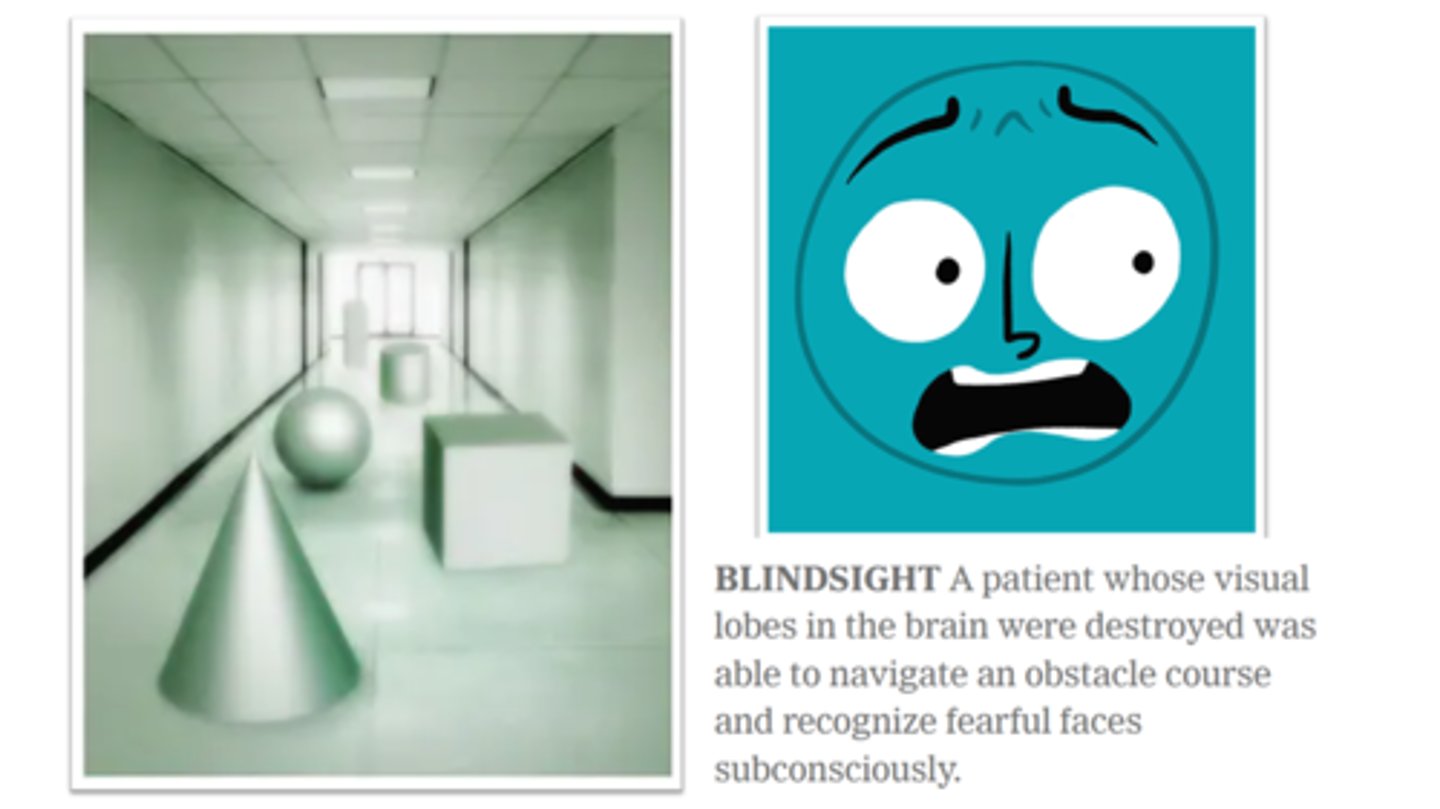
a VERY RARE condition in which a person can respond to a visual stimulus without consciously experiencing it
Caused by specific damage to the visual cortex and other parts of the brain are not effected by the damage
Example: one blind sight patient can go through an obstacle course without running into objects, even though he can't see anything
Example: another will look at a picture of a face, but even though he sees nothing, he can identify the emotion
amygdala
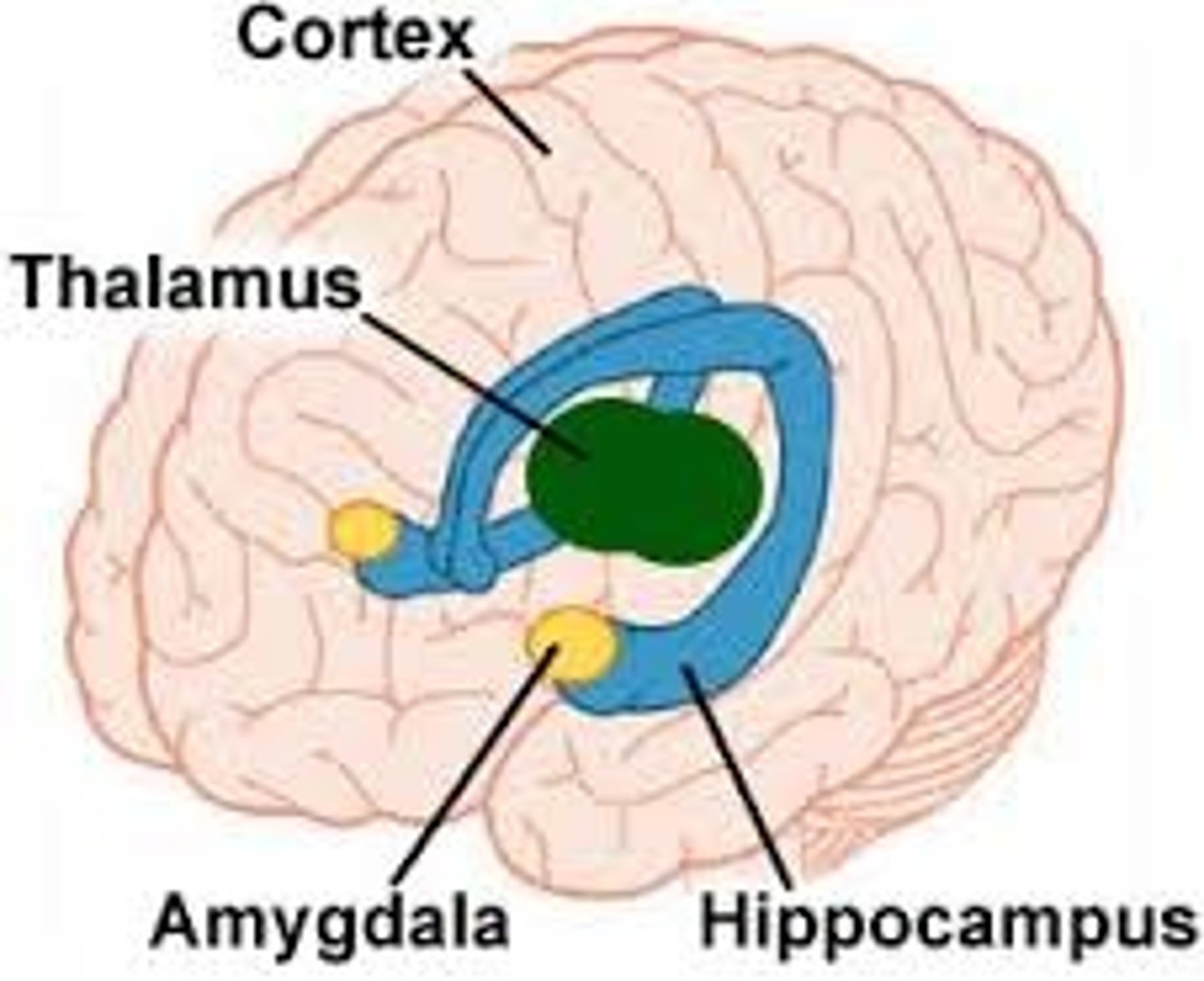
Emotion, fear, rage, aggressiveness- this part of the brain will sound the alarm for the sympathetic nervous system
The Limbic System is the emotional part of the brain because it includes this
The Austin shooter in 1966 had a tumor rubbing against this part of his brain, which made him aggressive and fearful, leading to the shooting
Case studies on brain function
Studies on an individual's particular brain, such has Phineas Gage or HM
After someone has suffered damage, a case study on the changes in their behavior is one way to determine that part of the brain's responsibility
lesion
tissue destruction. A brain lesion is a naturally (from disease or trauma), during surgery, or experimentally caused destruction of brain tissue
Case study examples:
(1) Phineas Gage had an railroad construction accident where his prefrontal cortex was damaged
(2) HM had his hippocampus surgically removed which directly stopped his ability to make new memories
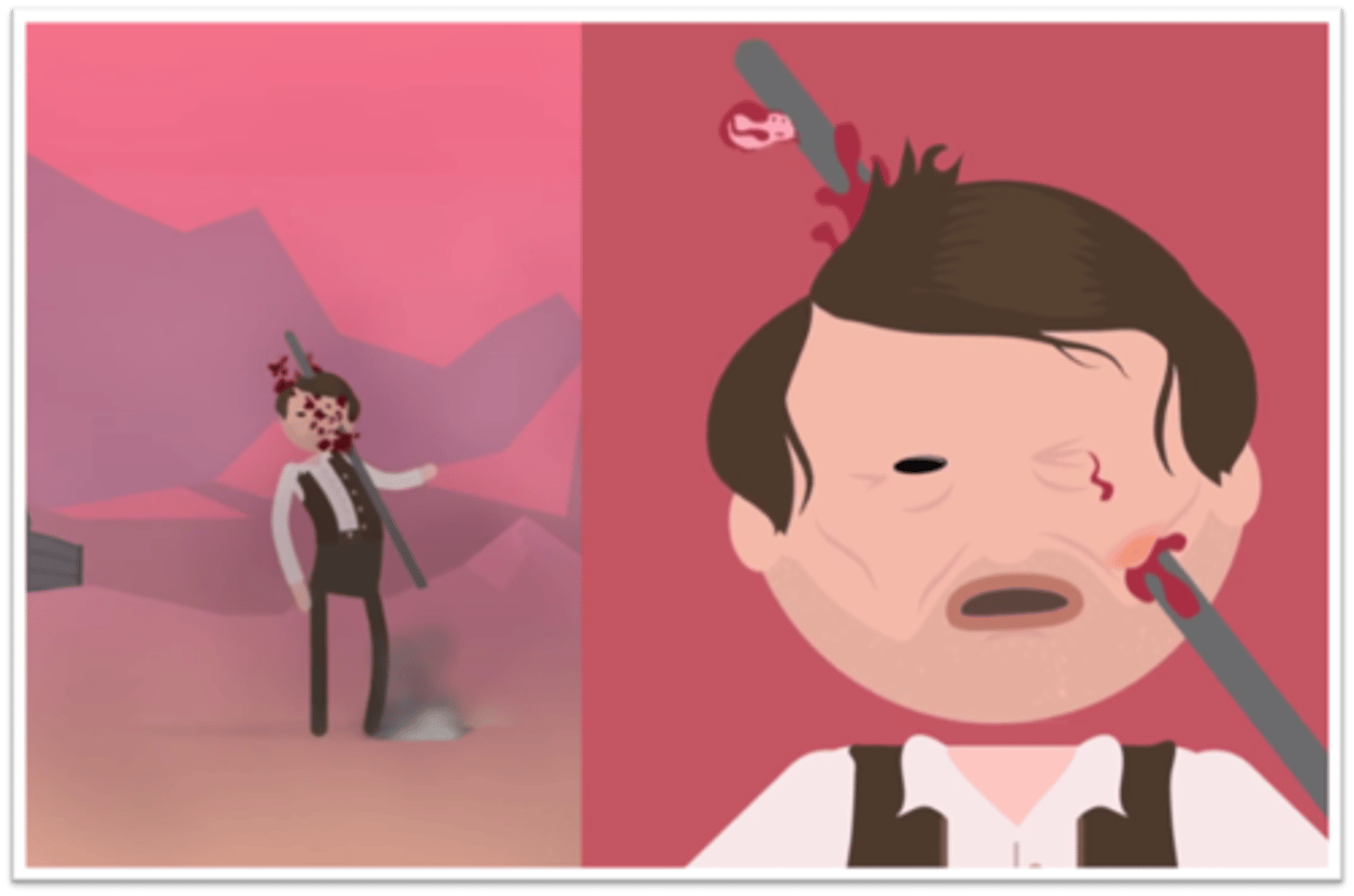
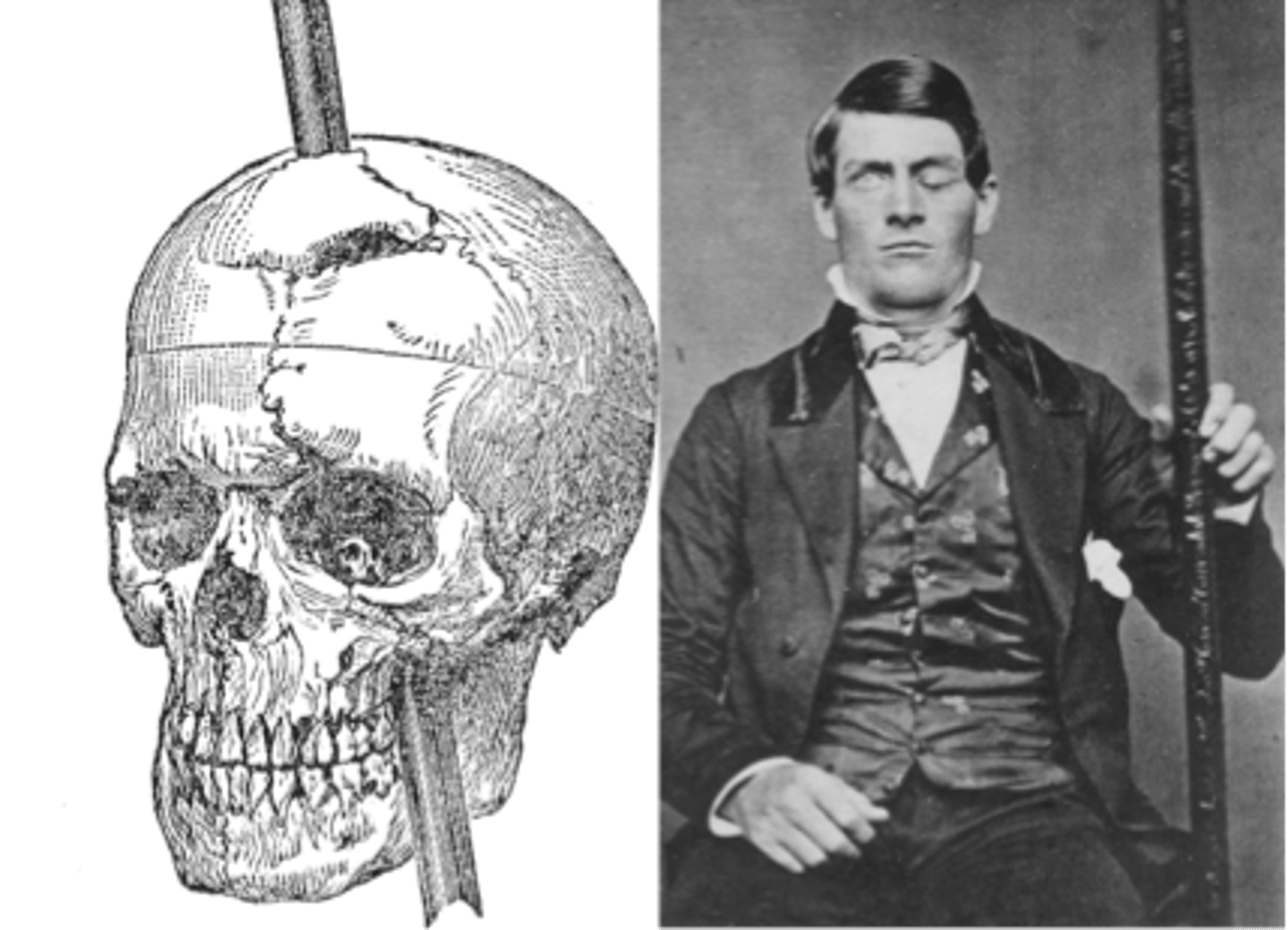
Phineas Gage
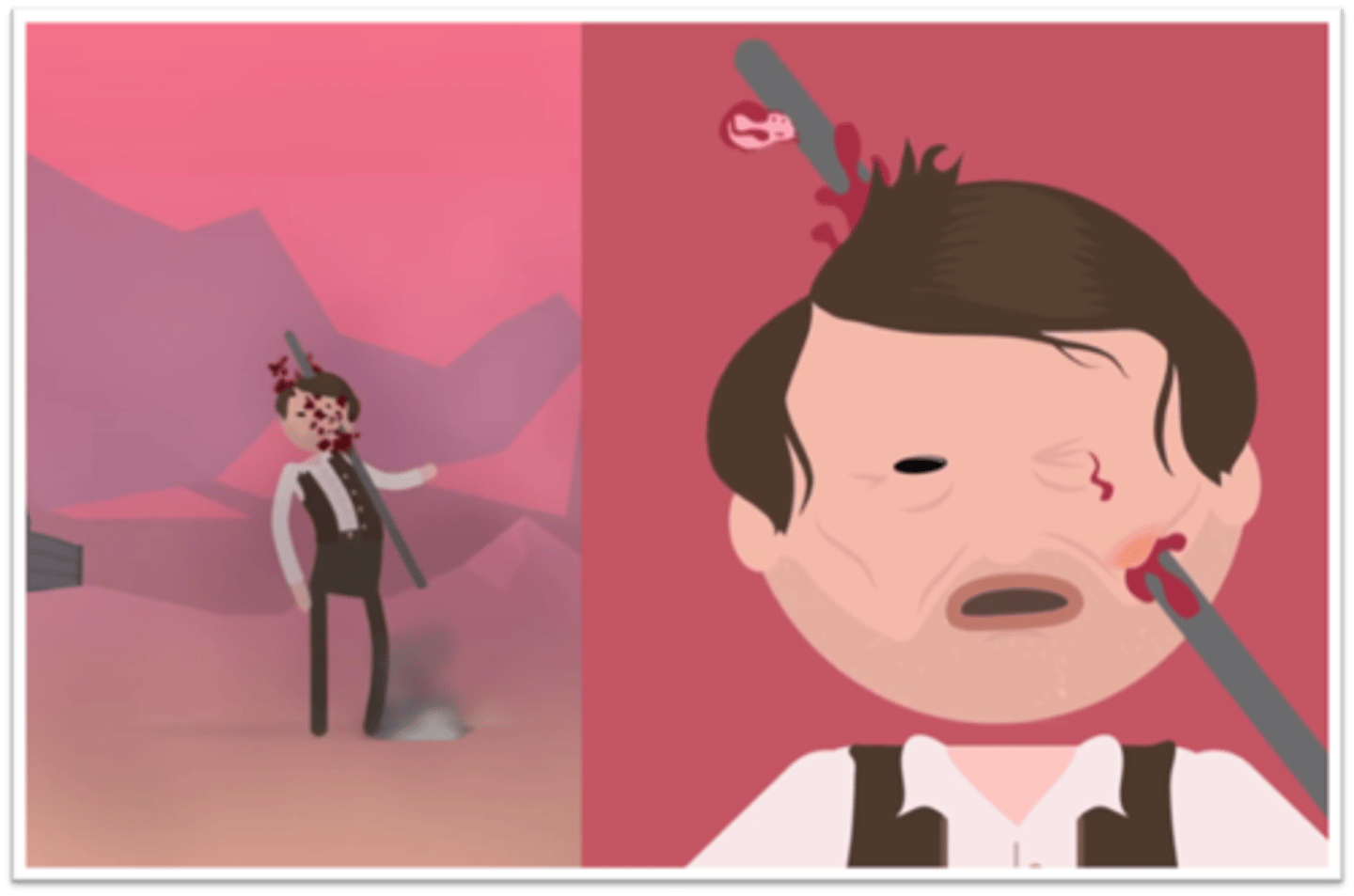
Railroad worker who in 1848 had an accident where a rod shot through his brain and damaged his pre-frontal cortex.
He became quite different. His friends said "Gage was no longer Gage." His damaged pre-frontal cortex made him no longer able to control emotions or plan for the future. He became rude and crude.
He could not regulate his emotions coming from his amygdala
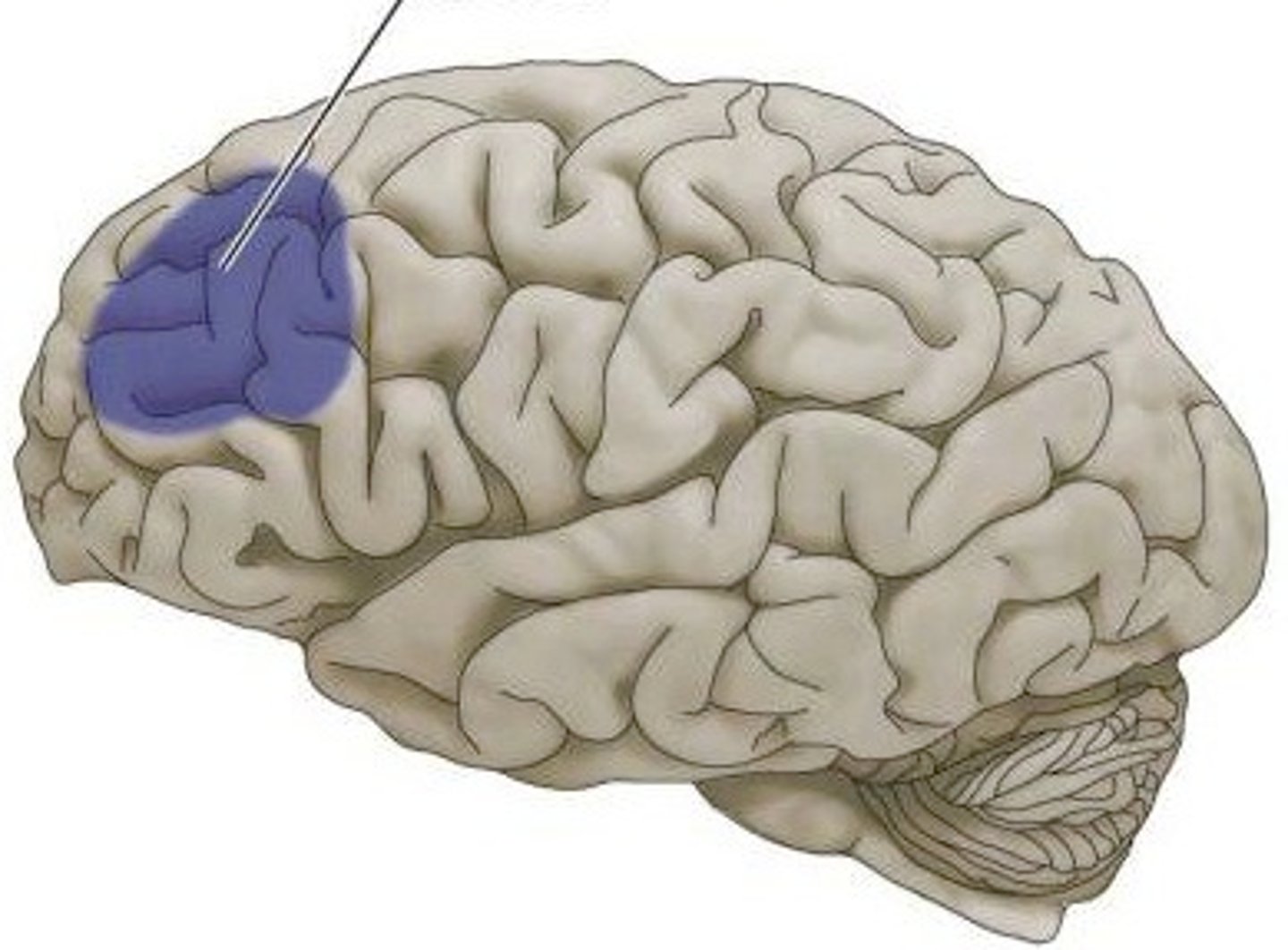
Prefrontal Cortex
EXECUTIVE FUNCTIONING
The "Central Executive" in charge of "executive functions"- self control, IMPULSE CONTROL, maintaining emotional control -regulates emotion from the amygdala, planning, decision making, problem solving, judgement - these things make up your personality
The anterior (front) part of the frontal lobe
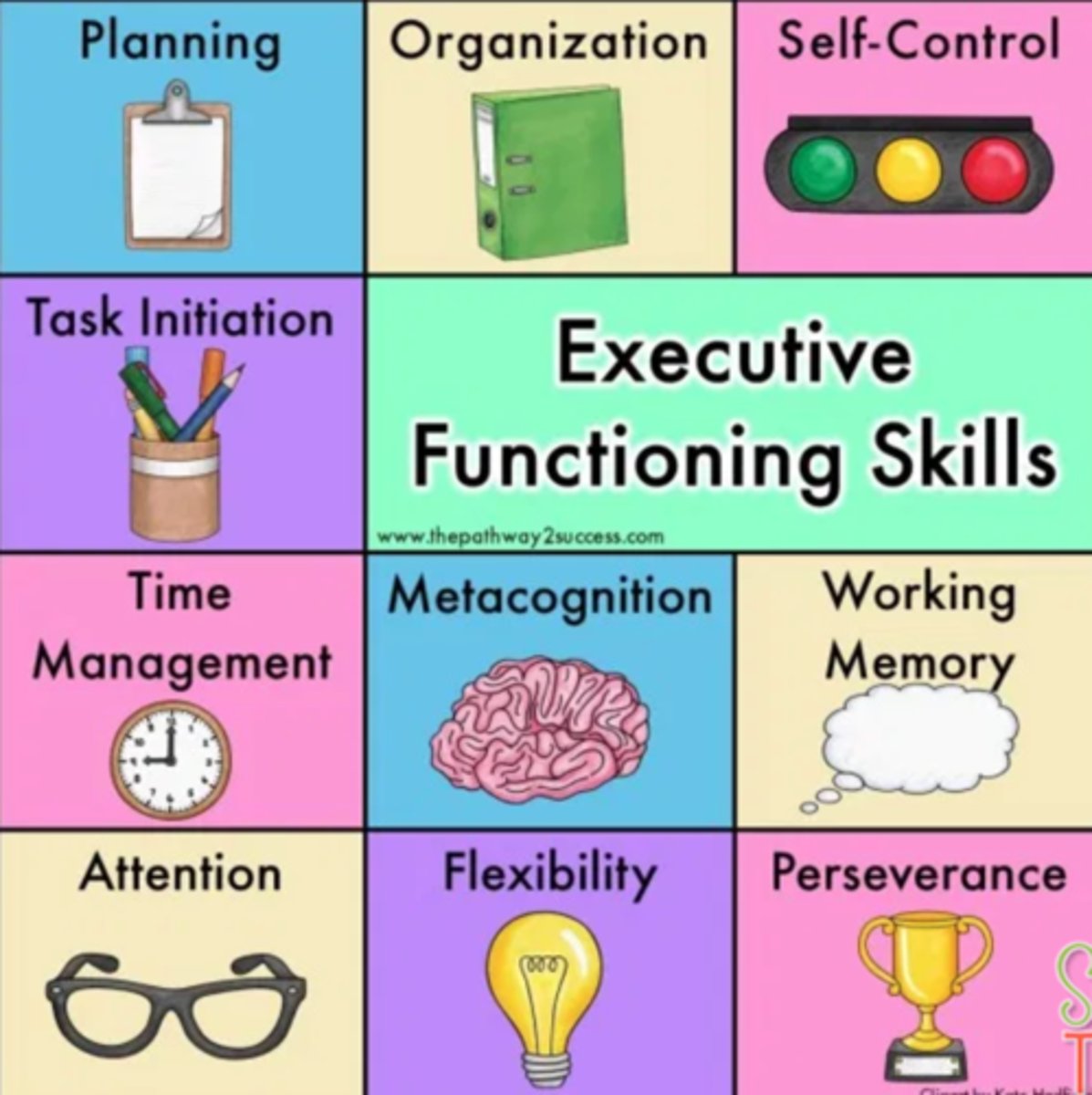
executive functions
Cognitive skills for goal-oriented behavior, including memory and inhibition
Primarily processed in the pre-frontal cortex
Examples: planning activities, managing distractions, and controlling impulses
Amygdala
Emotion, fear, rage, aggressiveness- this part of the brain will sound the alarm for the sympathetic nervous system
The Limbic System is the emotional part of the brain because it includes this
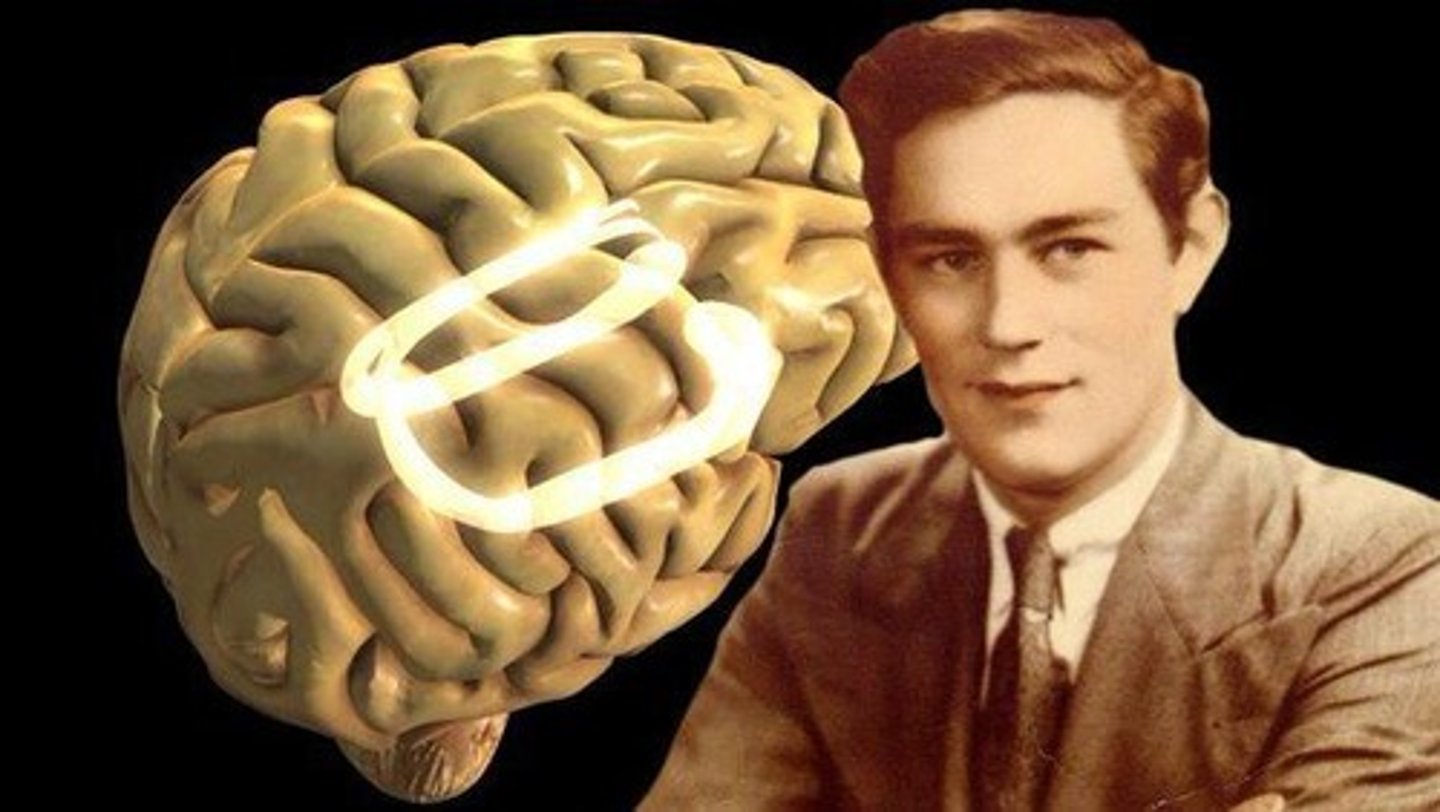
HM
The most famous brain in psychology.
Because of him, we now know the importance of both the hippocampus and cerebellum
BRAIN LESION: Had his hippocampus removed, so he had anterograde amnesia - he couldn't make new memories. He could, however, remember events that happened before the surgery.
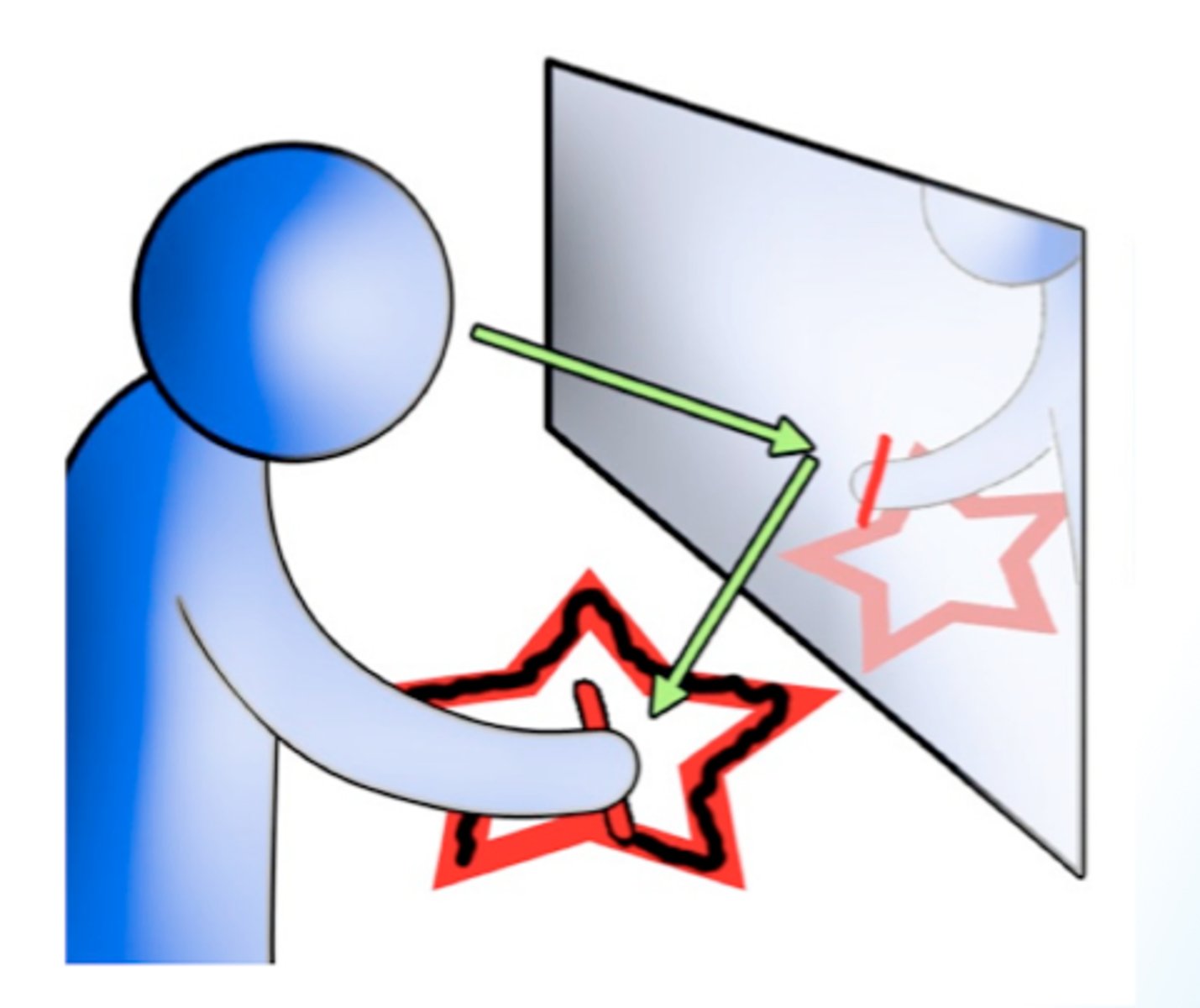
Plus he could learn new skills - procedural memory- since skills are stored in the cerebellum and the basal ganglia. He didn't remember learning how to draw the mirror star, but he improved each time he did it!
Anterograde amnesia
an inability to form new memories
Caused by damage to the hippocampus
Procedural memory
the gradual acquisition of skills as a result of practice, or "knowing how" to do things - made by cerebellum
You "know how" to ride a bike, hit a baseball, or swim, because this type of memory is stored in the cerebellum. Researchers taught HM how to draw a star by looking into a mirror, which is a SKILL.
Hippocampus
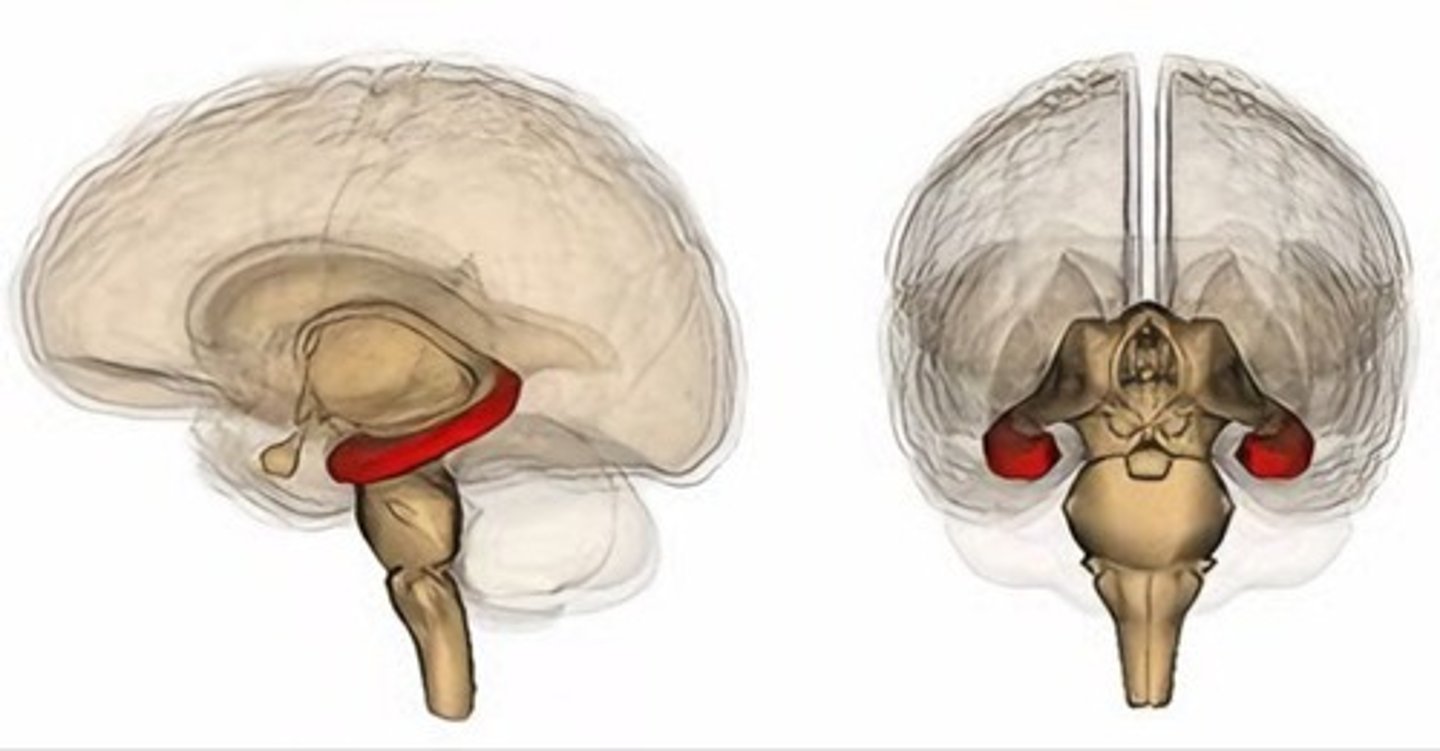
A neural center located in the limbic system that helps process explicit memories for storage.
Vital for memory - if you had this damaged, you wouldn't be able to make new memories - unless they were skill memories (procedural memories aren't stored here, because they are stored in the cerebellum)
Cerebellum
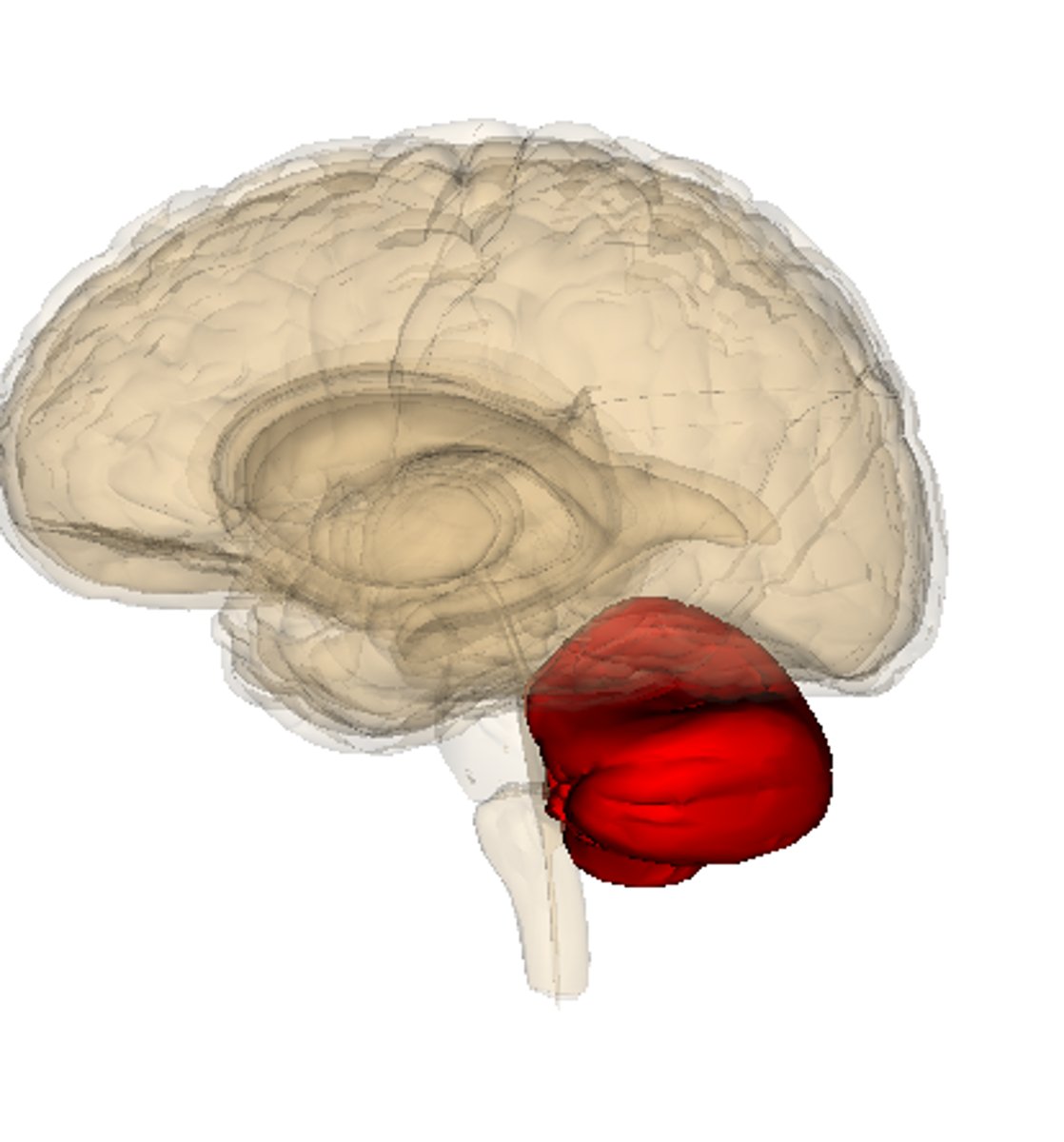
part of the brain responsible for balance and coordination. Also important for procedural memories (sometimes called "muscle memory"), like riding a bike or skills used in playing a sport.
Brain Plasticity
Parts of the brain can adapt themselves to perform other functions of the brain if needed - for example if part of your left brain is damaged, your right brain may try to do some of the functions of the left
If one part of the brain is damaged, the dendrites of the neurons might be able to make new connections that would be able to take over for those function
Researchers know that younger brains are more of THIS and are more likely to be able to compensate for damage.
Capgras delusion
belief that loved one has been replaced by an imposter (a body double)
In our normal brains, the amygdala gives us an emotional response when we see something familiar. However, this disorder is caused by a disconnected amygdala, causing an emotional response to be missing when recognizing objects. This disconnection results in no emotion when seeing someone familiar.
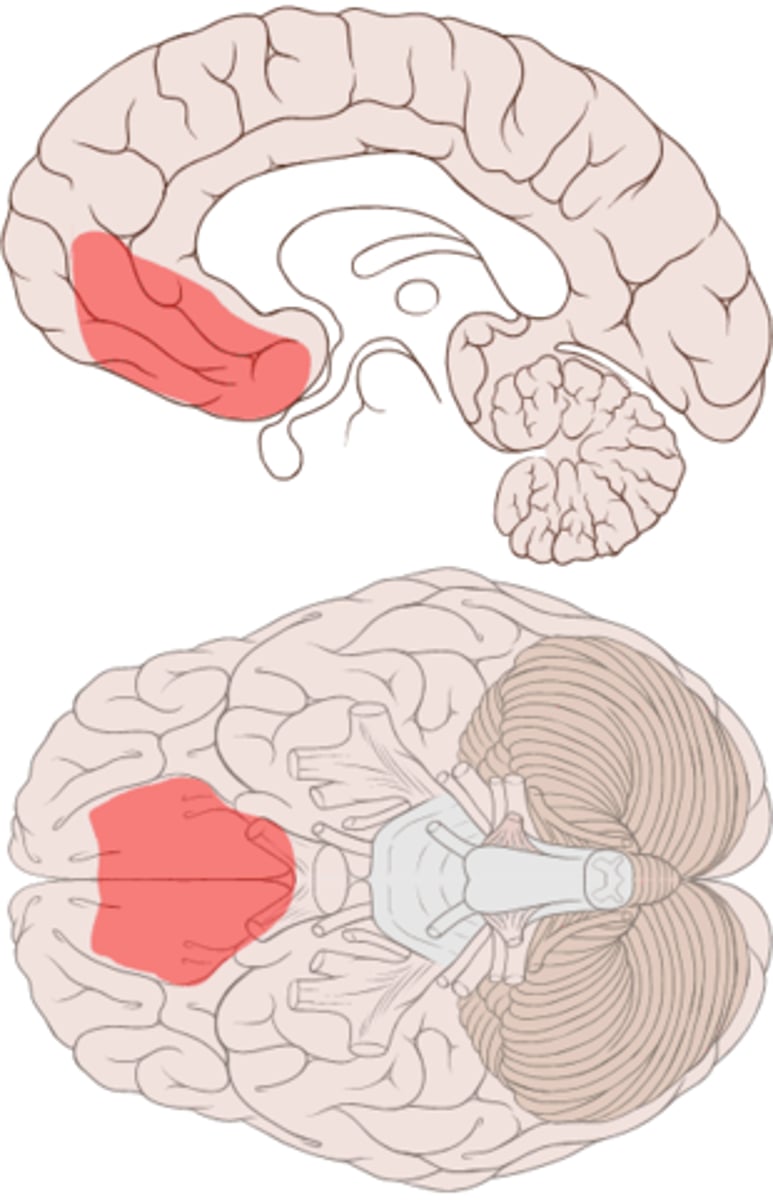
Prefrontal cortex
EXECUTIVE FUNCTIONING
The "Central Executive" in charge of "executive functions"- self control, IMPULSE CONTROL, maintaining emotional control -regulates emotion from the amygdala, planning, decision making, problem solving, judgement - these things make up your personality
The anterior (front) part of the frontal lobe
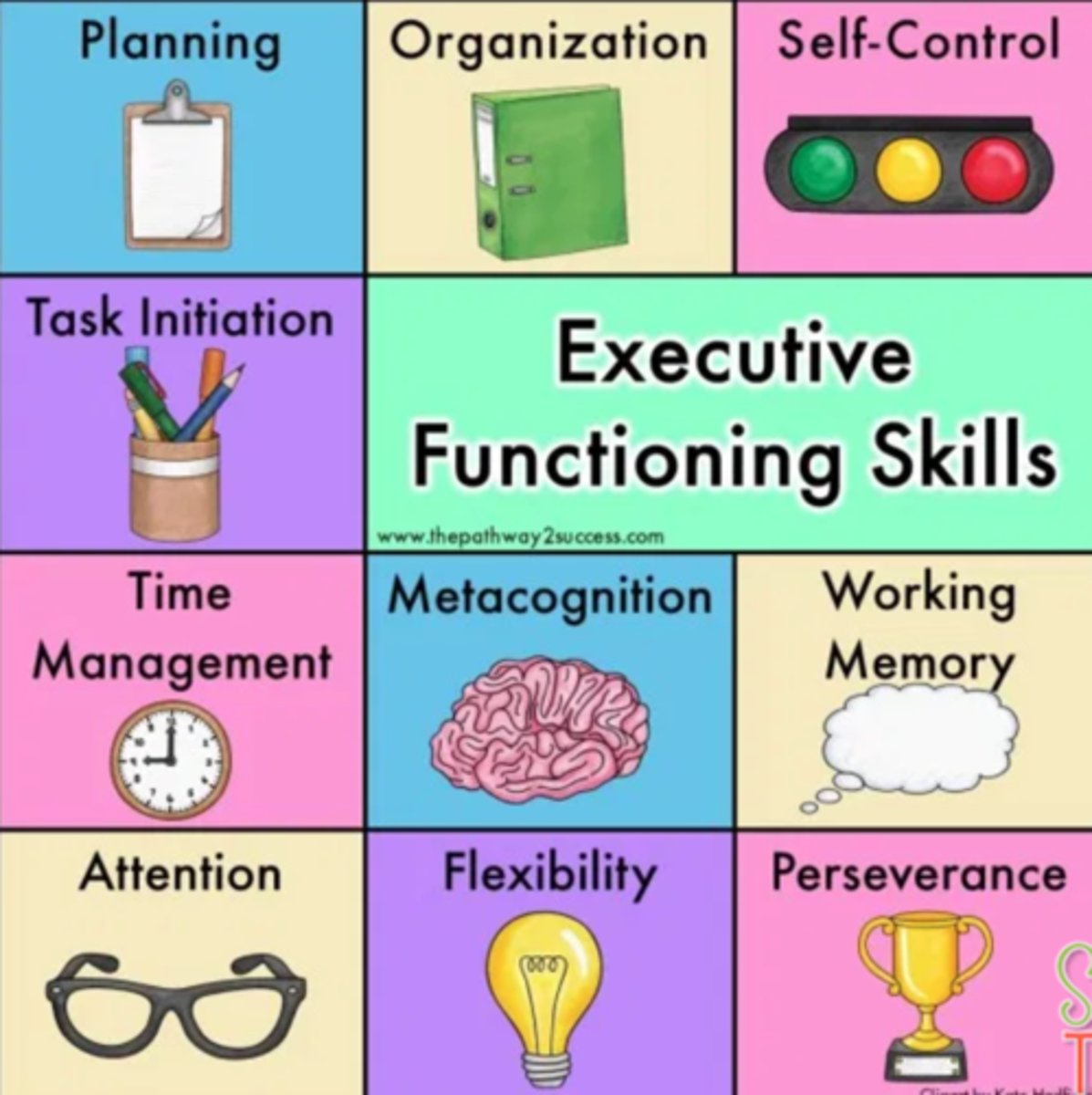
Executive functions
Cognitive skills for goal-oriented behavior, including memory and inhibition
Primarily processed in the pre-frontal cortex
Examples: planning activities, managing distractions, and controlling impulses
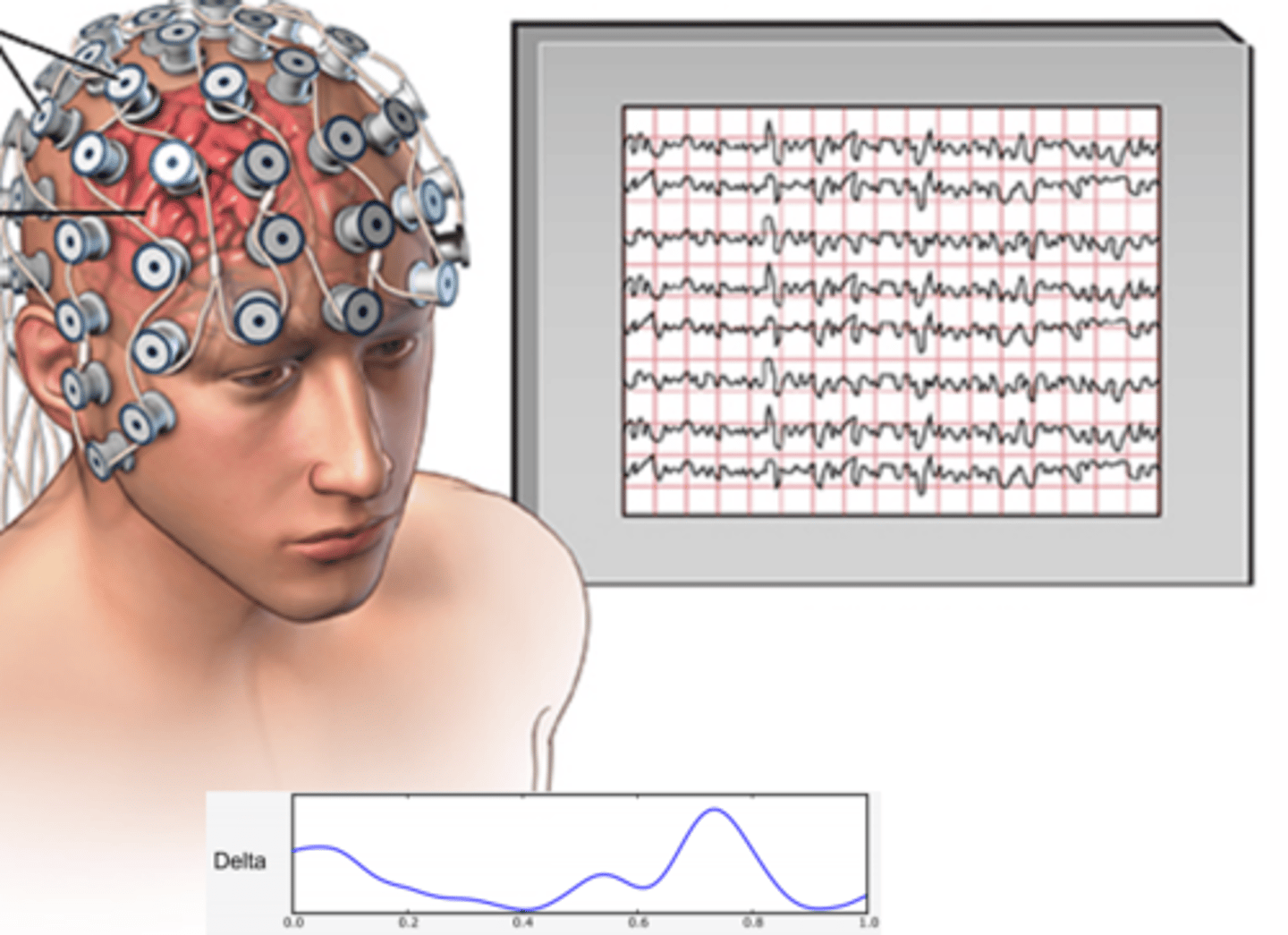
EEG
Brain scan : electroencephalogram
an amplified recording of the waves of electrical activity sweeping across the brain's surface.
These waves are measured by electrodes placed on the scalp and gives a printout of brain activity as it happens
Sleep researchers use this to study someone's stages of sleep
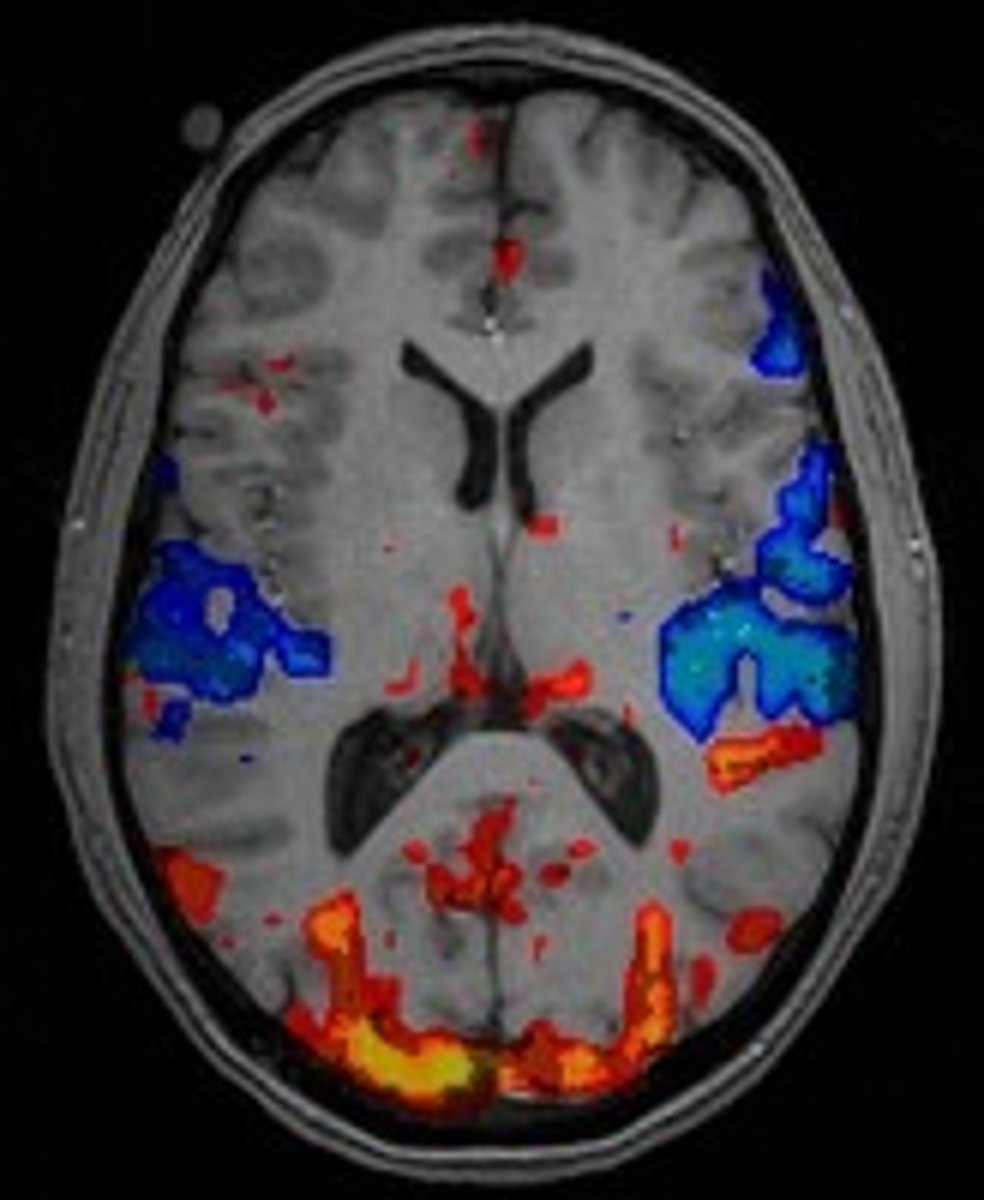
fMRI
a computerized brain scan technique for revealing blood flow and, therefore, brain activity
the scanner uses a powerful magnetic field to detect brain activity.
When an area of the brain becomes more active, such as when you wave your hand, there is an increase in blood flow to that region.
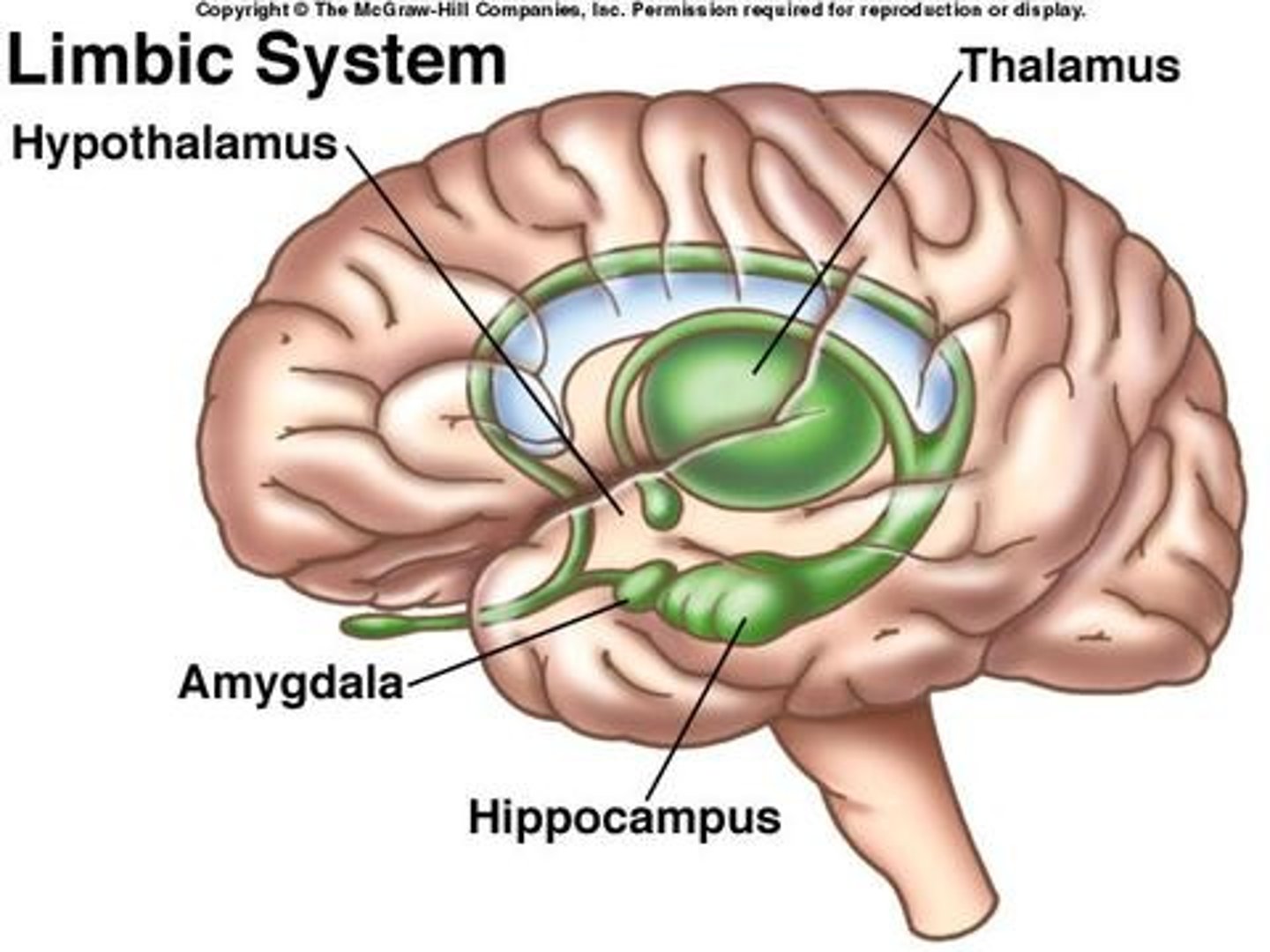
Limbic System
Called the emotional center this part the brain is also associated with memory and drives.
Memory trick to remember the parts: HiP H A T (Hippocampus, Pituitary Gland, Hypothalamus, Amygdala, and Thalamus)
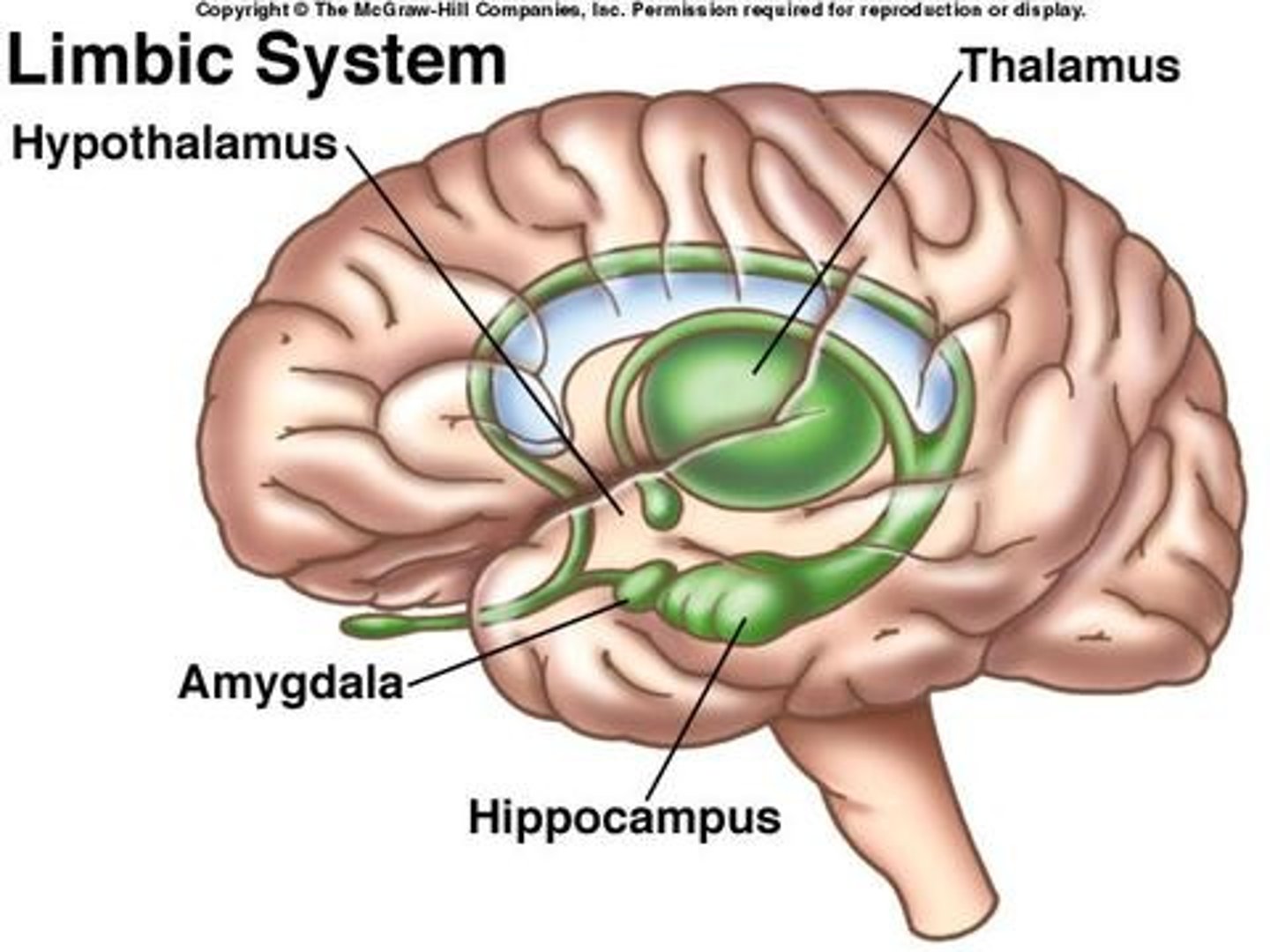
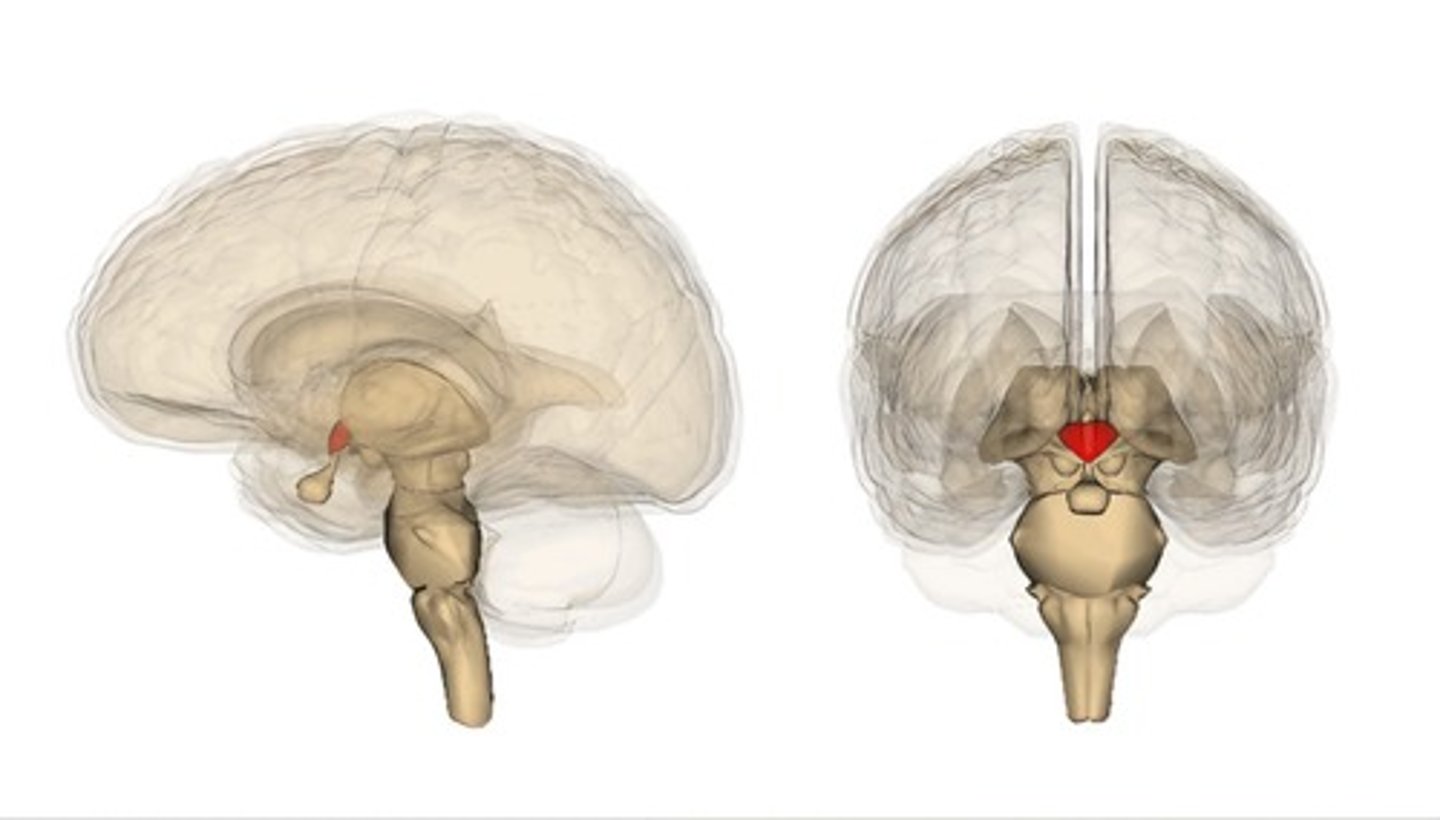
Pituitary gland
The endocrine system's most influential gland. Under the influence of the hypothalamus, the pituitary regulates growth and controls other endocrine glands.
Reward Center
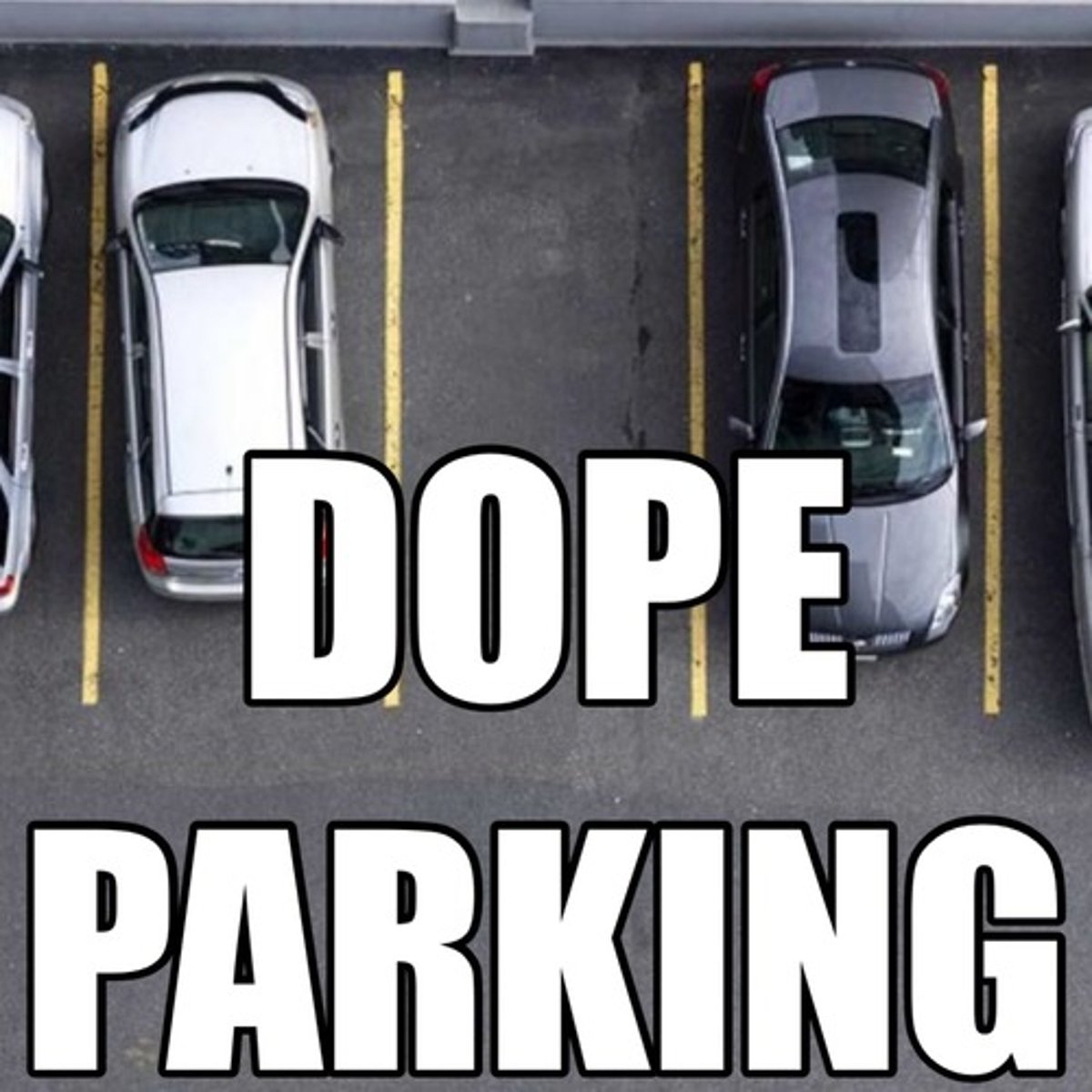
"HYPE DOPE": Located in hypothalamus- "The Dopamine Reward Center"
Reward center gives pleasure rewards for eating, drinking, and sex
These rewards centers can also be the reason why gambling, drugs like cocaine and opiates, and checking your phone is so addictive
DRUGS will artificially supply dopamine so ADDICTS will then have the body produce LESS actual dopamine - so an addict becomes unhappy and unmotivated without the drug
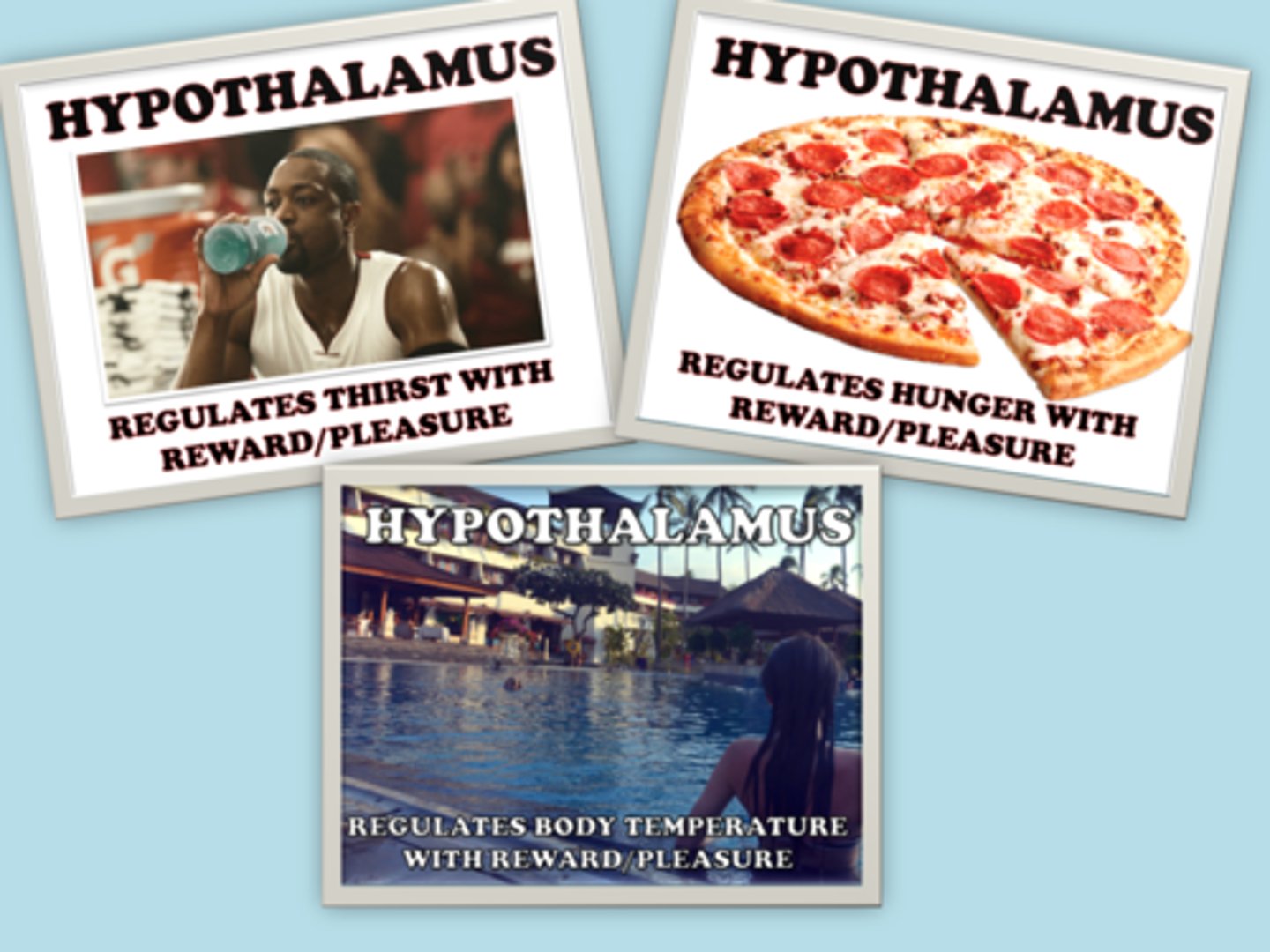
Hypothalamus
A neural structure lying below the thalamus; it directs several maintenance activities (eating, drinking, body temperature), helps govern the endocrine system via the pituitary gland, and is linked to emotion and reward.
Includes the HYPE DOPE - Dopamine Reward Center - which regulates our eating, drinking, body temperature, and other reward sensations
Addiction and dopamine rewards
DRUGS will artificially supply dopamine so ADDICTS will then have the body produce LESS actual dopamine - so an addict becomes unhappy and unmotivated without the drug
Thalamus
The sensory relay station: it directs messages to the sensory receiving areas in the cortex and transmits replies to the cerebellum and medulla.
All sensory messages, except for the sense of smell, stop here first
Located on top of the brainstem and also considered part of the limbic system
Sensory relay station (like a train station)
somatosensory cortex
Thin vertical strip of the parietal lobe that receives incoming touch sensations from the rest of the body
TOUCH SENSITIVITY (sensory) information is sent to the brain and goes to THIS area. Example- if you touch something with your hand, that information is sent to the hand section of this part of the brain
Those with phantom limb are feeling missing arms, hand, legs, or feet because this section is still active in the brain
In the parietal lobe which is part of the cerebral cortex
phantom limb
perceived sensation and feeling following amputation of a limb, (like an arm, hand, foot, or leg) that the limb still exists
Pain can even occur in these limbs even though the limbs are no longer there
Caused by a still very active somatosensory cortex
VS Ramachandran studied the relief of pain in patients with this condition
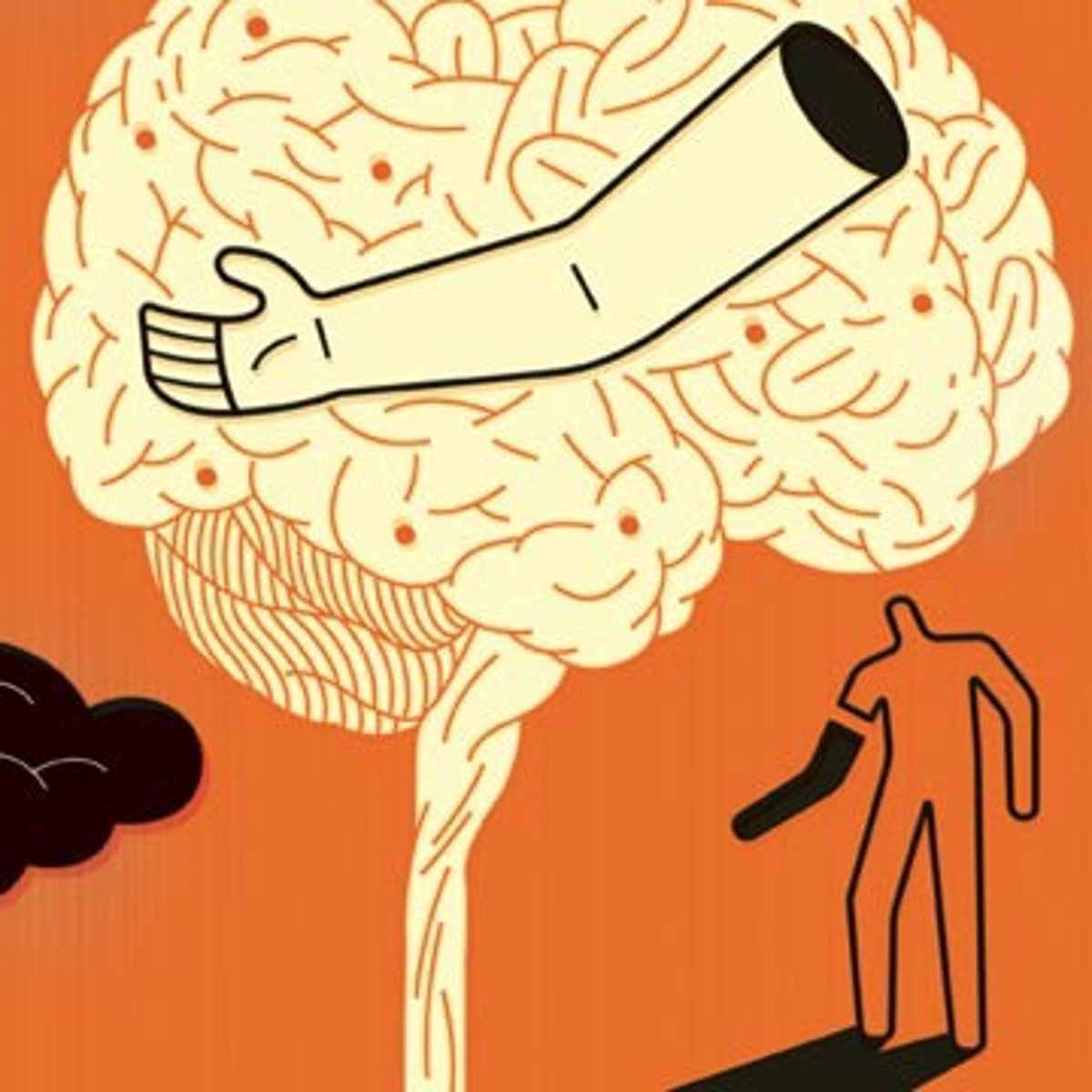
brainstem
THIS part of the brain is responsible for automatic survival functions
Sits right on top of the spinal cord at the lower base of the brain - Includes the medulla and the reticular activating system (within the brainstem)
In terms of evolution it's the oldest part of the brain
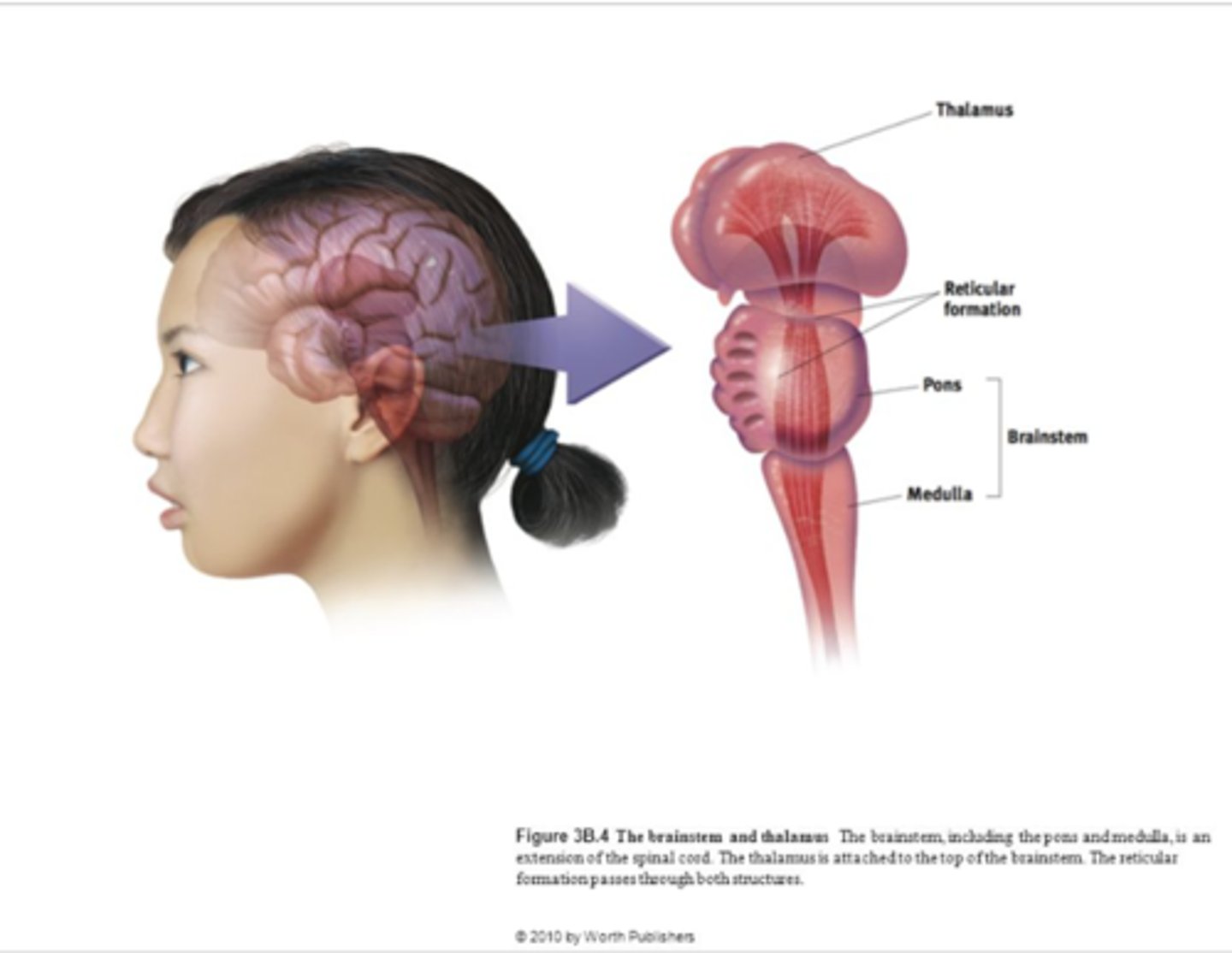
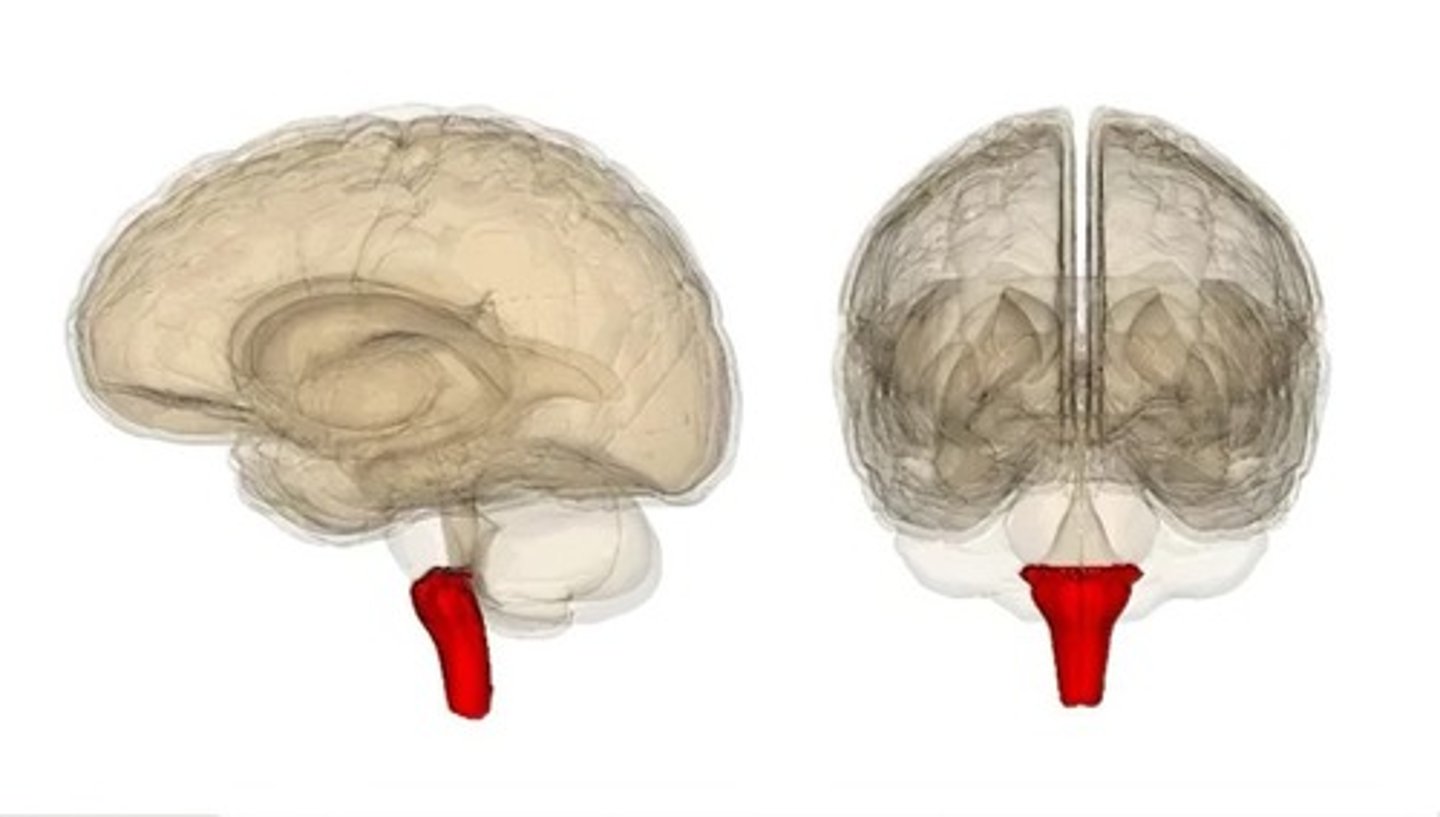
medulla
controls blood pressure, heartbeat, and breathing
Located at the base of the brainstem which is right on top of the spine
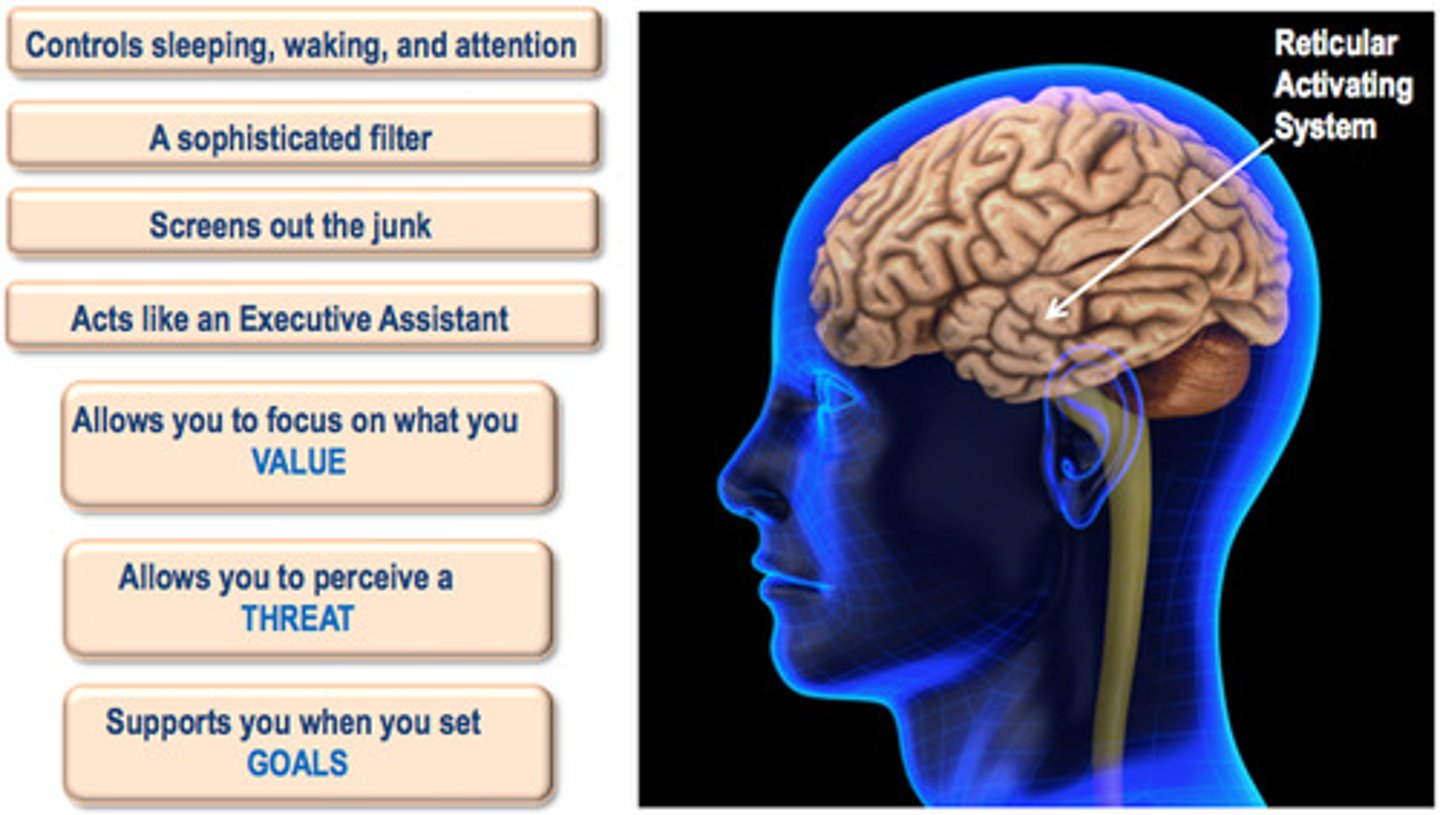
Reticular Activating System (RAS)
This part of the brainstem is responsible for arousal (alertness), waking up from sleep to wakefulness, paying attention, and it is the gatekeeper for sensory information - deciding what is important and what can be ignored - helps us filter distractions
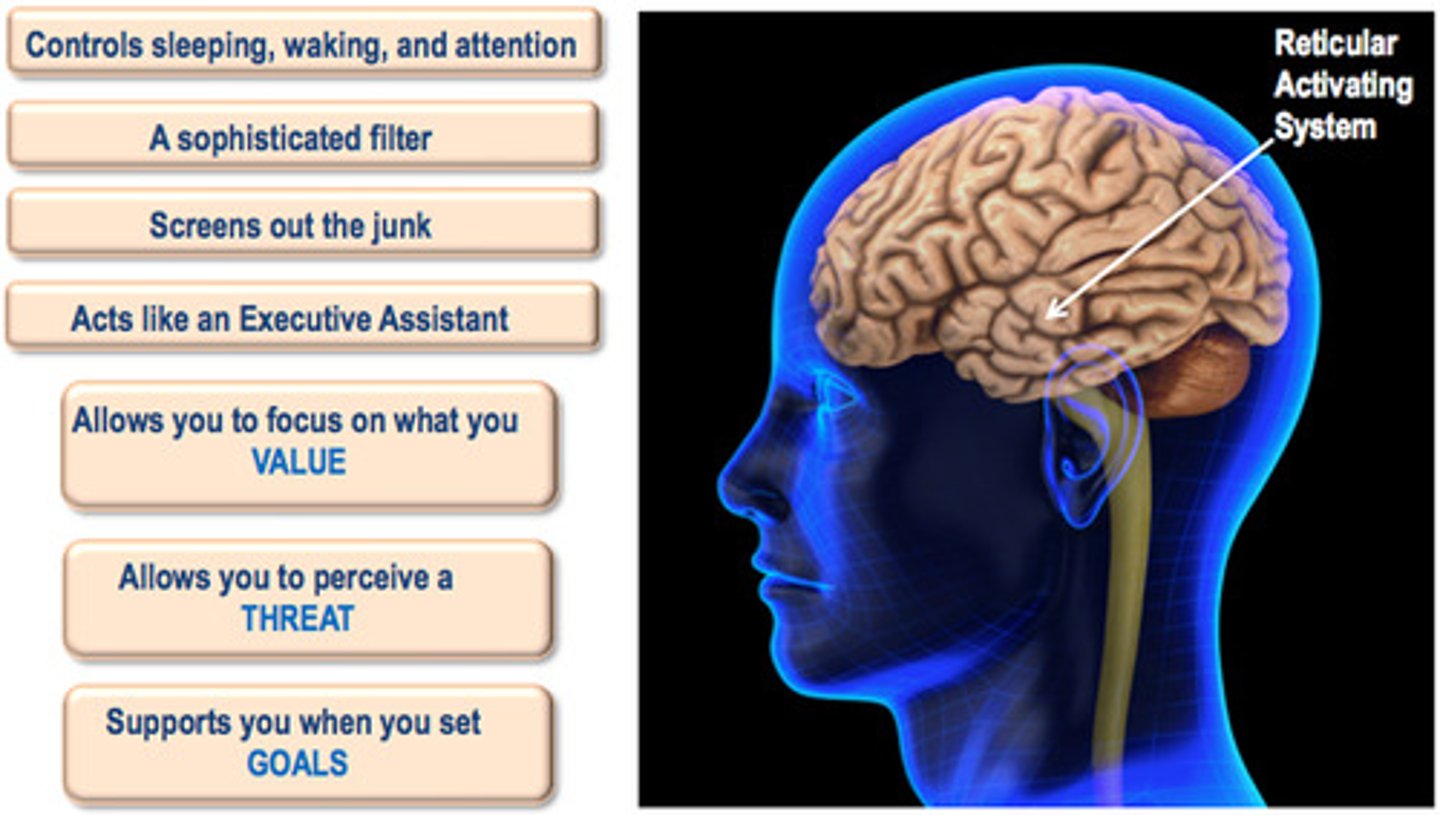
Why does the reticular activating system filter information
What that means is, the RAS is able to filter and control what incoming information (stimulus) you're aware of, so that you'll be motivated to behave in a certain way.
Why? It's a survival mechanism. At any given time, only a certain amount of information is actually useful to your brain. For example: If there's a tiger about to attack you, that's the only information your brain needs to drive you to action - RUN for your life! It doesn't need to know what color the grass and flowers are, or how the air smells, or what song is playing in the background - those things are all irrelevant information.
Your RAS is the thing that analyzes what incoming information is actually relevant to you (and your survival), and lets only the most important stuff through - it actively blocks the rest of the info (so you are not aware of it).
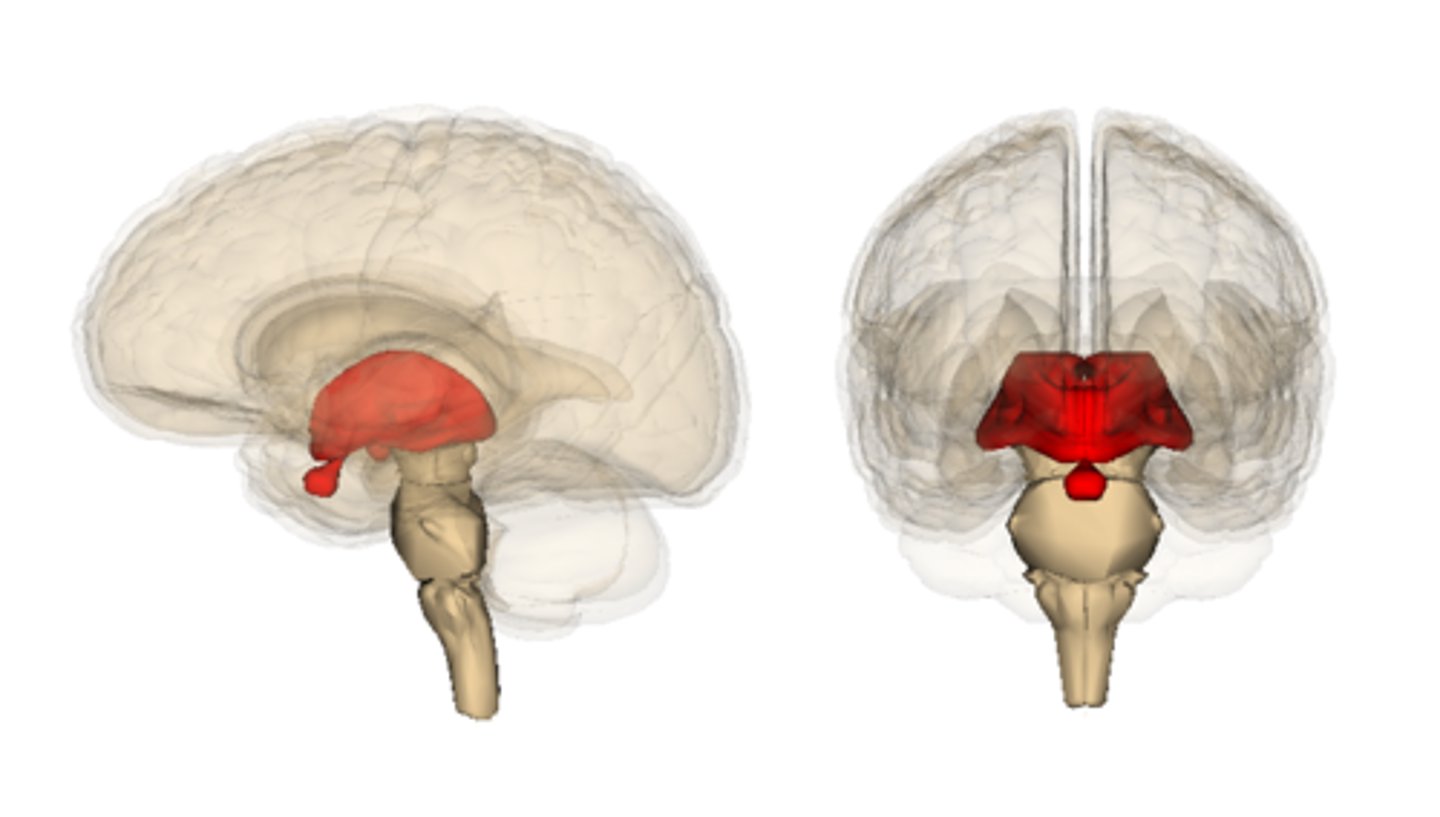
thalamus
The sensory relay station: it directs messages to the sensory receiving areas in the cortex and transmits replies to the cerebellum and medulla.
All sensory messages, except for the sense of smell, stop here first
Located on top of the brainstem and also considered part of the limbic system
Sensory relay station (like a train station)
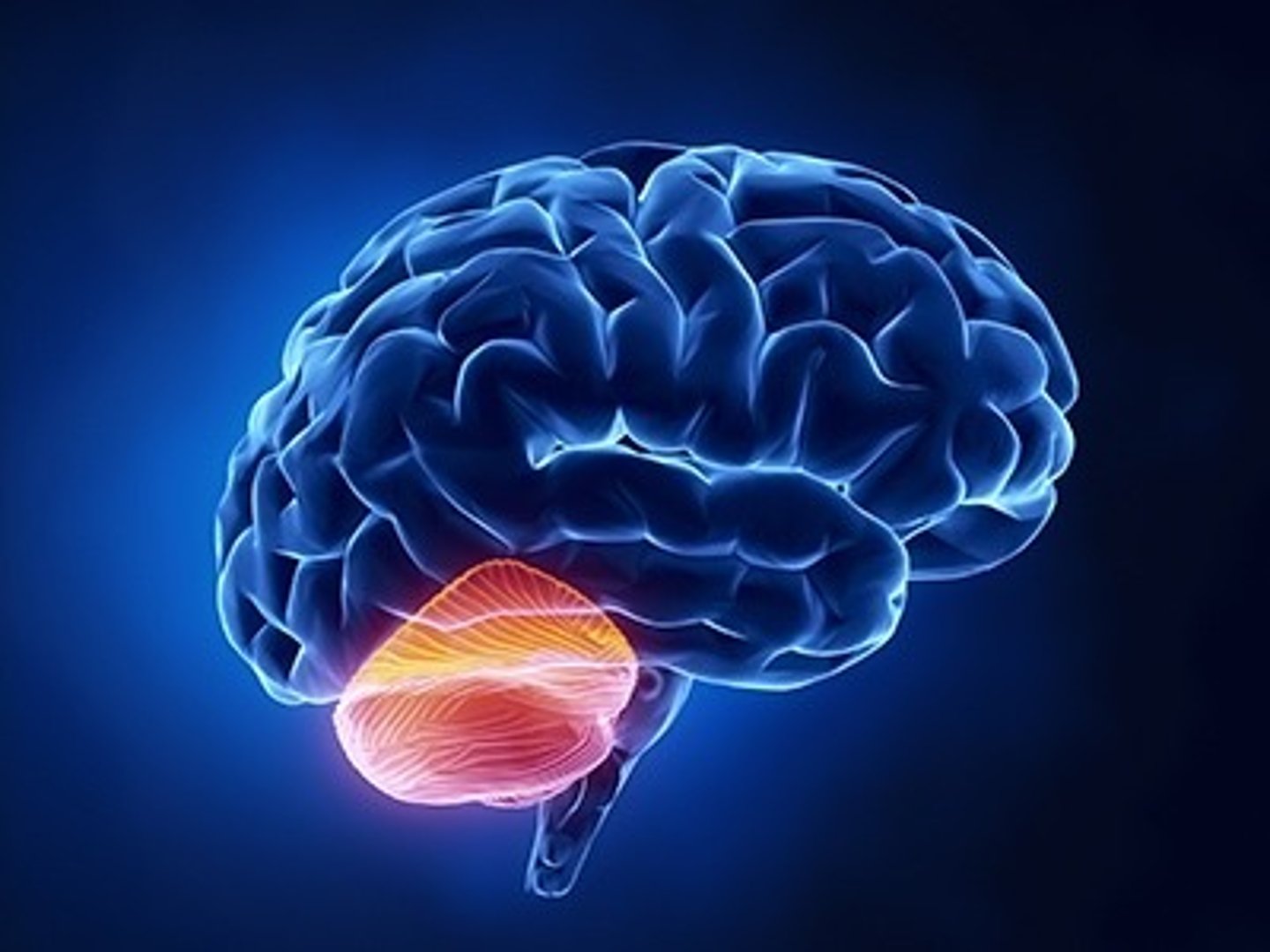
cerebellum
Used for balance and coordination. Also for skill memories.
Nicknamed the "little brain" because of how it looks at the base of the brainstem
You use it to coordinate movements and balance - like when you play soccer
Drinking alcohol effects it, so that's why drunks lose balance and coordination
Contains only a certain type of memory - Procedural Memory or Skills - like how to ride a bike, hit a baseball, or play the piano
Cerebral Cortex
The top, wrinkled surface of the brain - "NEWEST" part in terms of EVOLUTION
A thin (1-mm) layer of densely packed neurons
This top layer is divided into four lobes
This layer covers the rest of the brain, including most of the structures we have described

Lobes of the Cerebral Cortex
Lobe areas of the cerebral cortex: frontal, parietal, temporal, occipital

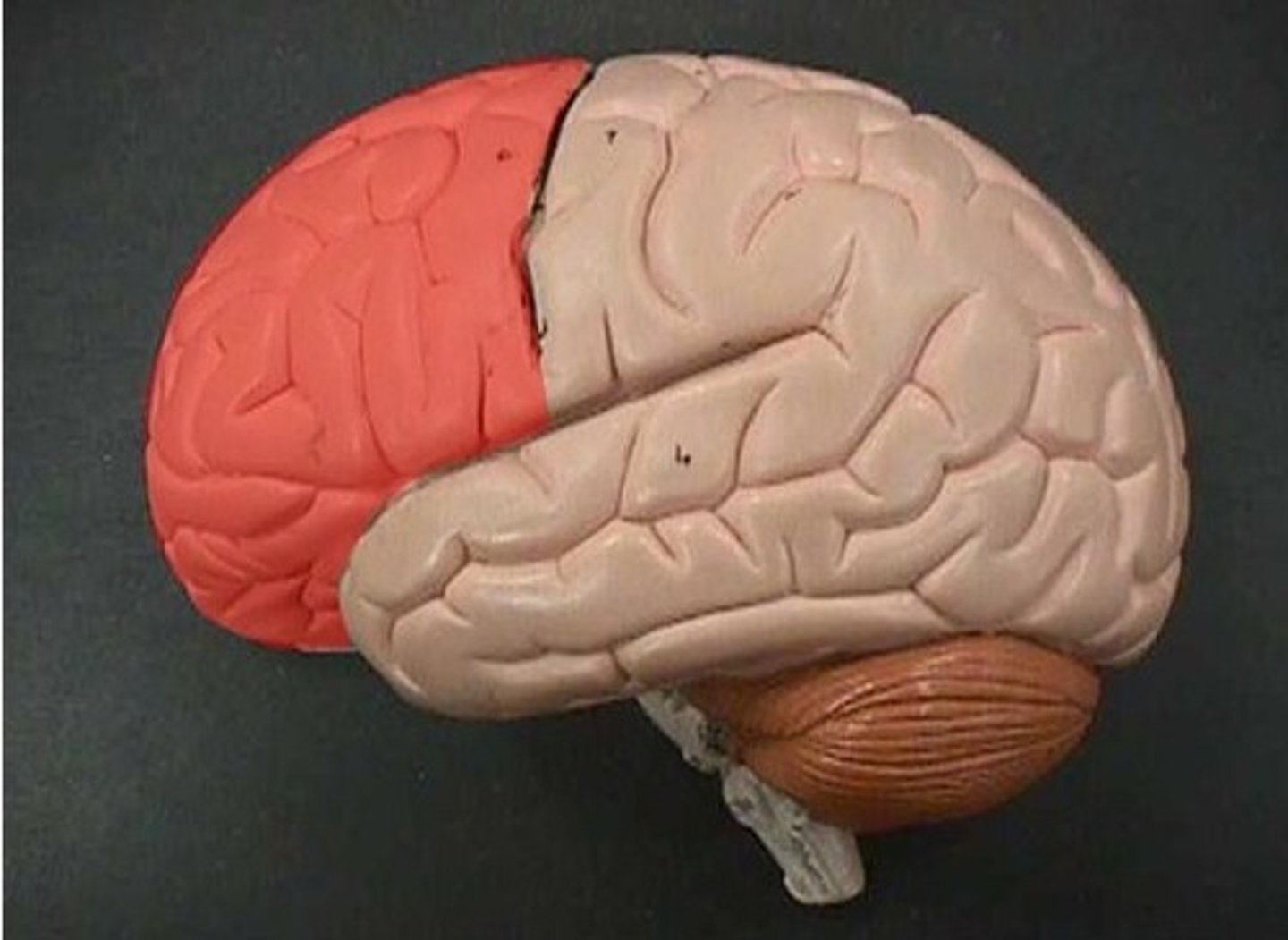
Frontal Lobes
Controls linguistic (language) processing, higher-order thinking, and executive functioning (especially in the pre-frontal cortex)
In the rear of these lobes is the motor cortex which controls the skeletal muscles
Located at the top front part of the brain behind your forehead
The anterior (front) part of THIS is called the prefrontal cortex (PFC)
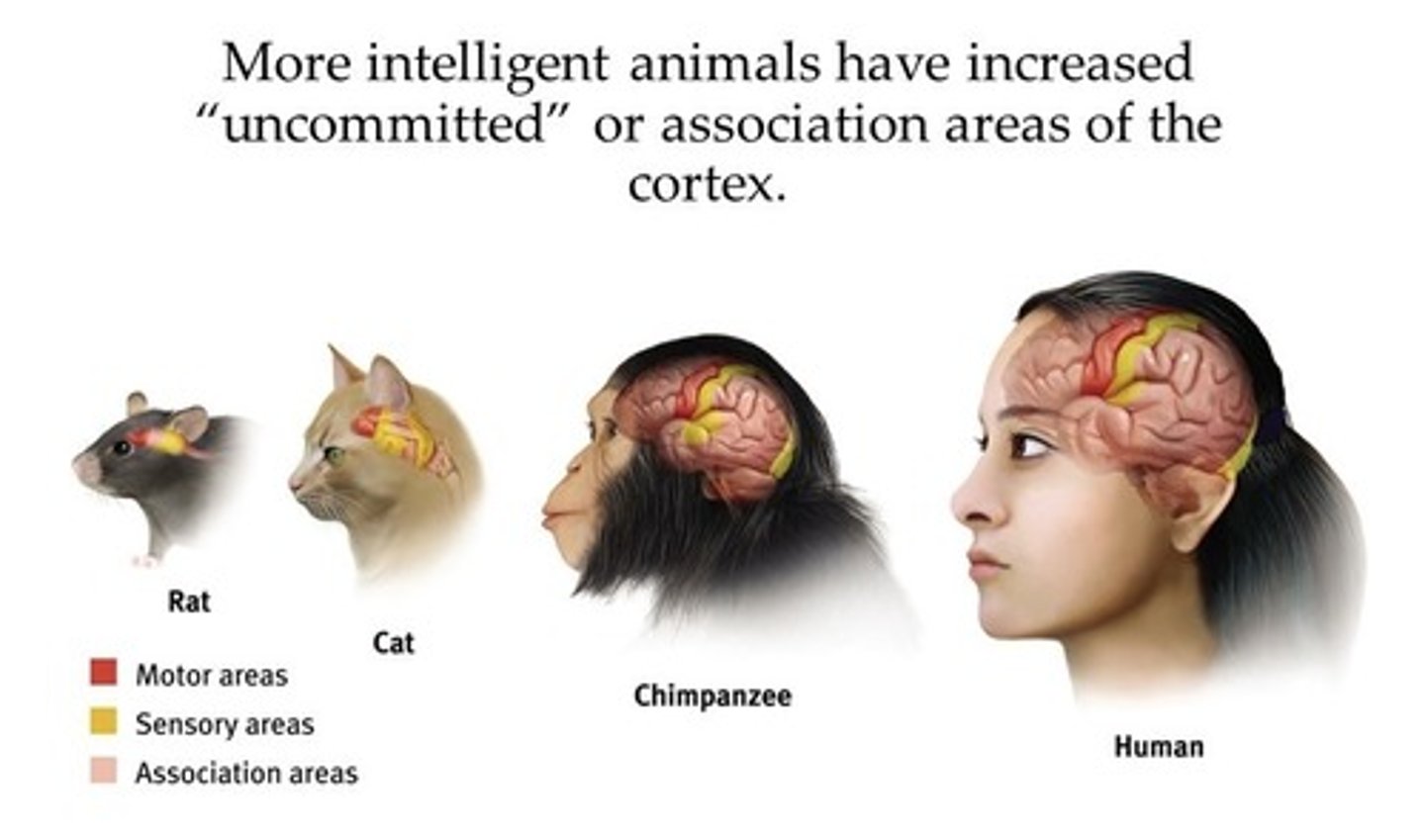
Association Area
Any area of the cerebral cortex that is not associated with receiving sensory information or controlling muscle movements
Higher level thinking occurs here - like language, cognition, and reasoning. Animals like rats don't have many of these areas, but humans have the most areas.