Skull & Face Slides
 Call Kai
 Learn
Learn Practice Test
 Spaced Repetition
 Match
Match Flashcards
 Knowt Play
1/26

There's no tags or description
Looks like no tags are added yet.
Name | Mastery | Learn | Test | Matching | Spaced | Call with Kai |
|---|
No analytics yet
Send a link to your students to track their progress
27 Terms
List the cranial bones
frontal, temporal, occipital, parietal, sphenoid, ethmoid
List the bones of the orbit
frontal bone, sphenoid bone, palatine bone, zygomatic bone, lacrimal bone, ethmoid bone, maxilla bone
What is the structure and joint function of sutures?
fibrous joint, synarthrotic joint
List the function of the trachea
conducts air to and from lungs, involved in coughing and airway clearance
What is the structure of the trachea?
C shaped hyaline cartilage
What type of joint is the temporomandibular joint?
synovial, modified hinge
List the motions of the temporomandibular joint
elevation/depression, R/L deviation, protrusion/retrusion
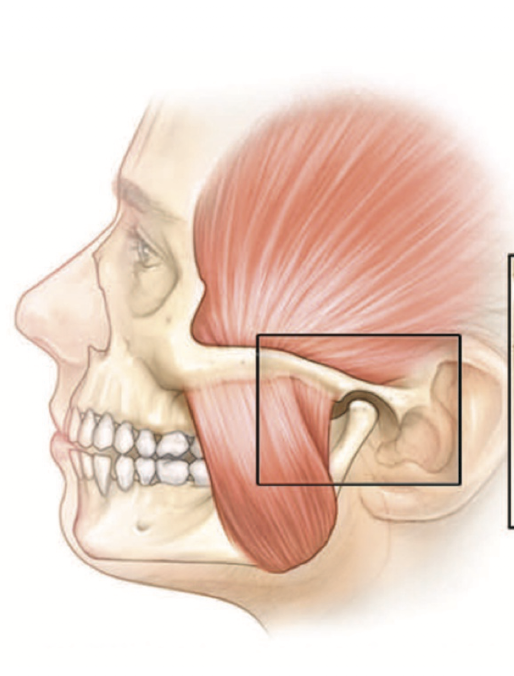
What keeps the temporomandibular joint stable?
articular disc, collateral ligaments, and joint capsule
List the cervical flexors
sternocleidomastoid and the scalene group
What is the largest muscle in the neck?
sternocleidomastoid (2 heads: sternal and clavicular)
What muscle group is deep to the sternocleidomastoid?
the scalenes (anterior, middle, posterior)
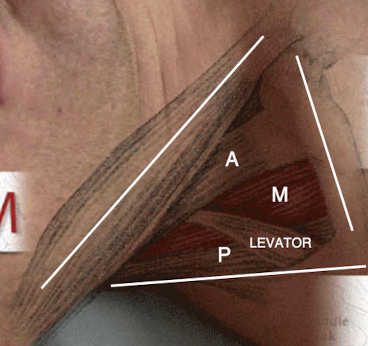
Where are the scalenes located?
between the SCM and anterior flap of trapezius
What is the strongest muscle in the body relative to size?
masseter , sits deep to parotid gland
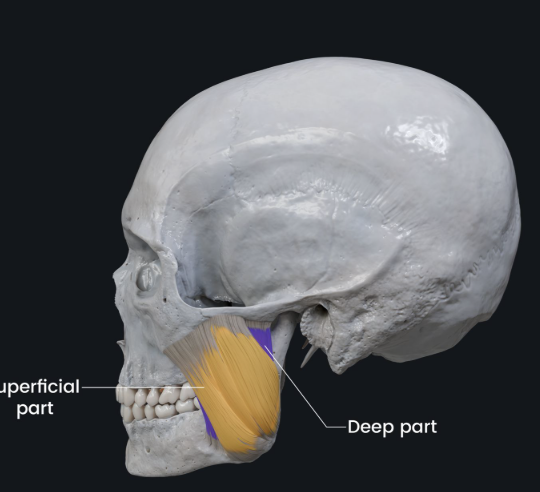
What two bony landmarks help identify the masseter?
zygomatic arch, mandible ramus
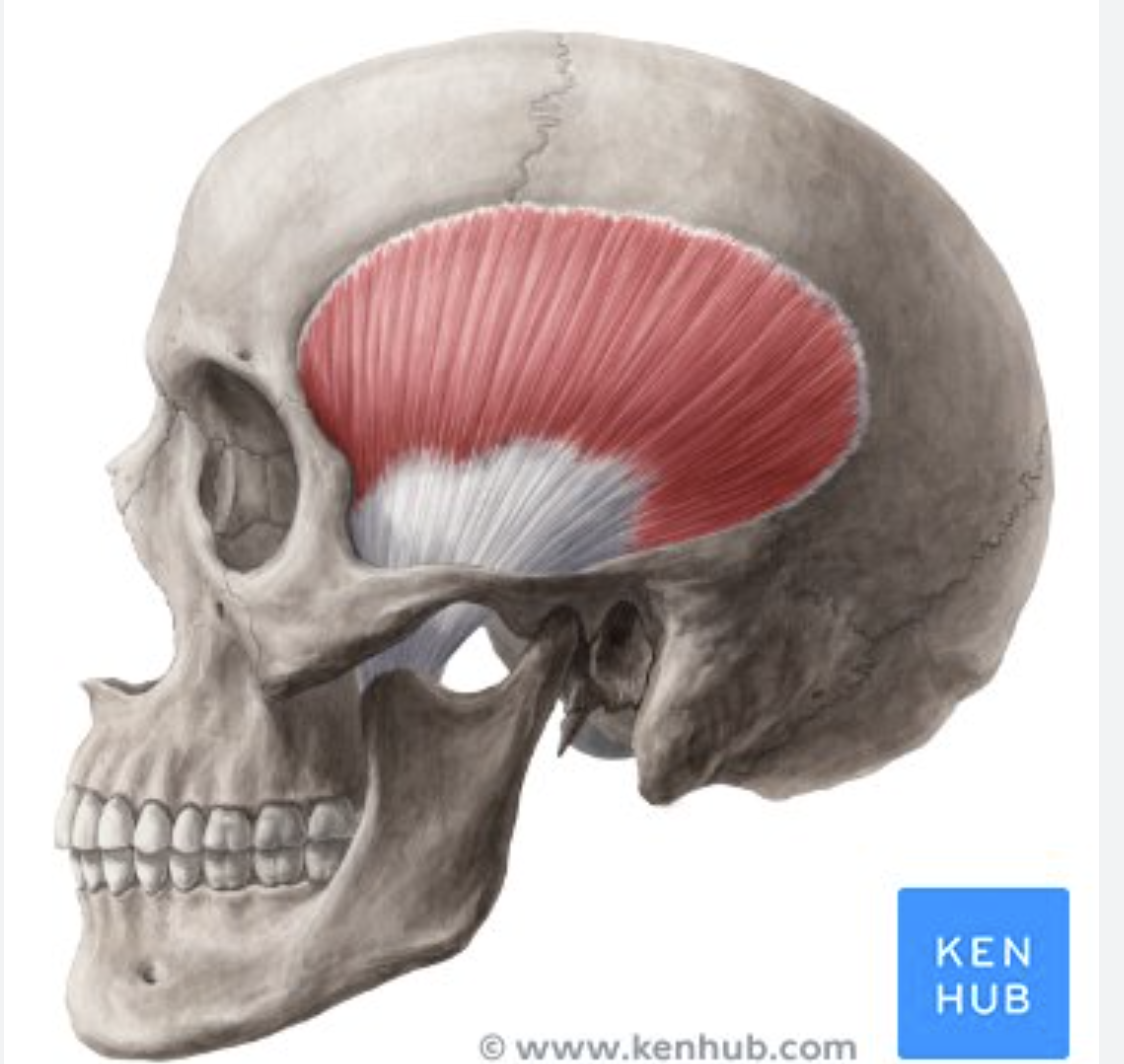
Where is the temporalis located?
passes beneath zygomatic arch
What is the action of the temporalis?
elevate and retract the mandible
What is the action of the frontalis?
raise the eyebrows and wrinkle the forehead
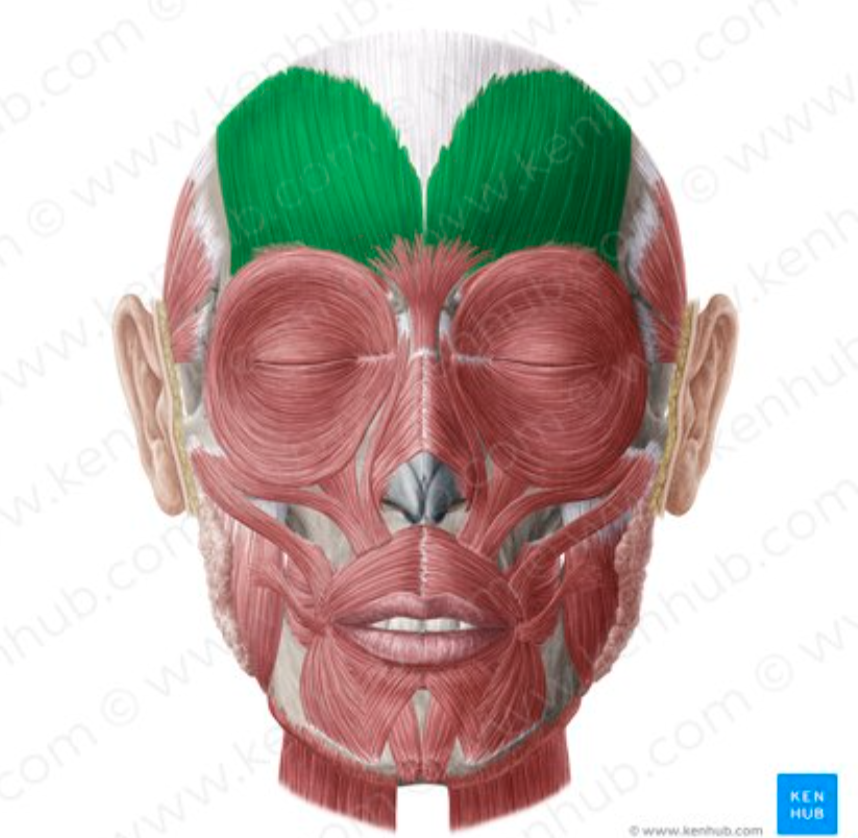
What is the origin and insertion of the frontalis?
O: galea aponeurotica
I: skin superior to the eyebrows
What is the frontalis innervated by?
facial nerve (VII)
What is the action of the pterygoids?
lateral jaw movement and protraction W
What are the pterygoids innervated by?
trigeminal nerve (CN V)
What is the action of the suprahyoids?
elevate hyoid and tongue, depress mandible (TMJ joint)
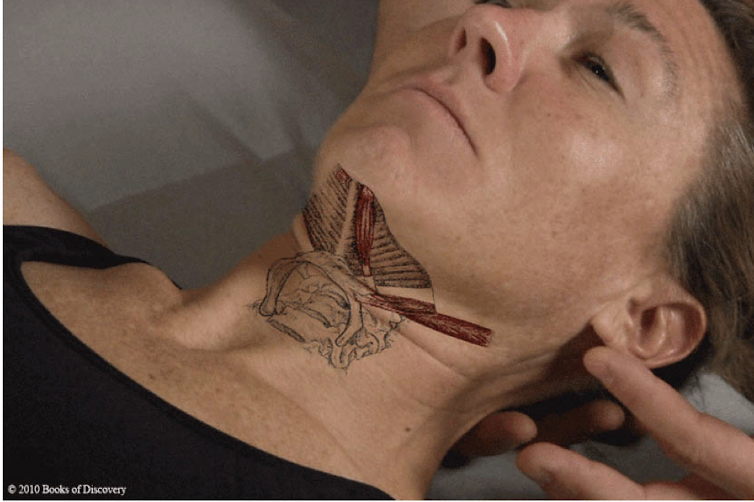
What is the origin and insertion of the suprahyoids?
O: underside of mandible and styloid process
I: hyoid bone
What is the suprahyoids innervated by?
C1, C2, Trigeminal (V), and Facial (VII)
What is the action of the digastric?
hyoid bone fixed: depress the mandible (TMJ)
mandible fixed: elevate the hyoid bone
retract the mandible
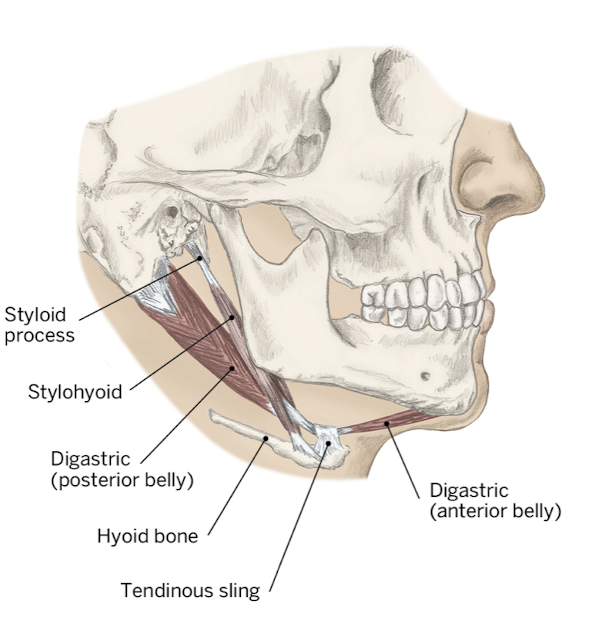
What is the origin and insertion of the digastric/
O: mastoid process (deep to sternocleidomastoid and splenius capitis)
I: inferior border of the mandible
What is the digastric muscle innervated by?
anterior belly: trigeminal (V) & Facial (VII)