genetics SB1 vocab
 Call Kai
 Learn
Learn Practice Test
 Spaced Repetition
 Match
Match Flashcards
 Knowt Play
1/19

There's no tags or description
Looks like no tags are added yet.
Name | Mastery | Learn | Test | Matching | Spaced | Call with Kai | Chat |
|---|
No analytics yet
Send a link to your students to track their progress
20 Terms
Genes
basic units of biological info
passed down from one generation to the next, underlie formation of every heritable trait
DNA region that specifies a particular protein/RNA
heredity
the way genes transmit traits from parents to offspring
4 Mendelian Themes
variation in traits = widespread in nature
variation = essential for following genes from one generation to the next
variation = inherited according to patterns
heredity apply equally well to all sxually reproducing organisms
artificial selection
selective breeding of domesitcated plants and animals w desirable characteristics
issues:
one parent contributes most to an offspring’s inherited features
blended inheritance
What did Mendel to differently from those who preceded him?
chose garden pea— has both sperm producing and egg producing organs (stamens and pistils, respctively)—> easy to self-fertilize
used no intermediate forms AKA discrete traits
collected lines of peas that bred true— pure breeding lines produce offspring that carry traits from parents that remain constant from generation to generation
also used antagonistic pairs (purple x white, yellow x green) to cross fertilize and produce hybrids— hybrid progeny always had the characteristics of one parent
recriprocal crosses— reversed characteristics of male and female parents, controlling whether a characteristic was transmitted via sperm or egg
hybrid progeny produced by reciprocal cross fertilizations had same characteristics, therefore doesn’t matter which parent was male/female

Mendel’s Monohybrid Cross
P1: homozygous yellow and green crossed (yellow dominant to green)
F1: all yellow, but heterozygous yellow
F2: heterozygous cross —> 3:1 ratio
Monohybrid Crosses
crosses btwn parents that differ in only one trait
law of segregation
two alleles of each gene separate during gamete formation, uniting at random, one from each parent @ fertilization
Product Rule
probability of two or more indp events occurring together is the product of the probablities that each event will occur by itself
probability of event 1 and event 2 = probability of event 1 x probability of event 2
phenotype
observable characteristic
genotype
pair of alleles present in an individual
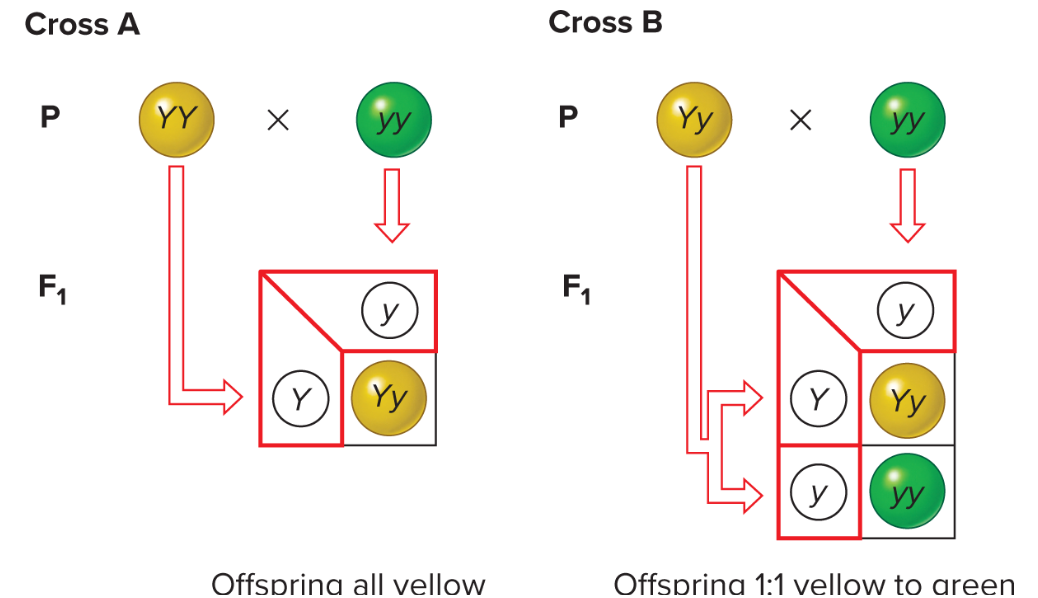
testcross
(1) a cross used to determine the genotype of an individual showing a dominant phenotype by mating with an individual showing the recessive phenotype; and (2) a cross used to determine whether genes are linked and the distance (recombination frequency) between linked genes
Dihybrid cross
9:3:3:1
only 9 different genotypes exist out of 16 allelic combos
produces parental types and recombinant types
crosses btwn individuals that are heterozygous at two different genes.
parental types
phenotypes that reflect a previously existing parental combination of alleles that is retained during gamete formation
recombinant types
phenotypes reflecting a new combination of alleles that occurred during gamete formation
Law of Indp Assortment
during gamete formation, different pairs of alleles segregate indp of each other
2 general important molecular principals
specific gene determines specific protein
dominant allele determines normally functioning protein, recessive allele doesn’t specify a functional protein
Rare Dominant Trait Pedigree
vertical inheritance
at least one affected person in each generation
view mating btwn affected and unaffected partner as analogous to a testcross
if some offspring don’t have the dominant inheritance disease, the parent showing the trait is heterozygote
ex: huntington’s
affected children always have at least one affected parent
dominant traits show a vertical pattern of inheritance: the trait shows up in every generation
two affected parents can produce unaffected children, if both parents are heterozygotes
Rare Recessive Trait Pedigree
horizontal pattern of inheritance
phenotypes reflecting a new combination of alleles that occurred during gamete formation
skips generations
ex: cystic fibrosis
unaffected can indicate carriers
affected individuals can be the children of two unaffected carriers
all children of two affected parents should be affected
rare recessive traits —> horizontal pattern of inheritance: trait first appears in one or more members of one generation and not seen in earlier generations
recessive traits may show a vertical pattern of inheritance if the trait is extremely common in the population