N325 Quiz 2: Pain
 Call Kai
 Learn
Learn Practice Test
 Spaced Repetition
 Match
Match Flashcards
 Knowt Play
1/67

There's no tags or description
Looks like no tags are added yet.
Name | Mastery | Learn | Test | Matching | Spaced | Call with Kai | Chat |
|---|
No analytics yet
Send a link to your students to track their progress
68 Terms
gender differences in pain
men: less likely to report pain and to use alternative pain treatments than women
women: more likely to have pain (migraines, back pain, arthritis, fibromyalgia, neuropathic pain, abdominal pain, footaches), more likely to be diagnosed with a nonspecific somatic disorder, and less likely to receive analgesics for chest and abdominal pain
aging considerations
older adults are more likely to experience pain from a chronic condition, may expect pain as a part of aging and fail to report it, and may have cognitive problems that limit ability to describe pain; often manifested by depression and increased social withdrawal
cardiovascular responses to acute pain
increased BP and HR, resulting in enhanced alertness to threats
neurological responses to acute pain
increased pupil diameter, resulting in visual perception of threat
skin responses to acute pain
increased perspiration, resulting in removal of excess body heat
musculoskeletal responses to acute pain
increased muscle tension and activity, resulting in readiness for rapid motor activity
psychosocial responses to acute pain
increased apprehension, irritability, and anxiety, resulting in enhanced mental alertness
acute pain
pain that is usually short-term (< 3 months), caused by a specific injury or condition, and decreases over time
chronic pain
pain that persists for longer than three months that can be caused by a variety of factors and typically is persistent (ebbs and flows)
nociceptive pain
pain resulting from the normal processing of harmful stimuli that leads to tissue damage
superficial somatic pain
type of nociceptive pain arising from skin, mucous membranes, or subcutaneous tissue that is localized
deep somatic pain
type of nociceptive pain arising from muscles, fasciae, bones, or tendons that may be localized or diffuse/radiating
visceral pain
type of nociceptive pain arising from visceral organs such as the gallbladder or pancreas that is usually referred to cutaneous sites
functional pain
type of nociceptive pain characterized by pain and disability without a clear etiology involving persistent and complex physical symptoms
neuropathic pain
pain caused by damage to the nervous system, often described as burning or tingling (ex: diabetes, alcoholism, shingles, amputation, chemotherapy, nerve compression)
referred pain
pain perceived at a location other than the site of the painful stimulus as a result of interconnected sensory nerves, different than radiating pain, may be blocked using Ketamine
ischemic pain
pain caused by tissue hypoxia
transduction
the process by which noxious stimuli cause cell damage and lead to the generation of action potentials
transmission
the continuation of an action potential from the site of injury to the spinal cord, then to the brainstem and thalamus, and ultimately to the somatosensory cortex of the brain
perception of pain
the conscious experience of pain once it reaches the brain
modulation of pain
neurons originating in the brainstem descend to the spinal cord and release substances that inhibit nociceptive impulses
somatic mapping
a technique used to identify pain sources based on the body's sensory nerves
endogenous opioids
natural pain-relieving chemicals released by the brain to inhibit nociceptive impulses
core principles of pain management
Everyone has a right to assessment/treatment of pain
Pain is always subjective
Physiological/behavioral signs of pain are not reliable
Pain is unpleasant
Assessments must be appropriate for each patient
Pain can exist without physical etiology
Pain perception is individual
Chronic pain sufferers may be more sensitive to stimuli
Unrelieved pain has physiologic consequences
pain assessment goals
describe patient’s pain experience to design pain management techniques and identify realistic goals for therapy and resources for self-management (0/10 pain isn’t always possible)
PQRST assessment tool
Palliative/provoking: what triggers the pain or makes it better?
Quality: what does the pain feel like (sharp, dull, throbbing, burning, etc.)?
Region/radiation: where is the pain located, and does it spread?
Severity: how intense is the pain on a scale of 1 to 10?
Temporal factors: when does the pain occur, and how long does it last?
gate control theory
non-painful sensations can override and reduce painful sensations, so we can interfere with the pain transmission process and modulate responses via distraction
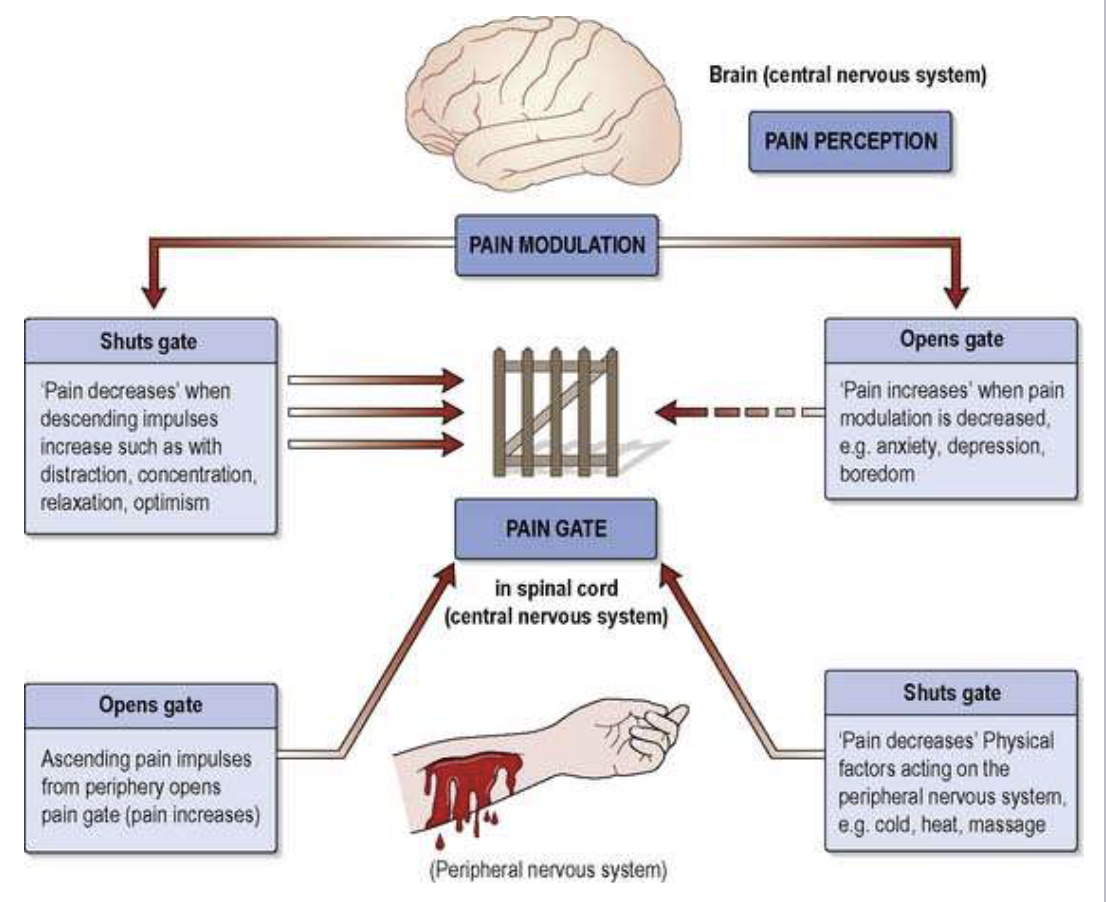
complementary interventions
non-pharmaceutical interventions such as massage, exercise, TENS, acupuncture/acupressure, heat or cold therapy, cognitive therapies, and immobilization that reduce dose of analgesic needed, minimize side effects, and don’t usually require a prescription
pain management principles
Holistic approach: pain affects affects all areas of life
Base treatment on pt goals: what is realistic for this patient? what are their functional goals?
Pharm and non-pharm options: drugs are mainstay, but complementary treatments can work wonders
Multimodal plan: when one med isn’t enough, patient may need two or more classes of analgesics
Awareness of bias: all patients deserve to have their pain treated
Collaboration: anesthesia, pharmacy, nursing, PT, OT, palliative care specialists
Evaluate effectiveness: trial and error may be needed; reassess and adjust
Manage side effects: CNS depression, constipation, n/v, dry mouth, tinnitus, itching, rash, etc.
Patient teaching: what can/can’t they do? how to manage side effects? when to call?
Understand policy: what are the laws in Texas? institutional policies? what are your responsibilities?
tolerance
a normal need for an increased opioid dose to maintain the same degree of analgesia
dependence
a normal physiologic response to ongoing exposure to opioids, manifested by withdrawal
pseudoaddiction
behaviors similar to those of addiction, because of inadequate treatment of pain
addiction
compulsive use, loss of control of use, and continued use of medication despite risk of harm
Naloxone (Narcan)
opioid antagonist used for suspected OD that precipitates complete withdrawal of opioids (endogenous and exogenous) and will cause S/Sx of withdrawal: n/v, diaphoresis, tachycardia, hypertension, yawning, tremors, abdominal cramping, etc.
epidural/intrathecal medication route
potent due to delivery close to receptors in dorsal horn so delivered in smaller doses (1mg = 300 mg po), complications include catheter displacement/migration and infection
implantable devices
pain pumps (meds) and spinal cord stimulators (electrical) may be used for pain management
patient controlled analgesia (PCA)
smaller but more frequent doses of medication dispensed by patient that use fluid as a driver to push meds through IV catheter, treated like narcotics (locked unit and two nurses to verify), patients must be appropriate candidate (able to hit button, appropriate cognitive awareness to recognize pain, understand time and dose constraints)
acetaminophen class/indication
analgesia, antipyretic
acetaminophen side effects/cautions
processed through liver so risk of hepatotoxicity in high doses, in many OTC products so check labels (look for acetaminophen, Tylenol, APAP)
acetaminophen dosage
325-650mg PO/PR q 4-6 hrs, not to exceed 4000 mg daily (3000 mg in chronic users, 2400 mg in elderly patients or those with liver, renal, or cardiac impairment)
NSAIDS medications
Ibuprofen, Naproxen, Aspirin, Ketoralac
NSAIDS class/indication
analgesic (anti-inflammatory)
NSAIDS mechanism of action
inhibits prostaglandin synthesis, metabolized through kidneys (ok to take with Tylenol)
NSAIDS side effects/cautions
GI upset, increased risk of GI bleed/perforation so look for dark, tarry stools (indicates upper GI bleed) and take with food, risk of kidney dysfunction
NSAIDS dosage
200 – 800 mg/ 4-6 hrs
opioids mechanism of action
bind with receptors in CNS and inhibit nociceptive input from periphery to spine (inhibit ascending pain pathways), alter limbic activity, opiate agonists
opioids side effects/cautions
respiratory depression, constipation, poor concentration, N/V, urinary retention, sedation (use POSS scale) itching, increased pain (OIH), not a good option for chronic pain because dose has to be continually increased to work due to tolerance
S on POSS scale
sleep, easy to arouse- acceptable, no action necessary, may increase opioid dosage if necessary
1 on POSS scale
awake and alert- acceptable, no action necessary, may increase opioid dosage if necessary
2 on POSS scale
slightly drowsy, easily aroused- acceptable, no action necessary, may increase opioid dosage if necessary
3 on POSS scale
frequently drowsy, arousable, drifts off to sleep during conversation- unnaceptable, monitor respiratory and sedation status until POSS score improves, decrease opioid dose 25-50% and notify provider, may administer non-opioid analgesic if not contraindicated
4 on POSS scale
somnolent, minimal or no response to verbal and physical stimulation- unacceptable, stop opioid, consider administering narcan, monitor respiratory and sedation status until POSS score improves
opioid indications
acute pain, chronic severe pain
Morphine (MS Contin) cautions
causes vasodilation- do not give to hypotensive patient, CNS depression, elderly, allergies, kidney dysfunction
Morphine (MS Contin) dosage
depends on route, typically 10-20 mg IV q4h PRN
Hydromorphone (Dilaudid) cautions
2-8x more potent than morphine, opioid naïve, elderly, low BMI, cognitive impaired
Hydromorphone (Dilaudid) dosage
0.5 mg – 2 mg IV (1.5 mg hydromorphine = 10 mg morphine)
Hydrocodone and oxycodone cautions
same as other opioids but typically PO rather than IV and may be mixed with acetaminophen
Hydrocodone and oxycodone dosage
5mg (naïve) to 20mg tolerate every 4-6 hours
Duloxetine (Cymbalta) class/indication
antidepressant (SNRI) for depression, peripheral neuropathic pain, generalized anxiety disorder, fibromyalgia, chronic musculoskeletal pain
Duloxetine (Cymbalta) mechanism of action
inhibits reuptake of serotonin and norepinephrine
Duloxetine (Cymbalta) side effects/cautions
nausea, dry mouth, headache, fatigue, sleepiness, can increase suicidal thoughts, risk of hepatotoxicity, risk for skin reactions, risk for orthostatic hypotension, risk of cognitive/motor function impairment
Duloxetine (Cymbalta) dosage
40-60mg PO daily
Gabapentin (Neurontin) class/indication
GABA analog for seizures, neuropathy, restless leg, insomnia, tremors
Gabapentin (Neurontin) mechanism of action
structurally related to neurotransmitter GABA, methods for analgesia unknown
Gabapentin (Neurontin) side effects/cautions
drowsiness, clients with CNS depression
Gabapentin (Neurontin) dosage
100 – 800 mg/day
adjuvant analgesic therapy
add analgesic effects, especially with neuropathic pain, includes corticosteroids (anti-inflammatory), antidepressants (modulate neurotransmitters), anti-seizure drugs (calm nerve cells), GABA receptor agonists (inhibit GABA), alpha-adrenergic agonist (alter pain perception), local anesthetics (inhibit nerve impulses), cannabinoids (modulate pain)