BIOL172 Exam 2: Lophotrochozoa
 Call Kai
 Learn
Learn Practice Test
 Spaced Repetition
 Match
Match Flashcards
 Knowt Play
1/15

There's no tags or description
Looks like no tags are added yet.
Name | Mastery | Learn | Test | Matching | Spaced | Call with Kai | Chat |
|---|
No analytics yet
Send a link to your students to track their progress
16 Terms
Lophotrochozoa
Triploblastic
Bilaterally symmetrical
Beginning of cephalization
- evolution of a concentration of nervous tissues and sensory organs in the head of the organism
Protostomes: include acoelomate, pseudocoelomate, and eucoelomate
Most possess either a lophophore feeding apparatus or a trochophore larva
Platyhelminthes (flatworms), Rotifera (rotifers), Annelida (annelids), Mollusca (mollusks)
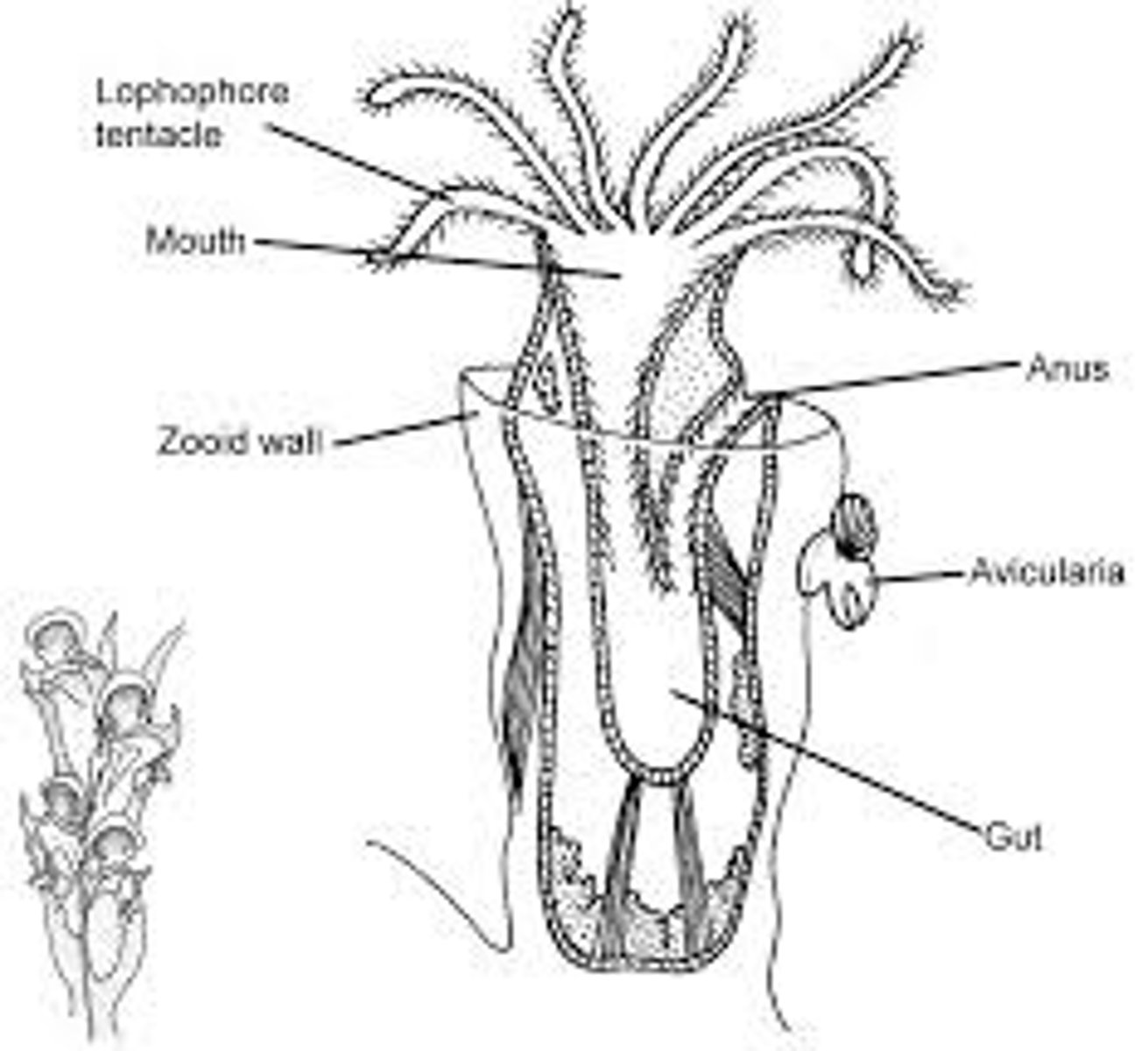
Lophophore
Crown of ciliated tentacles that functions in feeding
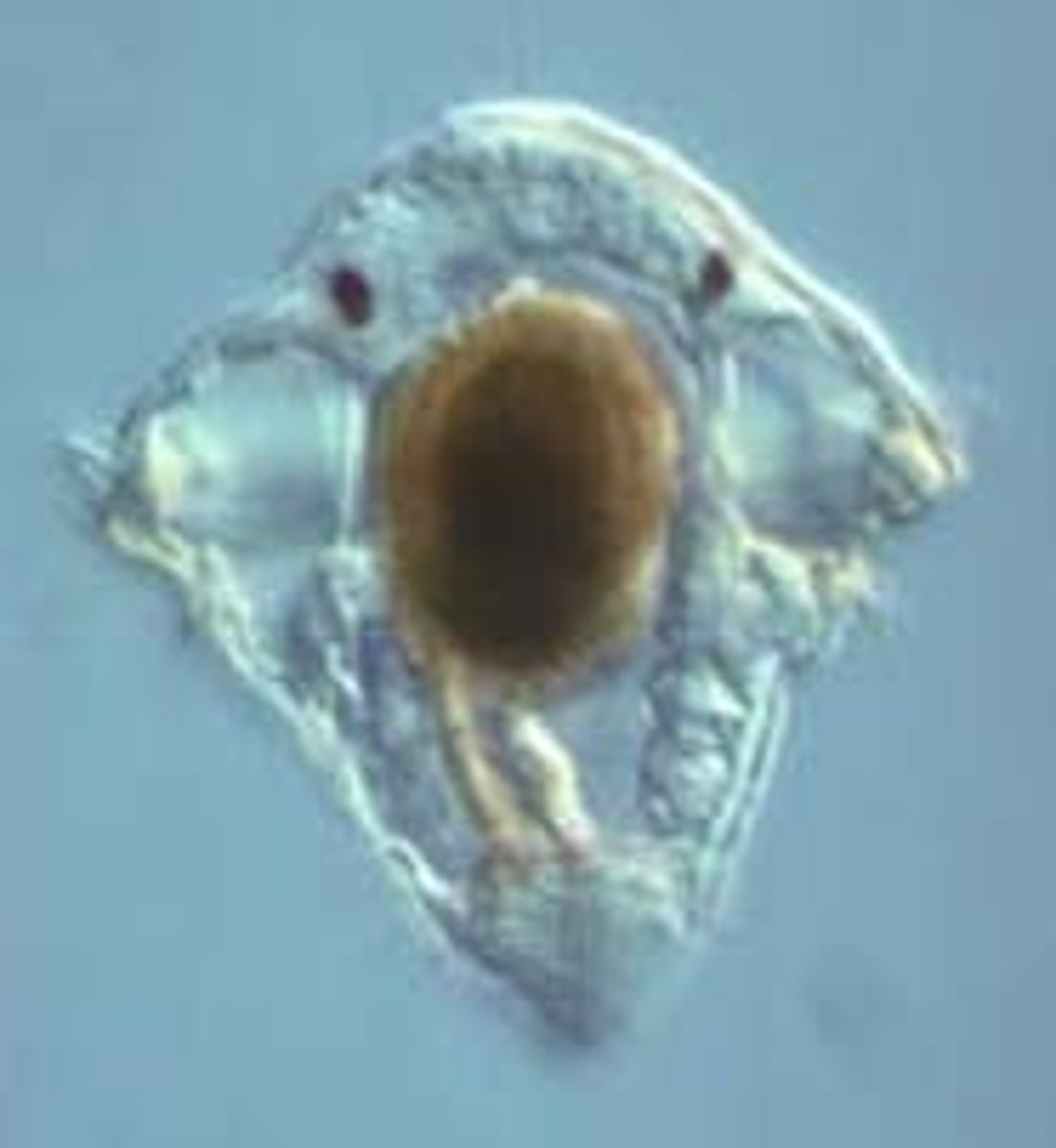
Trochophore
Free-swimming larval stage
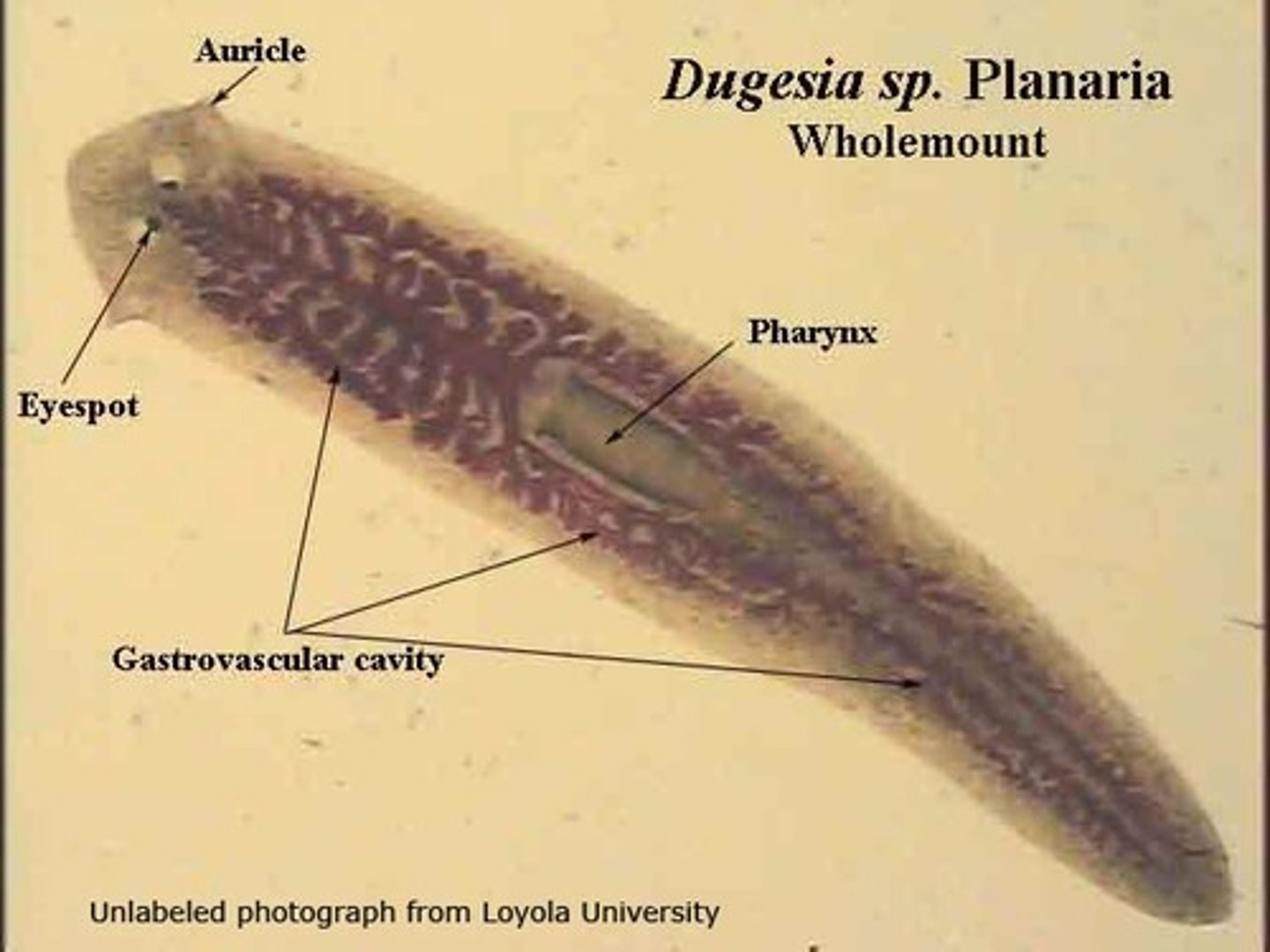
What group of animals shows a flat body, flame cells as part of their excretory system, and are important human parasites?
Platyhelminthes / Flatworms
Flame cells
- specialized cells used for excretion and osmoregulation
- remove waste, regulate water balance
- use cilia to move fluid
- alternative to kidney
Platyhelminthes
Flatworms
Acoelomate organisms
Free living and parasitic forms (Trematodes and Cestodes)
Lophophore and trochophore larvae are absent
- Polycladida larvae are considered to be homologous to trochophore larvae
Spiral cleavage
Uncertain phylogeny
Monophyletic clade:
- Monogenea (fish ectoparasites), Trematoda (flukes), Cestoda (tapeworms)
Monophyletic lineages:
- Catenulida (chain worms): budding reproduction, offspring not fully detached
- Rhabditophora (rhabdite bearers): rod-like structures discharged in the mucus produced by some free-living flatworms
Absent circulatory and respiratory systems
- gas and nutrient exchange dependent on diffusion and cell-to-cell junctions
Most monoecious, internal fertilization
Asexual reproduction by fission
Ciliate ventral part (free-living species)
Cerebral ganglia (concentrations of nerve cell bodies)
Platyhelminthes: Cestodes
Tapeworms
Lack a mouth and a gastrovascular cavity
Embryos penetrate intestinal wall and circulate to musculature
Rotifera
Wheel-bearer
Corona: feeding structure, appear to rotate under microscopic light
Mastax: muscular pharynx with toothy law-like structures
Microscopic aquatic organisms (mostly freshwater)
Filter-feeders
Usually free-swimming or planktonic organisms (the foot can secrete an adhesive substance)
Pseudocoelomates
Dioecious (male and female reproductive parts on seperate individuals) with sexual dimorphism (males and females look different)
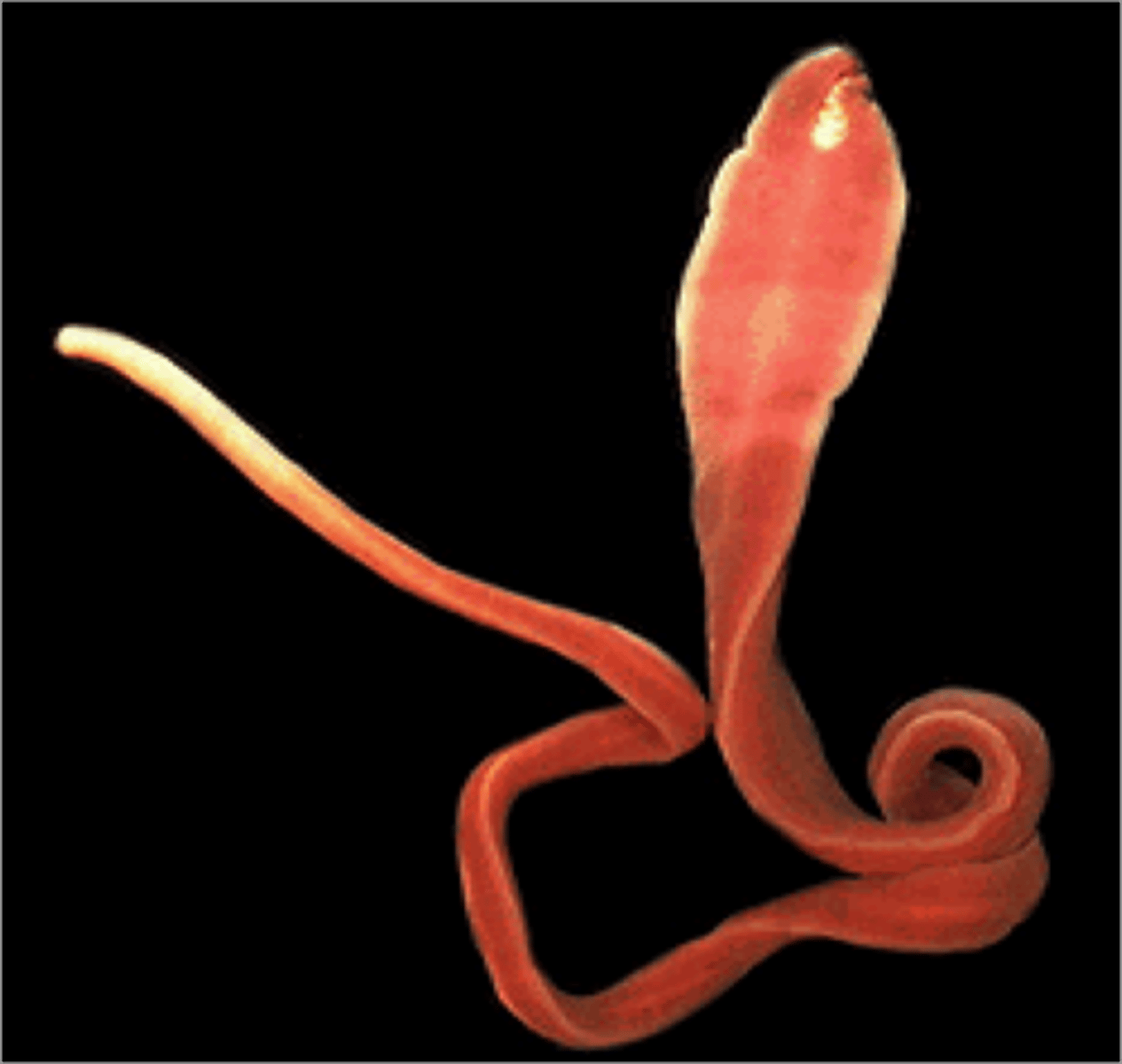
Nemertea
Ribbon worms or proboscis worms
Marine (predominantly benthic), freshwater, damp habitats
Carnivores, predators (worms, clams, crustaceans)
Commensalism with mollusks
1cm to several m
Bilateral symmetry
Proboscis (long eversible / can shoot out tube, captures prey and defense) and Rhynchocoel (fluid filled internal cavity that houses the proboscis)
Contractile properties
Coelomic, but sometimes classified as acoelomates
Protonephridia: excretory tubules for osmoregulation
Dioecious or monoecious
Fragmentation is common
External fertilization (eggs and sperm are released in water)
Mollusca
Snails, slugs, squids, octopi, clams, oysters...
Soft body
Marine, freshwater, terrestrial
Bilaterally symmetrical
Cephalized
Triploblastic
Schizocoelous coelomates (body cavity COMPLETELY LINED by mesoderm)
- schizocoely: forms a coelom by a split in a solid mass of mesoderm
Gulls in aquatic species, lungs in terrestrial species
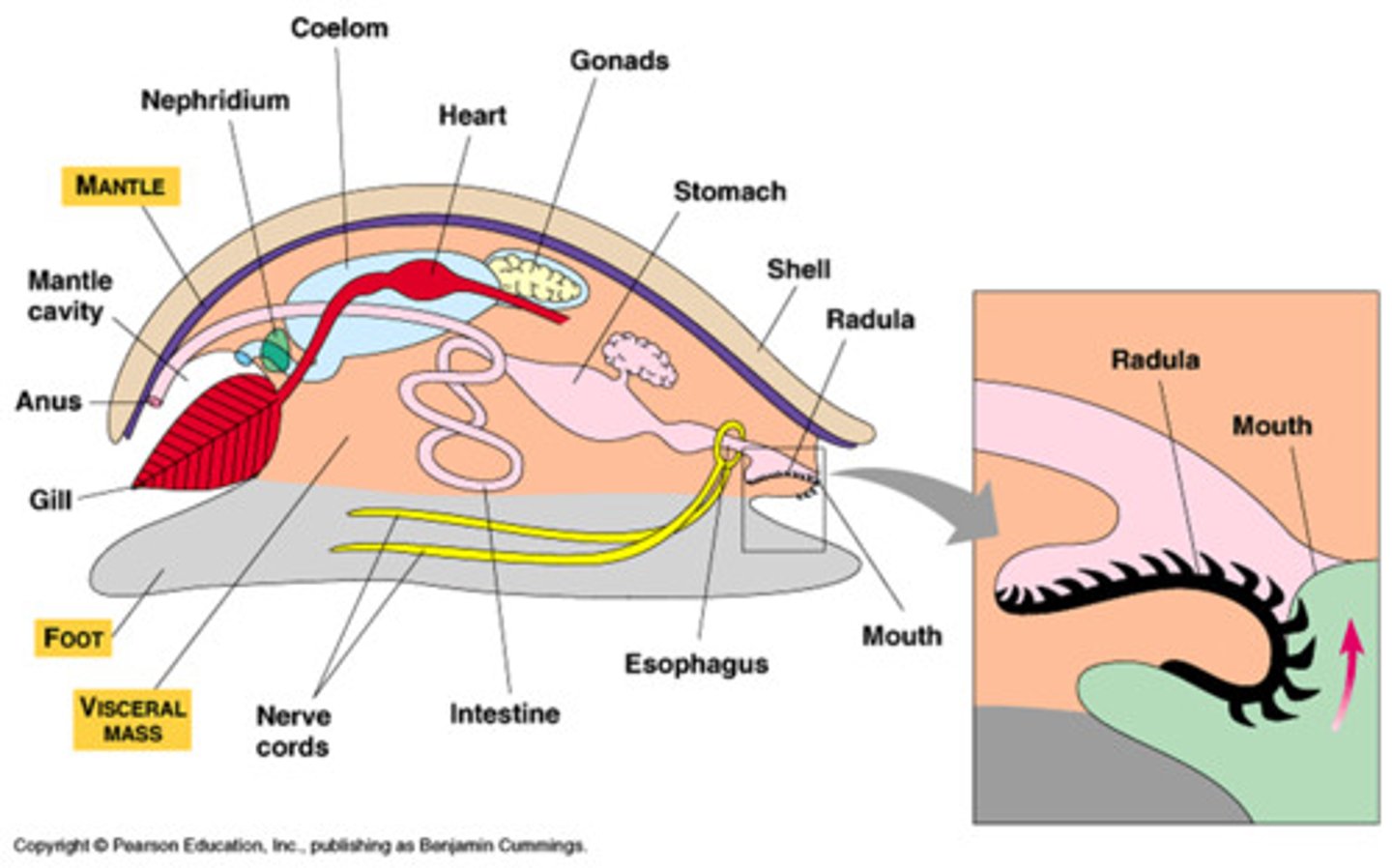
Molluscan Body Regions
Pallium: secretes a calcium-carbonate-hardened shell (most)
Foot: muscular, locomotion and anchorage (arms and tentacles in cephalopods)
Crop: storage pouch
Radula: abrasive tongue-like structure (except bivalves)
Gonad: reproductive system
Gill: respiratory structures
Classes of Mollusca
Caudofoveata and Solenogastres
- lack calcareous shell, worm-like, benthic marine habitats, eyeless, no tentacles, or nephridia
Monoplacophora
- bearing 1 plate
- posses a single, cap like shell that covers the dorsal body
Polypacophora
- bearing many plants
- chitons
Gastropod
Cephalopoda
Bivalvia
Scaphopoda
- boat feet, tusk shells or tooth shells
- 8 plates
- Hemocoel (open circulation system)
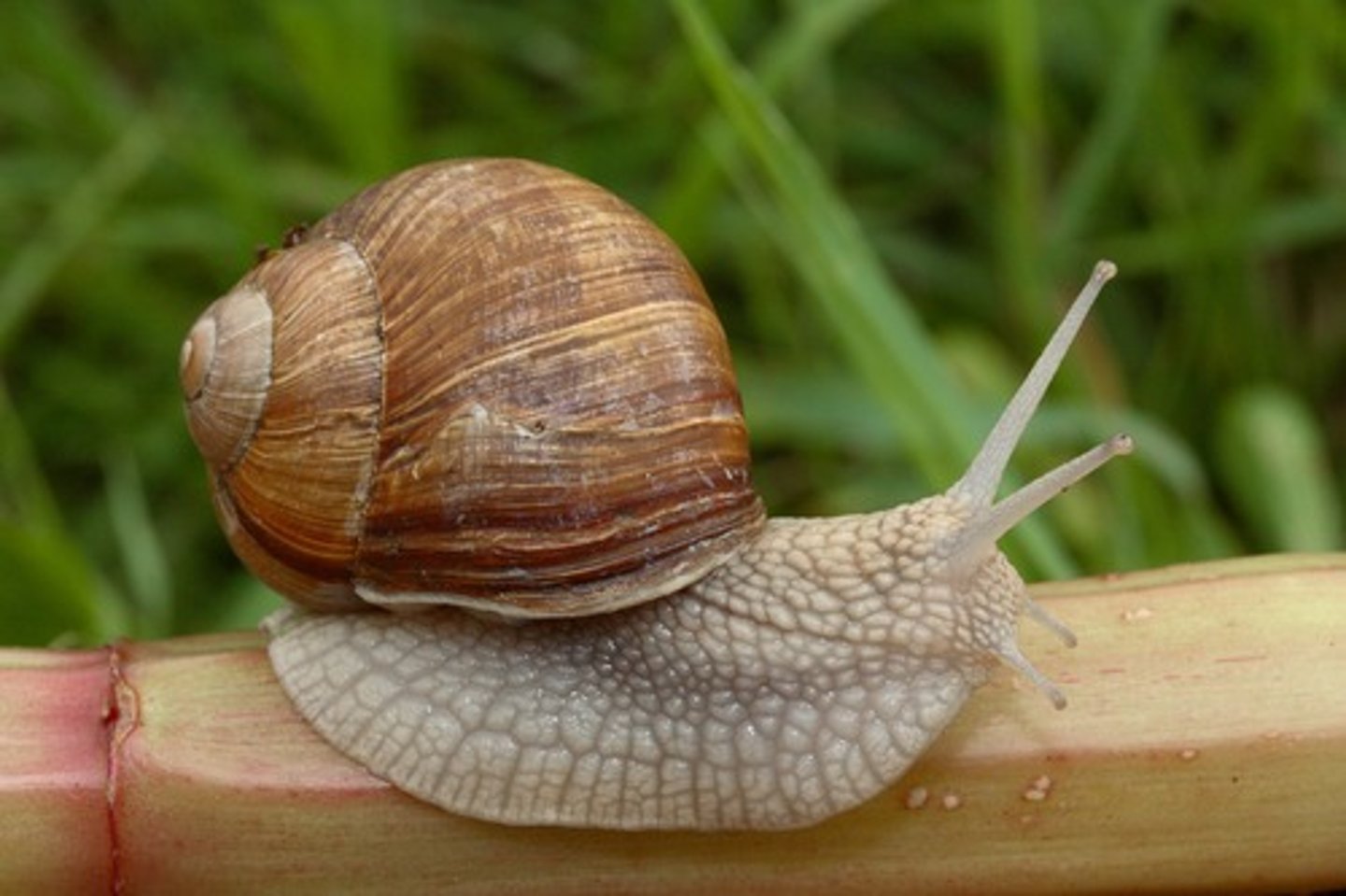
Mollusca: Gastropoda
Stomach foot
50% of aquatic and 100% of terrestrial
Asymmetrical with coiled shells
Embryonic development of torsion (counterclockwise rotation)
Mollusca: Bivalvia
2 valves
Flattened body, no conspicuous head or mouth, filter feeders, absent radula, nacreous substance
Mollusca: Cephalopoda
Carnivores, predators (beak-like jaw + radula)
Chambers with gas or water for buoyancy
Rapid color changing
Sepia or dark ink (melanin)
Dioecious, lays eggs after mating, no larvae formation
Chambered nautiluses are the only living cephalopods with an external shell
Annelida
annulus: little rings
Segmented worms (metamerism = true segmentation)
Marine, terrestrial, and freshwater habitats (humidity is necessary)
Polychaetes: marine annelids with multiple appendages, dioecious
Oligochaetes: earthworms and leeches, monoecious
Subclass Hirudinea: no bristles, suckers at both ends, seasonal clitellum
Chaetae / Setae: bristles made of chitin, forms parapodia
Parapodia: respiratory organs
Clitellum: reproductive-aid structure: mucus, cocoon
Teloblastic growth (growth behind the head)
Collagenous external cuticule
Lack a well developed respiratory system
- gas exchange occurs across moist body or via parapodia
Well-developed and complete digestive system
- filter feeders, blood feeders, predators, etc
How do polychaetes differ from oligochaetes in terms of structure and lifestyle?
Polychaetes
- many bristles / chaetes per segment
- have parapodia (paired paddlelike appendages used for movement and gas exchange)
- well developed head
- marine
- predators or filter feeders
- free swimming
Oligochaetes
- few chaete per segment
- no parapodia
- reduced / simple head
- soil or freshwater
- decaying organic matter
- slow moving