Muscles of Mastication and Facial Expression
 Call Kai
 Learn
Learn Practice Test
 Spaced Repetition
 Match
Match Flashcards
 Knowt Play
1/63

There's no tags or description
Looks like no tags are added yet.
Name | Mastery | Learn | Test | Matching | Spaced | Call with Kai | Chat |
|---|
No analytics yet
Send a link to your students to track their progress
64 Terms
Medial (internal) pterygoid

Medial (internal) pterygoid insertion/origin/action
o. medial surface of the lateral pterygoid plate & pterygoid fossa
i. medial surface of the ramus and angle of mandible
a. elevate mandible (bilateral contraction)
contralateral (one side) execursion/deviation (move mandible to opposite side from the muscle).
Lateral (external) pterygoid

Lateral (external) pterygoid origin/insertion/action
o. Superior head – infratemporal crest (great wing of sphenoid bone)
Inferior head - lateral surface of lateral pterygoid plate
i. Articular disc of TMJ and neck of the mandibular condyle
a. bilaterally protrude jaw and depress mandible (open mouth)
unilaterally: contralateral excursion of mandible (move to opposite side of muscle)
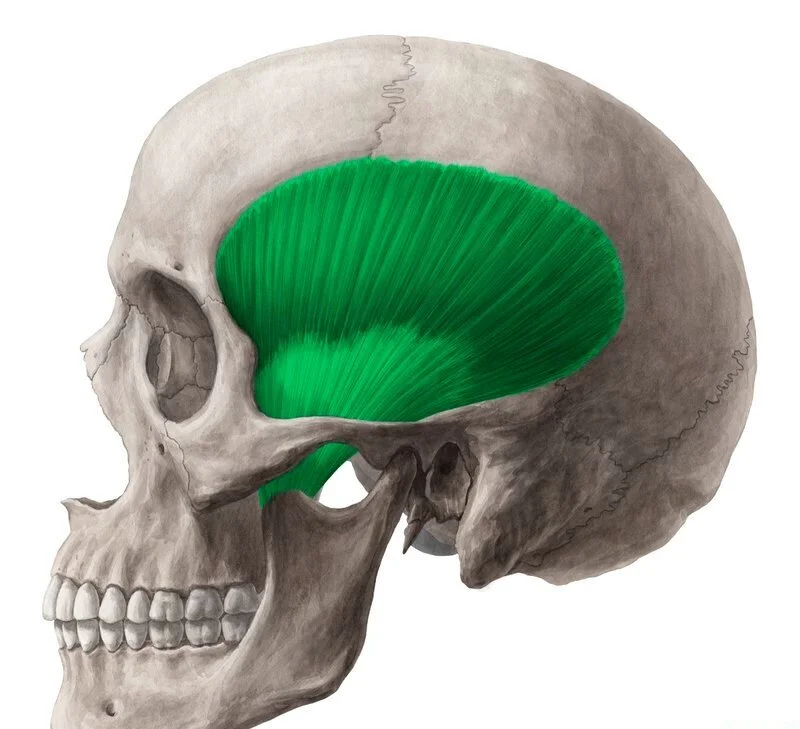
Temporalis origin/insertion
o. Temporal line of the temporal fossa
i. Coronoid process and anterior border of mandibular ramus
Temporalis
Superficial part of Masseter origin/insertion
o. Zygomatic process of maxilla and anterior 2/3 of inferior border of the zygomatic arch
i. Angle and lower lateral ramus of mandible
Deep part of Masseter origin/insertion
o. Inner surface of posterior 1/3 of zygomatic arch
i. Superior part of mandibular ramus and lateral surface of coronoid process
Masseter

Accessory muscle of mastication name
Buccinator
Buccinator

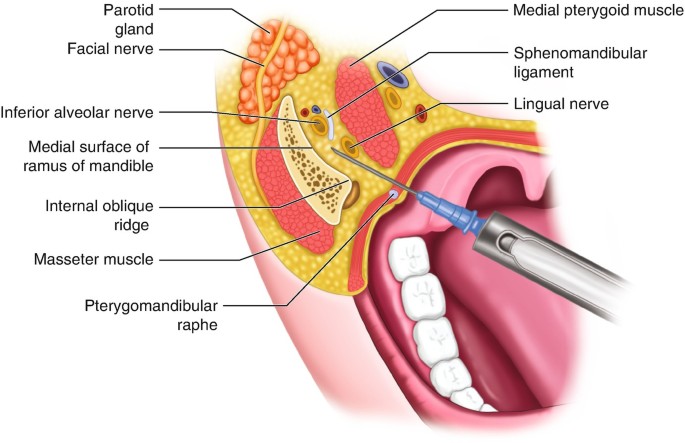
Pterygomandibular space boundries
a. Lateral – medial surface of mandibular ramus
b. Medial – lateral surface of medial pterygoid
c. Superior – lateral pterygoid
d. Inferior – insertion of medial pterygoid
Pterygomandibular space contents
a. Lingual nerve
b. Inferior alveolar nerve and artery
Pterygomandibular space
Orbicular oculi

Orbicular oris

Procerus

Nasalis

Zygomaticus major

Zygomaticus minor

Levator labii superioris

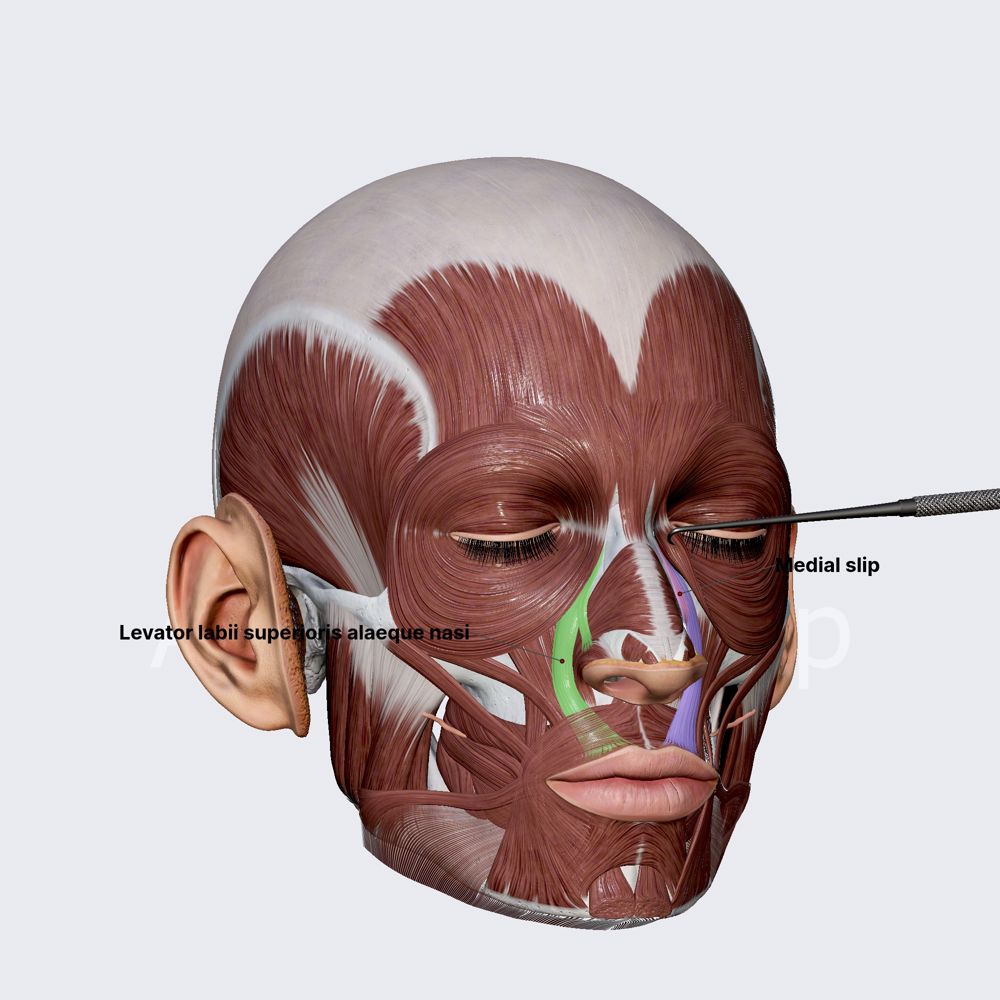
Levator labii superioris alaeque nasi
Levator anguli oris

Depressor anguli oris

Depressor labii inferioris

Mentalis

Buccinator

Risorius

Frontalis

Occipitalis

Platysma

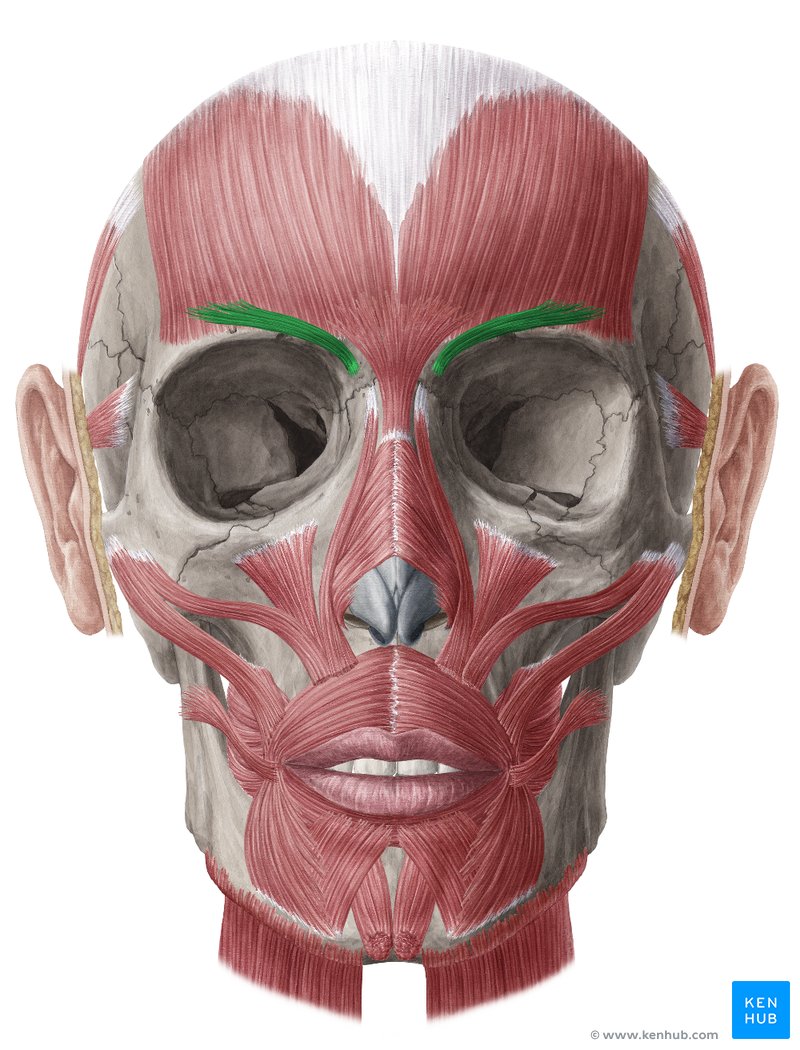
Corrugator supercilli
Cutaneous innervation of the face
trigeminal nerve (CN5)
a. Ophthalmic
b. Maxillary
c. Mandibular
Artery Supply to Face
a. Facial
b. Superficial temporal
Vein Supply to Face
facial
Ophthalmic branch v1
green

Maxillary branch v2
purple

Mandibular branch v3
red

Muscles of Facial Expression are derived from which brachial arch
2nd brachial arch
Muscles of Facial Expression are innervated by which cranial nerve
Facial nerve (VII)
Muscles of Mastication are derived from which brachial arch
1st brachial arch
Muscles of mastication are innervated by which cranial nerve
Mandibular nerve (V3, branch of trigeminal V)
Why are the Platysma and Corrugator supercilli muscles exceptions to the muscles of facial expression?
Due to their unusual locations while still using VII innervation
Temporalis o/i/a
o: temporal fossa, temporal fascia
i: apex and medial surface of coronoid process, anterior border of ramus
a: elevator of mandible
retraction of mandible
unilateral contraction leads to ipselateral (same side) contraction of mandible
superficial part of masseter o/i/a
o: zygomatic process of the maxilla
i: angle, ramus, and body of mandible
a: elevate mandible, protrude mandible, ipselateral excursion
deep part of masseter o/i/a
o: Posterior one-third of the inferior border and medial/deep surface of the zygomatic arch.
i: ramus and periosteum of ramus
a: elevate mandible, protrude mandible, ipselateral excursion
buccinator muscle o/i/a
o: alveolar processes of maxilla/mandible, Pterygomandibular Raphe
i: Modiolus (node near corner of mouth)
a: mastication and facial expression/blowing
parotid gland

orbicularis oculi action
closes eye
orbicularis oris action
closes mouth
procerus action
produces transverse wrinkling between the eyes
Nasalis action
compress/dilate nostrils
Zygomaticus major/minor action
smiling by raising the angle of the mouth
Levator labii superioris action
elevates upper lip
Levator labii superioris alaeque nasi actions
dilates nostrils, elevates upper lip
Levator anguli oris action
elevates angle of the mouth
Depressor anguli oris action
depresses angle of the mouth
Depressor labii inferioris action
depresses lower lip
mentalis action
protrudes lower lip (pout)
buccinator action
compress cheek to maintain pocket for food
Risorius action
draw back angle of oral cavity
Occipitofrontalis action
wrinkle forehead
Platysma action
tenses skin of neck, works with lateral pterygoid to depress mandible
corrugator supercilli action
draw eyebrows down/medially (as if frowning)