3.1 Fiscal Policy
 Call Kai
 Learn
Learn Practice Test
 Spaced Repetition
 Match
Match Flashcards
 Knowt Play
1/31

There's no tags or description
Looks like no tags are added yet.
Name | Mastery | Learn | Test | Matching | Spaced | Call with Kai | Chat |
|---|
No analytics yet
Send a link to your students to track their progress
32 Terms
Fiscal policy
Decisions made by the government on its expenditure, taxation and borrowing
Government budget
The balance between government receipts and outgoings (budget surplus/deficit)
Transfer payments
Occur when the government provides benefits (in cash or in kind) to poorer households
Direct taxation
A tax levied directly on income
Indirect taxation
A tax on expenditure, e.g. VAT
Progressive taxation
A tax in which the marginal tax rate rises with income, i.e. a tax bearing most heavily on the relatively well-off members of society
Proportional taxation
Tax that is proportional to income, being neither regressive nor progressive
Regressive taxation
A tax bearing more heavily on the poorer members of society
Current government expenditure
Spending by the government on goods and services
Capital government expenditure
Spending by government on capital projects
Budget surplus
A situation in which government expenditure is less than government revenue
Budget deficit
A situation in which government expenditure exceeds government revenue
Balanced budget
A situation in which government expenditure equals government revenue
Cyclical budget position
A government budget deficit that occurs during the downturn of the business cycle, but disappears in the upturn
Structural budget position
A government budget deficit that persists even when the economy is at full employment
Bond Yield
The rate of interest paid on government debt
National Debt
Total amount owed by the government which has accumulated over the years.
Government Debt
Incurred when countries borrow funds to pay for more public services and projects than they raise in taxes.
Roles of fiscal policy
Financing government spending
Changing final income and wealth
Providing a welfare state safety-net
Managing the economic cycle
Improving long run competitiveness
Tackle important market failures
Economic Importance of Education & Health Spending
Education spending: May increase the skills and productivity of workers, improvement in human capital will lower structural unemployment, more innovation / competitiveness
Health care spending: Improved health outcomes will boost active labour supply, will also increase productivity, lessens risks of relative poverty
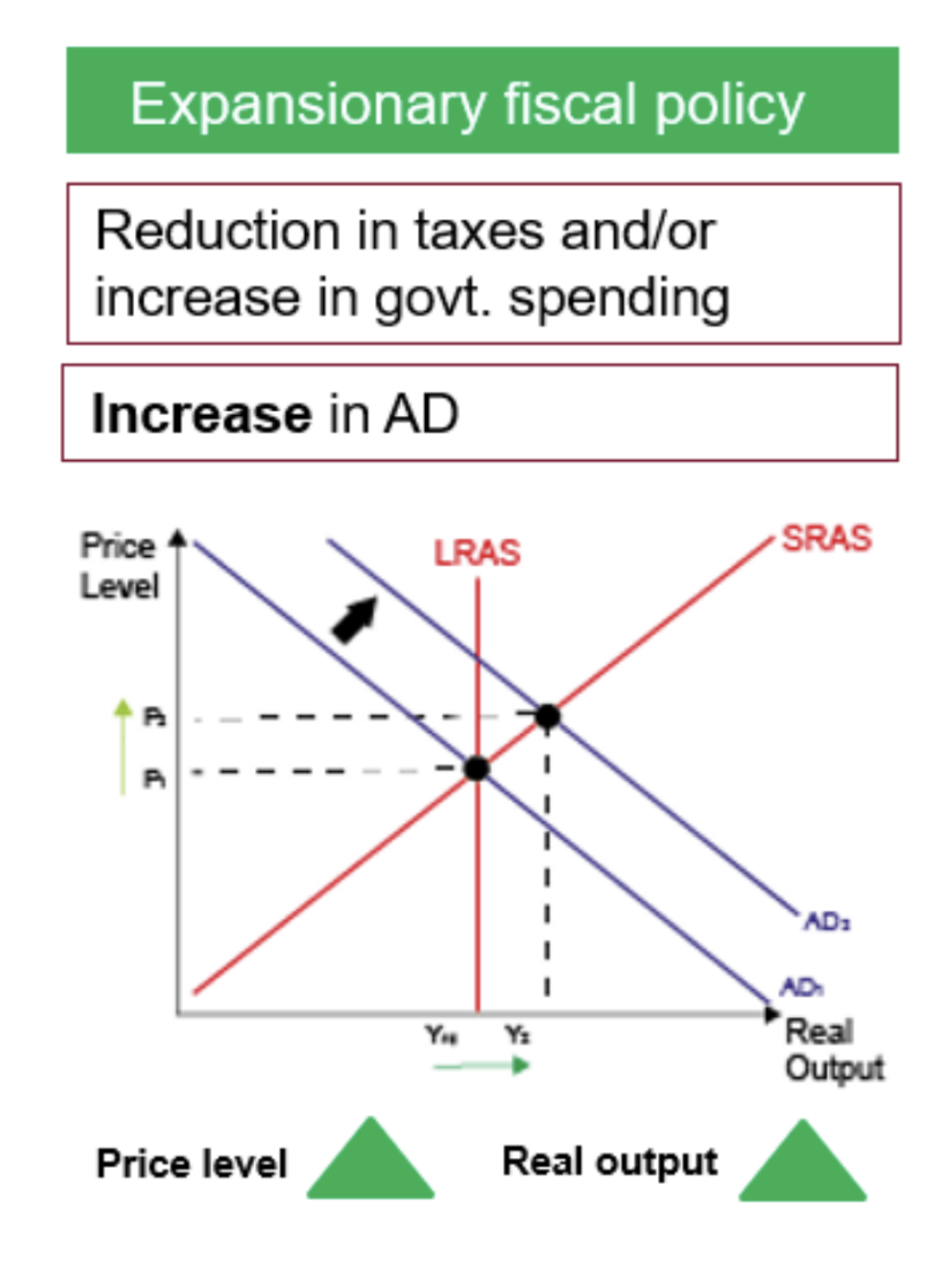
Expansionary fiscal policy
To stimulate economic growth by increasing spending/lowering taxes/both
This leads to a rightward shift of AD
Used when there is not enough AD, such as during a recession when output is low and unemployment is high
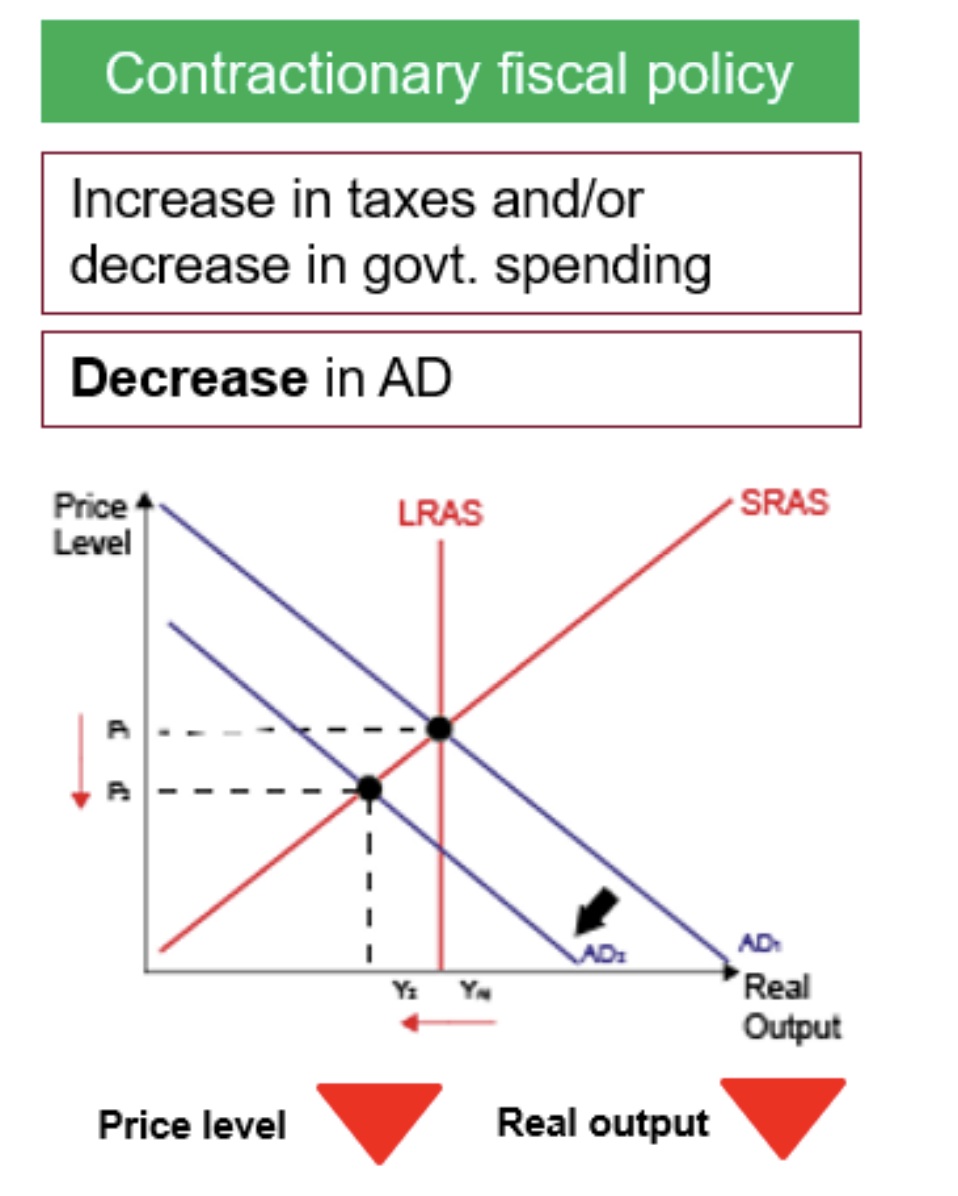
Contractionary fiscal policy
To slow the economic growth by decreasing spending/increasing taxes/both
This leads to a leftward shift of AD, leading to downward multiplier effect
Used when AD is too high, for example during a boom when the economy is near full employment output and inflation is too high
Effect of lower corporation tax on businesses
Increase in post-tax profitability may lead to a rise in planned investment - this increased capital spending is an injection into the circular flow, which creates a multiplier effect on demand, output and employment
Effect depends on the scale of the tax cut
Many factors affect capital investment so multiplier effect not guaranteed e.g. the pace of technological change and strength of market competition
There will be time lags between change in corporation tax and increased flow of actual investment
Some extra investment may lead to a loss of jobs through capital labour substitution effects
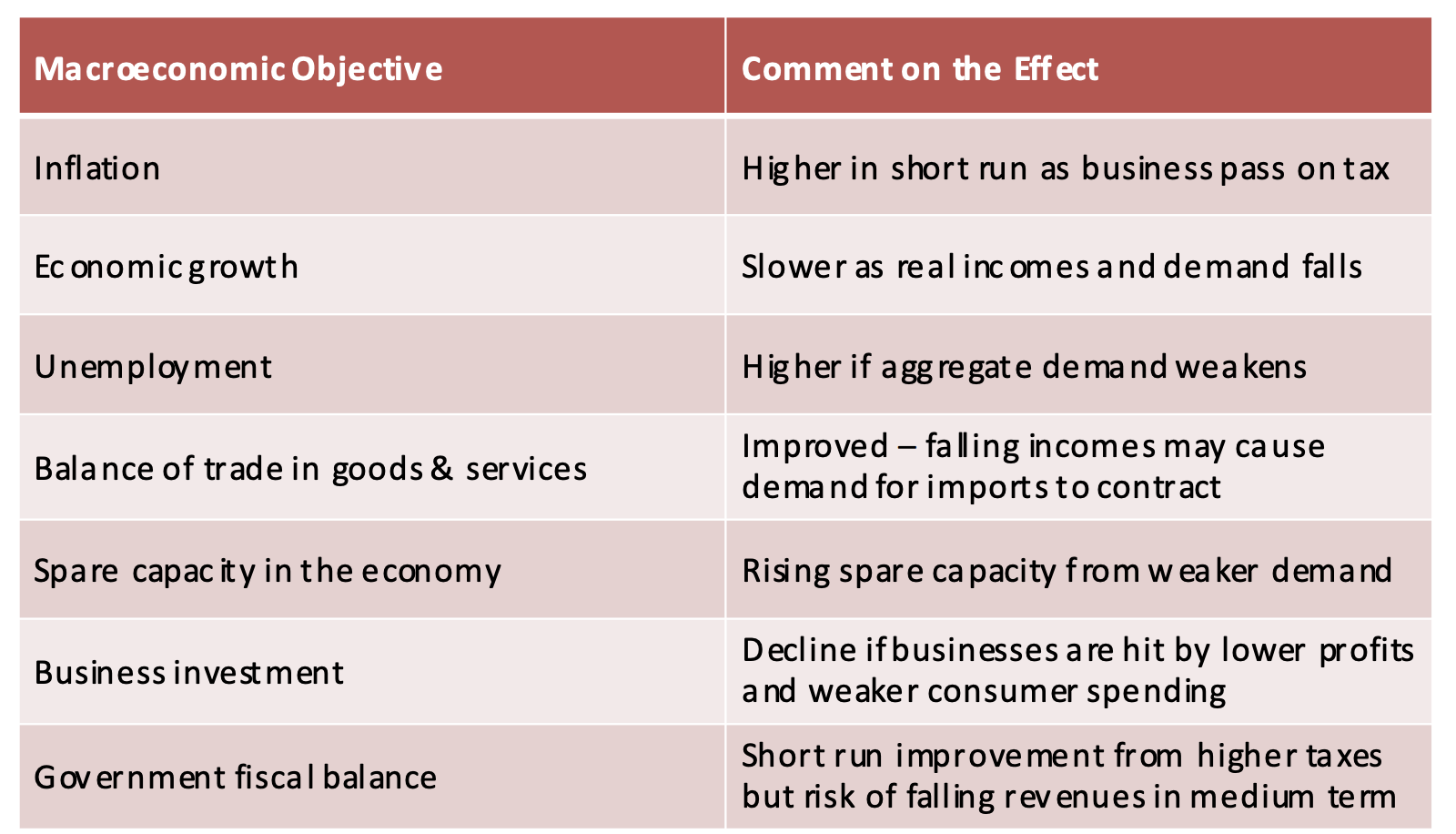
Impact of a rise in indirect taxes on the UK Economy
Effects of taxation on AS
Work incentives / active labour supply
Inward migration of key workers
Capital investment e.g. FDI projects
Enterprise / Entrepreneurship
Taxation and incentives to study
Tariffs affect import costs
Arguments for a low tax economy
Stimulates work incentives and productivity
Helps to create more jobs because businesses have less tax to pay
Encourages an inflow of FDI from businesses looking for low tax countries
Incentivizes enterprise and start-ups – a source of long term wealth and jobs
Lower tax rates might end up increasing total tax revenues (Laffer Curve concept)
Arguments for a high tax economy
Taxation is a key instrument for changing the final distribution of income and wealth. It is equitable for those with the greatest resources to pay more
Tax cuts don’t necessarily lead to an increase in total tax revenues for the government
Taxes are needed to fund high quality public services
Calculating average tax rate
Total taxes divided by total taxable income
Calculating the average tax rate involves adding all of the taxes paid under each bracket and dividing it by total income
Calculating marginal tax rates
The marginal tax rate is the extra tax paid on incremental income
Marginal tax rate = Change in tax paid / Change in income x 100
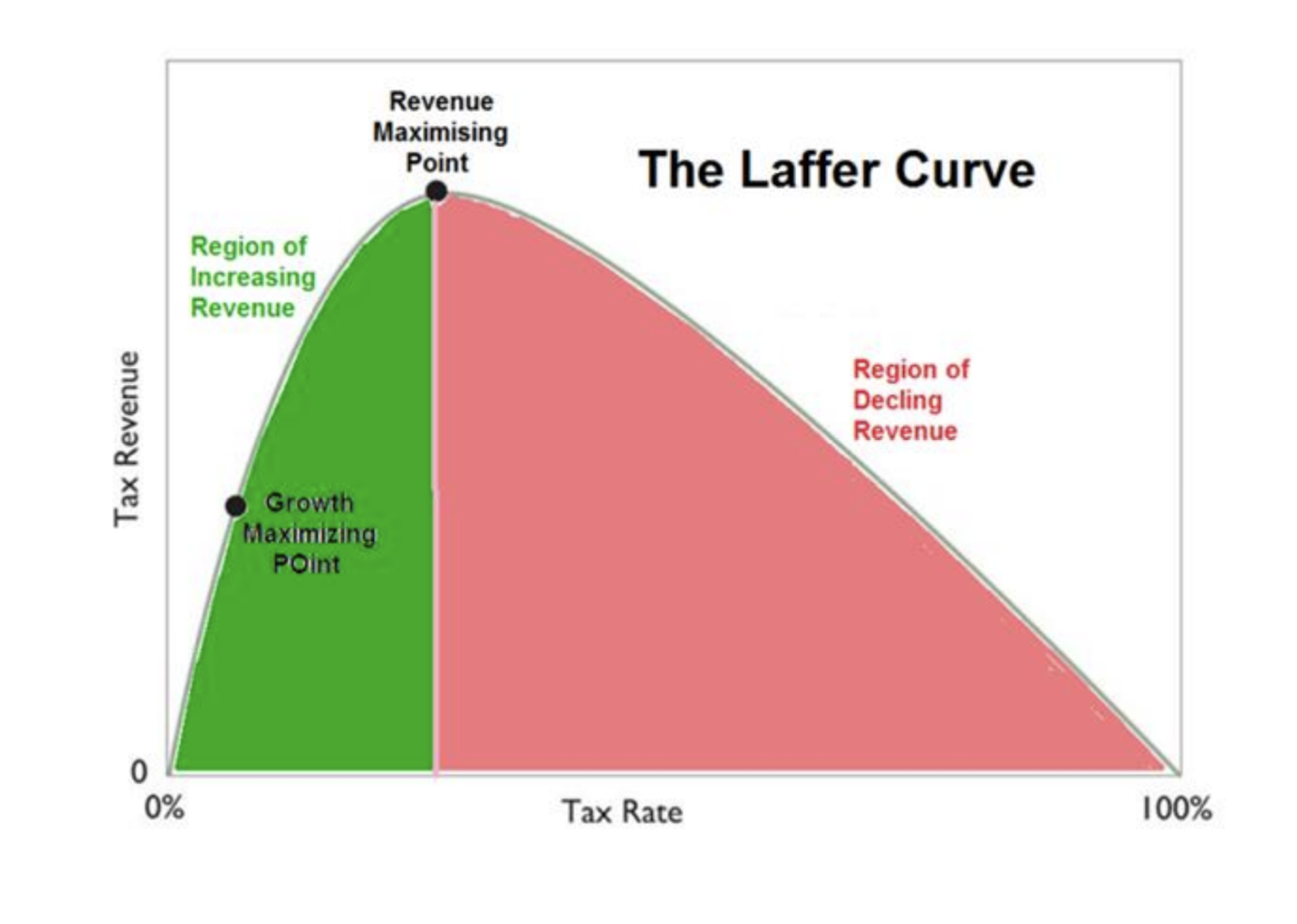
Laffer Curve
Illustrates that sometimes cutting tax rates can increase total tax revenue
When tax revenues increase beyond a certain level, people will avoid paying them or lose incentives to work/be productive, so tax revenue will fall
Tax revenue cannot be increased indefinitely by increasing taxes
Limitations of Fiscal Policy
Lack of data can hinder it. Data takes time to compile and governments may not be aware how much intervention is needed
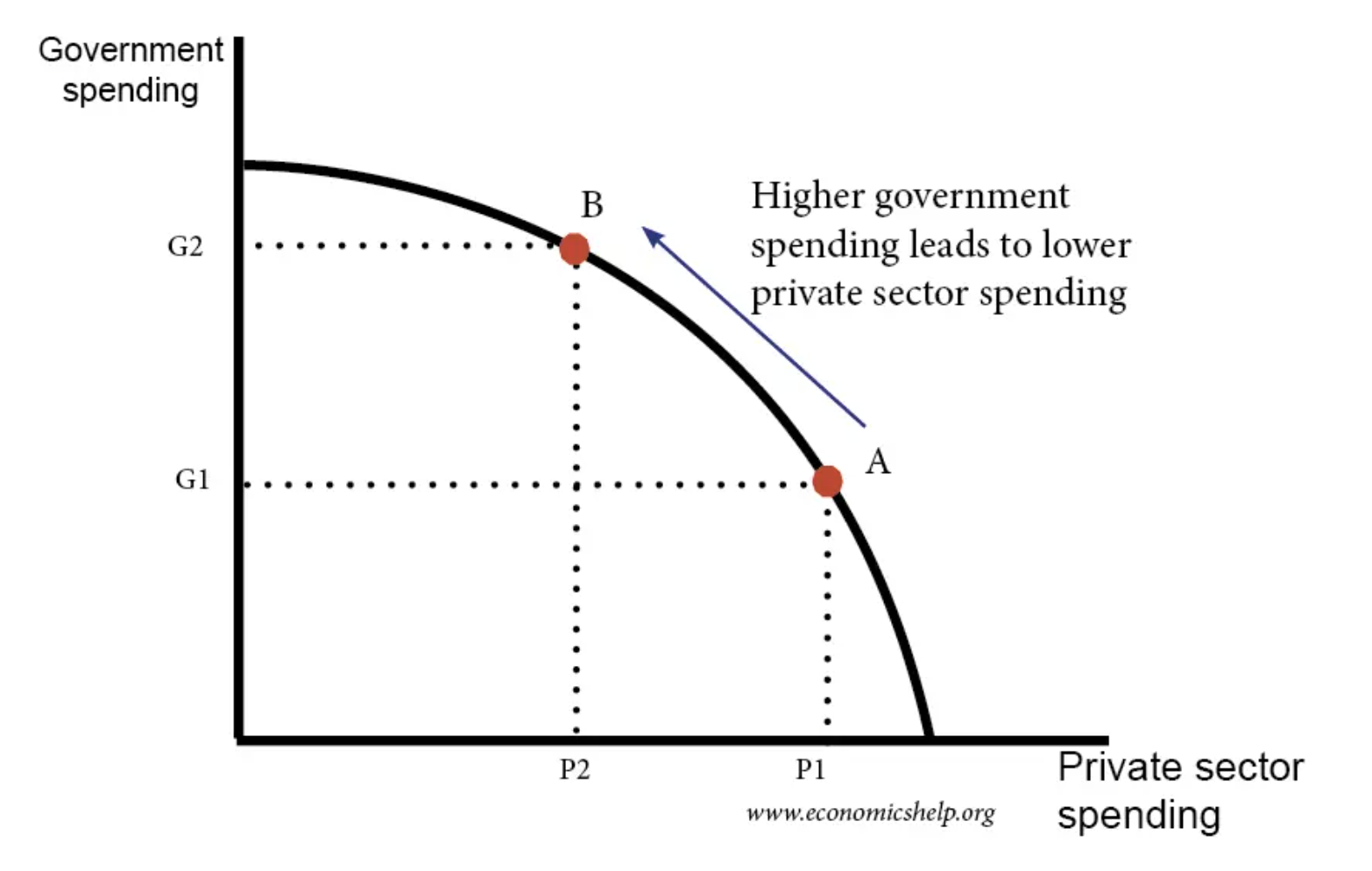
Crowding out effect
Suggests rising public sector spending drives down private sector spending
This is when government spending fails to increase overall aggregate demand because higher government spending causes an equivalent fall in private sector spending and investment