AP Biology Unit 5 + 6
 Call Kai
 Learn
Learn Practice Test
 Spaced Repetition
 Match
Match Flashcards
1/69

There's no tags or description
Looks like no tags are added yet.
Name | Mastery | Learn | Test | Matching | Spaced | Call with Kai | Chat |
|---|

70 Terms
Gene
A segment of DNA that contains the instructions for building a particular protein.
Asexual reproduction
A reproductive process where a single organism produces offspring that are genetically identical to itself.
Sexual reproduction
A reproductive process involving the combination of genetic material from two parents, leading to genetically diverse offspring.
Somatic cells
Any cells in the body that are not gametes/reproductive cells
Diploid
A cell that contains two complete sets of chromosomes, one from each parent.
Homologs
Chromosomes that are similar in shape, size, and genetic content, one inherited from each parent. i.e. a matching pair.
Autosomes
Chromosomes that do not determine sex; humans have 22 pairs of them
Sex chromosomes
The chromosomes that determine the biological sex of an organism; in humans, these are X and Y chromosomes.
Haploid gametes
Reproductive cells that contain a single set of chromosomes.
Meiosis
A type of cell division that reduces the chromosome number by half, producing four haploid cells.
Fertilization
The process where two haploid cells from two individual organisms combine to form a zygote.
Zygote
A single diploid cell formed when two haploid gametes fuse during fertilization.
Law of segregation
paired unit factors segregate equally into gametes so that offspring have an equal likelihood of inheriting any combination of factors.
Alleles
Gene variations that arise due to mutation and exist at the same relative locations on homologous chromosomes.
Phenotype
The observable characteristics or traits of an organism.
Heterozygotes
Organisms that have two different alleles for a particular gene.
Dominant
A trait which confers the same physical appearance, whether an individual has two copies of the trait or one copy of the dominant trait and one copy of the recessive trait.
Recessive
A trait that appears non-expressed when the individual also carries a dominant trait for that same characteristic; when present as two identical copies, the recessive trait is expressed.
Homozygotes
Organisms that have two identical alleles for a particular gene, having inherited the exact same DNA sequence from both biological parents.
Law of independent assortment
Genes do not influence each other with regard to sorting alleles into gametes; every possible combination of alleles is equally likely to occur.
Dihybrid
The result of a cross between two true breeding parents that express different traits for two characteristics.
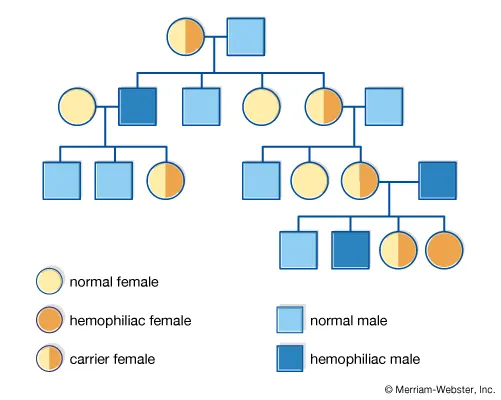
Pedigree
A diagram that depicts the biological relationships between a group of individuals.
Carriers
Individuals who carry one recessive allele for a trait but do not exhibit that trait.
Sex-linked genes
Genes that are located on the sex chromosomes, often leading to traits that are expressed differently in males and females.
Crossing over
The exchange of genetic material between homologous chromosomes during meiosis, leading to genetic diversity.
Aneuploidy
An abnormal number of chromosomes in a cell, either an extra or missing one than the typical set.
Nondisjunction
The failure of homologous chromosomes to separate properly and migrate to separate poles during the first cell division of meiosis.
Deletions
A genetic mutation that removes nucleotides from a DNA sequence of a segment in a chromosome
Duplications
A chromosomal mutation where a segment of a chromosome is copied and inserted, resulting in extra genetic material.
Inversions
A large-scale mutation where a segment of a chromosome breaks off, flips end-to-end, and reattaches to the same chromosome in reverse order.
Translocations
The process where one segment of a chromosome dissociates and reattaches to s different non homologous chromosome.
Down syndrome
A genetic condition caused by nondisjunction (the failure of homologous chromosomes in sister chromatids to separate properly during meiosis)
Double helix
The shape of DNA, consisting of two twisted, ladder-like structures.
Antiparallel
The orientation of the two strands of DNA in opposite directions.
Semiconservative
The mechanism of DNA replication.
Replication fork
A Y-shaped region on a replicating DNA molecule where parental strands are unwound and new strands are synthesized.
DNA polymerase
The enzyme responsible for synthesizing new DNA strands during replication. It sequentially adds complimentary nucleotides to the end of a pre-existing strand or RNA primer.
DNA replication
The process of a cell copying its DNA prior to cell division.
Phage
A virus that specifically infects and replicates inside bacteria.
Helicase
The enzyme that unwinds the DNA double helix during replication by breaking hydrogen bonds.
Primase
The enzyme that synthesizes short RNA primers to initiate DNA replication.
Origin of replication
The specific nucleotide sequence on a chromosome where DNA duplication begins.
Leading strand
The strand of DNA that is synthesized continuously in the 5’ - 3’ direction, the direction of the replication fork.
Lagging strand
During replication, the strand of DNA that is synthesized in short fragments and away from the replication fork.
Transcription
The process where messenger RNA forms on a template of DNA.
Translation
The process through which RNA directs the formation of protein.
mRNA
Messenger RNA, a type of RNA that carries genetic information from DNA to ribosomes during protein synthesis.
Codons
Sequences of three nucleotides in mRNA that specify the insertion of an amino acid or the release of a polypeptide chain during translation.
RNA polymerase
The enzyme that is responsible for synthesizing RNA from a DNA template during transcription.
TATA box
A conserved promoter sequence that indicates where a genetic sequence can be read and decoded; the initiation site for transcription.
Transcription factors
Proteins that bind to specific DNA sequences at the promoter or enhancer region and help regulate gene transcription.
5' cap
A methylated guanosine triphosphate (GTP) molecule that is attached to the 5 end of a messenger RNA to protect the end from degradation.
Poly-A tail
A series of adenine nucleotides that are attached to the 3’ end of an mRNA to protect the end from degradation.
Introns
Non-protein-coding sequences that are spliced from mRNA during processing.
Exons
A segment of a DNA or RNA sequence that remains in the final mRNA molecule after the cell removes non-coding sections.
RNA splicing
The crucial post-transcriptional process where non-coding sequences (introns) are removed from pre-mRNA and the coding sequences (extronsj are joined together to form mature mRNA.
tRNA
Transfer RNA, responsible for delivering amino acids to ribosomes during protein synthesis.
Anticodon
A sequences of three complementary nucleotides found on a tRNA molecule.
Operon
a collection of genes involved in a pathway that are transcribed together as a single mRNA in prokaryotic cells.
Repressor
A protein that prevents transcription (gene expression) by binding to the operator region of an operon.
Differentiation
The highly regulated process by which unspecialized stem cells become specialized in structure and function.
Cytoplasmic determinants
Material substances (such as mRNA and proteins) that are unevenly distributed in the egg cytoplasm. They influence the development of the embryo.
Proto-oncogenes
Normal genes that become oncogenes due to mutations.
Oncogenes
Mutated versions of a normal gene involved in the positive regulation of the cell cycle.
Tumor suppressor genes
A segment of DNA that codes for regulator proteins which prevent the cell from undergoing uncontrolled division.
Virus
A submicroscopic, acellular infectious agent that consists of genetic material enclosed in a protein coat. It replicates only inside the living cells of an organism.
Capsid
The protein coating of the viral core in a virus.
Lytic cycle
The type of virus replication in which virions are released through lysis, or the bursting of the cell.
Lysogenic cycle
The type of virus replication in which the viral genome is incorporated into the genome of the host cell.
Retrovirus
A type of virus with an RNA genome that must be reverse transcribed into DNA before being incorporated into the host cell genome..