IMED2003 - (ADD NAME) L3 and L4
 Call Kai
 Learn
Learn Practice Test
 Spaced Repetition
 Match
Match Flashcards
 Knowt Play
1/72

There's no tags or description
Looks like no tags are added yet.
Name | Mastery | Learn | Test | Matching | Spaced | Call with Kai | Chat |
|---|
No analytics yet
Send a link to your students to track their progress
73 Terms
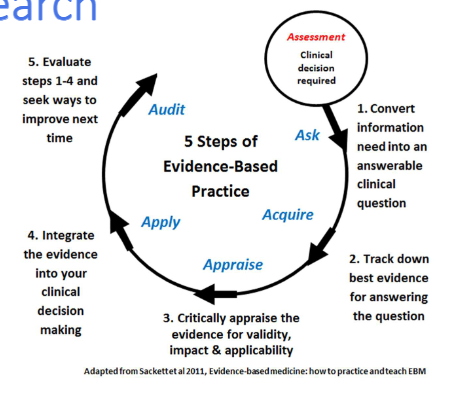
What are the five A's of evidence-based research practice?
1. Ask a question.
2. Acquire the information.
3. Appraise the articles found.
4. Apply the information.
5. Audit or assess the result.
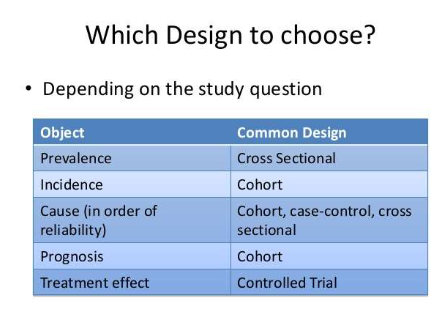
Why must different research questions be matched to different study designs?
Each design generates a particular type of information.
A design that is strong for one question may not answer another question at all.
For example:
- An RCT is most appropriate for testing an intervention.
- An RCT does not by itself answer prevalence or prognosis questions.
- Cohort studies can answer several question types depending on their specific design.
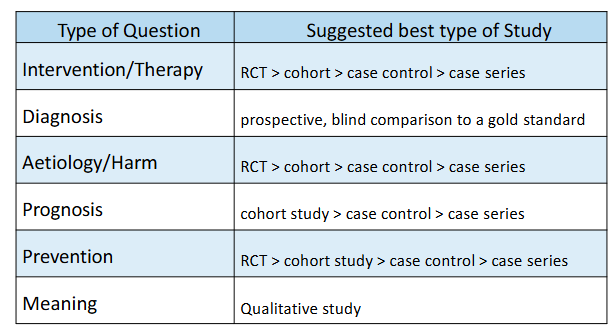
Which study designs are preferred for major clinical question types?
Intervention or therapy:
RCT > cohort study > case-control study > case series
Diagnosis:
Prospective, blinded comparison with a gold standard
Aetiology or harm:
RCT > cohort study > case-control study > case series
Prognosis:
Cohort study > case-control study > case series
Prevention:
RCT > cohort study > case-control study > case series
Meaning:
Qualitative study

Why do study designs occupy different positions in an evidence hierarchy?
Designs differ in their ability to:
- Minimise bias and confounding.
- Include appropriate control or comparison groups.
- Produce internally valid and robust data.
The absence of controls or comparison groups generally weakens evidence.
The hierarchy is best understood as a continuum rather than an absolute division.
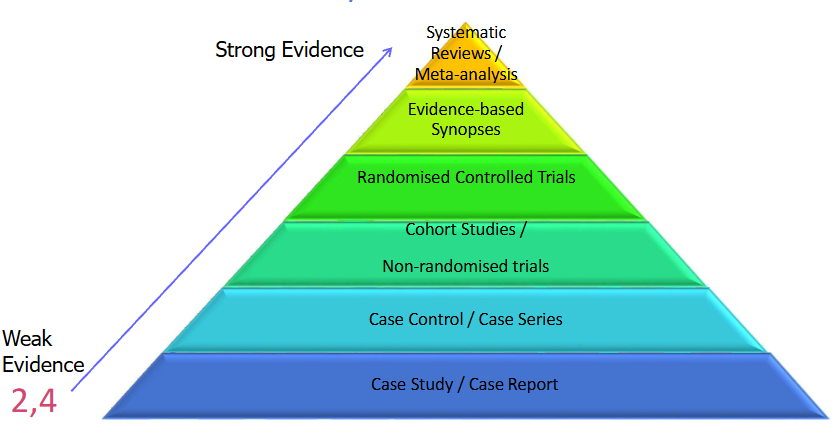
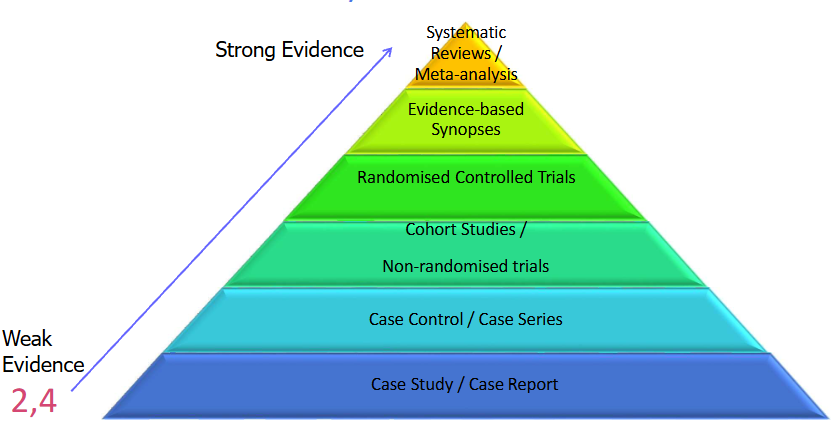
What is the conventional hierarchy of evidence from strongest to weakest?
1. Systematic reviews and meta-analyses
2. Evidence-based synopses
3. Randomised controlled trials
4. Cohort studies and non-randomised trials
5. Case-control studies and case series
6. Case studies and case reports
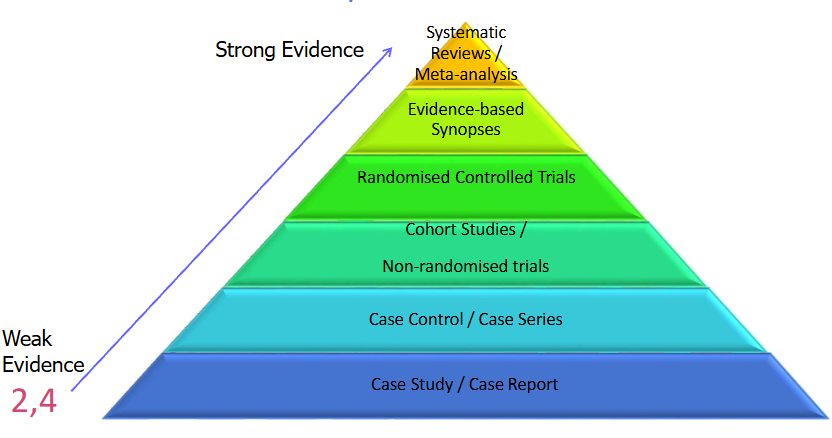
How should the statement "use the highest evidence in the hierarchy" be interpreted?
Higher-level evidence should usually be preferred when it appropriately answers the clinical question.
Lower-level evidence may be used when no good higher-level study exists.
However, not every question can or should be answered with an RCT.
Lecturer emphasis:
The lecturer challenged the idea that an RCT is necessary for every clinical question.
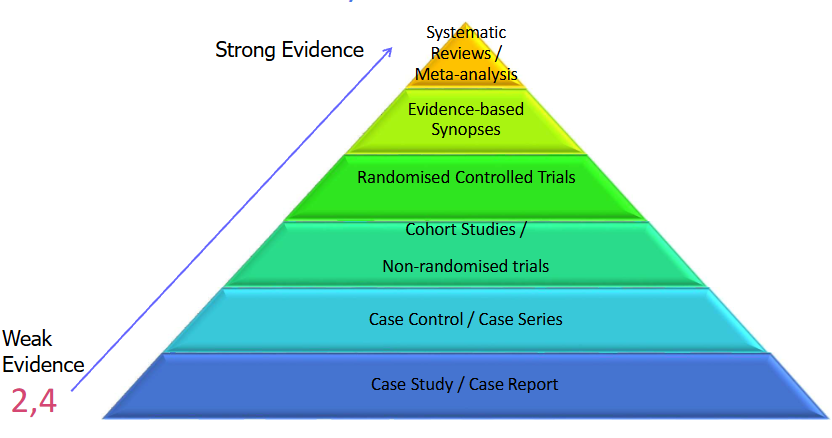
What does the evidence hierarchy primarily rank?
It primarily ranks internal validity, especially the expected risk of bias.
Studies near the top are generally more rigorously tested.
Studies near the bottom are more variable and more vulnerable to bias, although they may still be valid and useful.
Why is it better to say that high-level evidence is "more rigorously tested" rather than automatically "trusted"?
A study's label does not guarantee quality.
Even high-level designs can be poorly conducted or interpreted.
Higher placement means the design has greater potential to control bias, not that every result must be accepted without appraisal.
Why can lower-tier observational evidence still be useful?
It may address questions that cannot be answered ethically or practically by an experiment.
It may identify associations, rare outcomes or early clinical signals.
However, it usually requires more expertise and time to appraise and may reflect coincidence, bias or confounding.

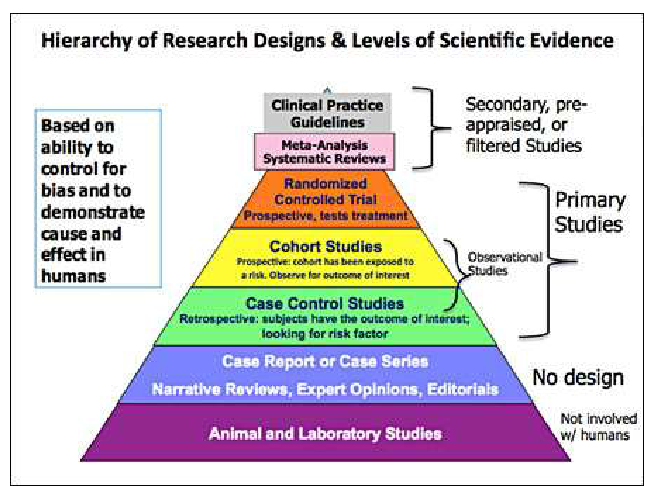
What additional evidence types appear in an expanded research hierarchy?
Above systematic reviews may sit clinical practice guidelines.
Below case reports and case series may sit:
- Narrative reviews
- Expert opinions
- Editorials
- Animal studies
- Laboratory studies
Animal and laboratory studies can have clinical relevance but do not directly demonstrate cause and effect in humans.

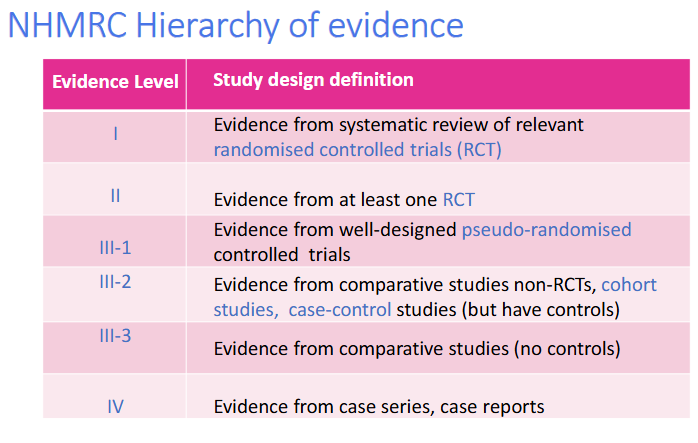
What are the NHMRC levels of evidence?
Level I:
Evidence from a systematic review of relevant RCTs.
Level II:
Evidence from at least one RCT.
Level III-1:
Evidence from well-designed pseudo-randomised controlled trials.
Level III-2:
Evidence from comparative non-randomised studies, cohort studies or case-control studies with controls.
Level III-3:
Evidence from comparative studies without controls.
Level IV:
Evidence from case series or case reports.
Why has the traditional evidence hierarchy been challenged?
Different organisations construct different hierarchies.
Study designs have individual strengths and weaknesses that warrant debate.
Systematic reviews and meta-analyses may not always deserve the top position because:
- Clinical, methodological and statistical heterogeneity cannot be eliminated.
- Some are conducted without sufficient expertise.
- Their quality can be doubtful.
- Reviews of the same topic can reach conflicting conclusions.
What is a noninferiority trial?
It tests whether a new treatment is not unacceptably worse than an established comparator by more than a predefined margin.
Lecturer explanation:
The tigecycline approval trials were noninferiority trials comparing cure rates with established antibiotic regimens.
What did the original tigecycline trials and mortality data show?
Tigecycline received FDA approval in 2005 based on four noninferiority trials:
- Two compared it with imipenem/cilastatin.
- Two compared it with vancomycin/aztreonam.
Cure rates were similar.
.
Deaths occurred in:
- 32/1383 tigecycline-treated patients, 2.3%.
- 22/1375 comparator-treated patients, 1.6%.
The difference was not statistically significant, and review did not identify a specific safety or efficacy explanation.
In 2010, the FDA warned of an increased risk of death.
What conflicting conclusions did 2011 systematic reviews reach about tigecycline?
One review:
Tigecycline monotherapy may be as effective as comparison therapy for several infections, but mortality, adverse events and resistance require caution.
A second review:
Tigecycline is not better than standard agents for serious infections, and unpublished studies are needed for sound decisions.
A third review:
Because of increased mortality and reduced clinical and microbiological efficacy, avoid monotherapy in severe infection and reserve it as a last-resort drug.
What did later analyses conclude about tigecycline?
A 2012 analysis:
Pooling noninferiority trials showed excess deaths and non-cure; tigecycline could not be relied on for serious infections.
A 2017 bloodstream-infection review:
Tigecycline monotherapy had an odds ratio for mortality of 2.73 compared with combination therapy.
95% CI: 1.53-4.87.
Evidence came from 6 studies and 250 patients, without heterogeneity.
Combination therapy was suggested for severely ill patients with bloodstream infection.
Why can systematic reviews on the same topic produce different outcomes?
Possible reasons include:
- Sourcing different primary studies.
- Using different review or meta-analysis methods.
- Selectively interpreting outcomes.
- Including or excluding unpublished evidence.
- Different investigator expertise or agendas.
Lecturer emphasis:
A publication labelled "systematic review" should not be accepted uncritically.
What regulatory action was taken for tigecycline in 2013?
The FDA issued a new safety communication warning of increased risk of death with intravenous Tygacil (tigecycline).
A boxed warning was approved.
Tigecycline became classified as a medication of last resort.
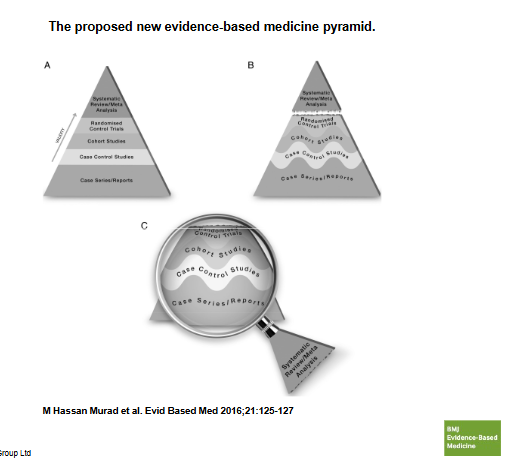
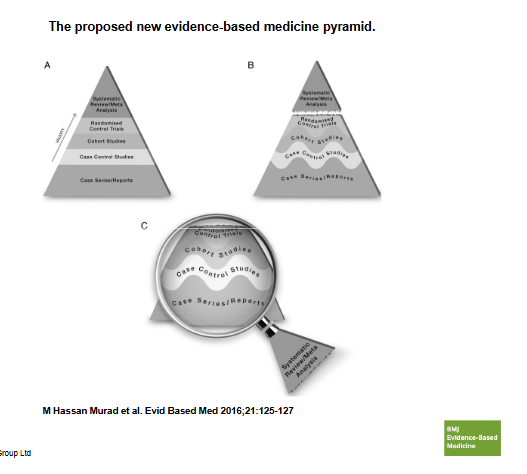
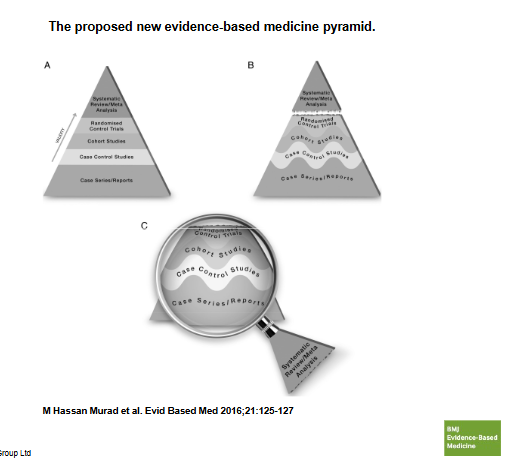
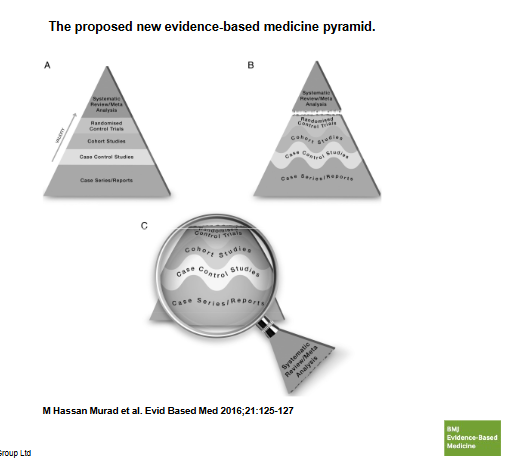
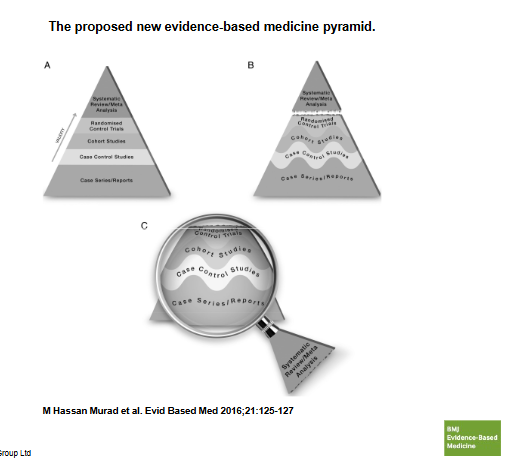
What does the proposed revised evidence pyramid change?
It allows evidence from individual designs to be upgraded or downgraded according to quality.
The boundaries between study designs become flexible rather than fixed.
Systematic reviews and meta-analyses are treated as a lens for examining evidence rather than automatically occupying the top.

Why is study design alone an imperfect indicator of risk of bias?
Limitations vary between individual studies.
Not all RCTs achieve equally low bias.
A meta-analysis of severely limited studies may need to be downgraded.
A high-quality non-randomised observational study may provide strong evidence, such as evidence for the benefits of hip replacement in osteoarthritis.
How should systematic reviews and meta-analyses be evaluated in the revised model?
First evaluate the credibility and conduct of the review.
Then evaluate the quality of the evidence it contains.
A meta-analysis of well-conducted low-bias RCTs is not equivalent to a meta-analysis of highly biased observational studies.
Systematic review methods should be used as a lens to interpret evidence rather than as an automatic guarantee of high level.
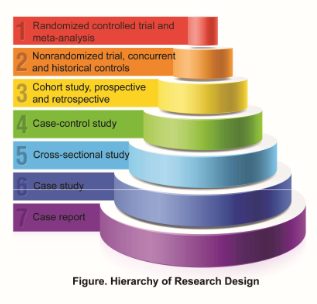
Why are RCTs considered the gold standard for intervention research?
They can minimise or even eliminate important bias and confounding through:
- Randomisation
- Blinding
- Control groups
Observational studies can be high quality, but a well-designed RCT generally has lower bias and confounding.
What did earlier observational evidence suggest about postmenopausal hormone therapy and coronary heart disease?
A meta-analysis of 24 case-control studies, 10 cohort studies and 1 RCT suggested hormone therapy should probably be recommended for:
- Women who had undergone hysterectomy.
- Women with coronary heart disease or high risk of it.
A meta-analysis of 31 observational studies suggested postmenopausal oestrogen therapy reduced coronary heart disease risk, although findings were not completely consistent.
What was the design of the HERS randomised trial?
Question:
Does oestrogen plus progestin alter coronary heart disease risk in postmenopausal women with established coronary disease?
Design:
Randomised, blinded, placebo-controlled secondary-prevention trial at 20 US centres.
Participants:
2763 postmenopausal women younger than 80 years with coronary disease and an intact uterus.
Mean age: 66.7 years.
Intervention:
0.625 mg conjugated equine oestrogens plus 2.5 mg medroxyprogesterone acetate daily, n=1380.
Control:
Identical placebo, n=1383.
Average follow-up:
4.1 years.
What outcomes were measured in the HERS trial?
Primary outcome:
- Nonfatal myocardial infarction
- Coronary heart disease death
Secondary cardiovascular outcomes:
- Coronary revascularisation
- Unstable angina
- Congestive heart failure
- Resuscitated cardiac arrest
- Stroke or transient ischaemic attack
- Peripheral arterial disease
All-cause mortality was also considered.
What were the main HERS trial results?
Primary outcome:
- Hormone group: 172 women had MI or CHD death.
- Placebo group: 176.
- Relative hazard: 0.99.
- 95% CI: 0.80-1.22.
There was no significant overall cardiovascular benefit.
Lipids:
- LDL was 11% lower.
- HDL was 10% higher.
Both P<.001.
Time pattern:
- More CHD events with hormones in year 1.
- Fewer in years 4 and 5.
What harms were identified in the HERS trial?
Venous thromboembolic events:
- Hormone group: 34.
- Placebo group: 12.
- Relative hazard: 2.89.
- 95% CI: 1.50-5.58.
Gallbladder disease:
- Hormone group: 84.
- Placebo group: 62.
- Relative hazard: 1.38.
- 95% CI: 1.00-1.92.
There were no significant differences in fracture, cancer or total mortality, although power for these outcomes was limited.
What conclusion did the HERS trial reach about hormone therapy for secondary prevention?
Oestrogen plus progestin did not reduce overall coronary heart disease events in women with established coronary disease.
It increased thromboembolic events and gallbladder disease.
The treatment should not be started for secondary prevention of CHD.
Because later years showed a more favourable pattern, continuing therapy might be appropriate for women already receiving it.
What did the HERS example demonstrate about observational and randomised evidence?
Observational evidence suggested a protective association.
The controlled randomised trial found no overall cardiovascular benefit and identified harm.
The observational association may have reflected bias or confounding rather than a true treatment effect.
Lecturer emphasis:
Study findings must be judged by both design and execution, not accepted because many observational studies point in one direction.
Why should RCTs and observational studies not be considered in isolation?
RCTs are often efficacy studies and observational studies often examine real-world effectiveness.
All evidence depends on:
- The rigour with which the individual study was conducted.
- The limitations and bias present.
- The care used in interpretation.
Different designs can provide complementary information.
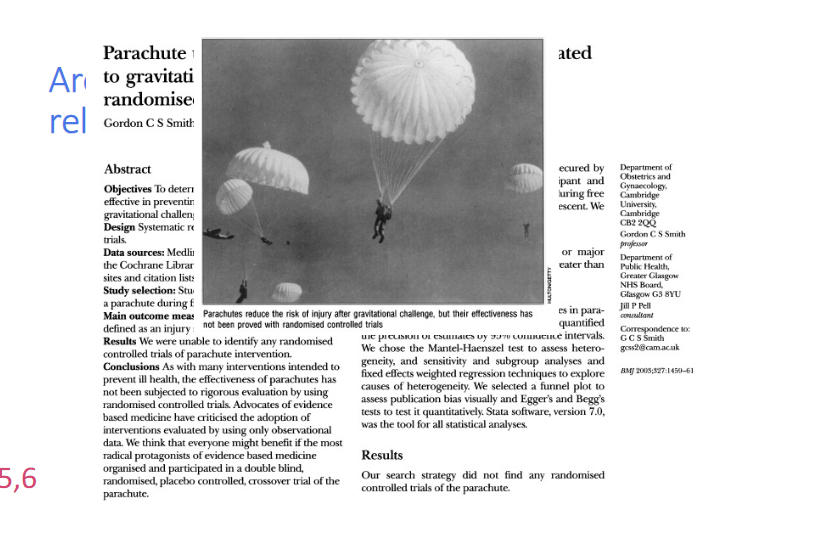
What does the parachute systematic-review example illustrate?
A systematic review found no randomised controlled trials of parachute use.
This illustrates that:
- Not every beneficial intervention requires an RCT.
- Some RCTs would be unethical or unnecessary.
- Absence of RCT evidence does not automatically mean absence of effect.
- Systematic reviews are not always necessary to establish an obvious effect.

What active steps are required when evaluating evidence?
1. Understand the research question.
2. Understand and evaluate the design used to answer it.
3. Identify limitations and bias.
4. Assign an appropriate level of validity.
5. Position the evidence within a hierarchy.
6. Apply the findings only where appropriate.
Evidence evaluation is conscious and active, and conclusions are rarely unequivocal.
How do basic science and clinical research differ?
They require the same general research principles.
Basic science assesses a disease or intervention in a created experimental environment.
Clinical research investigates diseases or interventions in human patients.
The study-design concepts taught for clinical research also apply to medical and basic science research.
What features should be considered when acquiring relevant and valid evidence?
- Use peer-reviewed publications and systematic reviews.
- Match study design to the research question and PICO framework.
- Consider study limitations and bias.
- Assess statistical power: whether enough patients or events were studied.
- Remember that not all information has equal usefulness or value.
Why must readers identify the actual study design rather than rely only on the authors' label?
Different designs generate different information and answer different questions.
Authors sometimes define their own designs incorrectly.
Misclassification can mislead the reader about the evidence's value and position in the hierarchy.
Lecturer emphasis:
Readers must understand design features well enough to identify the study themselves.
What are the main study designs covered in Lecture 4?
- Randomised controlled trial
- Cohort study
- Case-control study
- Cross-sectional study
- Qualitative study
- Case report or case series
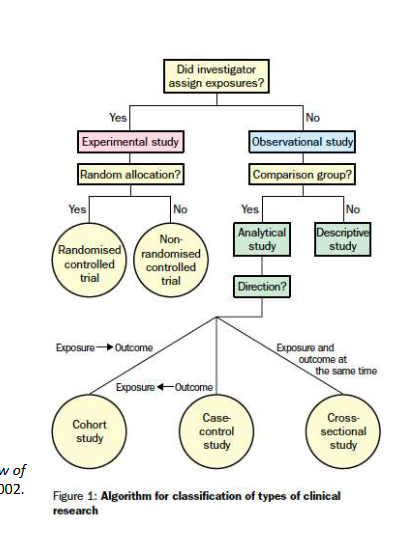
How are experimental and observational studies distinguished?
First ask whether the investigator assigned the exposure.
.
If yes:
Experimental study.
- Random allocation: randomised controlled trial.
- No random allocation: non-randomised controlled trial.
.
If no:
Observational study.
- Comparison group present: analytical study.
- No comparison group: descriptive study.
Analytical observational studies:
- Exposure followed to outcome: cohort study.
- Outcome traced back to exposure: case-control study.
- Exposure and outcome measured simultaneously: cross-sectional study.

What are the defining features of a randomised controlled trial?
An RCT:
- Is the clinical research gold standard.
- Is designed to minimise bias.
- Is equivalent to a controlled basic-science experiment.
- Randomises participants into two or more groups.
- Gives each group a different intervention.
- Uses chance assignment as its hallmark feature.
- Frequently blinds participants and trial staff.
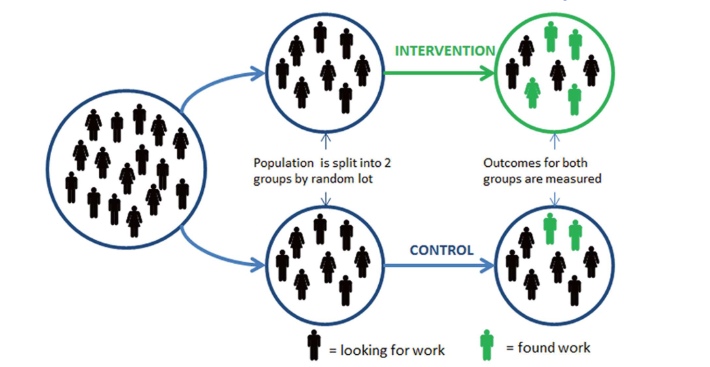
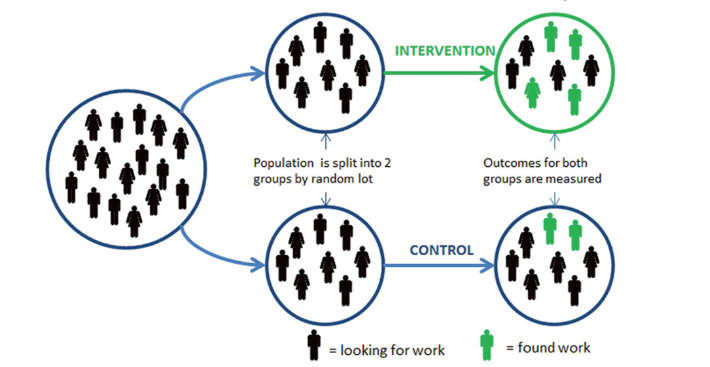
What sequence is shown in the basic RCT diagram?
1. Begin with a study population.
2. Split participants into groups by random allocation.
3. Give one group the intervention.
4. Give the other group the control condition.
5. Measure outcomes in both groups.
6. Compare the outcome frequencies.
What questions can an RCT answer?
Interventional questions, including:
- Is a treatment effective?
- Is treatment A more or less effective than treatment B?
What are the main strengths of an RCT?
If properly designed, it can be largely free of bias.
It is statistically robust.
It can detect small or moderate treatment effects that weaker designs may not detect.
It has strong internal validity for the population and conditions studied.
What are the main limitations of an RCT?
External validity may be limited because strict inclusion and exclusion criteria can produce an unrepresentative study group. (external means populations outside the population studied. e.g if experiment done on rats, may not be valid for humans)
Some RCTs are unethical or impractical.
Participants cannot be denied necessary care or deliberately exposed to harm.
RCTs can also be expensive in science and medicine.
What is the difference between internal and external validity in an RCT?
Internal validity:
The trial accurately answers its intended question under the study conditions.
.
External validity:
The result generalises to people and circumstances outside the study.
Strict volunteer inclusion and exclusion criteria can improve internal control while reducing external validity.
How do blinding and double-blinding reduce bias in an RCT?
Blinding conceals treatment allocation from participants.
Double-blinding also conceals it from trial staff or clinicians.
This reduces expectation effects and prevents clinicians from unintentionally influencing participants or outcomes.
It supports chance-based treatment allocation and reduces selection and performance bias.
How do placebo controls support an RCT?
The control group receives a sham intervention to support blinding.
Passive placebo:
Mimics how the treatment is administered.
.
Active placebo:
Mimics the treatment's side effects as well as administration.
A placebo cannot always be used, especially when withholding effective care would be unethical.

What observational study designs were covered?
- Cohort studies
- Case-control studies
- Cross-sectional studies
- Qualitative studies
- Case reports and case series

What is a cohort study?
A longitudinal observational study that follows participants over time from exposure to outcome.
Participants with shared characteristics form a cohort.
Investigators compare an exposed group with an unexposed group and measure later outcomes.
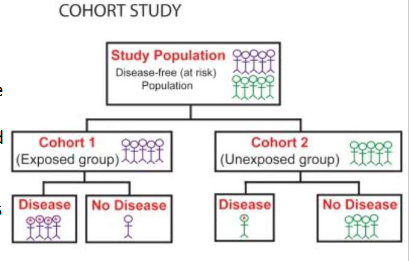

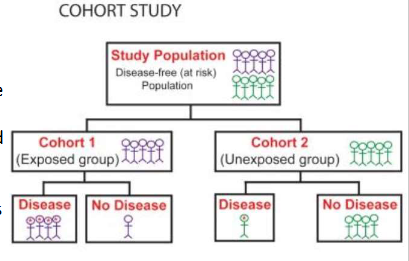
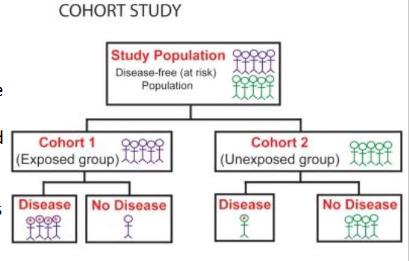
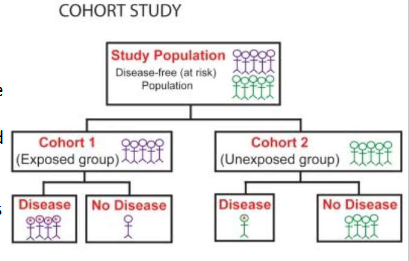
What is the sequence of a cohort study?
1. Identify a study population initially without the outcome.
2. Classify participants as exposed or unexposed.
3. Follow both groups over time.
4. Determine who develops disease or another outcome.
5. Compare outcome incidence between groups.
6. Associate higher incidence with increased risk from the exposure.
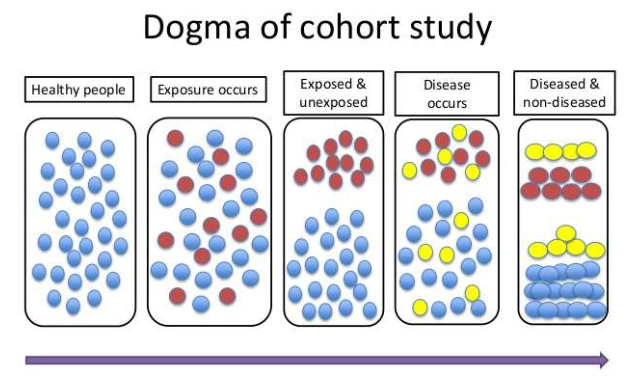
What questions are cohort studies used to answer?
- Risk factors and predictors of risk
- Aetiology: what causes outcomes?
- Prognosis: what happens over time? (cant do this for RCT bc of ethical problems)
- Diagnosis: what follows a positive test?
- Incidence of disease
- Relative risk
Cohort studies may be prospective or retrospective.
Why may cohort studies be unsuitable for rare diseases or slowly developing outcomes?
A very large cohort or very long follow-up may be required to observe enough events.
This can make the study too slow, expensive or impractical.
What are the main advantages of cohort studies?
- Determine incidence.
- Calculate relative risk and confidence intervals.
- Establish a clear exposure-to-outcome timeline.
- Reduce the "chicken-and-egg" uncertainty about which came first.
- Investigate multiple outcomes.
- Study rare exposures.
.
can be prospective or retrospective
What are the main disadvantages of cohort studies?
- Selection bias when exposed and unexposed groups cannot be matched well.
- Poor efficiency for rare diseases.
- Loss to follow-up can cause bias.
- Exposure status may change over time (e.g smoking example: smokers vs non-smokers. What if someone in the control group starts smoking? That changes the study as risk of lung cancer changes)
Why can a cohort study be useful for a rare exposure but poor for a rare disease?
Rare exposure:
Researchers can deliberately identify exposed individuals and follow them for several outcomes.
.
Rare disease:
A huge population may need to be followed before enough disease cases occur to analyse.
What is a case-control study?
An observational study that begins with outcome status.
It compares:
- Cases who have the disease or outcome.
- Controls who do not.
Investigators then look backwards for differences in prior exposures or risk factors.
.
most widely used study design
simplest to execute
tend to be susceptible to bias (people remember wrong or lie about their past)
easy to do but also easy to do wrong
What questions can case-control studies address?
- Risk factors
- Prognosis
- Diagnosis
They are widely used because they are simple, quick and relatively inexpensive.
However, they are especially susceptible to bias and are easy to perform badly.
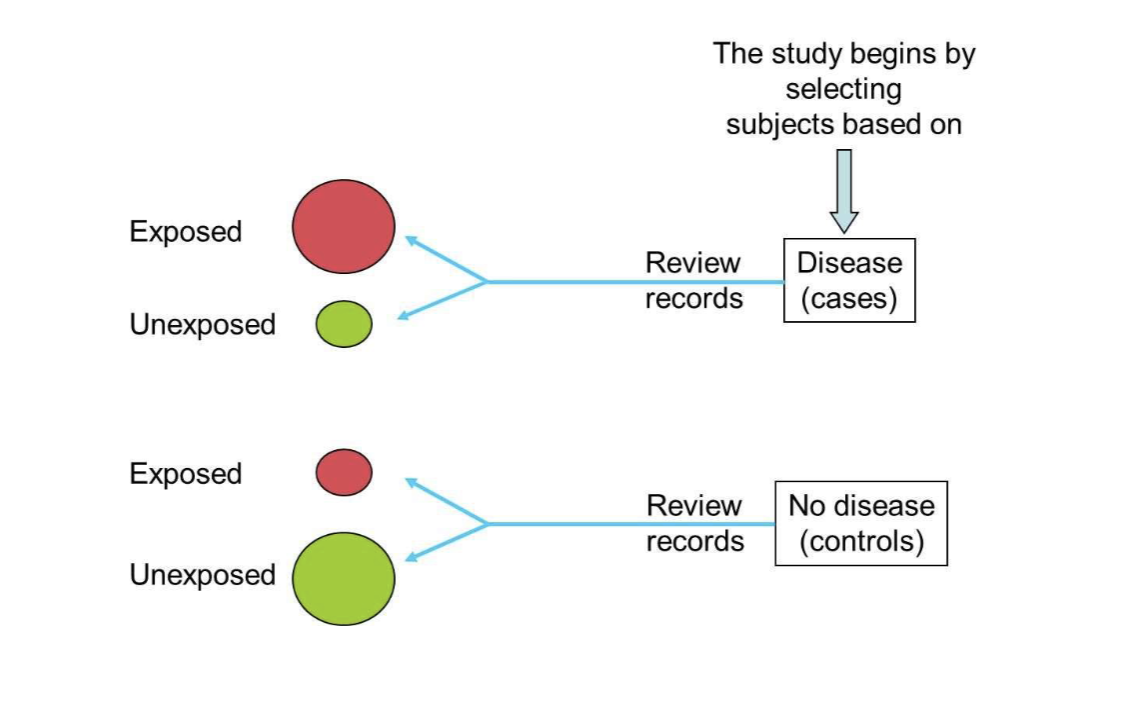
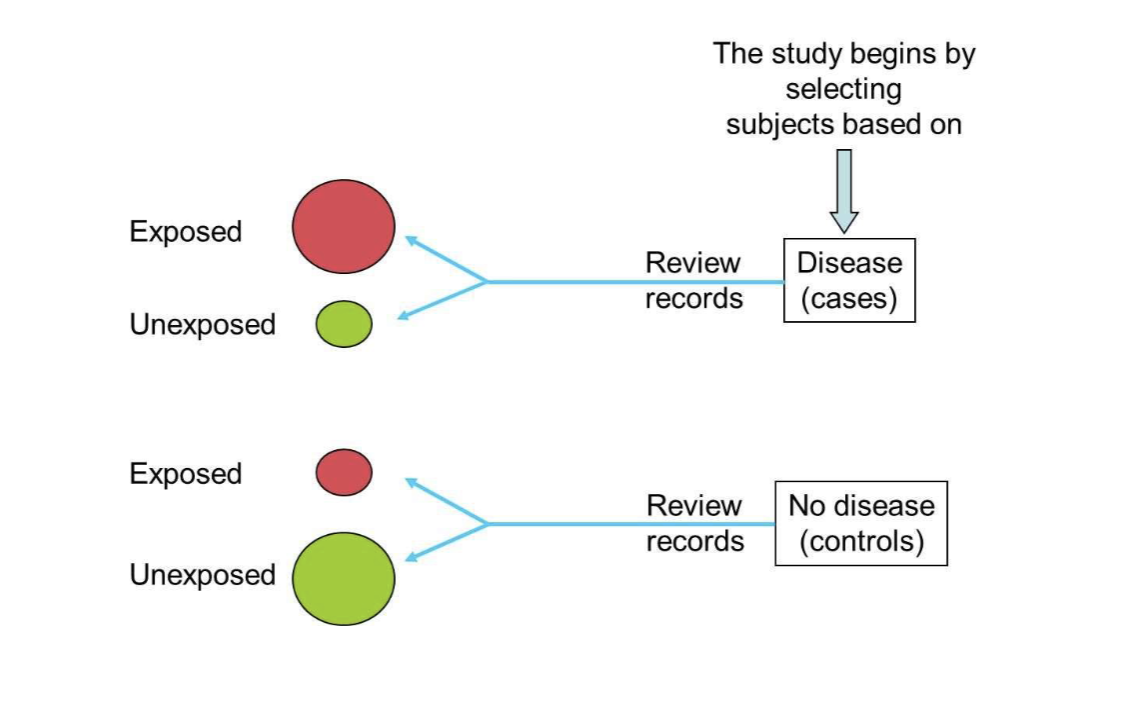
What sequence is shown in a case-control study?
1. Assemble cases with the disease.
2. Assemble controls without the disease.
3. Review records or interview participants.
4. Measure prior exposure status in each group.
5. Compare the proportions previously exposed and unexposed.
The direction of enquiry moves backwards from outcome to exposure.
What makes control selection valid in a case-control study?
Controls must:
- Be free of the outcome being studied.
- Represent the population from which the cases arose.
- Be comparable with cases on relevant characteristics.
- Be selected independently of exposure status.
Potential selection biases must be anticipated.
Lecturer emphasis:
Selecting an appropriate control group is extremely difficult and central to study quality.
How did the lecturer illustrate matching cases and controls?
If cases are 60-70-year-old men with lung cancer, controls should be similar 60-70-year-old men without lung cancer.
Using younger people or women could introduce systematic differences unrelated to the exposure of interest.
What is a cross-sectional study?
An observational "snapshot" that measures a population at one particular point in time.
Exposure and outcome status are measured within the same sample at the same time.
What questions can cross-sectional studies answer?
- Frequency or prevalence: how common is an outcome?
- Aetiological association: which risk factors are associated with it?
- Diagnosis: does a new test perform similarly to the current standard?
They identify associations, not temporal or causal relationships.
Why can a cross-sectional study not determine whether exposure caused an outcome?
Exposure and outcome are measured simultaneously, so the timeline is unknown.
Example:
Obesity is more common among people with arthritis.
Possible explanations:
- Obesity increases joint load and contributes to arthritis.
- Arthritis pain reduces activity and leads to weight gain.
The study can report higher arthritis prevalence among obese people but cannot determine which came first (cant tell which came first)
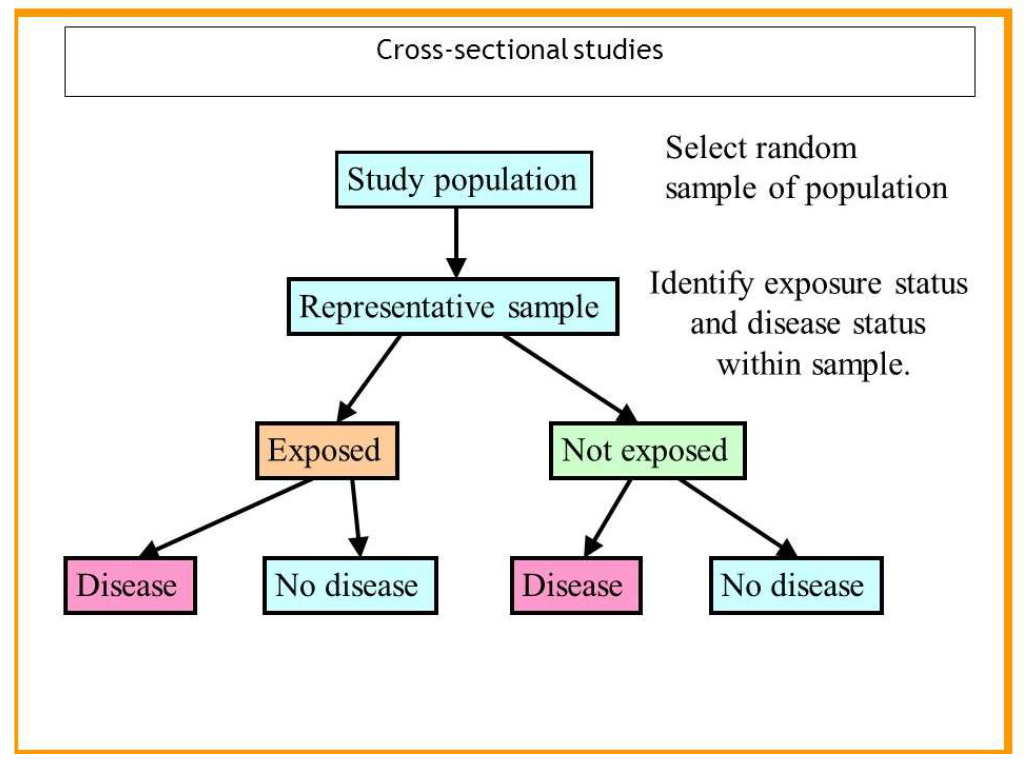
What sequence is shown in a cross-sectional study?
1. Define the study population.
2. Select a random representative sample.
3. Measure exposure and disease status at the same time.
4. Classify participants as:
- Exposed with disease
- Exposed without disease
- Unexposed with disease
- Unexposed without disease
What is qualitative research?
A group of study designs focused on patient-oriented outcomes and questions such as:
- Why do people behave in a particular way?
- What are the reasons for an experience?
- How do people feel?
It portrays the participant's voice, which is often absent from quantitative studies.
What methods and quality features are used in qualitative studies?
Methods:
- Interviews
- Focus groups
- Participant observation
.
Quality features:
- Explicit sampling strategies
- Systematic data analysis
- Structured interpretation of experiences, beliefs and behaviours
Why is qualitative evidence valuable in medicine?
It explains personal experience and its effect on patients and practitioners.
It can bridge the gap between scientific evidence and clinical practice.
It may improve care by identifying:
- Differences between doctor and patient views.
- Reasons for medication non-adherence.
- Concerns, preferences and behaviours that quantitative outcomes do not capture.
How did the asthma qualitative study reveal differences between patients and clinicians?
About half of participants did not identify themselves as asthmatic.
They viewed breathing difficulty as acute and temporary and wanted symptom relief rather than daily prophylaxis.
Many avoided triggers so life felt normal to them, while clinicians saw this lifestyle restriction as problematic.
Clinicians saw medication as low-cost protection against morbidity and mortality.
Some patients feared long-term adverse effects or dependence on medicines.
What is a case report or case series?
A descriptive observational study of:
- One patient, in a case report.
- A small group of patients, in a case series.
Patients may share a specific disease or exposure, including an intervention.
These designs usually do not provide definitive evidence but can generate hypotheses for higher-level studies.

What information should high-quality case-based descriptive research report?
- Who was affected?
- What outcome occurred?
- Why might it have occurred?
- When did it arise, including seasonal timing or relation to infection?
- Where did it occur?
Geography may reveal relevant proximity to chemical plants, insects, rodents or other exposures.
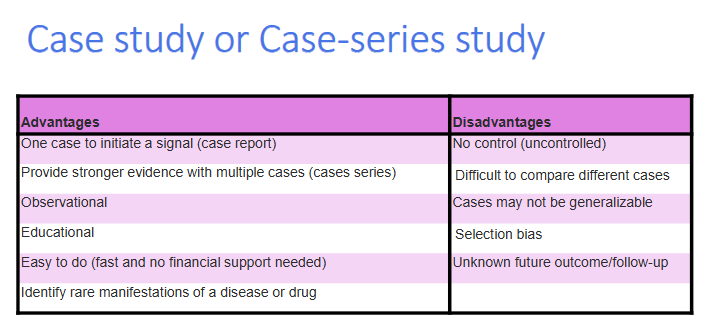
What are the advantages of case reports and case series?
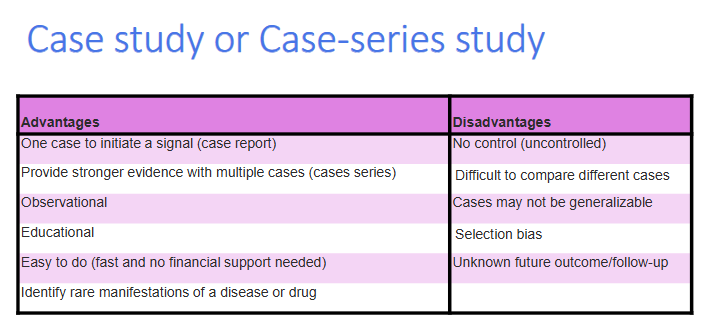
- One case can initiate a clinical signal.
- Multiple cases provide stronger evidence than one.
- They are observational and educational.
- They are quick and may require little or no funding.
- They identify rare disease manifestations or rare drug effects.
- They can generate hypotheses.
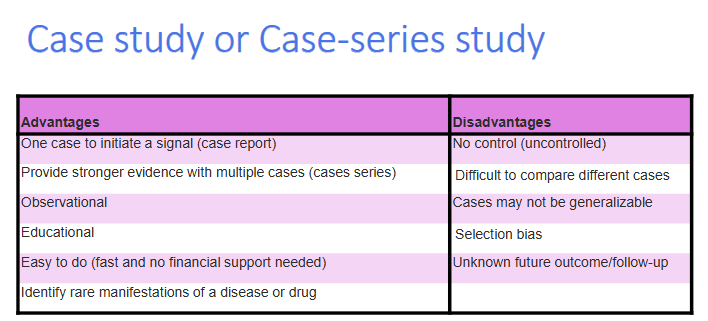

What are the disadvantages of case reports and case series?
- No control group.
- Different cases may be difficult to compare.
- Findings may not generalise.
- Selection bias.
- Future outcomes and follow-up may be unknown.
- No controlled comparison can establish causation.
Why do case reports and case series rank low yet remain important?
They describe one or a few patients, have no control group and are rarely cited, so they rank low and are less publishable.
However, they may reveal an important signal and provide the basis for a testable hypothesis.
How did case reports lead to stronger evidence about oral contraceptives and hepatocellular adenoma?
Initial case reports described women taking oral contraceptives who developed hepatocellular adenomas.
A later large case-control study confirmed a strong association between long-term high-dose oral contraceptive use and this cancer.
The case reports generated the hypothesis; the higher-level study tested it.
How can a case series help identify an epidemic?
One unusual case may attract little attention.
Several similar unusual cases occurring over a short period may reveal a cluster.
A cluster can signal an epidemic and justify more systematic investigation.