Bones of the Skull and Face
 Studied by 1 person
 Call Kai
 Learn
Learn Practice Test
 Spaced Repetition
 Match
Match Flashcards
 Knowt Play
1/24

There's no tags or description
Looks like no tags are added yet.
Name | Mastery | Learn | Test | Matching | Spaced |
|---|
No study sessions yet.
25 Terms
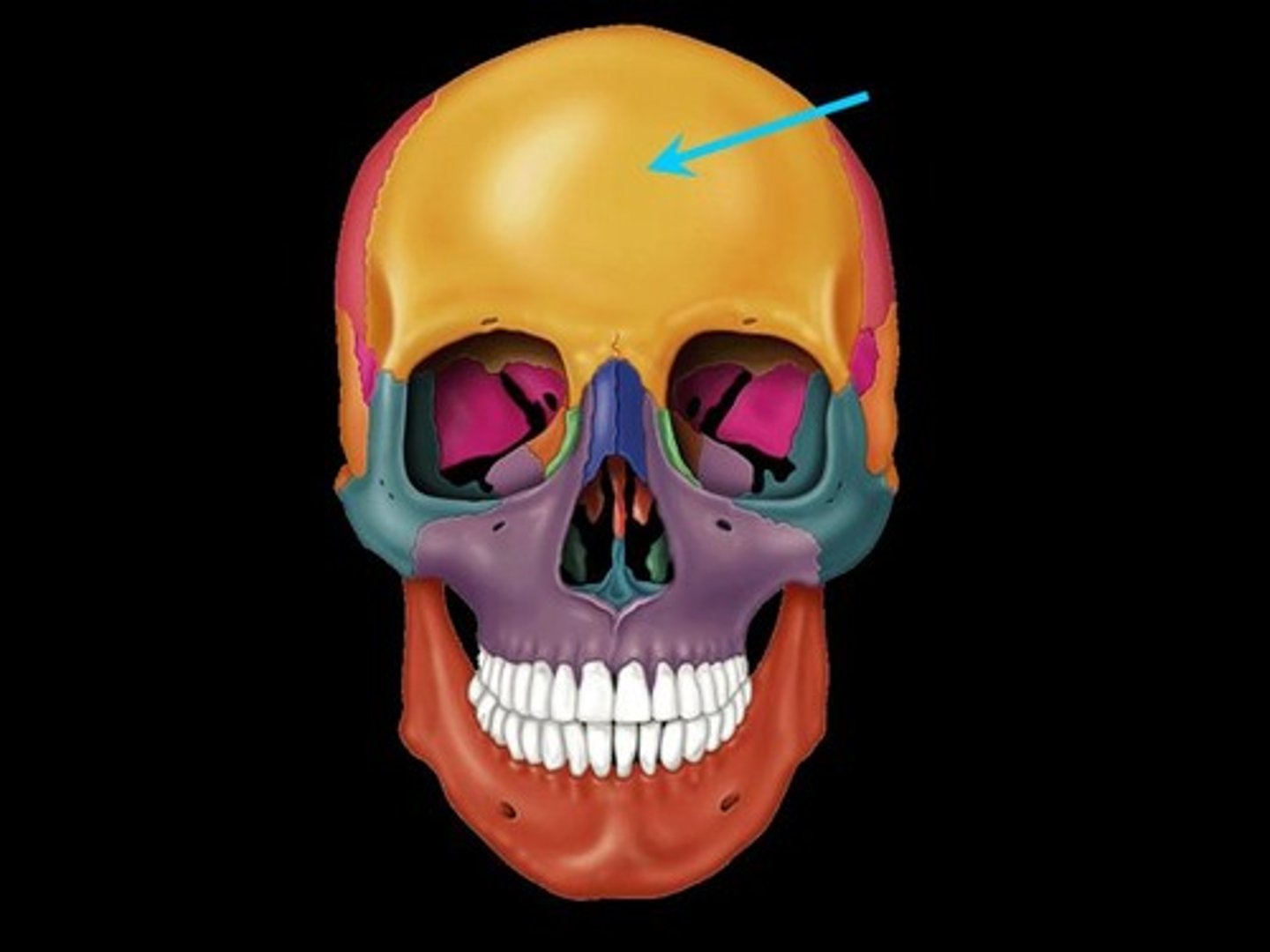
Frontal Bone
forms the forehead
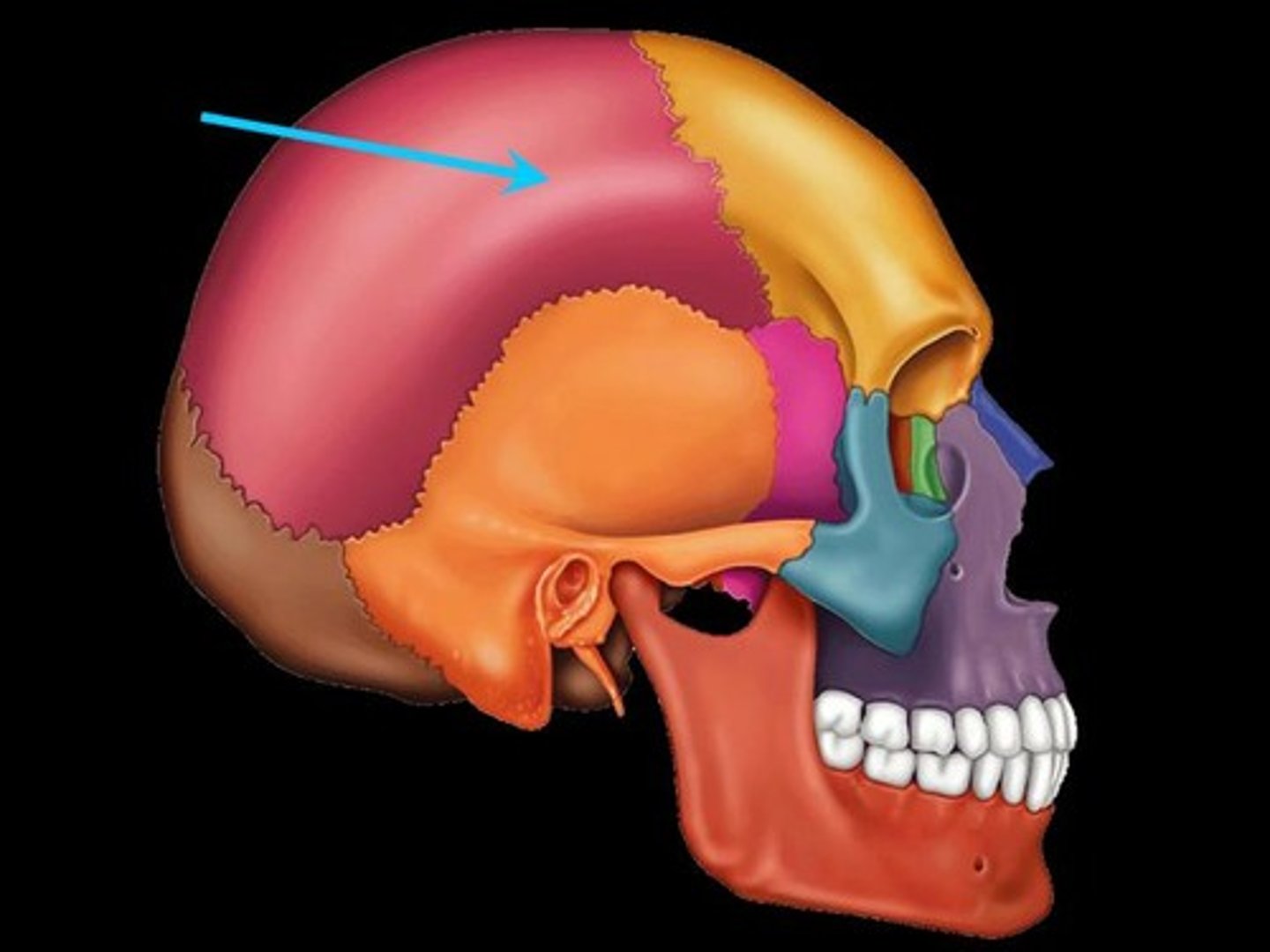
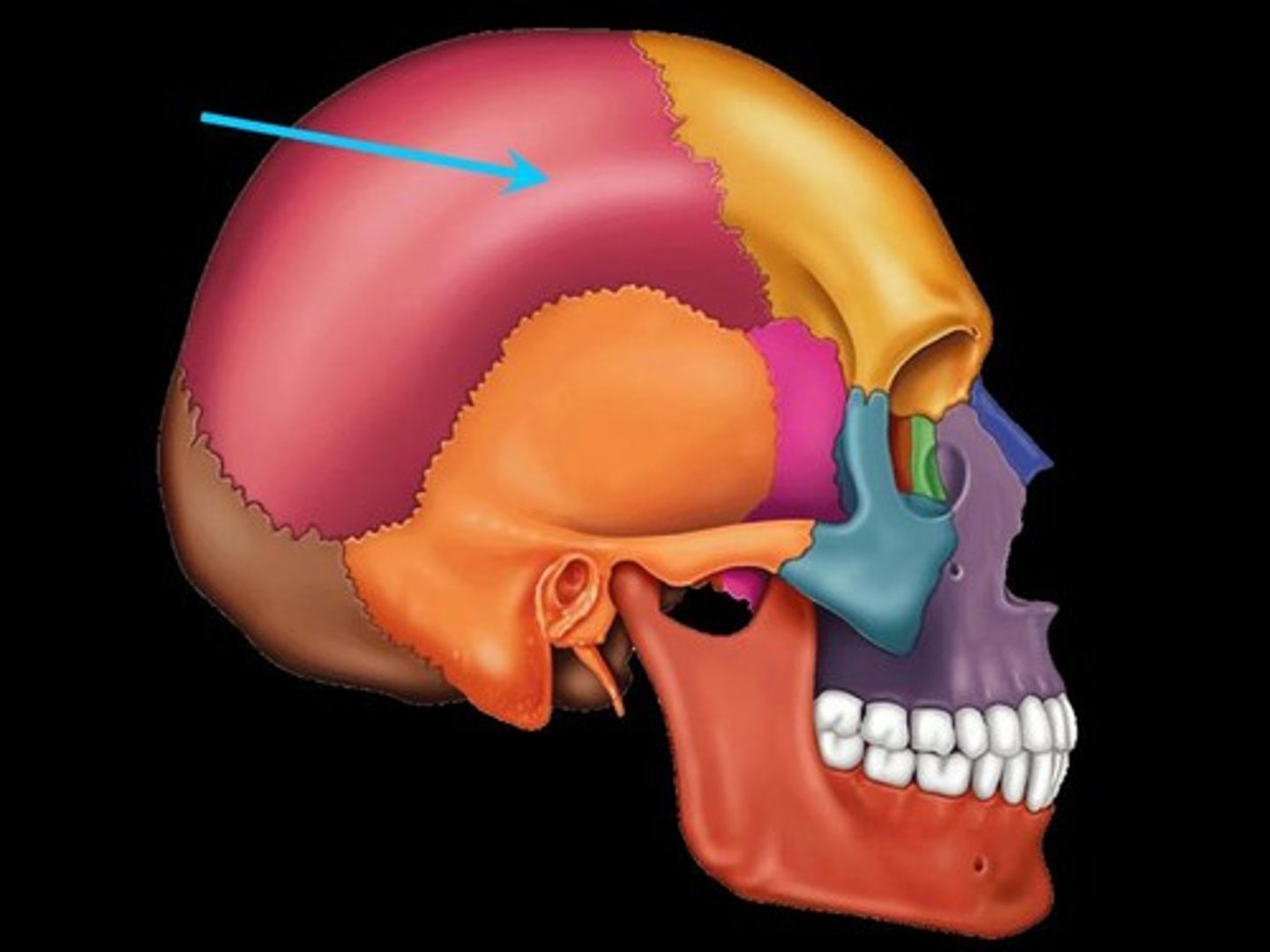
Parietal Bone
a bone forming the central side and upper back part of each side of the skull.
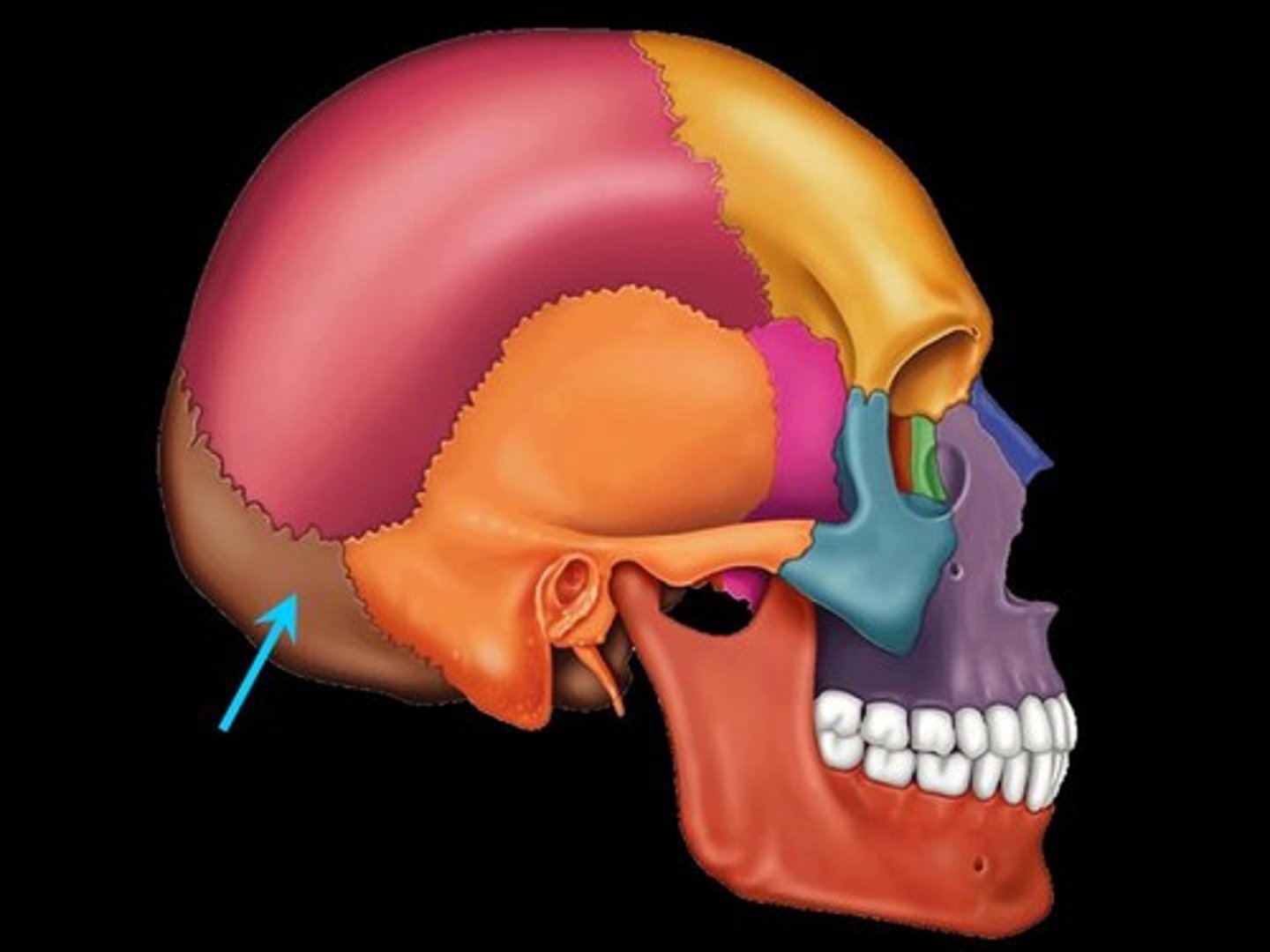
Occipital Bone
back of head
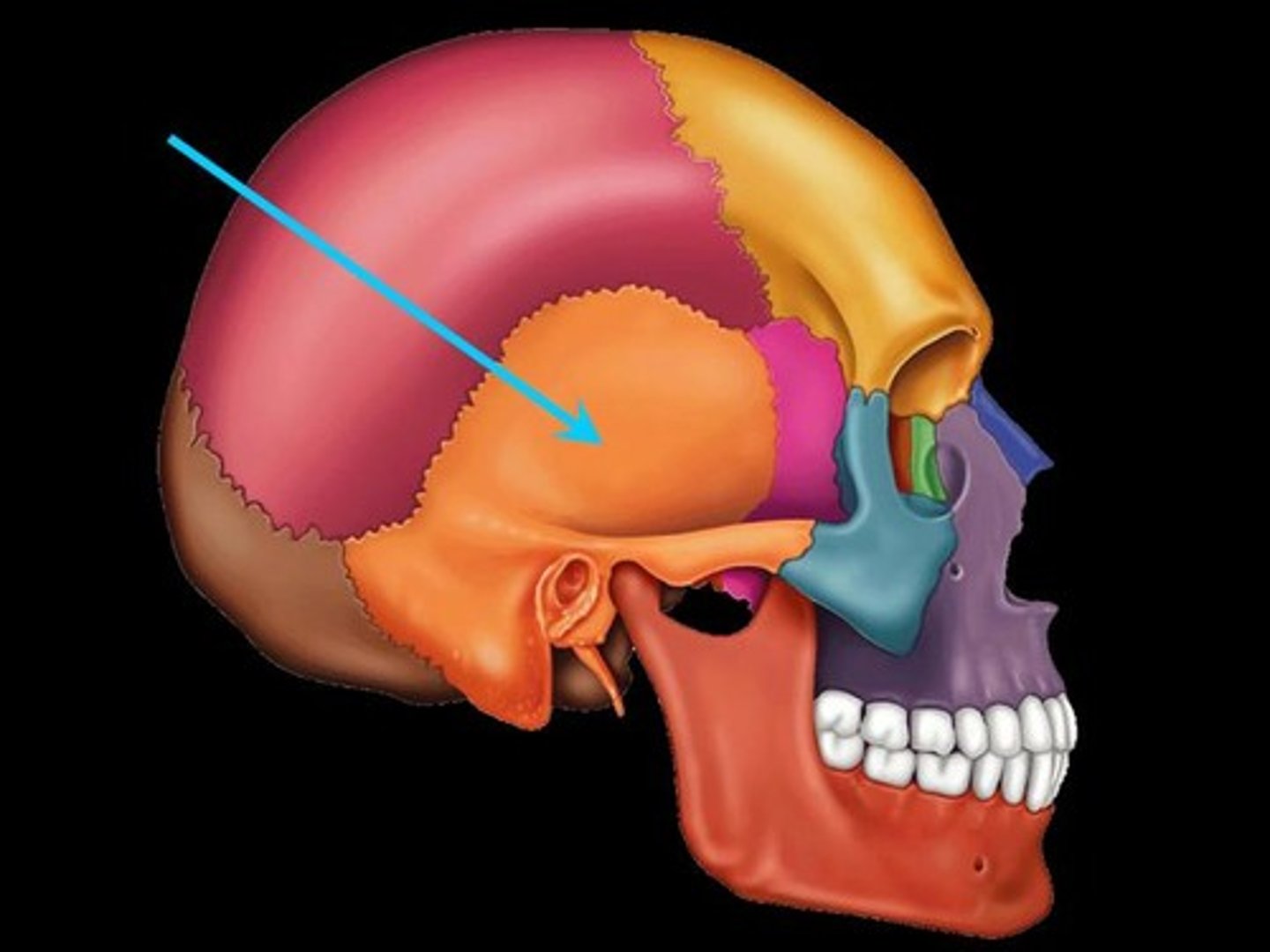
temporal bone
bone that forms parts of the side of the skull and floor of the cranium
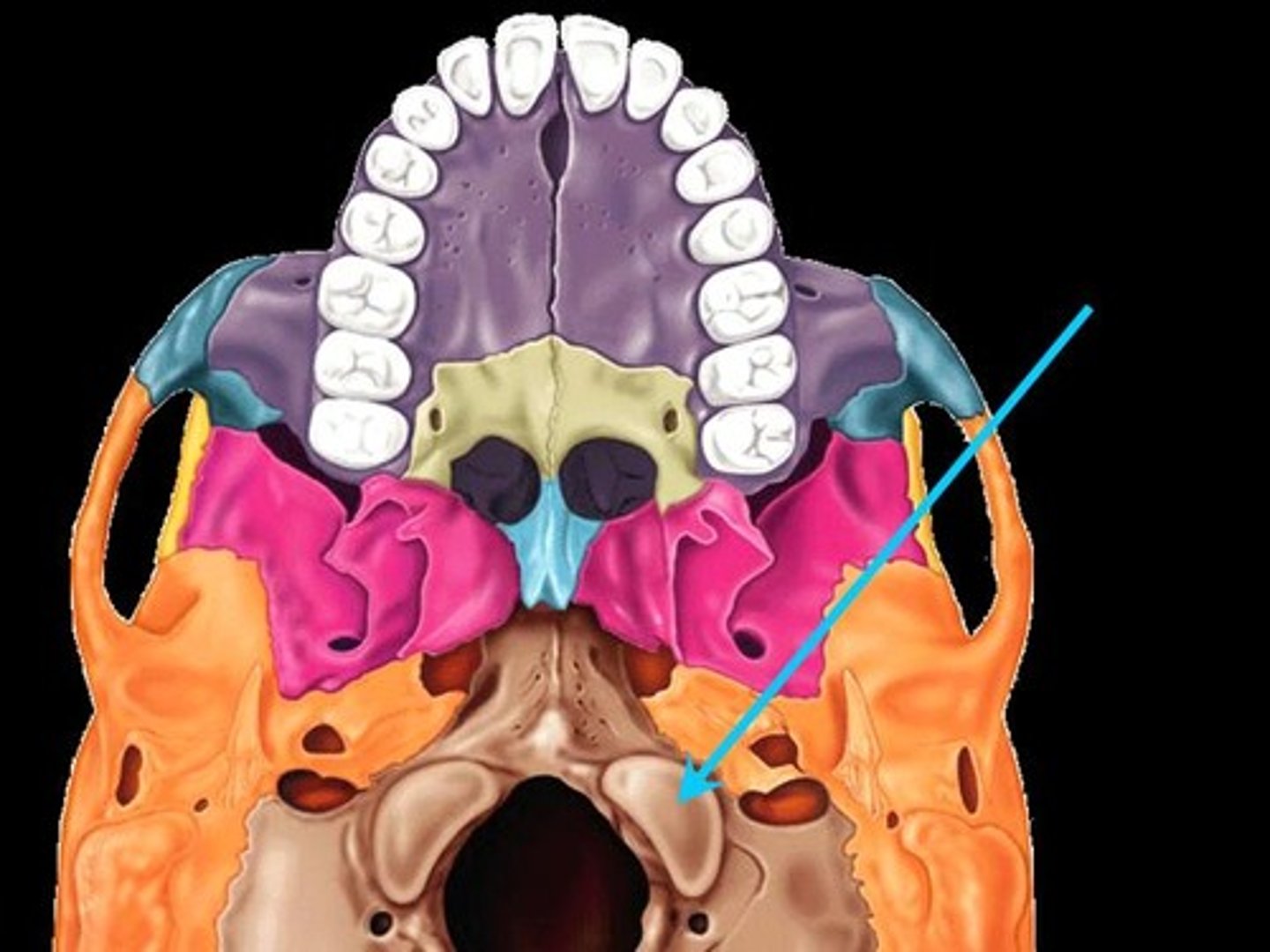
occipital condyles
this articulates with the first cervical vertebra
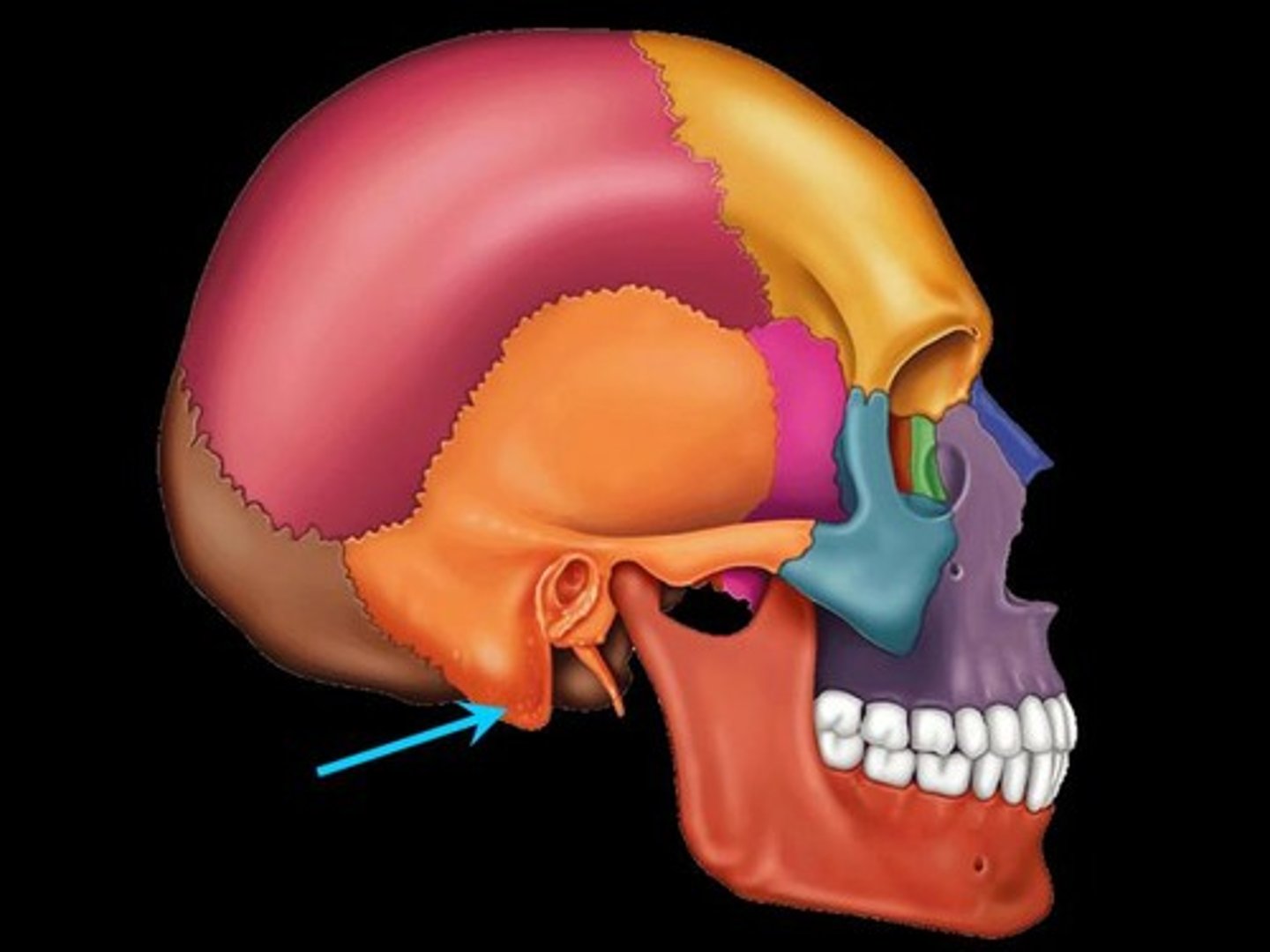
mastoid process
attachment point for various muscles
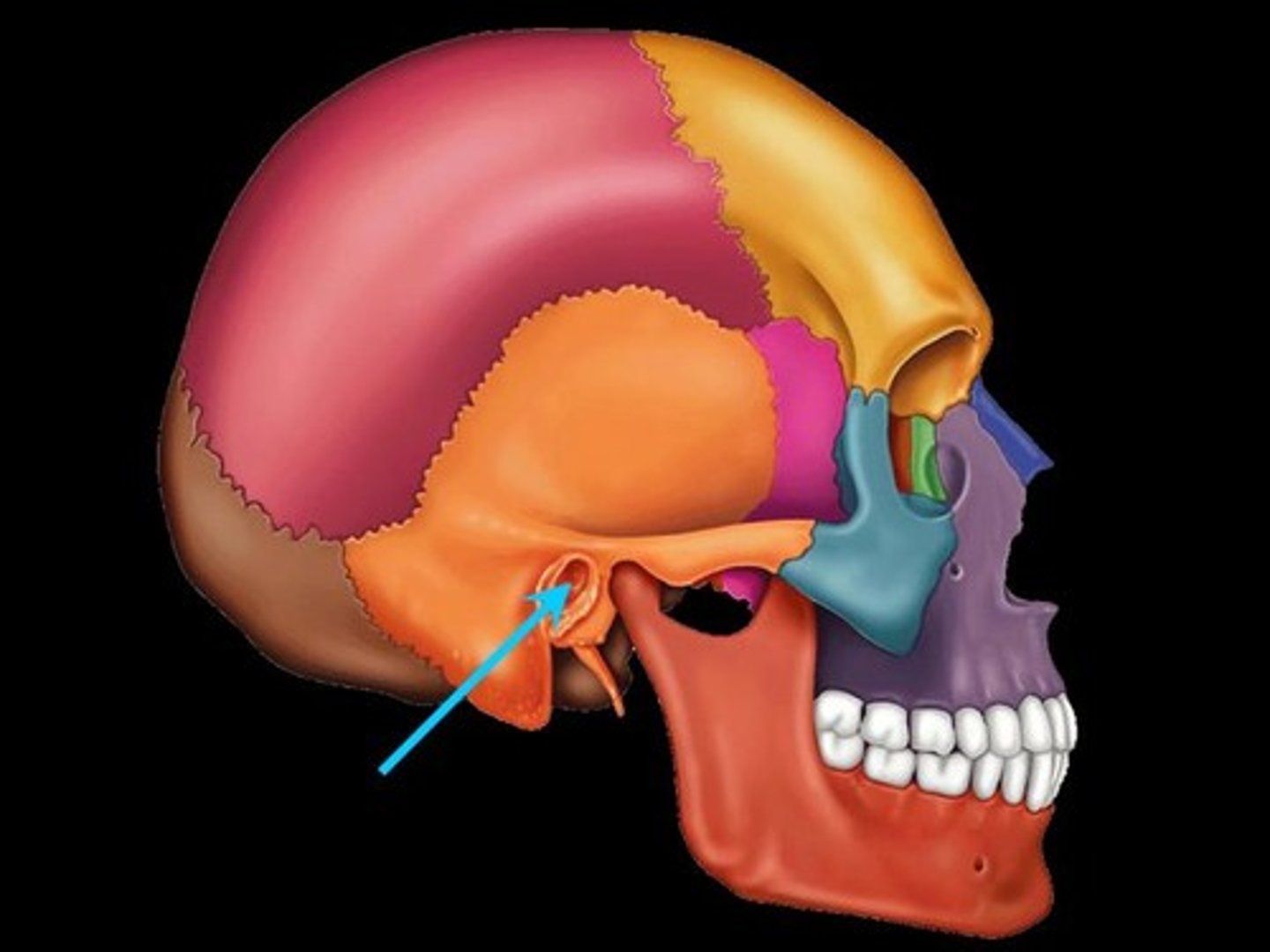
external auditory meatus
ear canal
Ethmoid Bone
Light spongy bone between the eye sockets; forms part of the nasal cavities.
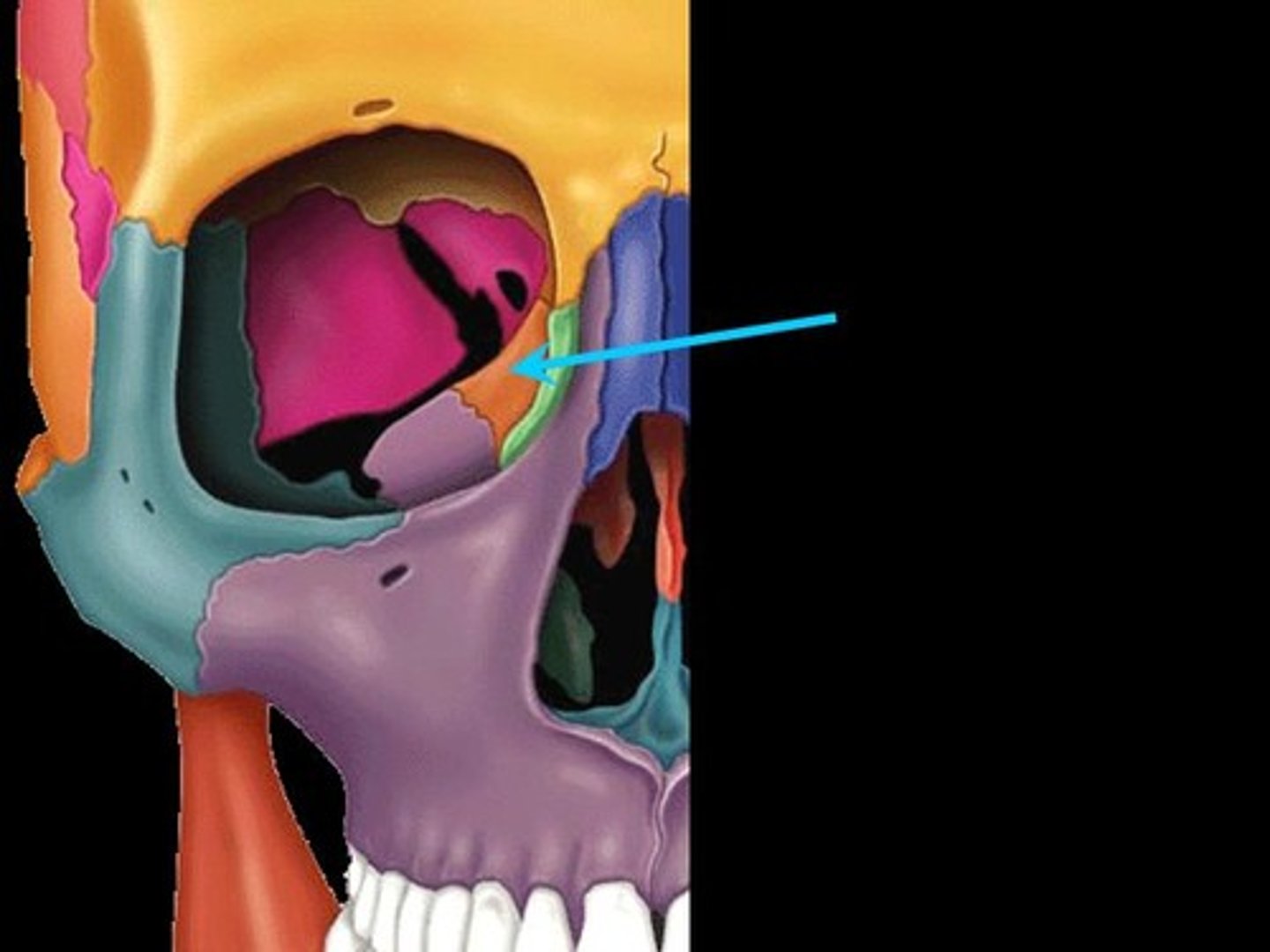
Sphenoid Bone
Bone that joins all of the bones of the cranium together. Forms base of skull
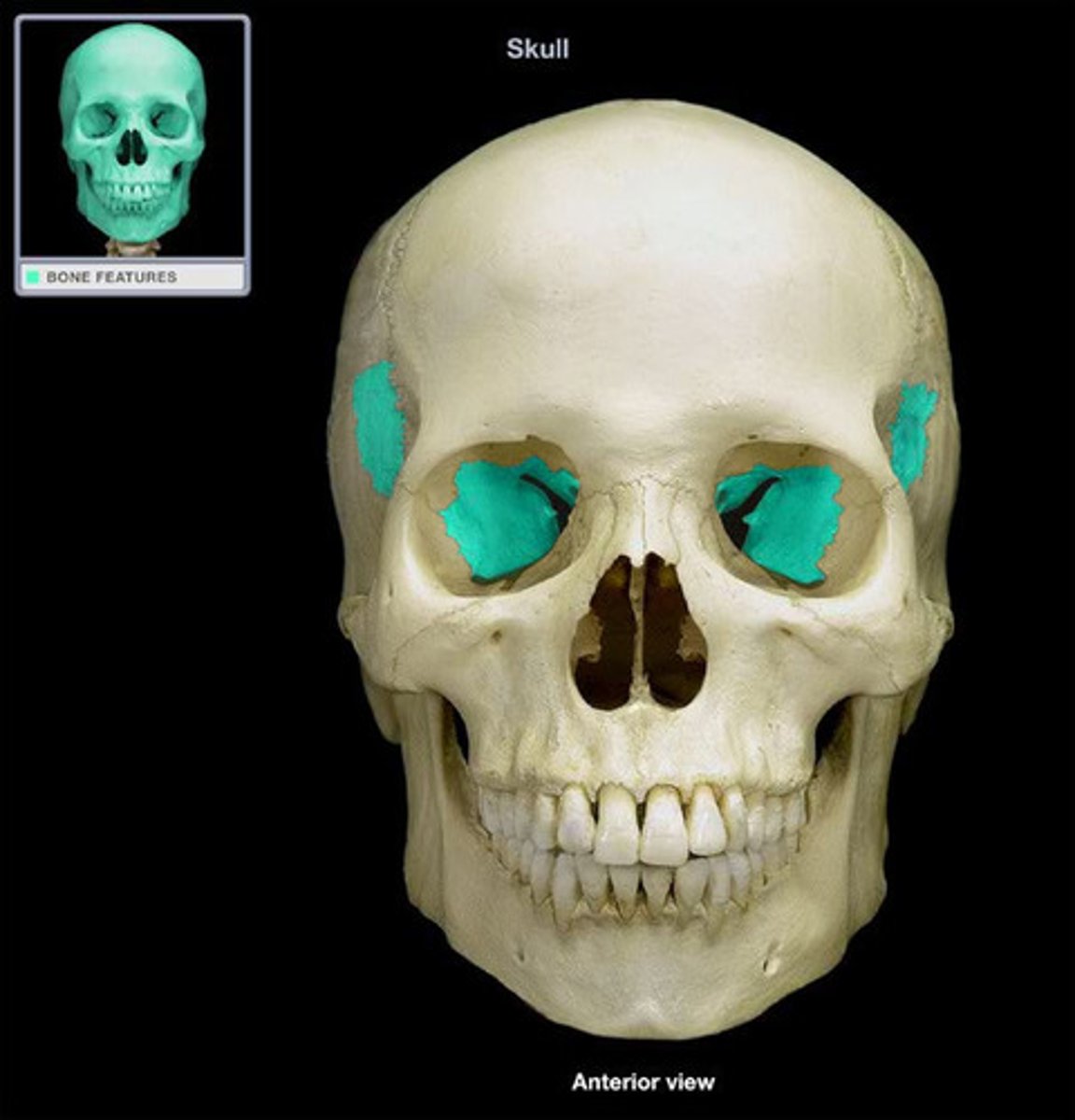
Maxillae
upper jaw
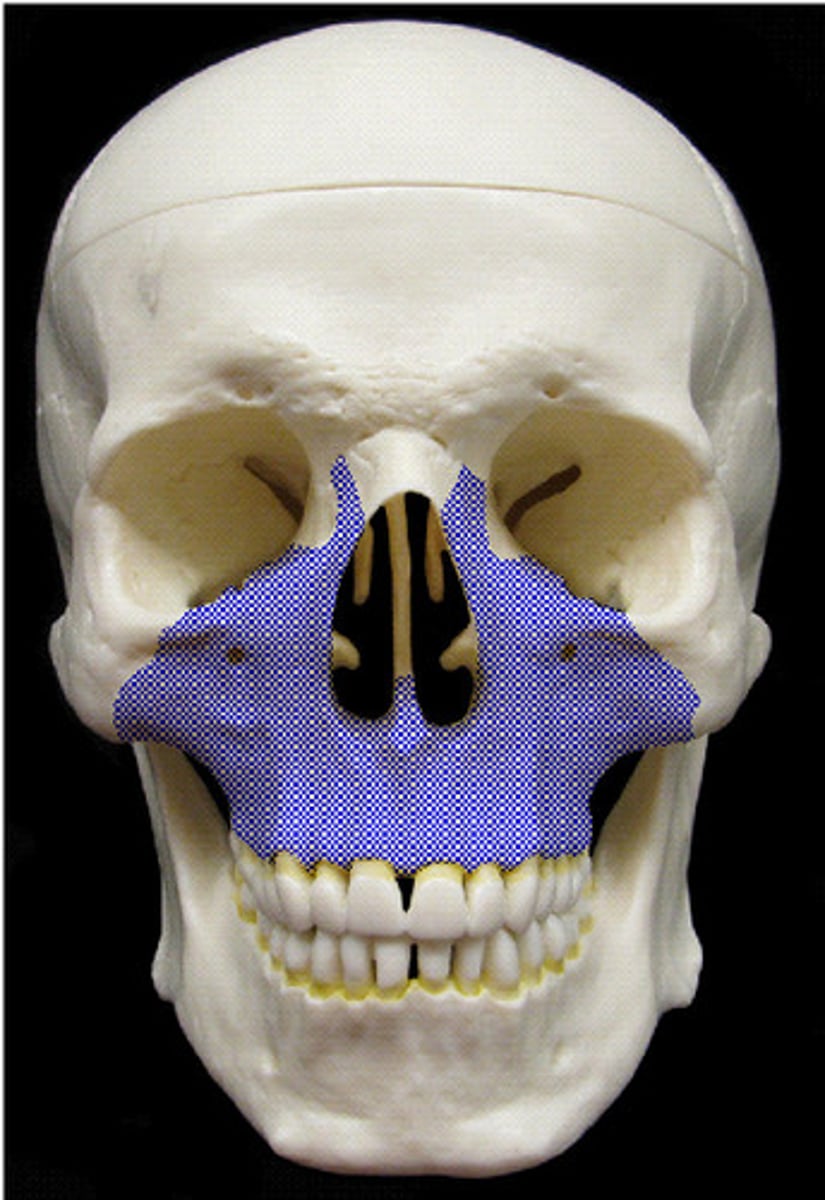
Mandible
lower jaw
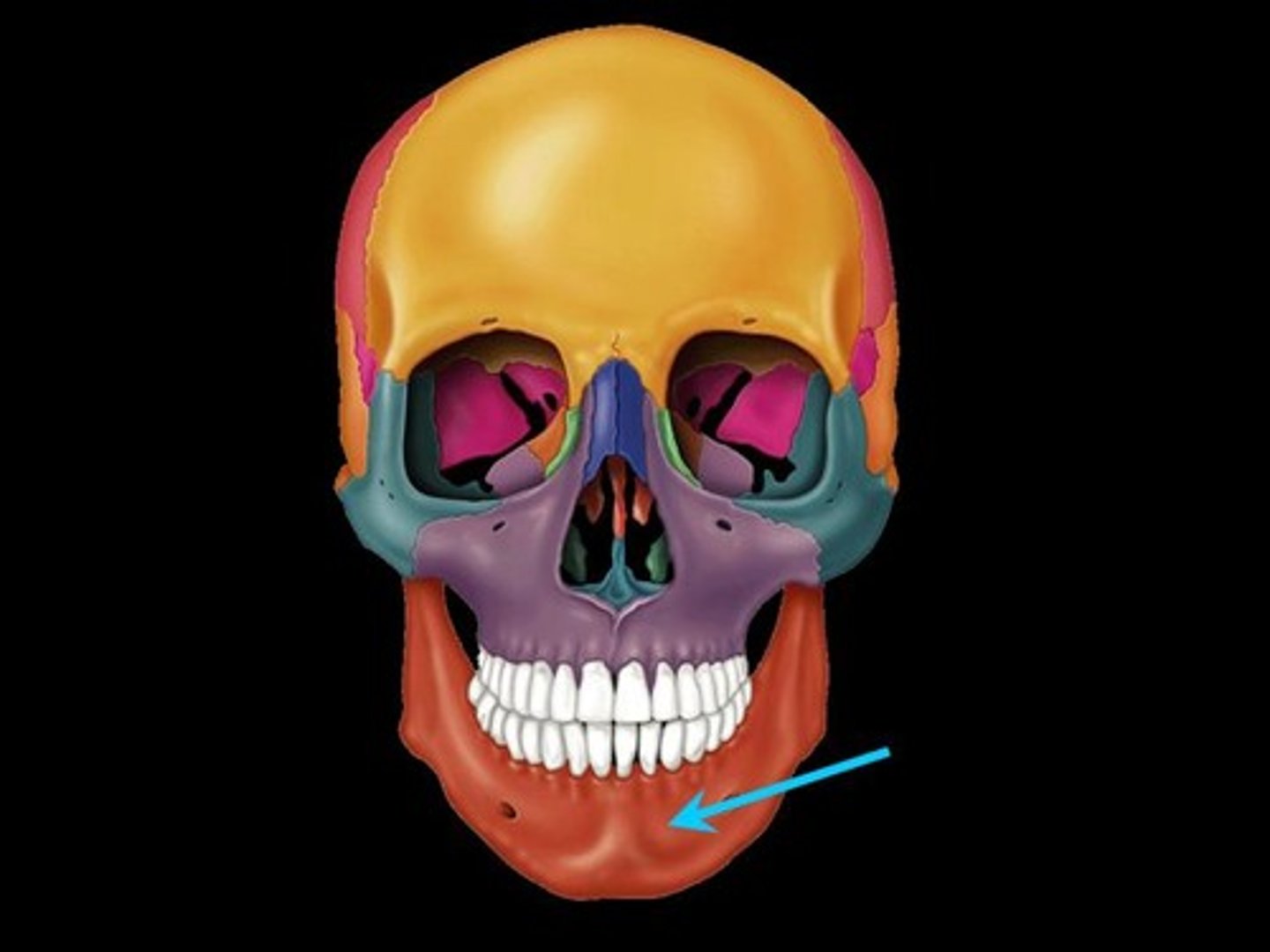
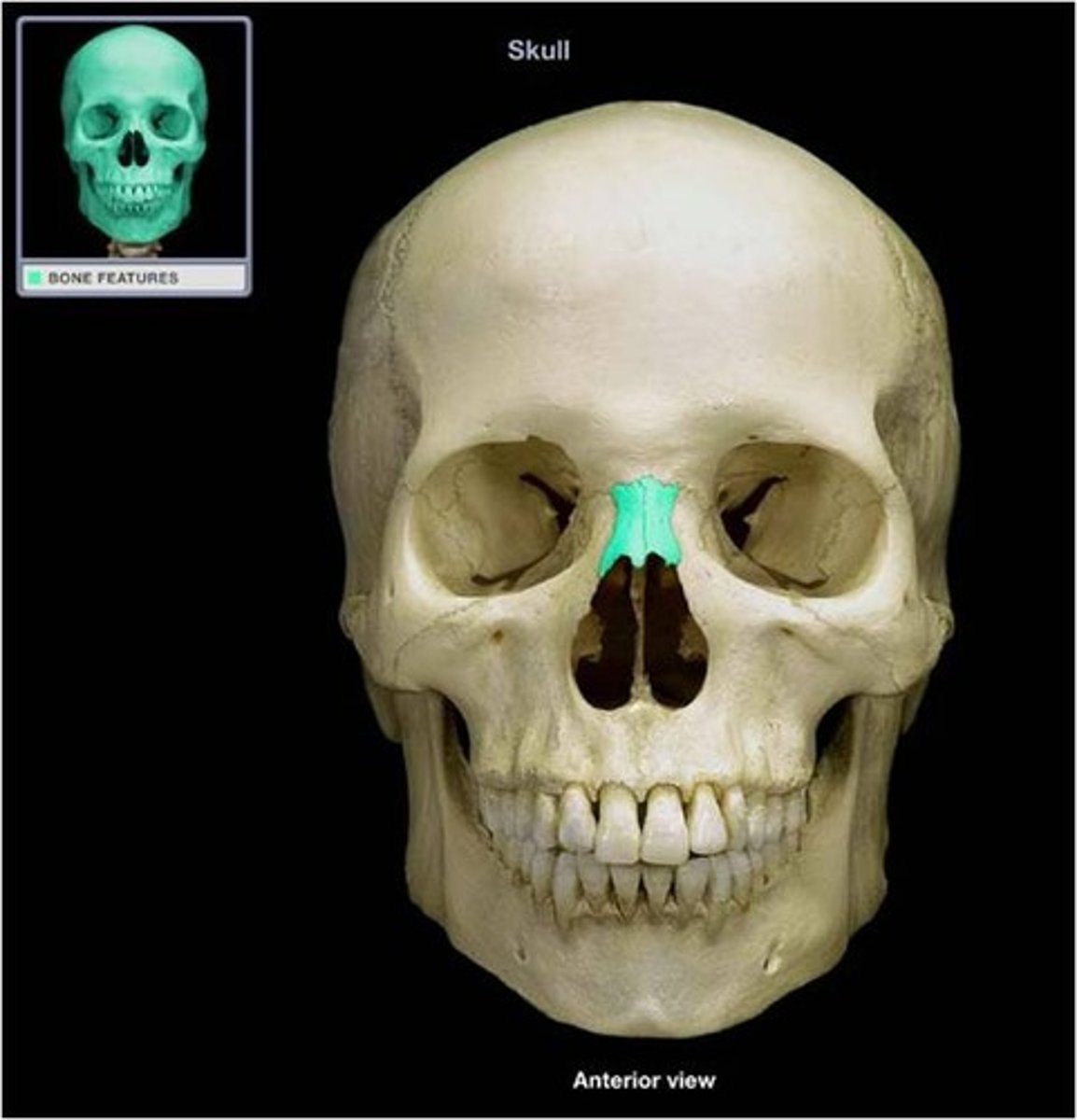
Nasal Bones
form the bridge of the nose
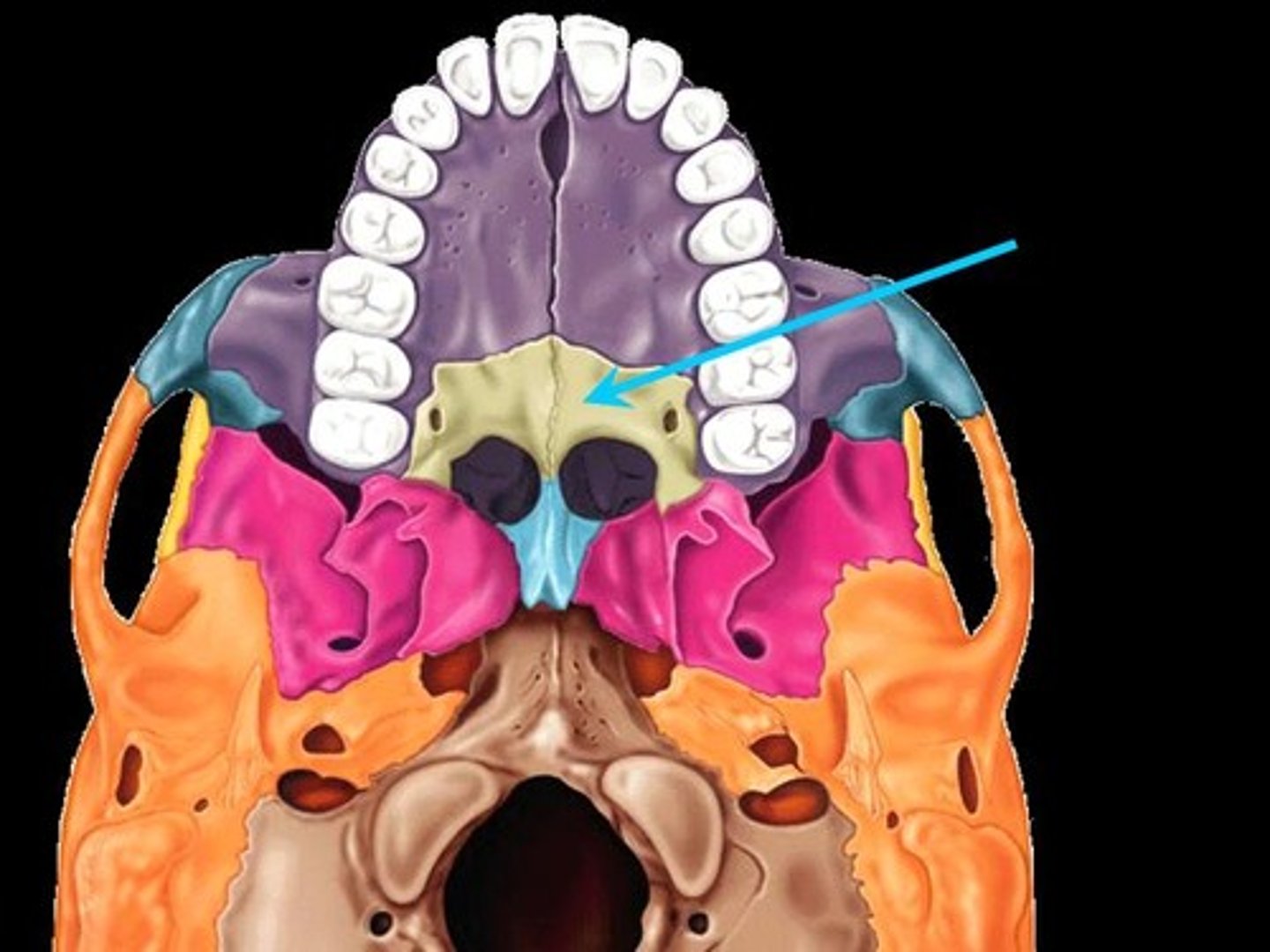
Palatines
posterior part of hard palate
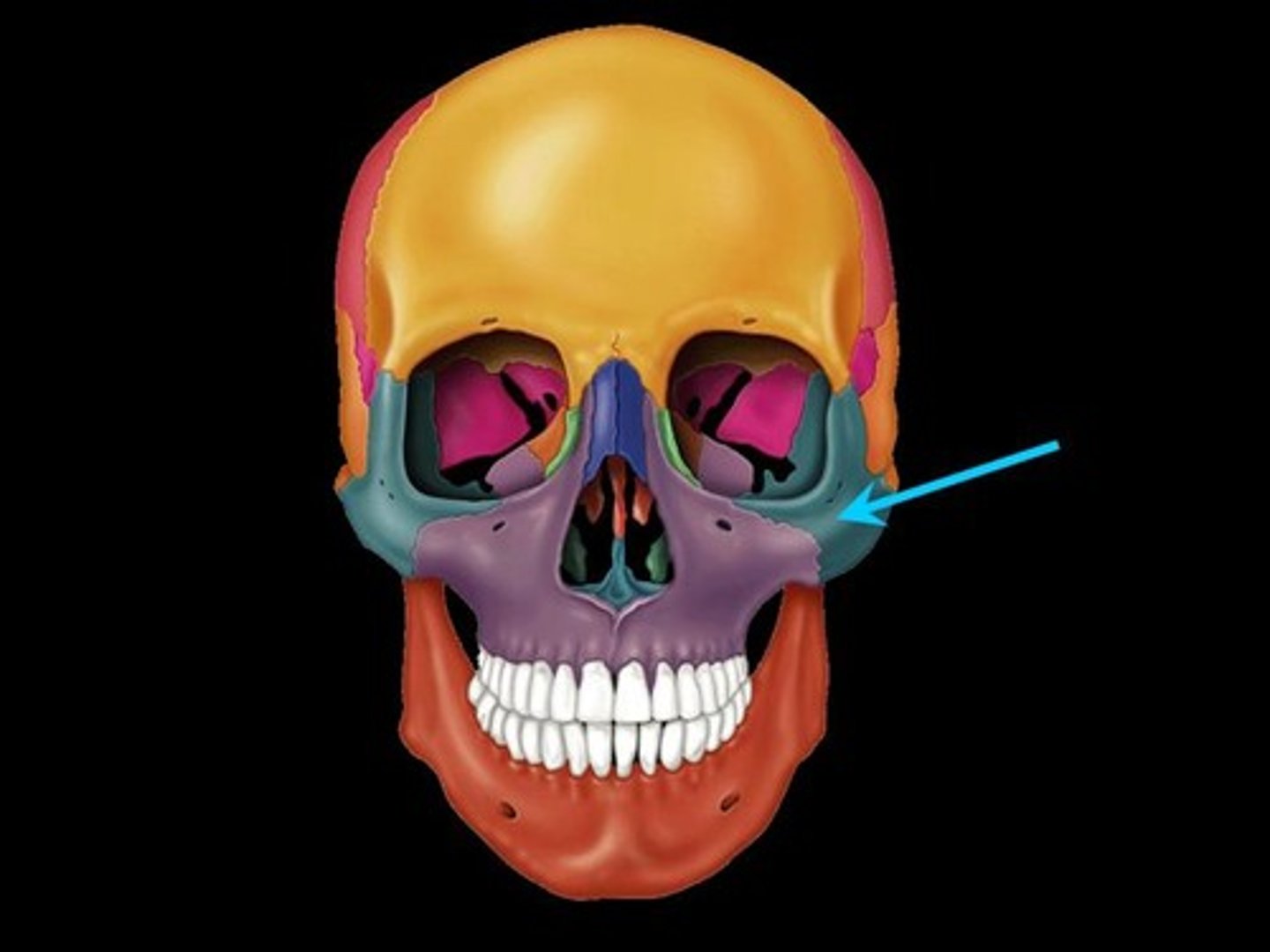
Zygomatic Bones
cheek bones
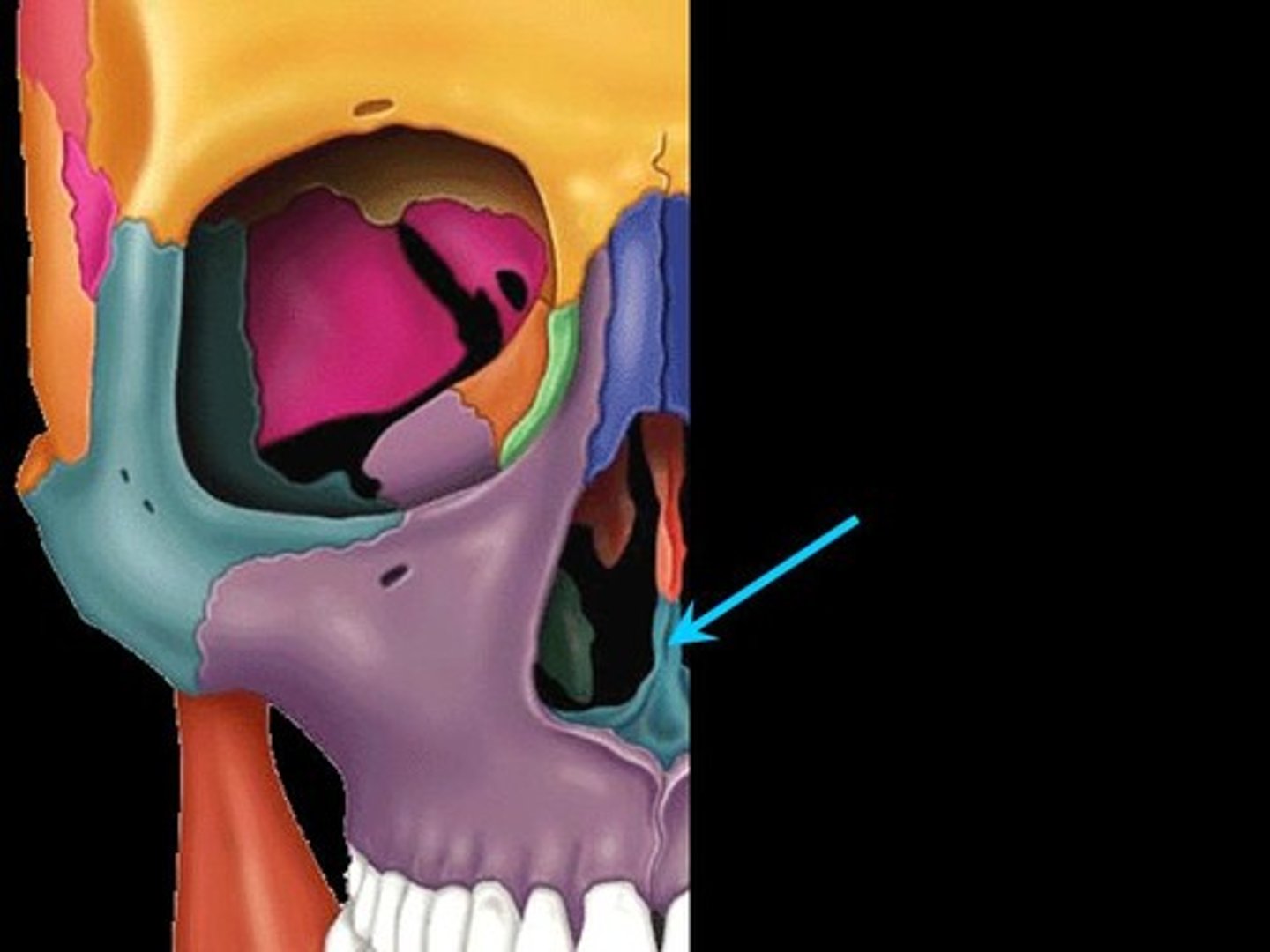
Vomer
forms the inferior portion of the nasal septum
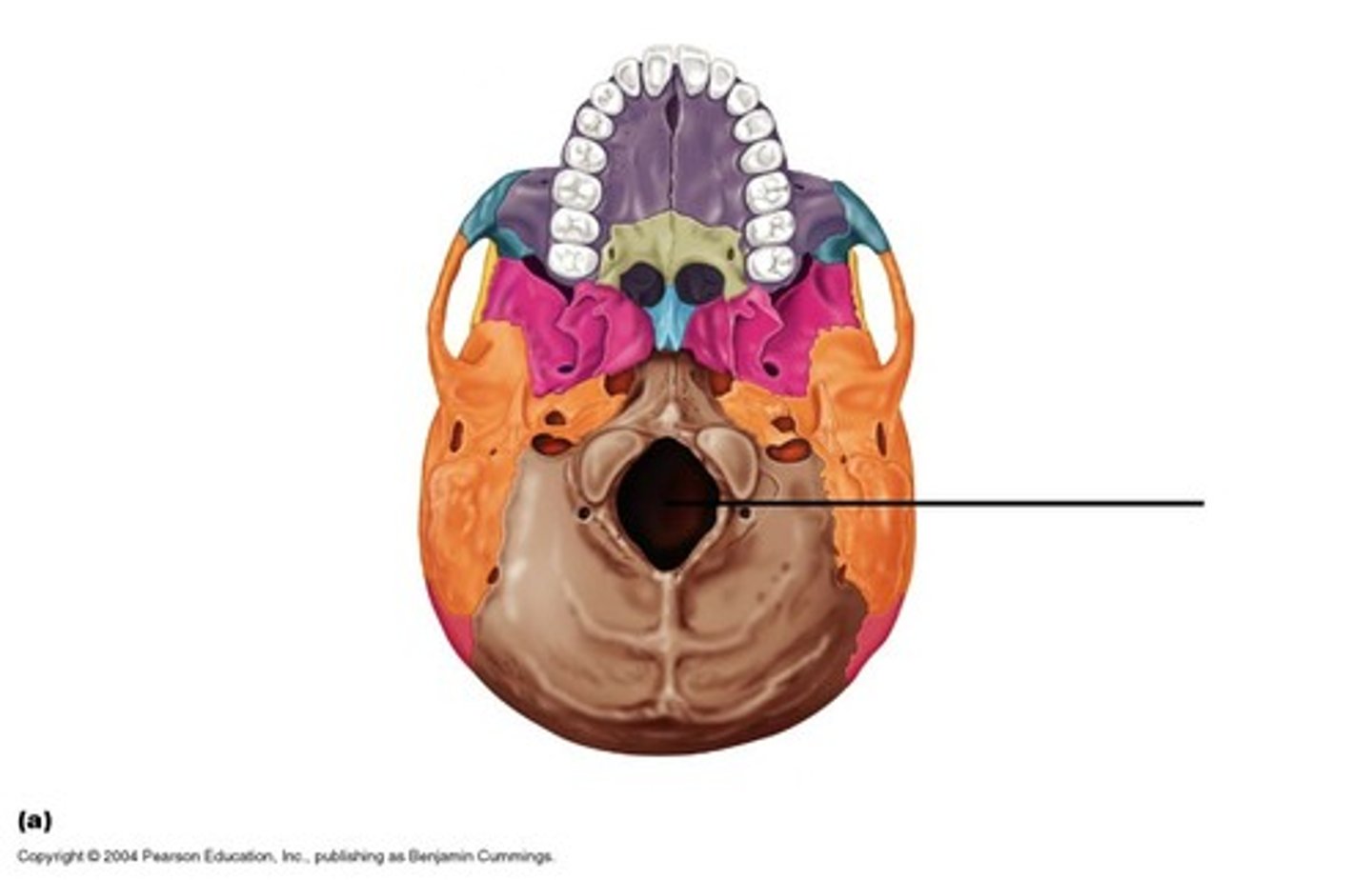
foramen magnum
A large opening at the base of the skull through which the brain connects to the spinal cord.
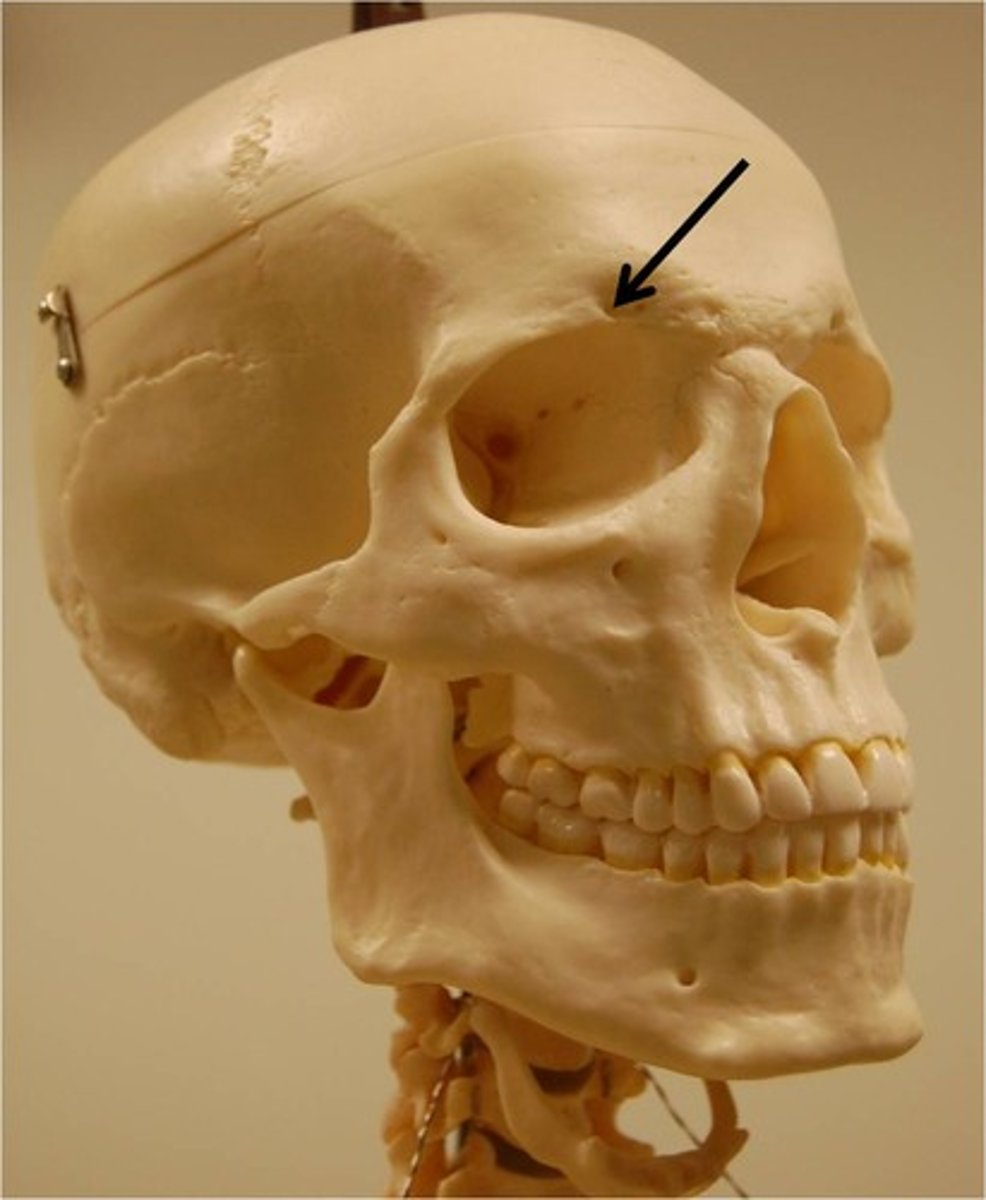
supraorbital foramen
opening above each orbit allowing blood vessels and nerves to pass
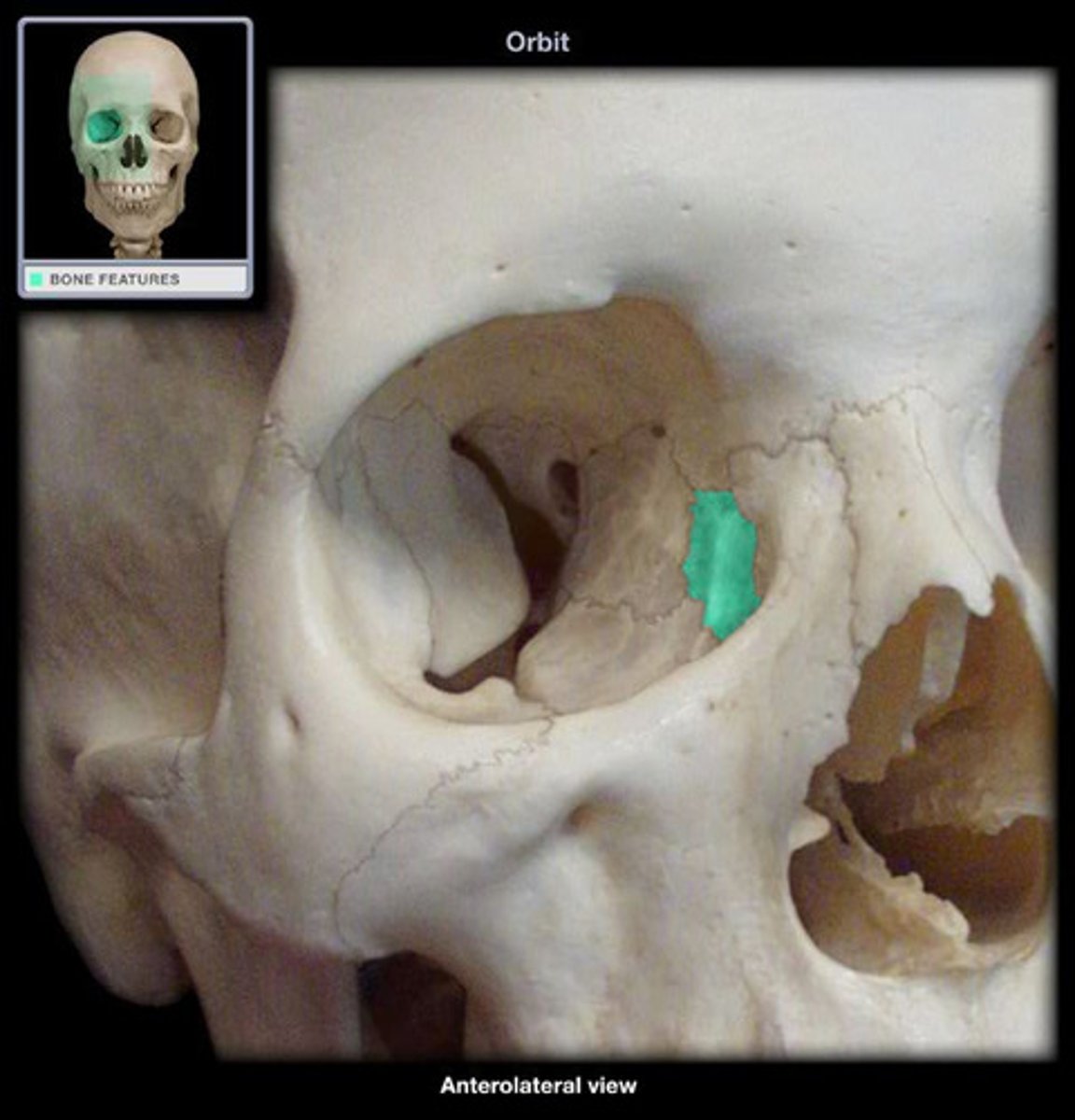
lacrimal bone
small fragile bone making up part of the front inner walls of each eye socket and providing room for the passage of the lacrimal ducts
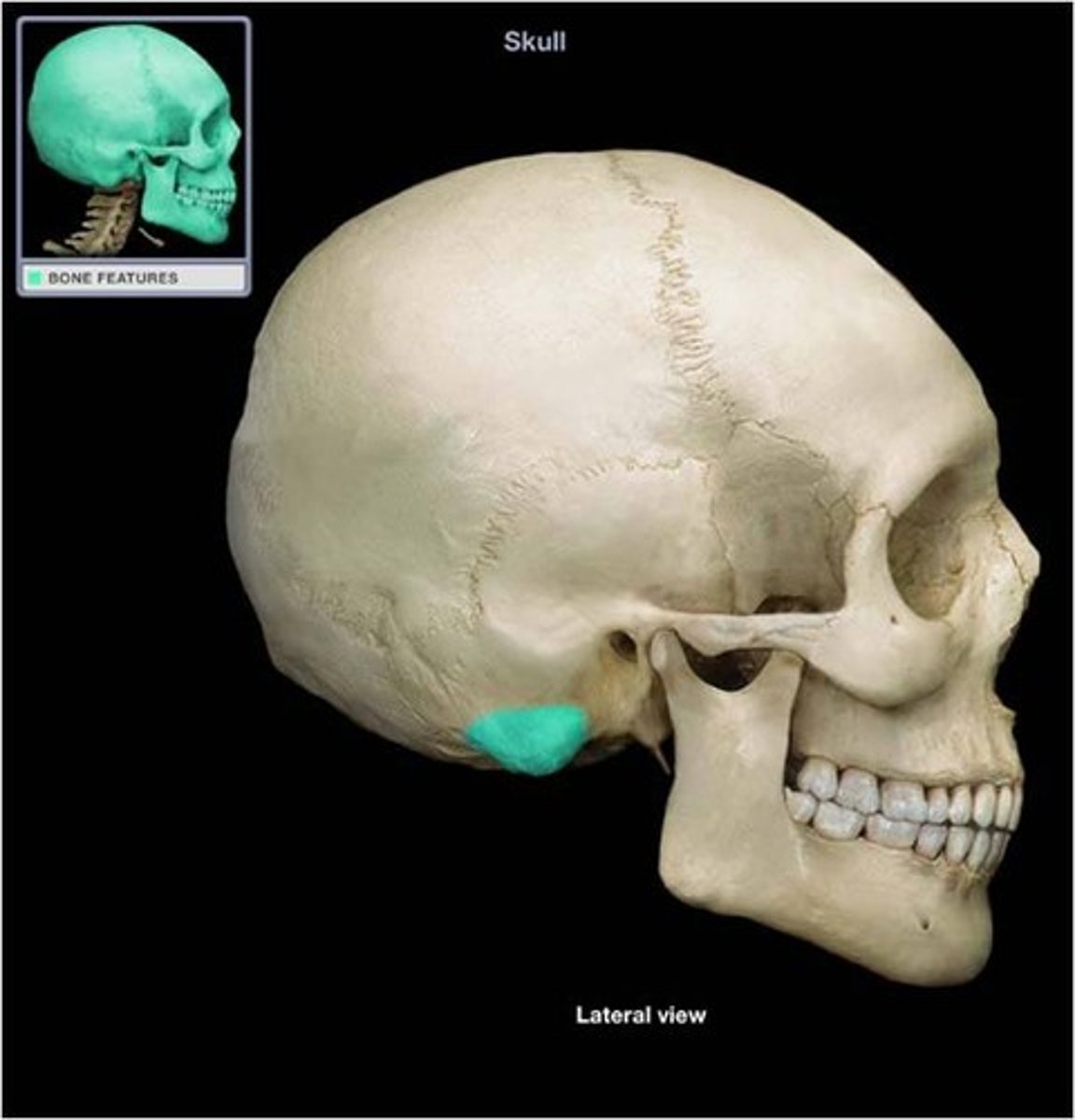
mastoid process
round projection on the temporal bone behind the ear
sphenoid bone
forms part of the base of the skull and parts of the floor and sides of the orbit
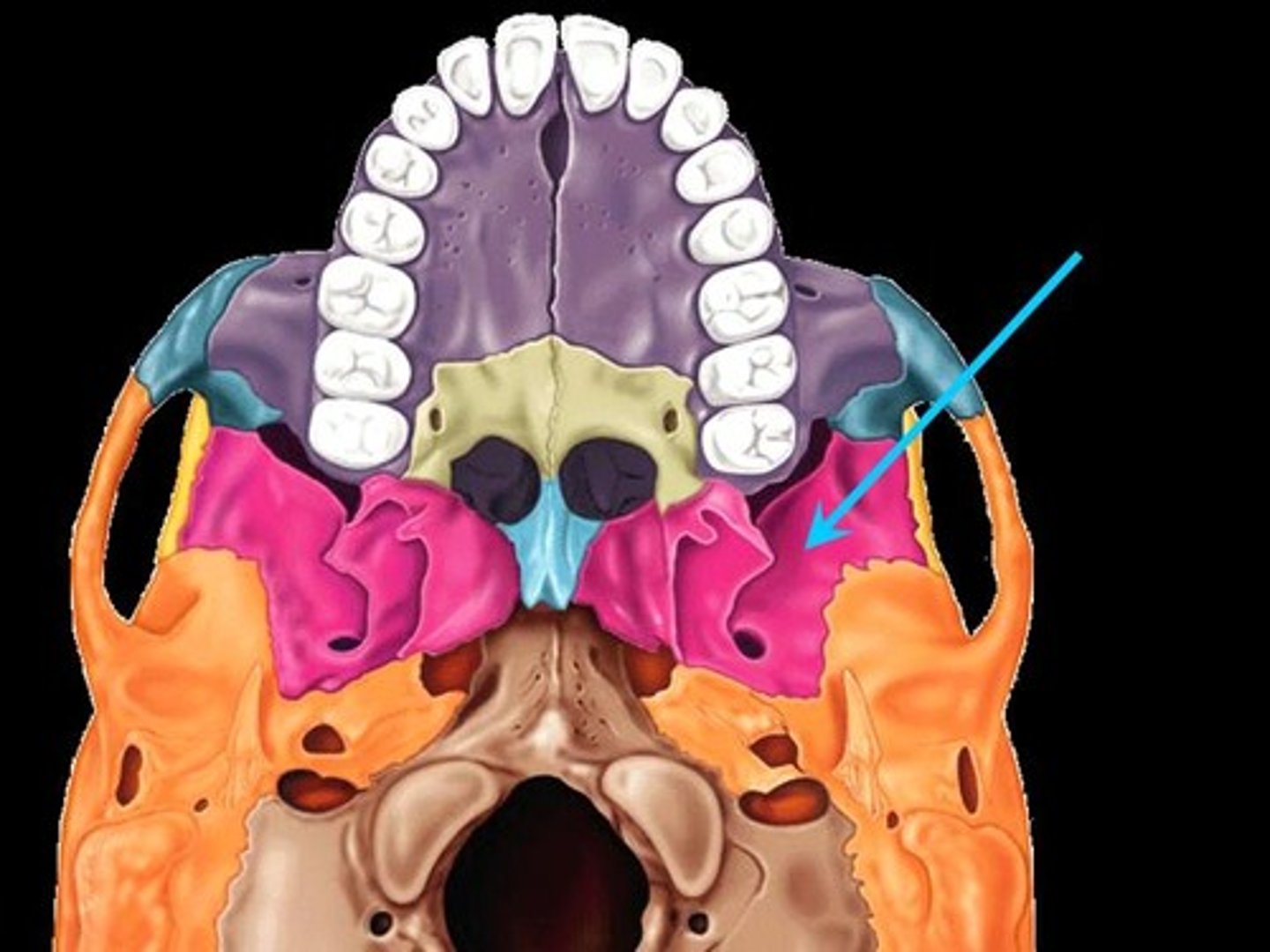
ethmoid bone
Light spongy bone between the eye sockets; forms part of the nasal cavities.
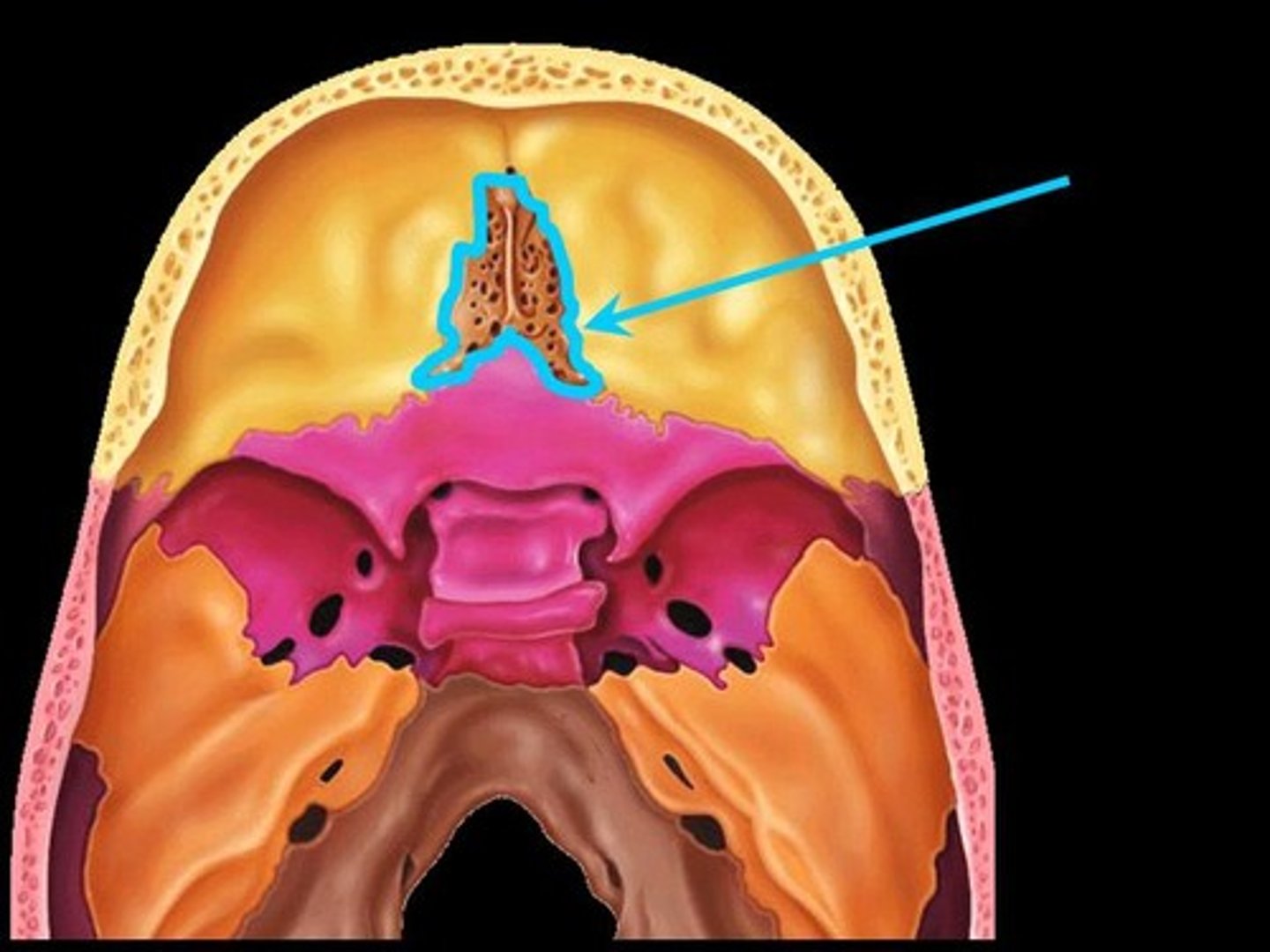
sella turcica
depression in the sphenoid bone where the pituitary gland is located
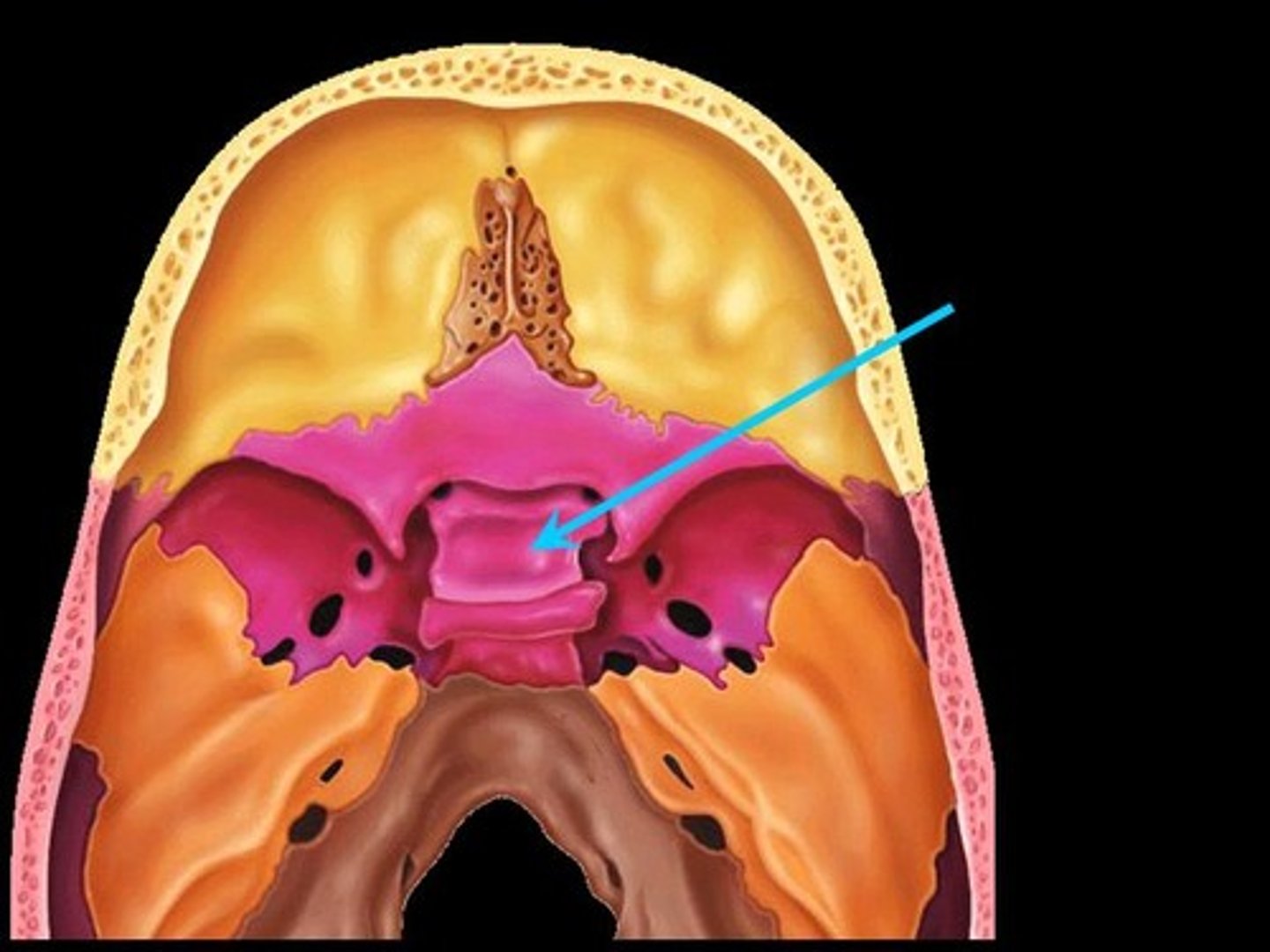
frontal sinus
SINUS LOCATED IN THE FOREHEAD OF THE SKULL
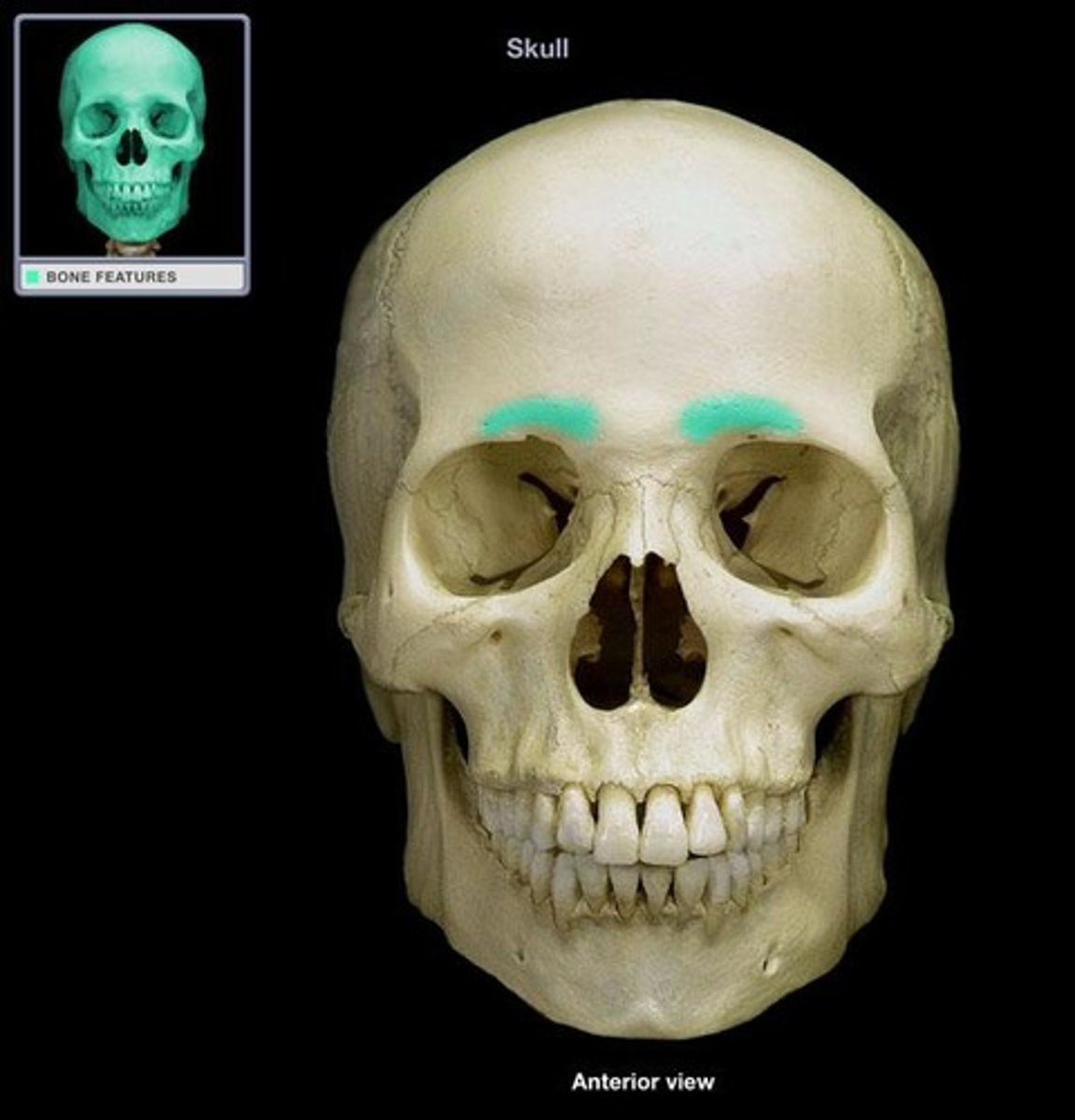
supraorbital ridge
bony projection in the eyebrow area of the frontal bone
inferior temporal line
There are two lines on the Temporal bone, this one is the one below