MSK LQ Unit 1 Special Tests
 Call Kai
 Learn
Learn Practice Test
 Spaced Repetition
 Match
Match Flashcards
 Knowt Play
1/19

There's no tags or description
Looks like no tags are added yet.
Name | Mastery | Learn | Test | Matching | Spaced | Call with Kai | Chat |
|---|
No analytics yet
Send a link to your students to track their progress
20 Terms
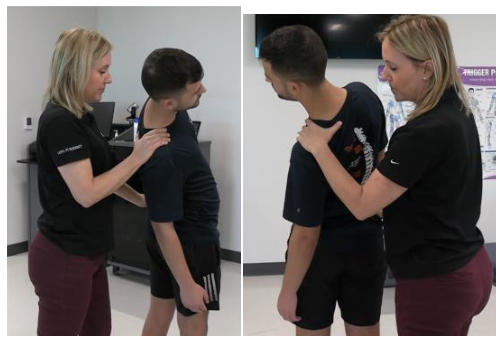
Lumbar Quadrant Test
Purpose: Facet joint involvement
How to Perform:
pt standing
Side bend → rotate toward the test side → extension
Apply OP only if pt has no pain
Positive Test: Reproduction of symptoms = facet joint involvement
Interpretation: Highly sensitive, so a negative test helps rule OUT facet joint involvement
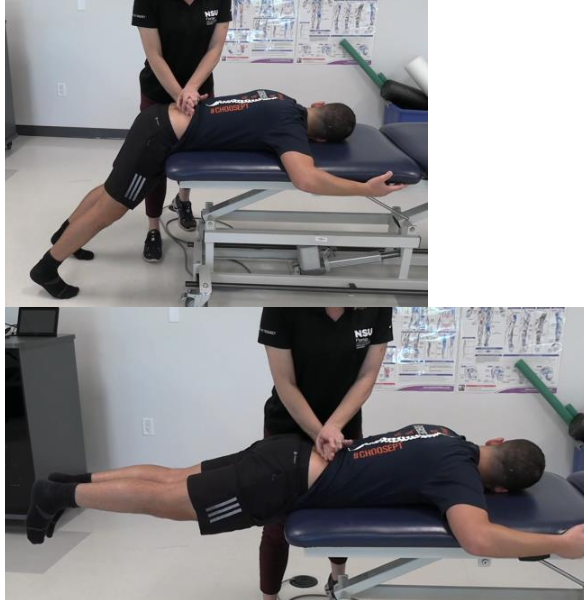
Prone Lumbar Instability Test
Purpose: Lumbar spine instability
How to Perform:
pt prone at edge of table with both feet on the floor
Perform PA glide over the painful/hypermobile lumbar segment
Reassess the same PA glide with the legs lifted off the floor
Positive Test: Pain decreases or symptoms change when the legs are lifted due to active muscle stabilization
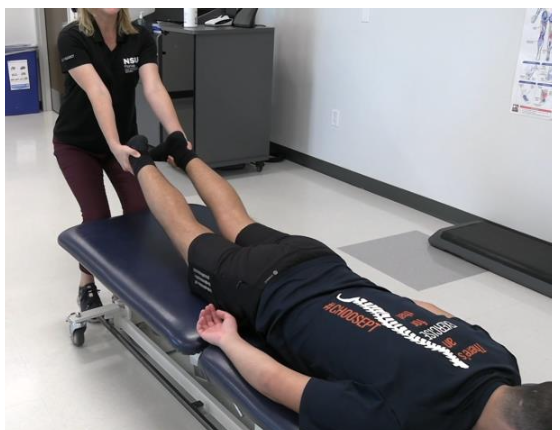
Passive Lumbar Extension Test
Purpose: Lumbar spine instability
How to Perform:
pt prone
Lift both legs about 30 cm
Add slight distraction
Positive Test: Reproduction of LBP and sense of heaviness = lumbar spine instability
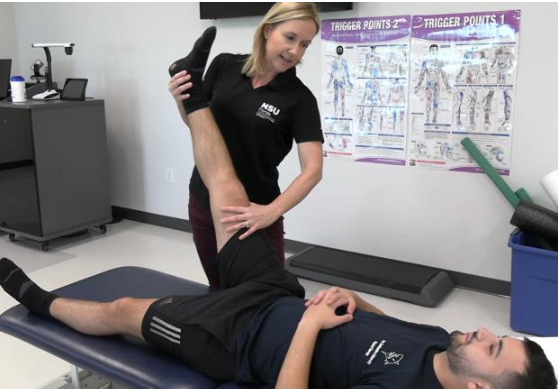
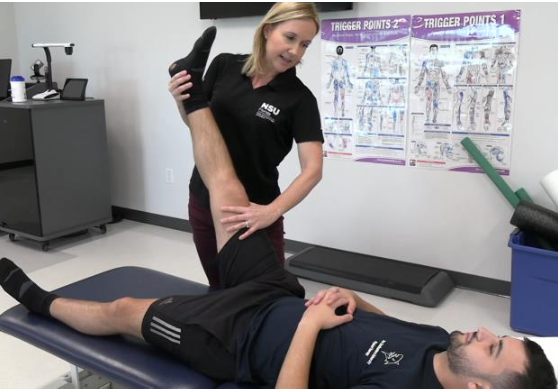
SLR Test
Purpose: Assess:
Hamstring flexibility
Neural tension of the sciatic nerve
How to Perform:
pt supine
Passively lift the tested leg with knee ext
Monitor for symptoms
Positive Test: Reproduction of symptoms (numbness & tingling) between 30°–70° = suggests neural tension/sciatic nerve involvement, may be associated with lumbar disc pathology
Crossed SLR Test
Purpose: Lumbar disc herniation / neural tension
How to Perform:
1. pt supine
2. Lift the nontest leg straight
3. Monitor for symptoms in the opposite leg
Positive Test: Symptoms are reproduced in the opposite leg between 30°–70°
Interpretation: Highly specific for ruling IN a herniated disc when positive
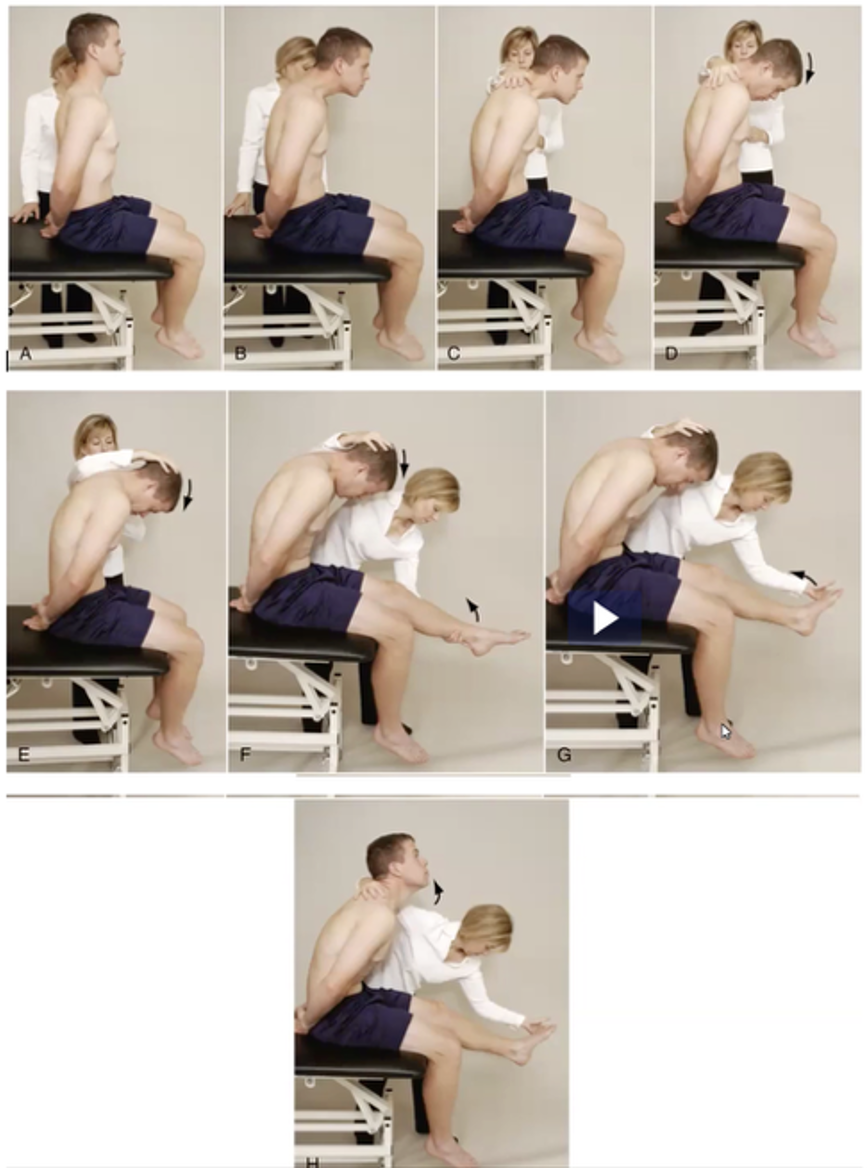
Slump Test
Purpose: Assess neurological pathology from the spinal cord, spinal nerve roots, or sciatic nerve
How to Perform: check symptoms at every step!
Patient seated EOB, hands behind back, neutral spine
Thoracolumbar flexion with neutral cervical spine
PT maintains pt’s thoracolumbar flexion
Cervical flexion
Knee extension (active or passive)
Ankle DF (active or passive)
Positive Test: Reproduction of neurological symptoms
Sensitizers: Cervical flexion and ankle DF
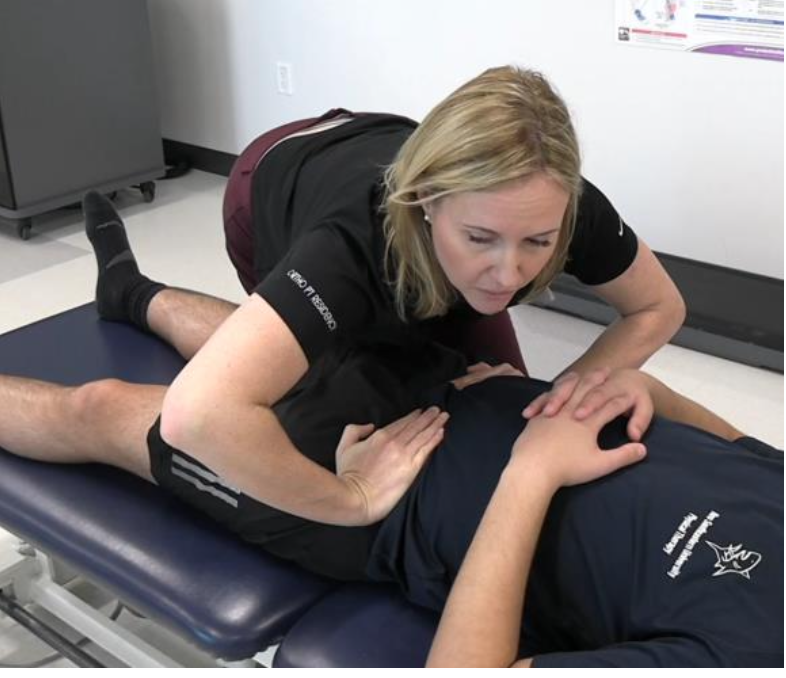
SIJ Compression Test
Purpose: Assess SIJ pain by compressing the innominates
How to Perform:
Patient supine
Place both hands on the ilium/innominates
Apply medial compression force for up to 30 seconds
Positive Test: Reproduction of unilateral or bilateral posterior SIJ pain
Interpretation: Suggests SIJ pain/involvement
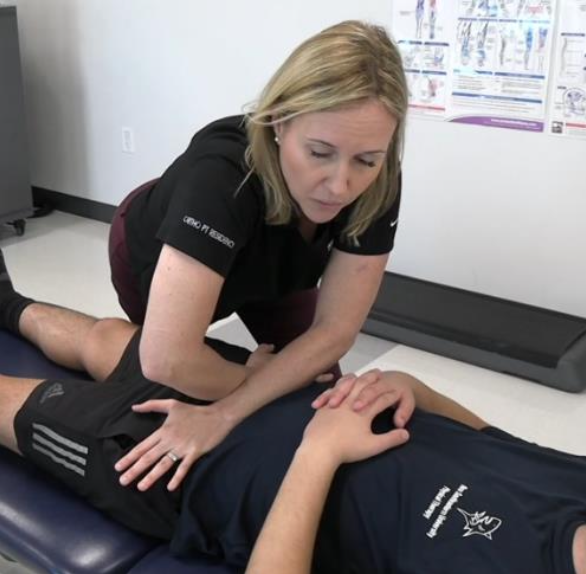
SIJ Distraction Test
Purpose: Assess SIJ pain by stressing the anterior SI ligament
How to Perform:
Patient supine
Cross arms and place palms on both ASISs
Push outward/laterally for 30 seconds
Positive Test: Reproduction of groin or SIJ pain anteriorly/posteriorly
Interpretation: Highest specificity, so a positive test helps rule IN SIJ pain
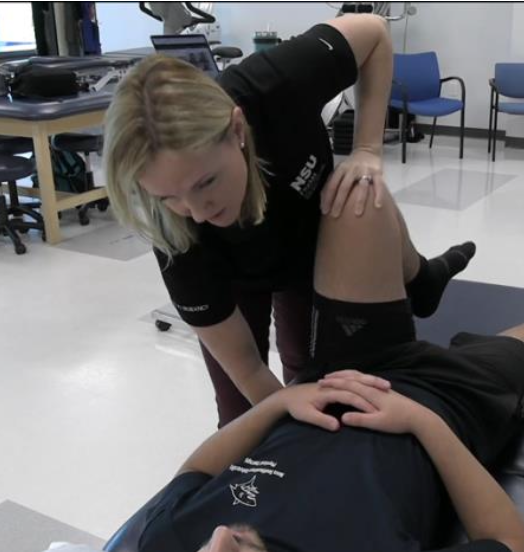
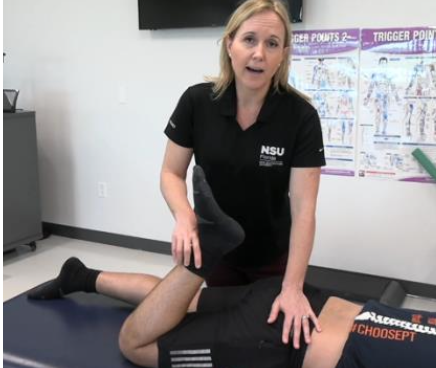
Thigh Thrust Test aka Sacrotuberous Stress Test
Purpose: Assess SIJ pain with posterior shear force
How to Perform:
Patient supine
Flex test-side hip to 90° with knee bent
Place one hand under sacrum for support
Apply downward axial force through the femur
Positive Test: Deep localized buttock pain on the tested side
Interpretation: Most sensitive, so a negative test helps rule OUT SIJ pain
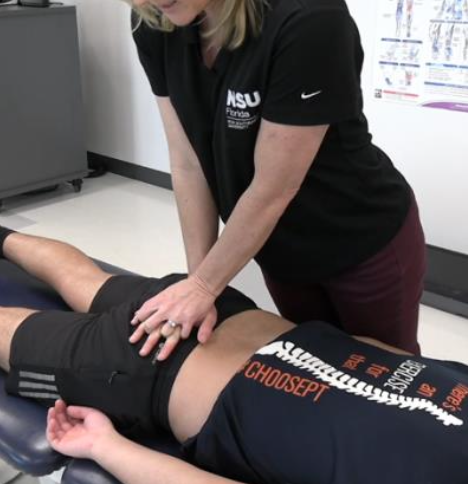
Sacral Thrust
Purpose: Assess SIJ pain with bilateral sacral shear
How to Perform:
Patient prone
Find S3 (PSIS → medial to S2 → inferior to S3)
Apply 3-5 quick PA thrusts over the sacrum using hand over hand technique
Positive Test: Pain reproduced over SIJs or posterior SI ligaments
Interpretation: Suggests SIJ pain/involvement
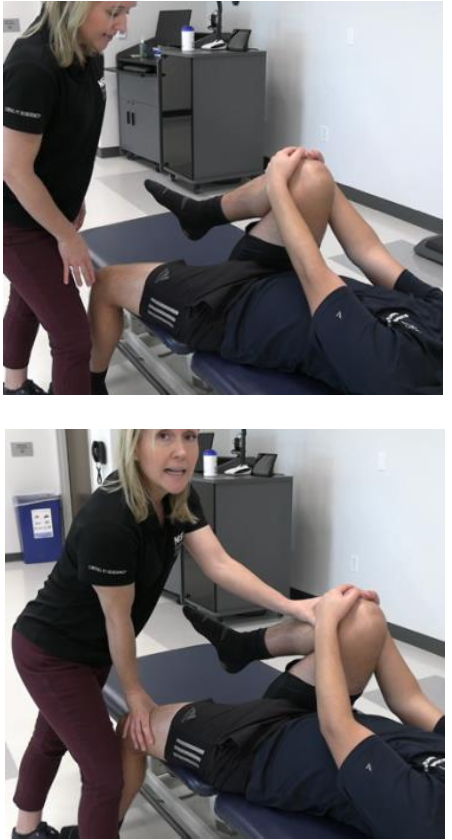
Gaenslen’s Test
Purpose: Assess SIJ pain using torsional SI stress
How to Perform:
Patient supine at edge of table
Non-tested leg flexed to chest
Tested leg hangs off table
Add OP into hip extension on tested leg and flexion on opposite leg
Positive Test: Reproduction of pain
Interpretation: May suggest SIJ lesion, hip pathology, or L4 nerve root involvement
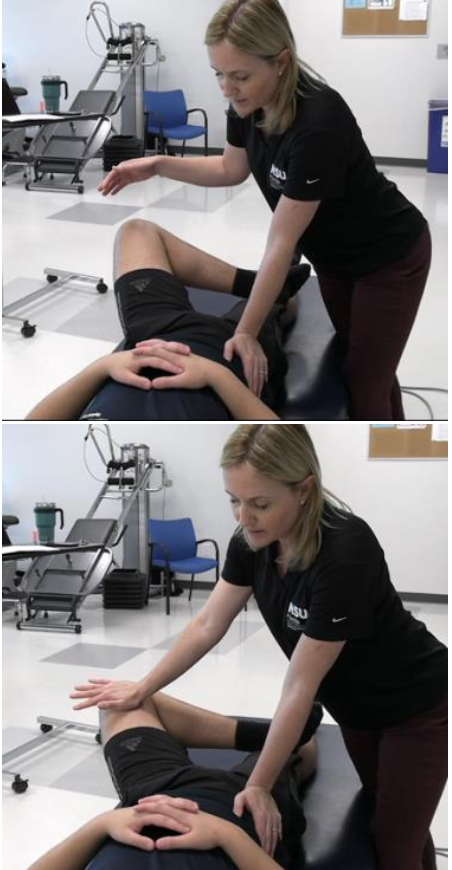
FABER / Patrick’s Test
Purpose: Differentiate lumbar spine, hip, SIJ, or iliopsoas involvement
How to Perform:
Patient supine
Place test leg in figure-4 position (knee over opposite patella)
Allow test leg to drop/relax to see how far knee can drop
Assess for pain. If no pain, apply OP
Stabilize opposite ASIS/ilium (PT on nontest side)
Apply OP on test knee
Repeat on other side
Positive Test: Reproduction of pain
Interpretation:
Groin pain = (anterior or lateral) joint or iliopsoas
PSIS or buttock pain = SIJ involvement
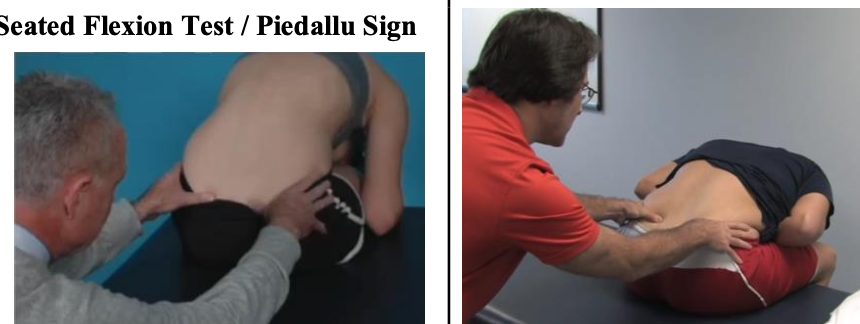
Seated Flexion Test
Purpose: Assess SIJ mobility/asymmetry
How to Perform:
Patient seated (w/ both legs supported)
Palpate under both PSISs
Patient bends forward
Compare PSIS movement
Positive Test: One PSIS moves more superiorly than the other
Normally, both PSIS should move superiorly
Interpretation:
The side moving more superiorly may indicate SIJ restriction
Poor reliability/validity
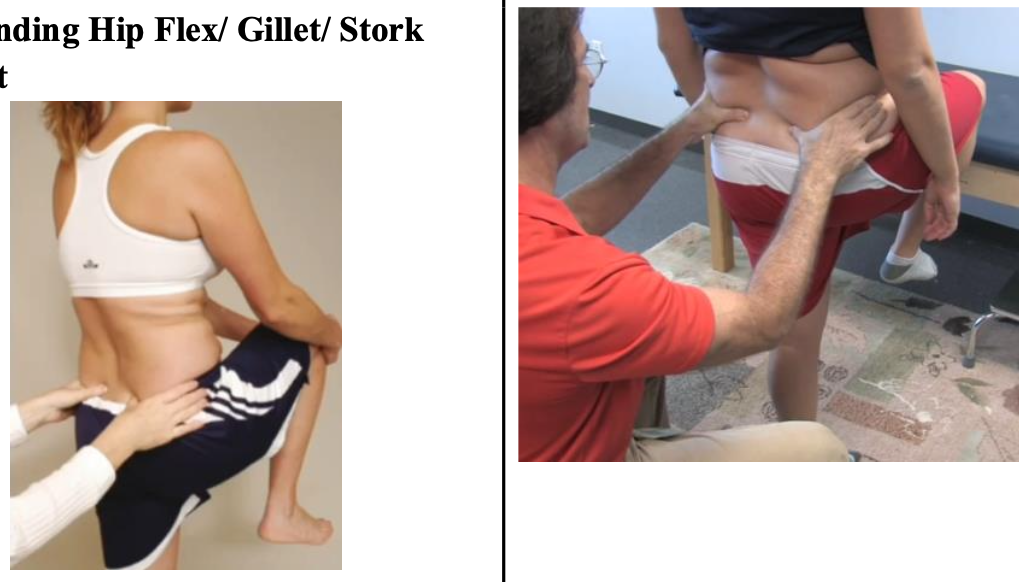
Standing Hip Flexion
aka Gillette / Stork / Marching Tests
MAYBE WRONG
Purpose: Assess SIJ mobility/asymmetry in standing
How to Perform:
Patient standing
Palpate under both PSISs
Patient raises one leg to flex one hip to 90 degrees
Positive Test: PSIS on raised leg remains where it is or moves superiorly
Normally, the PSIS on the raised leg should drop
Interpretation:
May suggest SIJ restriction
Poor reliability/validity
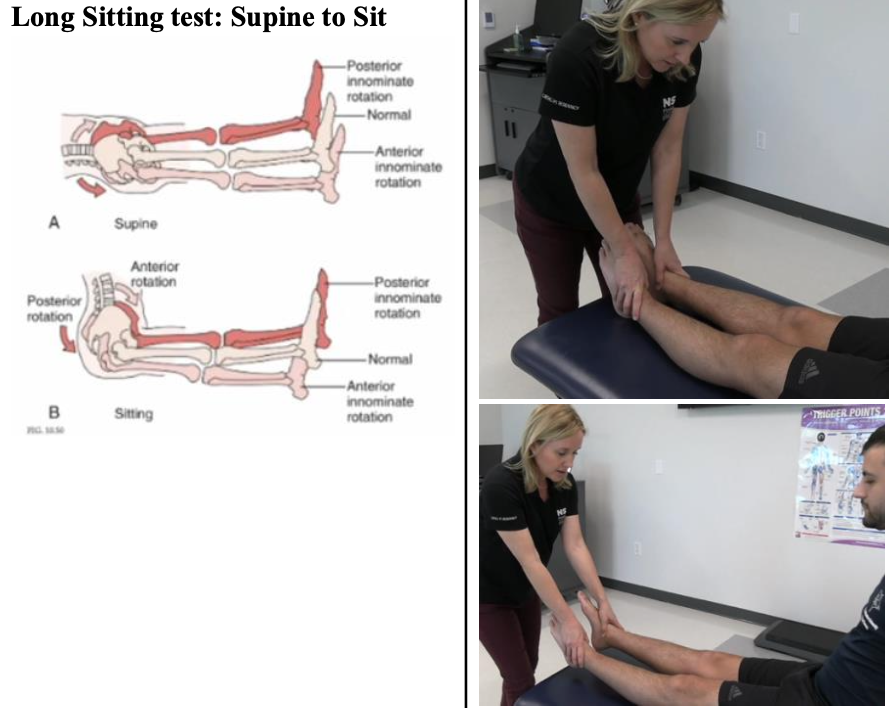
Long Sitting Test / Supine to Sit Test
Purpose: Assess functional leg length change/innominate rotation
How to Perform:
Patient supine
Patient bridges and lowers to reset pelvis
Passively extend the pt’s legs & give slight pull
Assess if one leg is significantly longer than the other (or higher/lower at hips)
Compare landmarks: medial malleoli, knees, hips (ASIS)
Assist patient into long sitting without moving legs
Give gentle pull on the legs & look for changes
Positive Test: Leg length changes from supine to sitting
Interpretation:
Long in supine → anterior innominate rotation
Short in supine that becomes long in sitting → posterior innominate rotation
Low reliability
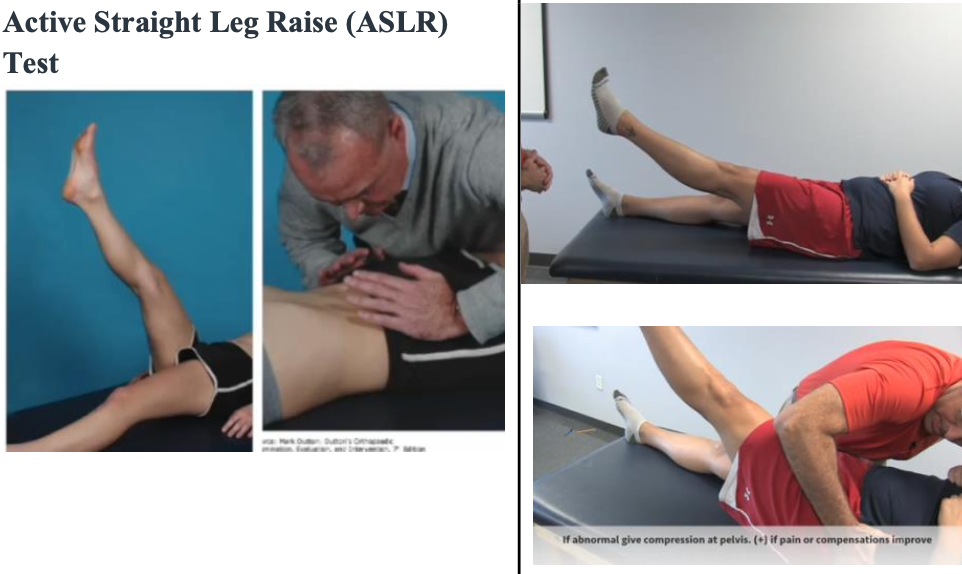
Active SLR Test
Purpose: Identify proper stabilization of the pelvic girdle
How to Perform:
Patient supine
Patient actively lifts one straight leg off table
Watch for pain, pelvic rotation/SB, rib flare, abdominal bulging, or Valsalva
If abnormal (pain or compensation), add manual pelvic compression medially
Positive Test: Pain/compensation improves with compression
Interpretation:
Suggests force closure deficit
Anterior compression helps = may need TrA stabilization
Posterior compression helps = may need multifidus stabilization
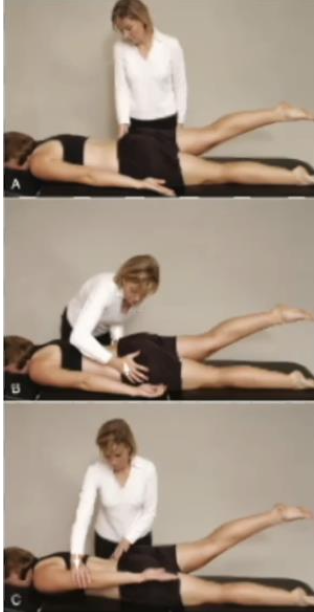
Reverse Active SLR Test (unedited)
Purpose: Assess posterior force closure/motor control during hip extension
How to Perform:
Patient prone
Patient lifts one straight leg into hip extension
Watch for abnormal lumbopelvic rotation
Repeat with manual innominate compression or resisted contralateral shoulder extension
Positive Test: Symptoms or abnormal motion improve with added closure
Interpretation:
Improves with force closure = dynamic stabilization exercises
Improves with form closure/manual compression = may benefit from SI belt
Sign of the Buttock Test (unedited)
Purpose: Testing for noncapsular issue - bursitis or tumor - under the glutes
How to Perform:
Patient supine
Perform passive SLR until pain/resistance
Flex knee
Attempt more hip flexion
Positive Test: Hip flexion stays equally painful/restricted even with knee bent
Interpretation: Red flag for serious pathology like tumor, abscess, fracture, or osteomyelitis; needs medical investigation
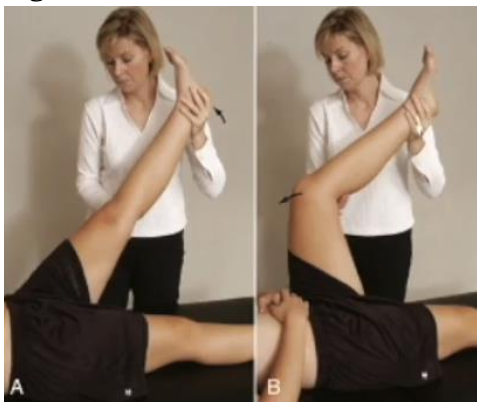
Nachlas / Prone Knee Flexion Test
Purpose: Assess hip/SIJ pain, femoral nerve mobility/involvement, or quad/rectus femoris tightness
Similiar to:
Ely’s Test = quads tightness
Femoral nerve test = paraesthesia down anterior thigh
How to Perform:
Patient prone
Stabilize pelvis (test side)
Passively flex knee and bring heel toward buttock
Positive Test: Reproduction of hip/SIJ pain or limited knee flexion
Interpretation: location of pain determines where the problem may be
Anterior thigh pain = rectus femoris tightness or femoral nerve involvement
Lumbar pain = possible L3 nerve root lesion
ASIS rotates forward early = hypomobile SIJ
Limited knee flexion = positive Ely test
Superoinferior Symphysis Pubis Stress Test (unedited)
Purpose: Assess pubic symphysis dysfunction
How to Perform:
Patient supine
Place one hand on superior aspect of one pubic ramus
Place other hand on inferior aspect of opposite pubic ramus
Apply slow shearing force
Reverse hand placement and repeat
Positive Test: Localized pubic pain reproduction
Interpretation:
High specificity, so a positive test helps rule IN pubic symphysis dysfunction
Sn: 81%, Sp: 99%