Metabolism Introduction
 Call Kai
 Learn
Learn Practice Test
 Spaced Repetition
 Match
Match Flashcards
 Knowt Play
1/56

There's no tags or description
Looks like no tags are added yet.
Name | Mastery | Learn | Test | Matching | Spaced | Call with Kai | Chat |
|---|
No analytics yet
Send a link to your students to track their progress
57 Terms
why is a well-regulated metabolism essential?
essential for health and for coping with disease
what happens if you have metabolic dysregulation?
can lead to diabetes, cancer, ageing, neurogeneration
involved with genetic diseases (understanding metabolism can help with diagnosis and treatment)
what is the definition of metabolism?
the sum of all the chemical processes necessary to make possible the characteristics of living cells/organisms
how does metabolism connect with characteristics of living organisms?
DNA codes for proteins
proteins control metabolism thorugh enzymes, transporters…
this determines our composition and characteristics
what are the three main things that organisms must do to survive?
maintain themselves, grow, reproduce
require chemical reactions to do this
what do chemical reactions require?
energy
carbon source
‘reducing power’
what are the four categories that describe where living organisms get their energy/carbon/reducing power from?
autotrophs
heterotrophs
phototrophs
chemotrophs
what do you call an organism that gets energy for a reaction from light (e.g. the sun)?
phototroph
what do you call an organism that gets their energy from chemical reactions?
chemotroph
what do you call an organism that uses inorganic carbon as their source of carbon?
autotroph
(reduces carbon itself)
what do you call an organism that uses organic carbon as their carbon source?
heterotroph
(ingesting reduced carbon)
what do you call an organism that uses inorganic sources of electrons?
autotroph
what do you call an organism that uses organic sources of electrons?
heterotroph
what are some examples of inorganic compounds for energy?
H2, FeCO3, NH3
what is an inorganic source of carbon?
CO2
what are inorganic sources of electrons?
H2O, H2S, H2, FeCO3, NH3
what are organic compounds for energy?
glucose, fats
what are organic sources of carbon/organic sources of electrons?
isopropanol, lactate, glucose, fats
summary grid of autotrophs, heterotrophs, phototrophs and chemotrophs
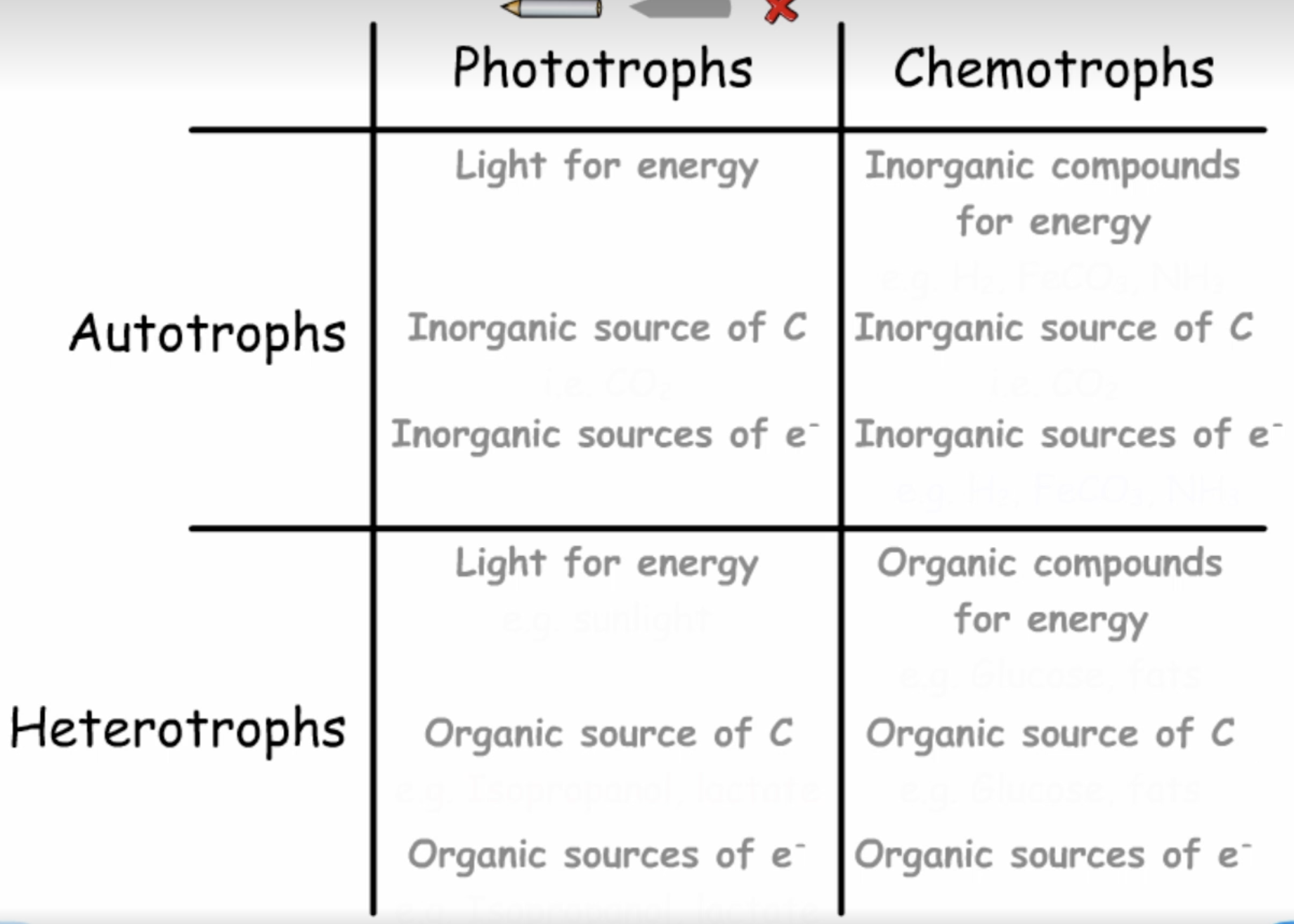
what are higher plants?
photoautotrophs
use light as their source of energy
convert inorganic CO2 into organic carbon
use inorganic sources of electrons
what are sulfur/iron/hydrogen bacteria?
chemoautotrophs/chemolithotrophs
bacteria with a compound attached to name are usually chemoautotrophs
use chemical reactions as source of energy
reduce inorganic carbon
higher animals
chemoheterotrophs
use chemical reactions as source of energy
obtain organic carbon from other organisms
what are the three major energy sources in human diets (chemoheterotrophs)?
carbohydrates
fats
proteins
what are the options when metabolising these energy sources?
break them down completely into CO2, energy, electrons (+ urea for proteins)
break them down partially into useful compounds and use those to make something else (require energy and reducing power)
what are the two main types of metabolic pathways?
catabolism
fuel oxidation (breaking down)
complex molecules —> simple molecules
anabolism
biosynthesis
simple molecules —> complex molecules
what is an example of a catabolic process?
respiration of glucose (breaking glucose down)
what is an example of an anabolic process?
DNA synthesis
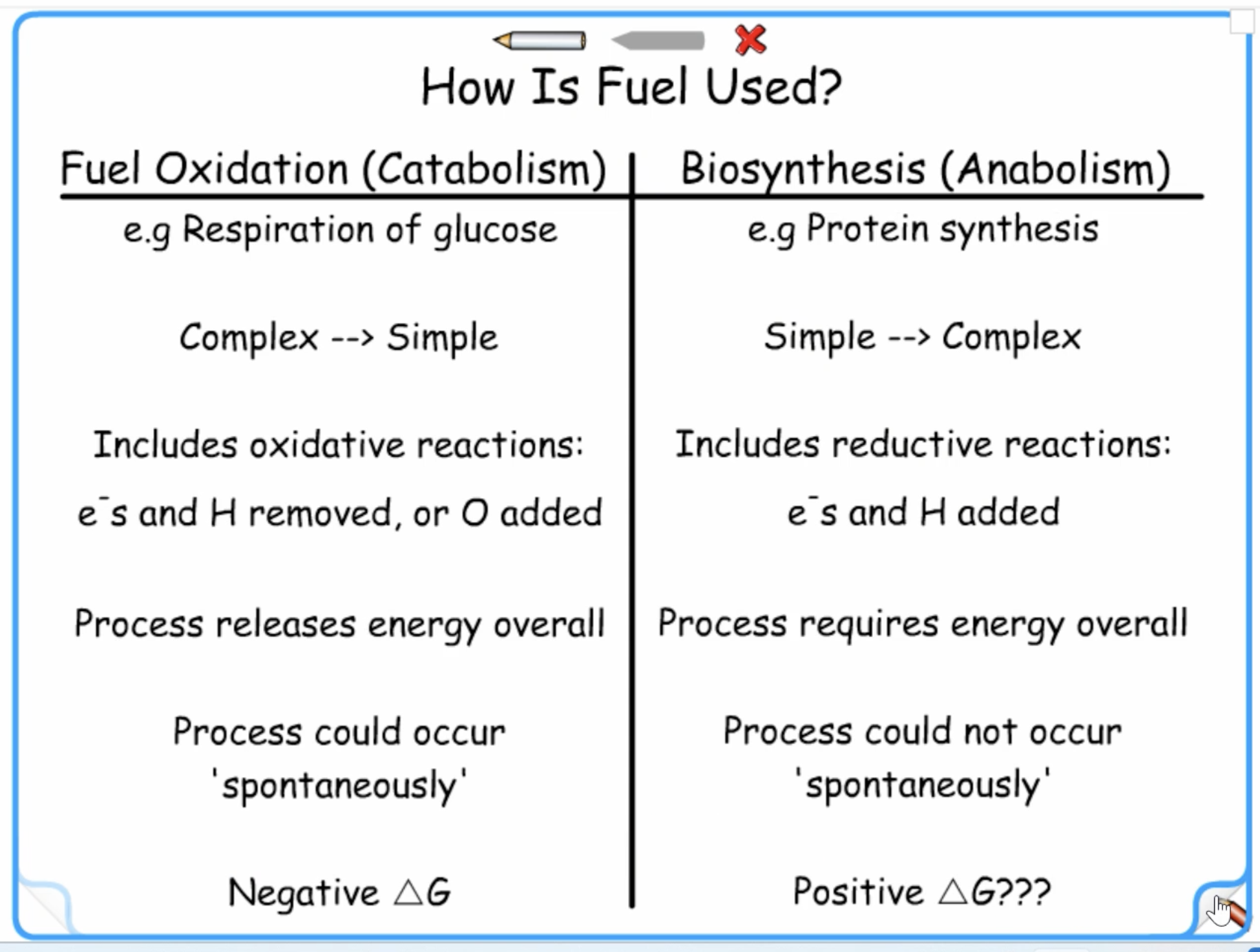
what kinds of reactions does catabolism include?
oxidative reactions (electrons/hydrogens removed, oxygen added)
process releases energy (can occur spontaneously)
what kind of reactions does anabolism include?
reductive reactions (electrons and hydrogens added)
process requires energy (cannot occur spontaneously)
catabolism vs anabolism
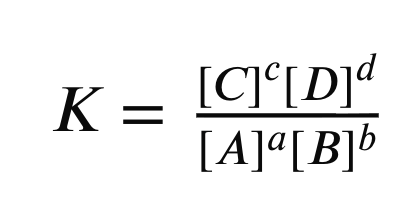
what is the equilibrium constant, Keq?
equilibrium constant quantifies the balance between reactants and products in a reversible chemical reaction at a specific temperature
what is the equation for Keq?
if products are favoured, Keq is larger
if reactants are favoured, Keq is smaller
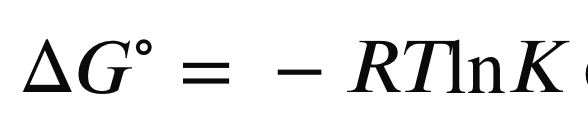
what is the equation for standard Gibbs free energy change of a reversible reaction?
if products are favoured, ΔG is negative
if reactants are favoured, ΔG is positive
what is standard gibbs free energy?
energy change associated with a reaction proceeding forwards (into products) if starting with equal concentrations of everything
what is the equation for gibbs free energy?
Q = reaction quotient (ratio of product concentrations to reactant concentrations)

what happens when you couple reactions?
if you couple a reaction that provides a lot of energy (exothermic, negative ΔG) to a reaction that requires some energy (endothermic, positive ΔG), the endothermic reaction can use energy from exothermic reaction to occur
overall ΔG is negative
process of catabolism —> anabolism
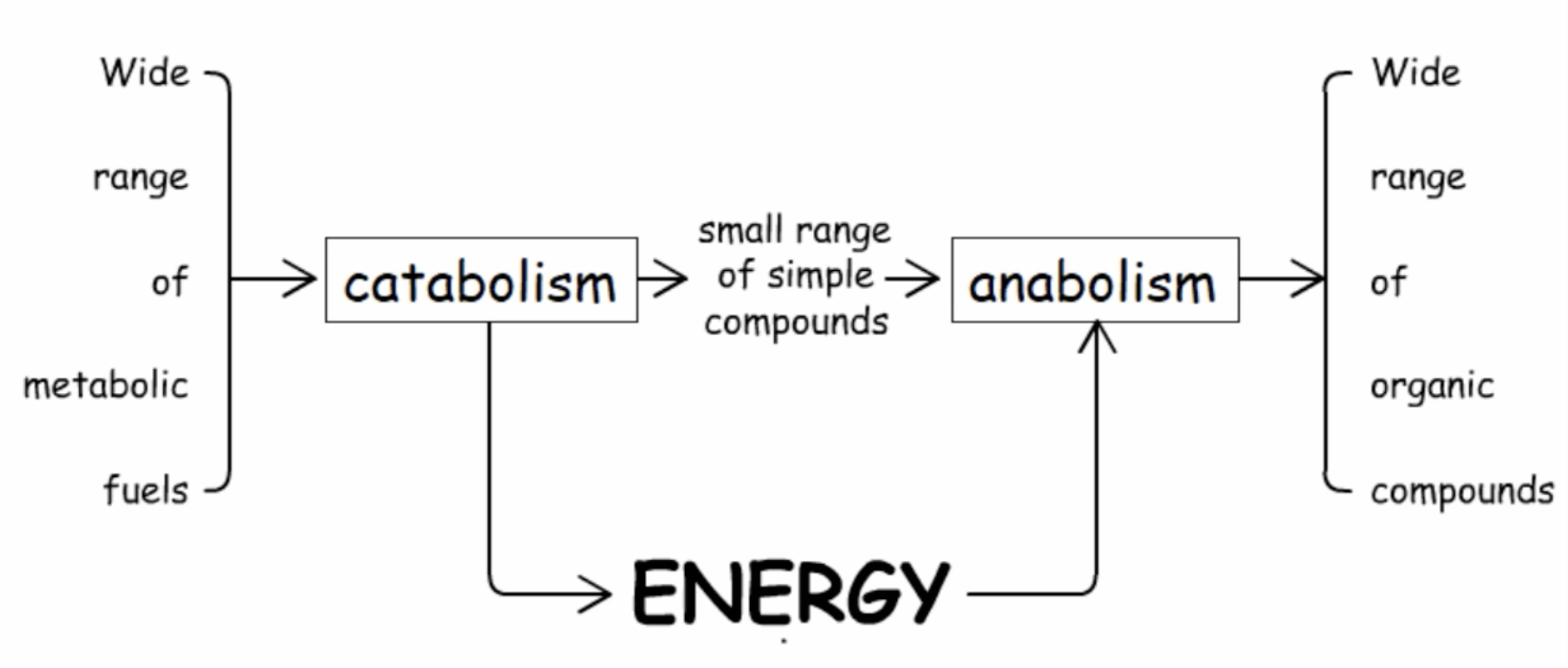
what form is the energy from catabolism in?
high energy bonds e.g. ATP (coenzyme)
reduced coenzymes e.g. NADH
concentration gradients e.g. H+ gradient
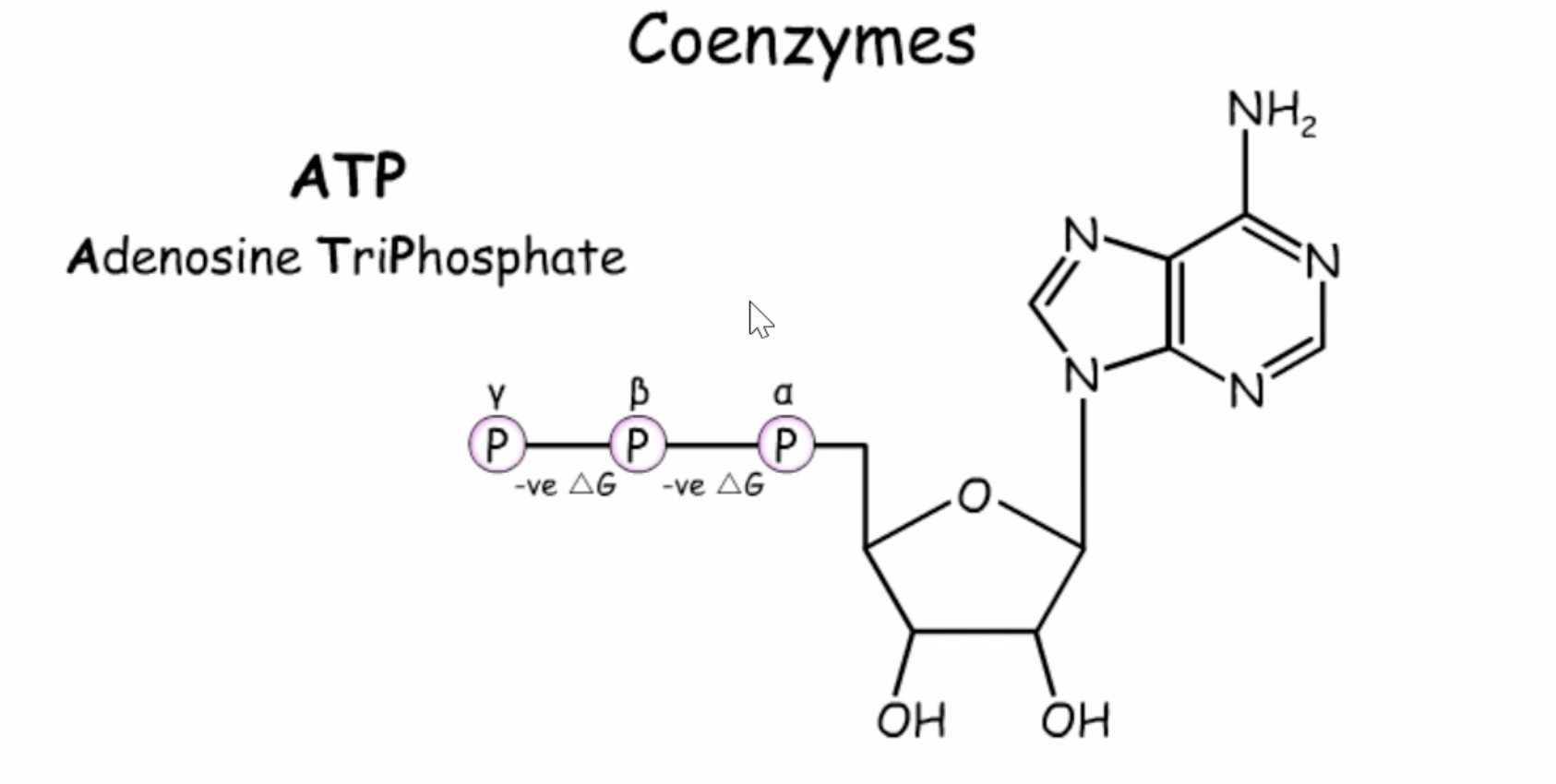
how does ATP (adenosine triphosphate) release energy
releases energy when β-ɣ bond is broken
-ΔG
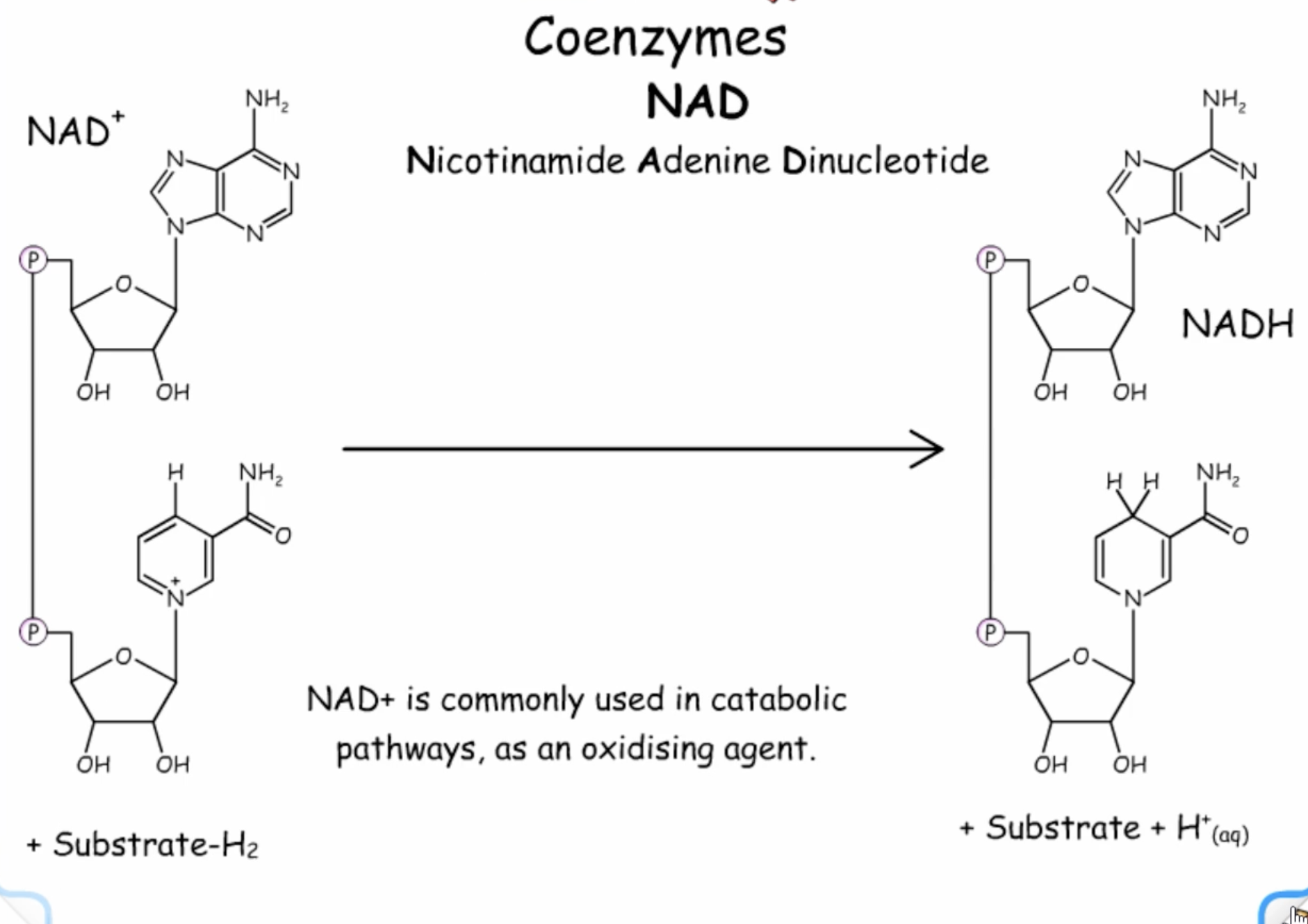
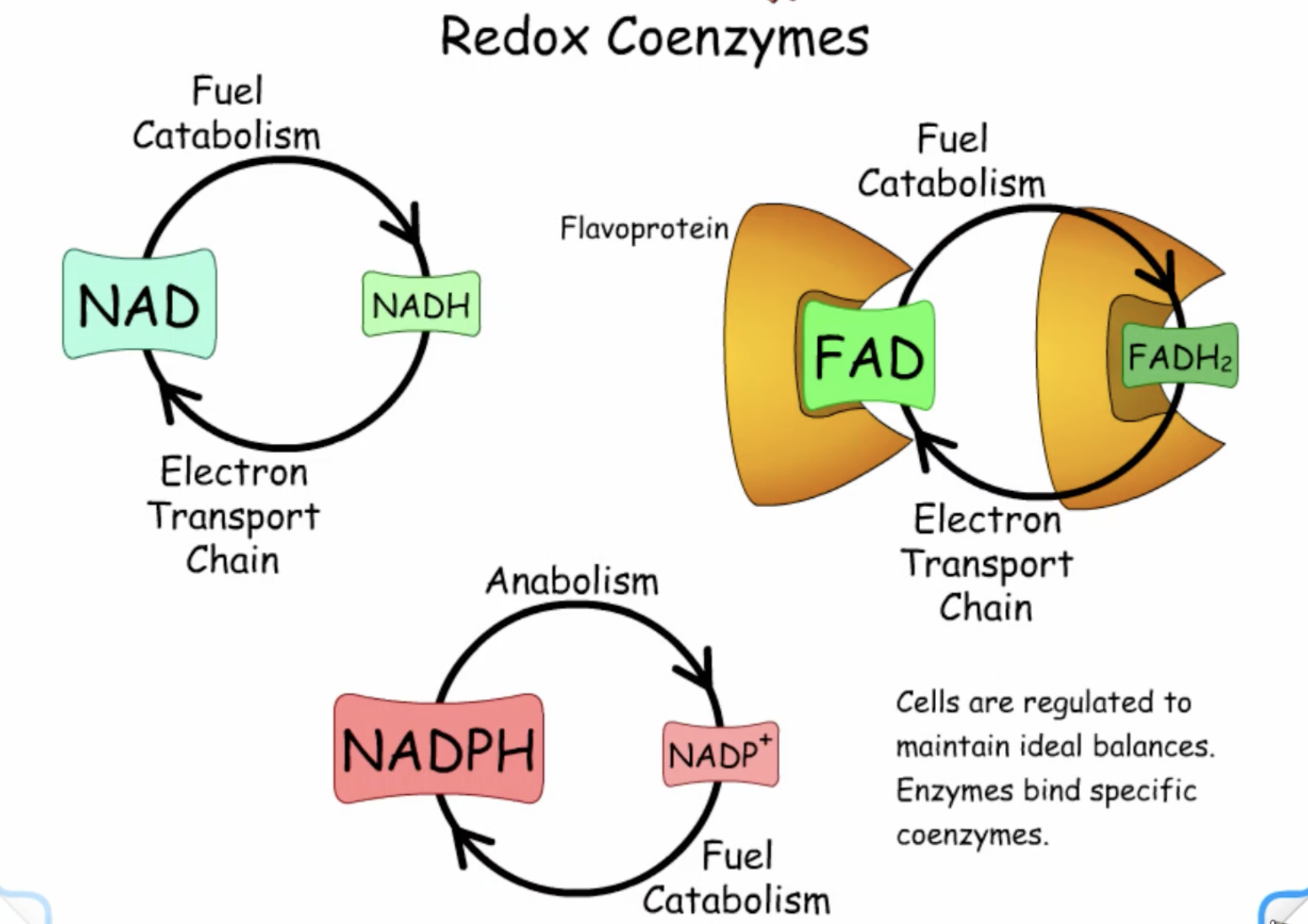
what type of coenzyme is NAD (nicotinamide adenine dinucleotide)?
redox coenzyme
how is NAD used?
used to react with reduced substrates
NAD gets reduced and the substrate gets oxidised
involved in catabolism, as an oxidising agent
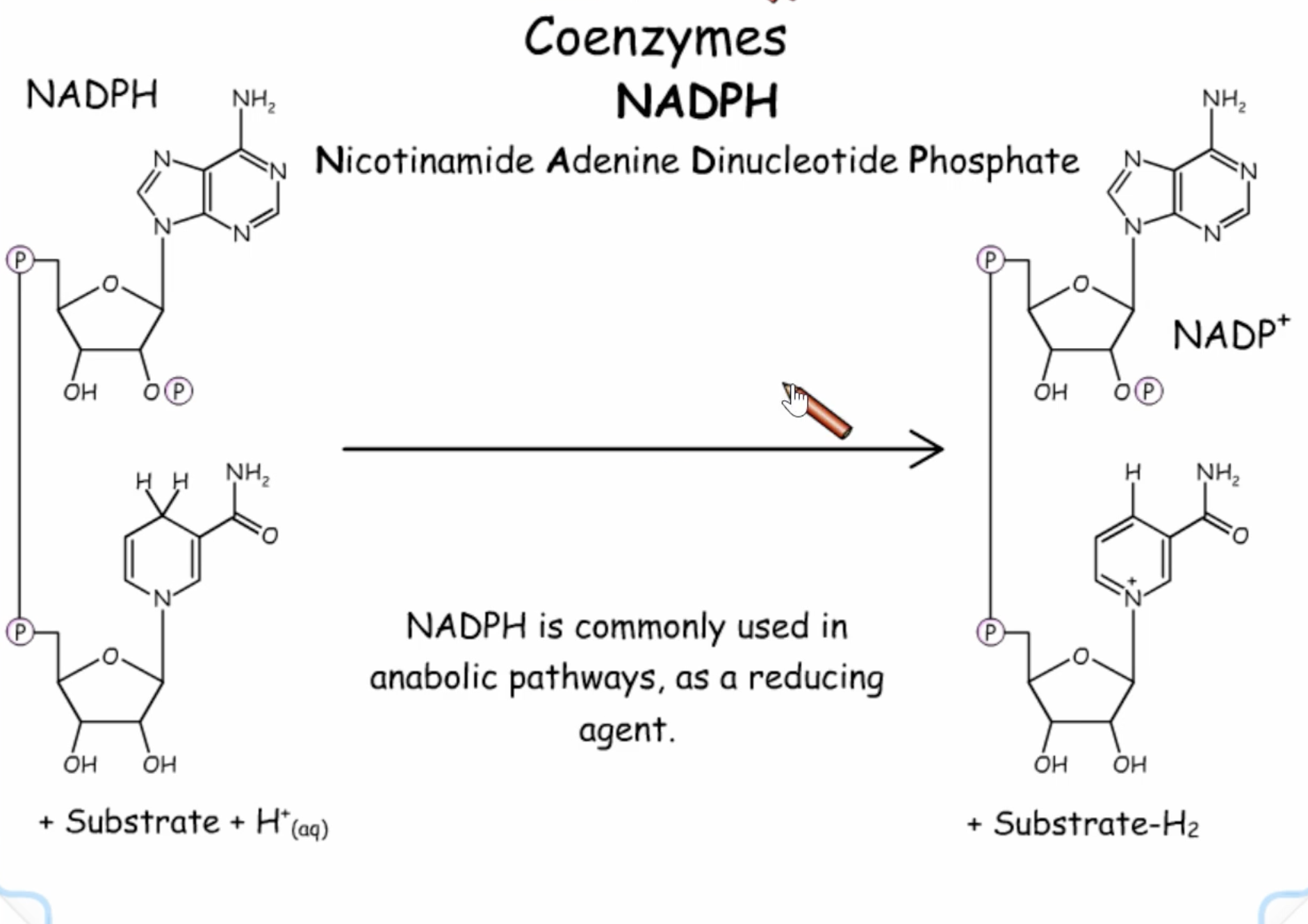
what type of coenzyme is NADPH?
redox coenzyme
similar to NAD but with extra phosphate
phosphate impacts what enzymes can bind to it
how is NADPH used?
involved in anabolic pathways
acts as reducing agent (itself oxidised)
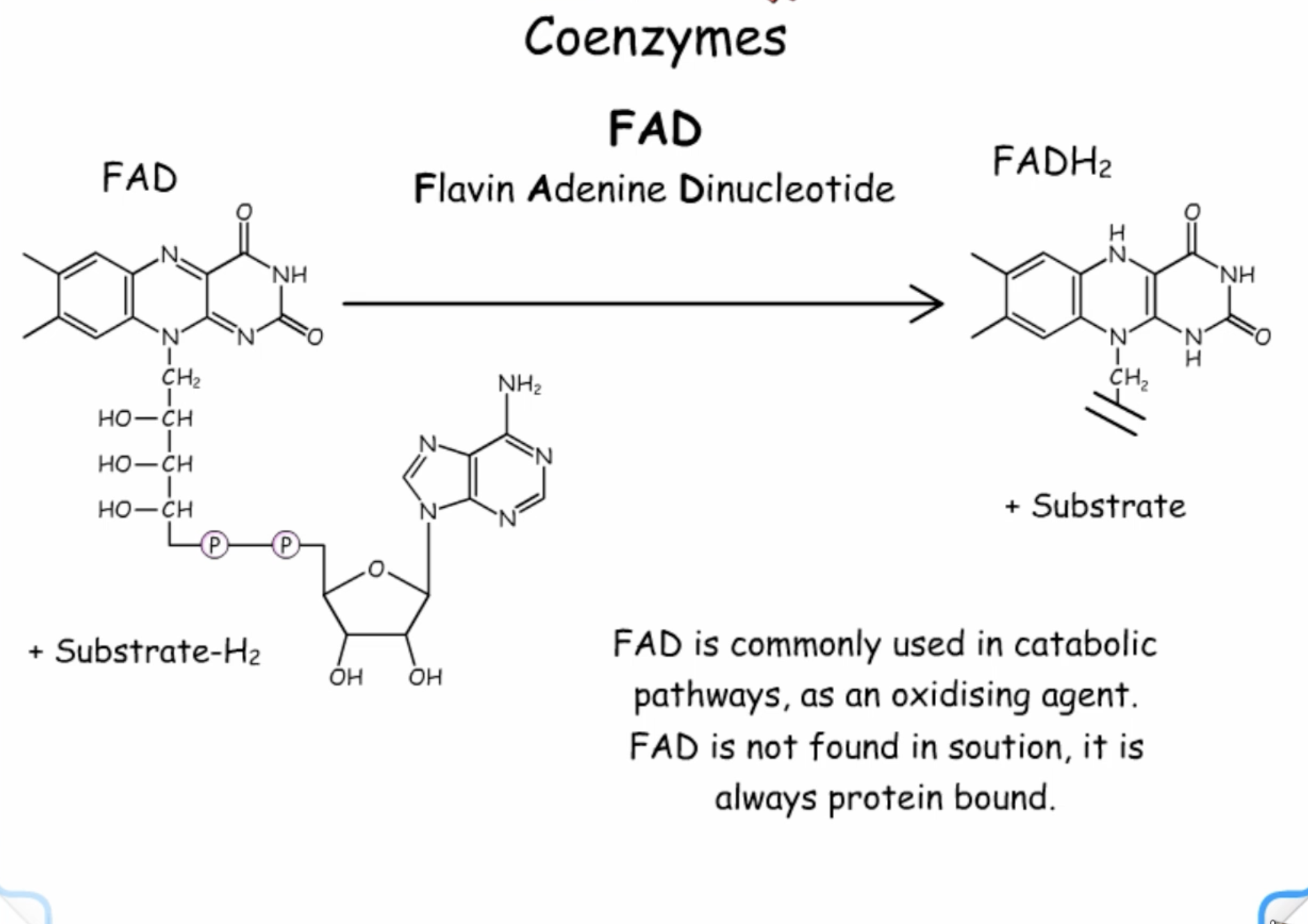
what type of coenzyme is FAD?
redox coenzyme
always bound to its enzyme
how is FAD used?
used in catabolic pathways as an oxidising agent (itself reduced)
cycling of coenzymes
how is metabolism regulated in unicellular organisms?
take up chemicals they need even at low concentrations
make chemicals that are not available
dependent on environment
how do multicellular organisms regulate metabolism?
each individual cell has its needs
each cell’s actions must be coordinated with the rest of the body
what important needs must metabolic regulation meet?
need adequate metabolic fuel
receive fuel in the correct form (e.g. brain needs glucose)
blood glucose must be kept within a set range
excess fuel needs to be stored
waste products need to be safely removed
role of brain in metabolism?
normally uses glucose as metabolic fuel
(can use ketone bodies during starvation)
role of skeletal muscle in metabolism?
when glucose is plentiful it stores glycogen for its own use
role of liver in metabolism?
when glucose is plentiful, stores excess as glycogen and makes fat
releases stored fuel during fasting and exercise
role of adipose tissue in metabolism?
when fat is plentiful, stores fat
released during fasting and exercise
what are the three main metabolic states?
fed
exercise
fasting
what occurs during the fed state?
liver uses excess fuel to make glycogen and fat
tissues take up excess glucose
adipose takes up and stores fat
what occurs during the fasting state?
liver releases glucose
liver releases ketone bodies
adipose releases fatty acids
most tissues switch to fat use
what happens during exercise state?
muscle fuel use increases
adipose releases fatty acids
liver releases glucose