2.6 Health, Disease, Defence and Treatments ❤️🩹
 Call Kai
 Learn
Learn Practice Test
 Spaced Repetition
 Match
Match Flashcards
 Knowt Play
1/84

Earn XP
Description and Tags
Name | Mastery | Learn | Test | Matching | Spaced | Call with Kai | Chat |
|---|
No analytics yet
Send a link to your students to track their progress
85 Terms
Communicable disease
contagious, microorganism passed from one organism to another
Non-communicable disease
not contagious, caused by lifestyle or genetic abnormalities
Healthy
person free from both types of disease
Microorganism
bacteria, virus, fungus
Cost to soceity
unhealthy people may not be able to work and require healthcare
NHS spends large amount on treating diseases e.g medicine, staff, hospital care
long term treatment e.g stays in hospital for cancer
Examples of viruses
HIV (leads to aids), cold/flu, human papilloma virus (HPV)
Cause, prevention and treatment of HIV/ AIDS
exchange of body fluids during sex, infected blood
using a condom, not sharing needles
controlled by drugs
Cause and prevention of cold/ flu
airborne (droplet infection)
flu vaccination
Cause and prevention of HPV
sexual contact
HPV vaccine at 12-13, also prevents cervical cancer
Examples of bacterium
salmonella food poisoning, tuberculosis, chlamydia
Cause, prevention and treatment of salmonella food poisoning
contaminated food
cook thoroughly, prevent cross contamination
antibiotics
Cause and treatment of tuberculosis
airborne (droplet infection)
antibiotics
Cause, prevention and treatment of chlamydia
sexual contact
using a condom
antibiotics
Examples of fungus
athlete’s foot, potato blight
Cause, prevention and treatment of athlete’s foot
contact
avoid direct contact with spores (flip flops)
anti-fungal treatment
Cause, prevention and treatment of potato blight
spores spread in air from plant to plant (especially when warm and humid)
crop rotation
fungicide
Droplet infection
microorganisms released into air when infected person coughs, sneezes, or talks
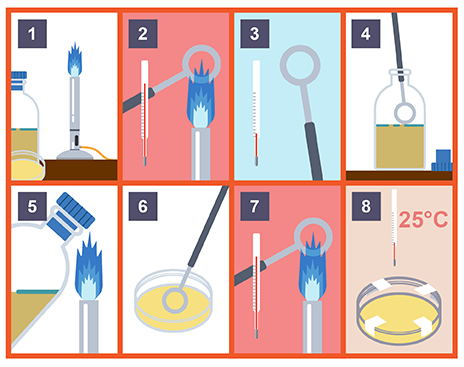
Aseptic techniques
procedures carried out to prevent the contamination of pure cultures of microorganisms
Defence mechanisms against entry
skin barrier to microorganisms
mucous membranes in nose, ears and eyes to trap microorganisms
blood clotting, to stop it escaping and prevent entry where skin is damaged
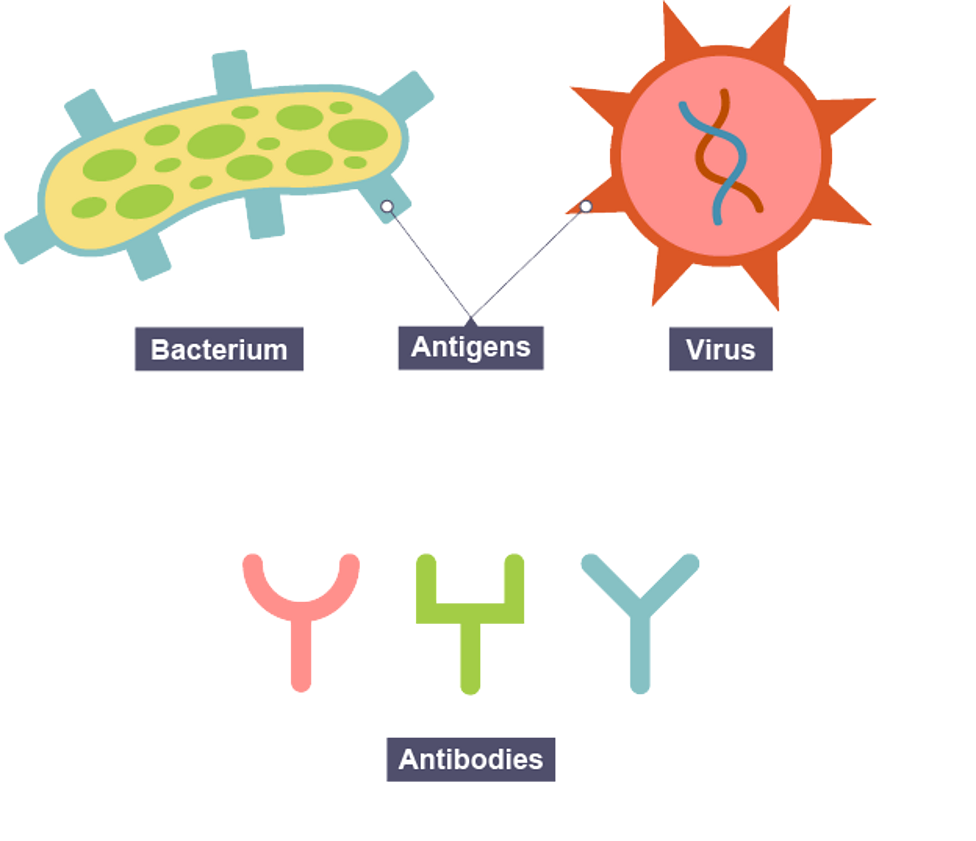
Antigen
marker on cell/ pathogen surface with specific shape
Need for antigens
allows antibodies to be produced that are complementary in shape
Lymphocytes
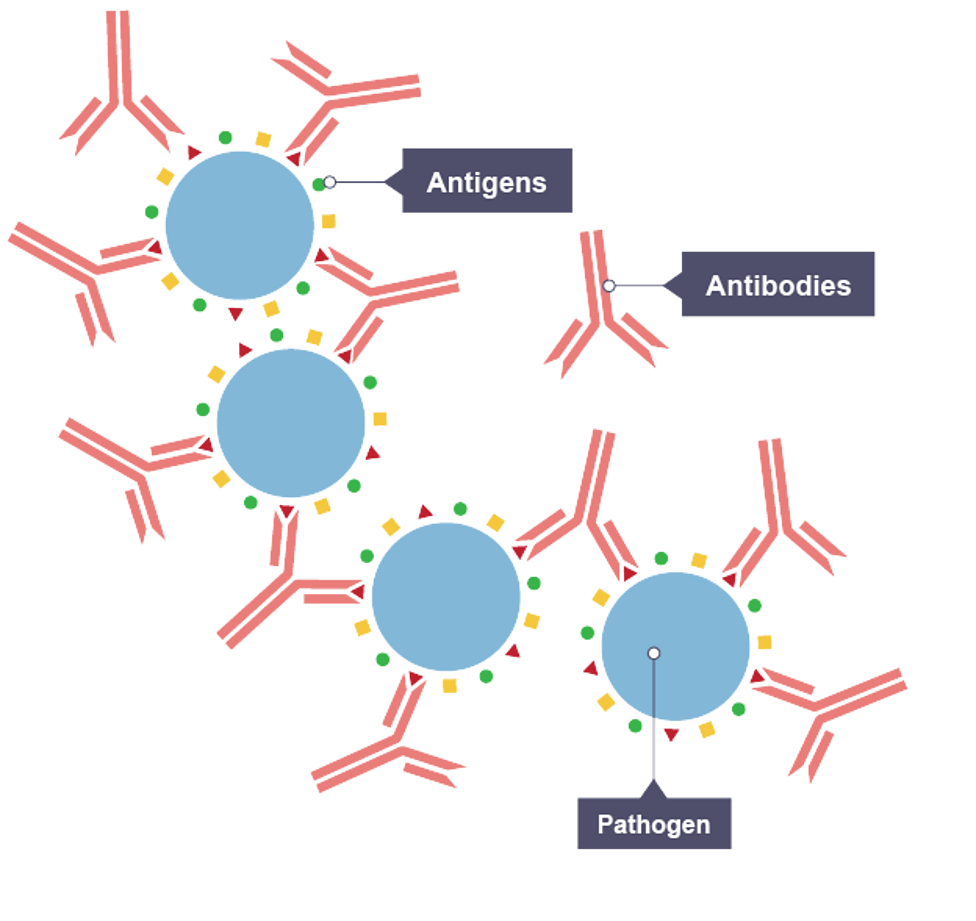
produce antibodies which immobilise microorganisms by clumping them together
Purpose of immobilising microorganisms
reduces symptoms and prevents spread of infection/ reproduction, can be ingested easier
Phagocytosis
phagocyte engulfs and digests microorganisms using enzymes
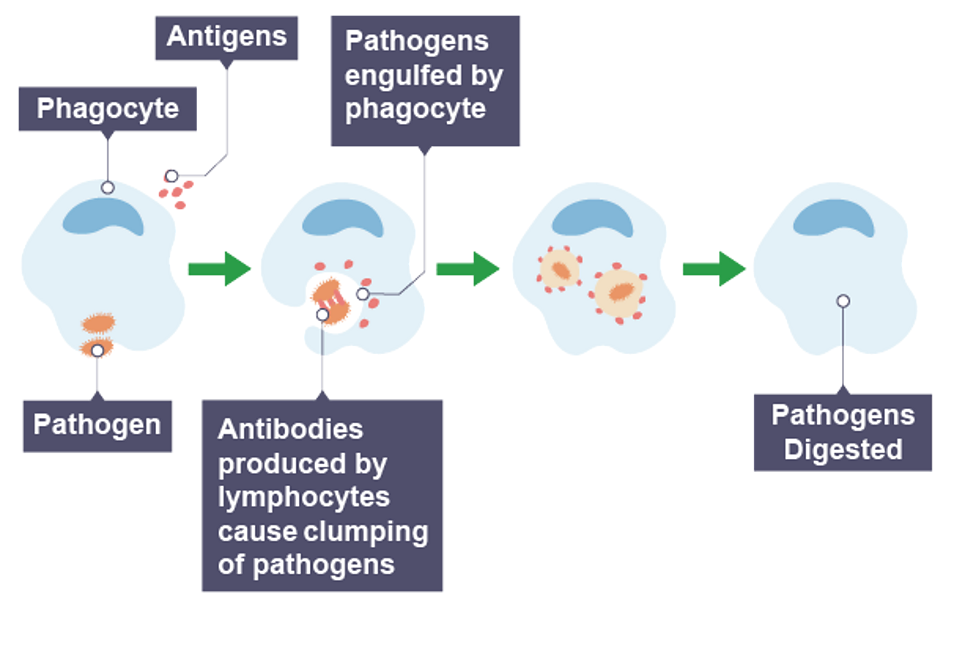
Fighting pathogens process
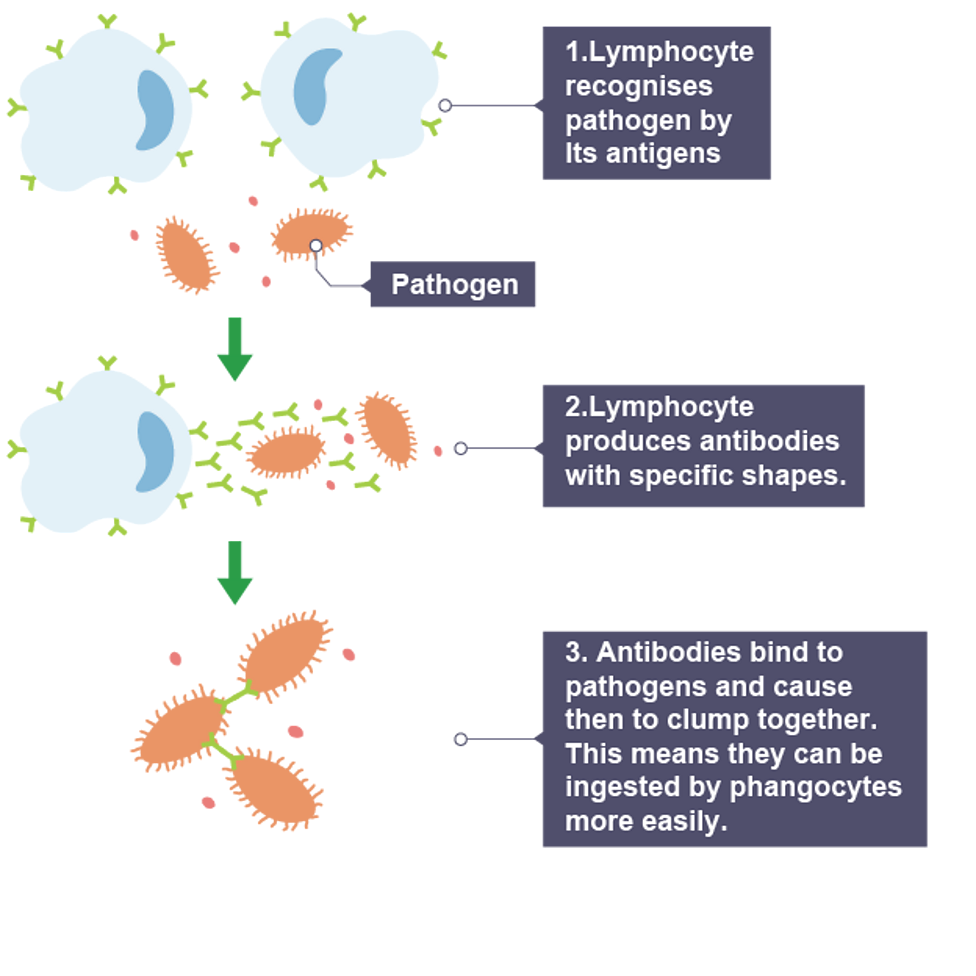
lymphocyte recognises pathogen by antigens and produces complementary antibodies
antibodies bind and cause them to clump together, prevents spread and easier to kill
phagocytosis, they engulf and digest microorganisms with enzymes
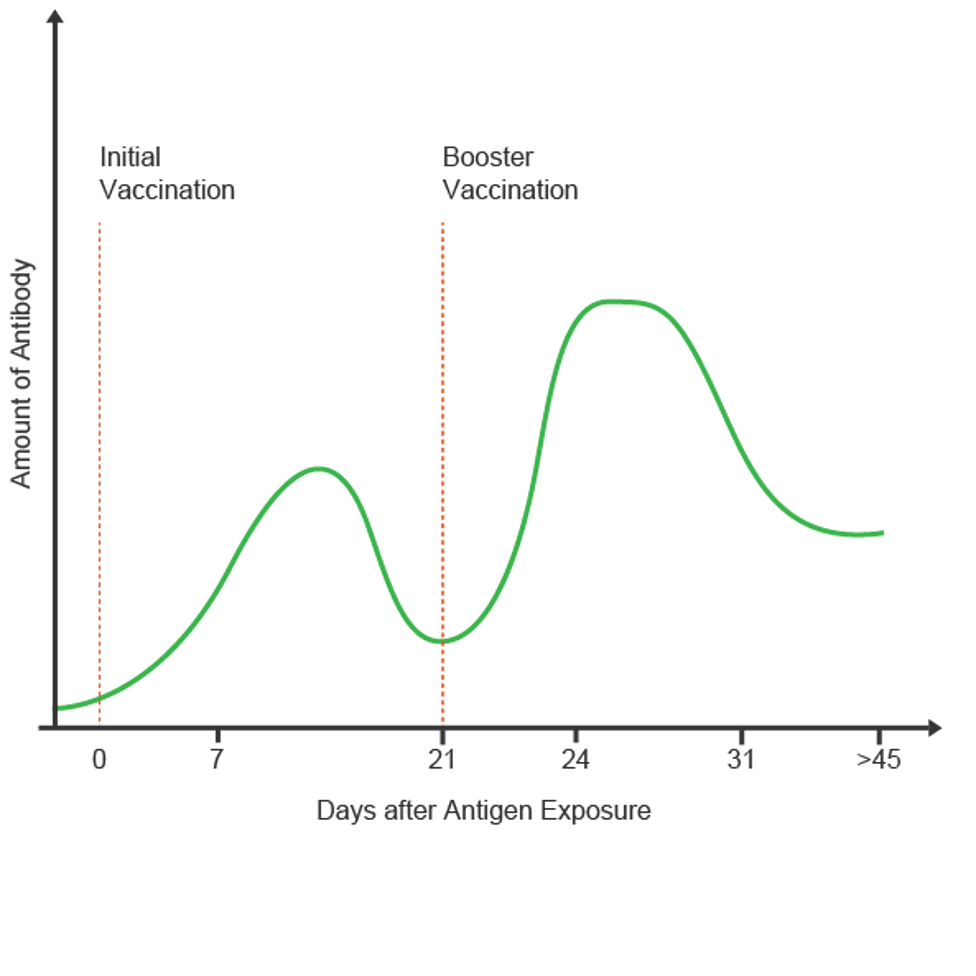
Primary response
lymphocytes work to produce antibodies, person feels sick
Secondary response
memory lymphocytes, prevents person getting sick again, now immune
Memory lymphocytes
remain in body for very long time, respond quickly and produce antibodies if body is infected by same microorganism
Immunity
enough antibodies for body to fight off disease and prevent getting sick
Active immunity
when body’s lymphocytes are activated and produce specific antibodies needed to fight pathogen
Features of active immunity
slow acting
long lasting protection
Natural active immunity
primary response when microorganism enters
Artificial active immunity
vaccines
Passive immunity
when ready made antibodies from another source are introduced to body
Features of passive immunity
fast acting
short term protection (no memory lymphocytes)
Natural passive immunity
breastfeeding passes on the antibodies from mother/ across placenta
Artificial passive immunity
anti venom used after a poisonous bite
Vaccine
injection of dead or weakened pathogens
Why do pathogens need to be dead or weakened
otherwise would give you disease it is trying to prevent
How do vaccines work
stimulate immune system to produce antibodies and create memory cells
Purpose of vaccines
memory lymphocytes will produce large numbers of antibodies very quickly, wont get sick
Booster vaccine
needed to increase/ maintain high levels of antibodies for immunity long term
Effect of booster vaccines
rapid antibody response due to memory lymphocytes to prevent losing immunity
Plant defence mechanisms
waxy cuticles prevent microorganisms entering/ leaving and thick cell walls surround
produce antimicrobial chemicals to kill or inhibit growth of bacteria/ fungi e.g mint
poisonous chemicals to deter herbivores from eating e.g digitalis from foxglove
Antibiotics
chemicals produced by fungi used against bacterial diseases to kill or reduce their growth
History of penicillin
first ever antibiotic
discovered by Alexander Fleming in 1920’s after he noticed bacteria didn’t grow near a mould contaminating his cultures
concluded mould released a substance preventing bacterial growth
scientists Florey and Chain produces pure penicillin in 1940’s and began large scale production
many have been discovered since, grown in carefully controlled conditions in fermenters
Preclinical trials
conducted in laboratories
tested on cells, tissues and animals
check if drug is toxic and effectiveness
Clinical trials
tested on small number of healthy volunteers, then more
to find optimum dosage and balance with minimal side effects
eventually tested on sick to ensure it works
Peer review
research is reviewed by other scientists before publication
ensures findings are valid, reliable and meet standards with feedback
drug can then be licensed for use
Advantages of animal testing
Avoids testing on humans at this stage
Can check for side effects in living organisms
Disadvantages of animal testing
Animals are different from humans, so drug may react differently
Raises ethical issues
More effective antibiotic
larger clear zone
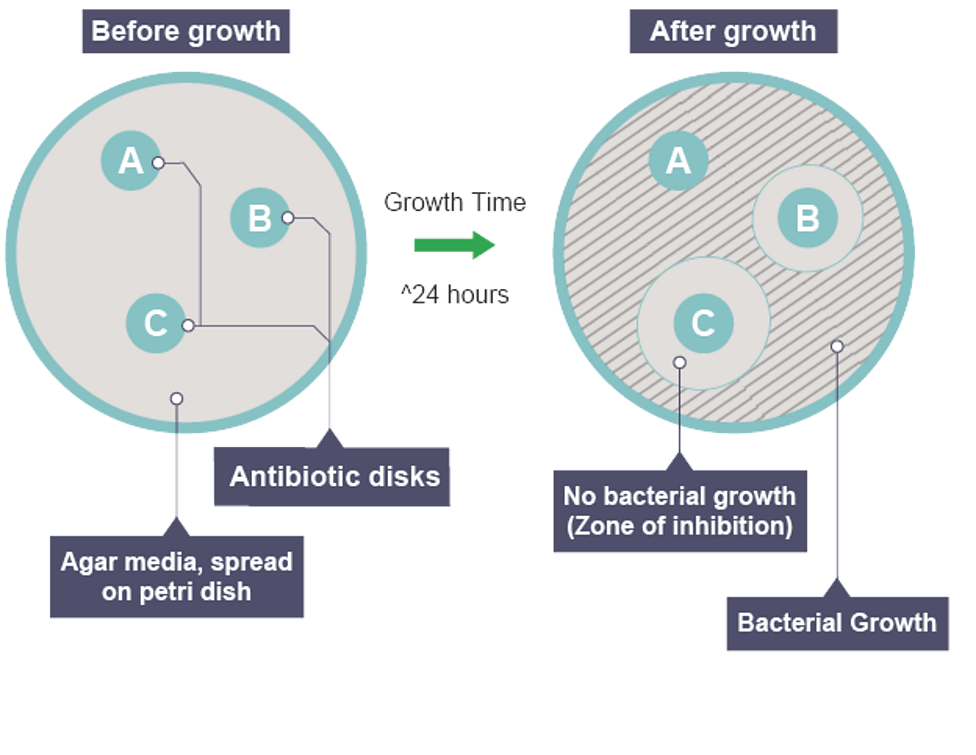
Antibiotic resistance
drugs can no longer kill the bacteria, caused by their overuse
Antibiotic resistance process (natural selection)
variation among phenotypes of bacteria, some are resistant to antibiotics
treating with antibiotics provides competition
resistant individuals survive, less resistant don’t (differential survival)
resistant bacteria reproduce and pass on resistance gene to next generation
number of resistant bacteria increase
Superbug
resistant to multiple antibiotics so infections are difficult to treat e.g MRSA
Reducing superbugs
hygiene, regular handwashing and cleaning hospital environments
controlled antibiotic use, prescribe only when necessary
isolation, keep patients infected separate to prevent spread
Why superbugs are hard to eradicate
bacteria can mutate quickly
resistant strains survive and multiply
limited development of new antibiotics
Inheritance of non communicable diseases
some people carry a gene that predisposes them to conditions
Lifestyle factors of non communicable diseases
poor diet
lack of exercise
overexposure to sun
misuse of drugs
Poor diet effects
eating too much sugar and fat can cause obesity
may lead to cardiovascular disease or type 2 diabetes
unbalanced diet means missing out on essential vitamins and minerals
Lack of exercise effects
taking in more energy than they use can cause obesity
exercise is needed to strengthen bones and heart/ improve mood
Overexposure to sun effects
too much UV radiation can cause mutations in skin
may lead to skin cancer
very preventable, less time in sun or using sunscreen
Misuse of drugs, alcohol
unlikely to cause harm in moderation
binge drinking (large amount in short period) can damage liver and organs
drinking during pregnancy causes serious brain damage to foetus, foetal alcohol syndrome
Misuse of drugs, tobacco
Tar causes bronchitis, narrow bronchi and bronchioles
also causes emphysema which damages alveoli and reduces surface area for gas exchange
leads to lung cancer/ abnormal cell division
nicotine is addictive and affects heart rate
carbon monoxide combines with haemoglobin and reduces oxygen capacity permanently
Build up of cholesterol in arteries
causes them to become narrow, restricting blood flow
Heart attack/ CHD
build up of cholesterol in coronary arteries
Stroke
build up of cholesterol in brain
Heart attack/ CHD process
cholesterol builds up in coronary artery
becomes narrow as blockage/ clot forms
blood flow is restricted
heart muscle is starved of glucose and oxygen
respiration is reduced/ stopped and heart cells die
Stroke process
cholesterol builds up in artery in brain
becomes narrow as blockage/ clot forms
blood flow is restricted
part of brain is starved of glucose and oxygen
respiration is reduced/ stopped and brain cells die, reduced brain function e.g paralysis
Decreasing risk of cholesterol buildup
healthy diet
regular exercise
managing stress
avoid smoking
Treating heart attack and strokes
angioplasty to widen arteries and drugs such as statins or aspirin to prevent
Angioplasty
balloon inserted into blocked artery and inflated to expand wire cage/ artery
stent (mesh tube) placed, balloon removed, to keep open and restore blood flow
Statins
lower blood cholesterol levels
Aspirin
reduces blood clotting to prevent blockages, thinner and less sticky
Cancer
uncontrolled cell division that can lead to development of a tumour
Benign
encapsulated, surrounded by boundary so does not spread
Malignant
not encapsulated, spreads via blood causing secondary tumours so far more dangerous
Lifestyle factors in cancer
cervical cancer, reduced with HPV vaccine
lung cancer, increased by smoking (carcinogens)
skin cancer, increased by tanning/ excessive sun exposure
Early detection
via screening programs, improves chances of treatment and recovery
Importance of early detection
tumour may be smaller and not have spread, significantly increasing survival rates
Treatments of cancer
surgery, radiotherapy, chemotherapy and immunotherapy
Treating cancer with surgery
physically removes cancer cells
few side effects
will not work if spread or inaccessible
Treating cancer with radiotherapy
x rays or radiation to kill cancer cells
target cells deep in body, accurate
damages healthy cells too
Treating cancer with chemotherapy
using drugs to kill cancer cells
target cells anywhere, good if spread
lots of side effects e.g hair loss, weak immunity
Treating cancer with immunotherapy
injecting antibodies which attach to cancer cells and allow immune system to kill
fewer side effects and doesn’t harm healthy cells
not suitable for all cancer types