2.4 Middle Kingdom Egypt: Tombs
 Call Kai
 Learn
Learn Practice Test
 Spaced Repetition
 Match
Match Flashcards
 Knowt Play
1/7

Earn XP
Description and Tags
The Middle Kingdom Era and a Whole New Burial Approach--Cliff-Side Tombs
Name | Mastery | Learn | Test | Matching | Spaced | Call with Kai | Chat |
|---|
No analytics yet
Send a link to your students to track their progress
8 Terms
The start of the Middle Kingdom era begins when one pharaoah (Mentuhotep II) finally asserts control and authority over all of Egypt in 2040 BCE, and this new kingdom era would last approximately 400 years.
Egyptians continued to value the afterlife and made sure that their high-ranking officials and pharaohs were interred in secure and well-stocked tombs to provide for them in the afterlife.
What tombs become popular in the Middle Kingdom era
-rock-cut tombs hollowed out of cliffs as if the decades of near anarchy had depleted Egypt to such as an extent as if there was no budget or energy for anything as monumental.
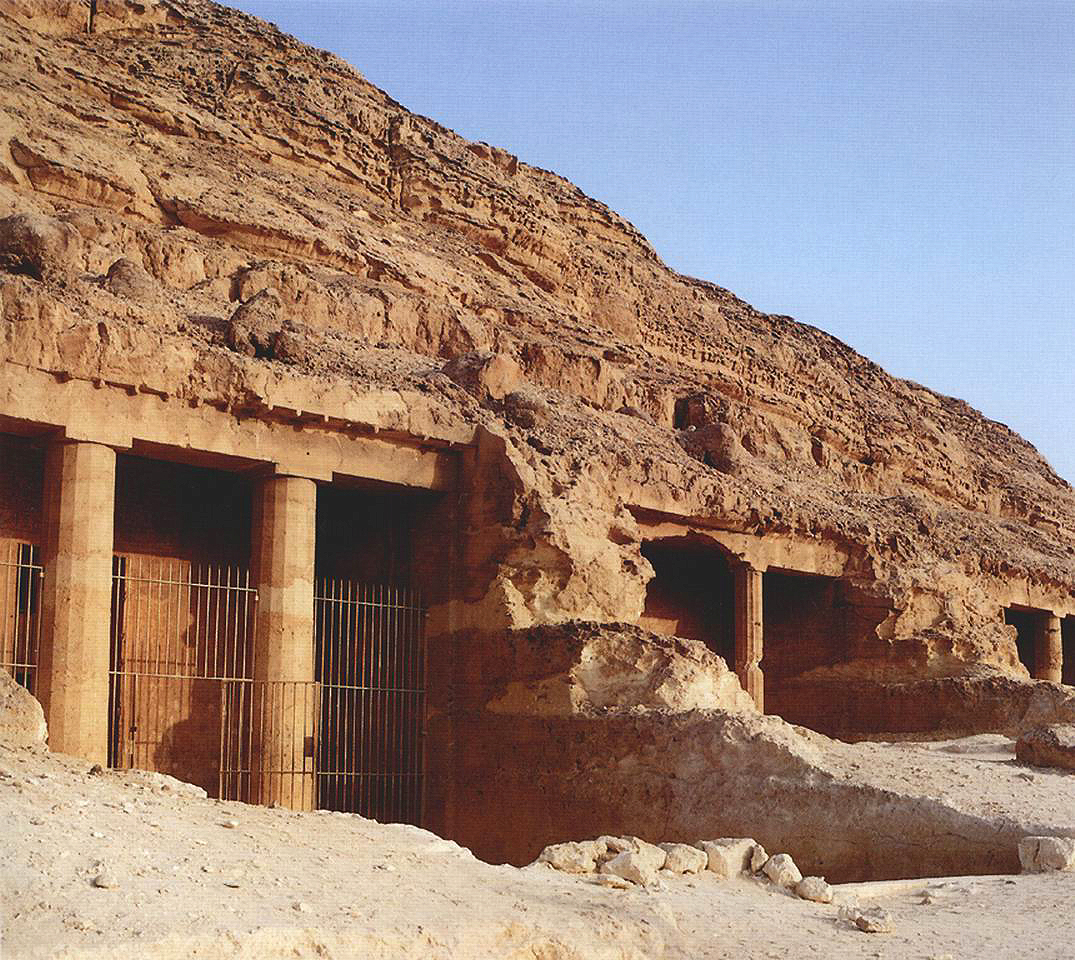
Rock-cut Tombs at Beni Hasan, Egypt, ca. 1950-1900 BCE
-The best Middle Kingdom tombs are located in Beni Hasan, a necropolis in central Egypt. These often were tombs for high officials like governors. There are 39 such tombs. In front you see a porch entrance to the doorway of such a cliff tomb
Fluted Columns (cột có rãnh)
Fluting describes the linear, multi-facets that run down the length of each column shaft
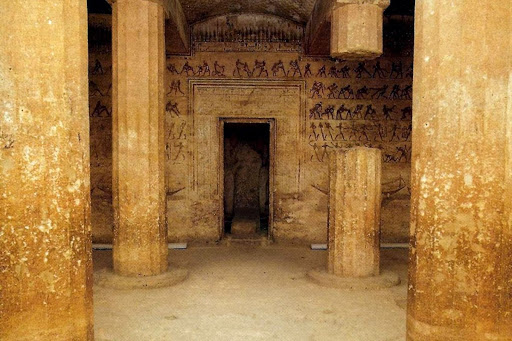
Interior, rock-cut tomb of Amenemhet (an overlord and high priest to a pharaoh), Beni Hasan, Egypt, ca. 1950-1900 BCE
-interior hall that concluded with a separate room that served as a burial chamber. (phòng chôn cất)
Details of the Interior, rock-cut tomb of Amenemhet
-still features the painted murals and painted reliefs which decorate the interior
→ figures in composite view, organized in registers, with that enduring use of hierarchy of scale just like we saw in Mesopotamia.
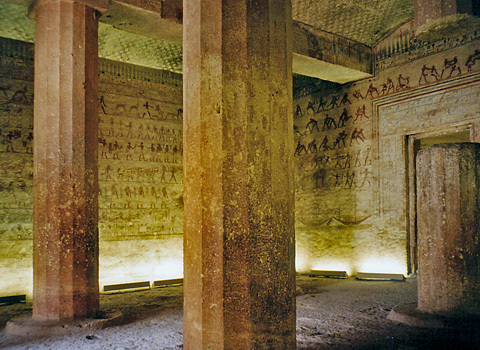
The meaning of the fluted columns inside the interior hall:
The same fluted columns that exist outside for the porch continue inside
BUT they aren’t there for support—do you see that broken one (first image)? That's because they were carved from the living rock, like the tomb itself, instead of sculpted and installed separately like in most building projects or mines. Overall they're mostly decorative vs. needed for structural support. The same is true with the exterior columns as well.
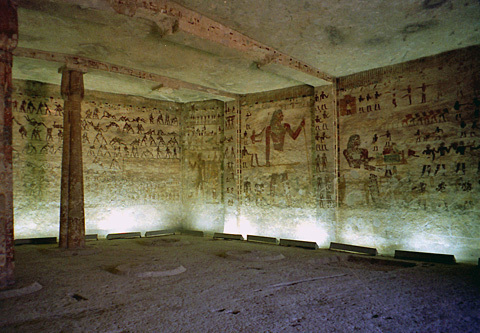
What cultural practices and artistic traditions seem to continue in Middle Kingdom Egypt? What's abandoned? (*Things to consider)
-The cultural practices and artistic traditions seem to continue in Middle Kingdom Egypt are the royal tombs for high positions, the reliefts and mortuary texts, also the linked of god with high positions people.
-They abandoned the idea of huge room for burial chamber, they use more cheaper material such as live stone, they also abandoned the wooden tomb