modifications and deviations from mendelian inheritance
 Call Kai
 Learn
Learn Practice Test
 Spaced Repetition
 Match
Match Flashcards
 Knowt Play
1/9

There's no tags or description
Looks like no tags are added yet.
Name | Mastery | Learn | Test | Matching | Spaced | Call with Kai | Chat |
|---|
No analytics yet
Send a link to your students to track their progress
10 Terms
incomplete dominance
when the phenotype of a heterozygote is distinct from and often intermediate between the phenotypes of the two homozyogtes
co dominance
Co-dominance occurs when both alleles contribute to the phenotype AND the effects of both alleles are seen to their full extent– not an intermediate ‘blended’ phenotype as seen with incomplete dominance
ABO Blood grouping in humans. A and B alleles cause modifications to glycoproproteins on RBC surface. A and B are co-dominant to each other (both modifications seen if Type AB). A and B are dominant to O, which is recessiveEpistasis
epistasis
the phenotype caused by one gene is influenced by one or more other genes
sex linked inheritance
normally assumed that the individual has 2 copies of each locus
this is only true of the genes on the autosomes however
animals have pairs of sex chromosomes which may be the same of different depending on the sex of the animal
genes located on sex chromosomes do not follow mendelian patterns of inheritance
X linked dominant inheritance
as with autosomal dominant inhertance only only dominant allele is required for the phenotype to be displayed
with X linked dominant disorders the sex of the offpsring doesnt make much difference to the phenotype outcome
the individual will display th ephenoytype if they inherit the dominant allele, whatever their sex.
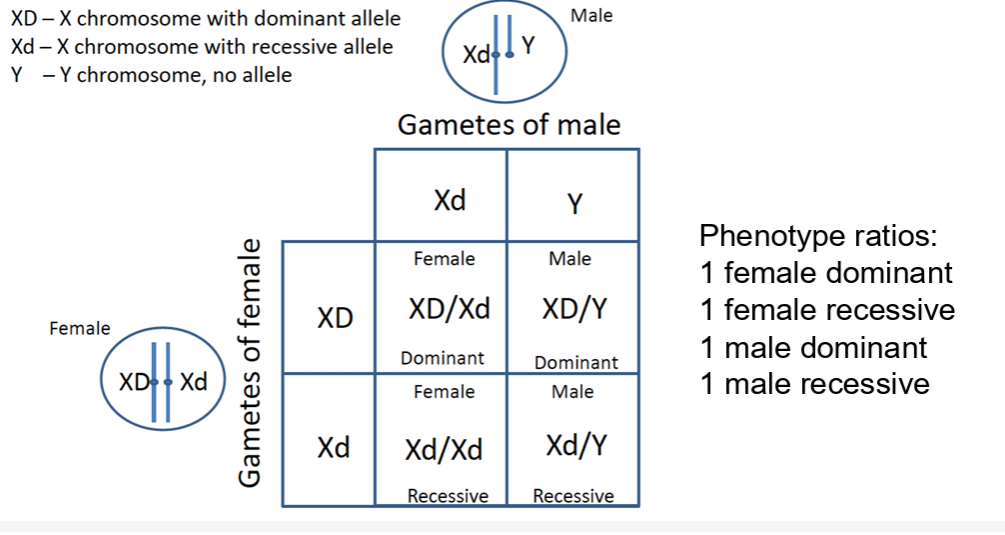
X linked recessive inheritance
in htis instance the sex of offspring doesn not matter
as females are xx they require 2 recessive alleles to show phe otype
as males have only one x they show si inherit x bearing the recessive allel
therefore 100 percent of male offpsirng of a female with an x linked recessive phentype will shwo the phenotype
Y linked inheritance
only definite trait inherited via the y chromosome is maleness- SRY sex determining gene
genetic linkage
Law of independent assortment states that genes segregate independently of each other
❑ However, we now know that (10s to 1000s of) genes are arranged on long DNA strands which form chromosomes
❑ Genes on the same piece of DNA are therefore physically linked
❑ These genes may not always be able to segregate independently of each other ❑ Genes that are linked to each other by being on the same chromosome are said to belong to the same linkage group
recombination
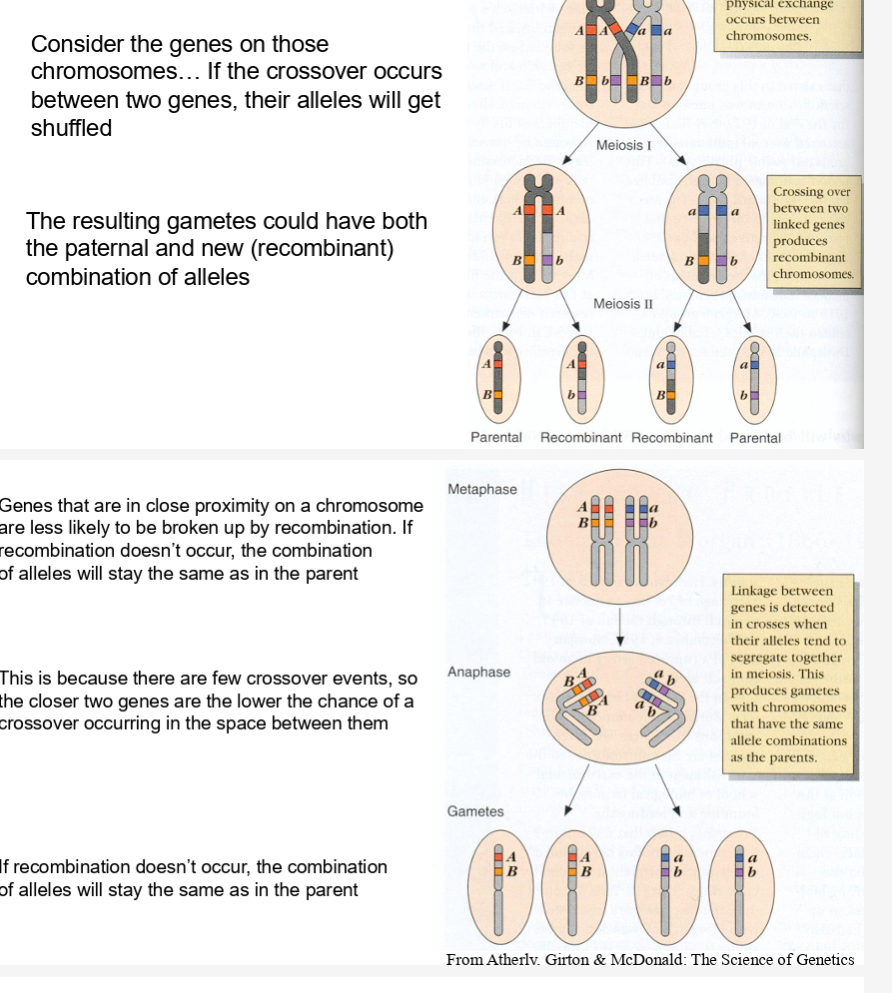
consequence of linkage
Genes that remain linked together will segregate in groups during gamete formation.
❑Consequently offspring will have a higher than expected proportion of parental genotypes and less recombinant genotypes
❑Think about the dihybrid cross in the last lecture, we had parents which were:
❑rug hair/no horns x short hair/horns
❑And after crossing their offspring, we got offspring that were:
❑rug hair/no horns, short hair/no horns, rug hair/horns, short hair/horns
❑These new combinations could not occur if the genes were completely linked – all offspring would be rug hair/no horns or short hair/horns