Cell Bio- Lecture #4 (Bone & Cartilage)
 Call Kai
 Learn
Learn Practice Test
 Spaced Repetition
 Match
Match Flashcards
 Knowt Play
1/57

There's no tags or description
Looks like no tags are added yet.
Name | Mastery | Learn | Test | Matching | Spaced | Call with Kai | Chat |
|---|
No analytics yet
Send a link to your students to track their progress
58 Terms
Axial skeleton
Supports and protects the brain & spinal cord, thoracic region, and abdominopelvic region
Appendicular skeleton
Supports the limbs and facilitates their movement
Skeletal system
Composed of bones, cartilages, ligaments, and associated connective tissues
Spongy bone (trabecular)
Bone with a latticework interior, a scaffold of interconnected supports

Compact bone
Closely-spaced layers of bone stacked to create a solid wall of osseous tissue

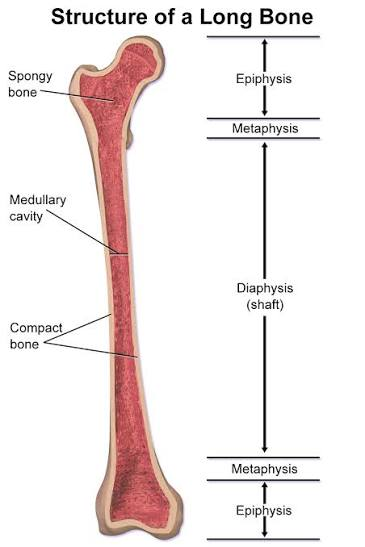
Diaphysis
Shaft of a long bone; has a dense wall of compact bone, surrounds the medullary cavity
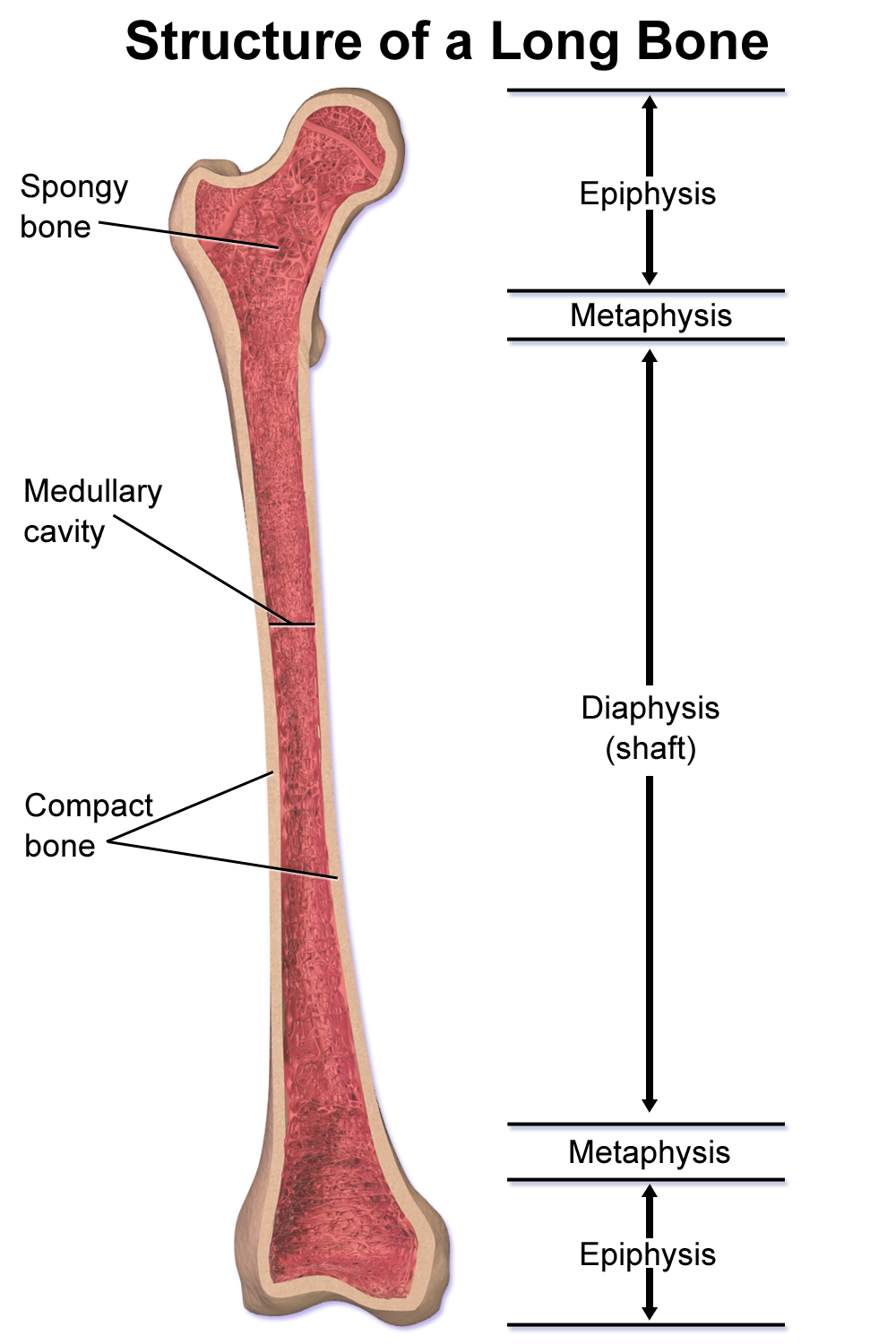
Epiphysis
Widened ends of a long bone; covered by thin compact bone, filled with spongy bone
Metaphysis
Meeting of the diaphysis and epiphysis

Osseous tissue
Another name for bone

Matrix
Dense connective tissue substance filling the space between bone cells
Calcification
Deposition of calcium salts that hardens the collagen fiber framework of bone
Hydroxyapatite
Crystals formed when calcium phosphate reacts with calcium hydroxide; combines with collagen to give bone flexibility & strength
Osteogenic cells
Stem cells that replace osteoblasts
Osteoblasts
Cells that make new bone (ossification); become osteocytes
Ossification
Process of making new bone, performed by osteoblasts

Osteocytes
Cells that maintain the bone matrix, form a network with gap junctions, live in lacunae

Osteoclasts
Cells that break down bone (osteolysis), releasing minerals
Osteolysis
Breakdown of bone, performed by osteoclasts
Osteoid
Secreted bone matrix that is not yet calcified
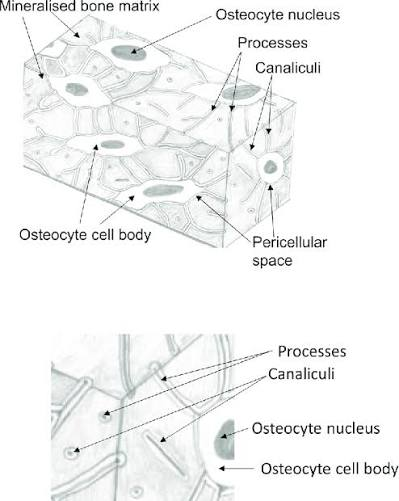
Lacunae
Spaces where osteocytes live, surrounded by calcified matrix
Filopodia
Structures connecting osteocytes to each other, forming gap junctions

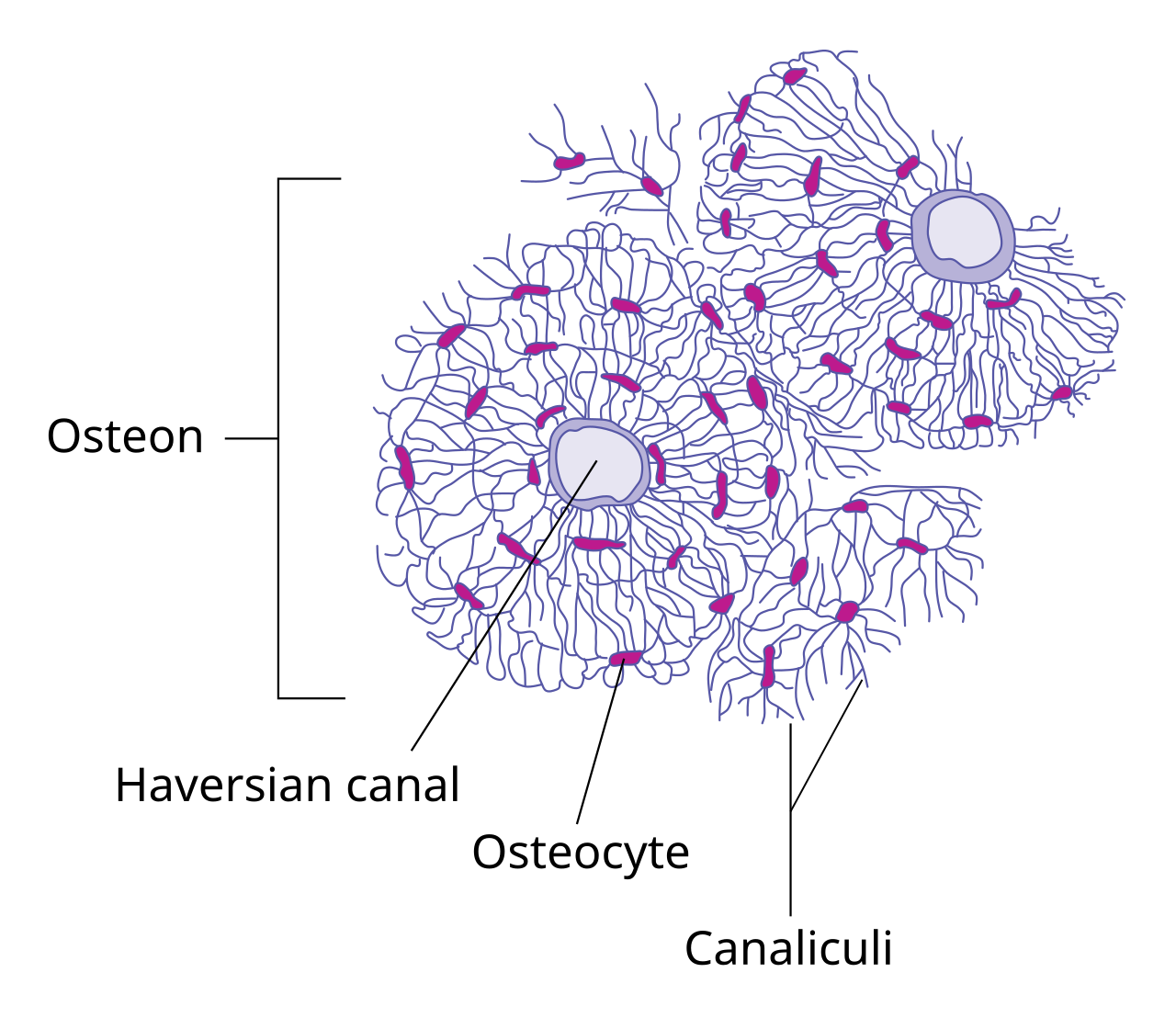
Canaliculi
Channels in calcified matrix through which filopodia pass
Osteons
Units of compact bone; rings of bone matrix surrounding a central canal with blood supply
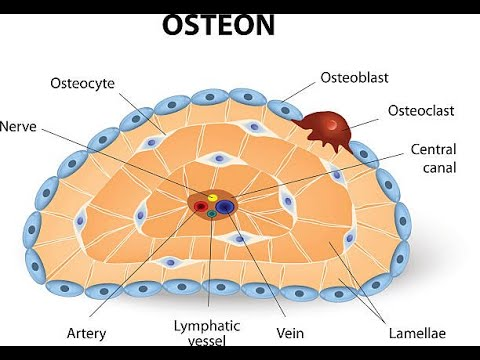
Lamellae
Thin layers composing osteons

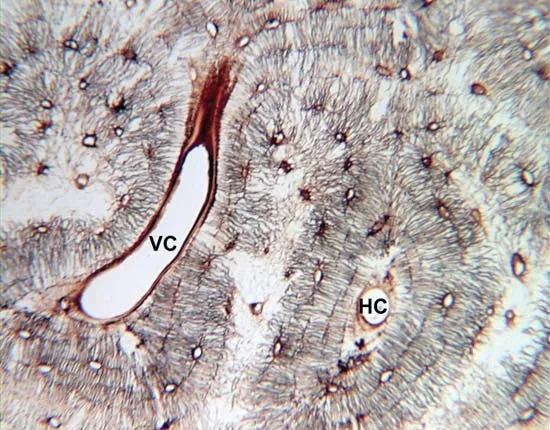
Haversian canal
Central canal of an osteon allowing blood vessel passage


Trabeculae
Interconnected bone filaments composing spongy bone (no internal blood supply)

Periosteum
Tough, fibrous connective tissue membrane wrapping bones; isolates bone, contributes to repair
Endosteum
Membrane covering the inner surface of compact bone and trabeculae; formed of osteogenic cells, osteoblasts, osteoclasts
Pituitary dwarfism
Deficiency in growth hormone production, leading to proportionately smaller bones
Gigantism
Excess growth hormone (often from a pituitary tumor) prior to puberty
Acromegaly
Excess growth hormone after puberty; bones grow thicker rather than longer
Osteopenia
Normal bone loss associated with age from declining hormone secretion
Osteoporosis
Severe osteopenia, where bone fragility impedes normal skeletal function
Chondroblasts
Cartilage-forming cells (analogous to osteoblasts)
Chondrocytes
Mature cartilage cells (analogous to osteocytes)
Chondroclasts
Cartilage-breakdown cells (analogous to osteoclasts)
Chondroitin sulfate
A GAG found in cartilage's proteoglycan matrix
Hyaline cartilage- extra
Most common cartilage type, found in most joints; intermediate amount of collagen
Perichondrium
Connective tissue layer surrounding cartilage (absent in fibrocartilage)
Elastic cartilage
Found in only a few places; least collagen, many elastic fibers
Fibrocartilage
Found in joints under heavy compressive load; matrix heavy in collagen fiber bundles; lacks a perichondrium
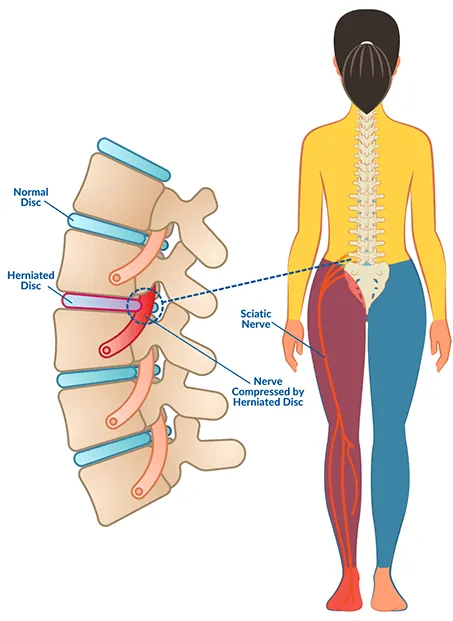
Slipped disc
Occurs when pressure forces the fibrous ring surrounding the intervertebral disc to bulge out
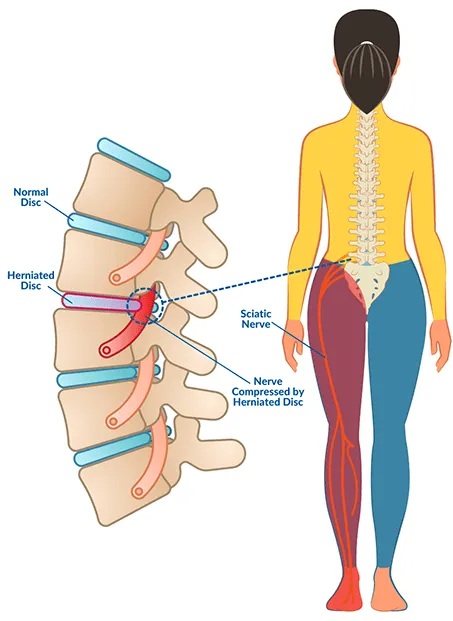

Herniated disc
More serious condition where the pulpy nucleus of the intervertebral disc is forced through the fibrous ring

Growth plate closure
When the epiphyseal cartilage disappears during puberty
Articular cartilage
Cartilage that remains at joints after growth plate closure
Achondroplasia
Most common form of dwarfism; deficits in converting cartilage into bone, affecting long bone development
Arthritis
General term for joint damage/inflammation
Osteoarthritis
Caused by "wear and tear" on joints from heavy usage or cumulative strain
Rheumatoid arthritis
Autoimmune disorder where the immune system attacks joint structures, causing chronic inflammation
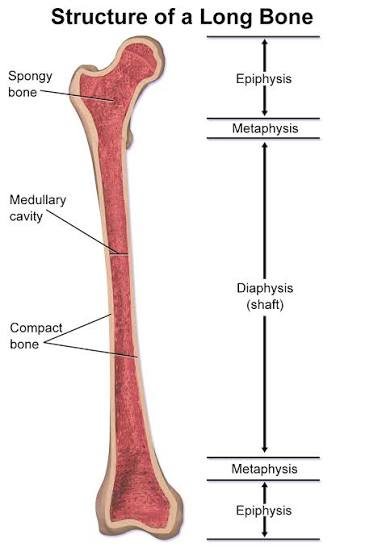
Long Bone
Diaphysis (shaft), Epiphysis (ends), metaphysis (junction)
Bone Cells
Osteogenic (stem), Osteoblasts (build), Osteocytes (maintain lacunae, canaliculi), Osteoclasts (break down)

Osteon
Unit of compact bone (Haversian canal + lameliae)
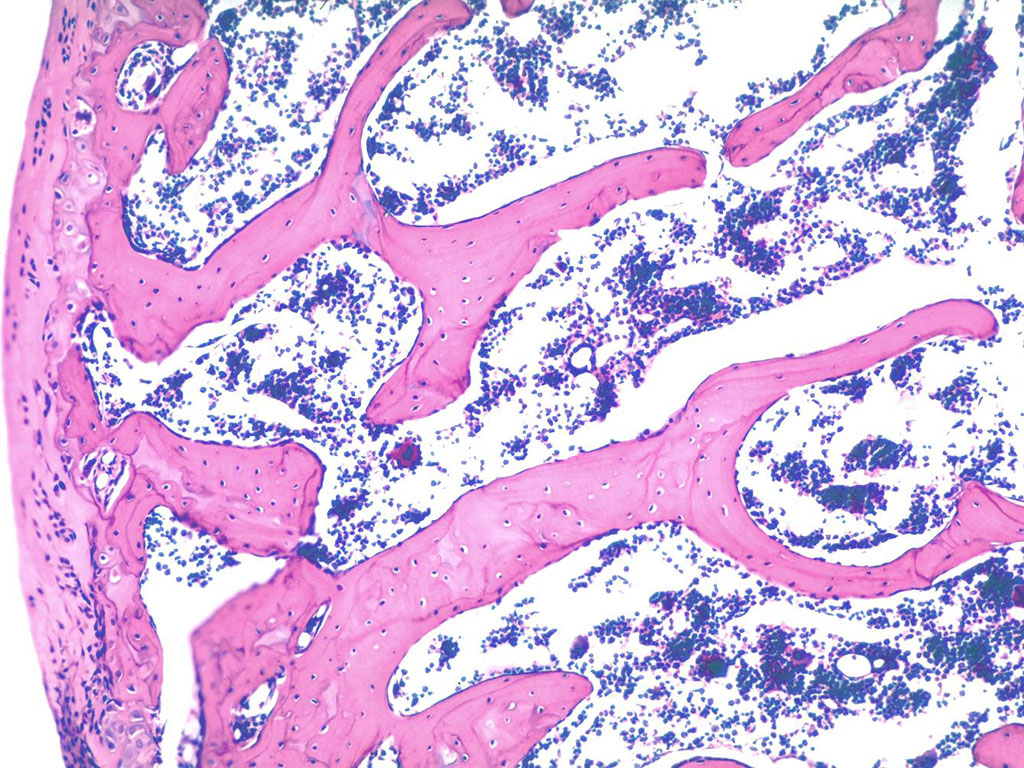
Traeculae
Spongy bone struts

Periosteum
Outer covering
Endosteum
inner lining
Cartilage Cells
Chondroblasts- Chondrocytes (breakdown by chondroclasts)
Hyaline
Most common; joints

Fibrocartilage
Heavy compression; NO perichondrium
