L41 - Apoptosis
 Call Kai
 Learn
Learn Practice Test
 Spaced Repetition
 Match
Match Flashcards
 Knowt Play
1/6

There's no tags or description
Looks like no tags are added yet.
Name | Mastery | Learn | Test | Matching | Spaced | Call with Kai | Chat |
|---|
No analytics yet
Send a link to your students to track their progress
7 Terms
overview
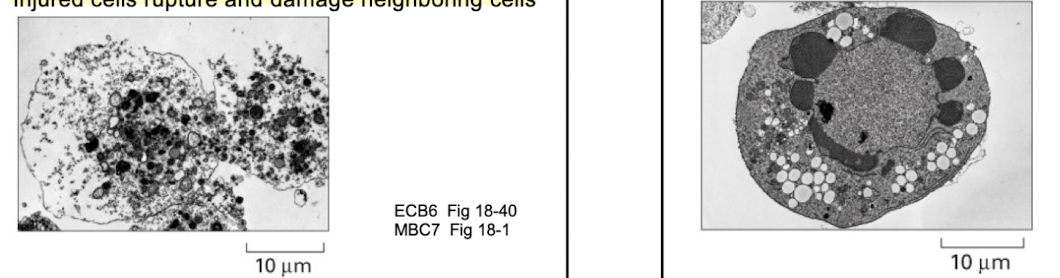
cell necrosis is HARMFUL: injured cells rupture + damage neighbouring cells
apoptosis is BENEFICIAL: cells no longer required or are a threat are dismantled → provide nutrients for other cells
apoptosis is essential for multicellular organisms
Apoptosis Prep
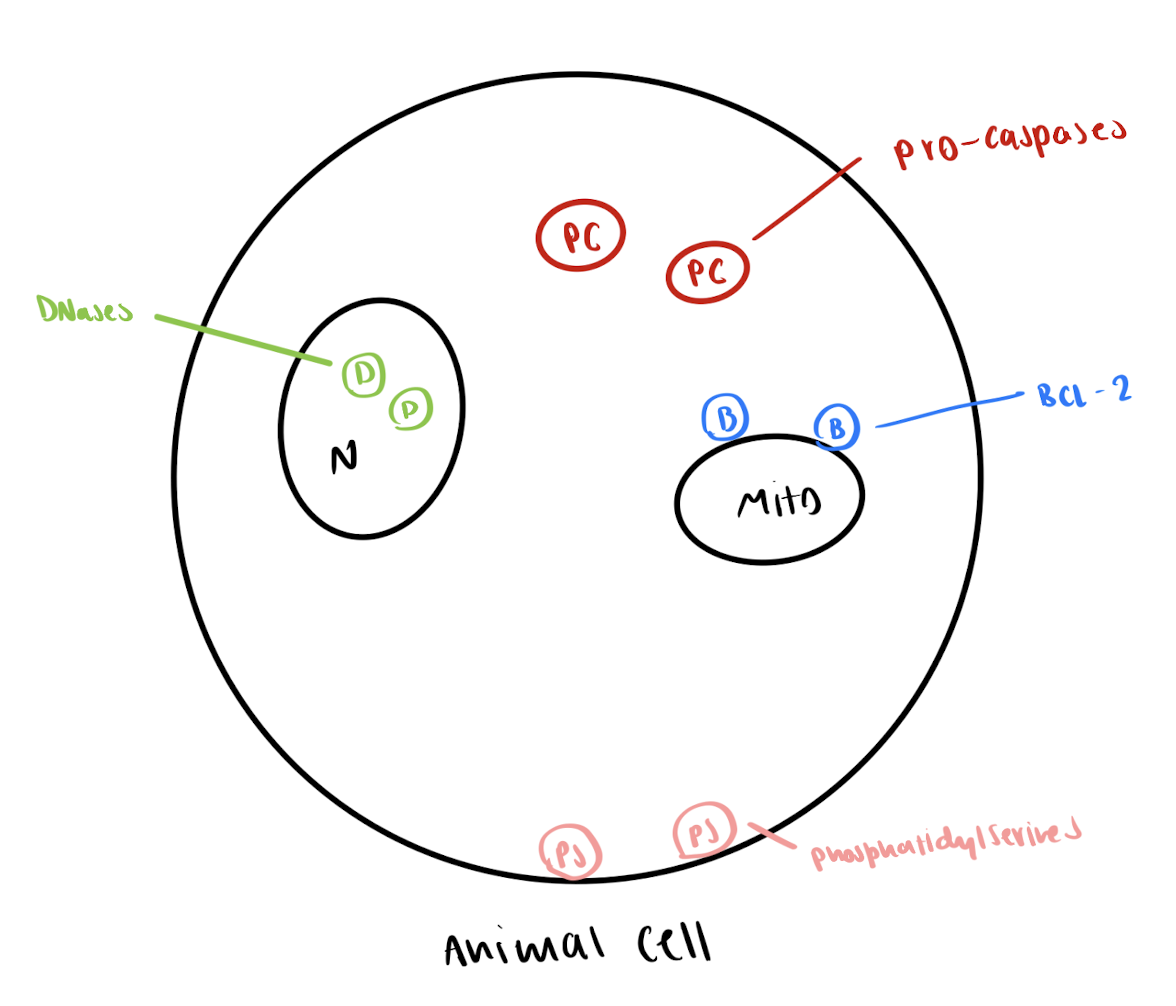
→ most animal cells can do apoptosis, bc the cell already contains what is necessary, its just not active yet
contains:
procaspases (inactive monomers)
active Bcl2 protein protects the mitochondria
DNases are inactive (enzymes that break down DNA)
phosphatidylserines are hidden on the cytosol side of membrane
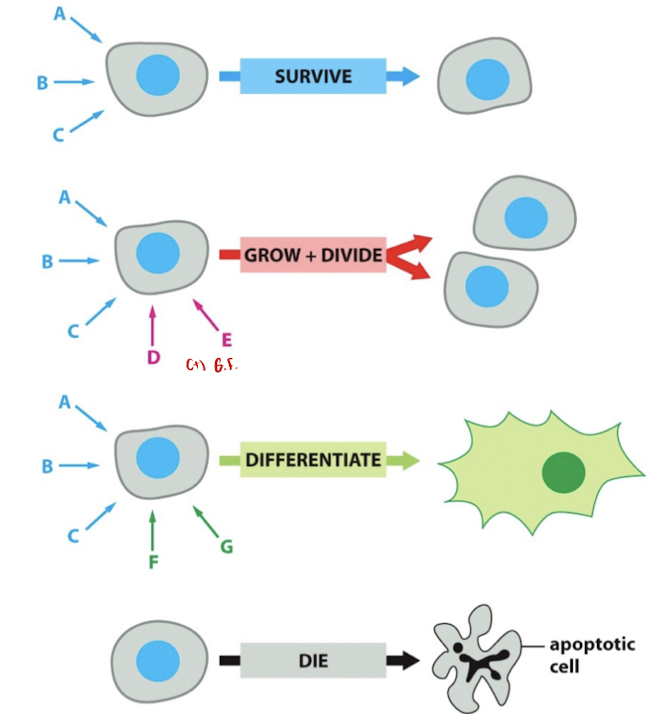
survival signals
ALL cells need survival signals in addition to other signals - lack of these causes apoptosis
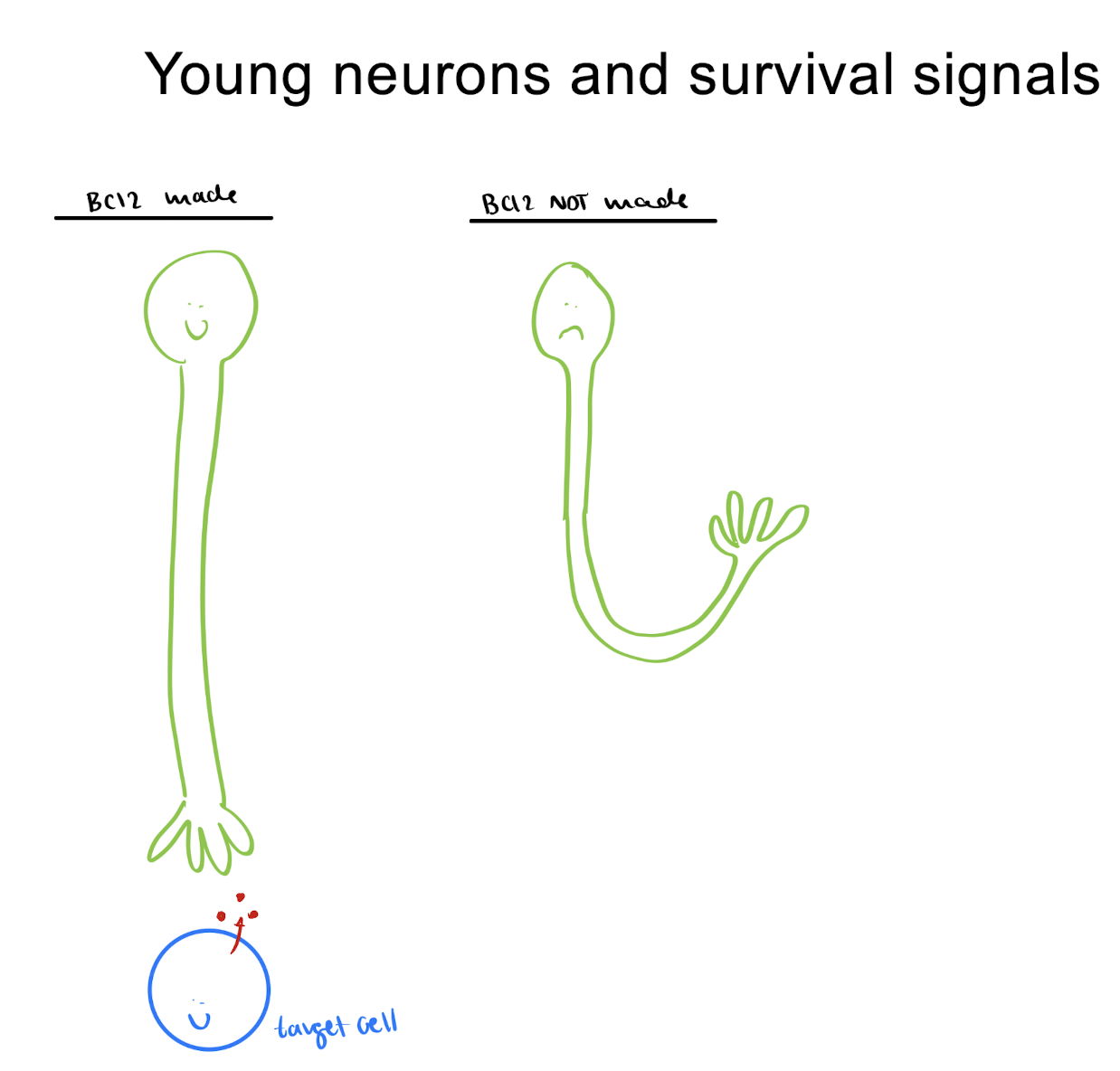
mech: survival signal → Bcl2 is made → mito. is protected
STEP 1: 3 Ways to Start Apoptosis
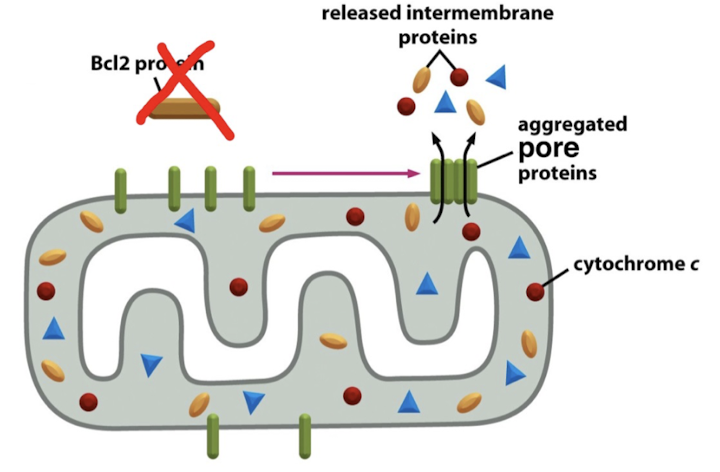
absence of survival signals → apoptosis
mech: no survival signal → Bcl2 ISNT made → CANT protect mito. → Cyt C is released from mito into cytosol → apoptosis
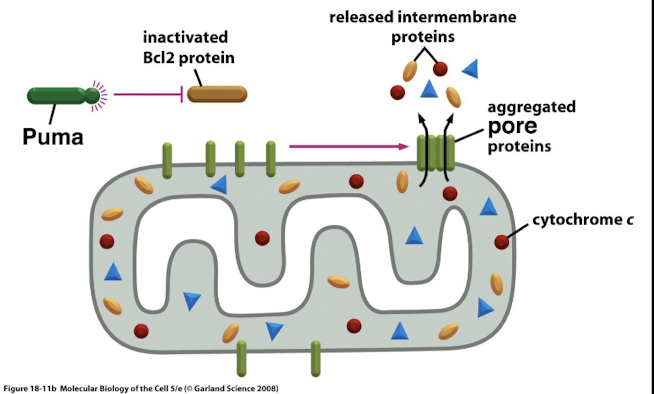
DNA damage → apoptosis
mech: severe DNA damage → p53 turns on PUMA gene → PUMA inhibits Bcl2 → Cyt C released into cytosol → apoptosis
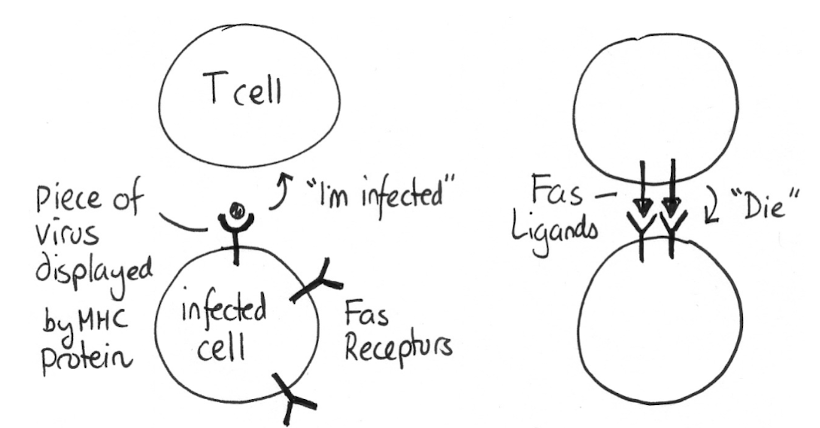
WBCs attack infected cell → apoptosis
mech: T cell (WBC) uses its Fas ligand memb. proteins → bind to infected cells Fas receptors → apoptosis
this uses contact dependent signalling
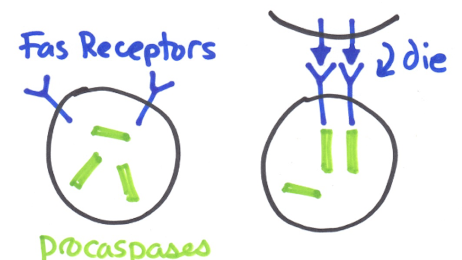
STEP 2: Activation of Procaspases
signals (Fas receptors, Cyt c) bring Procaspases (monomers) together → form an ACTIVE Caspases (dimer)
Caspases = protease, thus cuts things
an active dimer
STEP 3: Cell destruction
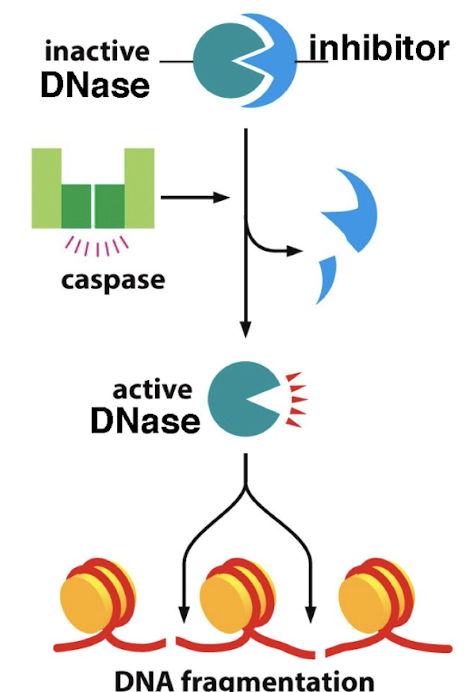
caspases indirectly activate DNases → destroy chromosomes
chopping up DNA : makes apoptosis irreversible + makes apoptotic bodies safe to eat (destroyed the virus/cancer genes)
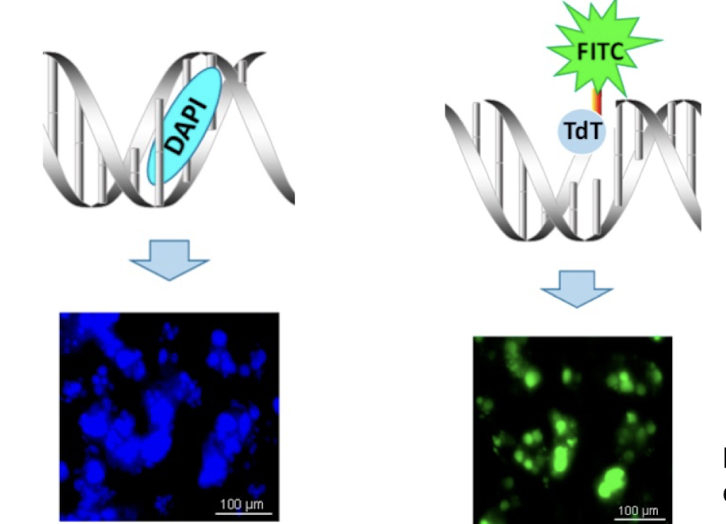
visualized using TUNEL technique = binds to DNA fragments
used since DAPI can only bind to intact DNA
example of this chromosome destruction: forming a mouse/human hand & forming a leaf
caspases directly destroy nuclear lamins → dismantle nuclear envelope
note: this ISNT the same as what occurs in prometaphase, bc thats inactivation of nuclear lamins, whereas caspases destroy nuclear lamins
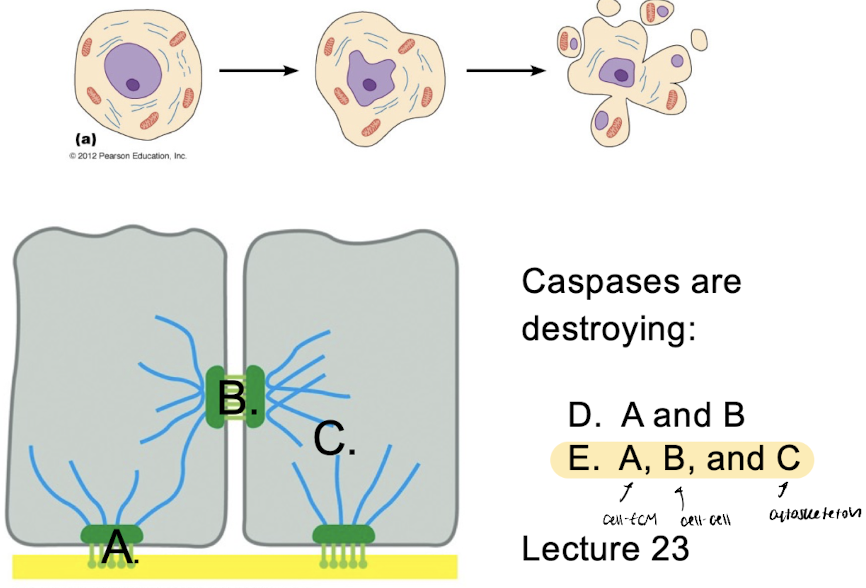
cells round up & become apoptotic bodies
caspases destroy cell-cell, cell-ECM, & cytoskeleton connections
STEP 4: Phagocytosis
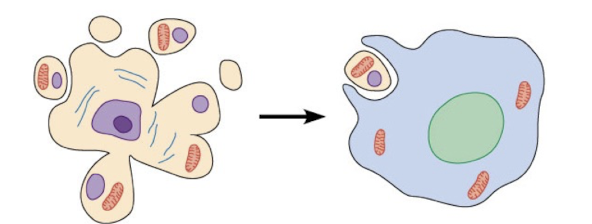
→ apoptotic bodies are consumed by macrophages
mech : apoptotic bodies display PS phospholipids on ECM side of p. membrane → eat me signal
by: caspases activate scramblases & inactivate flippases (to stop them from keeping PS in the safe place)
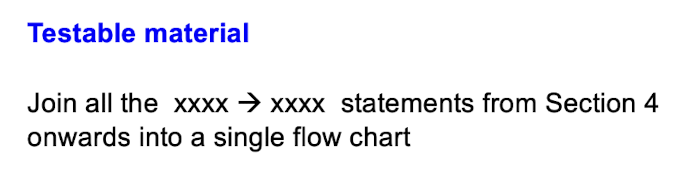
Examinable Content
start
no survival signal → Bcl2 ISNT made → CANT protect mito. → Cyt C is released from mito into cytosol → apoptosis
or
severe DNA damage → p53 turns on PUMA gene → PUMA inhibits Bcl2 → Cyt C released into cytosol → apoptosis
or
T cell (WBC) uses its Fas ligand memb. proteins → bind to infected cells Fas receptors → apoptosis
signals (Fas receptors, Cyt c) bring Procaspases (monomers) together → form an ACTIVE Caspases (dimer)
caspases indirectly activate DNases → destroy chromosomes
caspases directly destroy nuclear lamins → dismantle nuclear envelope
caspases destroy cell-cell, cell-ECM, & cytoskeleton connections → form apoptotic bodies
apoptotic bodies display PS phospholipids on ECM side of p. membrane → eat me signal
by: caspases activate scramblases & inactivate flippases (to stop them from keeping PS in the safe place)